The Fourth Trimester: What Your Newborn Actually Needs Right Now
The first 30 days with your newborn are about survival, bonding, and building confidence — not perfection. Here's what actually matters.

In this article
You've just brought home a person who has never experienced gravity, cold air, or hunger before. No wonder the first 30 days feel overwhelming. According to the World Health Organization, approximately 2.4 million newborns die globally in the first month of life — the vast majority from preventable causes — making this the most medically significant period of childhood. But for the millions of healthy newborns born each year, the challenge isn't survival; it's the sheer volume of decisions, fears, and sleepless nights that pile up before you've even figured out how to fold a swaddle.
This guide distills 30 evidence-based tips into six clear themes so you can stop Googling at 3 a.m. and start trusting yourself.
By the end, you'll understand:
1. The Fourth Trimester: What Your Newborn Actually Needs Right Now
Your newborn isn't a blank slate — they're a fetus who just changed address. The "fourth trimester" concept, popularised by paediatrician Dr. Harvey Karp, recognises that human babies are born neurologically earlier than other mammals because our heads are too large to stay in the womb any longer. The result: a baby who still craves the warmth, motion, and sound of the womb for the first three months.
Skin-to-Skin Is Medicine, Not Just Bonding
Skin-to-skin contact (also called kangaroo care) does measurable physiological work. A 2016 Cochrane Review of 38 studies found that kangaroo care for preterm and low-birthweight infants significantly reduced mortality, infection, and hospital stay — and the benefits extend to full-term babies too, stabilising heart rate, temperature, and blood glucose.
Skin-to-skin contact immediately after birth should be facilitated for all mothers and newborns, healthy or not.
— World Health Organization (2023)
Swaddling: The Womb Simulator
A snug swaddle mimics the contained feeling of the uterus and can reduce the startle reflex (Moro reflex) that wakes babies. Use a breathable muslin or a purpose-designed swaddle blanket. Stop swaddling as soon as your baby shows signs of rolling — typically around 8 weeks — to prevent suffocation risk.
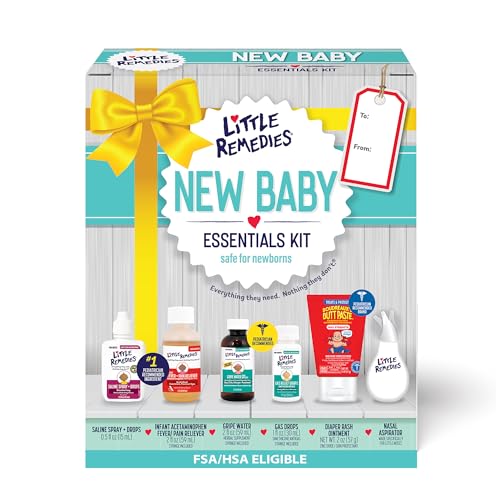


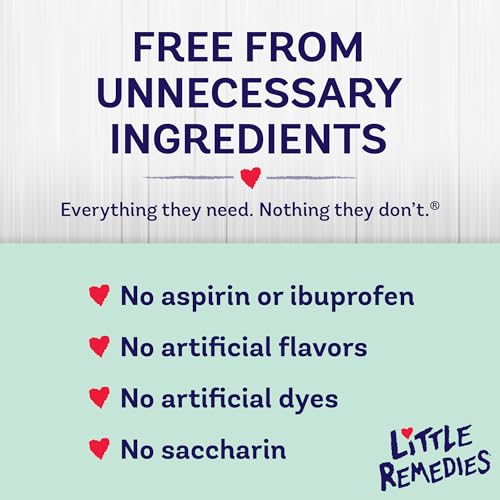
Little Remedies New Baby Essentials Kit with Saline Nasal Spray, Diaper Rash Cream, Gas Relief Drops, Gripe Water & More, Safe for Newborns
- Little Remedies New Baby Essentials Kit contains the essentials a new parent needs to safely and effectively t
- This kit of newborn essentials must-haves makes a perfect baby shower gift for new parents and has everything
- This newborn essentials kit can help your little one feel better from their first diaper rash to stuffy nose,
2. Feeding in the First Month: Realistic Expectations, Not Instagram Goals
Feeding is the single biggest source of anxiety for new parents, and it shouldn't be — because fed is always the goal, regardless of method.
Breastfeeding: What "Normal" Actually Looks Like
The American Academy of Pediatrics (AAP) recommends exclusive breastfeeding for the first six months, but acknowledges that the path there is rarely smooth. In the first 24–48 hours, your breasts produce colostrum — a thick, yellowish fluid packed with antibodies. Mature milk typically "comes in" between days 2 and 5, often accompanied by engorgement.
Newborns feed 8–12 times per 24 hours. That is not a sign of low supply. That is how breastfeeding works.
Formula Feeding: Doing It Safely
If you're formula feeding — by choice or necessity — the preparation matters as much as the formula itself. Always follow the manufacturer's ratio exactly; over- or under-diluting formula is dangerous.
Track feeding times loosely for the first two weeks to spot patterns, but don't obsess over schedules. Demand feeding — responding to hunger cues rather than the clock — is what the AAP recommends for the first month.
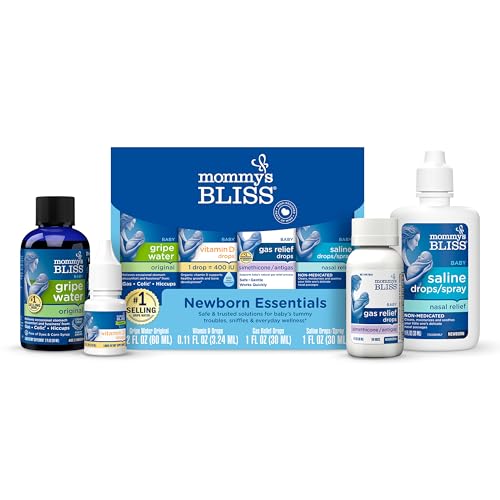
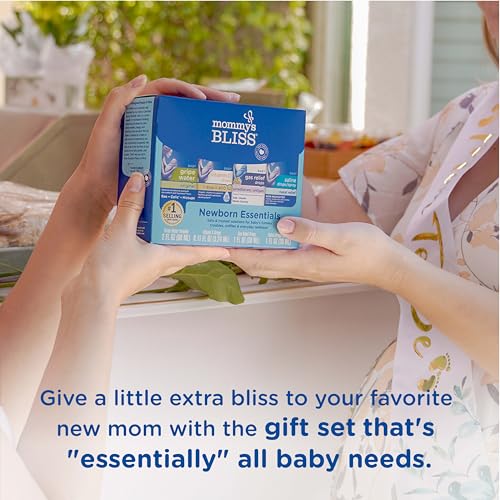
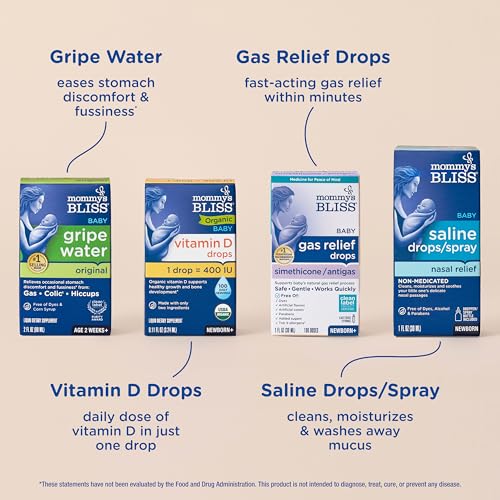
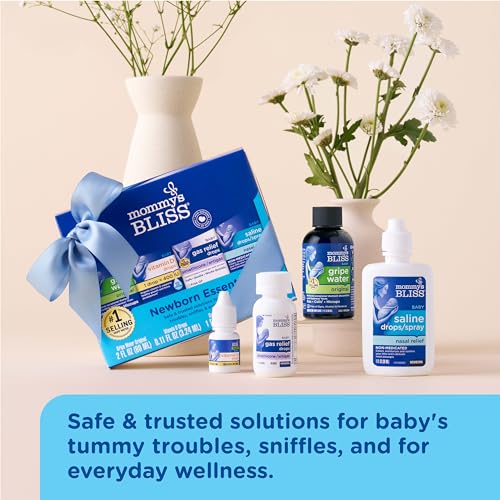
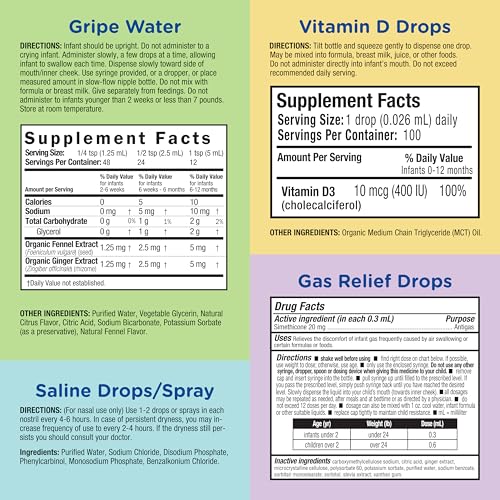
Mommy's Bliss 4-Piece Newborn and Baby Essentials Kit - With Gripe Water, Gas Relief Drops, Vitamin D 400IU, and Saline Drops/Spray - The Perfect Baby Gift.
- Newborn Essentials Gift Set for Baby's Wellness
- Made in the USA
- Mommy's Bliss Baby Newborn Essentials Gift Set, Includes Gripe Water, Baby Vitamin D Drops, Baby Gas Relief Dr
3. Safe Sleep: The Rules That Save Lives
Safe sleep is the area where the evidence is clearest and the stakes are highest. Sudden Infant Death Syndrome (SIDS) and sleep-related infant deaths claim approximately 3,400 babies annually in the United States alone, according to the CDC. The good news: following the ABCs of safe sleep dramatically reduces that risk.
The ABCs of Safe Sleep (AAP 2022 Guidelines)
- A – Alone: Baby sleeps alone, not with adults or siblings - B – Back: Always on their back, every sleep, every caregiver - C – Crib: On a firm, flat surface with a fitted sheet — nothing else
4. Reading Your Baby: Cues, Crying, and Communication
Crying is your baby's last resort, not their first. By the time a newborn cries, they've already been sending signals for several minutes. Learning to read earlier cues is one of the most practical skills you can build in the first month.
The Hunger Cue Ladder
1. Early cues (act now): rooting, sucking on hands, turning head side to side 2. Mid cues (act soon): increased movement, fussing, bringing hands to mouth repeatedly 3. Late cues (harder to feed): full crying, red face, arched back
What Different Cries Mean
Newborn cries are genuinely hard to distinguish at first — and research suggests even experienced parents take several weeks to reliably decode them. Give yourself grace. A useful framework:
Gas discomfort is one of the most common causes of fussiness in the first month. Mommy's Bliss Gripe Water and Gas Relief Drops are popular options many parents keep on hand — always check with your paediatrician before using any supplement in a newborn.
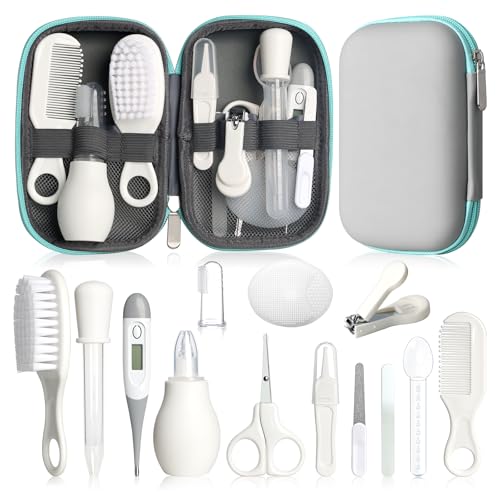
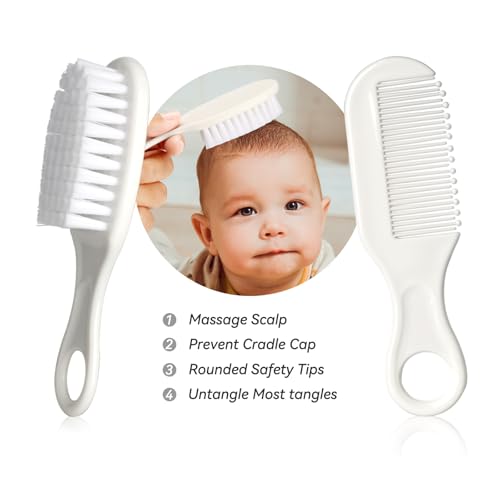
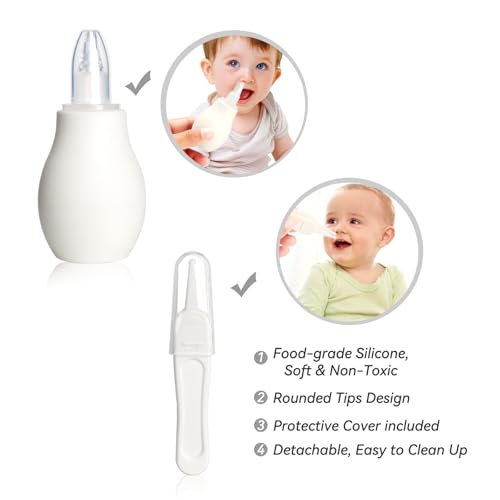
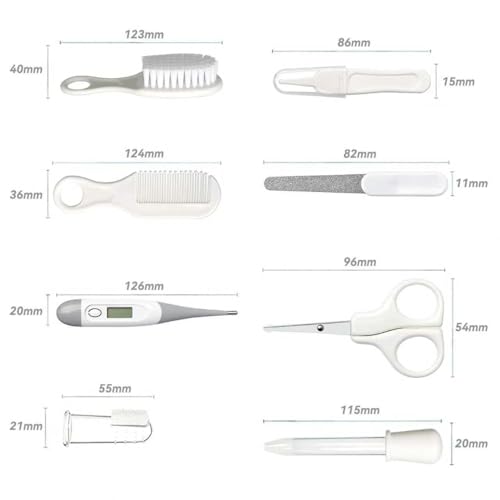
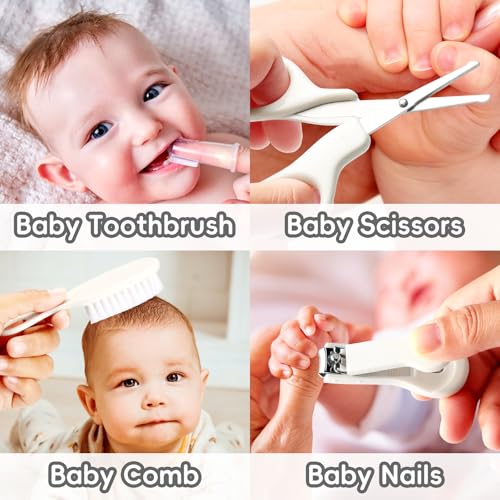
Baby Grooming Kit, Infant Safety Care Set with Hair Brush Comb Nail Clipper Nasal Aspirator,Baby Essentials Kit for Newborn Girls Boys (Grey White)
- 14 in 1 Baby Grooming Kit: The package comes with the baby grooming kit, including baby nail file, Newborn hai
- Baby Hair Brush And Hair Comb : You can softly brush your baby’s hair and massage his scalp both for grooming
- Safe Baby Grooming Kit: In order to make every baby always get good grooming and health, we designed this groo
5. Newborn Care Basics: Skin, Nails, Nose, and the Rest
The physical care of a newborn can feel alarming if you don't know what's normal. Here's your quick-reference guide.
Skin
Newborn skin is designed to peel. The vernix (white waxy coating) that protected your baby in the womb dries and flakes off in the first week — this is normal and requires no treatment. Avoid over-bathing; two to three sponge baths per week is plenty until the umbilical cord stump falls off (usually 1–3 weeks).
Nails
Newborn nails grow surprisingly fast and can scratch their face. File rather than clip in the first few weeks — a newborn's nail beds are very close to the skin. The Momcozy Elite Baby Kit includes an electric nail trimmer with a gentle 3,500 RPM speed specifically designed for newborn use.
Nasal Congestion
Newborns are obligate nose-breathers, so even mild congestion is uncomfortable. Saline drops followed by a nasal aspirator is the safest approach. The Safety 1st Deluxe Baby Healthcare Kit and POPYJAN 24-piece baby care set both include nasal aspirators alongside other grooming essentials at a budget-friendly price point.


Momcozy Elite Baby Kit, Superior Baby Shower & Registry Essential Kit for Grooming & Health & Cleansing Care, Electric Nail File & Nasal Aspirator,Tummy Wrap,Thermometer,Bath Brush,Teether,Storage Bag
- The All-in-1 Momcozy Baby Elite Kit - Superior Baby Shower & Registry Gift. The Elite Baby Kit covers 3 main b
- Gentle Electric Nail Trimmer - Momcozy Elite Baby Kit comes with an electric nail trimmer, features a gentle 3
- Efficient Baby Nasal Aspirator- Made of BPA-free soft material, the nasal aspirator has 3 levels of suction po
6. Your Mental Health Is a Medical Issue: Protecting the Parent Behind the Baby
Approximately 1 in 5 mothers and 1 in 10 fathers experience perinatal depression or anxiety, according to the Royal College of Psychiatrists. These are not signs of weakness or bad parenting. They are clinical conditions with effective treatments — and they directly affect your baby's development if left unaddressed.
The Edinburgh Scale: Know Your Baseline
Many maternity services use the Edinburgh Postnatal Depression Scale (EPDS) at the 6-week check. But symptoms can emerge any time in the first year. Know the signs:
Building Your Support System
The old proverb "it takes a village" is backed by data. Social support is one of the strongest protective factors against postnatal depression. Be specific when asking for help — "Can you bring dinner on Tuesday?" lands better than "let me know if you need anything."
7. Newborn Care Kit Comparison: What You Actually Need
| Kit Type | Best For | Key Contents | Price Range | Recommended Product |
|---|---|---|---|---|
| Budget grooming kit | First-time parents wanting basics | Nail file, scissors, comb, nasal aspirator, dropper | $9–10 | WXA 14-in-1 Baby Grooming Kit |
| Mid-range grooming kit | Parents wanting more tools in one case | 25 pieces incl. toothbrush, aspirator, brush, comb | $16 | Safety 1st Deluxe Baby Healthcare Kit |
| Comprehensive grooming set | Value-seekers wanting 24+ pieces | Tongue cleaner, silicone brush, curved nail clipper | $9–10 | POPYJAN 24-piece Baby Care Kit |
| Premium all-in-one kit | Parents who want electric tools | Electric nail trimmer, electric aspirator, thermometer, tummy wrap | $89–90 | Momcozy Elite Baby Kit |
| Wellness essentials kit | Addressing gas, congestion & rash | Gripe water, gas drops, saline spray, diaper rash cream | $24–25 | Little Remedies New Baby Essentials Kit |
| Natural wellness kit | Parents preferring plant-based formulas | Gripe water, gas relief, Vitamin D drops, saline drops | $22–23 | Mommy's Bliss 4-Piece Newborn Kit |
Expert Insights
The first 30 days with your newborn will not look like the photos. There will be moments of profound, unexpected love and moments of profound, unexpected despair — sometimes within the same hour. Both are real, and both are normal. The most important thing you can give your baby right now isn't the perfect swaddle or the right brand of nappy cream. It's your presence, your attention, and the willingness to learn this particular small human one day at a time.
The best parent for your baby is already in the room. Save this guide, share it with your co-parent or support person, and come back to it when the 3 a.m. doubt hits. You've got this.
Sources & References
- World Health Organization. "Newborn Mortality." 2023. https://www.who.int/news-room/fact-sheets/detail/newborn-mortality
- World Health Organization. "Recommendations on Newborn Health." 2023. https://www.who.int/publications/i/item/WHO-MCA-17.07
- American Academy of Pediatrics. "Safe Sleep Recommendations." 2022. https://publications.aap.org/pediatrics/article/150/1/e2022057990/188304
- American Academy of Pediatrics. "Breastfeeding and the Use of Human Milk." 2022. https://publications.aap.org/pediatrics/article/150/1/e2022057988/188305
- Centers for Disease Control and Prevention. "Sudden Unexpected Infant Death and Sudden Infant Death Syndrome." 2023. https://www.cdc.gov/sids/
- Conde-Agudelo A, Díaz-Rossello JL. "Kangaroo mother care to reduce morbidity and mortality in low birthweight infants." Cochrane Database of Systematic Reviews. 2016.
- Royal College of Psychiatrists. "Postnatal Depression." 2023. https://www.rcpsych.ac.uk/mental-health/mental-illnesses-and-mental-health-problems/postnatal-depression
- Postpartum Support International. "Postpartum Depression Facts." 2023. https://www.postpartum.net/learn-more/postpartum-depression/
- Shonkoff JP, Phillips DA (eds). "From Neurons to Neighborhoods: The Science of Early Childhood Development." National Academy Press, 2000.
- Cox JL, Holden JM, Sagovsky R. "Detection of postnatal depression: Development of the 10-item Edinburgh Postnatal Depression Scale." British Journal of Psychiatry. 1987;150:782–786.
Frequently Asked Questions
When should I call the paediatrician in the first month?
Is it normal for my newborn to make grunting noises while sleeping?
How do I know if my baby is getting enough milk if I'm breastfeeding?
When does the newborn phase get easier?
Can I take my newborn outside in the first month?
How do I manage visitors in the first month?
What's the difference between baby blues and postpartum depression?
Was this helpful?
Thanks — your feedback helps us pick what to write next.