What Family Mindfulness Really Means in 2025
Family mindfulness in 2025 is more accessible than ever, with research-backed activities that take as little as five minutes a day and measurably improve children's emotional regulation, focus, and stress resilience.
In this article
Picture this: it's 6 p.m. on a Tuesday, homework is half-done, dinner is burning, and your seven-year-old is mid-meltdown on the kitchen floor. Sound familiar? You're not alone — and the science says the stakes are real. According to the American Psychological Association (APA), nearly one in three children aged 8–17 reported experiencing significant stress related to school, family, and the future, a figure that has trended upward since 2020. The good news? A growing body of clinical research confirms that regular mindfulness practice — even brief, playful moments woven into ordinary family life — can meaningfully reduce that burden for your child and for you.
In this guide you'll understand:
1. What Family Mindfulness Really Means in 2025
Family mindfulness is not about sitting cross-legged in silence for 30 minutes — it's about intentionally paying attention to the present moment, together, in ways that feel natural for your family's age and rhythm. The definition matters because many parents abandon mindfulness before it starts, assuming it requires stillness their children simply don't have.
The World Health Organization (WHO) defines mental health promotion in childhood as building skills for emotional regulation, resilience, and social connection — and mindfulness directly targets all three. In 2025, the conversation has shifted from "should families try mindfulness?" to "which format fits our life best?"
The Three Core Ingredients
Regardless of the activity you choose, effective family mindfulness shares three elements:
- Attention — noticing what is happening right now (a breath, a sound, a feeling) - Intention — choosing to pay attention on purpose, not by accident - Non-judgment — observing without labelling the moment as good or bad
These concepts are not abstract for children. A four-year-old can notice that her tummy feels "bubbly" before a big event. A nine-year-old can catch himself tensing his shoulders during a test. These are mindfulness skills in action.
Why 2025 Is a Turning Point
Screen time has hit record highs for children under 12, with the American Academy of Pediatrics (AAP) noting that children aged 8–12 now average nearly five hours of recreational screen time daily. Mindfulness offers a direct counterweight — training the attentional system that screens fragment. The tools available today, from expert-designed card decks to guided video sessions, make it easier than ever to start.
Today's action: Pick one moment in your existing routine — morning wake-up, car ride, or bedtime — and decide that's your mindfulness window this week.
2. The Neuroscience Behind Why Mindfulness Works for Developing Brains
Mindfulness produces measurable changes in the developing brain, and understanding this can motivate even the most sceptical parent to give it a genuine try. The prefrontal cortex — the brain's "thinking and decision-making centre" — is not fully developed until around age 25, which is precisely why children are so reactive. Mindfulness practice strengthens the connection between the prefrontal cortex and the amygdala (the brain's alarm system), effectively giving your child a stronger emotional brake.
Mindfulness training in children has been associated with improved attention, reduced anxiety symptoms, and enhanced emotional regulation, with effects observable after as few as eight weeks of practice.
— American Psychological Association (2023)
What Happens in a Child's Brain During Mindfulness
When a child focuses on slow, deliberate breathing, several things happen simultaneously:
- The parasympathetic nervous system activates, lowering heart rate and cortisol - The anterior cingulate cortex (involved in attention regulation) shows increased activity on fMRI imaging - Interoceptive awareness — the ability to notice internal body states — improves, which is foundational to emotional intelligence
A landmark review published in Clinical Psychology Review (2015, Zoogman et al.) analysed 20 studies of school-based mindfulness programmes and found significant reductions in psychological symptoms, with the strongest effects in clinical populations — meaning children who struggle most benefit most.
Ages and Brain Readiness
- 0–2 years: Sensory grounding (touch, sound, breath) lays early interoceptive foundations - 3–5 years: Simple breathing games and body scans work well; attention spans are short but responsive - 6–9 years: Children can engage with guided visualisation and emotion-naming exercises - 10–12 years: Abstract concepts like "observing thoughts without reacting" become accessible
Today's action: Tonight at bedtime, place your child's hand on their chest and yours on yours. Take three slow breaths together and ask: "What does your body feel like right now?"
3. Age-by-Age Mindfulness Activities That Actually Work
The single biggest mistake families make is choosing an activity designed for adults and expecting a five-year-old to engage with it. Age-appropriate design is everything. Here's a practical breakdown by developmental stage.
Babies and Toddlers (0–2 Years): Sensory Mindfulness
Mindfulness for infants is really mindful parenting — slowing down during feeding, bath time, and play to narrate sensations and make eye contact. Research from the Royal College of Paediatrics and Child Health (RCPCH) highlights that responsive, attuned caregiving in the first two years directly shapes the stress-regulation architecture of the developing brain.
- Slow, narrated bath time ("feel how warm the water is") - Skin-to-skin contact with conscious, slow breathing - Sensory bins with different textures explored without rushing
Preschool (3–5 Years): Breathing Games
This age group responds brilliantly to imaginative framing. "Smell the flowers, blow out the candles" teaches diaphragmatic breathing without a single abstract word.

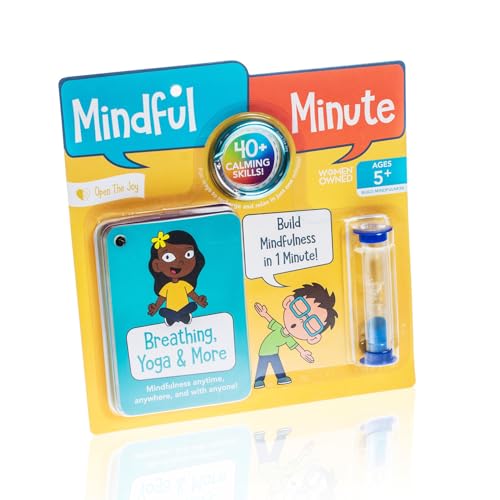
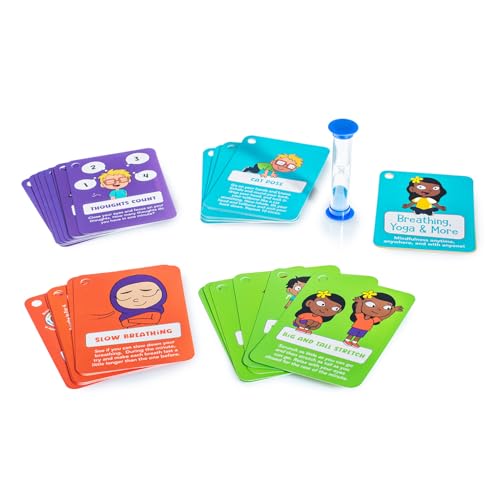
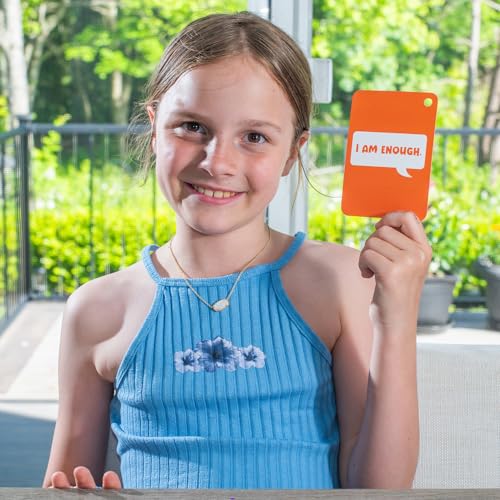
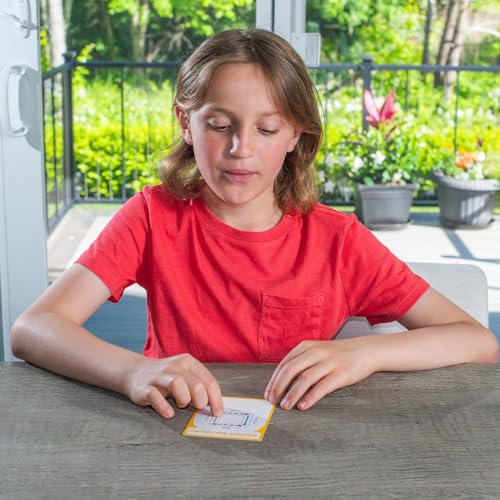
Open The Joy Mindful Minute Cards for Kids - Mindfulness Activities, Stress Relief, Emotional Regulation Tools, and Calming Strategies - Ages 5 and Up
- COMPLETE CALMING SET: Includes a 60-second sand timer, 40+ mindfulness and stress-relief cards, and a clip-and
- EXPERT-DESIGNED TECHNIQUES: Created with guidance from child life experts, these cards feature proven mindfuln
- PORTABLE PEACEKEEPER: Compact, pocket-sized cards fit easily in backpacks, purses, or glove compartments, keep
The Open The Joy Mindful Minute Cards are particularly well-suited here — the 60-second sand timer gives preschoolers a concrete, visual container for a short practice, and the clip-on ring means the cards travel everywhere from the car to the waiting room.
School Age (6–9 Years): Emotion Mapping and Visualisation
Children this age can begin to label emotions with nuance ("I feel nervous-excited") and follow simple guided visualisations. Body scans, gratitude check-ins, and mindful movement (yoga poses named after animals) all work well.
Tweens (10–12 Years): Reflective and Social Mindfulness
Older children benefit from journalling, conversation-based mindfulness, and mindful listening exercises with peers and family.
Today's action: Match one activity from the list above to your child's current age and try it at the next natural pause in your day.
4. Building a Family Mindfulness Routine That Sticks
Consistency matters far more than duration — five minutes every day beats 30 minutes once a week for building neural pathways in children. The challenge is making mindfulness a habit rather than a chore, which requires attaching it to something your family already does.
Habit stacking — attaching a new behaviour to an existing routine — is one of the most evidence-supported strategies for sustaining behaviour change in families.
— Centers for Disease Control and Prevention, Health Promotion Resources (2022)
The Three-Anchor System
Think of your day as having three natural anchors where mindfulness fits without friction:
1. Morning anchor — one to two minutes of breathing or an intention-setting card before school 2. Transition anchor — a grounding exercise in the car or at the school gate 3. Evening anchor — a gratitude share or body scan at bedtime
You don't need all three. Start with one anchor and hold it for two weeks before adding another.
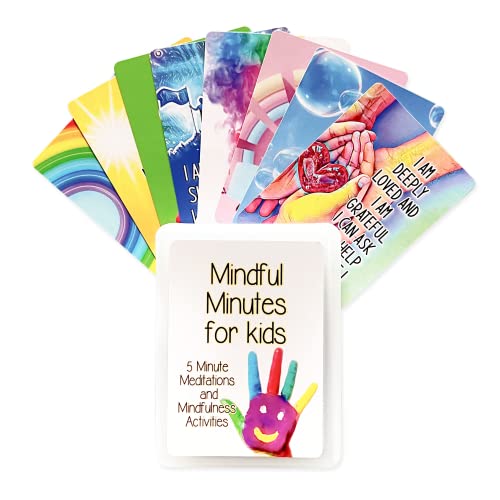

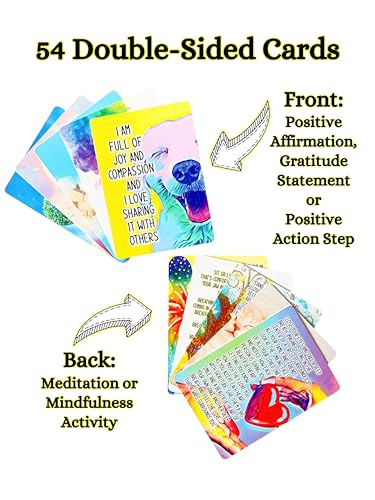
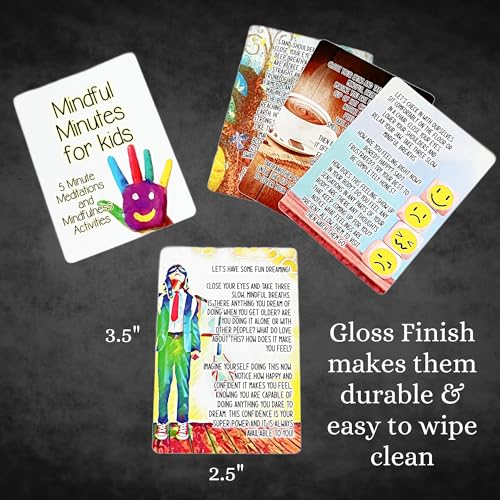
Mindfulness, Meditation and Affirmations Activity Cards for Kids and Teens - in 5 Minutes or Less Daily - Loved by Teachers, Therapists and Parents as a Teaching Tool
- 💙 FUN WAY TO ENCOURAGE DAILY MEDITATION AND MINDFULNESS - Elevate your child's well-being with our set of 54 a
- 💚 MULTIPLE USES - Use affirmations and gratitude statements as an instant joyful pick-me-up or delve deeper in
- 💛 FAMILY-FRIENDLY FUN - Infuse purpose and energy into your mornings with our Mindful Minutes cards. Designed
The Because I'm Happy Mindfulness Activity Cards are designed specifically for this kind of daily micro-practice — each card delivers a complete activity in five minutes or less, making them perfect for a morning anchor before the school rush. The affirmation component also gives children a positive cognitive frame to carry into their day.
Making It Non-Negotiable Without Making It Punitive
The word "practice" is important — it signals effort without perfection. Some days your child will be fully engaged; other days they'll giggle through the whole thing. Both are fine. Research from the AAP on social-emotional learning consistently shows that parental modelling is the single strongest predictor of whether a child adopts a coping strategy. If they see you breathing slowly when you're frustrated, they learn that it works.
Today's action: Identify your family's most natural anchor moment and put a two-minute mindfulness reminder in your phone for that time, starting tomorrow.
5. Mindfulness Games and Card Decks: The 2025 Family Toolkit
The mindfulness tools market has matured significantly, and in 2025 there are genuinely excellent products designed with clinical input and age-appropriate pedagogy. Card-based tools are particularly effective for families because they remove the "what do we do?" barrier and make the practice feel like a game rather than a lesson.
Why Card Decks Work for Families
- Low friction: No app, no screen, no setup - Tangible and portable: Children can hold, shuffle, and choose their own card - Conversation-starting: Many prompts open dialogue that wouldn't happen otherwise - Therapist-endorsed: Several leading decks are developed with input from clinical professionals

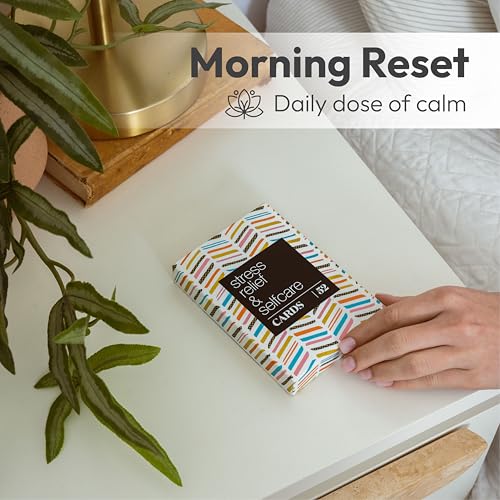
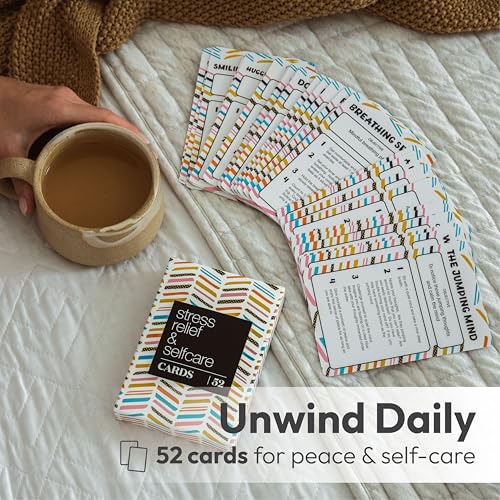
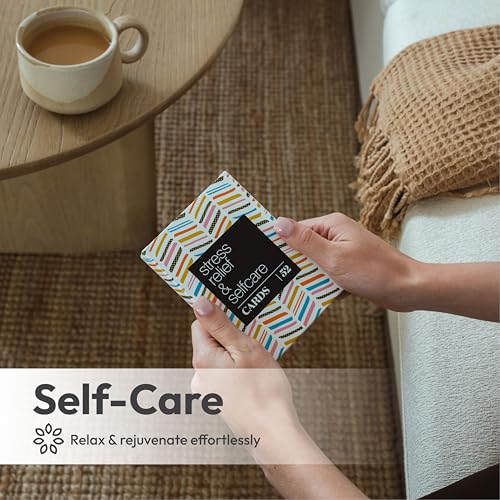
Allura & Arcia 52 Stress Less & Self Care Cards - Mindfulness & Meditation Exercises - Anxiety Relief & Relaxation
- 52 EASY EXERCISES FOR EVERYONE: This unique Self Care Deck contains 52 extremely effective exercises for mindf
- POWERFUL MEDITATION AND MINDFULNESS TECHNIQUES: These exercises are known to help reduce stress, anxiety and s
- RECOMMENDED BY HEALTH CARE PROFESSIONALS: For kids, teens, women, men & adults, our self care kit cards are re
The Allura & Arcia Stress Less & Self Care Cards offer 52 exercises developed by therapists, counsellors, and yoga professionals. What makes this deck stand out is its versatility — the same card that helps your ten-year-old decompress after school can help you reset during a stressful workday. This dual-use quality makes it genuinely more likely to stay in rotation.
For families who want a more interactive, game-based format, the Allura & Arcia Mindfulness Therapy Game turns the practice into structured group play for up to five players, with dedicated cards for social skills, self-care, and guided visualisations. It's an excellent option for family game nights or for households with multiple children at different ages.
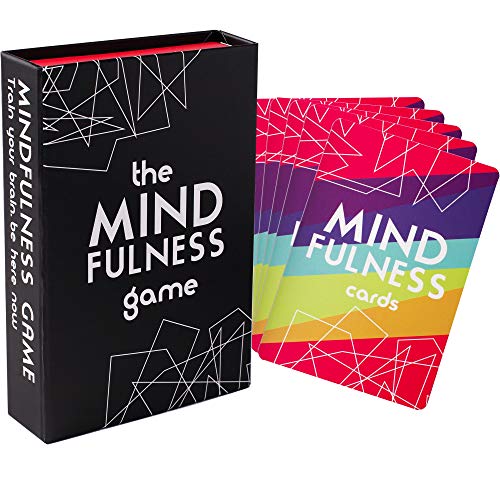
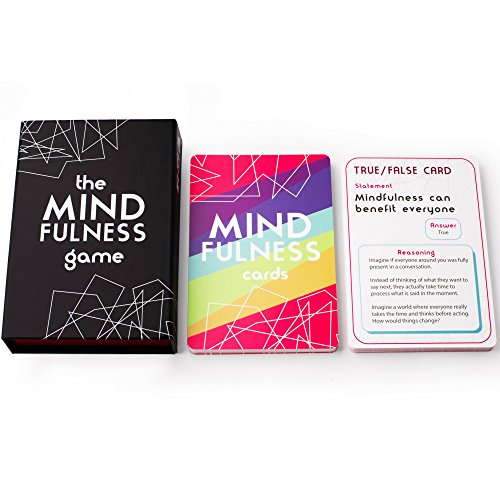
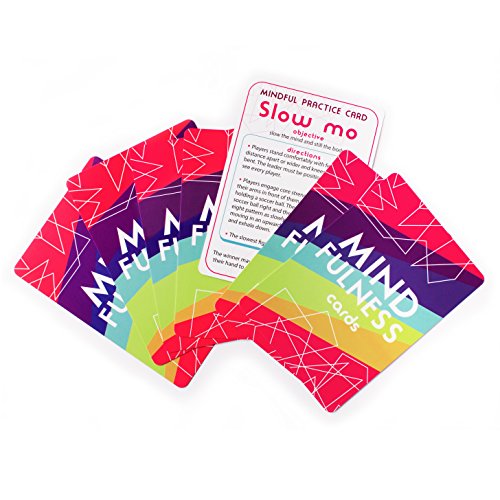
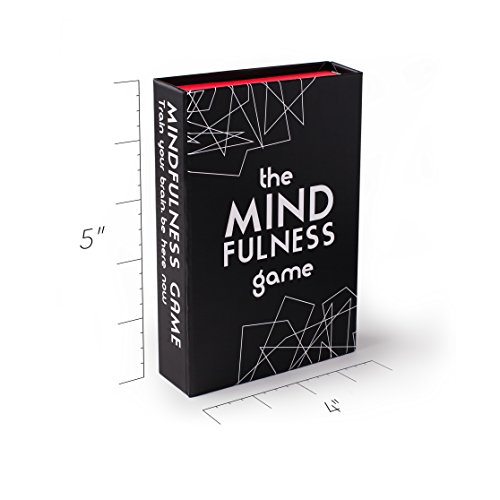
Mindfulness Cards - Conversation Cards for Kids and Therapy Games for Teens, Kids and Adults. Mindfulness Game for Better Communication and Social Skills - Great Teacher Gifts or Homeschool Essentials
- GREAT TEACHER GIFTS & HOMESCHOOL ESSENTIALS – A meaningful classroom resource that doubles as a fun mindfulnes
- FUN CONVERSATION CARDS FOR KIDS & TEENS – More than just positive affirmations cards, these engaging conversat
- MINDFULNESS CARDS FOR BEGINNERS & BEYOND – Whether new to mindfulness or practicing daily, these versatile car
The INNERICONS Mindfulness Conversation Cards take a slightly different approach, using open-ended prompts to build emotional awareness through dialogue. These work particularly well for families where children are verbal and curious — the conversation itself becomes the mindfulness practice.
Today's action: Browse the card decks listed in this article and order one that fits your family's style. When it arrives, introduce it at a relaxed moment — not during a meltdown.
6. Mindfulness for the Whole Family: Making It a Shared Practice
The most powerful shift you can make is reframing mindfulness from "something I do to my child" to "something we do together." Co-regulation — the process by which a calm caregiver helps a dysregulated child return to baseline — is one of the most well-evidenced mechanisms in developmental psychology.
Children co-regulate with caregivers long before they can self-regulate independently. The caregiver's own nervous system is the most powerful tool in the room.
— Center on the Developing Child, Harvard University (2023)
Family Mindfulness Rituals That Build Connection
Gratitude rounds at dinner: Each person names one thing they noticed today — not an achievement, but something they noticed (a smell, a colour, a feeling). This trains present-moment attention and opens genuine conversation.
The family weather report: At bedtime, each person describes their inner emotional "weather" — sunny, stormy, foggy, partly cloudy. No fixing required, just listening. This is particularly powerful for children who struggle to name emotions directly.
Mindful walking: On the school run or a weekend walk, challenge the family to find five things they've never consciously noticed before on that route. Novelty-seeking attention is a core mindfulness skill.
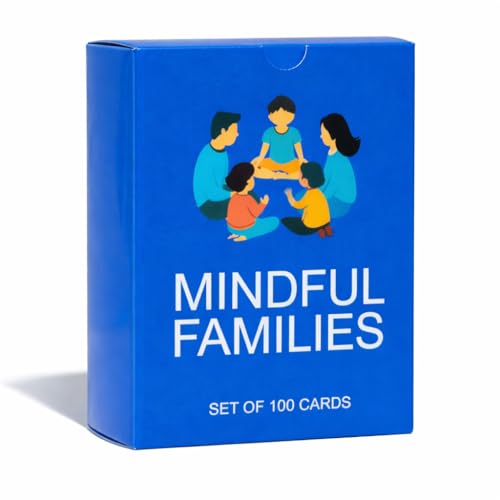
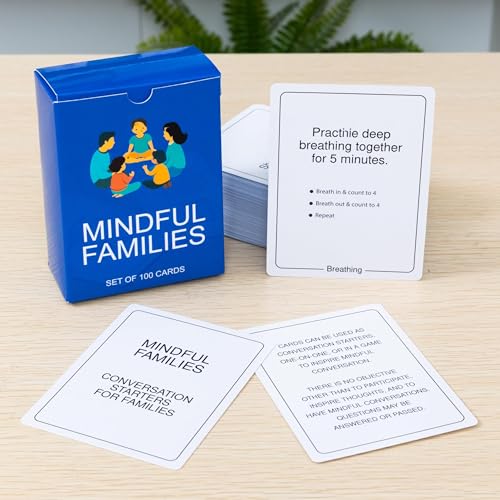
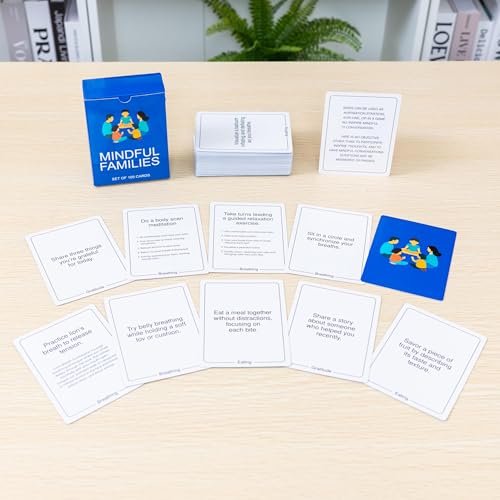
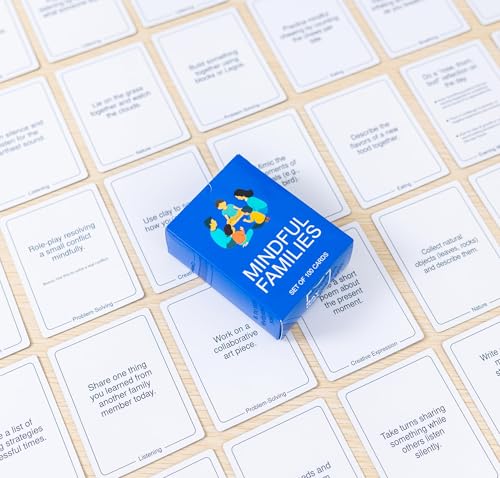
100 Mindful Families Conversation Cards – Mindfulness, Gratitude & Breathing Prompts for Self Care at Home, Travel & Therapy
- 👨👩👧👦 100 PROMPTS FOR FAMILY MINDFULNESS Includes 98 engaging prompt cards and 2 instructions—perfect for fa
- 🌿 TEN THOUGHTFUL CATEGORIES Choose from Breathing, Gratitude, Nature, Creative Expression, Movement, Listening
- 🧠 PROMOTES EMOTIONAL HEALTH & SELF‑CARE Supports social-emotional regulation through intentional dialogue—idea
The BayWel 100 Mindful Families Conversation Cards are built precisely for these shared rituals — 100 prompts across ten categories including breathing, gratitude, nature, movement, and creative expression. The format works beautifully at the dinner table, on road trips, or during quiet evenings, and the breadth of categories means you're unlikely to exhaust the deck quickly.
When a Parent Is Struggling Too
Honest moment: you cannot pour from an empty cup. The CDC's mental health guidance for caregivers explicitly notes that parental stress directly transmits to children through physiological co-regulation pathways. Doing mindfulness with your children isn't just good for them — it's one of the most efficient self-care strategies available to you as a parent.
Today's action: At your next family meal, introduce the "weather report" check-in. Go first, and be honest about your own weather. Watch how quickly your children engage.
Mindfulness Activity Formats Compared: Finding Your Family's Best Fit
| Activity Format | Best Age Range | Primary Benefits | Main Drawbacks | Recommended Product | Price Range |
|---|---|---|---|---|---|
| Breathing card decks | 5–12 years | Quick, portable, therapist-designed | Needs adult to facilitate initially | Allura & Arcia Stress Less Cards | $14–15 |
| Mindfulness therapy game | 6–12 years | Interactive, builds social skills, group play | Requires 2+ players, more setup | Mindfulness Therapy Game | $16–17 |
| Sand timer + activity cards | 5–10 years | Visual time cue, great for anxious kids, portable | Smaller card set | Open The Joy Mindful Minute Cards | $14–15 |
| Conversation prompt cards | 7–12 years | Builds emotional vocabulary, sparks dialogue | Less structured for younger children | INNERICONS Mindfulness Cards | $17–18 |
| Affirmation + activity cards | 4–12 years | Positive framing, under 5 minutes per card | Affirmation style may not suit all children | Because I'm Happy Activity Cards | $14–15 |
| Family conversation cards | All ages (with adult) | Whole-family engagement, ten topic categories | Requires family buy-in | BayWel 100 Mindful Families Cards | $14–15 |
Expert Insights
Conclusion
The most important thing to know about family mindfulness in 2025 is this: you don't need to be calm to start. You just need to start. Every slow breath you take in front of your child, every moment you pause and say "let's just notice how we feel right now," is a deposit into their lifelong emotional resilience account. The research is clear, the tools are accessible, and the window of opportunity in childhood is genuinely precious.
The families who thrive aren't the ones who never feel stressed — they're the ones who have practised, together, how to come back to calm.
If this guide has helped you, save it, share it with another parent who needs it, or subscribe to tinymindsworld.com for more evidence-based parenting resources delivered straight to your inbox. Your family's wellbeing is worth five minutes a day.
Sources & References
- American Psychological Association. "Stress in America: Generation Z." 2023. https://www.apa.org/news/press/releases/stress
- American Academy of Pediatrics. "Media and Young Minds — Screen Time Guidelines." 2023. https://www.aap.org/en/patient-care/media-and-children/
- World Health Organization. "Mental Health of Adolescents." 2023. https://www.who.int/news-room/fact-sheets/detail/adolescent-mental-health
- Zoogman, S., Goldberg, S. B., Hoyt, W. T., & Miller, L. "Mindfulness Interventions with Youth: A Meta-Analysis." Mindfulness, 2015. https://doi.org/10.1007/s12671-013-0260-4
- Center on the Developing Child, Harvard University. "Serve and Return Interaction Shapes Brain Circuitry." 2023. https://developingchild.harvard.edu
- Royal College of Paediatrics and Child Health. "State of Child Health Report." 2023. https://www.rcpch.ac.uk/state-of-child-health
- Centers for Disease Control and Prevention. "Promoting Health Behaviour Change in Families." 2022. https://www.cdc.gov/healthcommunication/index.html
- Semple, R. J., & Lee, J. Mindfulness-Based Cognitive Therapy for Anxious Children. New Harbinger Publications, 2011.
- Bertin, M. Mindful Parenting for ADHD. New Harbinger Publications, 2015.
- Vo, D. X. The Mindful Teen. New Harbinger Publications, 2015.
Frequently Asked Questions
At what age can children start mindfulness?
How long should a family mindfulness session be?
My child refuses to do mindfulness. What should I do?
Can mindfulness replace therapy for a child with anxiety?
What's the difference between mindfulness and meditation for kids?
How do I stay consistent when family life is chaotic?
Are there mindfulness tools designed specifically for the whole family, not just children?
Was this helpful?
Thanks — your feedback helps us pick what to write next.