Why Family Stories Are a Hidden Superpower for Children
Sharing your childhood memories with your children — through stories, play, and preserved family history — actively strengthens their identity, emotional security, and cognitive development at every age from birth to adolescence.

In this article
Here is something that might surprise you: research from Emory University found that children who know more about their family history score higher on measures of emotional wellbeing, self-esteem, and resilience — even after controlling for other factors. That single finding reframes the whole conversation. Sharing your childhood memories with your children is not sentimental self-indulgence. It is one of the most evidence-backed things you can do for their development.
This guide is for every parent — whether you are rocking a newborn, chasing a seven-year-old around a playground, or navigating the moody silences of a twelve-year-old. You will understand:
1. Why Family Stories Are a Hidden Superpower for Children
Your childhood memories are more than nostalgia — they are raw material for your child's developing sense of self.
The landmark research here comes from psychologists Marshall Duke and Robyn Fivush at Emory University, who developed what they called the "Do You Know?" scale. They found that children who could answer questions about their family history — where their grandparents grew up, how their parents met, what hard times the family had survived — showed significantly stronger psychological wellbeing than those who could not. The mechanism is what Fivush calls the "intergenerational narrative": a child who understands that they belong to a story larger than themselves develops a more stable identity.
This is not about reciting a family tree. It is about the texture of real stories: the time your mum burned the Christmas pudding every single year, the summer your dad got lost on a hiking trail and laughed about it for decades. Imperfect, human stories are precisely the ones that stick.

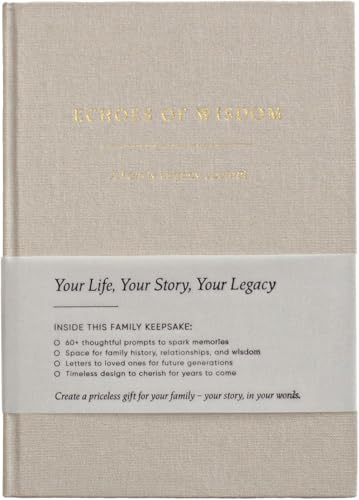
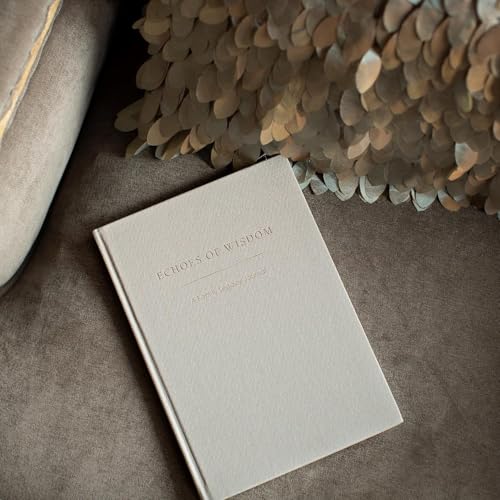

Family Legacy Memory Journal – I Want to Hear Your Story Keepsake for Capturing Stories, Heritage & Traditions with Guided Prompts | Ideal Gift for Mom, Dad, Grandma & Grandparents
- Preserve Family Stories & Personal Legacy: This thoughtfully designed family legacy journal helps capture mean
- Guided Reflection for Life Stories & Wisdom: This memory journal for heartfelt reflection gently invites paren
- 60+ Guided Prompts Across Every Life Chapter: Organized into structured sections, this legacy journal includes
2. Age-by-Age Guide: How Memory-Sharing Changes as Children Grow
The way you share your childhood memories should evolve with your child's cognitive and emotional development.
Newborns and Infants (0–12 months)
Your baby cannot understand words yet, but they are wired to respond to your voice, your rhythm, and your emotional tone. Narrating your own memories aloud — describing the garden you played in as a child, humming a song your grandmother sang — is not pointless. It builds language exposure, emotional attunement, and the habit of storytelling itself. The American Academy of Pediatrics confirms that talking and reading to infants from birth supports language development regardless of comprehension.
Toddlers and Pre-schoolers (1–5 years)
This is the golden window for imaginative play. Children this age cannot distinguish sharply between story and reality — which is a feature, not a bug. Tell them about your childhood in simple, concrete terms. "When I was little, I used to build forts out of sofa cushions." Then build one together. The story becomes lived experience.
Primary School Age (6–10 years)
Children at this stage are actively constructing their identity and are genuinely curious about where they came from. This is the age to go deeper. Share stories about school friendships, the games you played, the books you loved. Let them ask questions — and answer honestly, including the embarrassing parts.
Pre-teens (11–12 years)
Pre-teens are beginning to individuate — to define themselves partly in opposition to their parents. Paradoxically, this is when family stories matter most. Share memories of your own pre-teen struggles: social anxiety, changing friendships, the pressure to fit in. Frame them as "here's what I went through" rather than "here's what you should do." Authenticity is everything at this age.
3. The Developmental Science Behind Analog Play
Outdoor and imaginative play are not just nostalgic preferences — they are developmentally essential, and the research is unambiguous.
The American Academy of Pediatrics published a clinical report in 2018 confirming that play — particularly child-directed, unstructured play — is fundamental to healthy brain development. It builds executive function, creativity, emotional regulation, and social competence. These are precisely the skills that structured, screen-based activities are least effective at developing.
Play is not a luxury. Play is a necessity.
— American Academy of Pediatrics, Clinical Report on the Power of Play (2018)
When you share memories of climbing trees, making mud pies, or spending entire afternoons in improvised games with neighbourhood children, you are not just being wistful. You are modelling a relationship with the physical world that your child's nervous system is designed to crave.
4. Storytelling and Books: Building a Reading Identity Together
One of the most powerful things you can share from your childhood is not an object or an activity — it is a reading identity.
Research from the National Literacy Trust in the UK consistently shows that children who see their parents read for pleasure are significantly more likely to become readers themselves. More specifically, children who are read to — and who hear stories told aloud — develop stronger vocabulary, empathy, and narrative comprehension than those who are not.
Share the books that shaped you. Read them aloud together. Talk about why they mattered. A child who hears their parent say "this book made me cry when I was eight" understands something profound: that stories have real emotional power, and that reading is not a chore but a portal.
If you want to preserve the stories behind the books — the family traditions, the bedtime rituals, the tales your own parents told you — a structured journal makes it far easier than a blank page. The Mom's Story Keepsake Journal is designed specifically for mothers to document these personal narratives for their children.
5. Preserving Your Memories Before They Fade: Practical Tools
Memory is not a recording — it is reconstructive, and it degrades. The details that feel unforgettable now (the exact smell of your grandmother's kitchen, the words of the song your dad sang on road trips) will blur within a decade if you do not write them down.
This is not morbid — it is practical. Guided journals work better than blank notebooks for most people because the prompts do the heavy lifting of retrieval. A question like "What did your family do on Sunday mornings?" unlocks memories that "write about your childhood" never would.



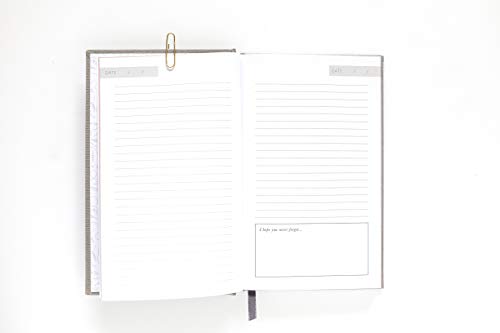
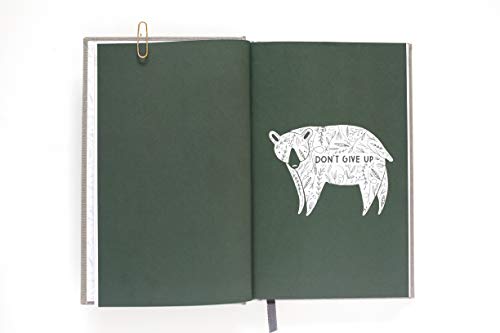
Letters to You: A Modern Keepsake Journal and Memory Book for Parents to Write Letters to Their Children (Premium Hardcover Edition)
- Crafts, Hobbies & Home
- Crafts & Hobbies
- Scrapbooking
For grandparents who want to contribute their own layer of family history, the Grandma's Story Keepsake Journal and Grandpa's Story Keepsake Journal are structured to capture an entire lifetime of memories across guided sections — childhood, relationships, work, beliefs, and advice for future generations.
6. Retro Games, Shared Rituals, and the Power of "We've Always Done This"
Family rituals — including the games and traditions you bring forward from your own childhood — are among the most protective factors in child development.
Research published in the Journal of Family Psychology found that family routines and rituals are associated with better academic achievement, stronger social skills, and lower rates of behavioural problems in children. The content of the ritual matters less than its consistency and the sense of belonging it creates.
This is the developmental science behind board game nights, Sunday baking sessions, and the annual rewatching of a film your parents watched with you. When you say "we do this because I did it with my mum," you are handing your child a thread of continuity that connects them to something larger than the present moment.
Families that eat together, play together, and maintain traditions together produce children with stronger identities and better mental health outcomes.
— Journal of Family Psychology, American Psychological Association
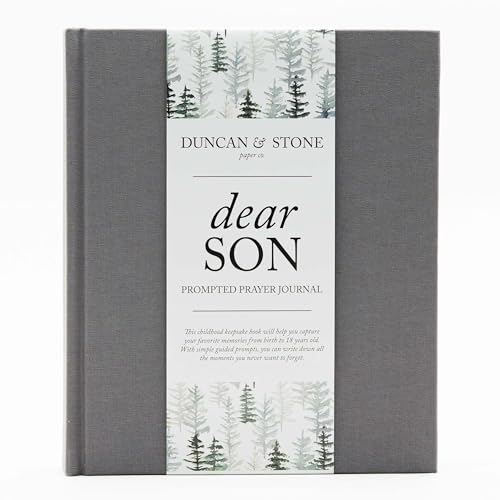


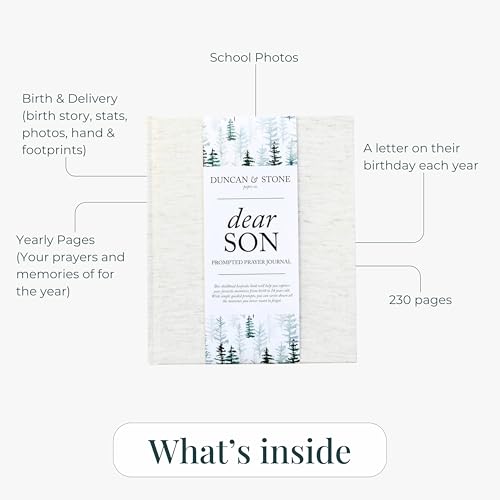
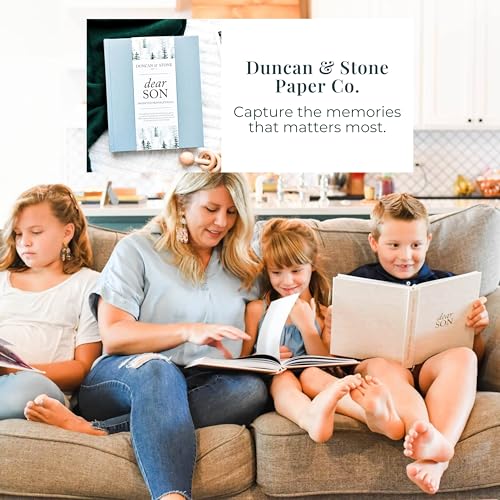
Baby Memory Book - Childhood Memory Book For Milestones - Baby Photo Album with Writing Space - Family Keepsake Journal w/Prompts (Grey,230 Pages)
- Baby Keepsake Book: This beautiful 5x8 inches baby journal memory book provides parents with the perfect place
- Durable & Stylish: With durable hardcover and paperback options, this stylish baby scrapbook journal is design
- Treasure for Years to Come: Use this baby photo book as a timeless keepsake, preserving all special moments; b
7. Memory-Sharing Across Generations: Bringing Grandparents In
The richest family narratives span more than one generation, and children who have strong relationships with grandparents show measurably better outcomes across multiple developmental domains.
A 2017 study published in the journal Child Development found that children who had close, involved grandparents showed lower rates of depression and anxiety, and higher levels of prosocial behaviour. The mechanism, again, is the intergenerational narrative: a child who knows their grandparents' stories has a longer, more stable sense of where they come from.
Practical strategies for weaving grandparents into your memory-sharing practice:
Comparison Table: Memory-Sharing Approaches by Age and Method
| Approach | Best Age Range | Primary Benefits | Main Challenges | Recommended Product | Price Range |
|---|---|---|---|---|---|
| Oral storytelling at bedtime | 0–12 years | Language development, emotional bonding, identity building | Consistency required; memories fade over time | Mom's Story Keepsake Journal | $14 |
| Guided memory journals (parent/grandparent fills in) | Adults capturing for 0–17 | Permanent record; structured prompts aid recall | Requires sustained effort over time | Family Legacy Memory Journal | $19.99 |
| Baby milestone + memory books | 0–3 years | Captures early years in real time; parallel parent stories | Best started early; harder to backfill | Baby Memory Book by Duncan & Stone | $36.97 |
| Grandparent story journals | All ages (grandchildren 3+) | Multi-generational narrative; irreplaceable once grandparents are gone | Requires grandparent buy-in and time | Grandma's Story Journal | $13.12 |
| Letter-writing to children | All ages | Deeply personal; children can read at their own pace | Blank page can feel daunting | Letters to You Keepsake Journal | $14.88 |
| Analogue play rituals (board games, outdoor play) | 3–12 years | Builds shared experience; reinforces family narrative through action | Screen competition; scheduling pressure | Grandpa's Story Journal (pair with play ritual) | $13.12 |
Expert Insights
The memories you carry from your own childhood are not just yours. They are your children's inheritance — a map of who they come from and, by extension, who they might become. You do not need to be a natural storyteller or a scrapbooking enthusiast. You need ten minutes at bedtime, a willingness to be honest, and the understanding that the imperfect, funny, sometimes painful stories are the ones that matter most.
The most quotable truth in all of this research is simple: children who know where they come from are better equipped to face where they are going.
If this guide resonated with you, save it, share it with a grandparent, or start tonight with one story from your childhood. That is enough.
Sources & References
- Duke, M. P., Lazarus, A., & Fivush, R. "Knowledge of Family History as a Clinically Useful Index of Psychological Well-being and Prognosis." Psychotherapy, 2008.
- Fivush, R., Bohanek, J. G., & Duke, M. "The Intergenerational Self: Subjective Perspective and Family History." In F. Sani (Ed.), Self Continuity, 2008. Psychology Press.
- American Academy of Pediatrics. "The Power of Play: A Pediatric Role in Enhancing Development in Young Children." Pediatrics, 2018. https://doi.org/10.1542/peds.2018-2058
- American Academy of Pediatrics. "Reading Aloud to Children: The Evidence." Pediatrics, 2014. https://doi.org/10.1542/peds.2014-1384
- National Literacy Trust. "Literacy and Life Chances." Annual Research Report, 2023. https://literacytrust.org.uk
- Fiese, B. H., et al. "A Review of 50 Years of Research on Naturally Occurring Family Routines and Rituals." Journal of Family Psychology, 2002. Vol. 16(4), 381–390.
- Griggs, J., et al. "Grandparental Involvement and Child Wellbeing." Child Development, 2017. Vol. 88(2).
- Siegel, D. J., & Bryson, T. P. The Whole-Brain Child. Delacorte Press, 2011.
- Yogman, M., et al. "The Power of Play." AAP Council on Communications and Media, 2018.
Frequently Asked Questions
Why does sharing family stories improve children's resilience?
At what age should I start sharing childhood memories with my child?
How do I get my child interested in stories from my childhood when they seem uninterested?
Is it okay to share difficult or sad memories from my childhood?
What is the best way to preserve family memories for my children?
How do I involve grandparents in sharing family history with my children?
How much screen time should I replace with memory-sharing activities?
Was this helpful?
Thanks — your feedback helps us pick what to write next.