Why Financial Learning Starts Earlier Than You Think
Teaching kids smart money habits from an early age—ideally before age 7—sets the neurological and behavioural foundation for lifelong financial wellbeing.

In this article
There's a quiet money crisis brewing in your home—and it has nothing to do with your bank account. According to the TIAA Institute–GFLEC Personal Finance Index, only 52% of American adults can correctly answer basic financial literacy questions. That means roughly half of all parents are trying to teach skills they were never fully taught themselves. The good news? The window to change that for your child is wide open right now.
Whether your little one is still counting pennies on the kitchen floor or your 10-year-old is already asking about "investing," this guide will help you meet them exactly where they are.
Here's what you'll understand by the end:
1. Why Financial Learning Starts Earlier Than You Think
The most important thing to know about kids and money is this: the habits and attitudes your child develops before age 7 are the ones most likely to stick into adulthood. A landmark study commissioned by the UK's Money and Pensions Service (MaPS) and conducted by researchers at the University of Cambridge found that children's money habits are largely formed by age 7—not 17, not 27. Seven.
This isn't about drilling your kindergartner on compound interest. It's about building the emotional and cognitive scaffolding that makes financial decision-making feel natural later on.
What's Happening in the Brain
Between ages 3 and 7, children are developing executive function—the cluster of brain skills that governs impulse control, planning, and delayed gratification. These are the exact same skills that underpin every smart financial decision an adult will ever make. When you hand your 4-year-old three coins and ask them to choose which jar to put each one in, you're not just playing a game. You're literally building neural pathways.
What "Too Early" Actually Looks Like
There is no "too early" for financial exposure—only age-inappropriate methods. A 2-year-old can feel the weight of a coin. A 3-year-old can understand "we don't have enough for that today." A 5-year-old can grasp that money comes from work and that it runs out.
2. The Save, Spend, Share Framework: Your Family's Financial GPS
The single most effective framework for teaching kids ages 3–12 about money is the Save, Spend, Share model—and the research behind it is robust. This three-bucket approach works because it mirrors the way healthy adult financial behaviour actually functions: we allocate, we prioritise, we give back.
Talking to children about money and involving them in financial decisions from an early age is one of the most important things parents can do to set them up for financial wellbeing in adulthood.
— Money and Pensions Service (MaPS), UK (2019)
How Each Bucket Works
Save teaches deferred gratification. Money in this jar isn't touched until a specific goal is reached—a toy, a book, a day out. This is where your child learns that patience has a payoff.
Spend teaches budgeting. This is guilt-free money for small, everyday choices—a treat at the shop, a sticker pack, a small toy. Making their own spending decisions (even imperfect ones) is how children learn cause and effect with money.
Share teaches empathy and civic responsibility. Whether it's a local food bank, an animal shelter, or a school fundraiser, children who practise giving regularly show higher levels of emotional intelligence and community awareness.

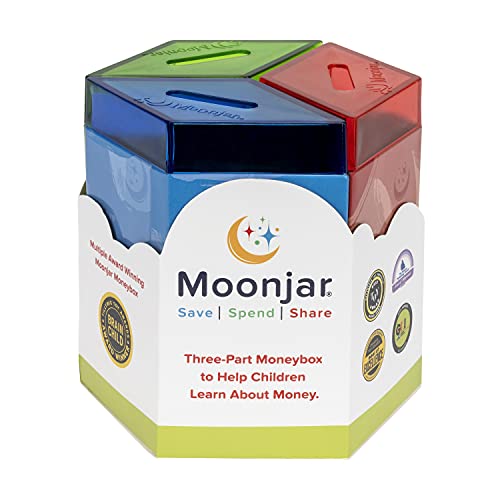
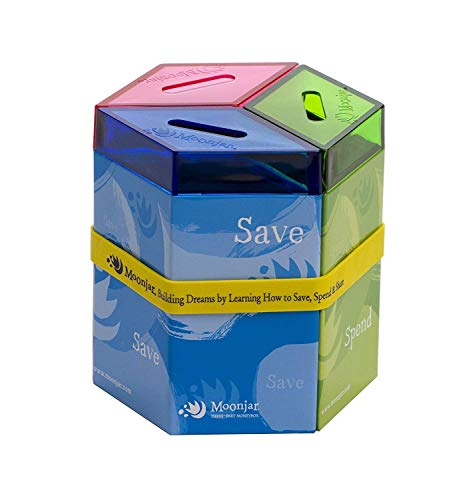
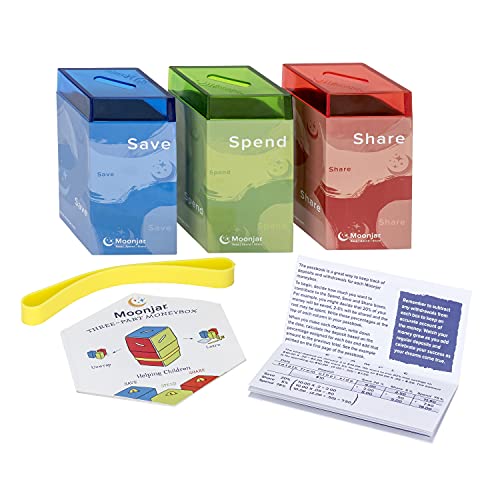
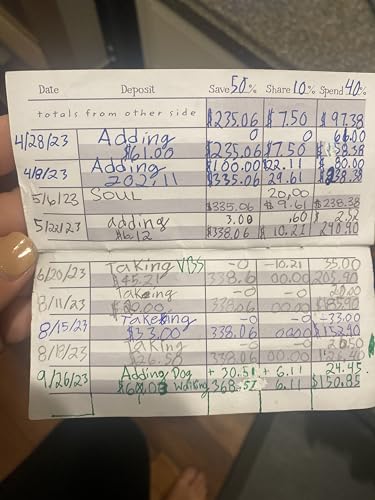
Classic MoonJar Award Winning SAVE SPEND SHARE Educational Tin Toy Bank with Passbook| Moneybox for Children 3+ Years | Teaches Responsible Money Management & Financial Skills
- Multiple Award-Winning 3 In 1 Moneybox: Moonjar Has A Trio Of Diamond Shaped, Tin Canisters That Have Either S
- Perfect For Small Hands: The Moonjar Canisters Are Diamond Shaped And Unbreakable To Enable Small Hands To Saf
- Color-Coded Acrylic Lids: Each Canister Lid Is Color-Coded To Make It Easier To Identify The Save, Spend Or Sh
The Classic MoonJar Save Spend Share Bank is one of the most widely recommended physical tools for this framework. Its three colour-coded tin canisters make the abstract concept of allocation completely concrete—your child can see their money sorted into categories. The included passbook even lets older children record transactions, adding a layer of financial record-keeping.
3. Age-by-Age Money Milestones: What to Teach and When
Financial literacy isn't a single lesson—it's a developmental curriculum that evolves alongside your child's cognitive and emotional growth. Knowing what's appropriate at each stage prevents both under-stimulation (too simple, so they disengage) and overwhelm (too complex, so they shut down).
Ages 3–5: The Concrete Stage
At this age, children are purely concrete thinkers. Money is interesting because it's shiny and physical—not because it represents value. Your job is to make the physical experience rich.
The Maxwill Save Spend Share Block Banks are ideal here—their clear plastic construction lets even a 3-year-old see their coins through the wall of the bank, making the accumulation tangible and exciting.
Ages 6–8: The Goal-Setting Stage
Children this age can understand time, which unlocks the concept of saving for something. They can also grasp fairness, which makes the "Share" bucket emotionally meaningful.
Ages 9–12: The Abstract Stage
Older children can now grasp concepts like interest, value over time, and even basic investing. This is the stage where financial conversations can get genuinely exciting.
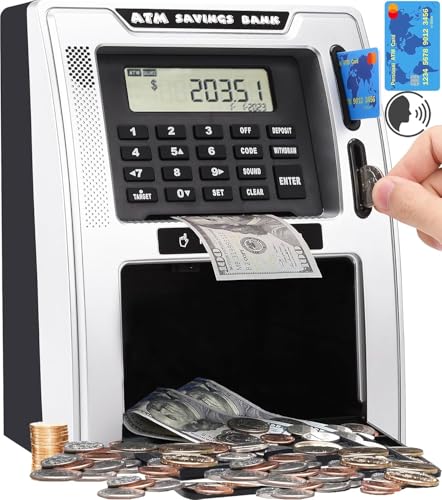
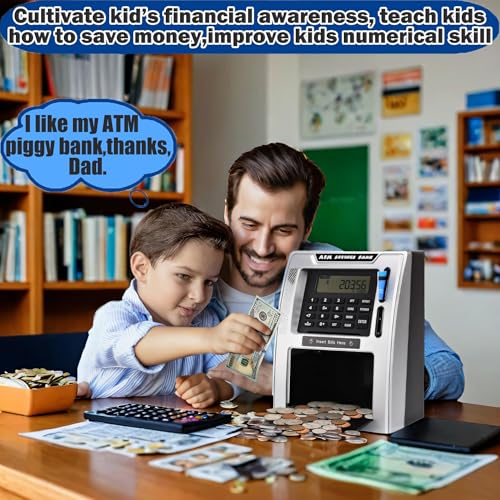
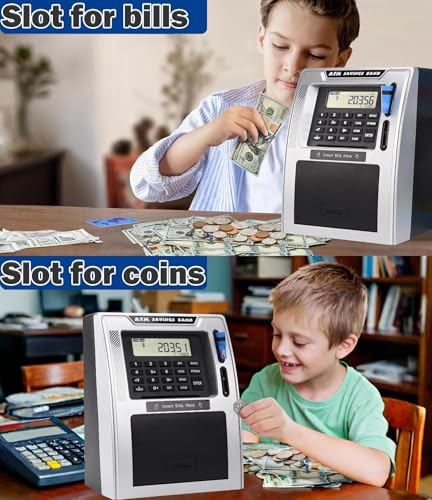
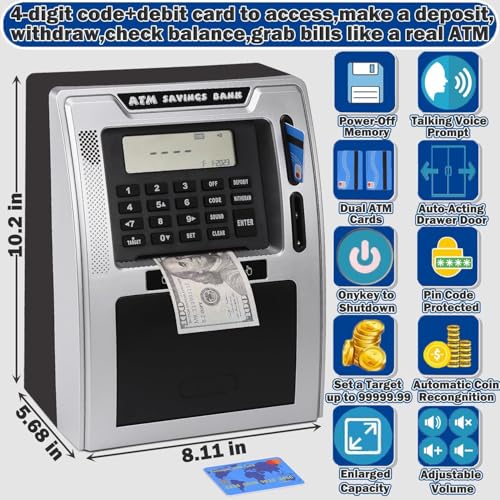
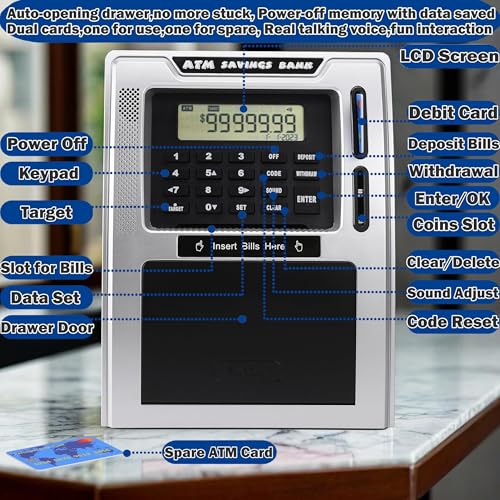
Fishboy Talking ATM Piggy Bank for Kids with Dual Debit Cards, Power-Off Memory, Auto-Opening Drawer for Real Money for Boys, Onekey Shutdown, Bill Feeder, Coin Recognition, Balance Calculator Machine
- 🔥【Auto-Opening Drawer, No More Stuck】--Kids hate getting money stuck, while when your kids make a withdrawal f
- 🔥【Power-Off Memory, Never Lose a Penny! Easy for Battery-Swap】--Worried about losing savings record when batte
- 🔥【Dual ATM Cards for Double Security, Never Lose Access to your Savings】--Never worry about lost cards again!
The Fishboy Talking ATM Piggy Bank is a brilliant bridge tool for this age group. With dual debit cards, PIN security, a balance calculator, and auto-opening drawer, it mimics real banking interactions in a completely safe, playful environment. Children aged 8–12 are particularly captivated by the "real bank" feel, and the power-off memory feature means their savings record is never lost—an important lesson in itself about financial record-keeping.
4. The Power of Hands-On Tools: Why Physical Beats Digital for Young Learners
In a world of tap-to-pay and invisible digital transactions, physical money tools are more important for children—not less. The reason is neurological: young children learn through multi-sensory experience. The weight of a coin, the sound of it dropping into a jar, the visual satisfaction of watching savings grow—these sensory inputs encode financial concepts far more deeply than any app can.
Children learn best through play and hands-on experience. When financial concepts are embedded in physical, tactile activities, they are processed more deeply and retained longer.
— American Academy of Pediatrics (AAP), Policy Statement on Learning Through Play (2018)
Piggy Banks Are Not Just Cute—They're Cognitive Tools
The act of physically placing money into a container—choosing which container, handling the coins, hearing the clink—activates the brain's reward circuitry in a way that watching a digital number change simply doesn't. This is why physical piggy banks remain one of the most evidence-aligned financial learning tools available for under-10s.


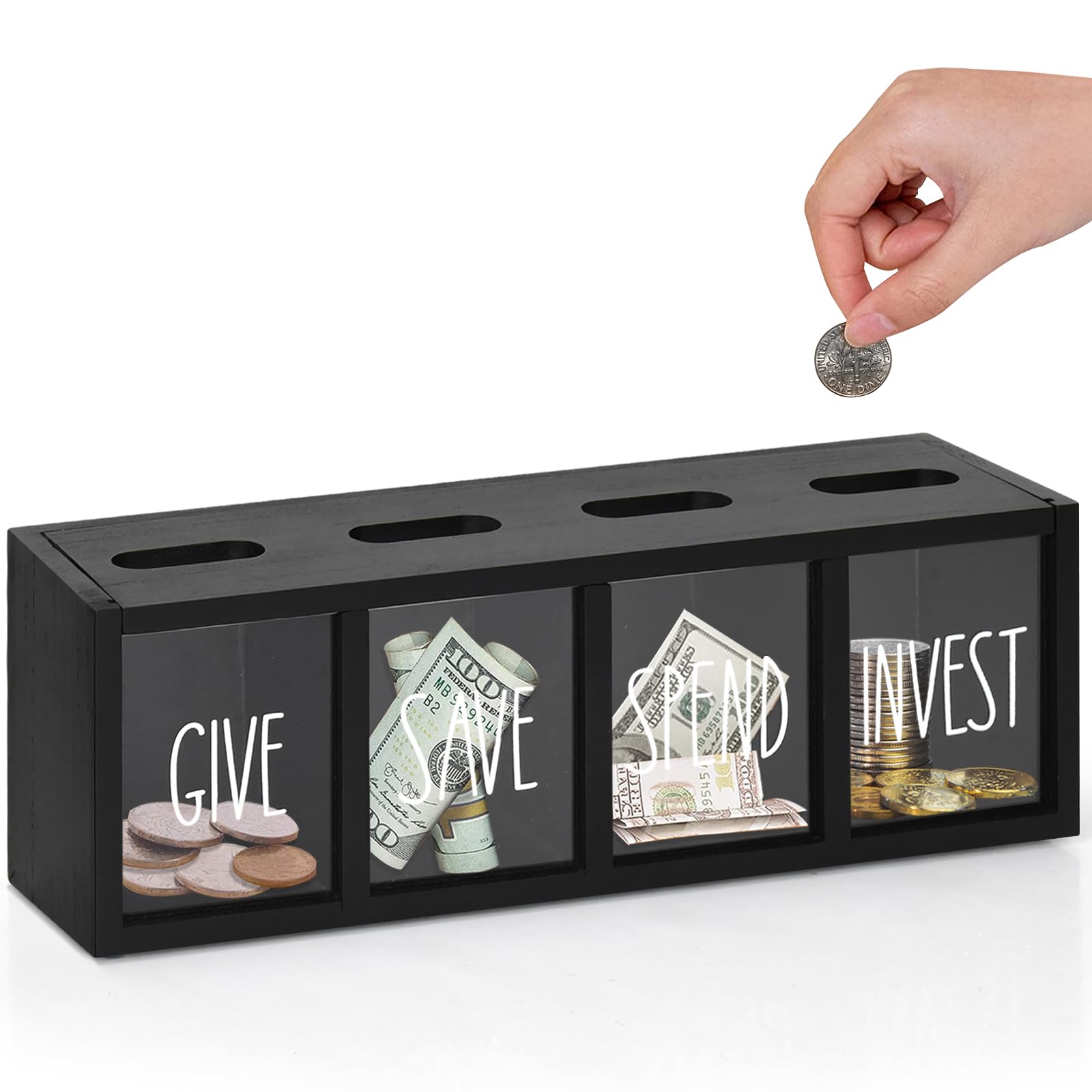
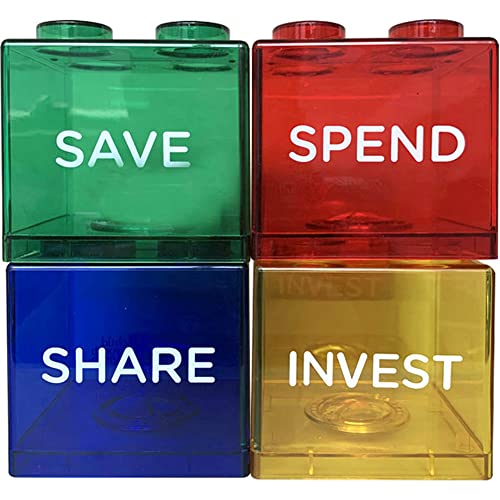
WAYUTO 4pcs Translucent Piggy Bank Set Colorful Coin Block Box Adorable Saving Money Cash Bills Jar Adults Kids Decorative Birthday Festival Financial Management Gifts Unique Educational Game
- View Funds Easier: The translucent small square block piggy bank, allows you to see how much we've saved so fa
- Durable & Perfect Size: Our piggy bank is made of translucent plastic with smooth finish sturdiness and durabi
- Multi-function: The money bank with a simple yet effective design is a classic decorative addition to the kids
The WAYUTO 4-Piece Translucent Piggy Bank Set takes this a step further with its see-through walls. Children can literally watch their savings grow, which provides a continuous visual reward that reinforces the saving behaviour. The four labelled compartments—Save, Spend, Invest, Share—also introduce the concept of investing earlier than most tools do, in a completely age-accessible way.
DIY Craft Banks: Learning Through Making
There's a second layer of power in tools that children build themselves. When a child assembles and paints their own piggy bank, they develop psychological ownership—they're far more motivated to fill something they created than something handed to them pre-made.

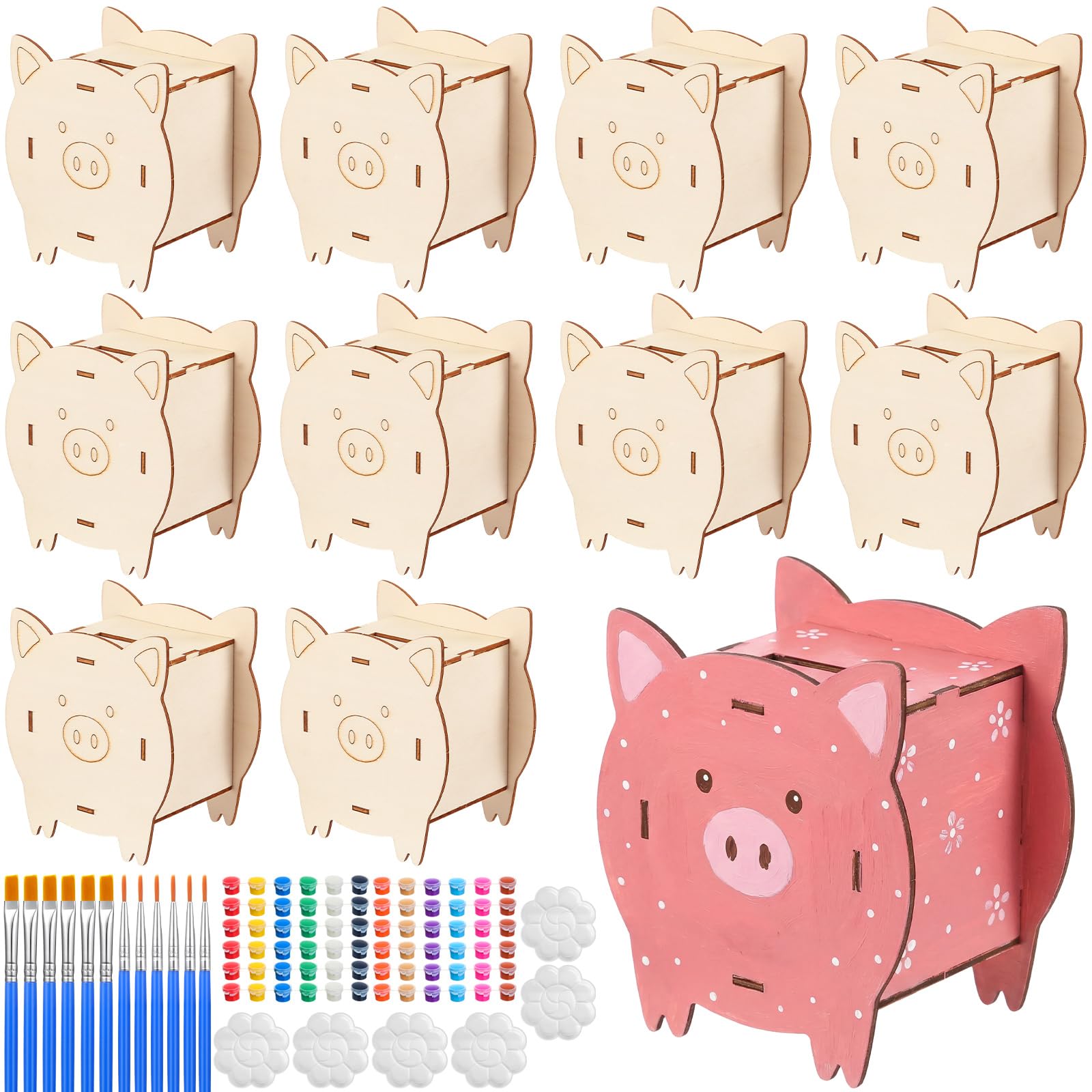
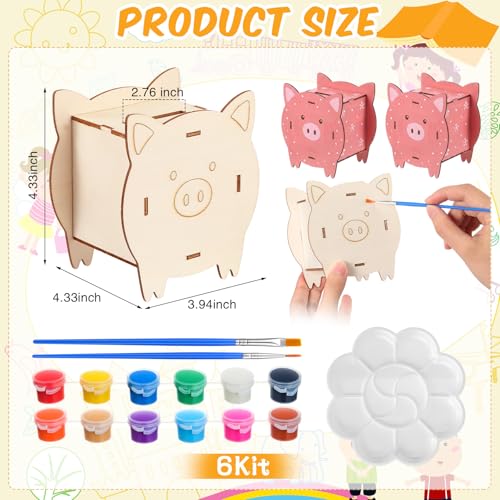
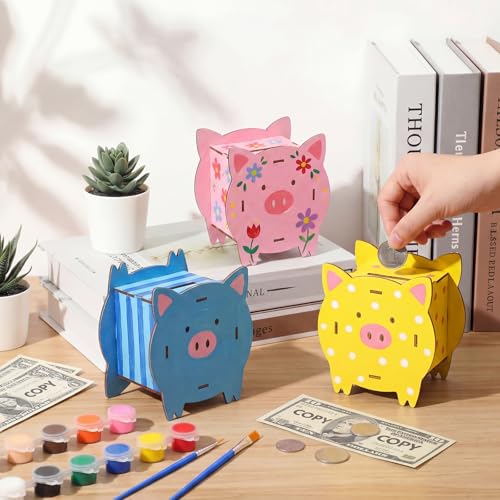
Weysat 12 Set DIY Wooden Piggy Banks Kit Unfinished Pig Coin Banks Craft with Paint Strips Brushes Palette Money Saving Box Small Change Container Art Craft Fo Birthday Home Festival Gift
- Sufficient DIY Craft Kit: this set includes 12 wooden piggy bank assembly kits and 6 paint sets; Each paint se
- Wooden Assembly Design: the piggy banks are made from lightweight wooden panels designed for manual assembly;
- Compact and Decorative Size: each assembled piggy bank measures approximately 11 × 10 × 7 cm (4.33 × 3.94 × 2.
The Weysat 12-Set DIY Wooden Piggy Bank Kit is perfect for this. Each kit includes wooden panels for assembly plus paints, brushes, and a mixing palette. For a classroom, birthday party, or rainy-day activity, this set lets up to 12 children each create a personalised bank—making the financial lesson inseparable from the creative experience.
5. Money Conversations at Home: How to Talk About It Without the Anxiety
One of the most powerful predictors of a child's financial literacy isn't their school curriculum—it's whether their parents talk openly about money at home. Yet for many families, money remains a taboo topic, shrouded in anxiety, secrecy, or shame. Breaking that pattern is one of the most valuable gifts you can give your child.
Why Parents Go Silent—and Why It Backfires
Most adults grew up in homes where "we don't talk about money." That silence doesn't protect children—it leaves them to fill the gap with anxiety, magical thinking, or unrealistic expectations. Research from Cambridge University's Faculty of Education shows that children who are excluded from money conversations are more likely to develop either avoidant or impulsive financial behaviours in adulthood.
Scripts That Actually Work
You don't need to share your salary or explain your mortgage. You just need to be honest at an age-appropriate level.
The Maxwill Save Spend Share Block Banks can serve as a conversation starter in themselves—place them somewhere visible in your home and let children see you interact with the concept of allocation too.
6. Building Lifelong Habits: From Pocket Money to Financial Independence
The ultimate goal of all this early financial education isn't to raise a child who hoards pennies—it's to raise an adult who makes confident, values-aligned financial decisions. That transition from "pocket money" thinking to genuine financial independence happens gradually, and the habits you build now are the runway it launches from.
The Allowance Debate: Chore-Based vs. Unconditional
This is one of the most hotly debated topics in family financial education, and the evidence is genuinely mixed. Here's what we know:
Chore-linked allowances teach that money comes from work—a valuable lesson. But they can also create transactional thinking ("I'll only help if I'm paid") that undermines family cooperation.
Unconditional allowances teach budgeting and allocation without conditional strings—but they miss the work-money connection.
The evidence-informed middle ground, recommended by many financial educators, is a hybrid model: some tasks are simply family responsibilities (no pay), while other "above and beyond" tasks earn bonus money. This preserves both the work ethic and the budgeting practice.
Teaching the Concept of "Enough"
One of the most underrated financial lessons is sufficiency thinking—the idea that "enough" is a legitimate and healthy financial goal, not a consolation prize. Children who grow up understanding that contentment is a skill—not a personality flaw—are less vulnerable to lifestyle inflation and consumer debt as adults.
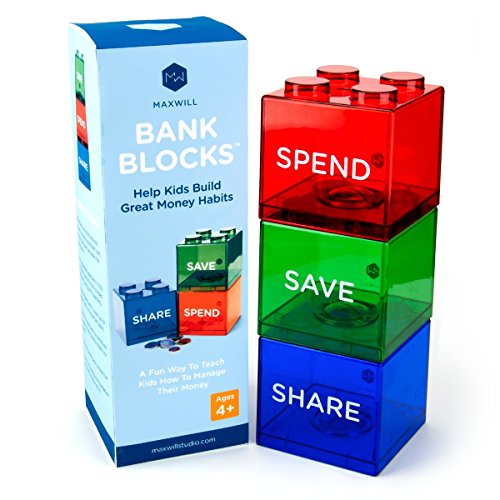
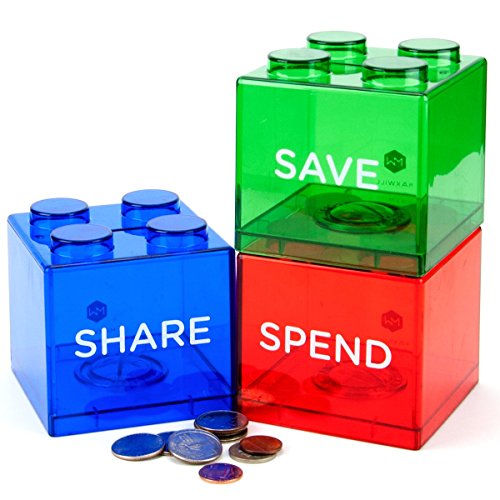
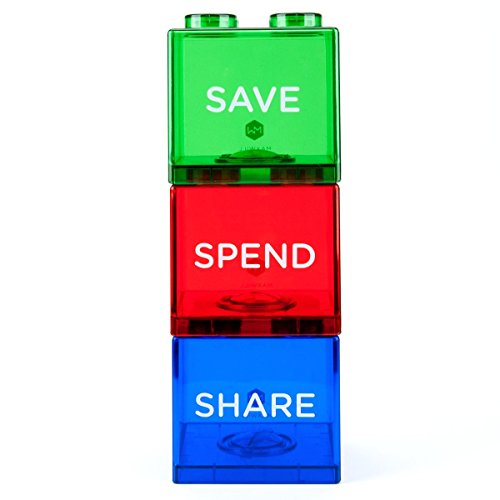
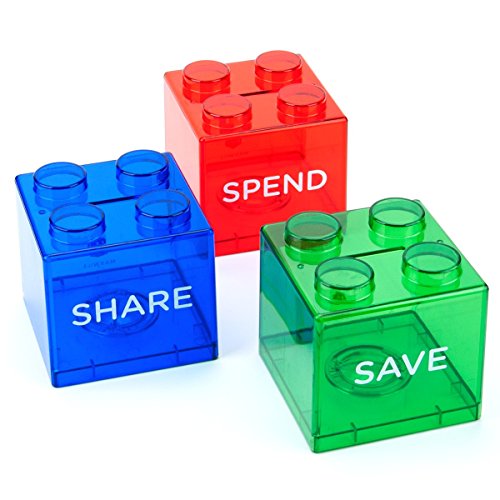
Save Spend Share Piggy Bank for Kids - Clear Transparent Plastic Coin Banks for Boys & Girls - Teach Children About Giving & Saving Money - Block Banks by Maxwill
- Helps Build Smart Money Habits- Bank Blocks are designed to help Lego loving kids develop long-term smart mone
- Encourages Saving & Charity - These plastic piggy banks for kids encourage saving, contribution, sharing and h
- Teach Kids About Money - The save spend share bank system is designed to teach kids money management and budge
The Maxwill Save Spend Share Block Banks make this concept visual: when the Spend jar is full, you have "enough" spending money. When the Save jar hits your goal, you have "enough" to buy what you wanted. The physical fullness of the jar becomes a metaphor for financial sufficiency.
For families with multiple children, the Hushee 16-Pack Clear Piggy Banks offer an economical way to give every child their own saving vessel—with the transparent design providing that all-important visual motivation to keep adding to the pot.
7. Comparison: Best Money Tools by Age, Goal & Learning Style
| Tool Type | Best Age Range | Primary Learning Goal | Key Benefit | Main Limitation | Recommended Product | Price Range |
|---|---|---|---|---|---|---|
| Classic 3-Jar Tin Bank | 3–8 years | Save/Spend/Share allocation | Tactile, colour-coded, includes passbook | Coins only, no visual accumulation | Classic MoonJar Tin Bank | ~$19 |
| DIY Craft Piggy Bank | 4–10 years | Ownership & creative engagement | Builds psychological investment | Single compartment, no allocation system | Weysat DIY Wooden Piggy Bank Kit | ~$30 |
| Translucent 4-Jar Set | 4–10 years | Visual savings motivation | See-through walls show progress; includes Invest jar | Smaller capacity per jar | WAYUTO Translucent Piggy Bank Set | ~$21 |
| Clear Block Banks (3-jar) | 5–10 years | Save/Spend/Share + goal setting | LEGO-style appeal, stackable, durable plastic | Fewer features than ATM-style banks | Maxwill Save Spend Share Block Banks | ~$15 |
| Bulk Clear Piggy Banks | 3–14 years | Individual saving motivation | 16-pack value; great for classrooms/siblings | Single compartment only | Hushee 16-Pack Clear Piggy Banks | ~$40 |
| Talking ATM Bank | 7–12 years | Real banking simulation | PIN security, balance calculator, dual cards | No allocation system; best as supplement | Fishboy Talking ATM Piggy Bank | ~$30 |
8. Expert Insights on Children and Financial Literacy
Conclusion
Raising a financially confident child doesn't require a finance degree, a large income, or a perfect money history of your own. It requires presence, honesty, and a willingness to make money a normal, even joyful, part of your family's daily conversation. The tools are simple—a few jars, a handful of coins, a weekly ritual of counting and talking. The impact, compounded over years, is extraordinary.
Every time your child drops a coin into their Save jar, they're practising patience. Every time they choose what to do with their Spend money, they're practising agency. Every time they put something in the Share jar, they're practising empathy. These aren't just financial skills. They're life skills—and you're the one who gets to teach them.
The best investment you'll ever make is the one you make in your child's financial future—starting today.
If this guide helped you, save it, share it with another parent, or bookmark it for the next stage of your child's money journey. You've got this.
Sources & References
- Money and Pensions Service (MaPS) / University of Cambridge. "Habit Formation and Learning in Young Children." 2019. https://mascdn.azureedge.net/cms/the-money-advice-service-habit-formation-and-learning-in-young-children-may2013.pdf
- TIAA Institute – Global Financial Literacy Excellence Center (GFLEC). "Personal Finance Index (P-Fin Index)." 2023. https://gflec.org/initiatives/personal-finance-index/
- Consumer Financial Protection Bureau (CFPB). "Money as You Grow: Building Financial Capability in Children and Youth." 2016. https://www.consumerfinance.gov/consumer-tools/money-as-you-grow/
- American Academy of Pediatrics (AAP). "The Power of Play: A Pediatric Role in Enhancing Development in Young Children." Pediatrics, 2018. https://doi.org/10.1542/peds.2018-2058
- Kobliner, Beth. Make Your Kid a Money Genius (Even If You're Not). Simon & Schuster, 2017.
- Lusardi, Annamaria. "Financial Literacy and the Need for Financial Education: Evidence and Implications." Swiss Journal of Economics and Statistics, 2019. https://doi.org/10.1186/s41937-019-0027-5
- Mischel, Walter. The Marshmallow Test: Mastering Self-Control. Little, Brown and Company, 2014.
- Whitebread, David & Bingham, Sue. "Habit Formation and Learning in Young Children." Money Advice Service, University of Cambridge, 2013.
Frequently Asked Questions
At what age should I start giving my child an allowance?
How much allowance is appropriate for my child's age?
Should I tie allowance to chores?
My child keeps raiding their piggy bank. What should I do?
How do I explain "we can't afford that" without causing anxiety?
What's the best way to introduce the concept of investing to kids?
Are digital money apps better than physical piggy banks for kids?
Was this helpful?
Thanks — your feedback helps us pick what to write next.