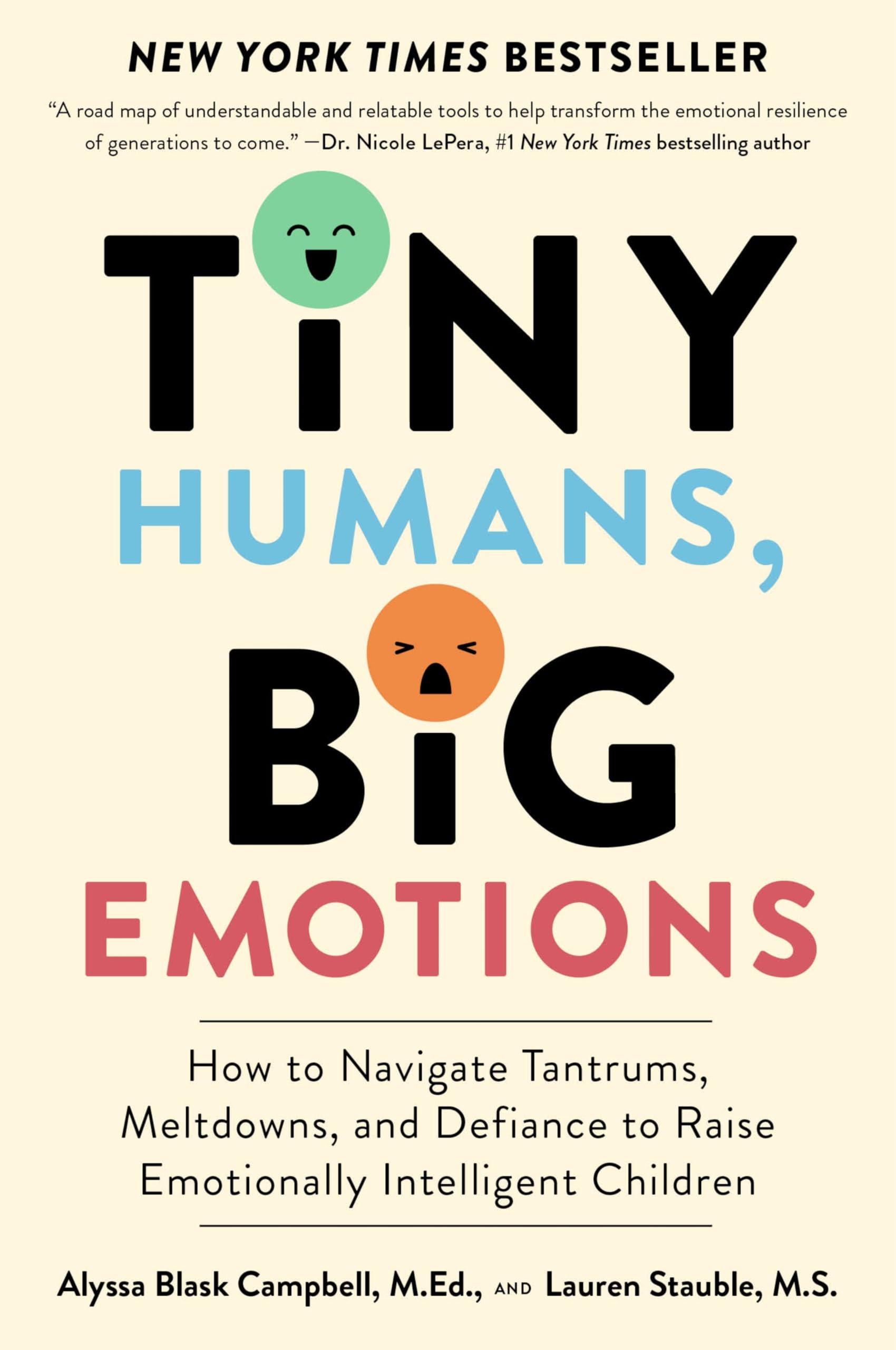
Positive Parenting and Gentle Discipline: A Complete Guide
Positive parenting builds stronger, more cooperative kids by pairing warm connection with consistent, empathetic guidance rather than punishment or control.
In this article
Picture this: it's 6pm, your four year old has just tipped a bowl of pasta on the floor, your eight year old is sobbing over homework, and you are running on three hours of sleep. In that moment, the instinct to snap, threaten, or simply give up is entirely human.
But here is what decades of child development research tell us: the way you respond in that exact moment shapes how your child's brain learns to handle frustration, conflict, and big emotions for years to come. According to the American Academy of Pediatrics (AAP), children who grow up with warm, responsive caregivers show better self regulation, stronger social skills, and lower rates of anxiety and behaviour problems throughout childhood and into adulthood.
This guide will help you understand:
1. What Positive Parenting Actually Means
Positive parenting is not about being endlessly patient, never raising your voice, or letting children run the household. It is a relationship style grounded in mutual respect, clear communication, and the understanding that children are still developing the brain circuits they need to regulate themselves.
The core idea, supported by decades of attachment research, is simple: children who feel securely connected to their caregivers are more willing to cooperate, more resilient in the face of challenge, and better able to learn from mistakes. The emotional relationship is not a nice extra. It is the mechanism through which all guidance actually works.
The five foundations

The Whole-Brain Child: 12 Revolutionary Strategies to Nurture Your Child's Developing Mind
- Health, Fitness & Dieting
- Psychology & Counseling
- Child Psychology
2. Gentle Discipline: Boundaries Without Punishment
Gentle discipline is frequently misread as no discipline. It is not. It means setting firm, consistent limits while responding to the child behind the behaviour rather than just the behaviour itself.
Traditional punishment (yelling, threats, time-outs used punitively, physical punishment) works in the short term because it stops behaviour through fear. The problem, as the AAP made clear in its updated guidance in 2018, is that it does not teach the replacement behaviour, it damages the relationship, and it models exactly the kind of aggressive problem solving we want children to avoid.
Gentle discipline works differently. It stops the behaviour AND teaches.
Natural and logical consequences
Natural consequences are what happen when you don't intervene. Your child refuses to wear a coat; they get cold. That is a real world lesson with no parental lecture required.
Logical consequences are ones you set up that are directly related to the behaviour. Your child throws a toy; the toy gets put away for the rest of the day. The consequence makes sense.
Both are more effective teachers than arbitrary punishment because children can draw a clear line between their action and the outcome.
The role of clear limits
Gentle discipline still requires you to hold firm. The gentleness is in your tone and your relationship, not in whether boundaries exist. Children actually feel safer when adults are consistent and predictable. "No, we don't hit. Let me show you what to do when you feel that angry" is gentle and firm at the same time.
If you find yourself struggling with your own emotional reactions in these moments, this practical anger management guide for parents offers 44 concrete techniques for managing your triggers before they manage you.
3. Age by Age: Applying These Principles From Birth to Teens
Babies (0 to 12 months)
Responsive caregiving IS positive parenting at this stage. Picking up a crying baby does not spoil them; it builds the secure attachment that makes everything else possible. Your baby's earliest emotional milestones lay the groundwork for how they will relate to others for the rest of their lives. Understanding your baby's emotional development month by month can help you see just how much is already happening neurologically, even before language arrives.
Toddlers (1 to 3 years)
Toddler behaviour is not wilful defiance. It is developmentally appropriate exploration crashing into a brain that does not yet have a functioning prefrontal cortex. The intensity of toddler emotions is rooted in neuroscience, not naughtiness. Expect tantrums, expect "no", and expect boundary testing. Your job is to hold limits warmly and consistently, offer limited choices ("do you want the red cup or the blue cup?"), and keep routines predictable.
Primary school age (4 to 8 years)
Children at this stage are beginning to develop genuine empathy and a sense of fairness, but their emotional regulation is still very much a work in progress. This is the ideal window for problem solving conversations: "What could you do differently next time?" works here in a way it simply does not for a two year old. Children ages 5 to 8 in particular face real neurological challenges with emotion regulation, and understanding why they struggle with big feelings makes it far easier to respond with patience instead of frustration.
Tweens and teens (9 to 17 years)
The goal shifts here. Your job is less about behaviour management and more about relationship maintenance. Teens who feel genuinely heard are more likely to come to you when things go wrong. Natural and logical consequences remain useful, but collaborative problem solving (working out solutions together) becomes the main tool. Repair after conflict matters enormously at this age: "I raised my voice and that wasn't helpful. I'm sorry. Can we talk about this again?"

Raising Good Humans: A Mindful Guide to Breaking the Cycle of Reactive Parenting and Raising Kind, Confident Kids
- Relationships
- Conflict Management
- Select 1 audiobook a month from our entire collection of titles.
4. The Research Behind the Approach
The evidence for warm, responsive, non-punitive parenting is not thin or contested. It is one of the most replicated findings in developmental psychology.
A large review published in the journal Child Development found that authoritative parenting (warm and responsive, but also structured and consistent) consistently produced better outcomes across cognitive development, emotional health, and social competence compared with authoritarian (high control, low warmth) or permissive (high warmth, low structure) styles.
The WHO and UNICEF's Nurturing Care Framework, published in 2018 and updated in 2023, identified responsive caregiving as one of five essential conditions for healthy child development, placing it alongside nutrition, health, safety, and early learning.
Research also supports specific techniques. A 2021 review in JAMA Pediatrics found that positive parenting programmes reduced child behaviour problems by 35 to 40 percent on average and also reduced parental stress significantly.
Stop Yelling and Love Me More, Please Mom.: Positive Parenting Is Easier than You Think: Happy Mom, Book 1
- Parenting & Relationships
- Family Relationships
- Motherhood
5. Practical Strategies You Can Start Today
Knowing the philosophy is one thing. Having concrete tools for a Tuesday evening is another. Here are the strategies that translate most reliably from research into real family life.
Name the emotion first
Before anything else, label what you see. "You're frustrated because your sister took your toy." This is not letting the behaviour slide; it is helping the child's brain make sense of what is happening internally, which is actually the first step in calming down.
Use "when/then" framing
Instead of threats ("if you don't tidy up, no screen time"), try forward framing: "When the toys are tidied, then we can watch something together." Same boundary, completely different tone and relationship.
Offer limited choices
Control is often the trigger underneath difficult behaviour. Offering two acceptable options gives the child a sense of agency without you losing authority. "Do you want to start with reading or maths?" "Bath first or pyjamas first?"
Repair after rupture
You will not always get this right. No parent does. What matters enormously is what you do after you yell, or overreact, or say something you regret. A genuine repair ("I lost my temper and I shouldn't have. I'm sorry.") is not weakness; it is some of the most powerful modelling you will ever do.
Use descriptive praise
"Good job" tells a child nothing. "I noticed you shared your snack without being asked. That was kind." That version tells them exactly what they did and why it mattered.
Parenting on Purpose - Positive Parenting Tools for Modern Families: Parenting With Purpose for Calm, Confident & Connected Kids at Every Age
- Kindle Store
- Kindle eBooks
- Parenting & Relationships
6. Common Mistakes and How to Avoid Them
Even well intentioned parents fall into predictable traps. Awareness is most of the fix.
Inconsistency
Children need consistency more than perfection. Saying "no" six times and then giving in on the seventh teaches persistence in the face of refusal, not compliance. If the boundary matters, hold it every time.
Emotion dismissal
"You're fine, stop crying" is one of the most common and most counterproductive things parents say. It teaches children that their emotional experience is wrong or shameful. Instead: "I can see that really hurts." That is it. You do not have to fix it. Just validate it.
Rescuing too quickly
Children need the experience of struggle to develop resilience. Jumping in the moment things get hard, while loving, robs them of the chance to discover they can cope. Stay nearby, stay warm, but let them work through it.
Over-explaining to young children
Long lectures lose toddlers and preschoolers entirely. Keep guidance short, concrete, and calm. "We don't hit. Use words." Three seconds. Done.
Inconsistent co parenting
When caregivers send different messages, children learn to work the divide rather than internalise the guidance. Getting on the same page with your parenting partner, even roughly, makes the whole system work better.


8 Errors Parents Make and How to Avoid Them: Parenting Book, Practical Guide for Christian Parenting, Positive Parenting Book for Parents
- Parenting & Relationships
- Image Unavailable Image not available forColor:
- Publisher : Canon Press
| Parenting Approach | Core Style | Warmth Level | Boundary Setting | Best Used When | Recommended Resource |
|---|---|---|---|---|---|
| Positive / Authoritative | Warm + structured | High | Consistent, explained | Foundation style across all ages | Parenting on Purpose |
| Gentle / Attachment-led | Empathy first, natural consequences | Very high | Flexible but present | Highly sensitive children, early years | The Whole-Brain Child |
| Mindful parenting | Pause and respond, not react | High | Situation specific | Parents who tend to react impulsively | Raising Good Humans |
| Permissive | Warm, few rules | High | Low or absent | Not recommended as sole approach | Stop Yelling and Love Me More |
| Authoritarian | Rule-focused, low warmth | Low | Very rigid | Short term compliance only | Practical Anger Management for Parents |
Expert Insights
Conclusion
Positive parenting is not a system you implement. It is a way of seeing your child. When you lead with curiosity instead of frustration, with connection instead of control, and with warmth instead of fear, you are not just managing behaviour in the moment. You are building the neural pathways, the emotional vocabulary, and the relational trust that will carry your child through adolescence and beyond.
You will get it wrong sometimes. So will I. So does every parent who has ever tried. The goal is not perfection. It is repair. It is showing up again the next morning and trying a different way.
If there is one thing I hope you take from this article, it is this: your relationship with your child is the most powerful parenting tool you will ever have. Protect it, invest in it, and come back to it every time you lose the thread.
Save this article if it was useful, and share it with a parent who needs it today.
Sources & References
- American Academy of Pediatrics. "Effective Discipline to Raise Healthy Children." Pediatrics, 2018. https://publications.aap.org/pediatrics/article/142/6/e20183112/38577
- World Health Organization and UNICEF. "Nurturing Care for Early Childhood Development Framework." 2018, updated 2023. https://www.who.int/publications/i/item/9789241514064
- Center on the Developing Child, Harvard University. "Serve and Return Interaction Shapes Brain Circuitry." 2023. https://developingchild.harvard.edu
- Pinquart, M. "Associations of Parenting Styles and Dimensions with Academic Achievement in Children and Adolescents." Educational Psychology Review, 2016.
- Kaminski, J.W. et al. "A Meta-analytic Review of Components Associated With Parent Training Programme Effectiveness." Journal of Abnormal Child Psychology, 2008.
- Chu, A.T. and Lieberman, A.F. "Clinical Implications of Traumatic Stress from Birth to Age Five." Annual Review of Psychology, 2010.
- Sanders, M.R. "Triple P — Positive Parenting Program: Towards an Empirically Validated Multilevel Parenting and Family Support Strategy for the Prevention of Behavior and Emotional Problems in Children." Clinical Child and Family Psychology Review, 1999.
- American Academy of Pediatrics. "HealthyChildren.org: Discipline and Your Child." 2023. https://www.healthychildren.org
Frequently Asked Questions
Is gentle discipline the same as permissive parenting?
What if my child just doesn't respond to positive parenting?
Is it ever OK to raise my voice?
How do I handle public tantrums without feeling judged?
At what age can I start having problem solving conversations with my child?
Does positive parenting work for children with ADHD or additional needs?
My partner thinks I'm too soft. How do we get on the same page?
Was this helpful?
Thanks — your feedback helps us pick what to write next.