Best Kids' Probiotics and Vitamins (2026): Pediatrician Picks
Most healthy toddlers do not need a full multivitamin, but vitamin D, iron, and a well chosen probiotic can fill genuine gaps — especially for picky eaters, breastfed children, and kids recovering from antibiotics.

In this article
Here is a number that should reshape how you think about toddler supplements: according to the American Academy of Pediatrics (AAP), vitamin D deficiency affects roughly 1 in 4 children in the United States, yet most parents assume a varied diet makes supplements unnecessary. The children's supplement market now tops $5 billion globally, but a bigger market has not produced better labelling or clearer guidance for parents standing in the pharmacy aisle.
This guide cuts through the noise. As a paediatrician who fields supplement questions in clinic every single week, I want to give you the same plain answer I give parents across the consultation desk.
What you'll understand after reading:
1. Why Gut Health Matters More in the Toddler Years Than Any Other Time
The toddler gut microbiome is not a smaller version of an adult gut — it is an ecosystem still under active construction. From ages one to three, the diversity of bacterial species increases rapidly, and the patterns laid down during this window have been linked in research to immune function, allergy risk, and even mood regulation in later childhood.
Approximately 70% of the body's immune cells live in the gastrointestinal tract. That means when a toddler's gut bacteria are out of balance — after a course of antibiotics, a stomach bug, or a spell of very restricted eating — immune function dips too.
When does a toddler actually need a probiotic?
Not every child needs one every day. But consider a probiotic seriously if your toddler:
2. What to Look for in a Kids' Probiotic: Strain, CFU, and Survivability
The number printed on the front of the packet — "5 billion CFU!" — is almost meaningless without context. What matters is whether those organisms are alive when they arrive in your child's gut, and whether the strain has any research behind it.
Strains with genuine clinical evidence
Lactobacillus rhamnosus GG (LGG) is the single most studied probiotic strain in paediatric medicine. Trials published in journals including Pediatrics and The Lancet have shown it reduces the duration of antibiotic associated diarrhoea and supports immune function in children.
Lactobacillus acidophilus and Bifidobacterium lactis have solid supporting evidence for reducing constipation and improving stool consistency in toddlers.
Bacillus subtilis is a spore forming strain, meaning it survives heat and stomach acid particularly well — useful if your household is not great at remembering fridge storage.
Survivability: how to check
Look for:

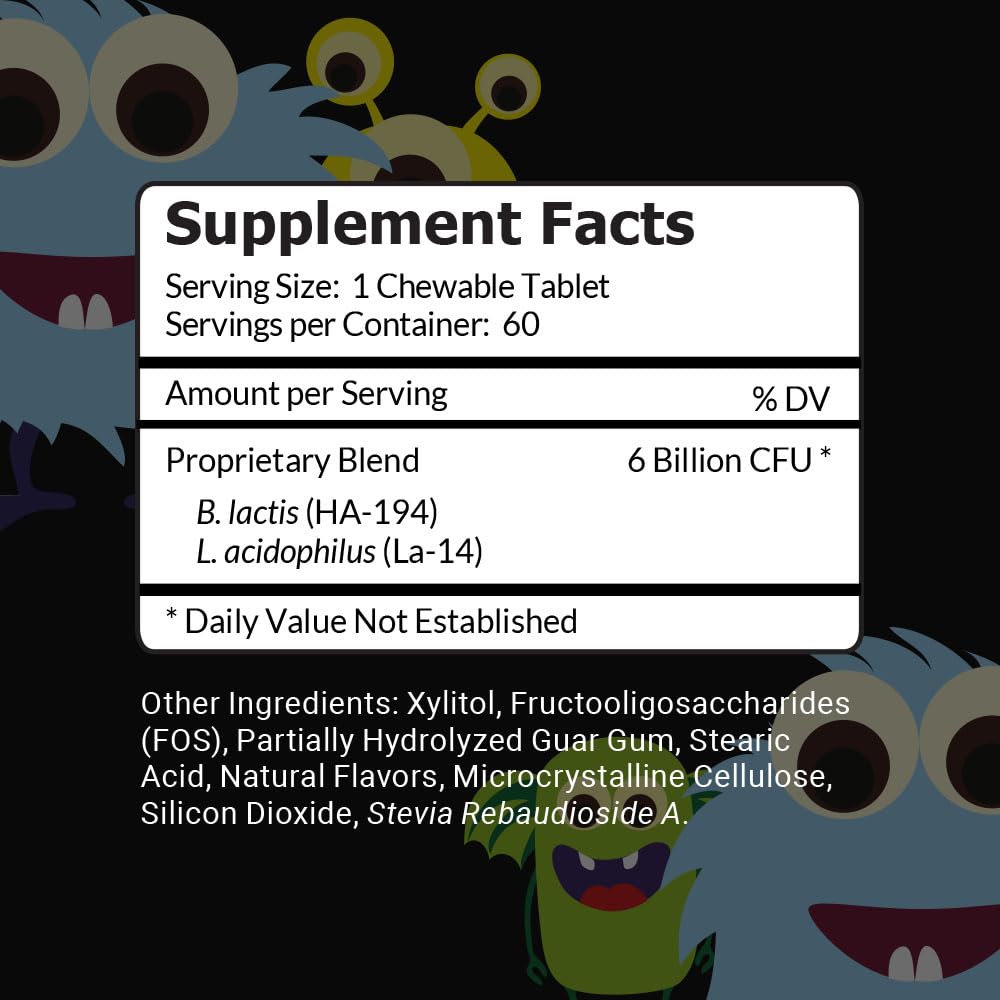



Intelligent Labs Kids/Children Probiotics 6 Billion CFU with Prebiotics, PHGG & FOS, Once-Daily Chewable, Great Taste, 10x Effectiveness, 60-Day Supply, Third-Party Verified
- ★ Boost your kid's health ★ Not all probiotics are created equal. Your child needs the right probiotics to hel
- ★ Strains that can survive acid and bile ★ Our probiotic strains are selected for their ability to survive the
- ★ Synbiotic effect of prebiotics ★ Each tablet also contains prebiotics which increases the effectiveness of p
The Intelligent Labs Kids Probiotic is a strong example here: it combines DuPont Danisco and Lallemand sourced strains, uses an Oxyfree desiccant system to keep oxygen inside the bottle below 0.01%, and pairs the bacteria with both PHGG and FOS prebiotics. That combination is what researchers mean when they call something a synbiotic.
3. Prebiotics: The Half of the Equation Parents Keep Skipping
If probiotics are the good bacteria, prebiotics are their food. Specifically, prebiotics are non digestible fibres that pass through the small intestine undigested and feed beneficial bacteria in the colon. Without adequate prebiotic intake, even a high quality probiotic supplement has limited lasting effect.
The challenge? Most toddlers do not eat enough fibre. The CDC reports that 95% of children and adults in the United States fall short of recommended daily fibre intake. For toddlers, the target is around 19 grams per day, and most are getting considerably less.


Seed PDS-08 Pediatric Daily Synbiotic - Fiber-Based Prebiotic & Probiotic for Kids - Digestive Health, Regularity, Constipation Relief - Ages 3-17 - Vegan and Shelf-Stable - 30 Sachets (30-Day Supply)
- 2-in-1 Kids Prebiotic + Probiotic: PDS-08 Pediatric Daily Synbiotic is a clinically studied synbiotic formulat
- Bridge the Fiber Gap: 95% of children and adults in the US do not reach their daily recommended fiber intake.
- Clinically Validated: In a double blind, randomized, controlled trial, PDS-08 demonstrated an increase in week
Seed's PDS-08 Pediatric Daily Synbiotic addresses this directly. Each sachet contains 5 grams of prebiotic fibre — equivalent to eating roughly 1.7 bananas — alongside 9 probiotic strains. It is one of the few paediatric products with a published double blind randomised controlled trial behind it, showing an increase in weekly bowel movements in children with low frequency. The Seed PDS-08 synbiotic is suitable from age 3, which makes it a good fit for children moving toward the top of the toddler range.
Food first: prebiotic rich foods to serve alongside any supplement
- Bananas (especially slightly underripe) - Oats - Garlic and onion (small amounts cooked into food) - Lentils and chickpeas - Asparagus
Understanding what your toddler eats and drinks matters just as much as what you supplement. If you are also thinking about how daily drinking habits affect nutrition, this article on toddler cup choices and development is worth a read alongside this one.
4. Vitamins Toddlers Actually Need: The Short, Evidence Based List
The AAP does not recommend routine multivitamin use for healthy toddlers eating a varied diet. That said, three nutrients consistently appear as genuine gaps in UK and US toddler nutrition data.
Vitamin D
This is the one most paediatricians agree on. Vitamin D is difficult to obtain from food alone, and sun exposure — the main natural source — is unreliable in northern climates or for children with darker skin. The AAP recommends 600 IU daily for children over 12 months. Deficiency is linked to poor bone mineralisation, increased infection risk, and emerging evidence around mood regulation.
Iron
Iron deficiency is the most common nutritional deficiency in toddlers worldwide, per WHO data. Children who were exclusively breastfed past 6 months and who eat limited red meat are particularly at risk. Symptoms are easy to miss: fatigue, reduced appetite, pale skin, and delayed cognitive development. A simple blood test at your 12 or 18 month check will confirm whether your child needs a supplement.
Omega 3 (DHA)
If your toddler does not eat oily fish once or twice a week, DHA supplementation is worth considering. Research published in the American Journal of Clinical Nutrition has linked adequate DHA intake in early childhood to improved language development and visual acuity.
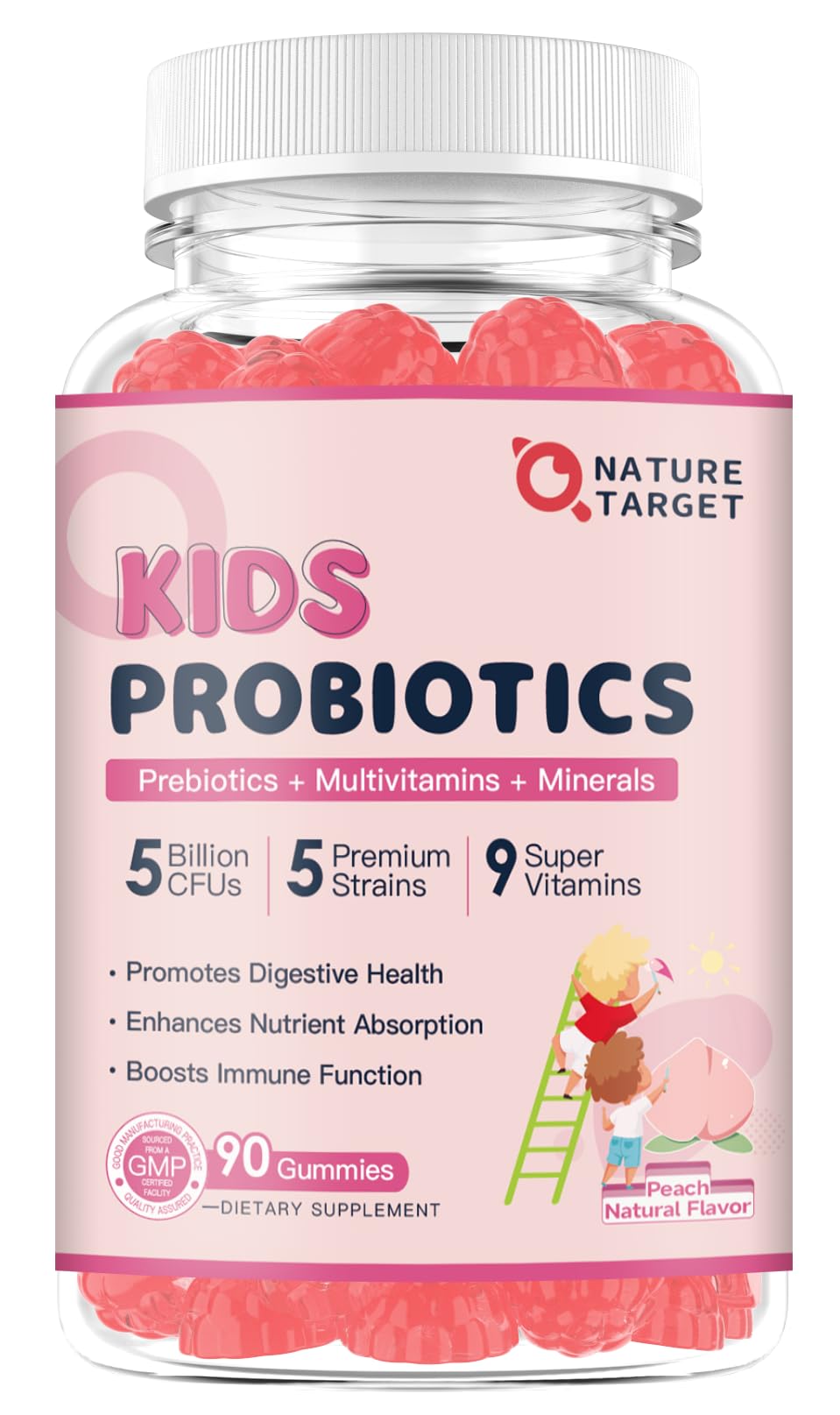
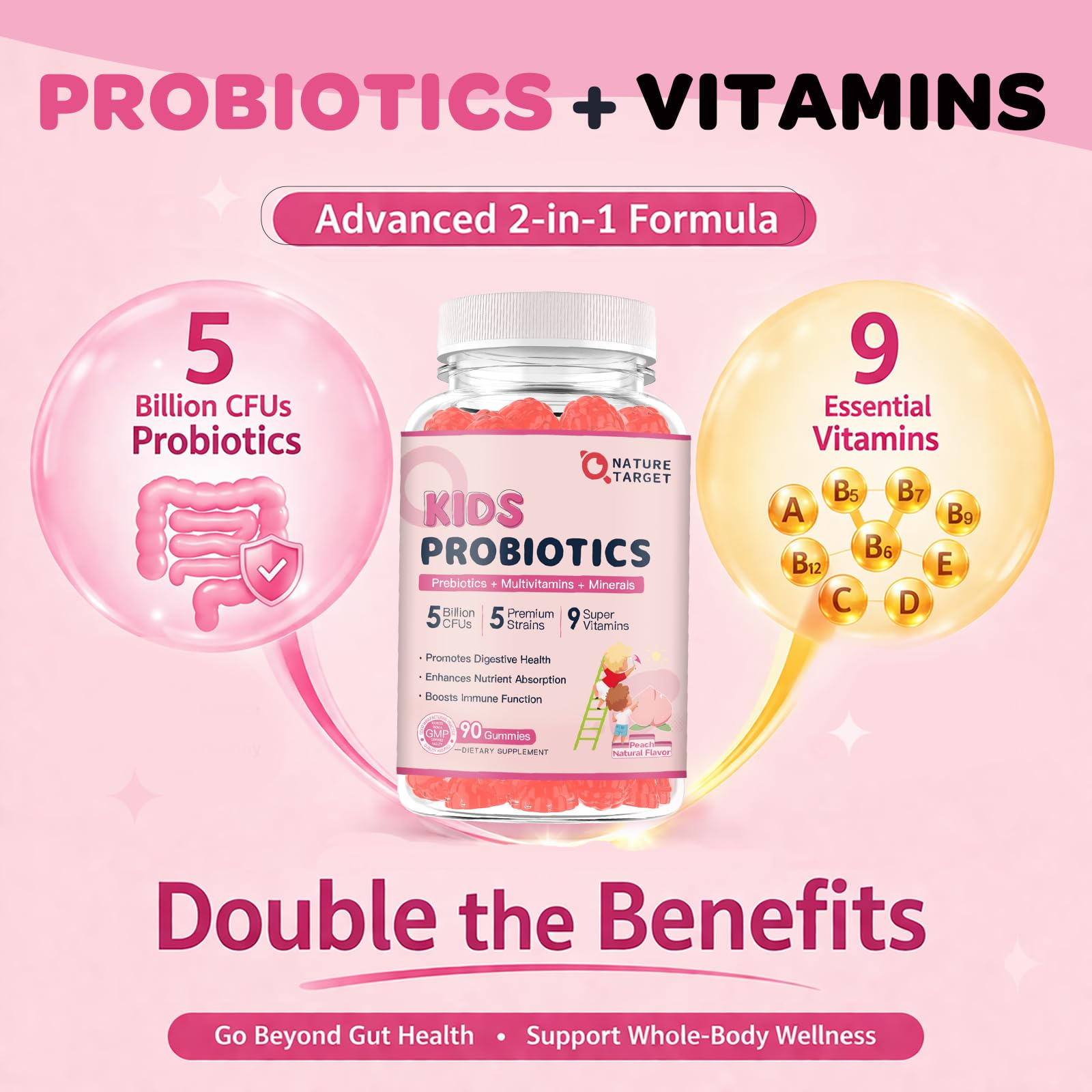
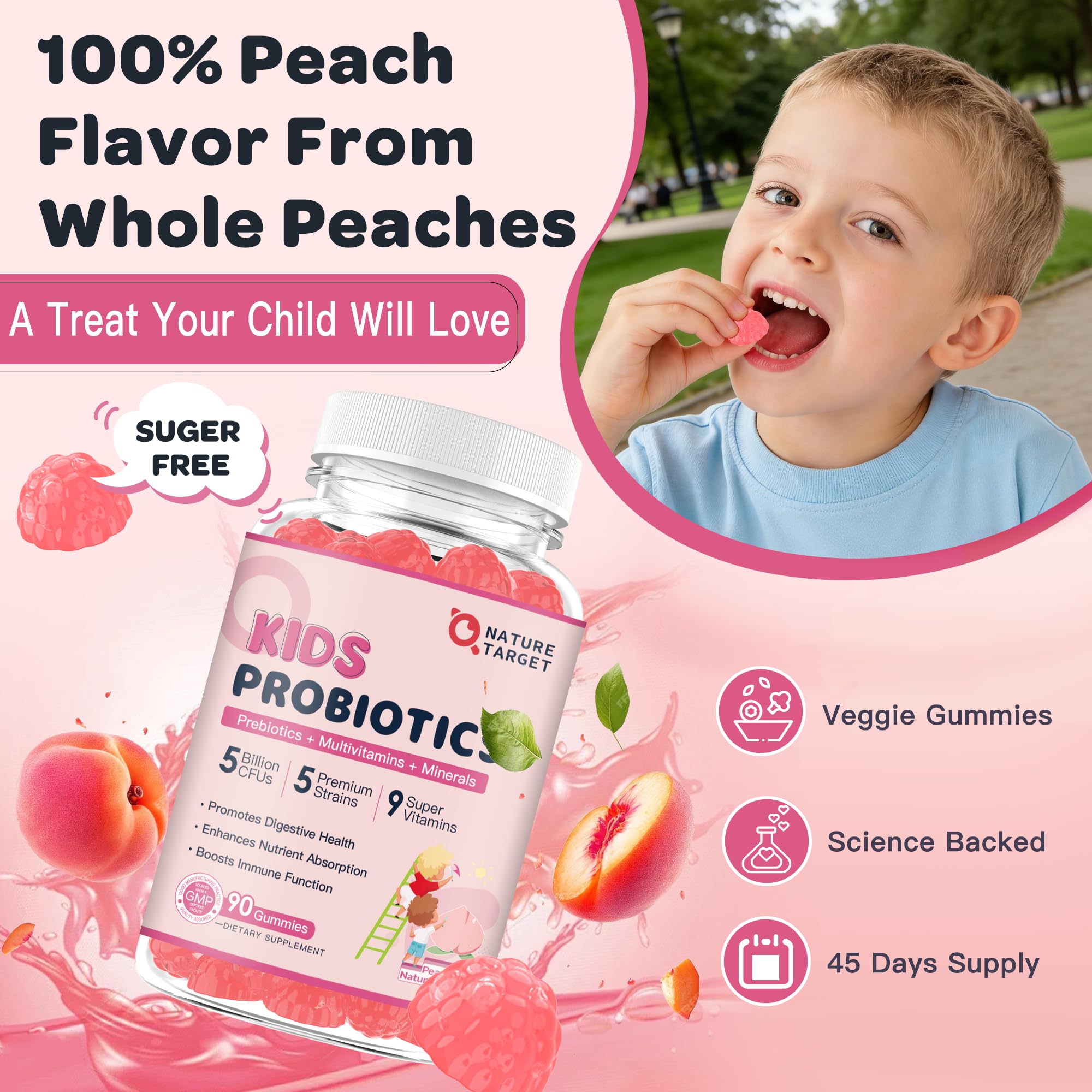
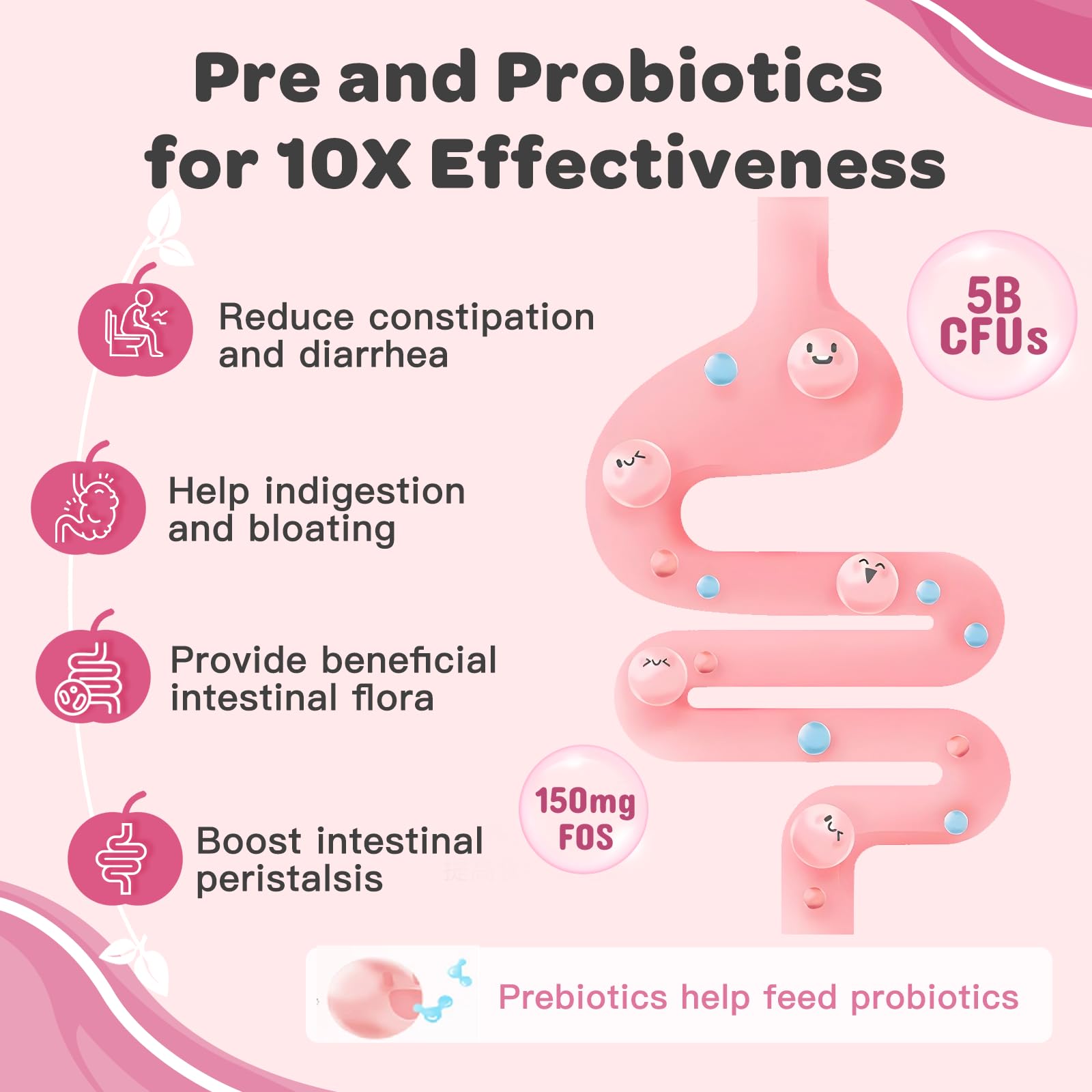
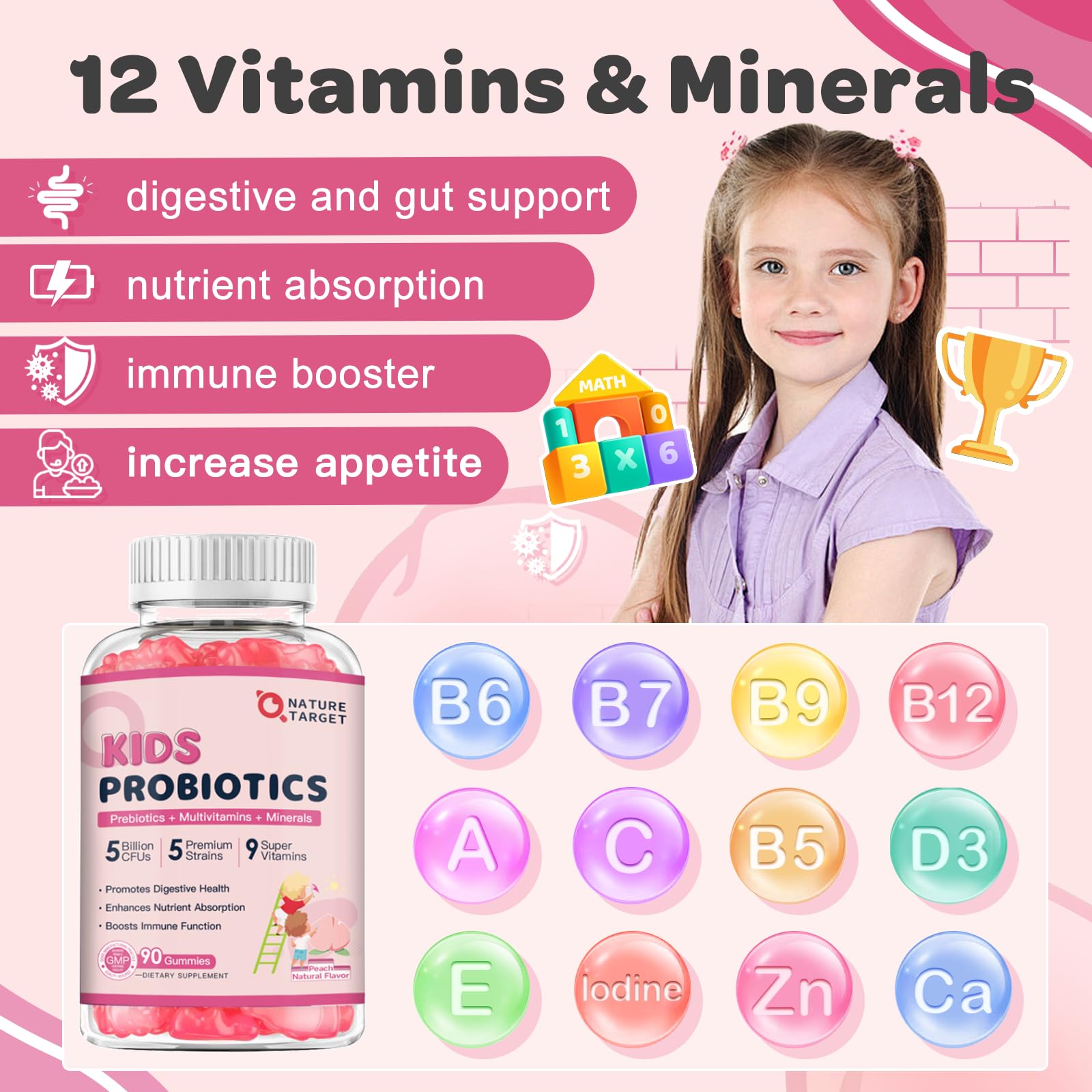
Probiotics for Kids, Kids Probiotic-Multivitamin Gummies with 5 Billion CFUs for Digestive Health & Immune Support, with Vitamins, Prebiotics, Minerals for Children, Natural Peach Flavor, 45 Servings
- 4-in-1 Formula: This probiotics for kids combining probiotics, prebiotics, vitamins, and minerals, promotes he
- 5 Billion CFUS & 150 MG inulin: With dual benefits targeting the digestive tract, helps reduce constipation, d
- Kids Multivitamin Gummies: Added with 9 vitamins + 3 minerals. The perfect combination will be the fastest way
For families who want probiotic and vitamin support in one format, NATURE TARGET's probiotic multivitamin gummies combine 5 billion CFU with 9 vitamins and 3 minerals in a natural peach flavour. The 4-in-1 formula is convenient, though parents of very picky eaters should note that gummy vitamins require supervision to avoid overconsumption.
5. Reading the Label: Red Flags and Green Lights
The supplement aisle is full of products that market themselves cleverly while quietly undercutting their own purpose.
Red flags on a kids' supplement label
Green lights
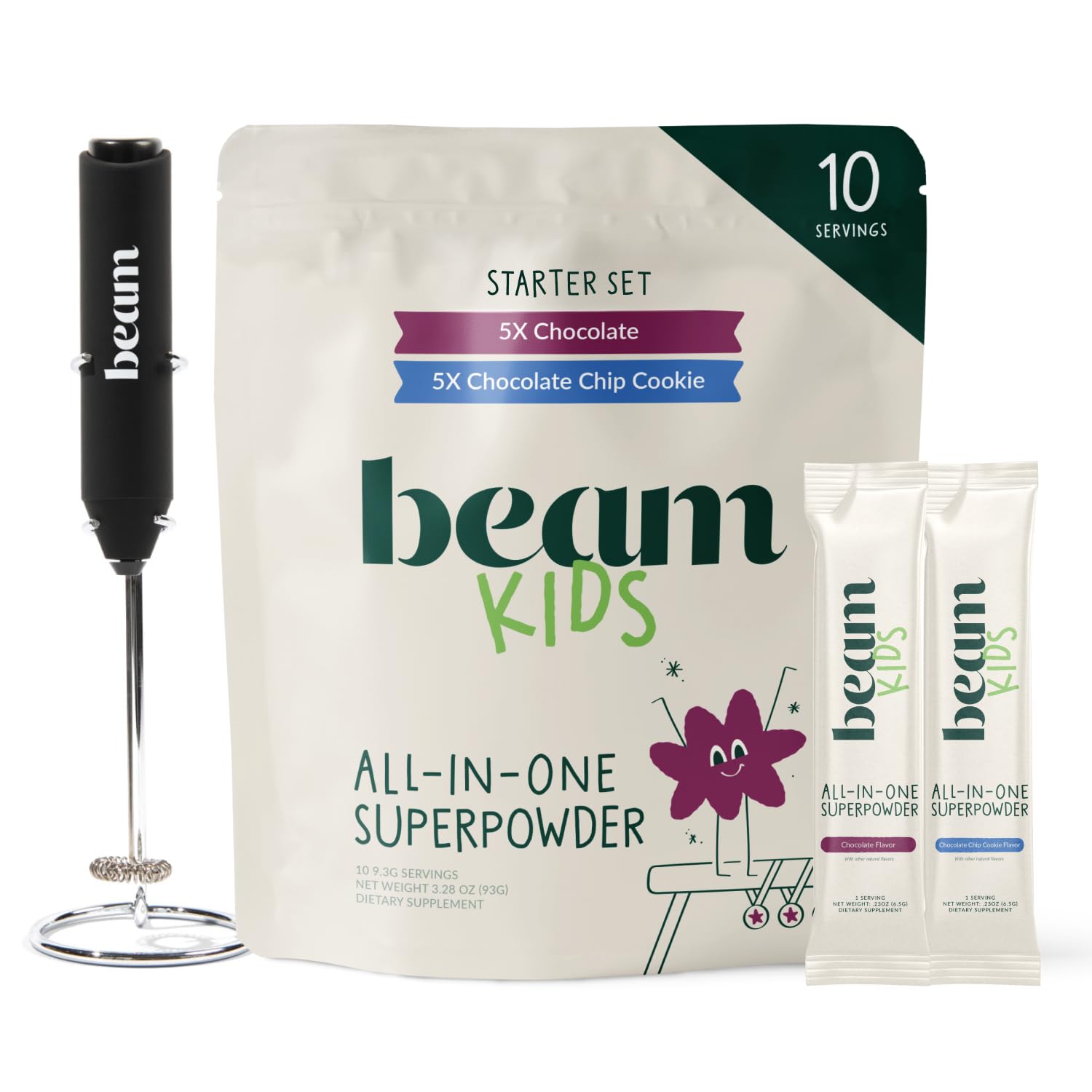
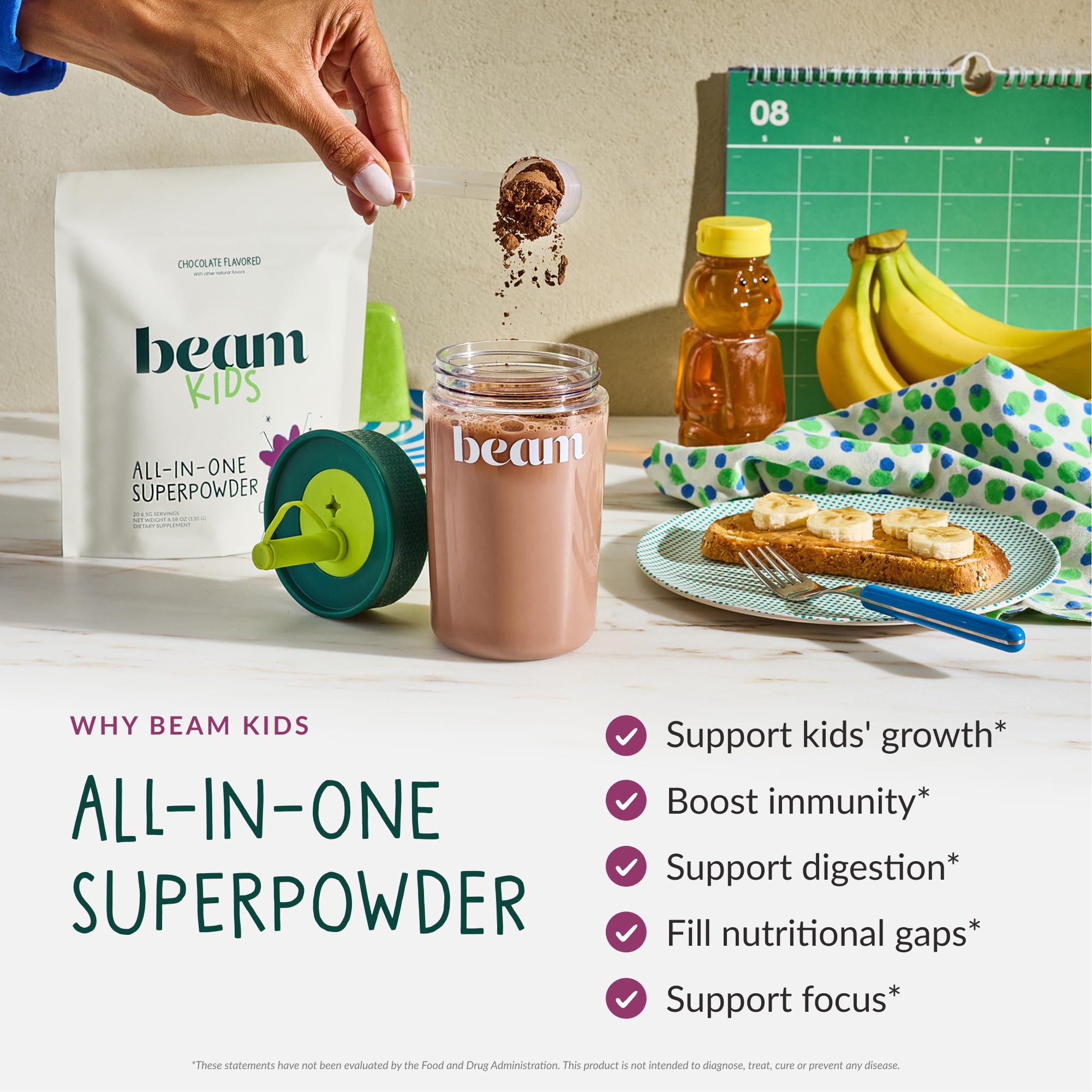
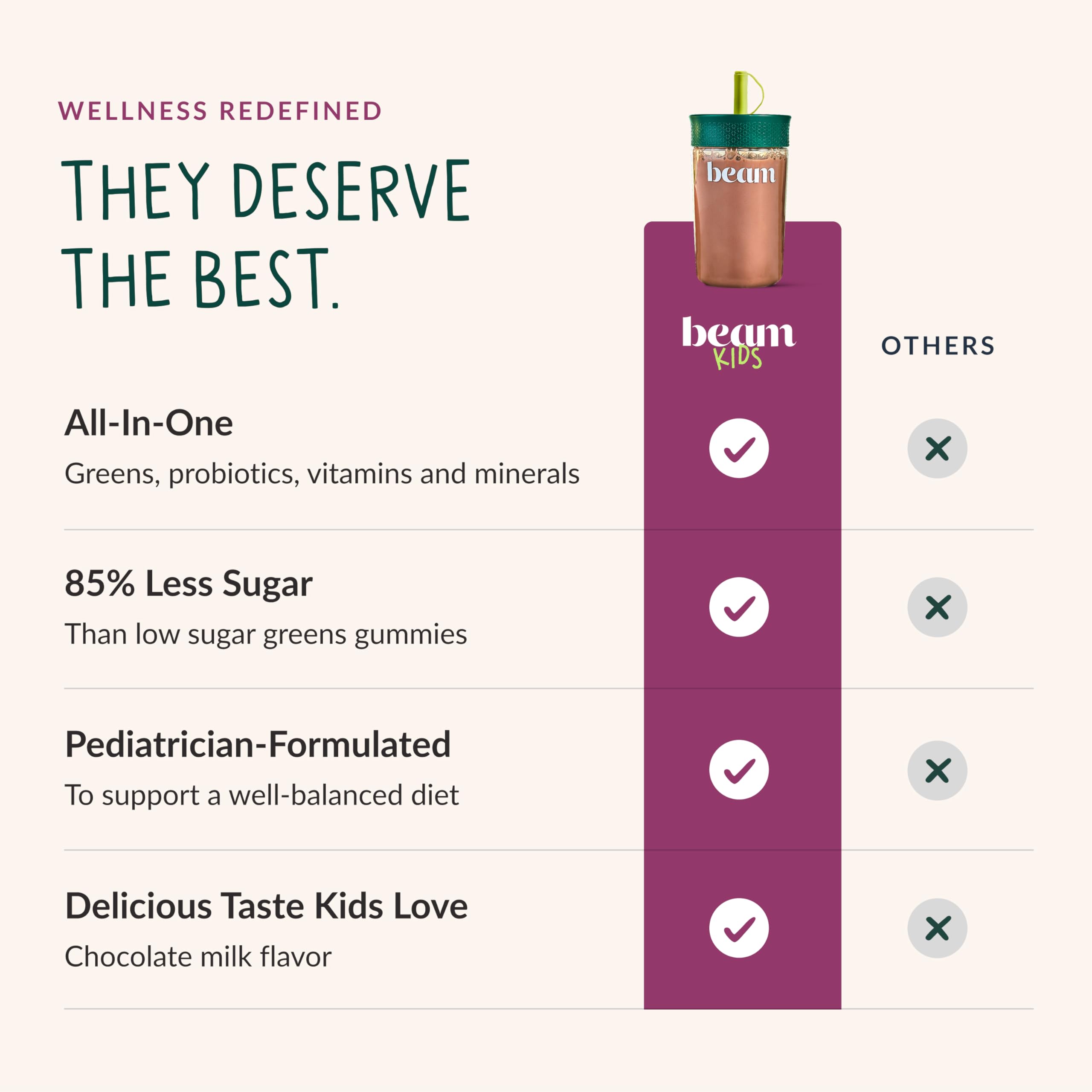
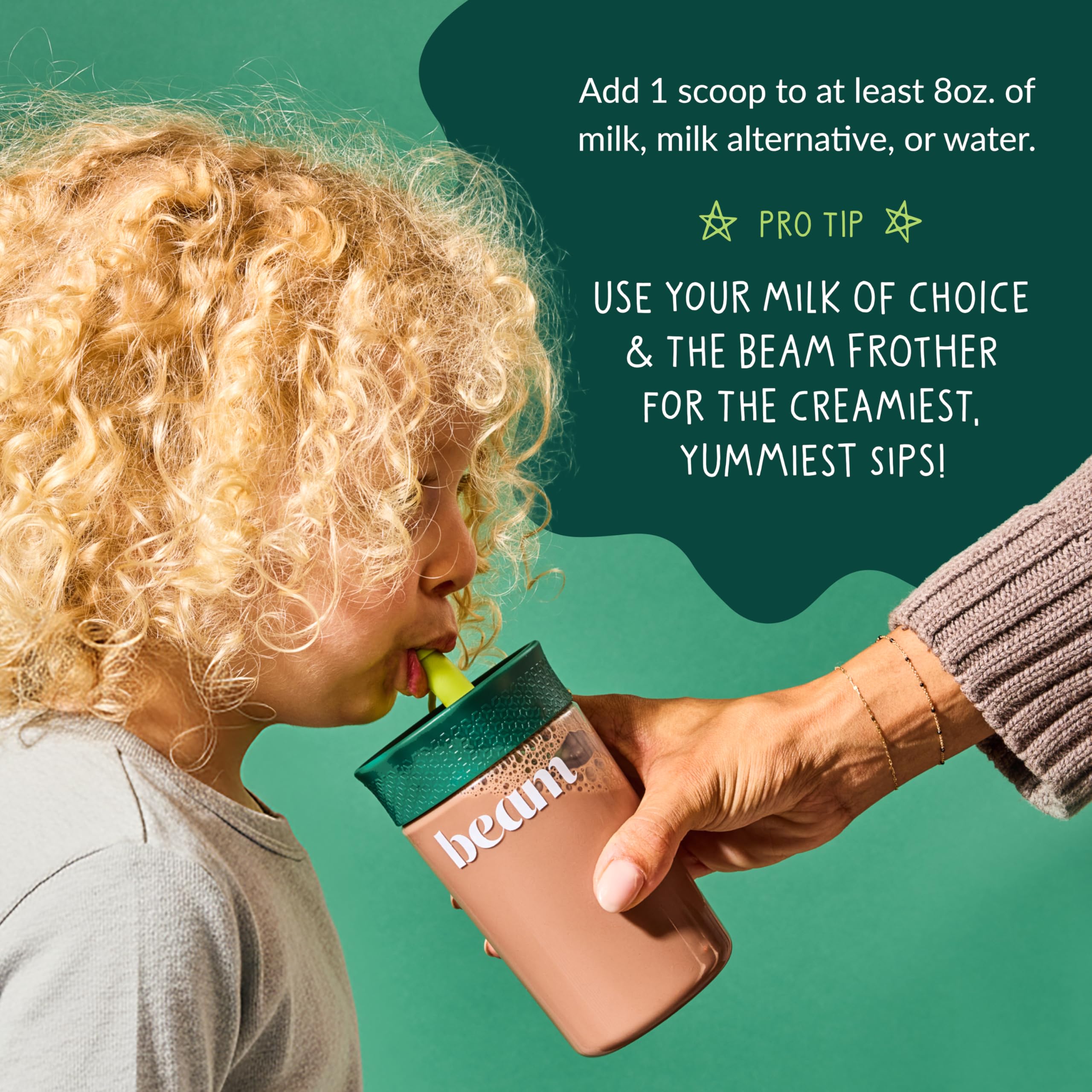

Beam Kids All in One Superfood Powder, Nutritional Shake, Organic Greens, Probiotics, Vitamins, Immune Support, Gut Health, Superfood, Nutrition for Children, No Artificial Sweeteners, Starter Set
- PEDIATRICIAN-FORMULATED FOR COMPLETE NUTRITION: Developed with experts to provide 40+ essential nutrients supp
Beam Kids All in One Superfood Powder takes a whole food approach to filling nutritional gaps, providing 40+ nutrients including organic greens, probiotics, and vitamins with no artificial sweeteners. It is a useful option for parents dealing with toddlers who resist taking anything in tablet form — mixing a powder into a morning smoothie is low resistance.
6. The Culturelle Advantage: Why One Strain Leads the Paediatric Probiotic Market
Culturelle holds a distinct position among paediatric probiotics because its lead ingredient, Lactobacillus rhamnosus GG, has more published clinical trials behind it than almost any other probiotic strain in existence. The brand's paediatrician recommendation data reflects decades of that research reaching clinical practice.


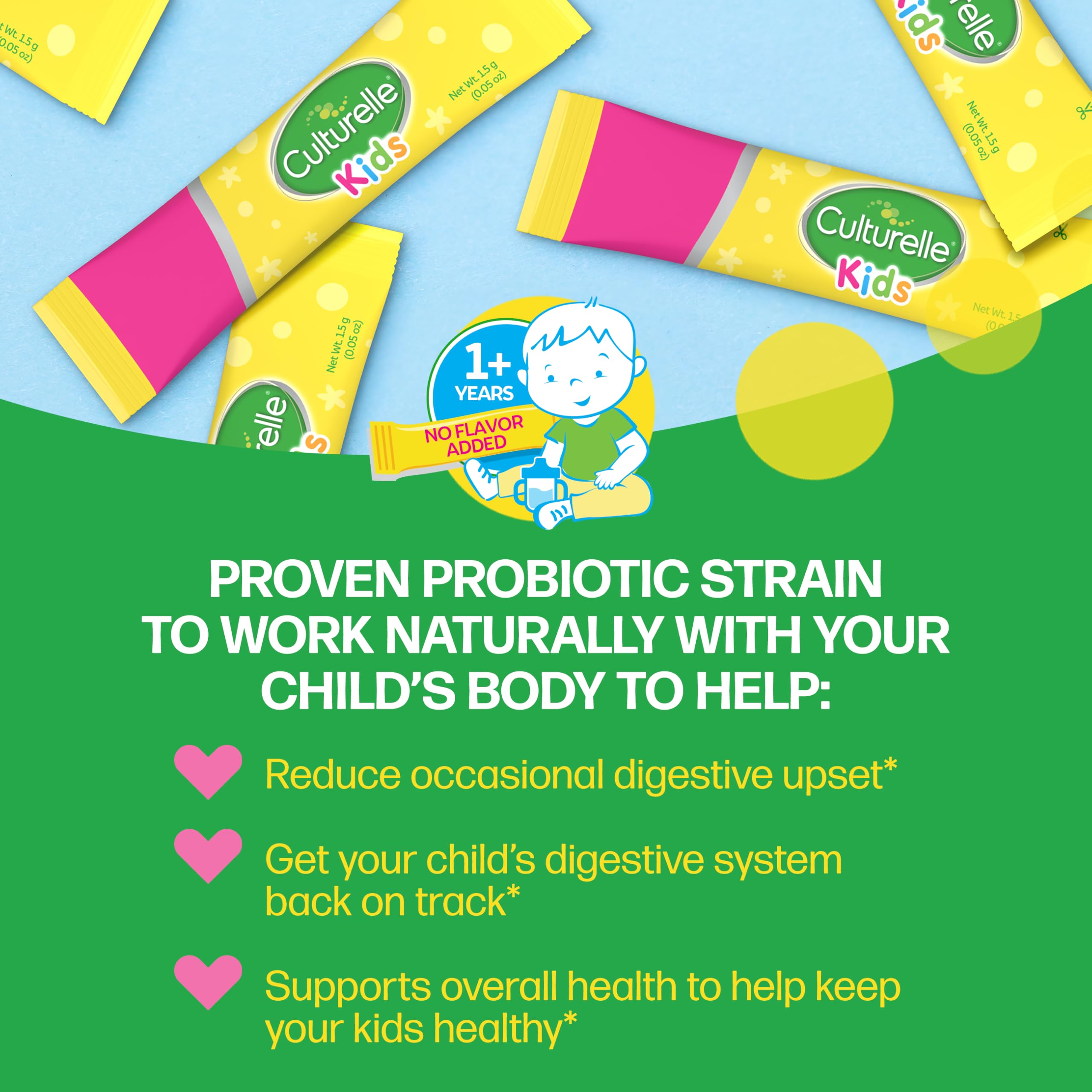


Culturelle Kids Daily Probiotic Packets for Kids, (Ages 3+) - 50 Count – From the #1 Pediatrician-Recommended Brand – Flavorless Daily Probiotics for Digestive Health & Immune Support
- PROBIOTICS FOR KIDS: From the Pediatrician-Recommended Probiotic Brand, Culturelle Kids helps promote your chi
- PROVEN EFFECTIVE STRAIN: Lactobacillus rhamnosus GG (LGG) - the key ingredient in Culturelle Kids Daily Probio
- PROBIOTIC POWER: Culturelle Kids is a flavorless probiotic formulated with 5 billion CFUs (colony-forming unit
Culturelle Kids Daily Probiotic Packets are flavorless, which solves one of the most common practical problems parents face: getting a sceptical toddler to take something new. The packets stir into any food or drink invisibly, which makes daily compliance genuinely achievable. 5 billion CFU of LGG is a clinically meaningful dose for digestive and immune support.
For toddlers who are happy to chew a tablet, Culturelle Kids Chewable Daily Probiotic delivers the same LGG strain in a natural berry flavour. At 4.8 stars across nearly 10,000 reviews, parent reported compliance for the chewable format is notably high.

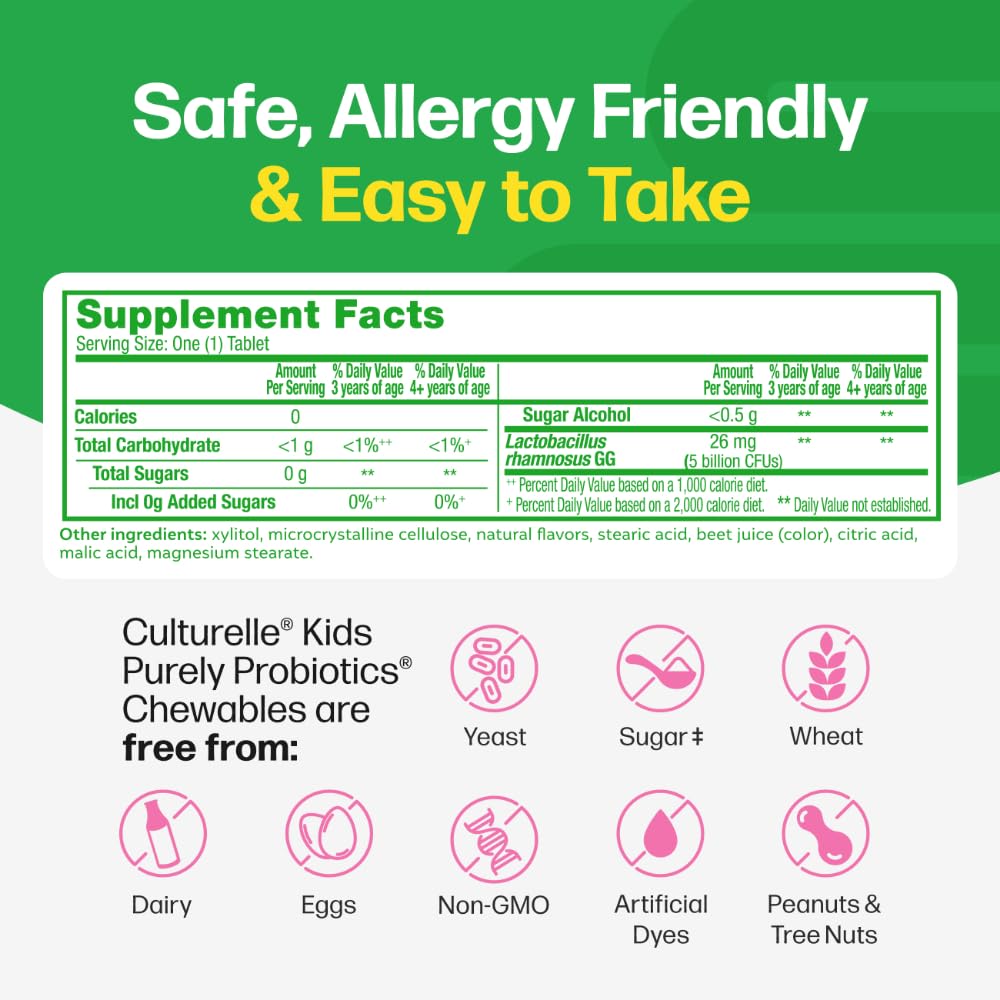
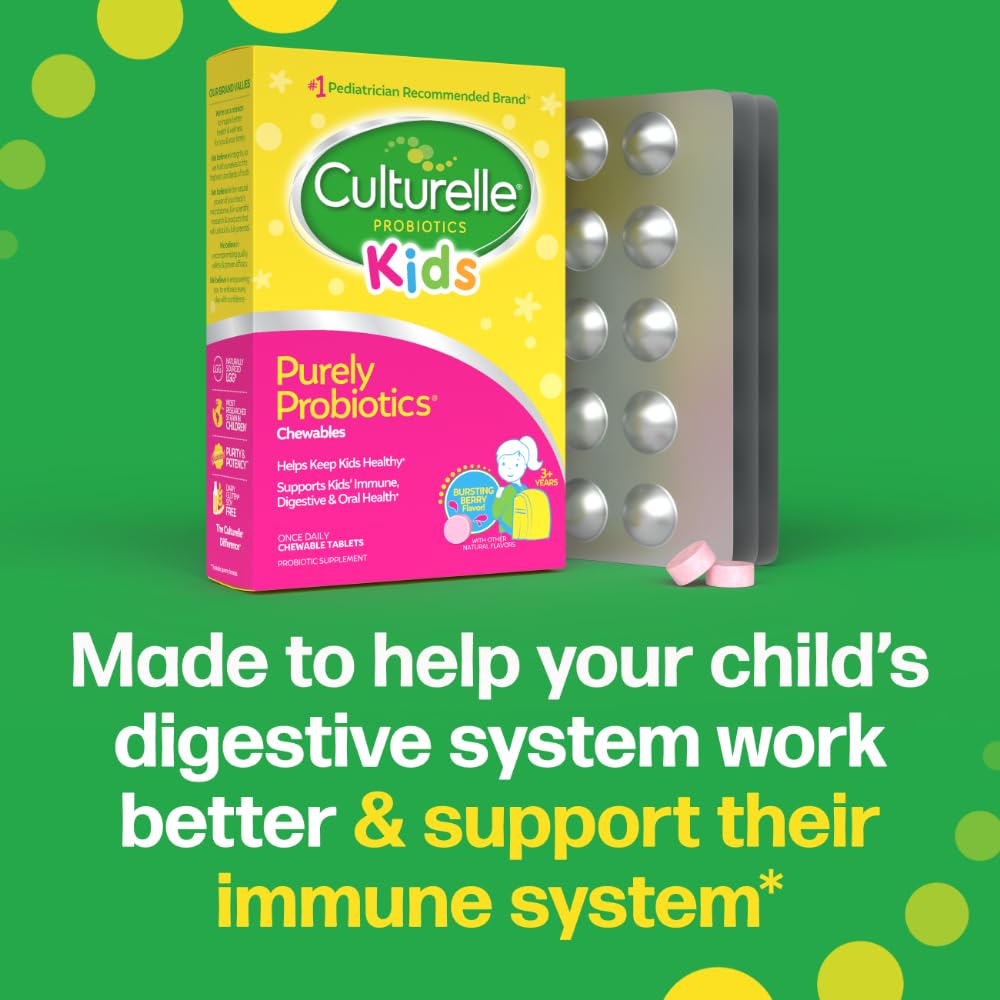
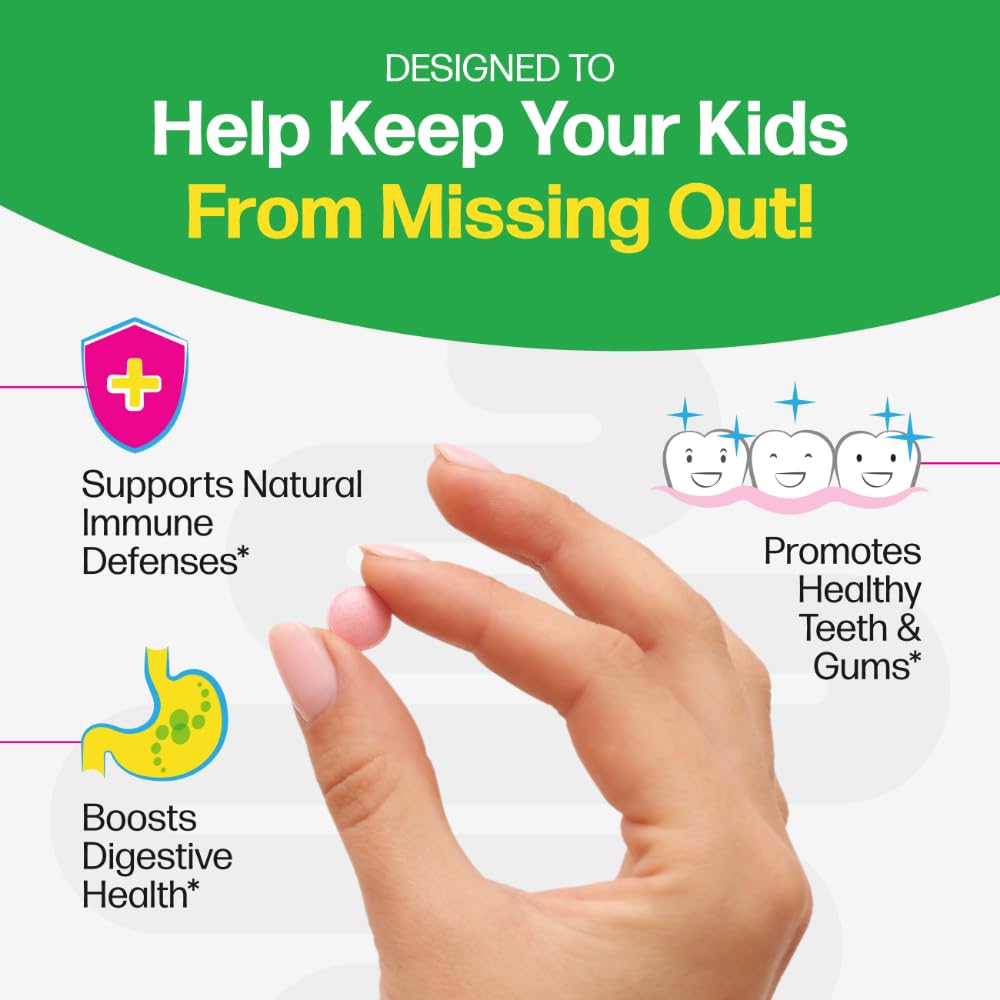

Culturelle Kids Chewable Daily Probiotic for Kids, Ages 3+, 30 Count, #1 Pediatrician-Recommended Brand, Natural Berry Flavored Daily Probiotics for Digestive Health, Oral Care & Immune Support
- PROBIOTICS FOR KIDS: From the #1 Pediatrician-Recommended Probiotic Brand, the ingredients in Culturelle Kids
- PROVEN EFFECTIVE STRAIN: These safe and effective chewables are formulated with 5 billion CFUs of the scientif
- PROBIOTIC POWER: Culturelle Kids is a natural berry-flavored probiotic chewable tablet that works to populate
| Format | Best Age | Key Benefit | Main Drawback | Recommended Product | Price Range |
|---|---|---|---|---|---|
| Chewable tablet with prebiotics | Ages 2 to 10 | Survives acid; includes prebiotic FOS and PHGG | Requires chewing ability | Intelligent Labs Kids Probiotic | $21.99 |
| Powder sachet synbiotic | Ages 3 to 17 | 5g prebiotic fibre; RCT evidence; easy to mix into food | More expensive per serving | Seed PDS-08 Synbiotic | $39.99 |
| Probiotic multivitamin gummy | Ages 3 and up | 4-in-1 formula; vitamins and minerals included | Gummy format risks overconsumption | NATURE TARGET Probiotic Gummies | $16.88 |
| Superfood powder | Ages 2 and up | 40+ nutrients; whole food ingredients; no artificial sweeteners | Powder format not for every child | Beam Kids Superfood Powder | $31.49 |
| Flavorless daily packet | Ages 3 and up | Invisible in food; LGG strain; highest compliance | No prebiotics included | Culturelle Kids Daily Packets | $32.99 |
| Chewable berry tablet | Ages 3 and up | LGG strain; great taste; oral care benefit | No prebiotics included | Culturelle Kids Chewable | $20.48 |
Expert Insights
Conclusion
The supplement aisle does not have to be overwhelming. Strip it back to first principles: does your toddler have a documented or likely nutritional gap? Is the product you are considering using strains and nutrients with real evidence behind them? Is the company testing independently and telling you the CFU figure at expiry rather than at manufacture?
Most of the time, you will end up with one or two targeted products rather than a basket of them. That is the right answer. Your toddler's gut and growing body need quality and consistency, not quantity.
As one of my favourite colleagues puts it: the best supplement is the one your child will actually take, formulated by people who care more about the science than the packaging.
If this guide helped you narrow things down, save it and share it with another parent doing the same scroll through the pharmacy aisle.
Sources & References
- American Academy of Pediatrics. "Vitamin D Deficiency in Children." AAP Clinical Report. 2022. https://publications.aap.org
- American Academy of Pediatrics Committee on Nutrition. "Probiotics and Prebiotics in Pediatrics." Pediatrics. 2010; 126(6):1217-1231.
- World Health Organization. "Nutritional Anaemias: Tools for Effective Prevention and Control." WHO Press. 2017.
- Szajewska H, Skórka A, Ruszczyński M, Gieruszczak-Białek D. "Meta-analysis: Lactobacillus GG for treating acute gastroenteritis in children." Alimentary Pharmacology and Therapeutics. 2007.
- Centers for Disease Control and Prevention. "Dietary Fiber Intake." NHANES Data Brief. 2021.
- Koletzko B, et al. "Dietary fat intakes for pregnant and lactating women." British Journal of Nutrition. 2007; 98(5):873-877.
- Seed Health. "PDS-08 Pediatric Daily Synbiotic: Double Blind Randomised Controlled Trial." Seed Scientific Publications. 2023. https://seed.com/science
- Greer FR, Sicherer SH, Burks AW. "The Effects of Early Nutritional Interventions on the Development of Atopic Disease in Infants and Children." Pediatrics. 2019; 143(4).
Frequently Asked Questions
Does my toddler actually need a probiotic?
What is the safest probiotic strain for a 1 to 3 year old?
Can I give my toddler a probiotic every day?
How do I know if a probiotic is working?
Should I give my toddler a multivitamin if they are a picky eater?
Are gummy vitamins safe for toddlers?
Can I give probiotics and vitamins at the same time?
Was this helpful?
Thanks — your feedback helps us pick what to write next.