
Milk for Kids: Benefits, Types, and How to Choose by Age
Milk provides calcium, protein, vitamin D, and healthy fats that support bone strength, brain development, and steady growth in children, but the right type changes significantly as your child ages.
In this article
Nearly 90 percent of peak bone mass is laid down before age 18, according to the U.S. National Institutes of Health. That single fact tells you everything you need to know about why the milk question matters so much. Get the calcium and vitamin D equation right in childhood and you are quite literally building a skeleton that will serve your child for life. Get it wrong during those growth windows and the deficit is hard to reverse later.
Here is what you will understand after reading this guide:
1. Why Milk Earns Its Place in a Child's Diet
Milk is one of the most nutrient-dense single foods available for growing children, delivering calcium, high-quality protein, phosphorus, vitamin D, vitamin A, and B vitamins in one convenient package.
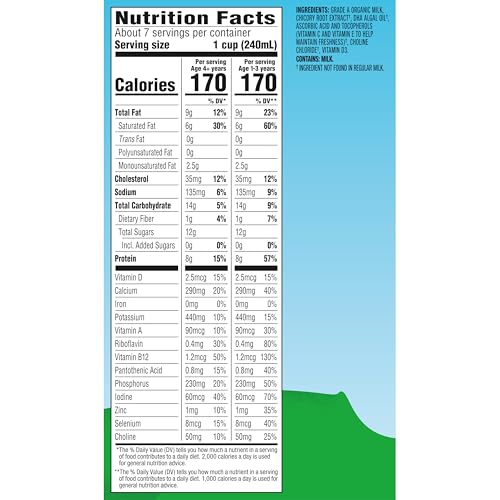
The numbers are worth knowing. One 8 oz (240 ml) serving of whole cow's milk provides roughly 300 mg of calcium, about 30 percent of what a toddler needs in a full day, according to the American Academy of Pediatrics (AAP). It also delivers 8 grams of complete protein containing all essential amino acids, making it one of the most efficient protein sources in a child's diet.
The nutrient lineup at a glance
Understanding how sodium and other minerals interact with calcium is also worth a moment's attention, particularly for toddlers who are eating a wider range of processed foods.
2. Age-by-Age Milk Guide: Newborn to Teen
The type of milk that is right for your child is not static. It shifts at 12 months and again at 24 months, with further considerations through the school-age and tween years.
Newborns and infants (0 to 12 months)
Breast milk is the gold standard for infant nutrition. The World Health Organization (WHO) recommends exclusive breastfeeding for the first six months, with continued breastfeeding alongside complementary foods to at least 12 months and beyond if desired. Breast milk adjusts its composition in real time, shifting fat content across a single feed and changing the balance of immunoglobulins as your baby's immune system matures. For families where breastfeeding is not possible or is supplemented, iron-fortified infant formula is designed to approximate breast milk's nutritional profile as closely as possible.
Cow's milk is not appropriate before 12 months. Its protein and mineral concentrations place a strain on infant kidneys, and it lacks adequate iron.
Toddlers (12 to 24 months)
Once your child turns one, the AAP recommends transitioning to whole cow's milk, capped at around 16 to 24 oz (470 to 710 ml) per day. The fat in whole milk is not something to fear at this age: it provides the concentrated calories a rapidly developing brain and body need. The cup you use to serve milk matters here too, because transitioning away from a bottle protects emerging teeth and supports oral motor development.
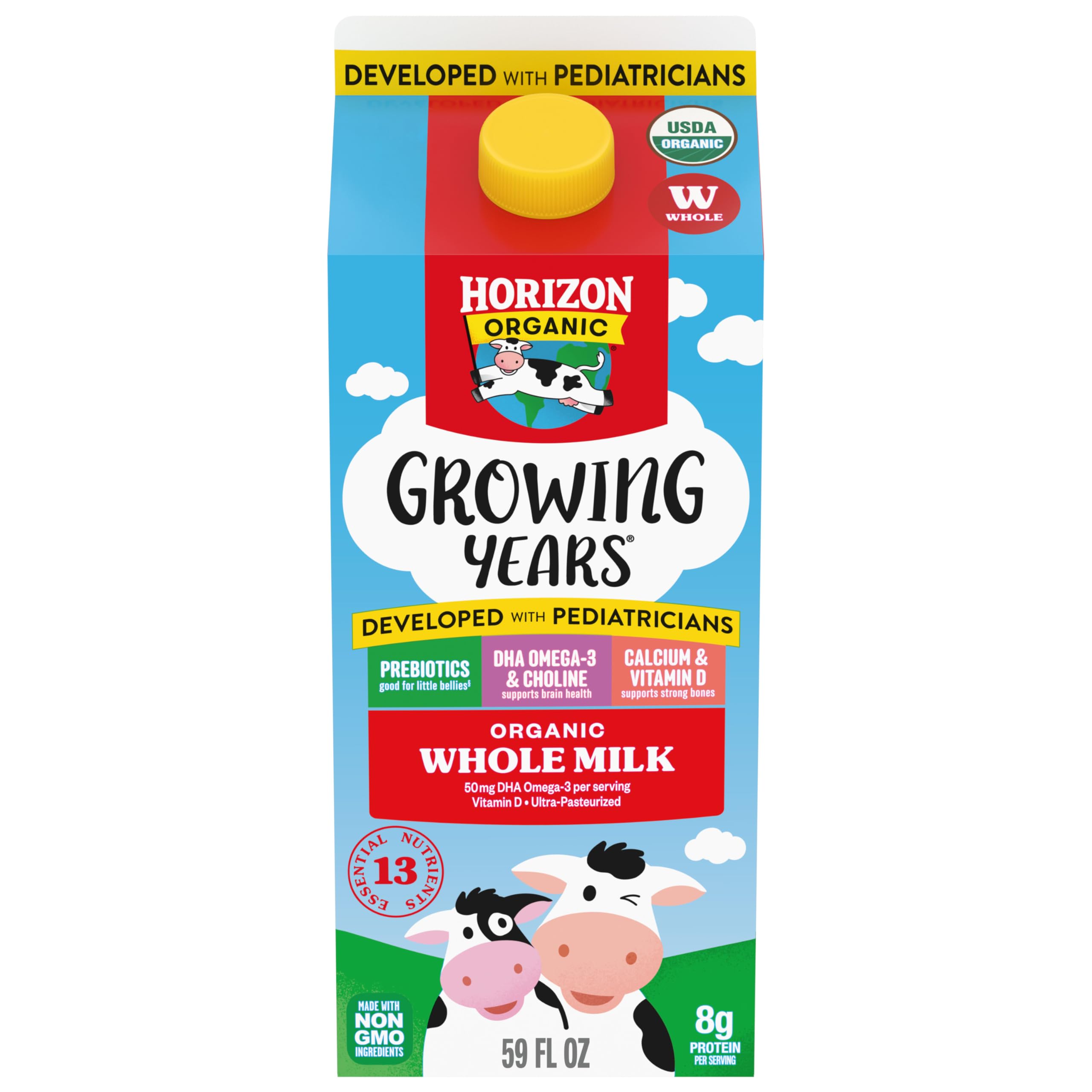
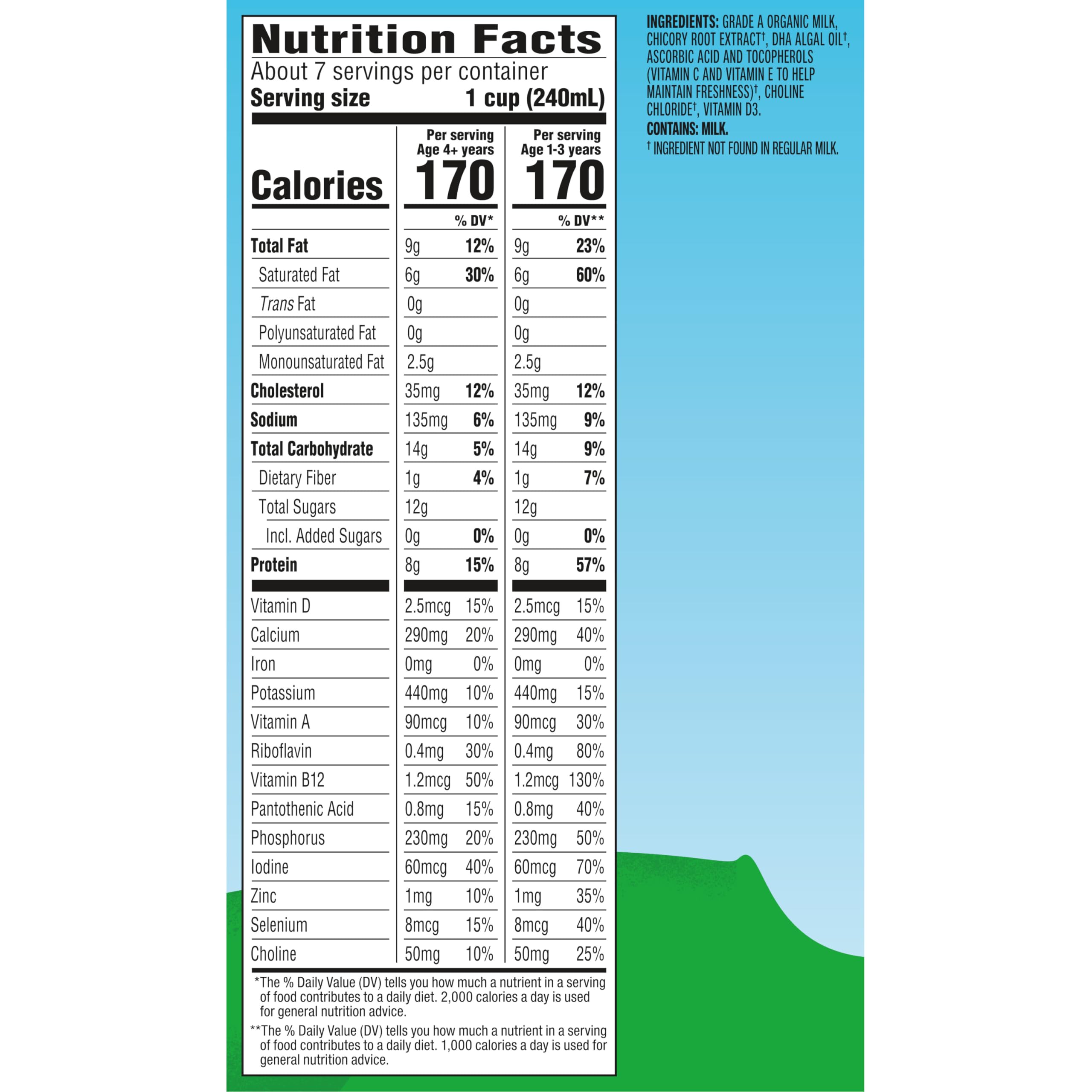
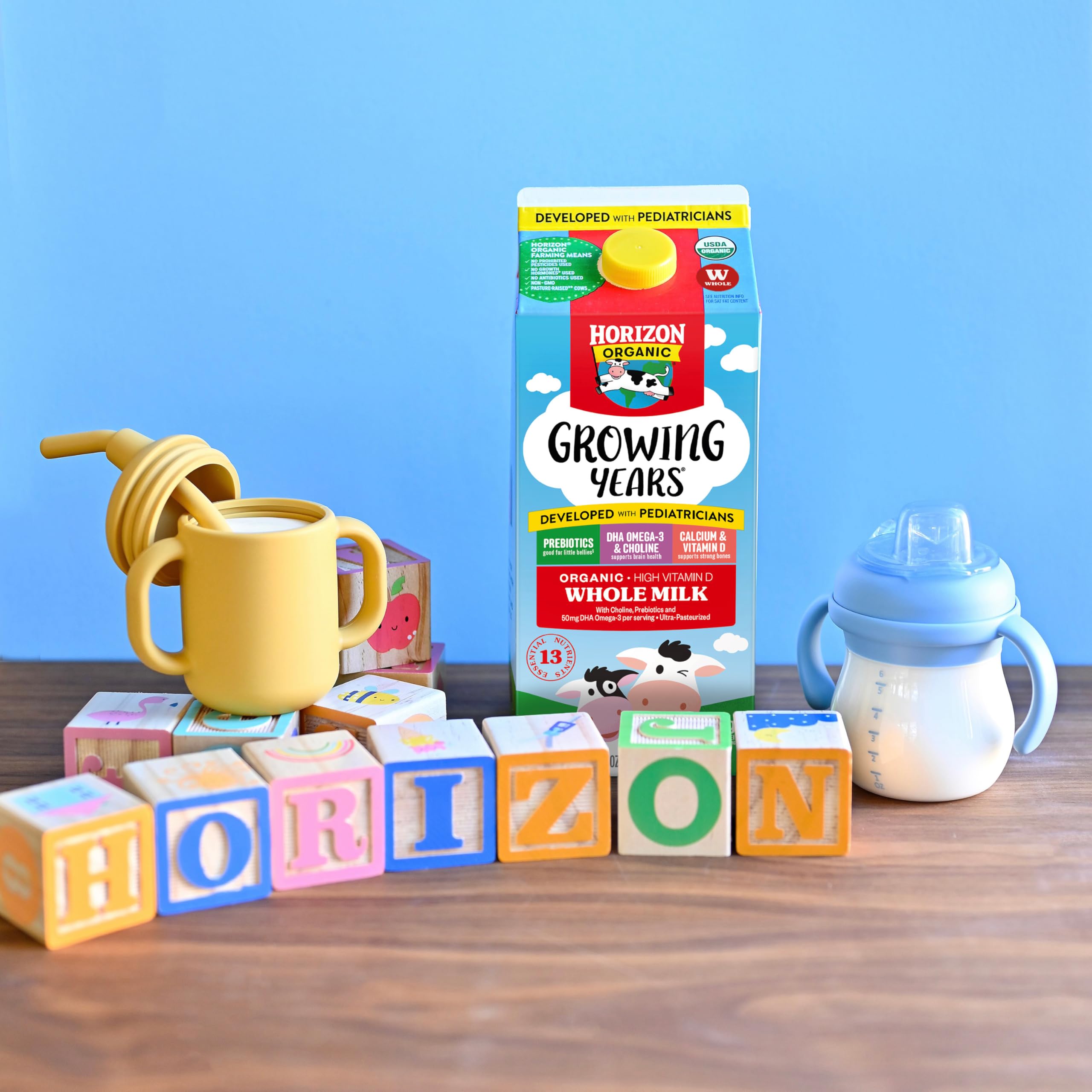
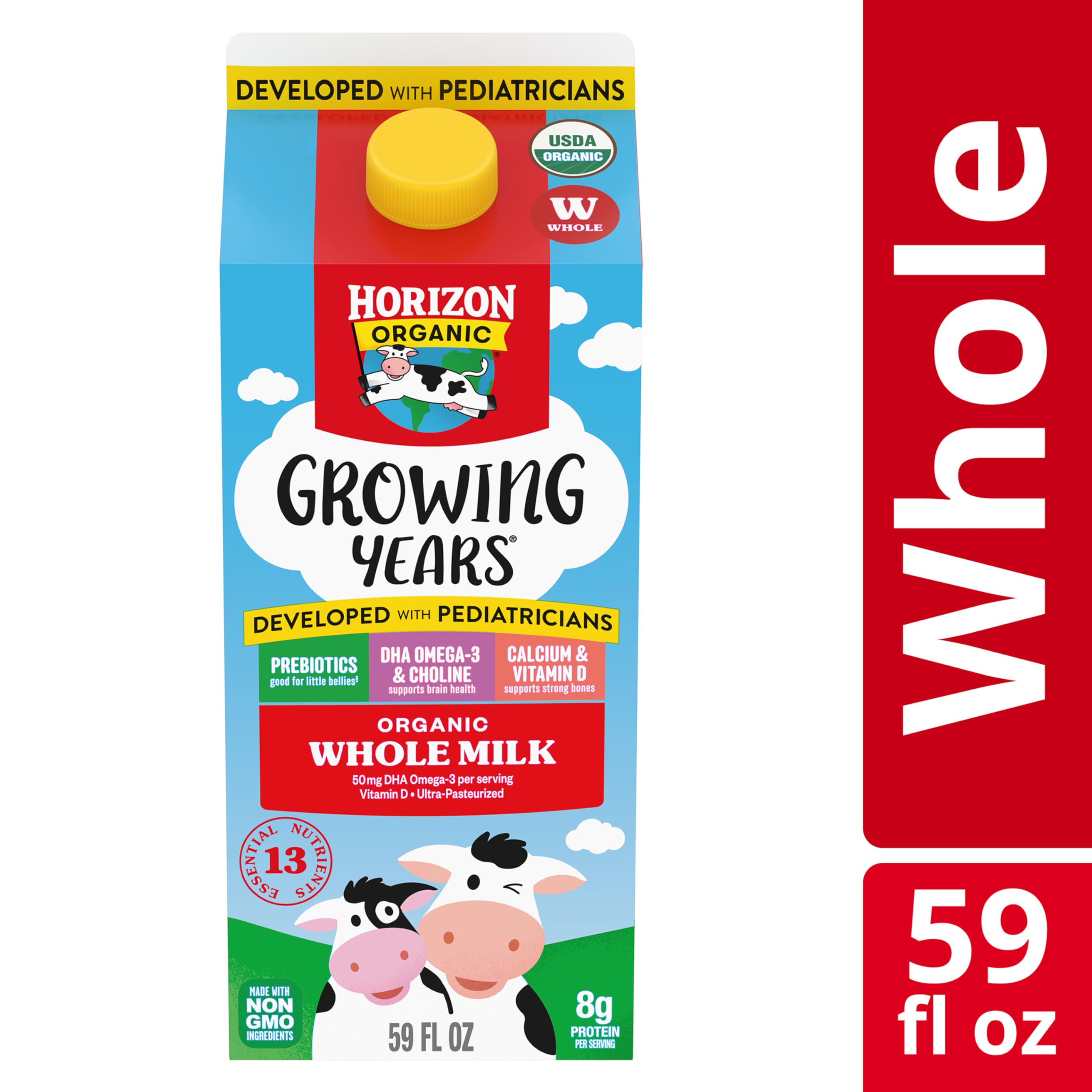
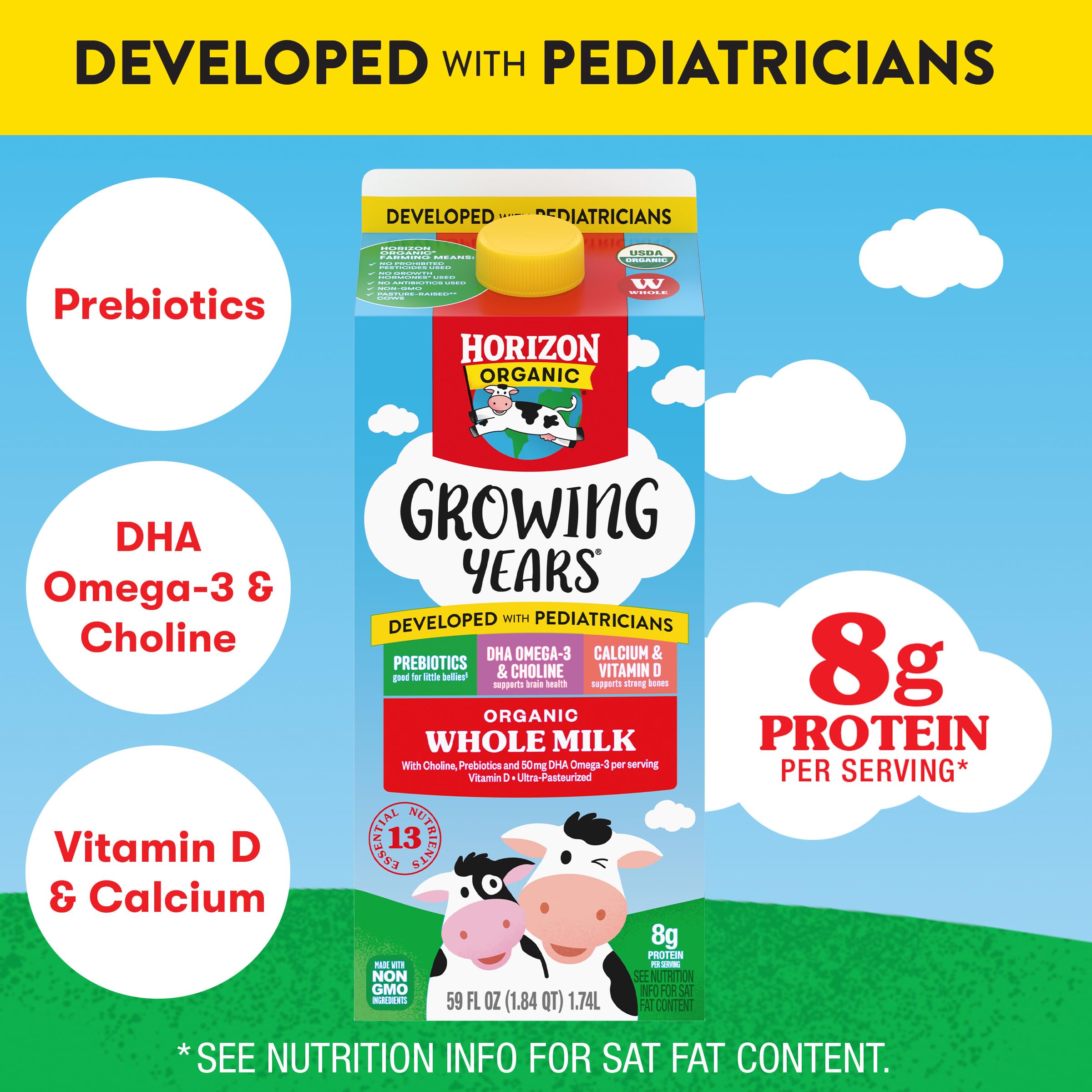
Horizon Organic Growing Years Whole Milk, High Vitamin D Organic Milk for Growing Kids with DHA Omega-3, Choline, and Prebiotics, 59 fl oz Carton
- Organic Whole Milk for Kids: One 59 fl oz carton of Horizon Organic Growing Years DHA Omega-3 Whole Milk helps
- DHA Supports Brain Health: DHA whole milk provides 50mg DHA Omega-3 per serving, which helps support brain and
- Developed with Pediatricians: Horizon Organic Growing Years Whole Milk was developed with pediatricians and in
Children aged 2 to 5
After the second birthday, the AAP and the American Heart Association both support switching most children to low-fat (1%) or reduced-fat (2%) milk. Fat intake no longer needs to be unrestricted, and the lower-fat options maintain the same calcium, protein, and vitamin D content. Aim for two to three servings of dairy per day.
School-age children (6 to 12 years)
Calcium requirements climb to 1,000 mg per day at this stage (AAP). Two to three cups of milk alongside other dairy foods generally meets that target. This is also the window where fizzy drinks begin competing with milk in many households; every glass of soda displaced by milk at this age has a measurable impact on bone density by the teenage years.
Tweens and teens (12 to 17 years)
Calcium requirements peak at 1,300 mg per day during adolescence, the highest demand of any life stage. Growth plates are closing and peak bone mass is being finalised. Many teens, particularly girls, fall well short of this target. If your teenager is dairy-averse, a combination of fortified plant milks, tinned salmon, fortified orange juice, and leafy greens can bridge the gap, though the protein density of cow's milk is hard to match in a single alternative. Tween nutrition needs a different lens altogether, and calcium is only one piece of that picture.
3. Lactose Intolerance and Milk Allergy: Knowing the Difference
These two conditions are often confused, but they require completely different responses.
Lactose intolerance is a digestive issue. The small intestine produces insufficient lactase enzyme to break down lactose, the natural sugar in milk. Symptoms (bloating, gas, loose stools, cramping) typically appear 30 minutes to two hours after consuming dairy. It is more common in children of East Asian, West African, Hispanic, and Middle Eastern heritage. The solution is usually lactose-free cow's milk, which delivers identical nutrition with the lactose pre-digested. Many lactose-intolerant children can also tolerate hard cheeses and yoghurt, where the lactose content is lower.
Milk allergy is an immune-mediated reaction to one or more proteins in cow's milk (casein and whey are the main culprits). Symptoms can include hives, vomiting, wheeze, or anaphylaxis. This is more common in infants and younger children, and many (but not all) outgrow it by school age. A confirmed milk allergy requires strict avoidance of cow's milk and professional guidance on calcium-rich alternatives. If you suspect your child has a milk allergy rather than intolerance, a paediatric allergist should confirm it with appropriate testing before you restrict the diet.
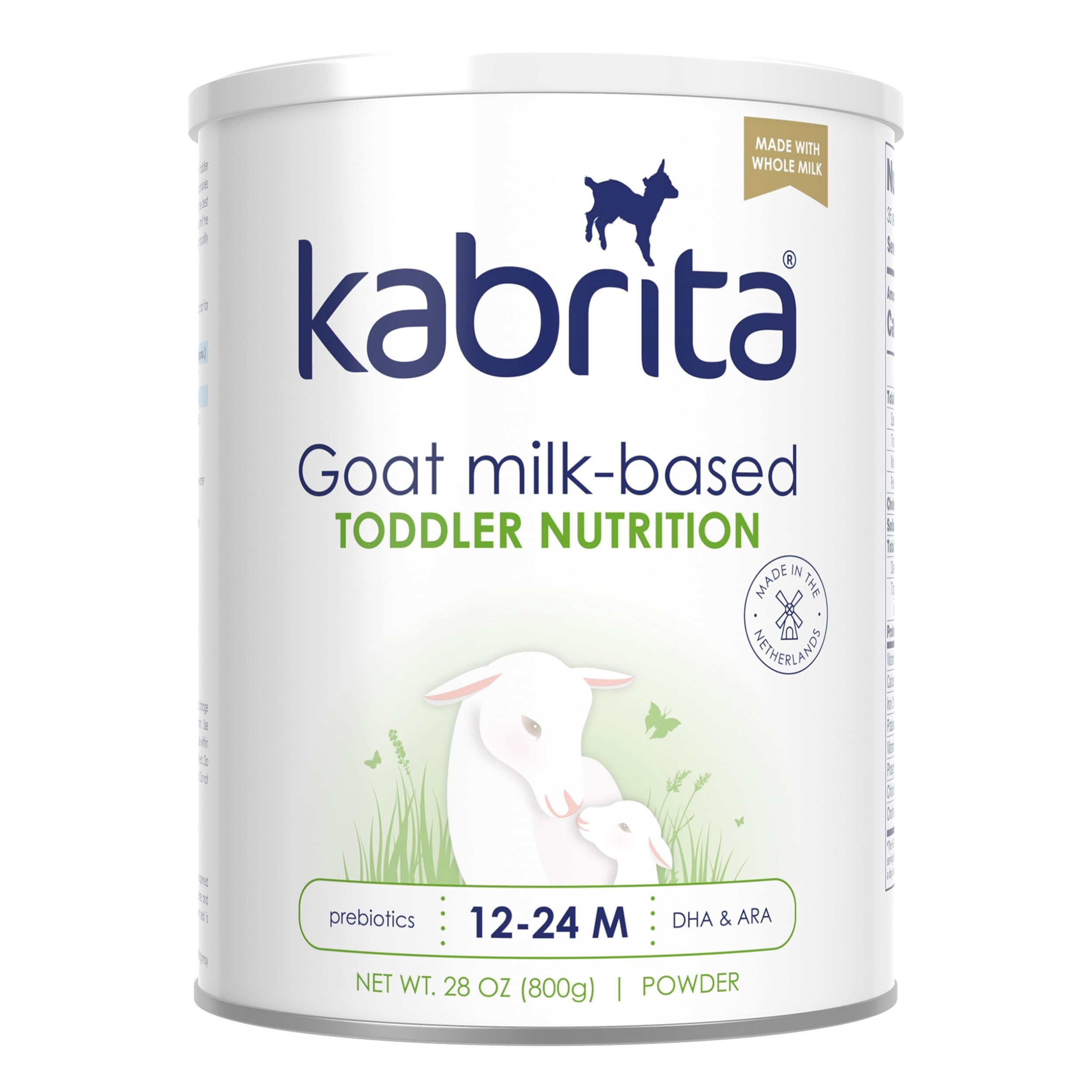
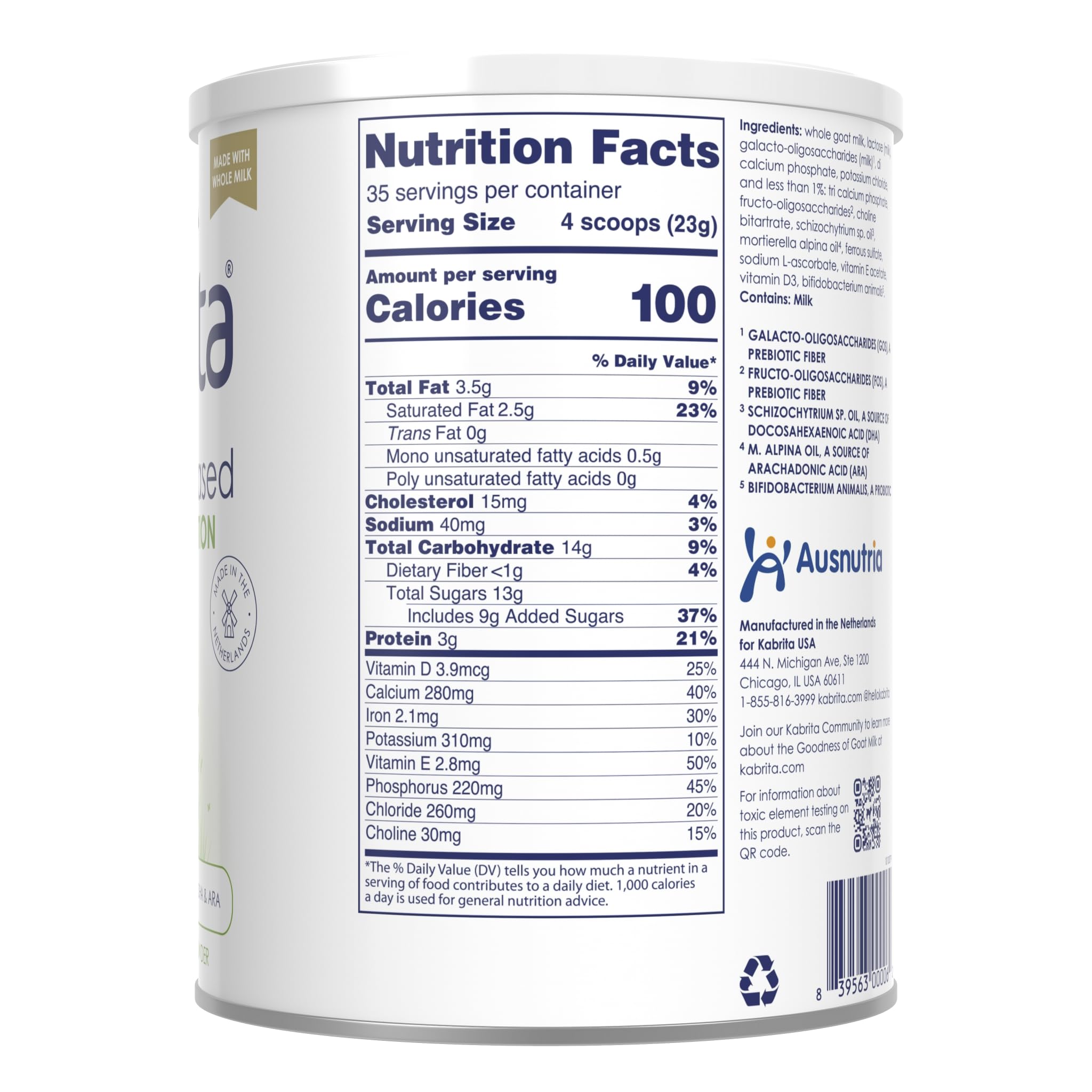
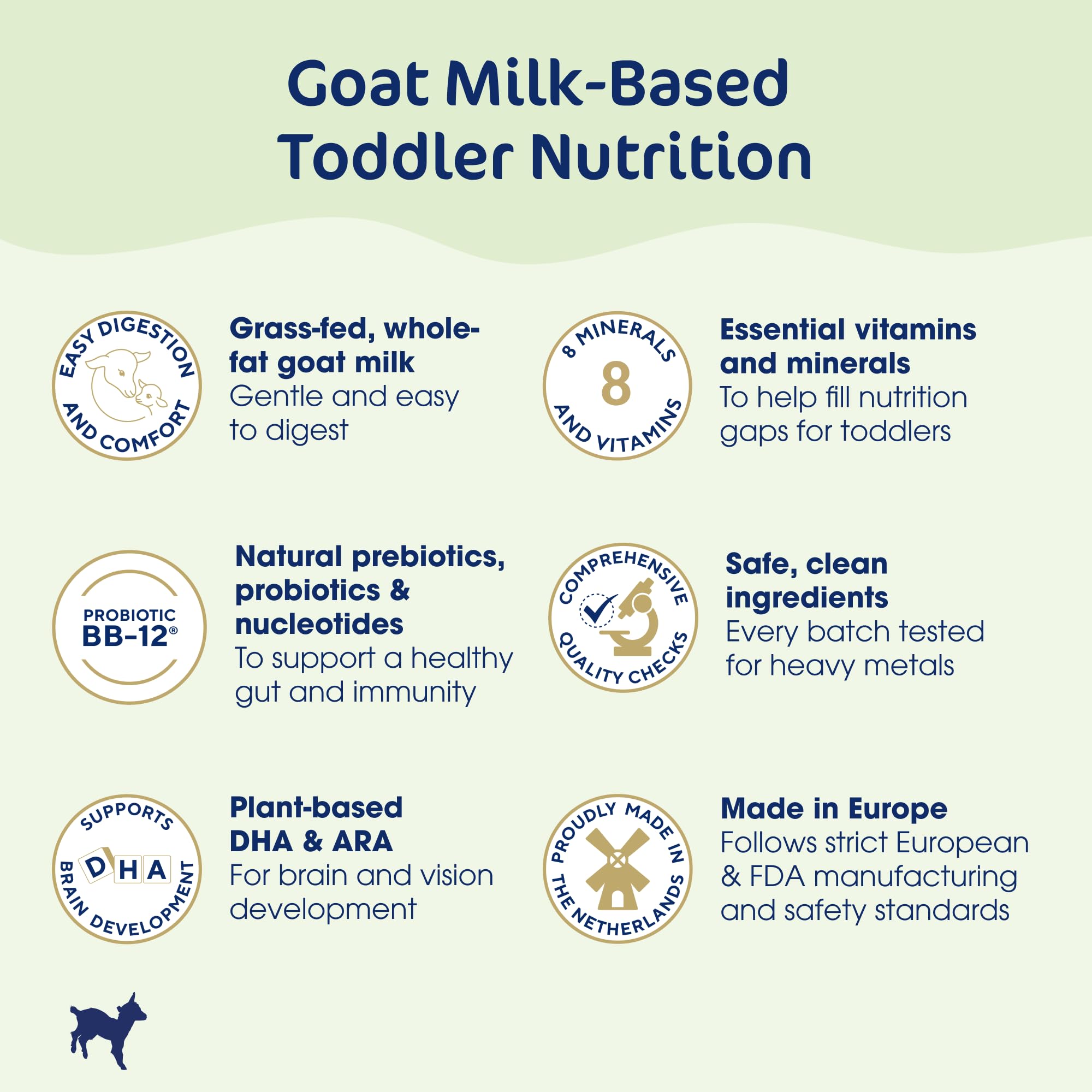
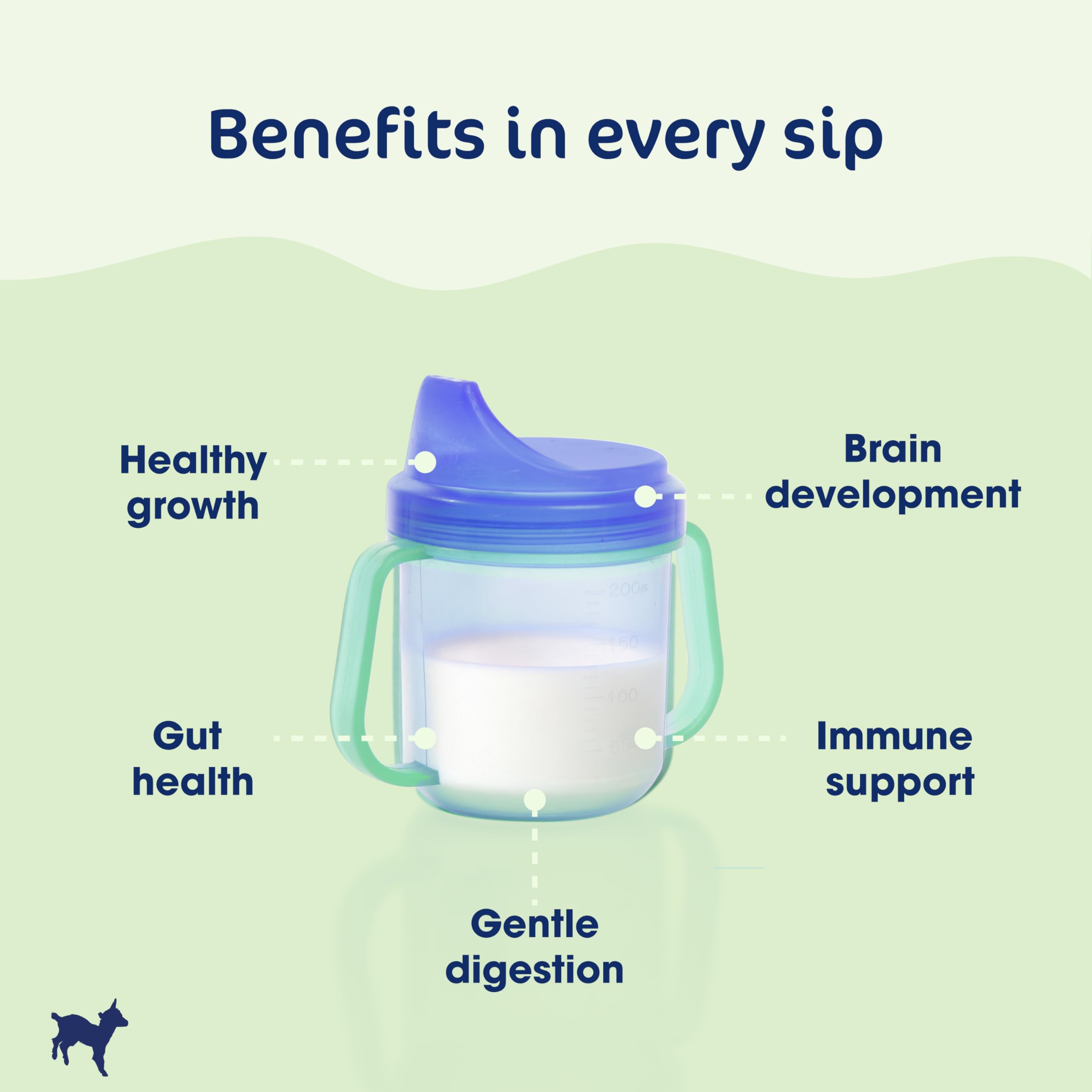
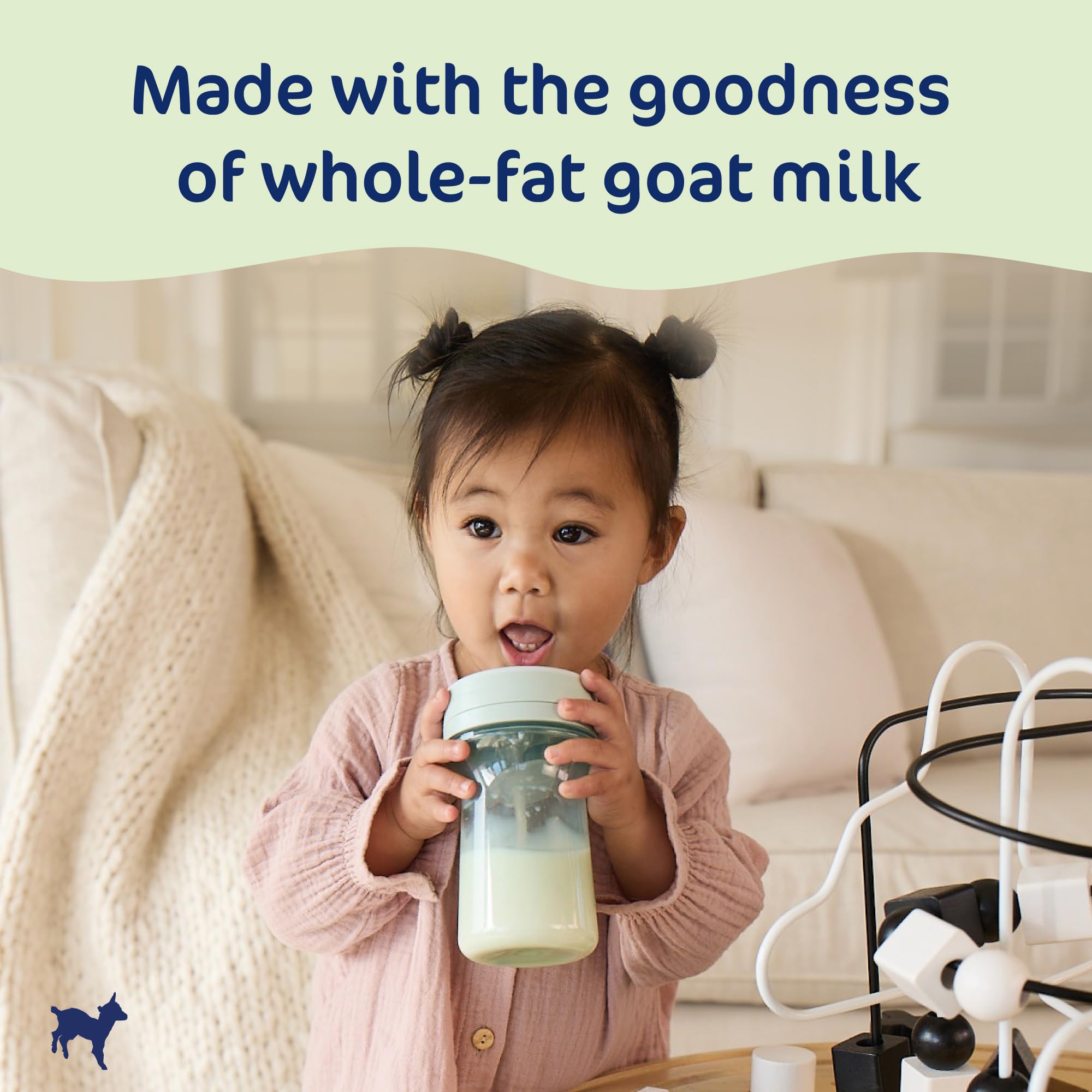
Kabrita Goat Milk-Based Toddler Nutrition Drink, 12–24 Months, Gentle & Easy to Digest, Clean Label Project Certified, Supports Gut Health, Immunity & Brain Development 28oz (Pack of 1)
- GENTLE TODDLER NUTRITION–Kabrita Goat Milk–Based Toddler Nutrition drink for ages 12-24 months, naturally easi
- SAFETY IS OUR PRIORITY – Every batch undergoes 300+ independent checks for heavy metals, pesticides, antibioti
- SUPPORTS IMMUNITY & BRAIN DEVELOPMENT – Supports toddler growth, gut health, immunity, and brain development.
4. Plant-Based Milks: When They Help, Where They Fall Short
Not every child can or will drink cow's milk, and the plant-based aisle has grown considerably. The important thing to know is that not all plant milks are nutritionally equivalent, and most fall short without fortification.
How common alternatives compare
Goat milk deserves a special mention for toddlers who seem sensitive to cow's milk but do not have a confirmed allergy. The fat globules in goat milk are smaller, and its protein forms a softer curd in the stomach, which some children tolerate more comfortably.


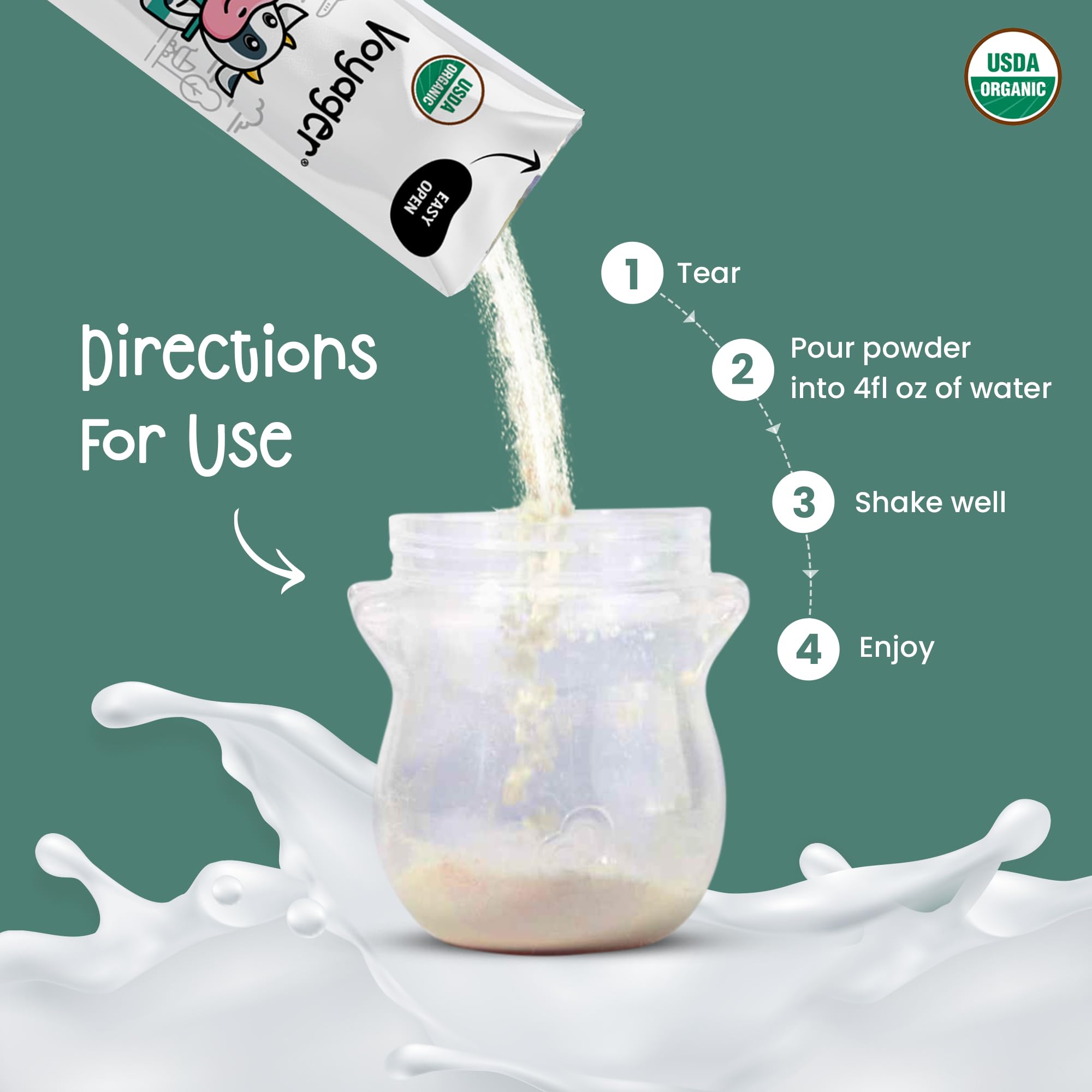

Voyager Toddler Milk On The Go, USDA Organic Shelf Stable Whole Milk Powder, Great for Travel, No Refrigeration, Gluten Free with No GMO's and No Antibiotics for Kids, 16 Sachets of 15g
- TRAVEL TODDLER ESSENTIALS: Voyager Milk is your go-to toddler travel milk for families on the move. These powd
- PEDIATRICIAN-DEVELOPED FORMULA: Trusted by parents and doctors alike, our toddler milk is created with only 3
- NO REFRIGERATION, NO PROBLEM: Our whole milk powder packets are TSA-approved and shelf stable. Just add 4 oz o
5. Practical Strategies: Making Milk Work Every Day
Even parents who understand milk's benefits sometimes struggle with logistics: children who refuse cups, families always on the move, or kids who genuinely dislike the taste of plain milk.
For reluctant milk drinkers
For busy, on-the-go families
Shelf-stable UHT milk has become a genuine lifesaver for lunchboxes and travel. Ultra-pasteurisation does reduce some heat-sensitive vitamins slightly, but the calcium and protein content is unchanged. For toddlers, travel-ready powdered milk sachets remove the refrigeration problem entirely.
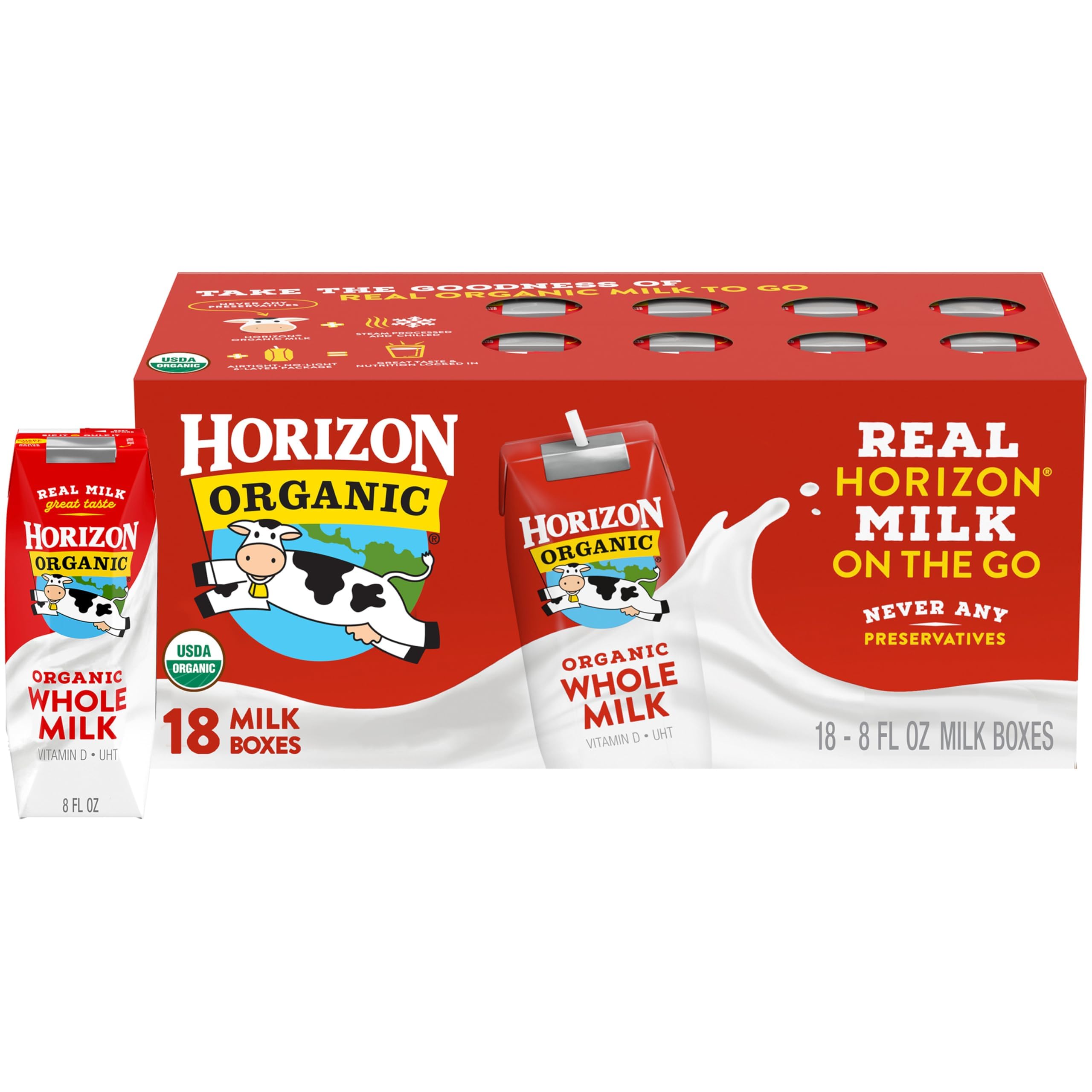


Horizon Organic Shelf Stable Whole Milk Boxes, Pack of 18 - 8g Protein per Serving
- ADD ORGANIC MILK TO LUNCHBOXES: Whole milk boxes are a great size for adding to school lunches
- SHELF STABLE: Ultra-pasteurized milk for easy, non-refrigerated storage
- ORGANIC GOODNESS: Certified USDA Organic milk from happy cows raised by our trusted farmer partners


Horizon Organic Shelf Stable Whole Milk Boxes, 8 fl oz, 6 Count - 8g Protein per Serving, USDA Organic UHT from Pasture-Raised Cows, Ready to Drink for Lunchbox, Travel, or On-the-Go, No Refrigeration Needed
- REAL, ORGANIC MILK ON-THE-GO: Single-serve whole milk boxes are great for lunchboxes and on-the-go snacking
- SHELF STABLE MILK: Ultra-pasteurized (UHT) milk for easy, non-refrigerated storage
- ORGANIC GOODNESS: Certified USDA Organic milk from happy cows raised by our trusted farmer partners
Supporting your child's gut health also supports nutrient absorption from milk. The toddler gut microbiome is still maturing in the early years, and what your child eats (including dairy) plays a direct role in shaping it.


Horizon Organic Instant Dry Whole Milk Powder, 30.6 oz, USDA Organic, Non-GMO, Shelf Stable, Great for Baking, Cooking, Beverages, Emergency Storage, Pantry Essential
- Powdered dry whole milk
- Certified USDA Organic
- Fortified with Vitamins A & D
6. How Much Milk Is Too Much?
Milk is nutritious, but more is not always better. Excess milk consumption in toddlers and young children is associated with iron-deficiency anaemia, because milk is low in iron and, in large quantities, can displace iron-rich foods from the diet. Milk also has a mild inhibiting effect on non-haem iron absorption when consumed alongside iron-rich meals.
Recommended daily upper limits by age
| Milk Type | Best Age Range | Key Nutritional Strengths | Main Limitations | Recommended Product | Approx. Price |
|---|---|---|---|---|---|
| Breast milk / formula | 0–12 months | Complete infant nutrition; antibodies; tailored composition | Formula lacks live immunoglobulins | Horizon Growing Years Milk (post-12m transition) | Varies |
| Whole cow's milk | 1–2 years | High fat for brain dev.; calcium; protein; vitamin D | Not suitable under 12m; displaces iron if overconsumed | Horizon Organic Whole Milk Boxes | $19.48/18-pack |
| Reduced-fat cow's milk | 2+ years | Same calcium/protein as whole; lower saturated fat | Less calorie-dense (fine after age 2) | Horizon Shelf Stable Milk Boxes 6-ct | $7.39/6-pack |
| Goat milk-based drink | 12–24 months | Gentler digestion for sensitive toddlers; supports gut health | More expensive; not appropriate for milk allergy | Kabrita Goat Milk Toddler Drink | $42.99/28oz |
| Organic powdered whole milk | 1+ years | Shelf-stable; great for travel and baking; no refrigeration | Requires mixing; slightly altered texture | Horizon Organic Dry Milk Powder | $23.22/30.6oz |
| Toddler milk powder sachets | 12–36 months (travel) | TSA-approved; single-serve; clean ingredients | Cost per serving higher than carton milk | Voyager Toddler Milk Sachets | $29.99/16 sachets |
Expert Insights
Every stage of your child's life calls for a different relationship with milk. In the newborn months, breast milk is almost miraculously complete. At one, a cup of whole milk is one of the simplest ways to fuel a growing brain. By the tween years, consistent calcium intake is quietly shaping bone density that will matter for decades. The milk conversation is not really about milk at all; it is about giving your child the raw materials to grow into their strongest self.
The most useful thing you can take from this guide is this: the right milk for your child is the one that fits their age, their health, and your family's reality. When in doubt, your paediatrician is your best resource, because nutrition advice that works for one child may need adjusting for another.
Save this guide, share it with another parent who is navigating the same questions, and come back to it as your child moves through each new stage.
Sources & References
- American Academy of Pediatrics. "Healthy Beverage Consumption in Early Childhood: Recommendations from Key National Health and Professional Organisations." 2019. https://www.aap.org
- American Academy of Pediatrics. "Calcium and Vitamin D: Important at Every Age." AAP Council on Nutrition. 2022. https://www.aap.org
- World Health Organization. "WHO Recommendations on Infant and Young Child Feeding." 2021. https://www.who.int
- National Institutes of Health, Office of Dietary Supplements. "Calcium Fact Sheet for Health Professionals." 2023. https://ods.od.nih.gov/factsheets/Calcium-HealthProfessional/
- National Institutes of Health, Office of Dietary Supplements. "Vitamin D Fact Sheet for Health Professionals." 2023. https://ods.od.nih.gov/factsheets/VitaminD-HealthProfessional/
- American Heart Association. "Dietary Recommendations for Healthy Children." 2023. https://www.heart.org
- USDA FoodData Central. "Milk, whole, 3.25% milkfat, fluid." 2023. https://fdc.nal.usda.gov
- Greer FR, et al. "Optimizing Bone Health in Children and Adolescents." Pediatrics. 2014;134(4):e1229-e1243.
Frequently Asked Questions
At what age can I switch my baby from formula to cow's milk?
Is organic milk worth the extra cost?
My toddler refuses milk. How do I make sure they get enough calcium?
Can my child drink too much milk?
Is goat milk better than cow's milk for toddlers with sensitive stomachs?
Do school-age children still need milk?
What is the difference between toddler formula and whole cow's milk?
Was this helpful?
Thanks — your feedback helps us pick what to write next.