Best Toddler Cups: Straw vs Sippy vs 360 Transition Cups
TL;DR: Quick summaryA straw cup is often a useful transition cup for toddlers, used alongside an open cup that you practise with at meals. Spouted sippy cups are fine in small doses, and 360 cups help teach sipping from a rim. Aim for open cups by about age 2.
In this article
TL;DR: Quick summary
A straw cup is often a useful transition cup for toddlers, used alongside an open cup that you practise with at meals. Spouted sippy cups are fine in small doses, and 360 cups help teach sipping from a rim. Aim for open cups by about age 2.
What you'll get
About 25 minutes to read. Short on time? Read the bold lines and the Key Takeaways near the end.
It is dinner time, and your toddler has just thrown a cup across the kitchen for the third time this week. The floor is wet, the dog is delighted, and you are standing in the cup aisle (or scrolling it online) wondering whether you picked the wrong one.
Here is the good news. There is no single magic cup, and you have not damaged anything by choosing a sippy cup. What matters is that your child gets practice with different ways of drinking over time.
This guide is for parents and carers of babies from about 6 months through toddlerhood. I will walk you through what each cup type asks your child's mouth to do, what the guidance really says (including where experts disagree), and how to make the switch to an open cup without a daily battle. You will also find honest notes on six cups you can actually buy.
Which toddler cup is best: straw, sippy or 360?
There is no single winner, but a mix works best. Offer a straw cup and an open cup, and use a spouted sippy cup only sometimes. A 360 cup is a useful stepping stone to open cup drinking. The goal is skills, not a perfect cup.
What each cup asks your toddler to do
Think of cups as a ladder. At the bottom is the spouted sippy cup. Many have a valve under the spout to stop spills, but your child has to suck to get any liquid out, which is just like drinking from a baby bottle.
In the middle is the straw cup. Straw use is more developmentally advanced than a spout, because it is closer to what adults use. Your child has to close their lips around the straw and control the flow.
Near the top is the 360 cup. It has an edge that allows drinking from any side of the cup, and it teaches your child to drink from a rim rather than a spout. At the very top is the open cup, which some children simply prefer from the start.
So which one should you buy?
When parents ask me to just tell them, my honest answer is this: pick one straw cup you like, add an open cup or a 360 cup for meals, and keep any spouted cup as an occasional option. That matches the advice from speech and language specialists, who suggest offering a sippy cup of any kind in moderation while also using straws and open cups.
Notice what that advice does not say. It does not say sippy cups are banned. It says variety builds skills.
Picture a toddler on an ordinary Tuesday. At breakfast she gets a few sips of water from a small open cup at the table. On the walk to the shops she carries a straw cup. At dinner she tries the open cup again, spills half of it, and laughs. That is a great day of cup practice, and nobody bought anything special.





Zak Designs Kelso Toddler Cups For Travel or At Home, 15oz 2-Pack Durable Plastic Sippy Cups With Leak-Proof Design is Perfect For Kids (DinoRoar, Zaksaurus)
- SIZE: The set contains two Zak tumblers that are 3.16 inches in diameter and 6.67 inches tall. They have a…
- MATERIAL: The durable tumblers are made of plastic with silicone straws. They're dishwasher safe, can be…
- LEAK-PROOF DESIGN: The silicone straw has a built-in valve that allows liquid to flow when drinking and…
If you want a straightforward everyday straw option, the Zak Designs Kelso tumblers are a popular choice. They come as plastic tumblers with soft silicone straws, which suit straw practice, since straw use is more developmentally advanced and closer to what adults use. With many customer reviews, plenty of families have road tested them.
Common mistakes when choosing
When should you introduce a cup, and which one first?
Start offering a cup when your baby begins solid foods, usually around 6 months. You can begin with a cup and straw, a spouted training cup, or an open cup. Many experts suggest starting with small sips from an open cup.
What the guidance says
The American Academy of Pediatrics recommends offering a cup when your child starts eating solid foods, usually around 6 months, and says you can use a spouted training cup or a cup and straw. That gives you room to choose.
The Cleveland Clinic suggests starting with a plastic or silicone cup with no lid. Once your baby is comfortable with an open cup, you can add cups with straws. The NHS agrees that an open cup, or a free flow cup without a valve, helps your baby learn to sip and is better for their teeth.
One example from speech and language specialists shows how this could look. Parents might start with small sips from an open cup at 6 months, then around 7 or 8 months try a squeezable straw cup, so the child can see where the liquid comes from. You do not have to follow that timeline exactly, but it shows the order: open cup sips first, straw second.
How to run your first open cup practice
Open cup practice is short and silly, and it works best when you are relaxed. Here is a simple routine.
- Sit your baby upright in their seat, ideally in a supportive high chair. If you are shopping for one, our guide to budget high chairs that are safe and comfortable is a good place to start.
- Pour just a small amount into a light cup. Ask your doctor or health visitor what drink suits your baby's age.
- Hold the cup with them at first. Tip it slowly until the rim rests on the lower lip.
- Let a tiny sip arrive, then take the cup away so they can swallow.
- Say something simple like, "Sip, sip, all done," and hand them a cloth to wipe their face.
- Stop when they lose interest. Two good sips beat ten fussy ones.
If you are still working out what goes in the cup, our article on milk for kids by age covers the types and how to choose.
What if your baby hates the open cup?
Some children do. The AAP notes that some children may prefer an open cup without a straw, and the NHS notes that for some children straw drinking will be easier to learn first. So if open cups lead to tears, a straw cup is a perfectly good way in. Come back to the open cup when your child is calm, with no pressure.
For cup practice at the table, a light, cheap cup is a gift. The First Years Take & Toss Bluey cups come with snap on lids, so they are easy for little hands to handle. Because the lids come off, you can use the cup itself without the lid for open cup practice, and you will not panic when it ends up on the floor.


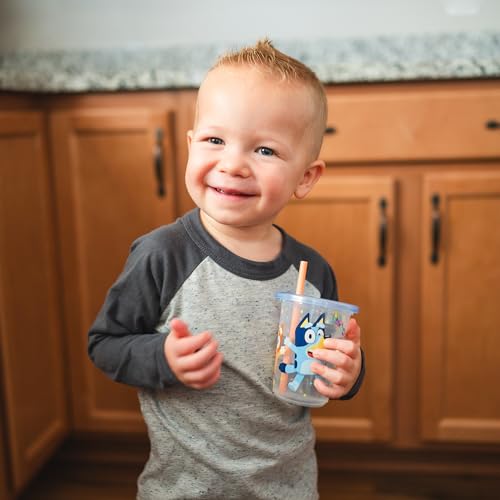

The First Years Take & Toss Bluey Sippy Cups - 10 Count
- Perfect for Families: Your kids will love these cups featuring their favorite Bluey characters and parents…
- Perfect for Travel: The Take & Toss Bluey toddler cups are durable enough to use again and again, but at a…
- Perfect for Parties: Skip the line for Bluey party supplies and grab some colorful Take and Toss cups to…
Common mistakes at the start
Are sippy cups bad for teeth and speech?
Not in the way social media suggests. Speech and feeding specialists say no research has found negative effects from sippy cups, and no scientific evidence links them to oral and facial development problems. The real risk is using only one cup type, or valve spouts that keep drinking like a bottle.
Where the experts agree and disagree
Here is the honest picture. The speech and language world says there is no scientific evidence linking sippy cups to problems with oral and facial development.
There’s no scientific evidence that links sippy cups and problems with oral and facial development.
ASHA Leader, Skip the Sippy
The same source says the more likely issue is that children who never practice with straws and open cups will not gain those skills. That is a skills gap, not damage.
Other guidance is more cautious. A hospital cup guide from the NHS says to avoid the spouted lid because it promotes a tongue forward posture.
Avoid the spouted lid as it promotes a tongue forward posture.
NHS, Choosing a Cup
The Cleveland Clinic adds that spill proof cups may be more convenient and make less mess, but can promote drinking patterns like jaw protrusion and unusual tongue placement. So you will see different tones in different places.
How I would make sense of the mixed messages
I read all of this the same way. A spouted cup is a tool, and a tool is fine when it is one of several. A spouted cup as your child's only drinking method, all day, is where the concern lives.
That is why the middle path keeps winning: a sippy cup in moderation, with straws and open cups in the mix. You are not choosing a side. You are giving your child's mouth a varied workout.
What about teeth?
Dentists recommend sippy cups with a hard spout or a straw, rather than ones with soft spouts. The NHS adds that an open cup or a free flow cup without a valve is better for teeth. Waiting too long to move to open cups may also raise the risk of cavities.
The other dental habit has nothing to do with cup shape. A cup that travels everywhere, sipped on all day, keeps liquid around the teeth. Make cups something that happens at meals, snacks and set drinks times, and keep your child's dentist in the loop.
The staged approach, in plain words
The NHS cup guide sets out three stages for children who need a gentle path. Stage 1 uses a soft spouted feeder cup with a valve. Stage 2 uses the same kind of cup without the valve. Stage 3 introduces a free flow cup with a hard spout, or an open cup, depending on your child's skills and preference.
You do not need to follow it like a prescription. But it shows the direction of travel: away from a valve, toward a free flow cup or an open cup.

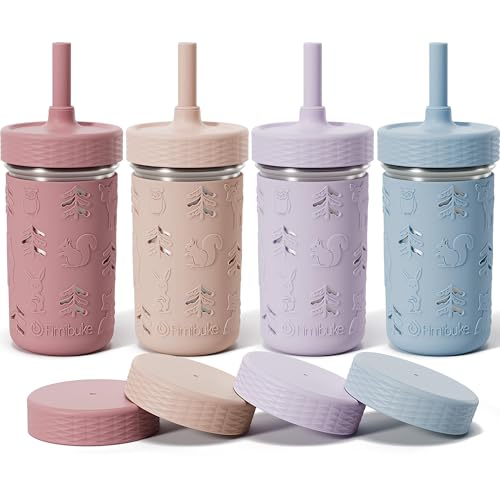
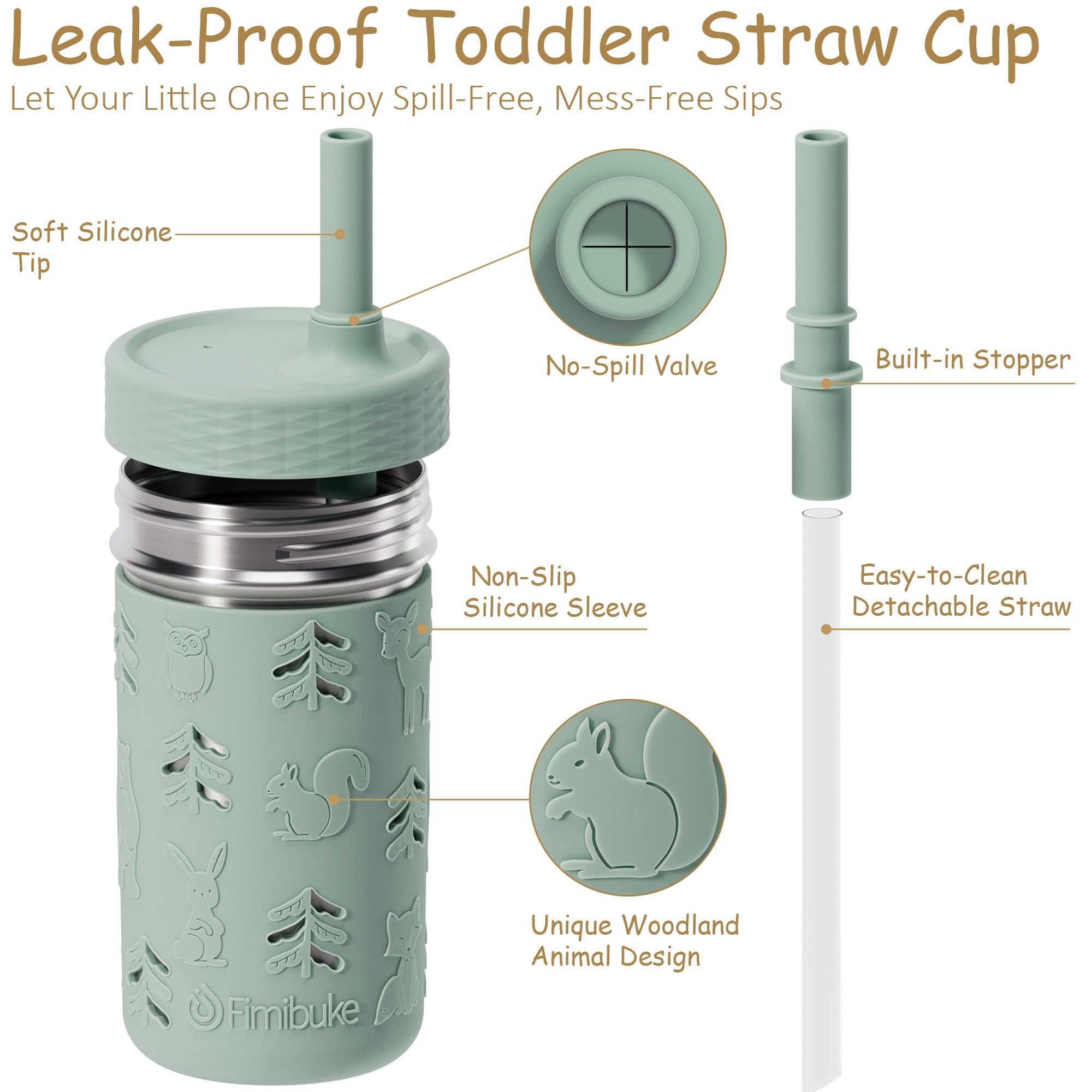
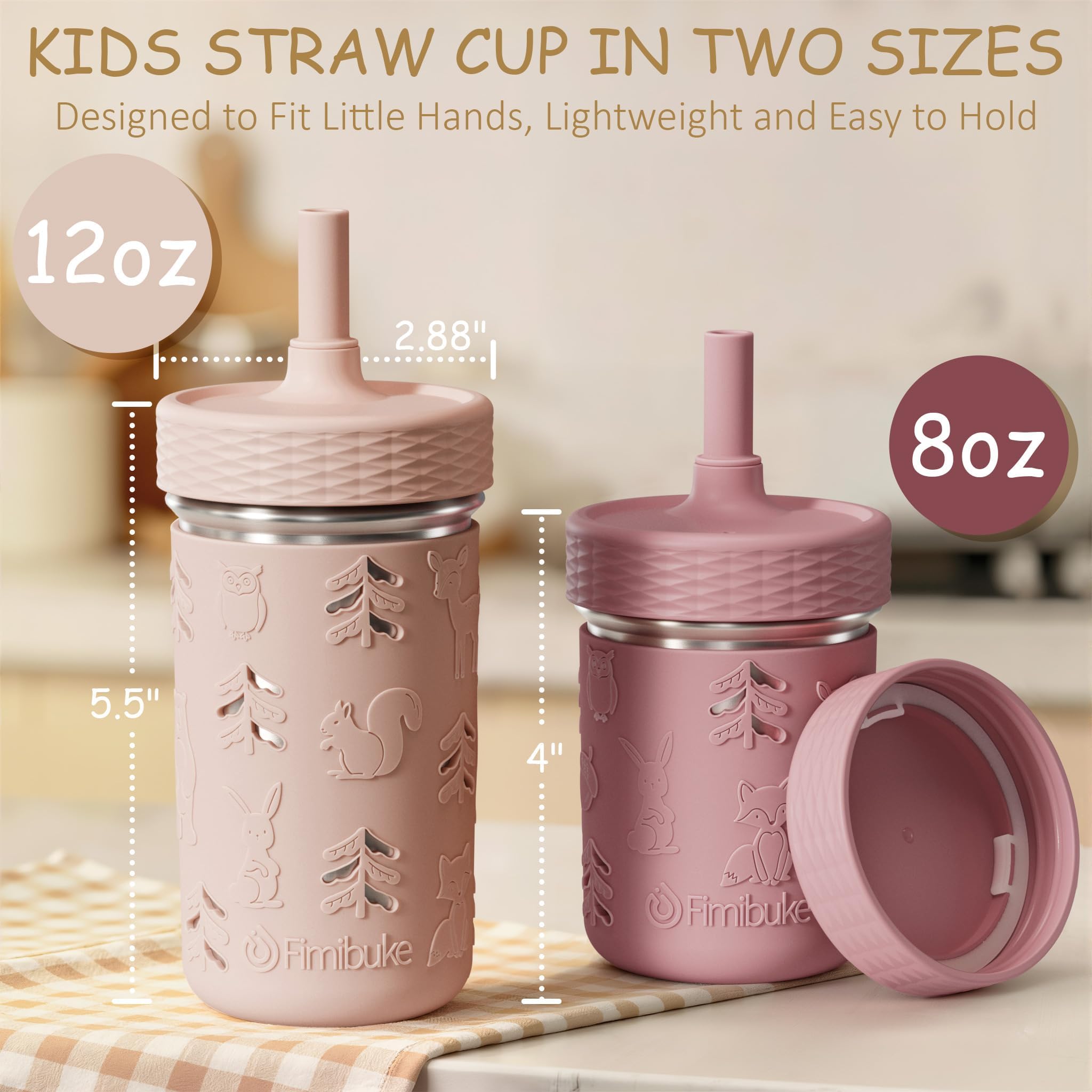
Fimibuke Toddler Cups Spill Proof, 12 OZ Stainless Steel Sippy Cups for Kid
- 3-IN-1 KIDS CUP FOR EVERY STAGE OF GROWTH: Designed for ultimate flexibility, our toddler cups boast…
- SPILL PROOF TODDLER CUPS WITH STRAW: Say goodbye to messy spills with these toddler cups spill proof…
- KID-FRIENDLY DESIGNS & EASY TO USE: Empower your child’s independence with our thoughtfully designed toddler…
If you like the idea of one cup that does a bit of everything, the Fimibuke 12 ounce stainless steel cup is one option to compare, and you should check that its lids offer a straw or open-cup option. It is worth checking the current price and read recent reviews first, since star ratings change over time. If you use the spout, check whether it is a hard spout, since that is what dentists prefer.
Common mistakes with spouted cups
Why do speech therapists like straw cups?
Straw use is more developmentally advanced than spout drinking, and it is closer to what adults use. Straws ask your child to close their lips and control the flow. For some children, straws are even easier to learn than open cups at first.
What a straw teaches
Many sippy cups have a valve under the spout, and kids must suck to get any liquid, just like a baby bottle. Specialists encourage offering straw cups as children enter toddlerhood and early childhood, since straw use is a step up in skill.
That is not me inventing a rule. It is why the ASHA example suggests trying a squeezable straw cup around 7 or 8 months, when your baby can watch the liquid rise. Seeing where the drink comes from makes the idea click.
How to teach straw drinking, step by step
Some children take to straws at once. Others need a gentle assist. The NHS notes that your child may need you to help by giving support around their lips.
- Choose a quiet moment when your child is calm and a little thirsty.
- Let them see and touch the straw, and show them how you drink from yours.
- Put the tip of the straw gently between their lips. Say, "Lips round the straw."
- If it is a soft, squeezable cup, a tiny squeeze can send a drop of liquid to the tip so they taste success.
- Give light support around the lips if they need help closing them.
- Praise the attempt, not the amount: "You got it! That was a real sip."
Choosing a first straw cup
For a baby just starting out, a weighted straw can be easier because the straw follows the liquid as the cup tilts. The bc babycare weighted straw cup is one weighted option to compare, though check its label for the age it suits. It has handles to help little hands grip and a weighted base that keeps it upright. The maker also describes features meant to slow the flow. Those are the maker's claims, so judge the cup by how your own child handles it. Please do not rely on any cup to make drinking safer, and always have your baby sit up for drinks.

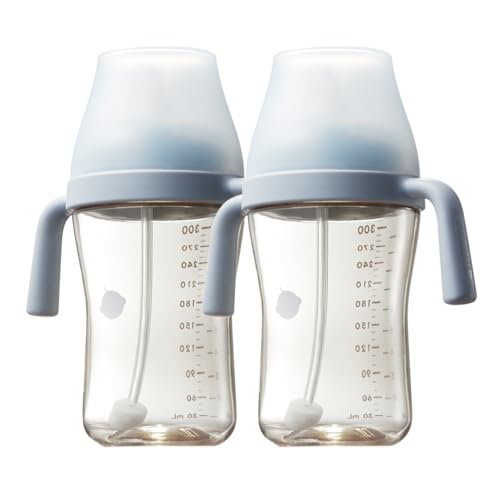
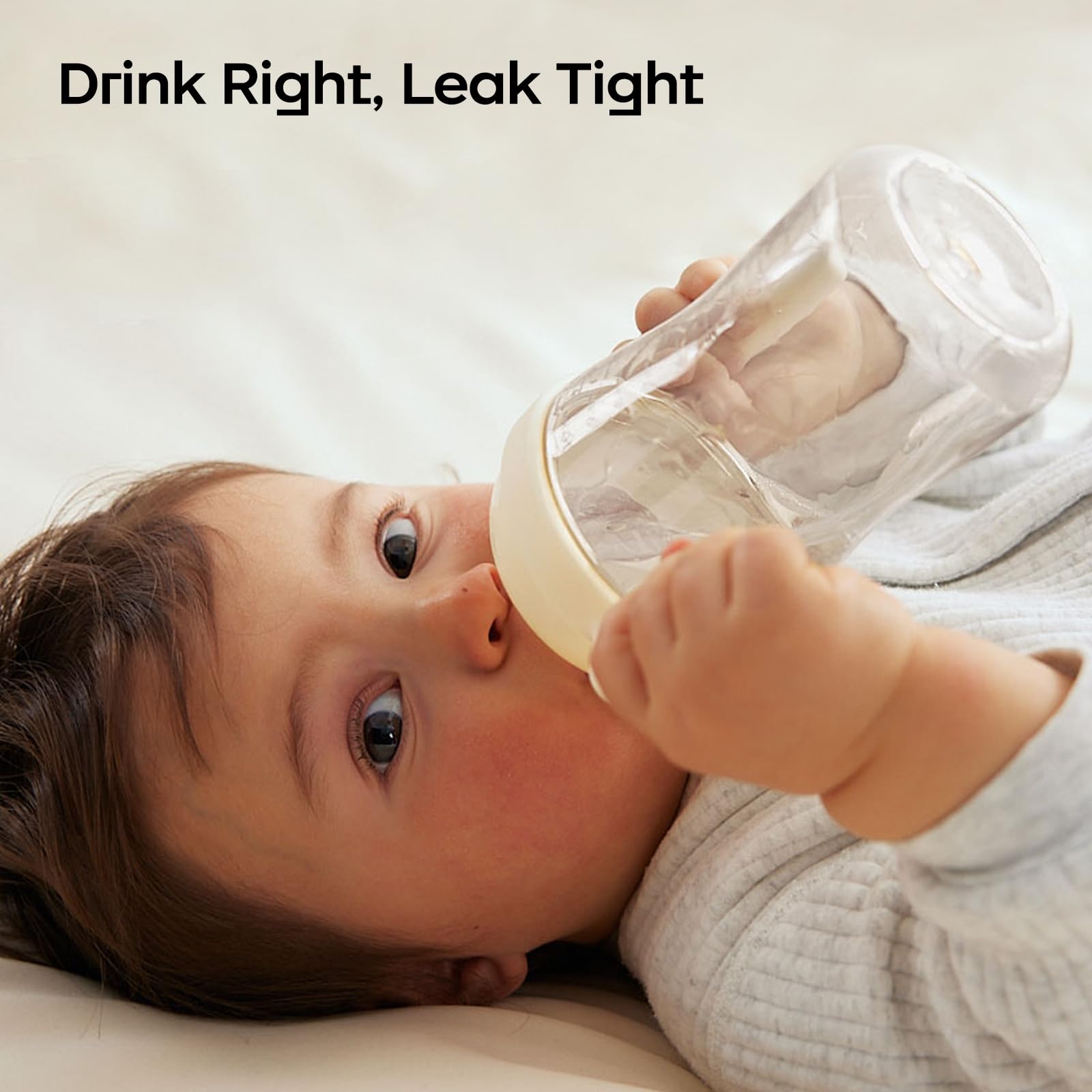
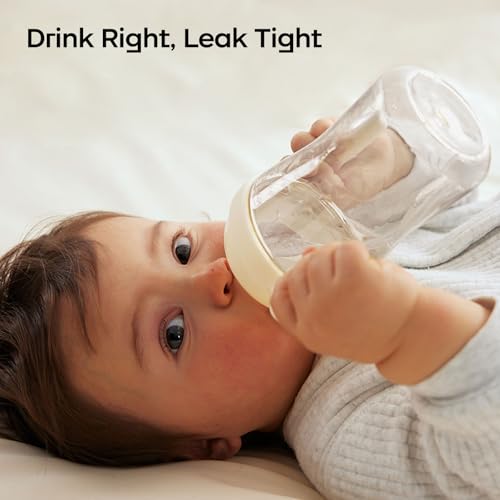
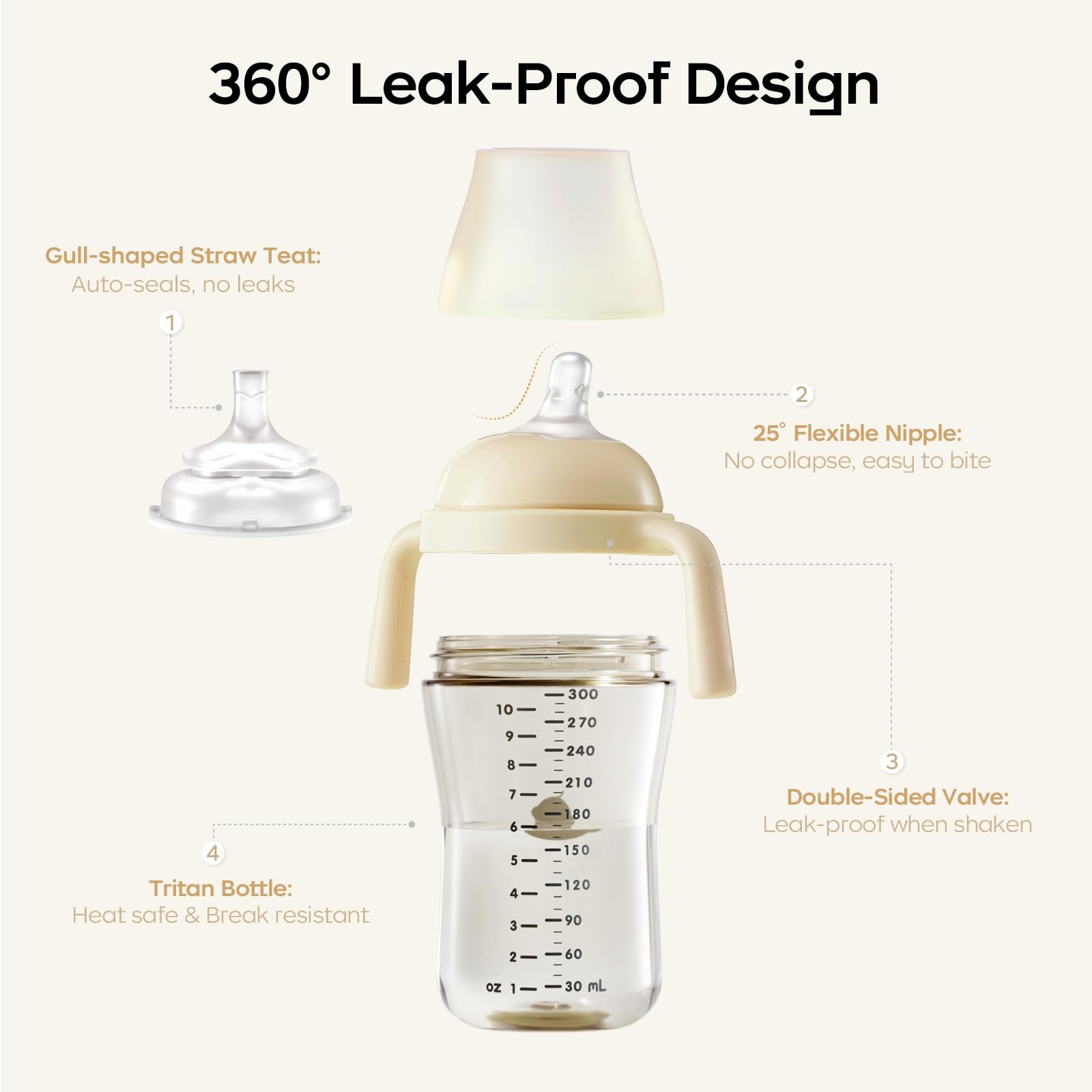
bc babycare Sippy Cup Learner for 6+ Month Old with Nipples & Handles, Spill Proof Sippy Cup, Weighted Straw Toddler Cups, Anti-Choking Baby Cups 2 Packs, Blue
- 13° Inclination: Sippy cup is designed with 13° inclination Angle, so that the baby can let the liquid enter…
- Double-side Outlet: Straw cups uses a new outlet method with double-side outlet, which can make the water…
- Conical Gravity Ball: Baby milk cup with new conical gravity ball, easier to suck even low water level. sippy…
For a toddler who has the basic idea, a plain tumbler is simple and easy to clean. The Infantino My 1st Tumbler is a cup with a handle, a soft straw tip and a valve to reduce spills. It is sold in multipacks, which suits families who lose cups at daycare. The small size is a good fit for small hands.
A note on valves
Valves in straws stop spills, which is lovely in a car seat. But they can also make your child work harder to get any liquid out. The NHS leans toward free flow cups without a valve for learning to sip. So treat valve straw cups as handy for travel and use a valve free option, like an open cup, for practice at home.
Common mistakes with straw cups
What is a 360 cup, and do you need one?
A 360 cup has an edge that allows drinking from any side, so your toddler learns to sip from a rim rather than a spout. It is a bridge between a sippy cup and an open cup. You do not need one, but it can make the switch less messy.
How a 360 cup works
Picture a cup with a lid. Instead of a spout, the lid has a rim, and your child can put their mouth anywhere on that rim and drink. Some cups have a weighted base that pulls them upright when they tip, which helps minimise spills.
That rim is the clever part. It teaches your child to tip the cup, press their lips to an edge, and sip. That is exactly the skill an open cup demands.
Where a 360 cup fits on the ladder
Think of it as a rung between the sippy cup and the open cup. The Cleveland Clinic suggests starting with a plastic or silicone cup with no lid, then adding straws once your baby is comfortable. A 360 cup is a way to get the benefit of rim drinking when you are not ready for a fully open cup at the dinner table, such as in the car or at a restaurant.
The NHS also encourages families to move from a lidded beaker to an open cup as soon as the child is ready. So a 360 cup is useful while you work toward that, not something to keep for years.
What to look for in a 360 cup
None of the six cups I list in this article is a 360 cup. They are mostly straw cups, so I am not going to pretend otherwise. If you want a 360 cup, here is a checklist.
A quick example
Picture a toddler at a restaurant. Everything is quiet for four minutes, and then comes the crash of a cup. A 360 cup lets your child sip from the rim like a grown up while you stay calm about spills. At home, you pour a splash into a small open cup for the same meal.
You can also make a cheaper plan. A lightweight cup like the Take & Toss Bluey cups with the lid off gives open cup practice at home, so you may not need to buy a special 360 cup at all.
Common mistakes with 360 cups
How do you move your toddler to an open cup by age 2?
Most toddlers should graduate to open cups by age 2. Go gradually: keep a straw or 360 cup as a bridge, practice open cup sips at meals, and drop the spouted cup first. Expect spills; they are part of learning.
Why age 2 matters
The Cleveland Clinic warns that waiting too long may raise the risk of cavities, unhealthy weight gain, and feeding and behavioral issues. That sounds scary, but part of the concern is that if children rely on one cup and do not practise others, they will not gain those skills. It does not mean you have failed if your child is 20 months and still using a spouted cup. It means the next few months are a good time to shift gear.
The NHS puts it more gently: as soon as your child is ready, encourage them to move from a lidded beaker to an open cup.
A step by step plan
- Start at one meal. Pick the calmest meal of the day and offer a small open cup there.
- Use a small, light cup. A heavy cup is hard to tip and easier to drop.
- Pour a little. A small amount means a small mess.
- Keep the other cup nearby. A straw cup or 360 cup is the safety net, not a failure.
- Add a second meal once the first is going well.
- Retire the spouted cup first, then the straw cup for meals, keeping it for outings.
What to say, word for word
Your tone does more than any cup. Try these phrases.
And avoid these, even when you are tired.
What to do about throwing and refusing
Toddlers test cups. Throwing is usually curiosity, not defiance. Calmly say, "The cup stays on the table. If you throw it, we are all done," then take it away once and try again later.
If your child refuses all cups other than the one they know, stay steady. Offer the new cup at the same times each day and leave the old cup out of sight. A few meals later, most children are much more flexible. If your toddler's feeding battles stretch beyond cups, this guide to five ways to end toddler picky eating food battles may help.

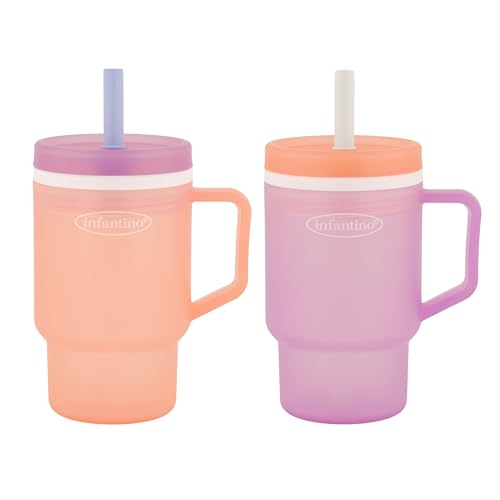

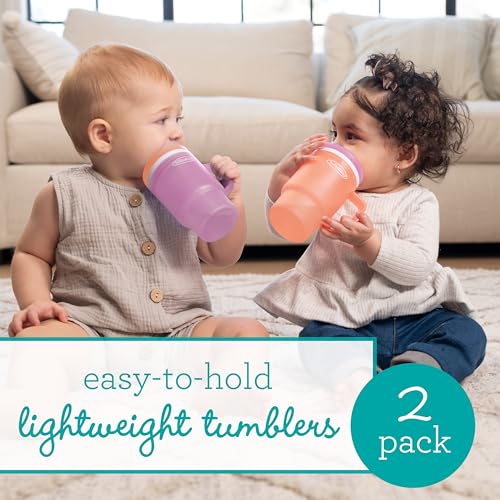
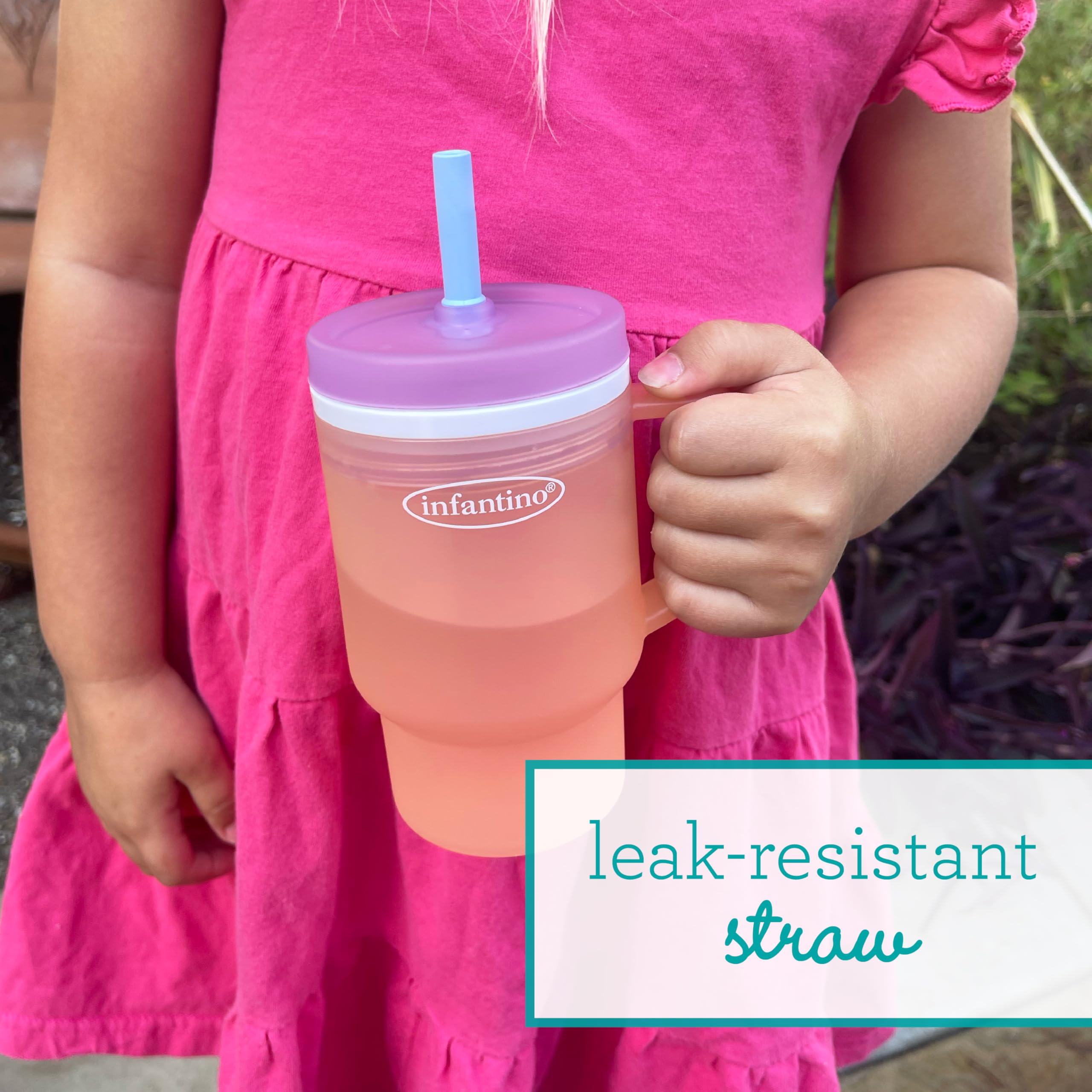
Infantino My 1st Tumbler 10 Oz Plastic Sippy Cup, Seashell/Lavender, 10 Ounces (Pack of 12)
- The information below is per-pack only
- TODDLER-FRIENDLY & JUST THE RIGHT SIZE: This lightweight 10oz training cup with handle is perfectly sized for…
- LEAK-RESISTANT STRAW DESIGN: The built-in straw features a soft silicone tip and a smart valve to help…
For the in between phase, a cup with a handle and a small size is a gift. A cup with two handles helps little hands get a grip, so a handled tumbler such as the Infantino My 1st Tumbler lets your child practise holding and lifting before moving on to the open cup.
When to get help
Please ask your doctor, health visitor or a speech and language therapist for advice if you notice any of these.
I will not give you a set number for any of these. If it worries you, it is worth a conversation.
How do you choose and look after a toddler cup day to day?
Pick a cup that is simple, easy to clean and easy to hold. The American Academy of Pediatrics suggests a snap on or screw on lid with a simple spout, two handles for little hands, and possibly a weighted base that pulls the cup upright. Then match the cup to the situation.
A simple checklist for choosing
Matching the cup to the situation
You probably need more than one cup, and that is fine. Here is how I would think about it.
At home at meals. Use an open cup or a lidless cup. This is where practice happens.
In the car or stroller. A straw cup is handy in the car, but offer it in moderation, because a valve makes kids suck much as they do from a bottle. Ask your doctor or health visitor which kind of cup suits your child. I would still have your child sit upright to drink, whatever any maker says about the cup's features.
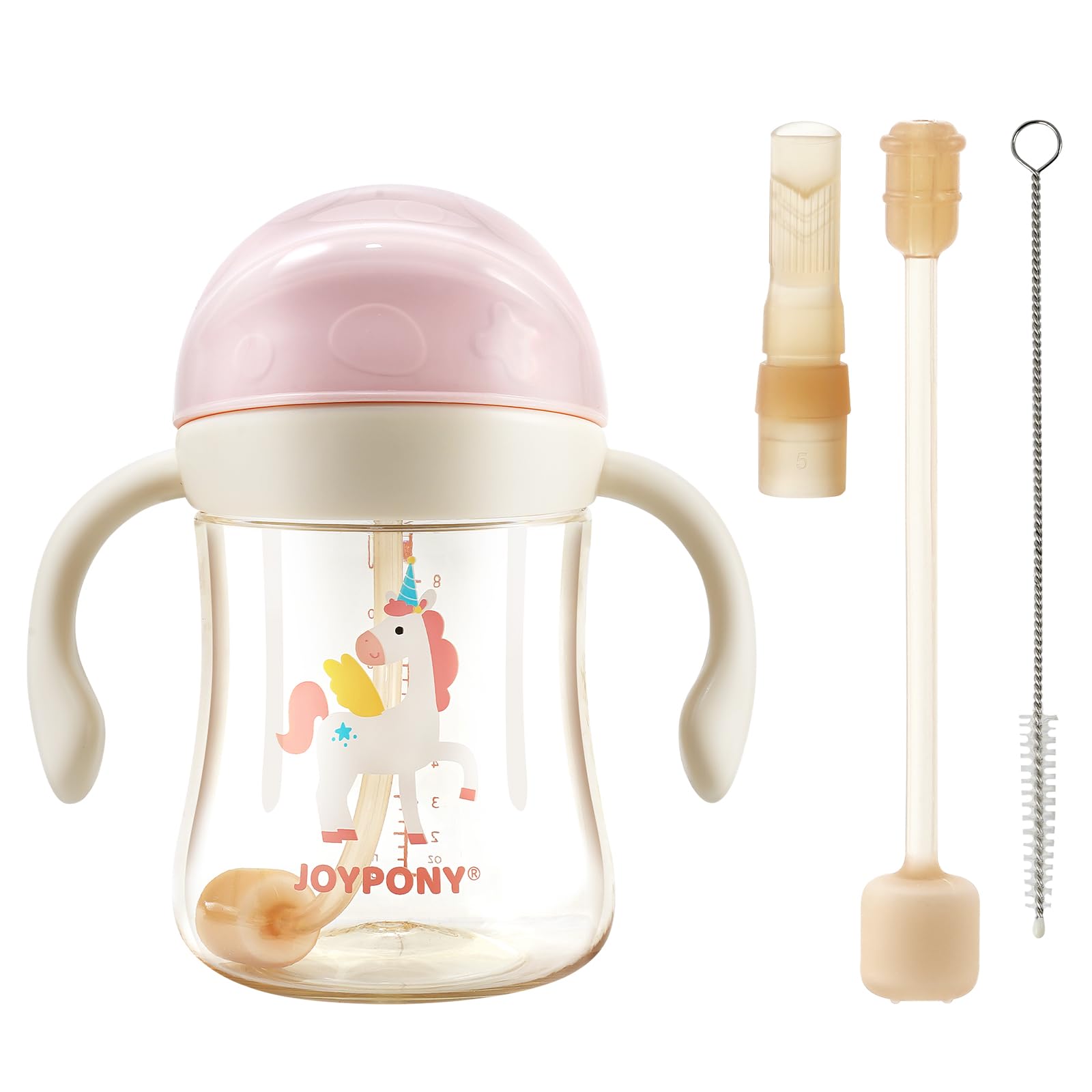

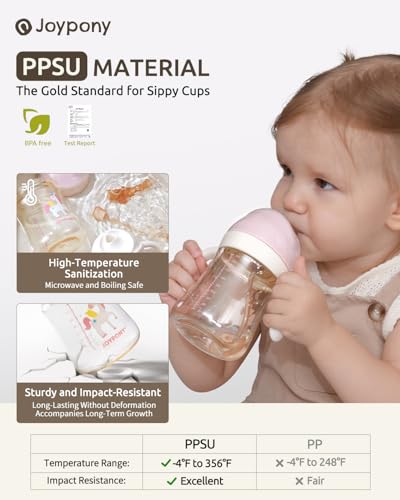

Joypony Sippy Straw Cups for Toddlers 1-3, Spill-Proof Baby Cup, 9 oz Pink
- PPSU Material for Durability: Crafted from high-quality PPSU, this sippy cup is BPA-free, offering strong…
- No-Spill, Easy Drinking: With a 4-layer anti-leak design, the cup ensures no spills, even when inverted. The…
- Simple to Use & Clean: Joypony toddler cup is designed for effortless use, featuring easy assembly…
At daycare and parties. Cheap and replaceable wins. The First Years Take & Toss pack is built for that, and you will not mind if one goes missing.
For a longer lasting option. For a longer lasting option, the Fimibuke stainless steel cup can grow with your child as they change cups.
Keeping cups clean
Cups are warm, wet, milky places, so wash them often. Pull the lid, straw and any valve apart each time, because that is where residue hides. Cups with a wide neck and fewer parts are easier to scrub. Always check the maker's instructions before using a dishwasher or a microwave.
Cups and fussy eaters
Cup battles and food battles often show up together. If your child is picky with food, they may also be picky with cups, because they like what is familiar. Keep the pressure low at the table and offer the same calm routine every time. Our article on what is normal for a picky eater explains what to expect and what really helps.
Common mistakes in everyday cup life
Comparing the options at a glance
None of the six products I list is a 360 cup, so the table covers the cup types I can link to. The age ranges are loose, since every child is different.
| Option | Best Age Range | Primary Benefits | Main Drawbacks | Recommended Product | Price Range |
|---|---|---|---|---|---|
| Open cup with no lid | From about 6 months for small sips | Teaches sipping, better for teeth | Messy at first, needs your help | First Years Take & Toss Bluey cups | About $14 for 10 |
| Weighted straw cup | From about 6 to 8 months | Easy first straw, helps lip closure | Cups with a valve or small parts need careful cleaning | bc babycare weighted straw cup | About $32 for 2 |
| Straw tumbler with valve | Older babies and toddlers | Few spills, easy to carry, no pull straw | Valve makes your child work harder to drink | Zak Designs Kelso tumblers | About $14 for 2 |
| Spill resistant travel straw cup | Toddlers | Locking lid, durable, handy on the go | Not a substitute for open cup practice | Joypony sippy straw cup | About $18 |
| Steel cup with straw or spout lid | Toddlers | Lasts longer, silicone sleeve for grip | Costs more, mixed reviews | Fimibuke stainless steel cup | About $36 |
Straw cups suit children from around 7 or 8 months in one example from speech specialists, and most toddlers should reach open cups by age 2.
Your questions, answered
Key Takeaways
- The best toddler cup is not one cup. It is a mix of straw, open and sometimes 360 or spouted cups.
- Offer a cup when solids start, usually around 6 months, and begin with small sips.
- Straw use is more developmentally advanced than a spout, so give your toddler straw practice.
- Spouted cups with a valve work like a bottle, so use them in moderation.
- A 360 cup teaches drinking from a rim rather than a spout, and its edge allows drinking from any side.
- Aim for open cups by about age 2, and move gradually with a calm routine.
- Choose cups that are simple, easy to clean and easy to hold, and ask your doctor if you have feeding worries.
One last thought
If your toddler is still on a spouted cup, or tossing every cup you buy, you are not behind. You are in the middle of a messy, normal skill that most children master with calm practice and a bit of variety.
The cup matters less than the habit: a few relaxed sips from different cups, most days, with a cloth nearby. Cups are tools, and spills are how toddlers learn.
If this helped, save it for the next time cup shopping gets overwhelming, share it with another tired parent, and subscribe for more clinic style advice from tinymindsworld.com.
Sources & References
- American Academy of Pediatrics. "From Bottle to Cup: Helping Your Child Make a Healthy Transition - HealthyChildren.org."
- American Academy of Pediatrics. "AAP Search: sippy cup."
- Cleveland Clinic. "When and How To Wean Your Baby Off Bottles and Sippy Cups."
- KidsHealth. "Stopping the Bottle (for Parents)."
- NHS. "Drinks and cups for babies and young children."
- ASHA Leader. "Skip the Sippy? Coaching Parents on Sippy Cup Use."
- NHS. "Choosing a Cup."
Frequently Asked Questions
What is the best cup for a 1 year old?
Are straw cups better than sippy cups?
Do sippy cups cause speech problems?
When should my child switch to an open cup?
What is a 360 cup and is it good for toddlers?
Are soft spouts or hard spouts better?
My toddler refuses the open cup. What should I do?
Was this helpful?
Thanks — your feedback helps us pick what to write next.