Meal Prep Gadgets for Busy Parents in 2026: 6 That Save Hours
The right six meal prep gadgets can cut your weekly kitchen time by several hours, making consistent home-cooked meals realistic even on the busiest family schedule.
In this article
Why Busy Parents Need a Smarter Kitchen Toolkit in 2026
It is 6:45 PM on a Wednesday. You have just walked in the door with three hungry kids in tow, and the fridge holds a lonely bell pepper and last night's rice. According to the U.S. Bureau of Labor Statistics' American Time Use Survey (2023), parents in two-earner households spend an average of 34 minutes per day on meal preparation, yet a majority report feeling chronically stressed about getting nutritious food on the table. The gap between time spent and satisfaction achieved is the real problem, and it is one that the right tools can genuinely close.
This article is a practical, evidence-grounded guide to six categories of gadgets and containers that will actually change your weekly routine. It is not a wishlist of expensive appliances.
What you will understand after reading:
1. The Multi-Blade Vegetable Chopper: Reclaim 20+ Minutes Per Session
Knife work is the single largest time sink in home cooking, and a quality multi-blade chopper removes most of it.
Studies in food-science literature consistently show that prep work, not cooking time, is what discourages home cooking on weeknights. A multi-blade press-style chopper with interchangeable blades handles dicing onions, cubing sweet potatoes, and julienning carrots in seconds rather than minutes. For families with babies or toddlers, the ability to quickly dice soft-cooked vegetables into appropriately sized pieces is a genuine safety and convenience win.
What to look for in 2026
Age-specific use: For parents of babies 6 to 12 months, a fine-dice blade lets you prepare finger foods at the correct size (roughly the width of an adult pinky fingernail) recommended by the American Academy of Pediatrics' guidance on starting solid foods.
2. Glass Meal Prep Containers: The Oven-to-Table Workhorses
Borosilicate glass containers are the gold standard when you need to prep, refrigerate, reheat, and serve in one vessel without worrying about chemical leaching.
Plastic containers are convenient, but the science around PFAS (per- and polyfluoroalkyl substances) and high-heat use has made many families understandably cautious. The U.S. Food and Drug Administration has been progressively tightening guidance on plastics in food contact, and borosilicate glass sidesteps the issue entirely. It goes from freezer to oven to table without cracking, and it does not absorb odours or stain.


M MCIRCO 10-Pack,30 Oz Glass Meal Prep Containers 2 Compartments Airtight Lunch Bento Boxes with Lids, Glass Food Storage Containers, Microwave, Oven, Freezer, Dishwasher
- GREAT SIZE: Our 10 glass sets (10 lids and 10 containers) size: 7.8(inch)x5.7(inch)x2.5(inch),Capacity: 860ml
- PREMIUM BOROSILICATE GLASS:Our glass storage containers are made from premium borosilicate glass, which is str
- AIRTIGHT SMART LOCKING LIDS: MCIRCO Glass food storage containers use snap lock lids that comes with silicone
The M MCIRCO 10-pack glass containers are a standout option here. Made from premium borosilicate glass with airtight snap-lock lids and silicone seals, they are rated for oven and microwave use and come in a two-compartment design that keeps, for example, roasted chicken separate from vegetables without needing a second dish.
Best for which families?
3. Three-Compartment Plastic Containers: The School-Lunch Champions
A well-designed three-compartment plastic container solves the most persistent packed-lunch problem: everything ending up tasting the same because the food has migrated together.
Compartment separation matters nutritionally, too. The Harvard T.H. Chan School of Public Health's "Healthy Eating Plate" model recommends that roughly half of every meal be vegetables and fruit, a quarter protein, and a quarter whole grain. A three-compartment tray makes that visual portion guide automatic, which is especially useful when children are old enough to pack their own lunches.
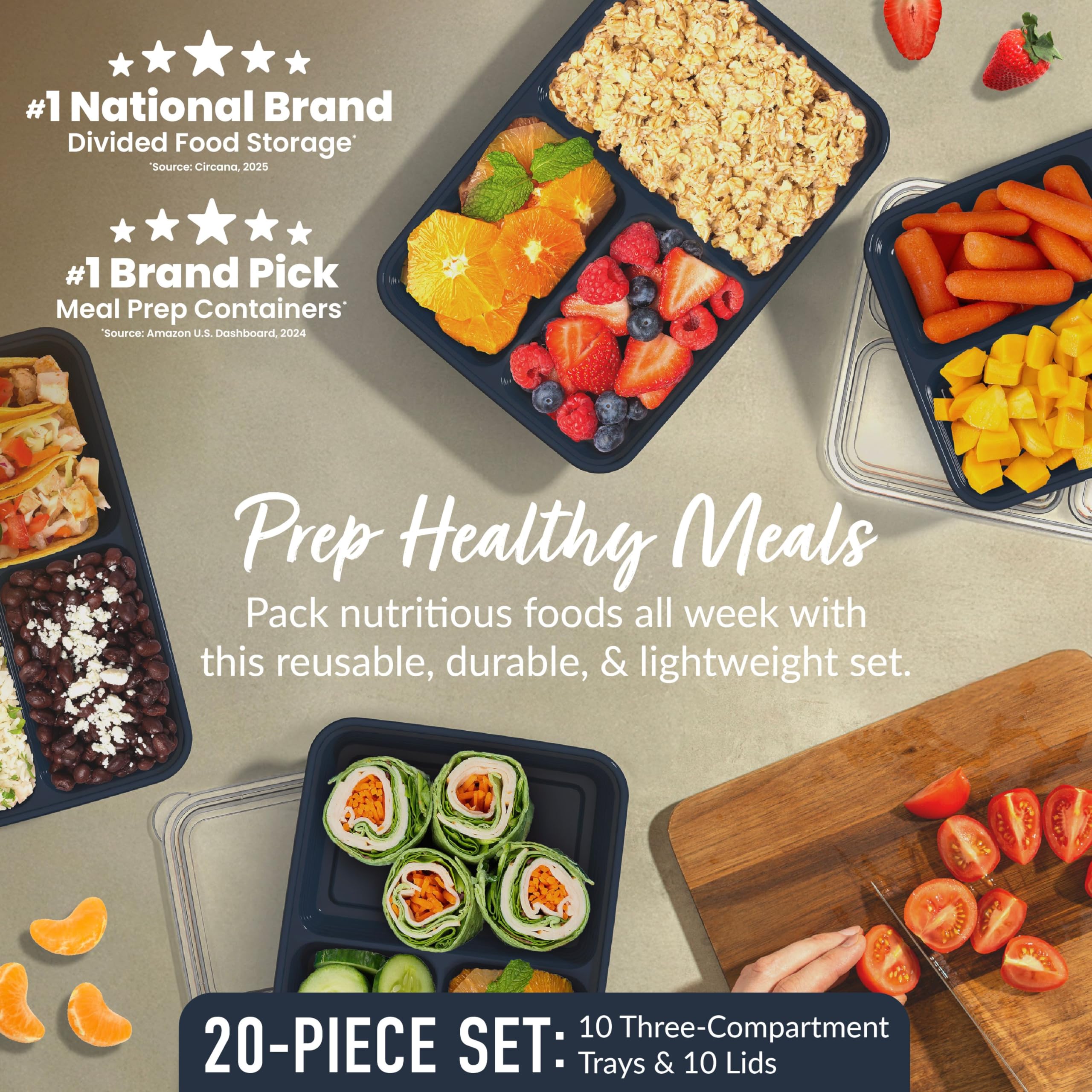
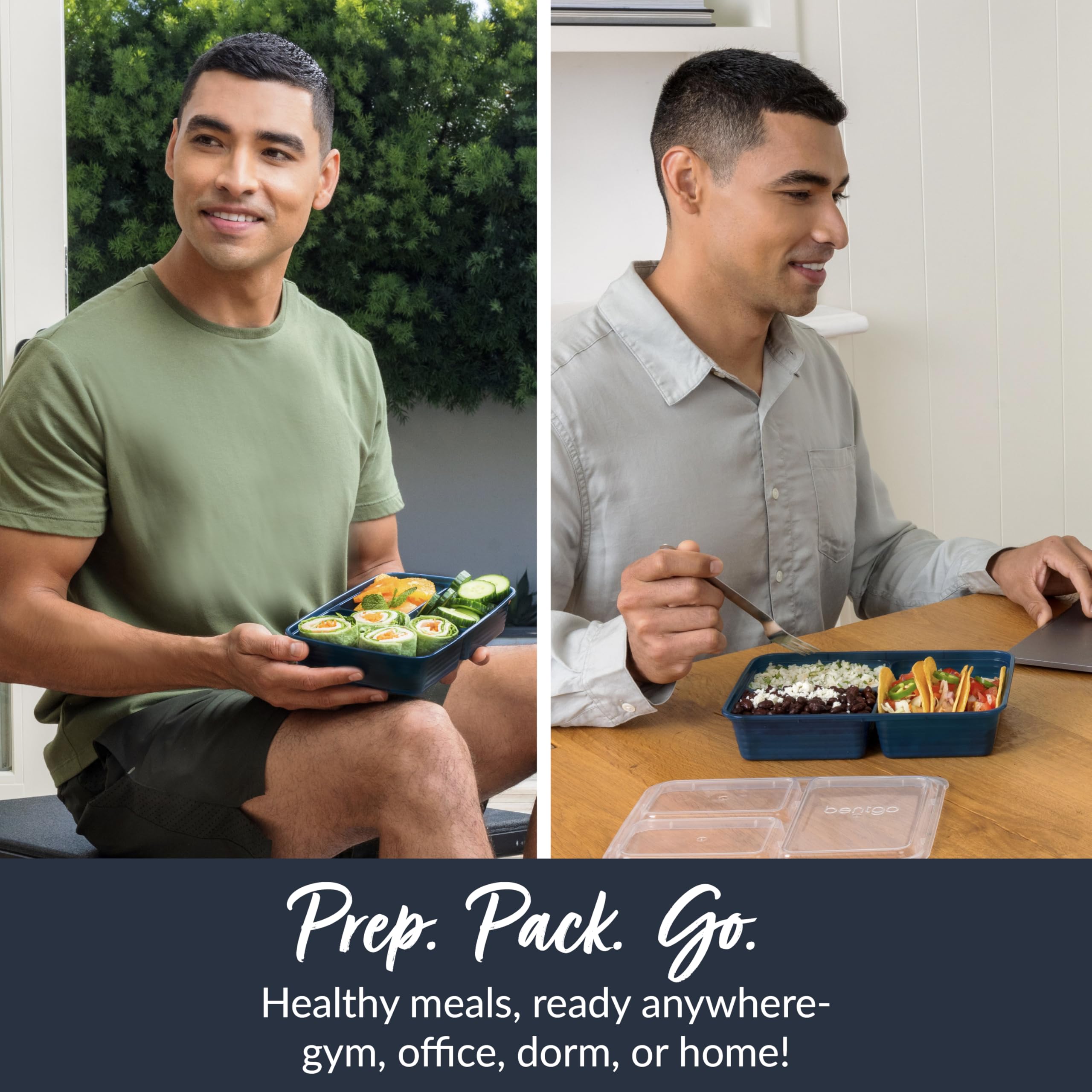
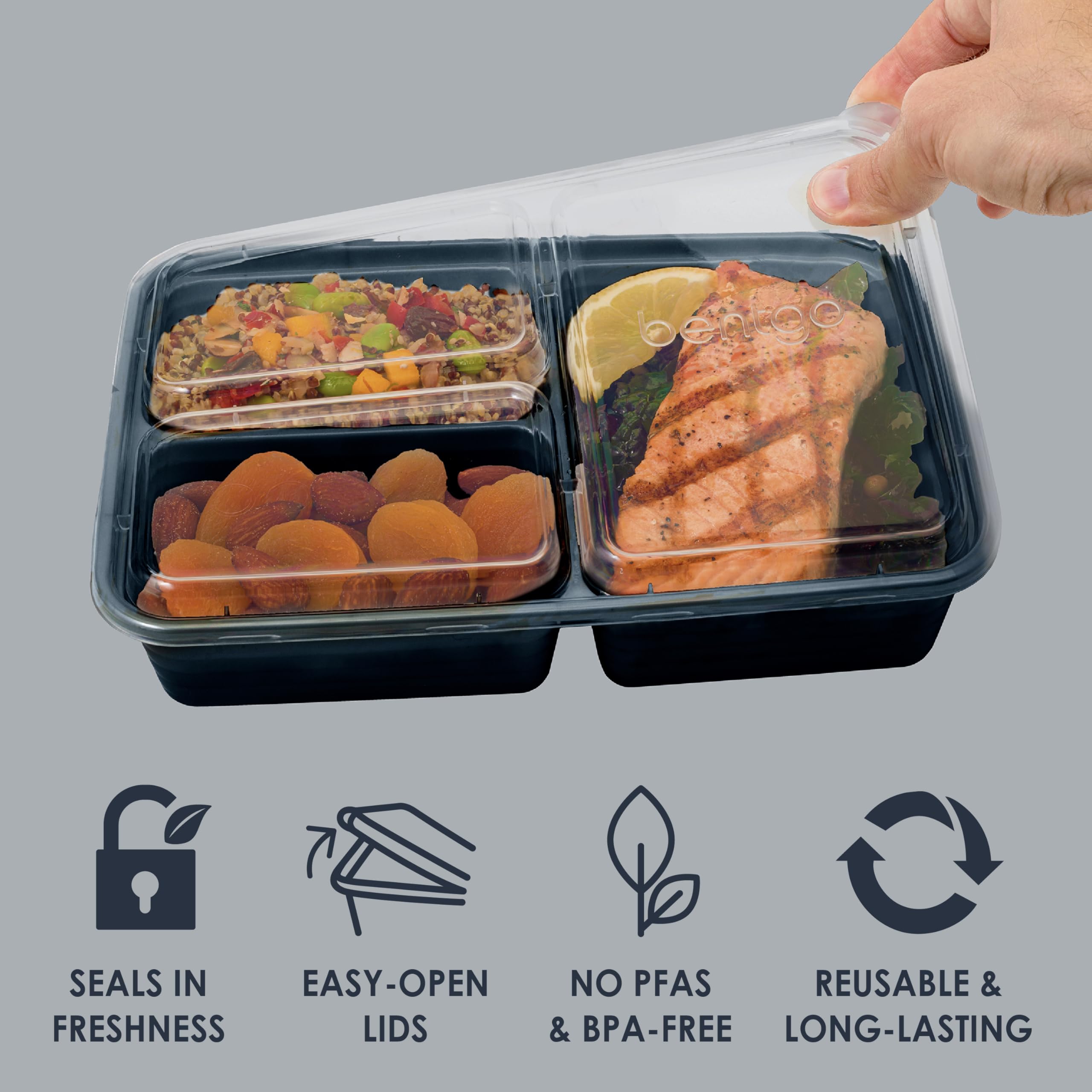
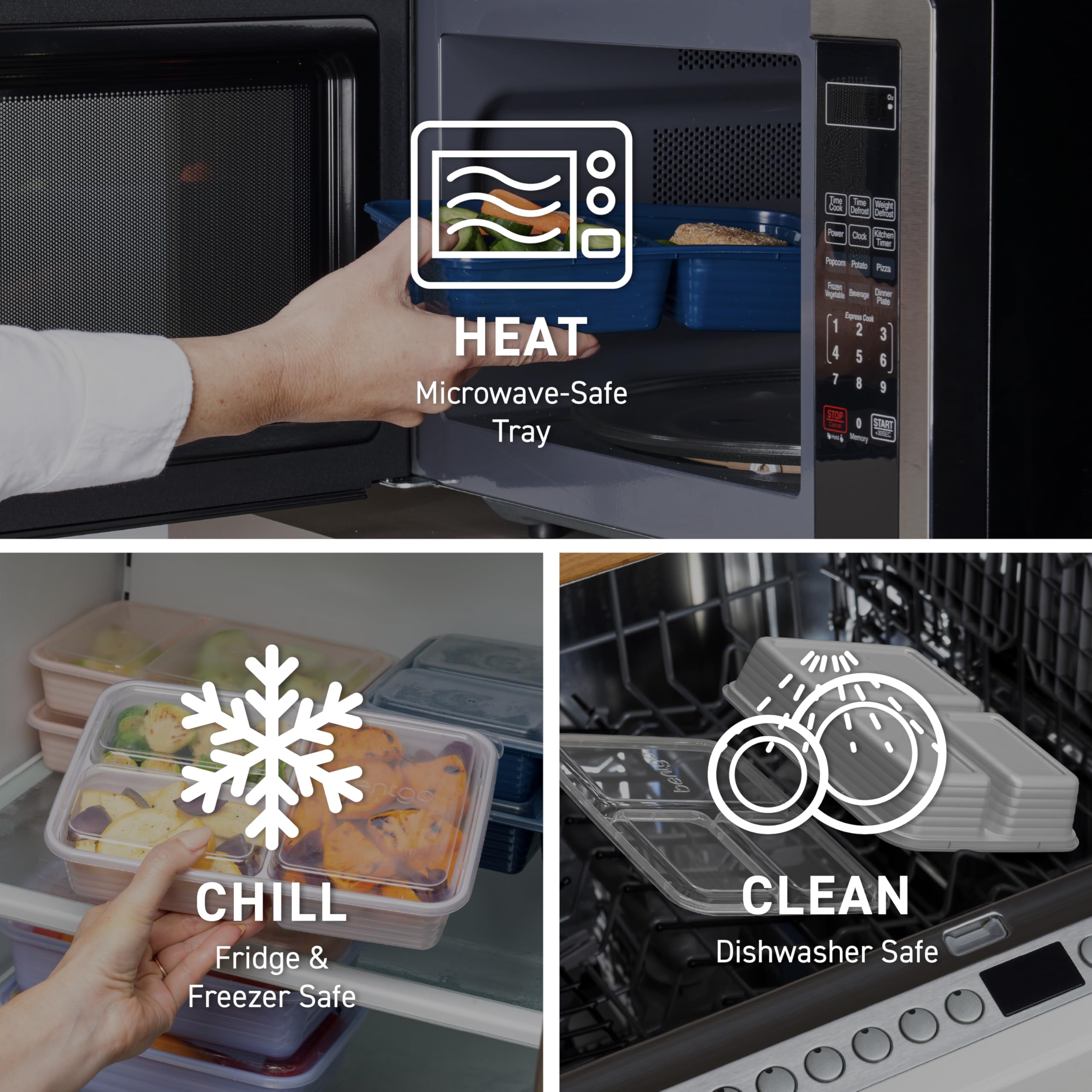
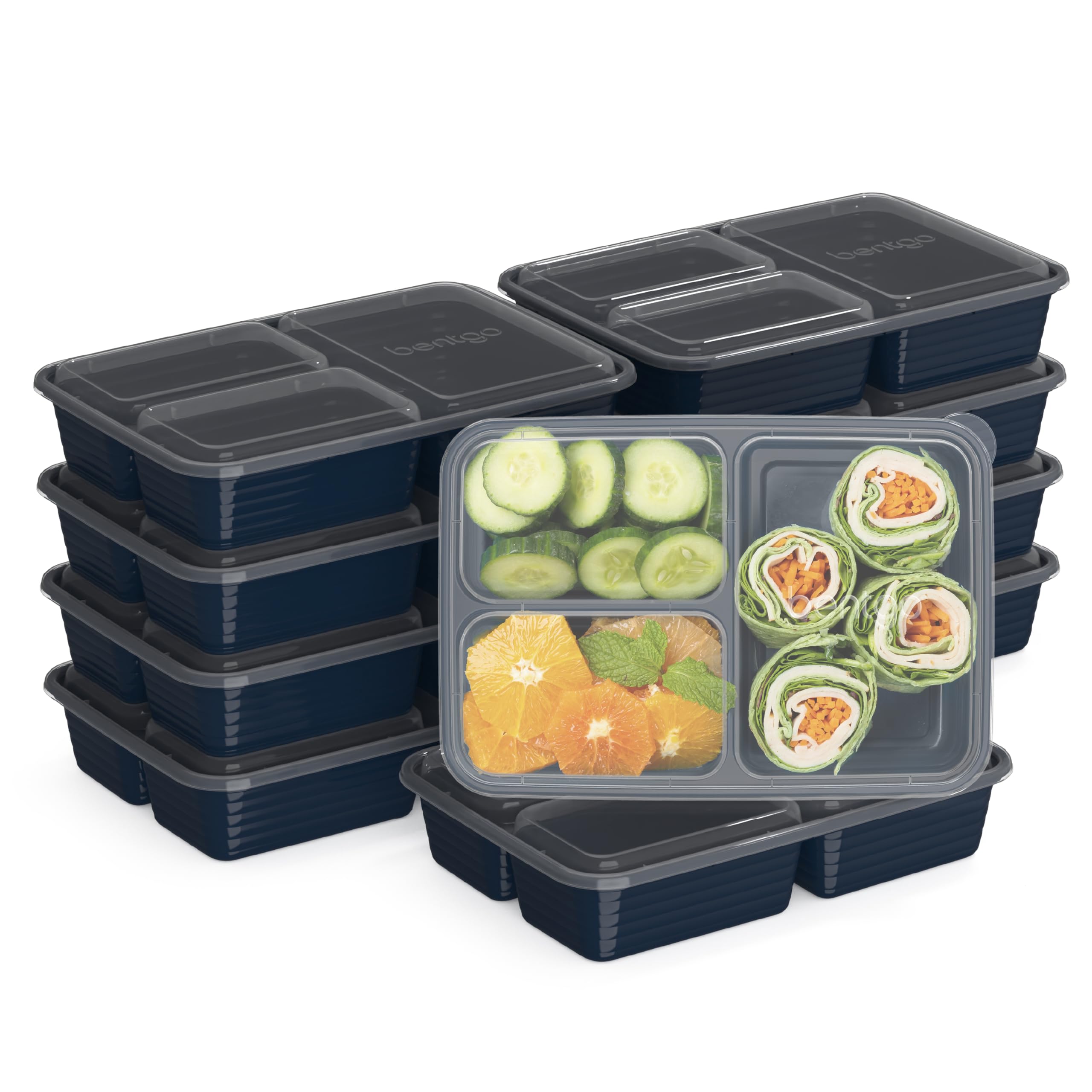
Bentgo Prep - 20-Piece 3-Compartment Reusable Meal Prep Containers with Lids, PFAS & BPA Free Materials, Durable, Microwave, Freezer, & Dishwasher Safe To Go Food Storage (Navy Blue)
- #1 Brand Pick for Meal Prep Containers: Bentgo is the top pick for meal prep containers!* This lightweight, po
- Perfect for Portion-Control: Each container’s 4-cup capacity and embossed measurements make portioning easy to
- Durable & Reusable: Made from tough, PFAS- and BPA-free materials, these meal prep containers are built to las
The Bentgo Prep 20-piece set (10 trays, 10 lids) is the top-rated option in this category, with over 16,000 reviews and a 4.6-star average. Each tray holds 4 cups total, uses PFAS- and BPA-free materials, and the embossed measurement markings inside each compartment are genuinely useful for portion control. At $14.99 for 20 pieces, the cost per container is under $1.50. The Stone Gray Bentgo Prep set is the same specification in a neutral colourway if you prefer a tidier-looking fridge.
For parents who prefer a budget-friendly disposable-style option with a bit more volume, the Dealusy 3-compartment 32 oz set offers 50 containers at under $24, rated for both microwave and freezer use.
Age-banded guidance for compartment containers
- Toddlers (1-3 years): Use one compartment for soft finger foods, one for a dip (hummus, yogurt), one for fruit. Keeps textures and flavours distinct. - Primary school (4-10 years): Children are far more likely to eat lunches they helped pack. Let them choose what goes in each compartment the night before. - Tweens and teens (11+): Larger 32 oz formats allow real meal-sized portions. Consistent daily nutrition during adolescence supports better energy and focus, which parents often notice in mood and after-school behaviour.
4. Two-Compartment Containers in Bulk: The Weeknight Dinner Lifeline
Buying portion containers in bulk is the single most cost-effective way to maintain a prep-ahead system without running out mid-week.
Two-compartment 28-32 oz containers hit a practical sweet spot: large enough for a full adult meal, small enough to store efficiently. They work for marinated proteins waiting to be cooked, pre-portioned pasta with sauce on the side, or leftovers that reheat evenly because there is airspace around the food.


Dealusy 50 Pack (100-Piece) 28 oz Meal Prep Containers Reusable with Lids 2-Compartment, Sturdy Leakproof Food Safe, Microwave Freezer Dishwasher Safe, To Go Take Out Plastic Food Storage, Black
- 【Sturdy & Reusable】Made of premium thick plastic and strong construction, Dealusy meal prep containers with li
- 【Leakproof & Stackable】: These food prep containers come with tight sealed lids, you can easily stack them and
- 【Microware Safe & Freezer Safe】: Made of premium food grade plastic, these BPA-free disposable food containers
The Dealusy 50-pack two-compartment set (100 pieces total) at $21.99 is built for exactly this scenario. The tight-sealed lids are genuinely leak-proof, the material is rated from -4°F to 248°F, and the stackable design means 10 prepped meals can sit in one fridge shelf without a tower of chaos. The Glotoch Express 32 oz set is a comparable alternative with slightly larger compartments, rated to 270°F, which suits higher-temperature reheating.
The 20-minute Sunday session
Here is a realistic system for a family with two adults and two school-aged children:
1. Chop all vegetables using your multi-blade chopper (10 minutes) 2. Cook one large protein batch (chicken thighs, lentils, or boiled eggs) while vegetables are being chopped 3. Portion into containers, two meals per family member, for Monday and Tuesday 4. Wednesday prep takes 10 minutes because you are topping up, not starting over
5. The Baggy Rack and Freezer Bag System: Invisible Time Savings
A simple bag-holding stand (often called a baggy rack) is a $10 to $15 accessory that eliminates one of the most frustrating small tasks in batch cooking: filling freezer bags without spilling.
This is the least glamorous item on this list, and also one of the most-recommended by parents who batch-cook. The concept is straightforward: a wire or plastic frame opens and holds a zip-lock bag upright at counter height, both hands-free so you can ladle soup, chilli, or pureed baby food directly in without a second adult holding the bag open.
For families with babies and toddlers, this system becomes critical. Batch-pureeing fruits and vegetables for infants and then portioning them into dated freezer bags is a workflow that saves enormous time during the first year. Paired with a hand blender, you can prepare a two-week supply of stage-one purees in under 45 minutes. If you are navigating questions about how much milk your infant still needs alongside solids, the guidance on appropriate milk volumes during the 3-12 month window is worth reading before you plan your puree schedule.
6. Smart Snack Containers: Portion Control That Actually Works for Kids
Pre-portioned snack containers reduce both food waste and the daily negotiation about "how much" a child is allowed.
Snacking is where family food systems often quietly unravel. Without a clear visual cue for portion size, children eat inconsistently and parents spend energy refereeing. A set of small, clearly divided containers filled on prep day eliminates the daily decision: the container is the answer.
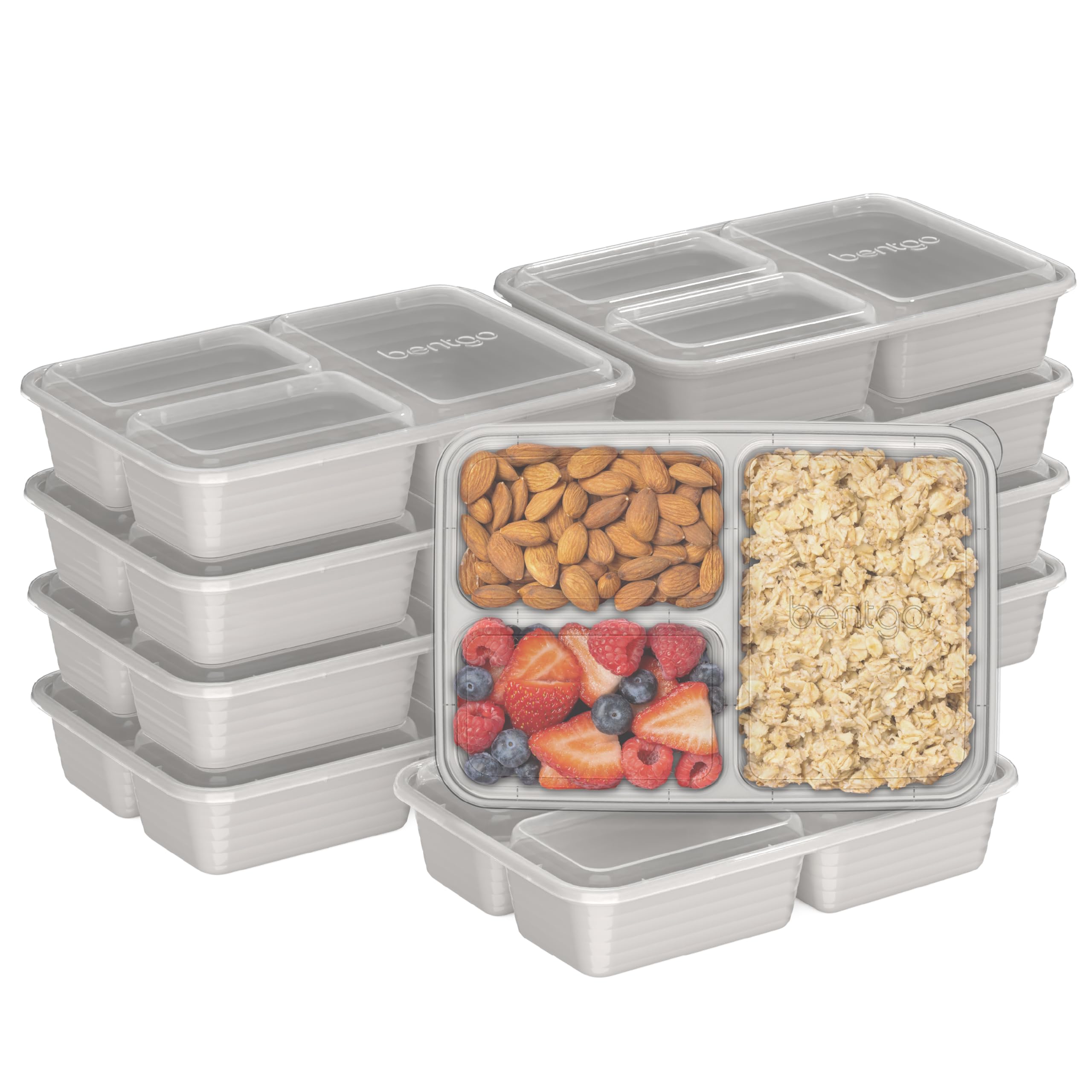
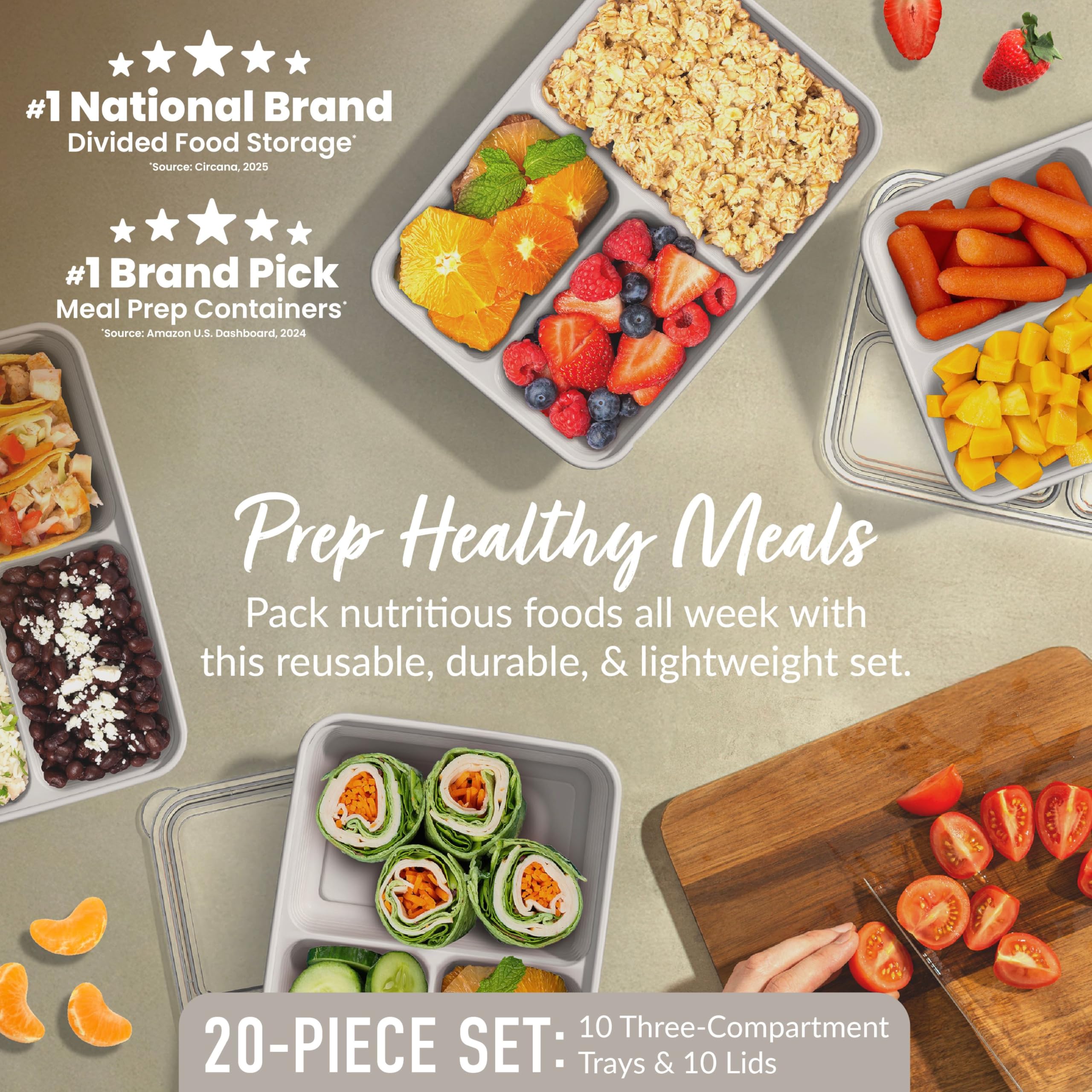
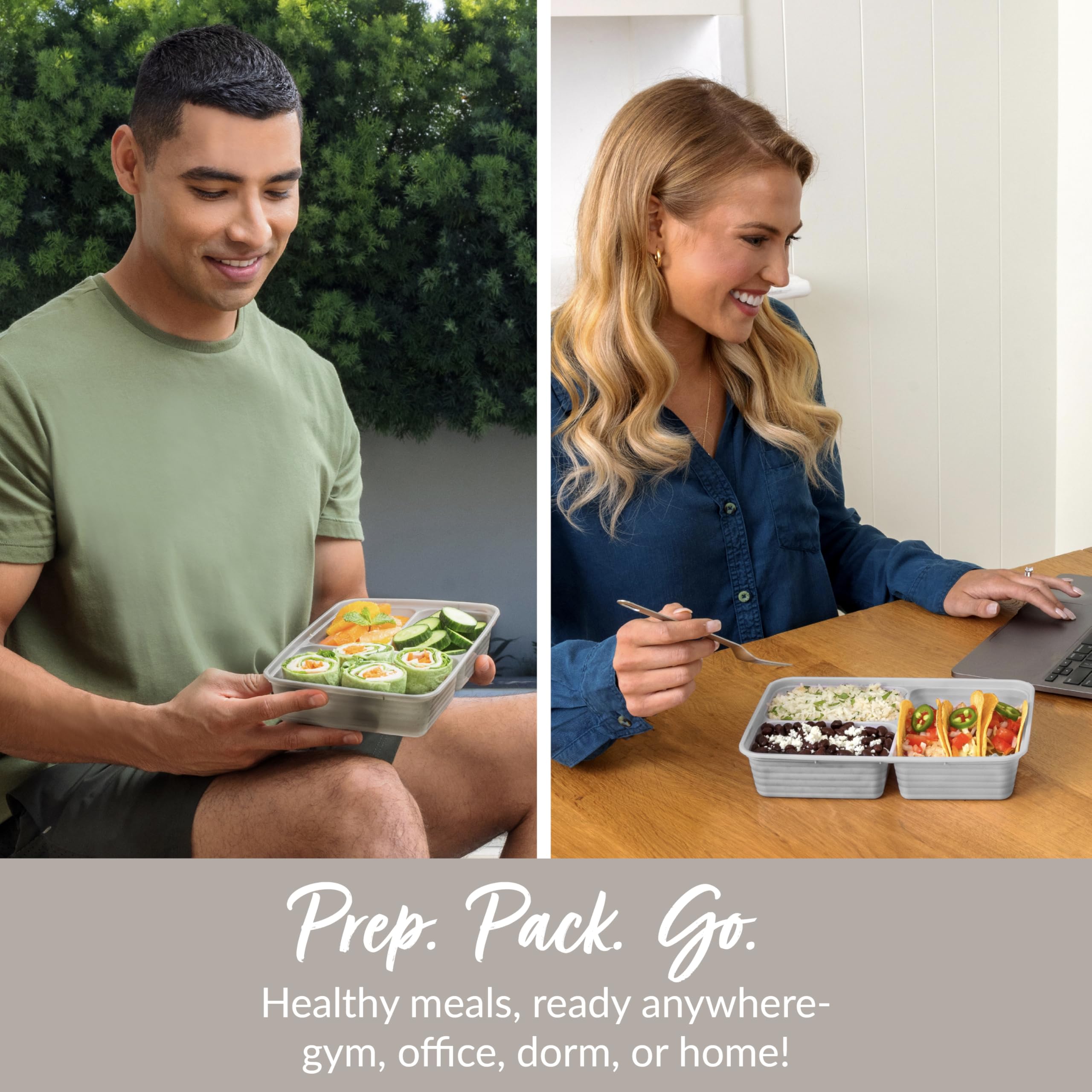
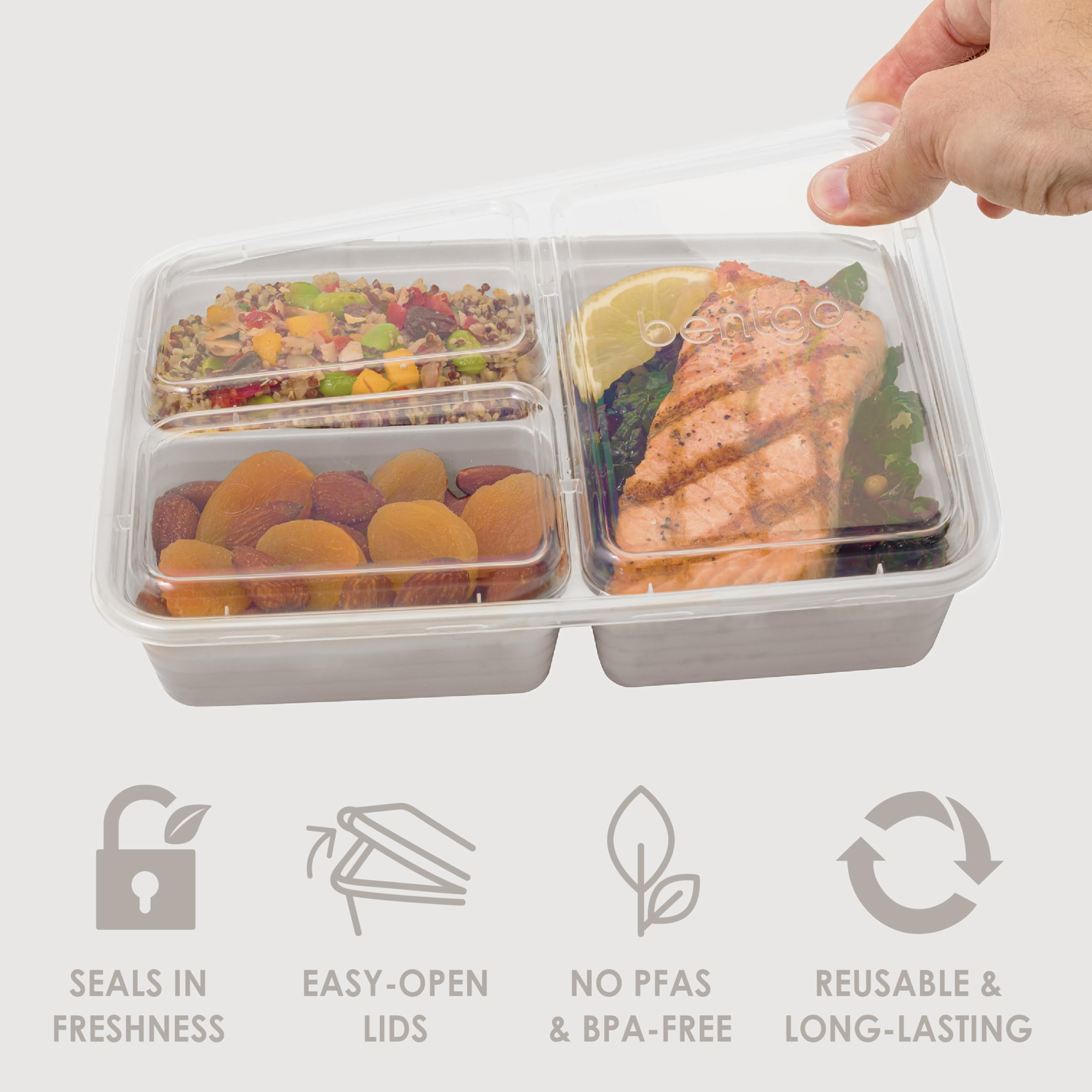
Bentgo Prep - 20-Piece 3-Compartment Reusable Meal Prep Containers with Lids, PFAS & BPA Free Materials, Durable, Microwave, Freezer, & Dishwasher Safe To Go Food Storage (Stone Gray)
- #1 Brand Pick for Meal Prep Containers: Bentgo is the top pick for meal prep containers!* This lightweight, po
- Perfect for Portion-Control: Each container’s 4-cup capacity and embossed measurements make portioning easy to
- Durable & Reusable: Made from tough, PFAS- and BPA-free materials, these meal prep containers are built to las
The Bentgo Prep three-compartment tray works here as well as it does for lunches. Fill one section with a grain-based snack, one with a protein source (cheese cubes, edamame, a boiled egg), and one with fruit or vegetables. Children from about three years old onwards respond well to the visual structure of a divided container because the separation makes the meal feel intentional rather than arbitrary.
For older children and teens, the larger Dealusy 3-compartment 32 oz containers give enough volume for a genuine after-school snack that bridges the gap to dinner without spoiling appetite.
| Container Type | Best For | Key Advantage | Main Limitation | Recommended Product | Price Range |
|---|---|---|---|---|---|
| 3-compartment plastic (small) | School lunches, toddler meals | Portion-control built in; lightweight | Not ideal for high-temp oven use | Bentgo Prep 20-piece set | $14–16 |
| 3-compartment plastic (large, bulk) | Batch dinners, teen meals | Volume and value; 50-pack supply | Single-use aesthetic; less premium feel | Dealusy 3-compartment 32 oz | $22–25 |
| 2-compartment plastic (bulk) | Weeknight leftovers, marinated proteins | Leak-proof; stackable; economical | Less portion guidance than 3-compartment | Dealusy 2-compartment 28 oz | $21–23 |
| 2-compartment plastic (large, alt) | High-temp reheating, larger servings | Rated to 270°F; crack-resistant | No third compartment | Glotoch Express 32 oz | $21–24 |
| 2-compartment glass | Oven-to-table adults and older children | No chemical leaching; oven safe | Heavier; breakage risk for young children | M MCIRCO glass 10-pack | $38–42 |
| 3-compartment plastic (neutral colourway) | Same as Bentgo Navy; aesthetics preference | Identical spec, tidier fridge look | Same limitations as navy version | Bentgo Prep Stone Gray set | $14–16 |
Expert Insights on Family Meal Planning
Frequently Asked Questions
The Simplest Kitchen Investment You Will Make This Year
Meal prep does not require a redesigned kitchen, an entire Sunday, or a professional-level skill set. It requires two things: a system you can actually repeat, and containers that hold the system together, literally.
The parents who describe feeling least stressed at dinner time are rarely the ones with the most elaborate recipes. They are the ones who made one decision on Sunday so they did not have to make six decisions on Wednesday. The tools in this guide exist to lower that barrier to its practical minimum.
Good food, served consistently, without daily chaos, is one of the most reliable ways to anchor a family's daily rhythm. That is worth a $15 investment in containers and a Sunday afternoon.
If this guide helped you, save it, share it with another parent who dreads the 6 PM question, and come back when your containers need an upgrade.
Sources & References
- U.S. Bureau of Labor Statistics. "American Time Use Survey." 2023. https://www.bls.gov/tus/
- American Academy of Pediatrics. "Starting Solid Foods." HealthyChildren.org. 2023. https://www.healthychildren.org/English/ages-stages/baby/feeding-nutrition/Pages/Starting-Solid-Foods.aspx
- American Academy of Pediatrics. "Snacking Habits for Healthy Kids." HealthyChildren.org. 2022. https://www.healthychildren.org/English/healthy-living/nutrition/Pages/Snacking-Habits-for-Healthy-Kids.aspx
- Harvard T.H. Chan School of Public Health. "The Healthy Eating Plate." The Nutrition Source. 2023. https://www.hsph.harvard.edu/nutritionsource/healthy-eating-plate/
- Ducrot, P., et al. "Meal Planning Is Associated with Food Variety, Diet Quality and Body Weight Status in a Large Sample of French Adults." International Journal of Behavioral Nutrition and Physical Activity. 2017. https://doi.org/10.1186/s12966-017-0461-7
- Larson, N., et al. "Making Time for Meals: Meal Structure and Associations with Dietary Intake in Young Adults." Journal of the American Dietetic Association. University of Alberta / University of Minnesota research programme. Published findings cited in multiple reviews, 2012 onward.
- U.S. Food and Drug Administration. "PFAS in Food Packaging." FDA.gov. 2024. https://www.fda.gov/food/environmental-contaminants-food/pfas-food-packaging
- Ellyn Satter Institute. "Division of Responsibility in Feeding." EllynSatterInstitute.org. 2023. https://www.ellynsatterinstitute.org/how-to-feed/the-division-of-responsibility-in-feeding/
Frequently Asked Questions
How many containers do I actually need to start?
Are plastic containers safe to microwave?
When can I start using compartment containers for my baby?
How do I stop prepped food from going dry in the fridge?
What is the most time-efficient one-session prep for a working parent?
Can older children and teenagers help with meal prep?
Do I need to buy all six gadget types at once?
Was this helpful?
Thanks — your feedback helps us pick what to write next.