Teething Toy Recalled After 3 Choking Incidents: What Parents Need to Know
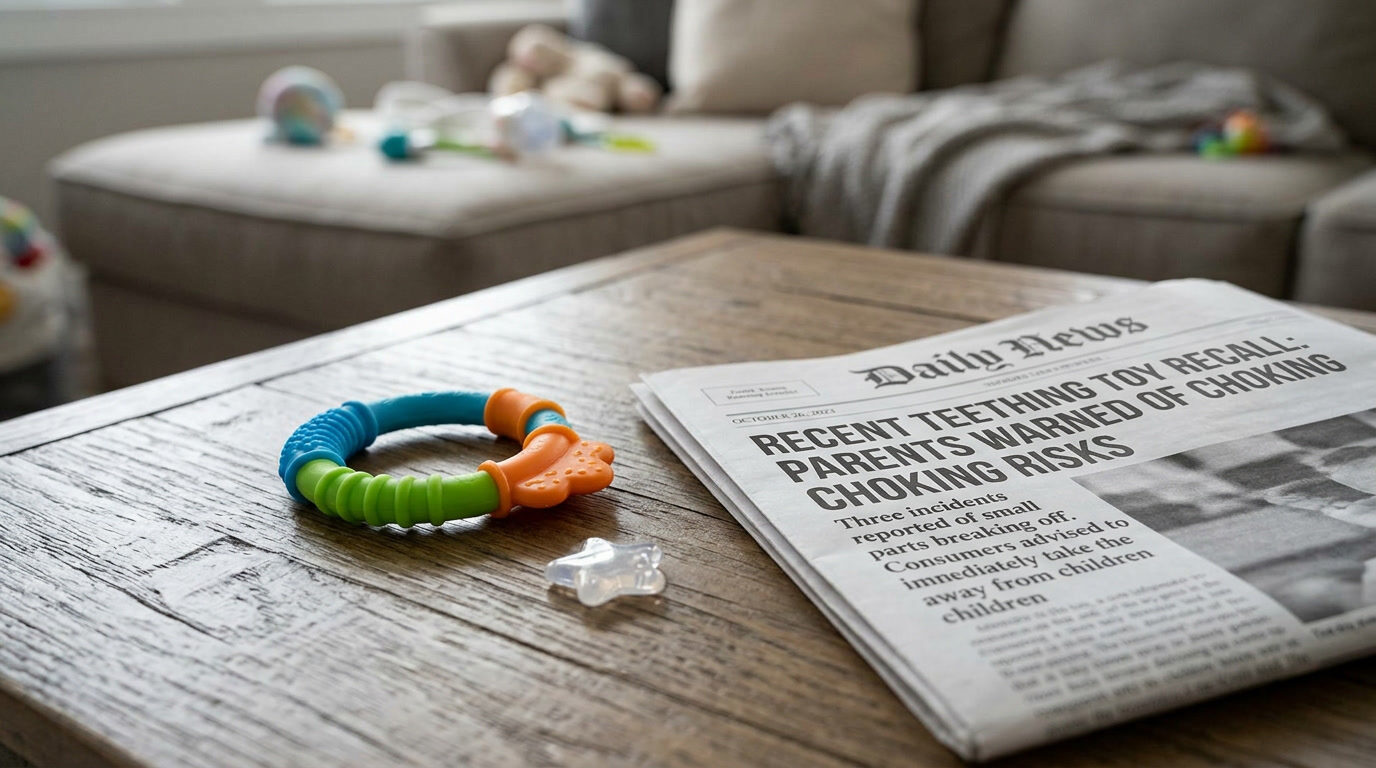
A teething toy sold on Amazon for years has been recalled following three reported choking incidents, and parents need to know exactly which products are affected, what warning signs to watch for, and how to choose safe alternatives right now.
In this article
Introduction
Every year in the United States, emergency rooms treat roughly 17,000 children for injuries related to toys, and choking accounts for a disproportionate share of the most serious cases, according to the Consumer Product Safety Commission. When a teething toy — something parents hand to the most vulnerable babies in their care — lands on a recall list after three documented choking incidents, the news lands differently than a crib recall or a stroller warning. It feels personal, because teethers are constant companions for babies between four and twelve months, often the most fussy, needy, and sleep deprived season of early parenting.
This article will walk you through exactly what happened with this recall, how to verify whether a product you own is affected, what the science actually says about safe teether design, and which products paediatric experts and parents consistently trust. Specifically, you will understand:
1. What Happened: The Recall Timeline and What We Know
Three choking incidents were enough to trigger a formal recall, and that context matters enormously. A single reported incident can sometimes be a manufacturing outlier; three incidents involving the same product design points to a systematic problem with how the toy is constructed or how its components hold together under the sustained, forceful chewing of a teething infant.
The toy at the centre of this recall was a multi-part silicone and plastic teether that had been available on Amazon for several years and had accumulated thousands of reviews. It was marketed as suitable for babies from birth to twelve months. The recall, coordinated between the seller and the CPSC, was initiated after the agency received reports of small beads or decorative attachments separating from the main body of the toy. In at least one reported case, a baby gagged on a separated piece; in another, a piece was found in a baby's mouth before any choking occurred, constituting a near miss that parents or caregivers reported directly.
How the CPSC Recall Process Works
The CPSC does not wait for a child to be seriously injured before acting, though the threshold for action is sometimes criticised as too high. When the agency receives incident reports, it investigates whether the product meets the standards set by ASTM International (specifically ASTM F963, the Toy Safety Standard) and whether small parts meet the federal small parts regulation under 16 CFR Part 1501. Any detachable component that fits entirely within a small parts test cylinder (roughly the diameter of a toilet paper tube and about 2.25 inches deep) is considered a choking hazard for children under three.
What Happens to Affected Products
Once a recall is announced, sellers are required to remove the product from sale, and Amazon is obligated to notify purchasers directly via email if purchase records exist. Parents who bought through third party sellers on the platform may not receive automatic notification, which is why checking the CPSC recall database yourself (at cpsc.gov/recalls) remains the most reliable step. Affected products are typically subject to a refund or replacement, and parents are advised not to donate or resell recalled items.
2. Why Teething Toys Fail: The Science of Choking Risk
Choking is the fourth leading cause of unintentional injury death in children under five in the United States, according to the American Academy of Pediatrics (AAP). Among infants specifically, the objects most frequently involved are not food items but small toys and toy parts, which parents may not intuitively recognise as hazards because the toys were sold as safe.
The failure modes of teething toys fall into three broad categories, and understanding them helps you evaluate any product you currently own.
Structural Failure Under Load
A teething infant can exert surprising bite force. Babies do not gently mouth their teethers; they clamp, twist, pull, and repeatedly compress the same spot over many months. If a toy is constructed from multiple bonded or press-fitted components rather than a single continuous piece of material, those joints can fatigue and fail. This is what appears to have happened in the recalled product: decorative elements that were attached rather than moulded as part of the toy's body eventually separated under repeated mechanical stress.
Single piece silicone teethers are, from a structural standpoint, significantly safer because there are no joints to fail. This is one of the reasons paediatric dentists and paediatricians have increasingly recommended them over multi-part designs.
Parents should look for teethers made from a single piece of material with no small attachments, beads, or detachable parts. If it has a part that could come off, assume it will eventually.
— American Academy of Pediatrics, HealthyChildren.org (2023)
Material Degradation
Silicone is durable, but not indestructible. Thin silicone edges and small projections can tear if a baby has erupted teeth and chews aggressively. Degraded rubber or low quality plastic can crack. Any material that can crack or tear can produce fragments, and fragments in a baby's mouth are a choking risk regardless of how the product was originally marketed.
Check your teethers regularly under good light for any surface cracks, tears, or discolouration. Run your fingernail along the edges. If you feel any roughness or detect any give in a seam that was previously firm, it is time to replace the toy.
Design Features That Increase Risk
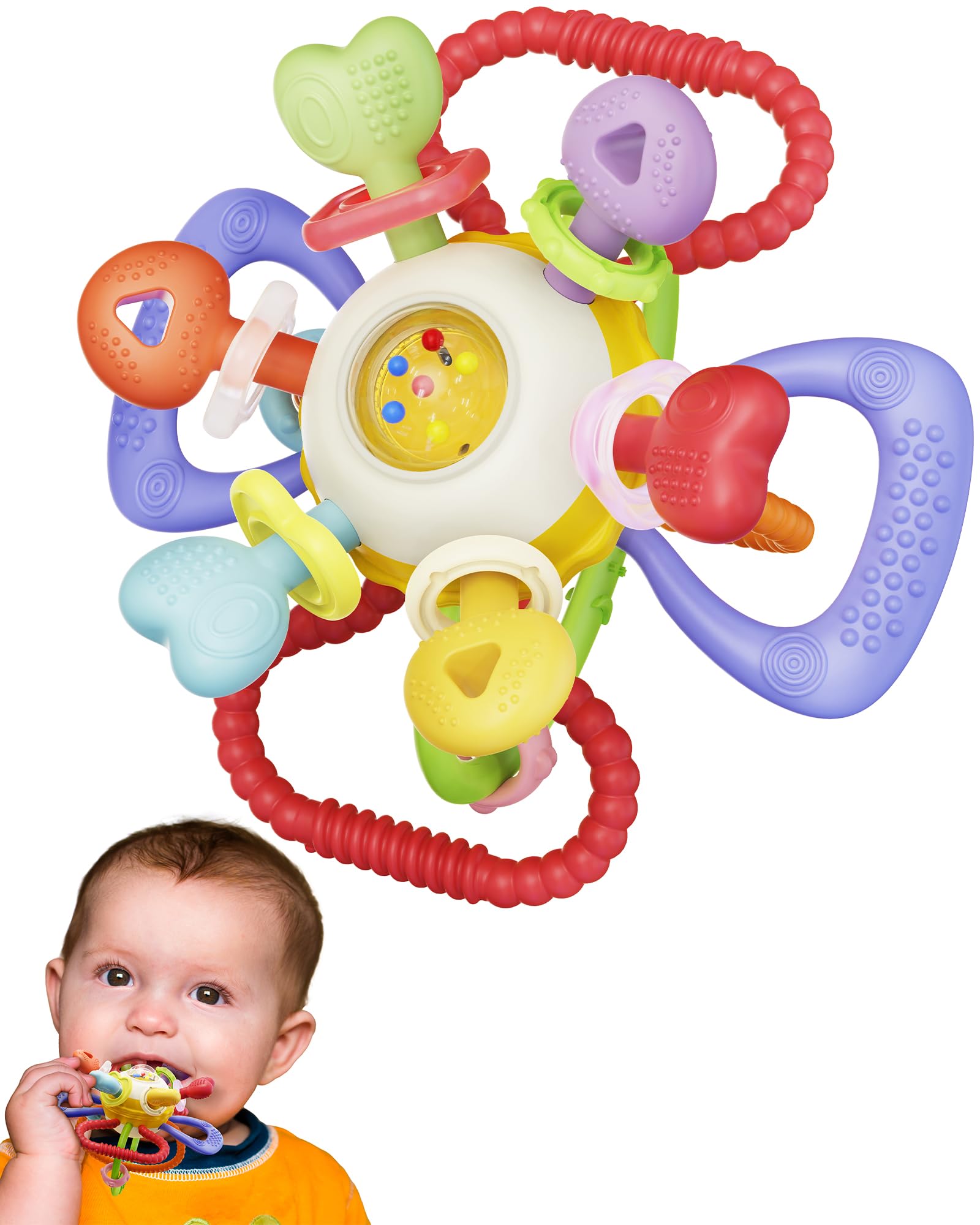
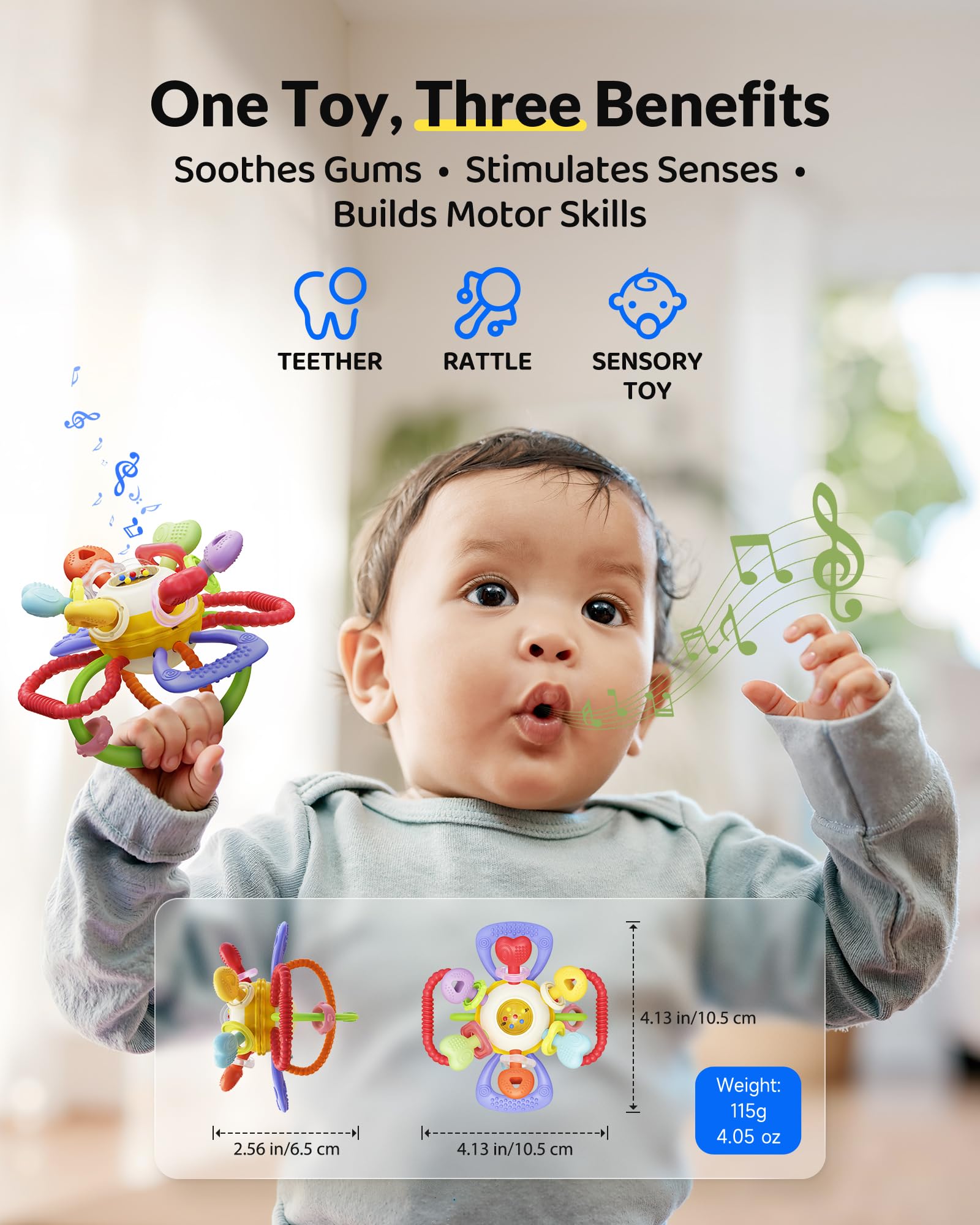
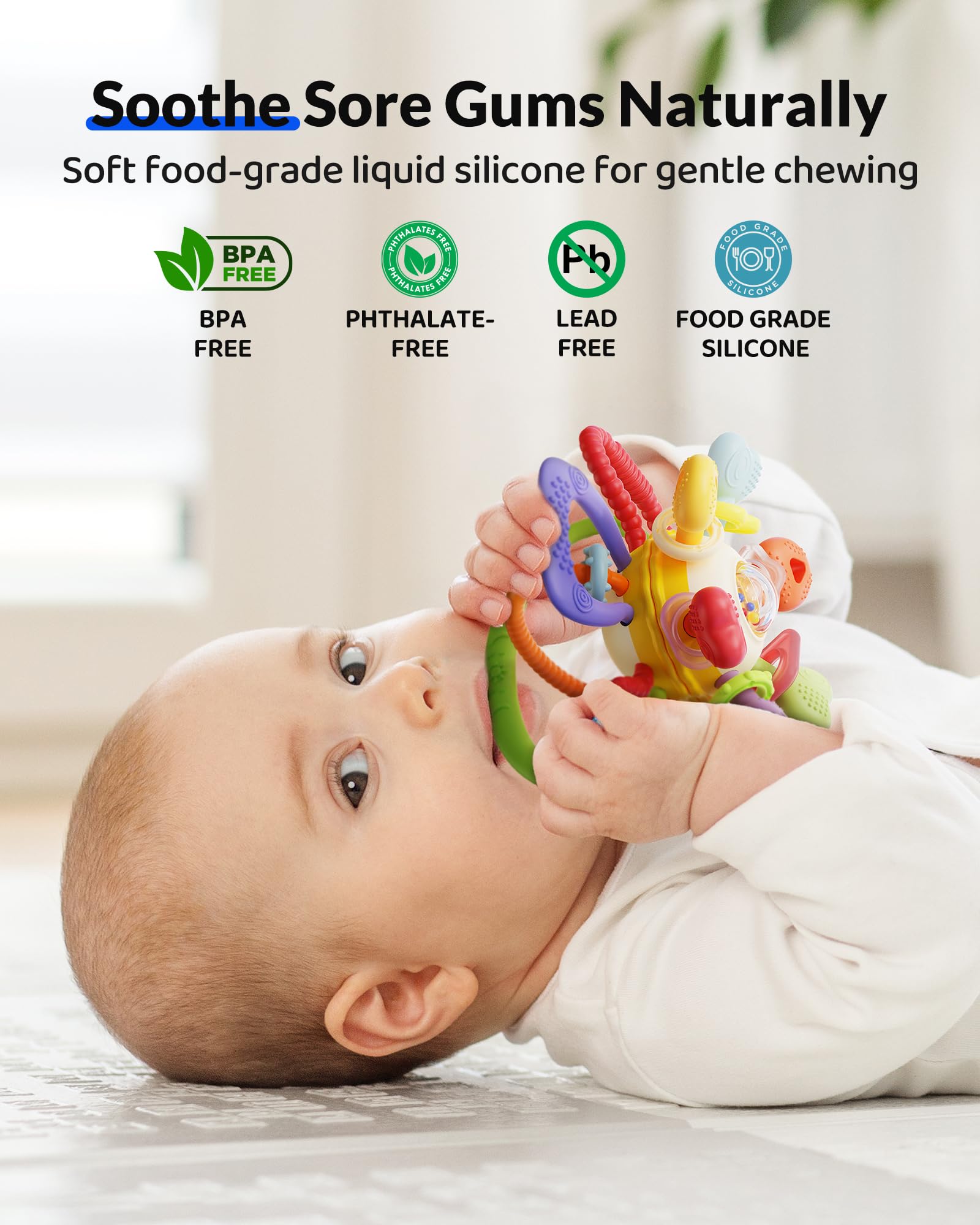
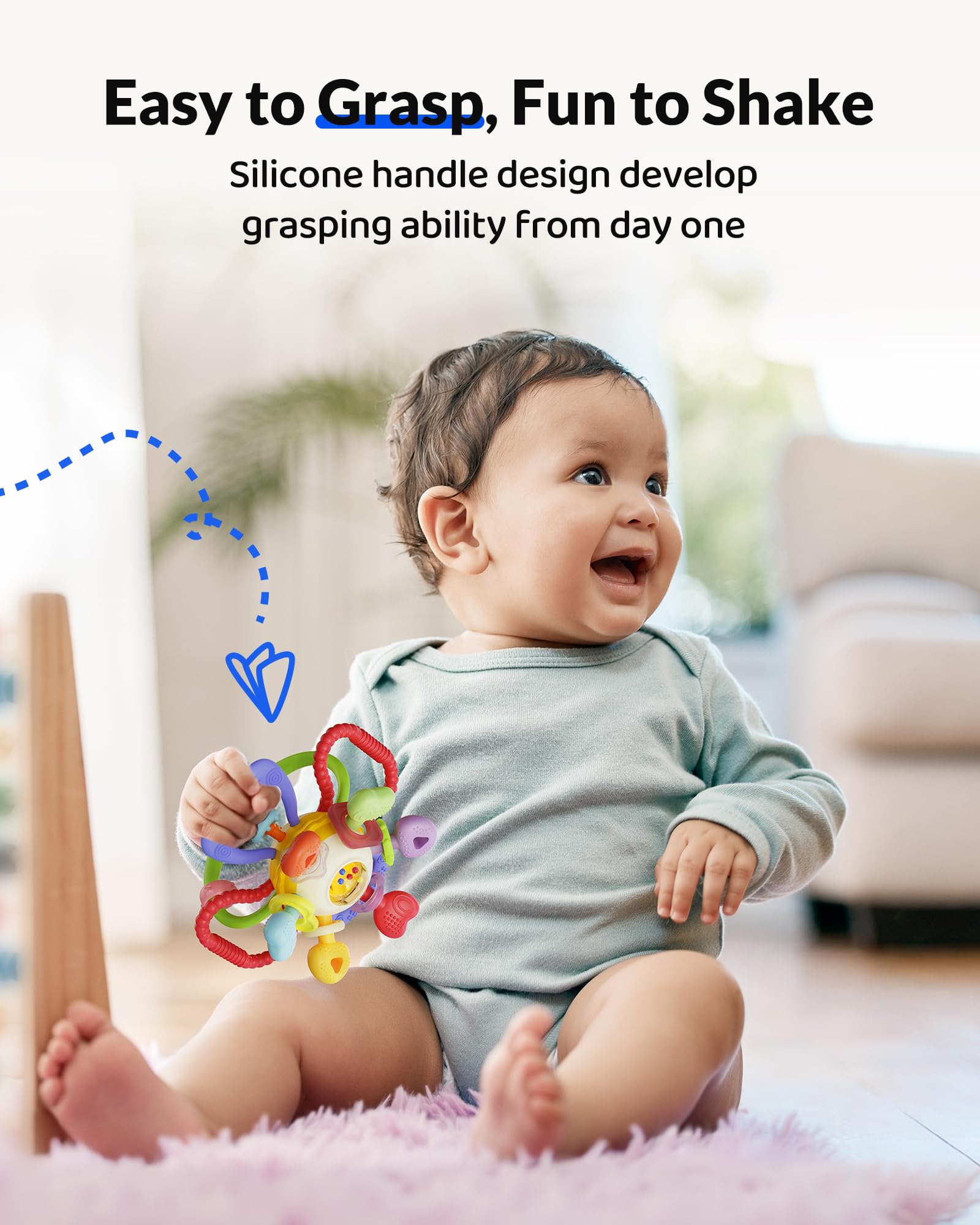
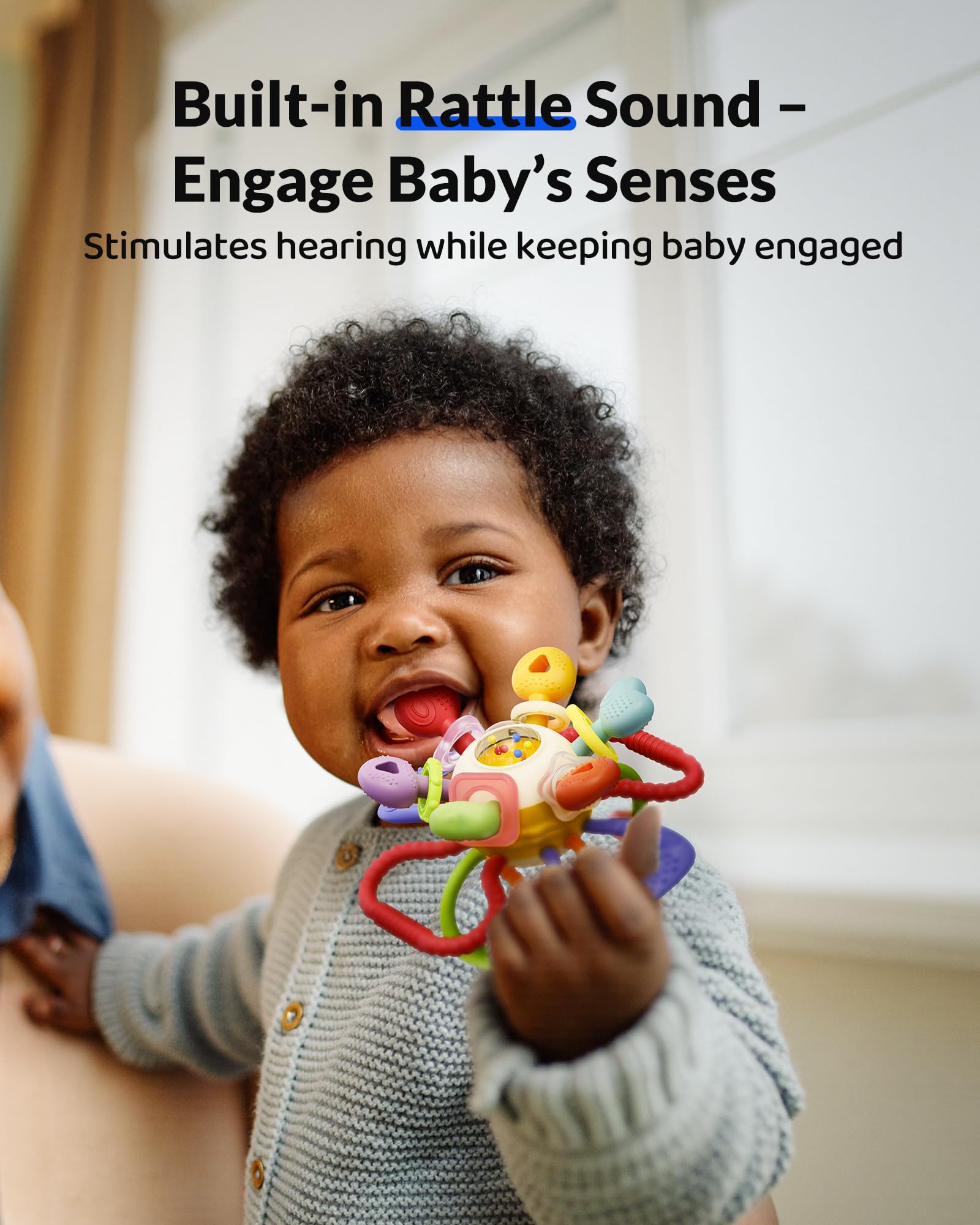
Baby Montessori Sensory Teething Toy - Safe, Multi-Functional BPA-Free Silicone Teether for Babies 0-12 Months - Teething Relief & Fun Play with Rattle - Perfect Baby Toys for Boys & Girls
- Dual Function: Teething Relief & Rattle Fun – This baby toy combines teething points and rattle sounds to soot
- Safe & Non-Toxic for Your Baby – Crafted from food-grade silicone and BPA-free plastic, this toy ensures your
- Vibrant & Engaging Design – With bright colors and fun rattle sounds, this toy is more than just a teether. It
3. Reading the Labels: What Safety Claims Actually Mean
Walk through any baby section of a large retailer or scroll through Amazon search results for teething toys, and you will see a familiar cluster of claims: BPA free, food grade silicone, non-toxic, ASTM certified. These terms sound reassuring, and some of them are genuinely meaningful, but none of them guarantee that a product will not shed a choking hazard. Here is what each claim actually tells you and what it does not.
BPA Free
Bisphenol A is a chemical used in some plastics that has been linked to hormonal disruption in animal studies, leading to widespread concern about its use in baby products. The FDA banned BPA from baby bottles and sippy cups in 2012, and most reputable baby product manufacturers removed it from teethers around the same time. So "BPA free" is now essentially a baseline, not a distinguishing feature. It tells you the product does not contain a specific chemical, but says nothing about whether the toy is structurally safe or whether it will stay in one piece.
Food Grade Silicone
This is a more meaningful claim than BPA free, but still not a complete safety guarantee. Food grade silicone (sometimes called LFGB grade, referring to the German food safety standard that is widely considered more stringent than FDA food contact standards) is stable, non-toxic, and resistant to temperature extremes. It does not leach harmful chemicals when chewed. However, "food grade" describes the material's chemical properties, not its structural engineering. A food grade silicone teether with decorative beads glued on is still a choking hazard.
ASTM F963 Certified
This is the most substantive safety claim of the three, and it is worth understanding what it covers. ASTM F963 is the US toy safety standard and includes tests for small parts, sharp edges, flammability, and structural integrity. However, certification is not always independently verified for every product on the market. Some sellers self-certify without third party laboratory testing, which is technically legal for many product categories. When you see this claim on a product, it is worth checking whether the brand has a website with accessible third party test reports, which reputable manufacturers typically publish.
What to Actually Look For


Frida Baby Silicone Teething Toys, 4-in-1 Teether for Babies & Infants, Teething Relief for 0-18 Months, Not-Too-Cold-to-Hold Baby Teether, BPA-Free
- SILICONE BABY TEETHING TOY: Thoughtfully designed with a room-temperature silicone handle that prevents baby's
- 0-18 MONTHS TEETHING TOYS: Features two double-sided inserts with four distinct cooling shapes strategically d
- SENSORY TEETHING TOY: Innovative texture variety incorporates four different massaging surfaces including bump
4. Safe Teether Alternatives: What Paediatricians Actually Recommend
Replacing a recalled teether feels urgent, and the sheer number of options on Amazon can make it harder, not easier, to choose quickly. Here is a clinically grounded breakdown of what actually works for teething relief, what is safe from a structural standpoint, and what parents consistently find practical.
Single Piece Silicone Teethers
These are the gold standard recommendation from most paediatricians and paediatric dentists precisely because there are no joints, no beads, and no attachments to fail. The whole toy is one continuous moulded piece. When you squeeze it, it gives a little; when your baby bites it, it does not crack.
The Frida Baby Get-A-Grip Teether is a well-designed example: 100% food grade silicone, single piece, with a wrist-hugging shape that helps prevent babies from flinging it across the room (a very real frustration for parents of five to eight month olds). Multiple textures reach front, back, and side gum areas, which matters because teething pain does not always come from the front incisors.
Cooling Teethers
Cooling provides genuine short term relief. Cold reduces inflammation in the gum tissue and briefly numbs surface nerve endings, which is why babies often calm down when given something cold to chew. The mechanism is the same as applying a cold compress to any inflamed tissue.
Water filled teethers that go in the refrigerator (not the freezer, which makes them too hard and risks dental injury) are effective and safe when well constructed. The Dr. Brown's AquaCool Teether uses purified water sealed inside a BPA free shell and is specifically designed for refrigerator use rather than freezer use, which is the right approach.
Textured Ring Teethers
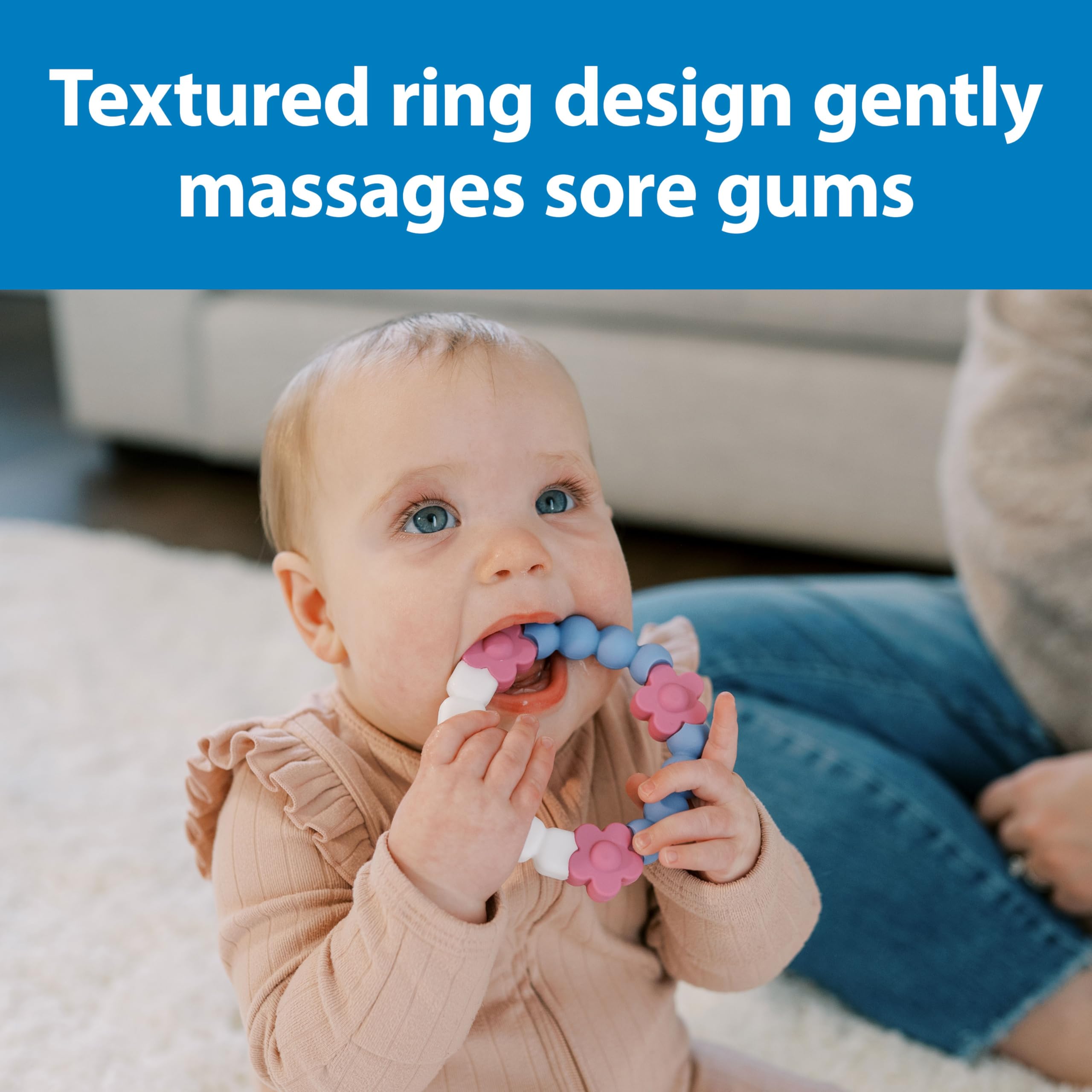
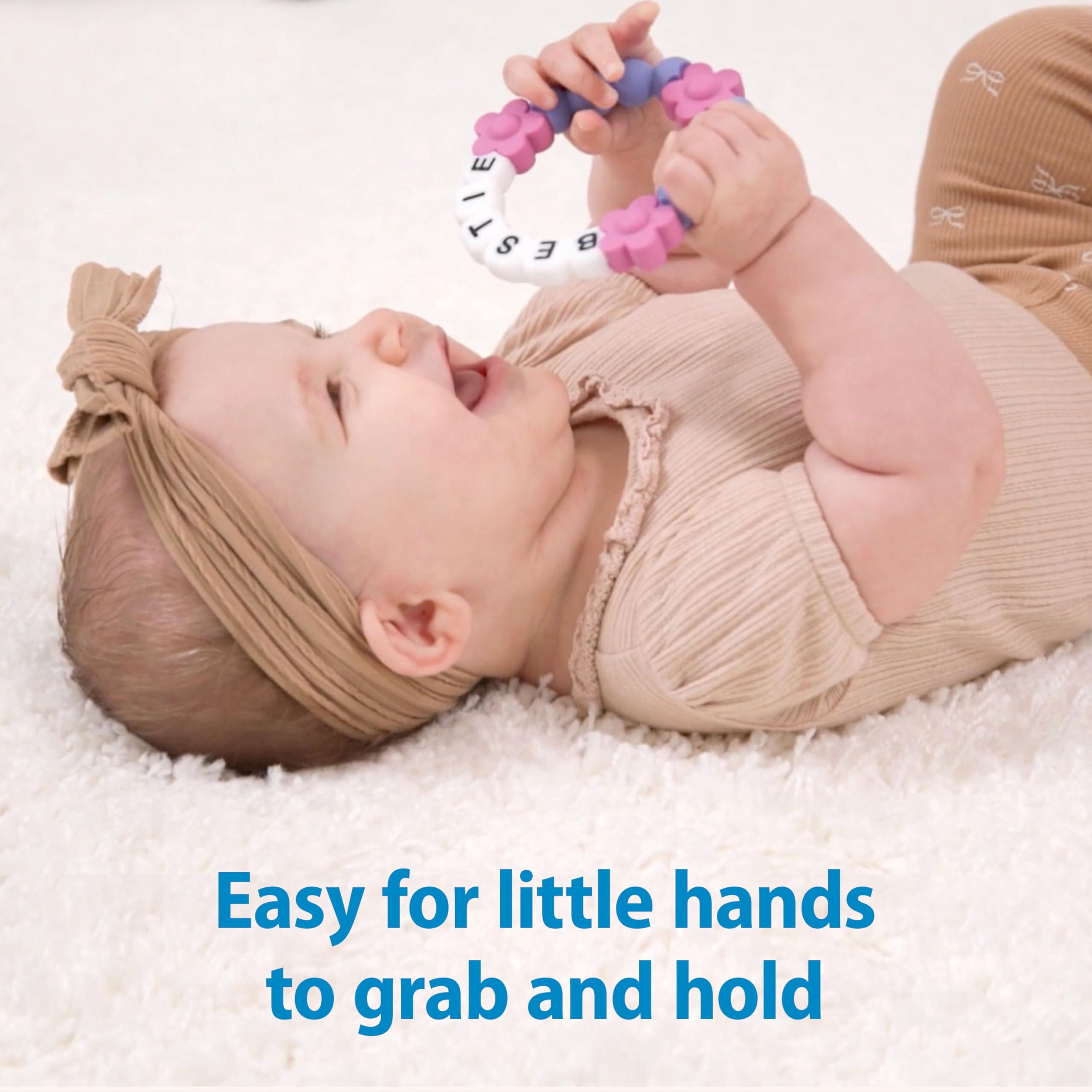
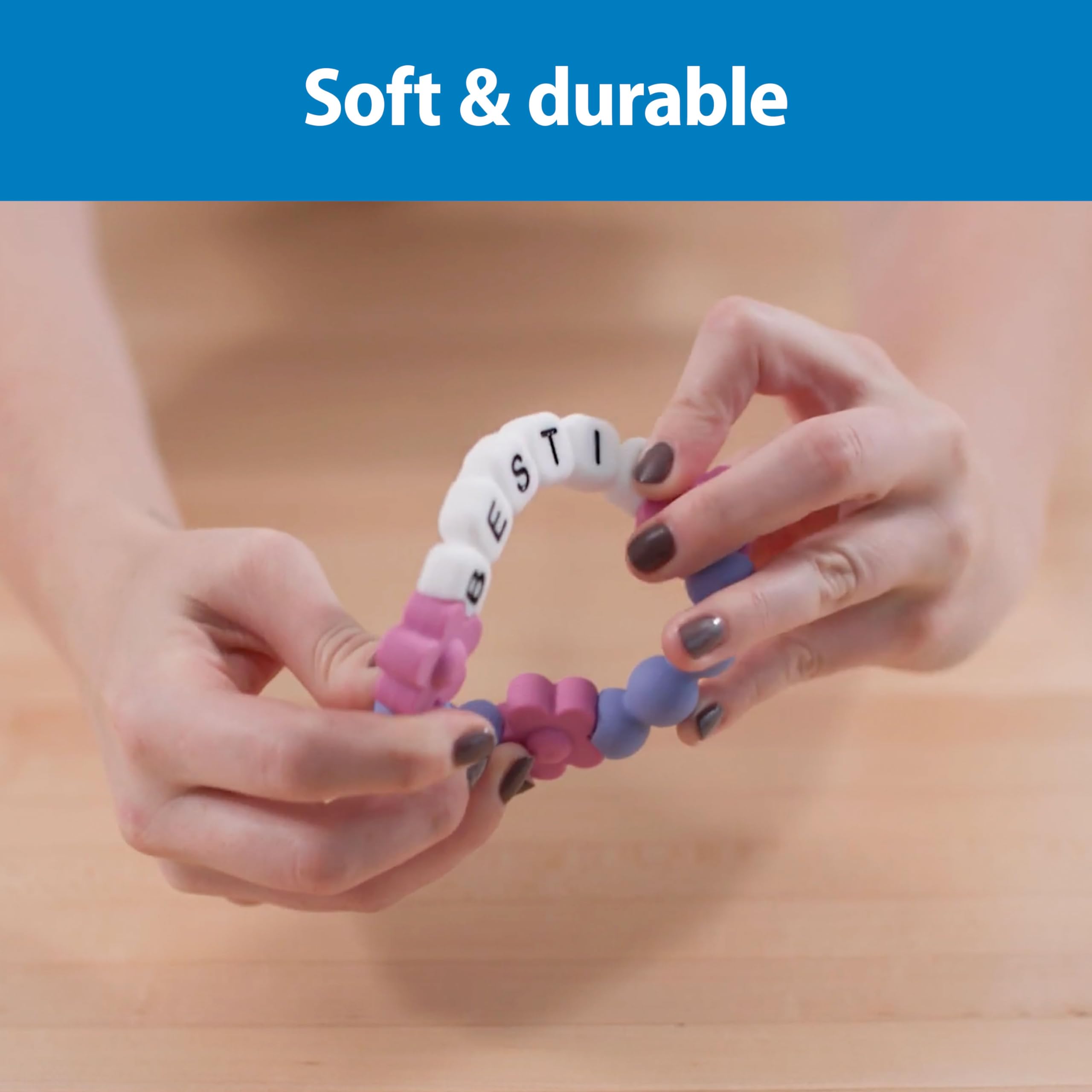
Rings are ergonomically sensible for babies who are developing their grip between three and seven months. A ring gives a baby something to hold onto and rotate, which is good for hand development, and the textured surface provides counter pressure against sore gums. The Dr. Brown's Best Friends Teething Ring is 100% silicone with a beaded texture that is all one piece, no separate beads to detach, making it a structurally safe choice.
What About Amber Teething Necklaces?
Skip them entirely. The AAP and the FDA have both issued explicit warnings against amber teething necklaces. They pose a strangulation risk, a choking risk if the string breaks and beads scatter, and the claimed mechanism (succinic acid absorption through the skin) has no credible clinical evidence supporting it. This is one of those cases where a culturally popular product has a genuine safety profile that simply does not support its use.
Learning more about how toddler development shapes play and comfort seeking can help you understand why babies during this period are so orally fixated and what that means for how you offer safe comfort objects.


Frida Baby Get-A-Grip BabyTeether for Teething Relief | 100% Food-Grade Silicone Teething Toys for Baby 0-6, 12, 18 Months Infant, BPA-Free, PVC-Free | Blue
- BABY TEETHING RELIEF: Help your baby drop the teething tantrums with an easy-hold, 100% food-grade silicone te
- WEARABLE DESIGN: Easy-hold cross bar and wrist-hugging design help prevent baby from accidentally tossing or d
- FIRST TEETH TO MINI MOLARS: Multiple shapes reach front, back, and all new teeth types, while different textur
5. How to Do a Safety Check on Every Teether You Own Right Now
You do not need to wait for a recall notice to assess whether a teether you already own is safe. This section gives you a practical, step-by-step audit you can do in about ten minutes today.
The Toilet Paper Tube Test
Take an empty toilet paper tube. If any component of the teether, including any part that could plausibly detach under pressure, fits entirely inside the tube, it is a small part hazard for any child under three. This approximates the CPSC's official small parts test cylinder and is a reasonable home screen.
The Seam Check
Hold the teether under good light (a phone torch works well). Run your fingertip along every seam, joint, and decorative element. You are looking for:
If you find any of these, bin the toy. Do not attempt to repair it with adhesive; the fix will not hold under infant chewing force and introduces a new chemical risk.
The Bite Force Test
This sounds counterintuitive, but try biting the teether yourself with moderate force. You are not trying to destroy it; you are testing whether it deforms excessively or whether any component shifts. A well-made single piece silicone teether should compress evenly and spring back to its original shape with no component movement.
The Age Appropriateness Check
Check the packaging or product listing for the recommended age range. A teether designed for a newborn may not be sturdy enough for a nine month old who already has two bottom incisors. As your baby's bite force increases and their teeth erupt, the structural demands on a teether change. Replace teethers when your baby moves into a new developmental stage.
After a Recall: What to Do With the Product
Do not donate a recalled product to a thrift store, pass it to a friend, or sell it secondhand. The recall exists because the product poses a documented risk. Many manufacturers offer a prepaid return label or simply instruct you to destroy the item and submit a photo for a refund. Follow the specific instructions on the CPSC recall page for the product in question.
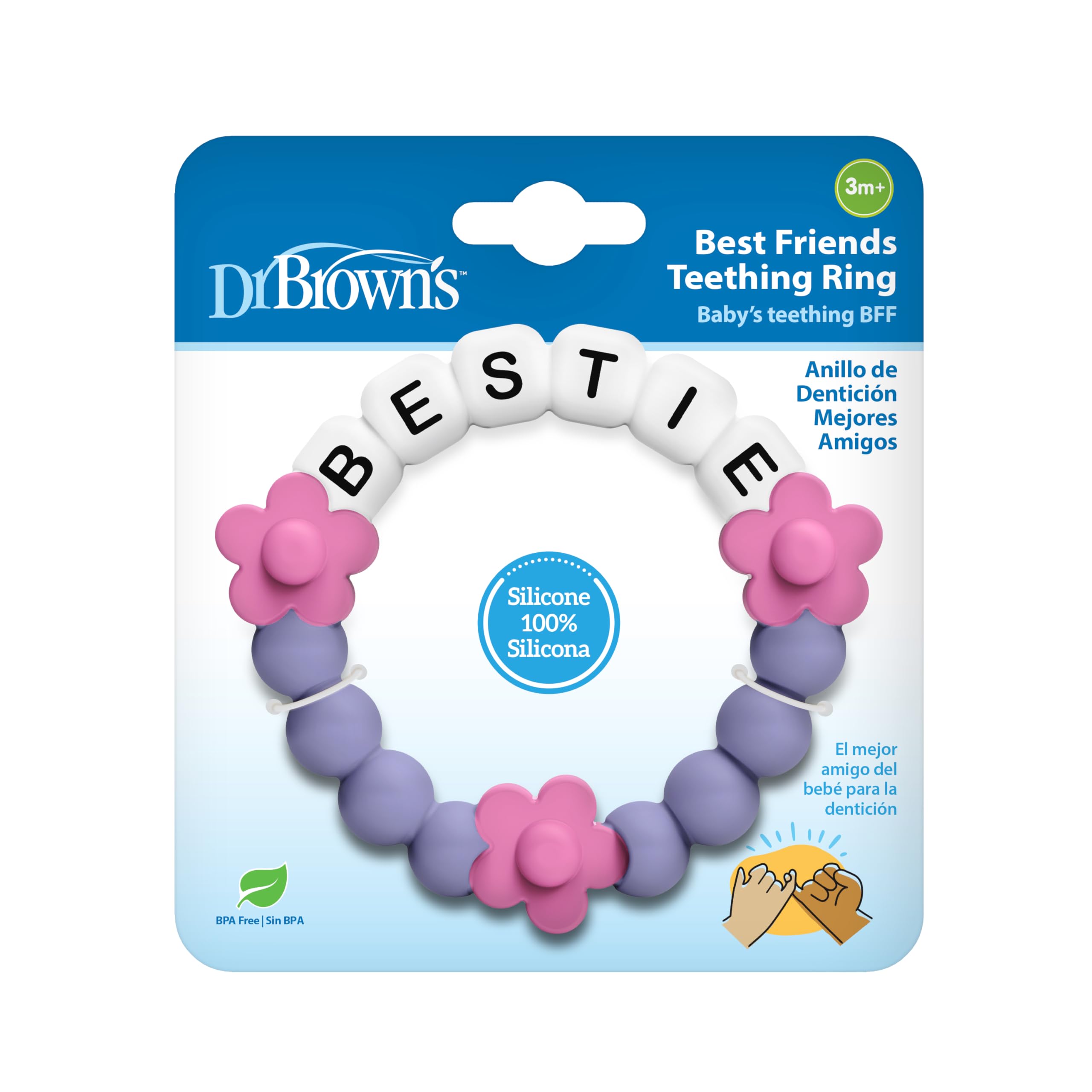
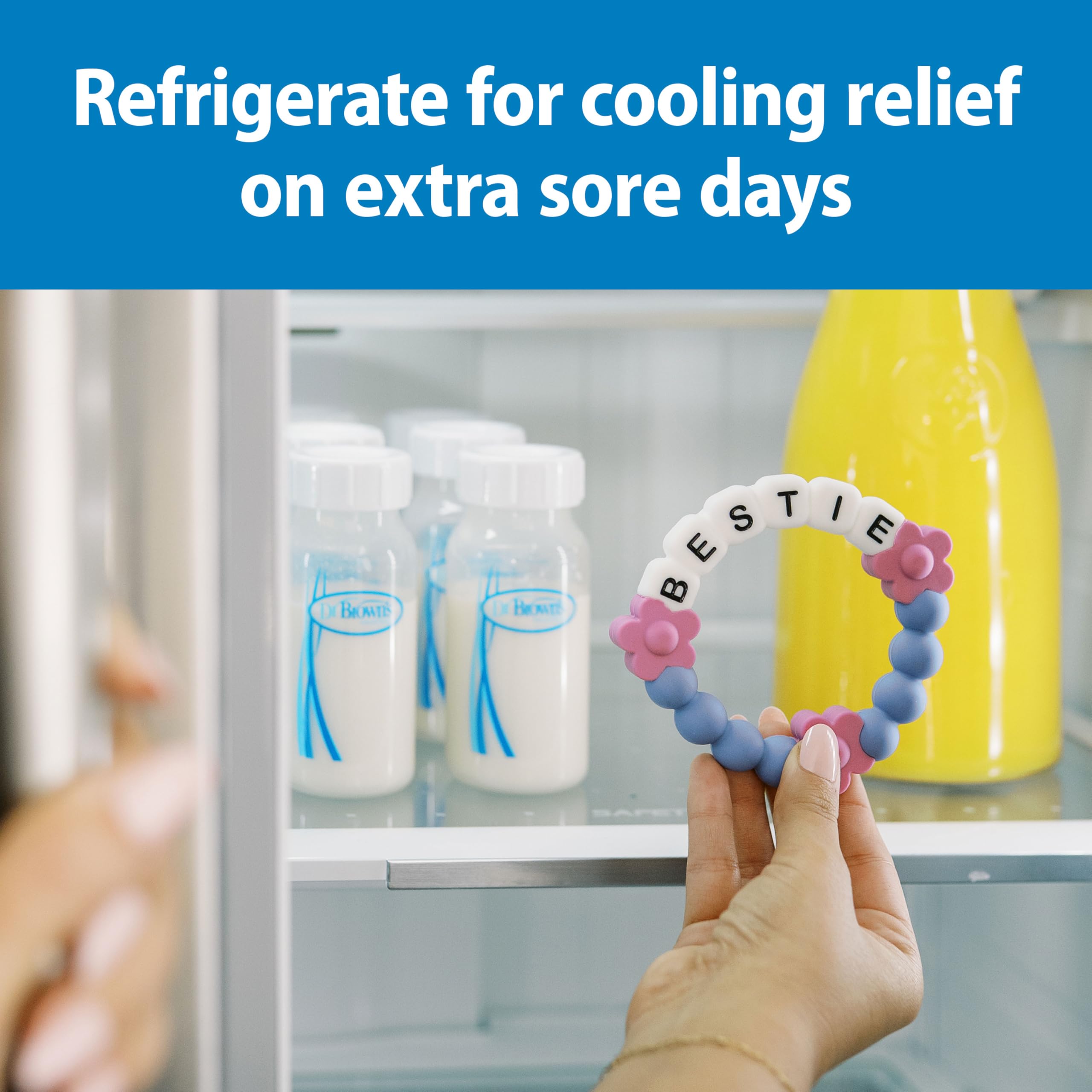
Dr. Brown's Best Friends Teething Ring, 100% Silicone Massaging Teether Toy, Pink and Purple, BPA-Free, 3m+
- BEST FRIENDS TEETHING RING. Help soothe your little BFF's sore gums with Dr. Brown's Best Friends Teether Ring
- 100% SILICONE TEETHER FOR BABIES. Soft and durable silicone beaded ring is easy for little fingers to grip and
- SATISFYING TEXTURE. The beaded texture gently massages tender gums and emerging teeth and keeps exploring fing
6. Choosing a Replacement: A Paediatrician's Buying Guide for 2025
Once you have confirmed a product is recalled or failed your home safety check, you need a replacement that is both safe and actually effective at providing teething relief. Here is what I tell parents in clinic when they ask me what to buy.
Prioritise Structure Over Features
The safest teether is structurally simple. More design features generally mean more components, and more components mean more potential failure points. A single piece silicone teether with varied surface textures covers the clinical bases: counter pressure for gum pain, sensory engagement, and safe material. You do not need a teether that rattles, lights up, or has a plush animal attached to it (the plush animal is a separate choking and hygiene concern).
That said, the sensory combination of teething relief and gentle rattle sounds can genuinely help keep some babies calm, and some parents find the dual function useful during the fussiest phases. The Infinno Sensory Teething Toy combines teething points with rattle sounds in a food grade silicone and BPA free plastic construction. If you are drawn to this style, just confirm that the rattle mechanism is fully enclosed and cannot be accessed if the toy is bitten.
Match the Teether to the Teething Stage
Not all teething is the same. Front incisor teething (usually starting around six months) involves discomfort at the front of the gum ridge. Side molar teething (closer to twelve to eighteen months) involves deeper, harder-to-reach areas of the mouth. A teether that only provides front gum relief is not going to help much during molar teething.
The Frida Baby 4-in-1 Teether specifically addresses this: four distinct shapes target front incisors, side molars, and back teeth, which makes it genuinely versatile across the full teething timeline from birth to eighteen months.
Consider Ease of Cleaning
Teethers go everywhere: into the pram, onto the floor, into bags. They need to be cleaned frequently and easily. Smooth, single piece silicone is the easiest to clean: rinse under warm water, use a little dish soap, and air dry. Toys with textured crevices, fabric elements, or enclosed chambers are harder to clean thoroughly and can harbour bacteria and mould over time.
The Dr. Brown's Flexees Bunny Teether has multiple textures for gum massage and is made from 100% silicone throughout, which means it can be thoroughly cleaned without concern about water getting trapped in inaccessible spaces.
Consider Whether Your Baby Has Erupted Teeth
Once a baby has one or more erupted teeth, the calcified tooth surface can cut through softer silicone. If you notice your baby is tearing or biting chunks off a teether, that teether is too soft for their current stage and needs to be replaced with a firmer option. Any detached silicone chunk is a choking hazard.
The fascinating thing about this period is that teething overlaps almost exactly with the developmental window when babies are learning through mouthing. Understanding how imaginative play builds problem solving skills from the earliest months helps explain why oral exploration is so cognitively important right now, not just a soothing behaviour.


Dr. Brown's AquaCool Water-Filled Teether, Cooling Baby Teether Toy for Sore Gums, Apple Pineapple, BPA-Free, 3m+, 2-Pack
- COOLER TEETHING TOY FOR BABY. Dr. Browns AquaCool Water-Filled Teether cools and soothes teething babys sore g
- QUICKLY SOOTHE SORE GUMS. Designed to be placed in the refrigerator, the teething toy is filled with 100% puri
- EASY GRIP. Open design is easy for little hands to grasp and hold.


Dr. Brown's Flexees Teether, Gray Bunny, Soft 100% Silicone Baby Teether, BPA Free, 3m+, 1 Pack
- BABY TEETHING TOY. Help soothe baby's sore mouth and gums with Dr. Brown's Flexees Bunny Teether.
- 100% SILICONE TEETHER FOR BABIES. Soft and durable silicone is safe for baby to gnaw and bite to soothe irrita
- SATISFYING TEXTURE. Multiple textures on bunny's arms and ears massage sore spots on baby's teething gums and
Teether Safety Comparison: At-a-Glance Guide for Parents
| Teether Type | Best Age Range | Primary Benefits | Main Drawbacks | Recommended Product | Price Range |
|---|---|---|---|---|---|
| Single piece silicone | 0 to 18 months | No joints to fail, easiest to clean, safest structure | Less stimulating for some babies | Frida Baby Get-A-Grip Teether | $7–9 |
| Multi-shape 4-in-1 silicone | 0 to 18 months | Covers all teething stages, versatile, ergonomic | Slightly more complex shape to clean | Frida Baby 4-in-1 Teether | $12–15 |
| Sensory rattle teether | 0 to 12 months | Dual function soothes and entertains, auditory stimulation | Must verify rattle chamber is fully enclosed | Infinno Sensory Teething Toy | $10–14 |
| Beaded ring teether (all silicone) | 3 to 12 months | Easy grip, helps hand development, massages gums | Ring shape may not reach back teeth | Dr. Brown's Best Friends Teething Ring | $9–10 |
| Water-filled cooling teether | 3 to 12 months | Genuine cold relief, reduces gum inflammation | Requires refrigeration; do not freeze | Dr. Brown's AquaCool Teether | $4–6 |
| Soft sculpted character teether | 3 to 12 months | Multiple textures, engaging shape, 100% silicone | Character features must be moulded in, not attached | Dr. Brown's Flexees Bunny Teether | $7–9 |
7. Expert Insights on Teething Safety
FAQ
Conclusion
Recalls are frightening precisely because they puncture the assumption that a product sold widely, reviewed positively, and marketed for the most vulnerable members of our families must be safe. Three choking incidents remind us that vigilance does not end at the point of purchase. It is a habit: checking recalls, inspecting toys monthly, replacing worn teethers, and making purchase decisions based on structure rather than marketing language.
The good news is that genuinely safe, paediatrician-sensible teethers do exist and are widely available. The simple act of choosing one piece silicone, checking the CPSC database, and doing a monthly ten-minute toy audit puts you significantly ahead of the risk curve.
If this article helped you, save it, share it with another parent in your circle, or forward it to your parent group. The more parents who know about this recall and these safety principles, the fewer close calls there will be.
Sources & References
- Consumer Product Safety Commission. "CPSC Recalls Database." cpsc.gov/recalls. Accessed 2025.
- Consumer Product Safety Commission. "Small Parts Regulations for Toys: 16 CFR Part 1501." cpsc.gov. 2022.
- American Academy of Pediatrics. "Choking Prevention." HealthyChildren.org. 2023.
- American Academy of Pediatrics. "Teething: 4 to 7 Months." HealthyChildren.org. 2023.
- US Food and Drug Administration. "FDA Warns Against the Use of Teething Necklaces and Bracelets." FDA Safety Communication. 2018.
- ASTM International. "ASTM F963-23: Standard Consumer Safety Specification for Toy Safety." ASTM International. 2023.
- Centers for Disease Control and Prevention. "Choking Hazards." cdc.gov. 2024.
- American Academy of Pediatric Dentistry. "Frequently Asked Questions: Teething." aapd.org. 2023.
Frequently Asked Questions
How do I find out if a specific teething toy has been recalled?
Is it safe to put a teething toy in the freezer?
My baby has started biting chunks off a silicone teether. What should I do?
Are wooden teethers safe?
What is the difference between BPA free and food grade silicone?
Can teething toys affect speech development?
How many teethers does my baby actually need?
Was this helpful?
Thanks — your feedback helps us pick what to write next.