
Tween Behaviour and Emotions: What's Normal at 8–12
Emotional intensity, mood swings, and push-back behaviour in 8 to 12 year olds are driven by real brain development, not bad parenting or a difficult child.
In this article
Something shifts around age eight or nine. The child who used to chatter all the way home from school goes quiet. The one who loved family movie nights suddenly finds them "embarrassing." And the slightest correction can trigger a reaction that feels wildly out of proportion to what just happened.
You are not imagining it. And you have not suddenly become a terrible parent.
According to the American Academy of Pediatrics, the years between 8 and 12 represent one of the most significant periods of brain reorganisation in the entire lifespan, comparable in scale to the changes that happened in infancy. That context changes everything about how you interpret your child's behaviour.
In this guide you'll understand:
1. What the Tween Brain Is Actually Doing Right Now
The brain, not the attitude, is the starting point for understanding everything that follows. Between ages 8 and 12, the prefrontal cortex (the part responsible for impulse control, weighing consequences, and reading social cues) is being actively restructured. Grey matter is being pruned and white matter connectivity is improving, but this process is nowhere near complete.
At the same time, the limbic system (the emotional engine of the brain) is already running hot, driven in part by the hormonal shifts that begin well before any visible signs of puberty. The result is a child whose emotional responses are strong and fast, but whose ability to pause, reflect, and regulate is still developing.
This is also why tweens can be articulate and insightful one moment and completely unable to explain why they're upset the next. If you want to go deeper on the neuroscience, the detail on how the tween brain actually learns is worth reading alongside this article.
2. Normal Tween Behaviour Versus Genuine Warning Signs
This is where parents most often need clarity. A lot of what tweens do is developmentally normal but still genuinely hard to live with.
What falls inside the normal range
What warrants a closer look
These patterns go beyond ordinary turbulence and deserve a conversation with your GP or paediatrician:
The World Health Organization notes that half of all lifetime mental health conditions begin by age 14. Early attention at the tween stage means earlier support and better outcomes.
3. The Emotional Vocabulary Gap (and Why It Matters)
Here is a thing that surprises many parents: tweens often behave badly because they genuinely cannot name what they are feeling. Not because they won't, because they can't.
Research published through the Yale Centre for Emotional Intelligence found that people can describe and manage an emotion more effectively once they can accurately label it. Tweens have the emotional intensity of someone much older, but often the feeling vocabulary of a younger child.
This gap shows up as:
- "I don't know" when you ask what's wrong - Anger that is actually masking embarrassment, anxiety, or sadness - Physical acting out instead of verbal expression - Shutting down entirely rather than attempting to explain
One of the most effective things you can do is model your own emotional vocabulary out loud. Naming your own feelings in daily life ("I felt embarrassed when I got that wrong in the meeting today") teaches the language implicitly without making your child feel put on the spot.
Emotional Intelligence for Kids Workbook: Understanding Feelings, Self-Regulation and Mindfulness
- Children's Books
- Growing Up & Facts of Life
- Friendship, Social Skills & School Life
For tweens who respond well to working through things on paper rather than face to face, a structured workbook can help build this vocabulary at their own pace.
4. Why Tweens Push Back (and What They Actually Need)
Defiance in tweens is frequently misread. What looks like disrespect is often one of three things: a bid for autonomy, a stress response, or an attempt to save face in front of peers (real or imagined).
The autonomy drive
Between 8 and 12, children begin to form a sense of identity that is separate from the family. This is healthy and necessary. The push back against rules, the need to have opinions, the refusal to just comply, this is your child practising becoming a person. Your job shifts from directing to coaching.
The stress response
When tweens are overwhelmed by school, friendships, or social comparison (which digital life accelerates considerably), their nervous system goes into threat mode. Irritability and defiance are often the surface behaviour of a child who is actually struggling under the surface.
Saving face
Tweens are acutely sensitive to looking foolish or being seen to back down. A public correction (particularly in front of siblings or friends) will almost always produce resistance, even if the same conversation in private would land completely differently.
The work of understanding why your child is resisting is also the foundation for having harder conversations. Practical tools for big conversations can make a real difference when you need to address something your tween would rather avoid.
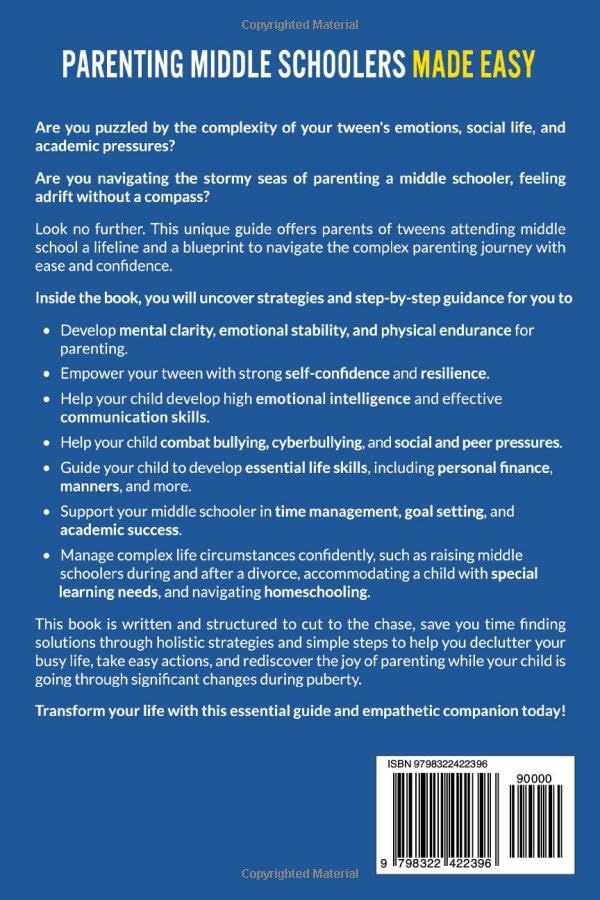
Parenting Middle Schoolers Made Easy: Empower Your Tween With Strong Self-Confidence, High Emotional Intelligence, and Essential Skills to Thrive in School and Life
- Parenting & Relationships
- Family Relationships
- Stepparenting & Blended Families
5. Self Regulation: What It Is and How Parents Actually Build It
Self regulation (the ability to manage emotional responses, delay gratification, and calm yourself down) is not something children either have or don't have. It is a skill, and it is built through thousands of small interactions with the adults around them.
The science here is consistent. A 2018 review in the journal Child Development found that parental warmth combined with clear, consistent expectations was one of the strongest predictors of healthy self regulation in middle childhood.
What builds self regulation:
What undermines it:
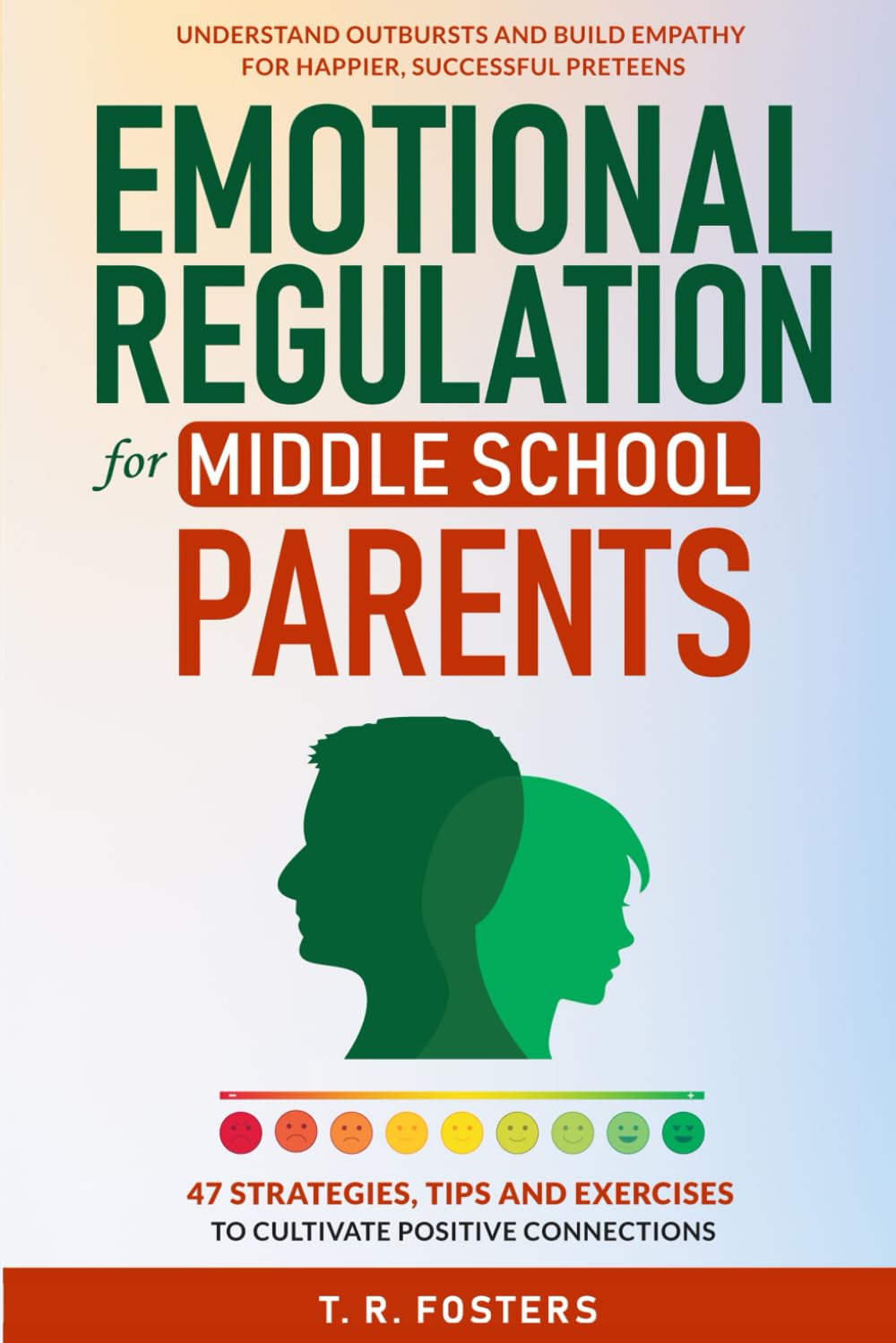
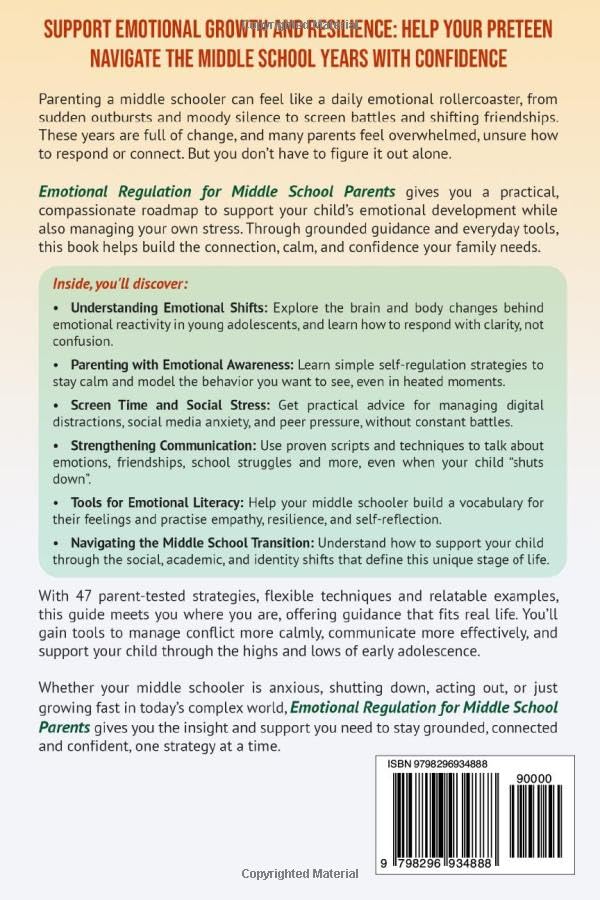
Emotional Regulation for Middle School Parents: 47 Strategies, Tips and Exercises to Cultivate Positive Connection. Understand Outbursts and Build ... Successful Preteens (Positive Parenting)
- Relationships
- Conflict Management
- Image Unavailable Image not available forColor:
6. The Role of Social Life, Friendships, and Digital Pressure
Peer relationships move to the centre of your tween's world. This is developmentally correct. But the social landscape tweens navigate now is significantly more complex than it was even ten years ago.
Social comparison, once limited to the school day, now runs around the clock. Exclusion that used to happen on the playground now happens in group chats at 10pm. The emotional consequences are real: a 2023 report from the US Surgeon General's office specifically flagged social media exposure as a contributing factor to rising anxiety and low mood in 10 to 14 year olds.
What parents can do
This isn't about banning everything digital. It's about staying in the conversation.
Understanding the emotional shifts tied to tween development can help you make sense of why your child's friendship struggles feel so all-consuming to them.
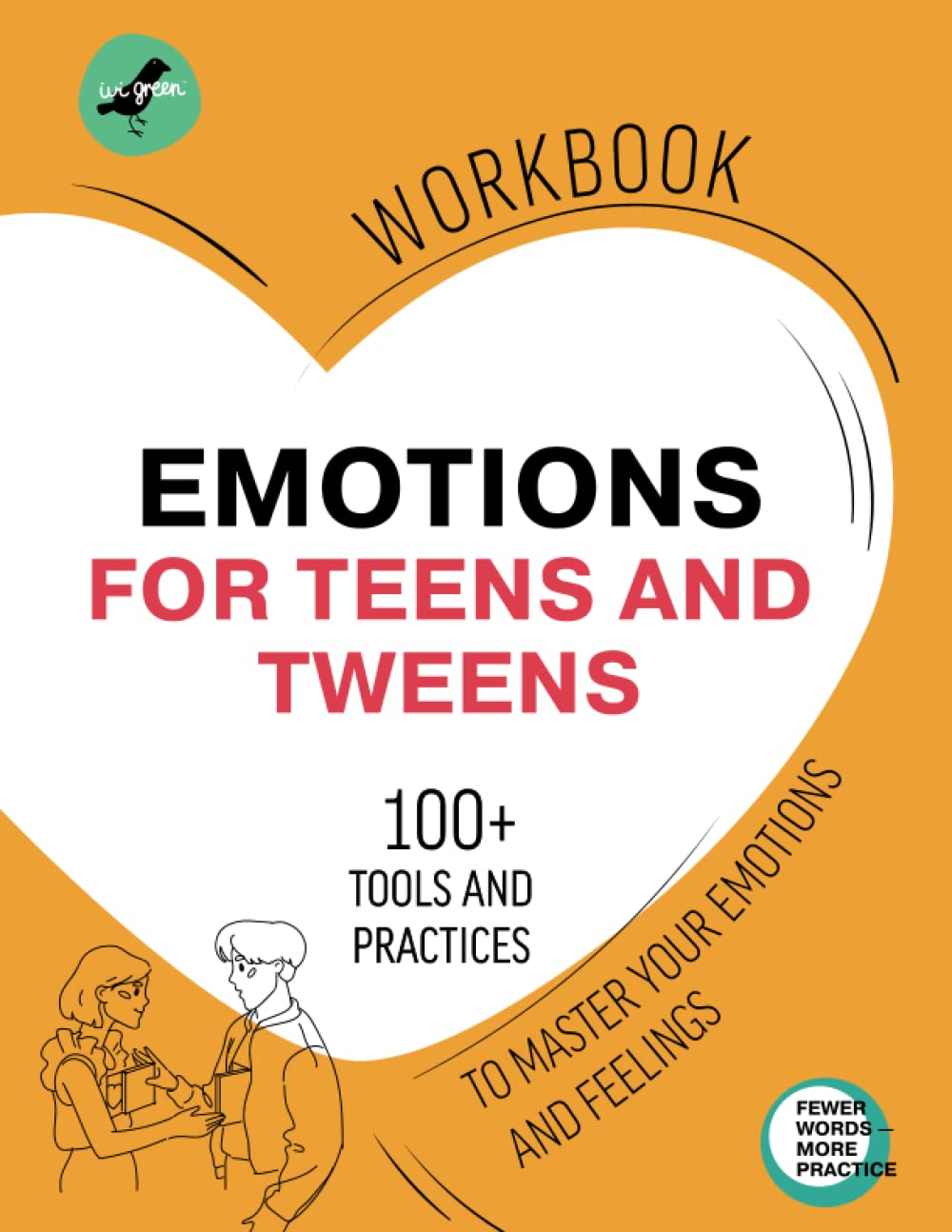
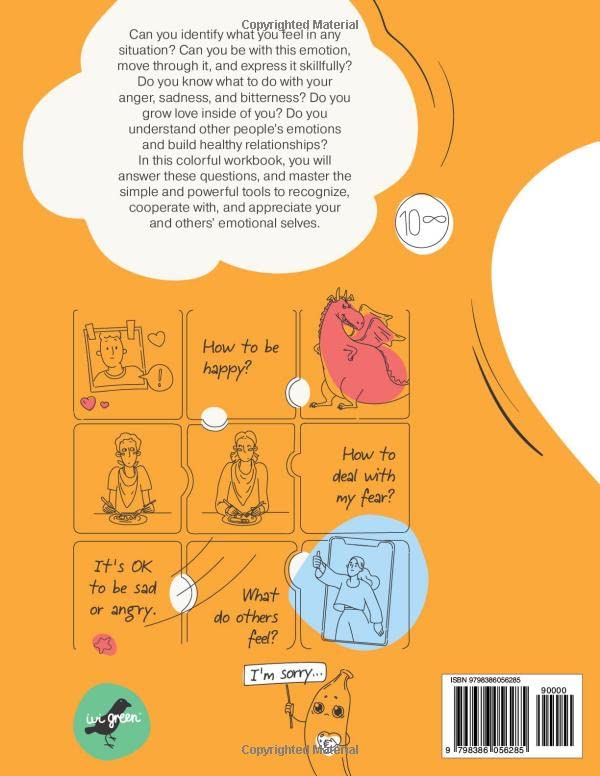
EMOTIONS FOR TEENS AND TWEENS: Workbook to Master Emotions and Feelings. 100+ Questions, Quizzes, and Fun Practices for Understanding, Managing, ... Relationships (Life Skills 101 For Teens)
- Teen & Young Adult
- Personal Health
- Depression & Mental Health
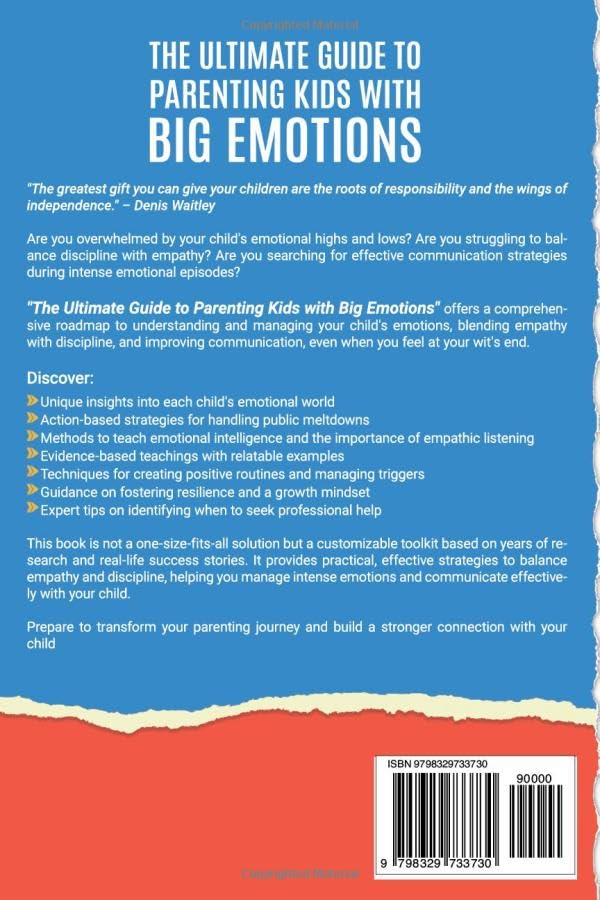
The Ultimate Guide To Parenting Kids with Big Emotions:: Easy Strategies to Manage Intense Emotions, Balance Empathy with Discipline, and Communicate Effectively—Even When Overwhelmed
- Parenting & Relationships
- School-Age Children
- Image Unavailable Image not available forColor:
| Challenge | What It Looks Like | What's Usually Behind It | What Helps | Recommended Product |
|---|---|---|---|---|
| Emotional outbursts | Crying, shouting, slamming doors over seemingly small triggers | Limbic system running faster than prefrontal regulation | Co-regulate first, talk later | Emotional Regulation for Middle School Parents |
| Defiance and push back | Refusing requests, arguing every rule | Need for autonomy, stress response, or saving face | Choices within limits; private conversations | Parenting Middle Schoolers Made Easy |
| Withdrawal and moodiness | Short answers, avoiding family, spending more time alone | Normal identity formation plus possible anxiety or low mood | Stay warm and available; don't withdraw in response | The Ultimate Guide To Parenting Kids with Big Emotions |
| Low emotional vocabulary | "I don't know" when asked about feelings; anger masking other emotions | Emotional language still developing | Model your own emotional vocabulary; use workbooks | Emotional Intelligence for Kids Workbook |
| Social stress and comparison | Upset after using devices; worried about friendships | Peer world intensifying; digital social comparison | Regular check-ins; overnight device rules | Emotions for Teens and Tweens Workbook |
Expert Insights
The tween years can feel like someone quietly replaced your child with a stranger who speaks in sighs and finds you embarrassing. But underneath the eye rolls, this stage is asking something meaningful of both of you: your child is learning who they are, and you are learning how to love them in a new way.
The science is clear that your consistent, warm presence matters more than any single strategy or perfect response. You will get things wrong. You will lose your patience. What matters is that you come back, you repair, and you keep showing up.
One sentence worth saving: the tweens who come through this stage with the best emotional foundations are not the ones whose parents were perfect; they are the ones whose parents stayed in the room.
If this guide helped you, save it, share it with a co-parent, or pass it on to another family navigating the same stretch of road.
Sources & References
- American Academy of Pediatrics. "Middle Childhood." HealthyChildren.org. 2023. https://www.healthychildren.org
- World Health Organization. "Adolescent Mental Health." WHO Fact Sheet. 2023. https://www.who.int/news-room/fact-sheets/detail/adolescent-mental-health
- US Surgeon General. "Social Media and Youth Mental Health: The U.S. Surgeon General's Advisory." 2023. https://www.hhs.gov/surgeongeneral
- Grusec, Joan E., and Maayan Davidov. "Integrating Different Perspectives on Socialization Theory and Research." Child Development, 2010.
- Jensen, Frances E. "The Teenage Brain." HarperCollins, 2015.
- Ginsburg, Kenneth R. "Building Resilience in Children and Teens." American Academy of Pediatrics, 3rd ed., 2015.
- Yale Centre for Emotional Intelligence. "The Science of Emotional Intelligence." Yale University. https://ycei.org
- American Academy of Pediatrics. "Sleep in Middle Childhood and Adolescence." Pediatrics, 2016. https://doi.org/10.1542/peds.2016-1360
Frequently Asked Questions
Why is my tween so emotional about small things?
My tween never wants to talk to me anymore. Is this normal?
How do I know if my tween needs professional support?
Is it normal for my tween to be fine one minute and furious the next?
Should I punish every act of defiance or let some things go?
How does sleep affect tween behaviour and emotions?
My tween seems fine at school but falls apart at home. Why?
Was this helpful?
Thanks — your feedback helps us pick what to write next.