Tween Family Life: How to Stay Close at Ages 8 to 12
TL;DR: Quick summaryThe best way to handle family life with a tween is to stay present without hovering. Keep regular one on one time, talk side by side rather than face to face, give fair and clear rules with more say as they earn trust, and treat screens as a family topic. Expe
In this article
TL;DR: Quick summary
The best way to handle family life with a tween is to stay present without hovering. Keep regular one on one time, talk side by side rather than face to face, give fair and clear rules with more say as they earn trust, and treat screens as a family topic. Expect moods; watch for lasting changes.
What you'll get
About 28 minutes to read. Short on time? Read the bold lines and the Key Takeaways near the end.
Picture a 10 year old who used to chatter the whole way home from school. Now you get a shrug, a closed bedroom door, and a sudden, serious interest in having a phone. You wonder what you did wrong.
Usually it is normal growing independence. Children between about 8 and 12 are going through a big change in body, brain and social world, and family life has to shift to keep up. The good news is that small habits at home make a real difference.
This guide is for parents and carers of children in that age band. It covers staying close, talking, rules and chores, screens, sibling fights and big moods, and the tough topics. You will leave with scripts you can try this week and a clearer sense of what is normal.
What counts as a tween, and what is changing at home?
A tween is a child roughly between ages 8 and 12, though no formal definition exists. At home, you'll see bigger feelings, a growing need for privacy, more interest in friends and screens, and a child who still needs you, just in a different way.
Different organisations draw the lines in slightly different places. The Child Mind Institute describes the tween years as ages 8 to 12, while Common Sense Media points out that there is no formal definition and usage varies widely. So do not worry if your 9 year old seems ahead of, or behind, the label. Think of it as a loose stage, not a switch that flips on a birthday.
The body is starting to change
Puberty is the biggest change happening behind the scenes. It is normal for the start of puberty to range from 8 to 13 years in girls and 9 to 14 years in boys. The American Academy of Pediatrics adds that some changes can be normal as early as age 8 for girls and age 9 for boys.
The Child Mind Institute notes that it is not uncommon for changes to start at 9, 10 or 11, with boys tending to trail a little behind. Even before anything visible happens, shifting hormones can affect mood, sleep and energy. That alone can explain a lot of crankiness at dinner.
The brain is changing too
Between ages 10 and 12, children develop the ability to think abstractly and play with "what if" ideas. In family life, this shows up as arguing a point, spotting the holes in your rules, and worrying about things that have not happened yet.
Picture a child who says, "Why do I have to be home by dark when Maya doesn't?" That is not just cheek. It is a brain that can now compare, reason and push back. Your job is to answer the reasoning, not just win the argument.
Confidence can wobble
Studies show that self esteem in girls peaks at age 9 and for many decreases sharply by age 12. Self esteem issues can affect tweens of any gender, even if they show it differently. A child who seems prickly or dramatic may actually be feeling unsure of themselves.
Home is where they should be able to drop the act. When you treat your tween as a person who is learning, rather than a problem to fix, you give their confidence somewhere safe to land. For a wider look at moods, our guide to what is normal at 8 to 12 is a good companion to this one.
Common mistakes in this first stretch
If your tween's mood, sleep or appetite changes sharply and stays changed, or they stop doing things they used to love, mention it to your paediatrician. We will come back to this in the last section.
How do I stay close when my tween starts pulling away?
Stay close by making connection regular and low pressure. Plan one on one time, follow their interests, and be around without an agenda. Pulling away is a normal part of growing up; it does not mean they need you less.
Here is the reassuring part. Even as they push for independence, kidshealth.org reminds us:
Even so, parents are still important anchors in the life of a preteen, providing love, guidance, and support.
kidshealth.org, Connecting With Your Preteen
That line matters on the days when it feels like you have been replaced by their friends and a screen. You have not. Your role has changed from running their day to being the safe base they return to.
Build in one on one time
Clinical psychologist Laura Kirmayer, quoted by the Child Mind Institute, suggests setting up a special period of one on one time once or twice a week with your tween. It does not need to be fancy or long. It needs to be regular, and it needs to belong to them.
Some ideas that work for many families:
Let your tween pick the activity, within reason. Keep it light. This is not the moment for feedback on homework or tidy rooms.
Put the screens away
Kidshealth.org suggests turning off the TV and putting away cellphones when you want to connect. That means yours as well as theirs. If you scroll while they talk, they notice, and they learn that this is how listening looks.
A simple way to make it fair: a basket by the door where every phone goes during your together time. You go first.
Tiny daily rituals count
Big outings are lovely, but small daily moments do most of the work. A few examples:
Some tweens find writing easier than talking. A shared journal such as Just Between Us: Mother & Daughter gives a mother and daughter a way to swap thoughts on paper, with no pressure to answer out loud. Families with sons or other caregiving pairs can adapt the idea with any notebook you pass back and forth.

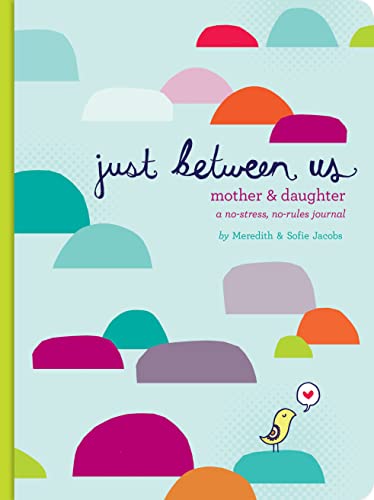



Just Between Us: Mother & Daughter: A No-Stress, No-Rules Journal (Activity Journal for Teen Girls and Moms, Diary for Tween Girls)
- Children's Books
- Growing Up & Facts of Life
- Family Life
What to say when they push you away
When your tween snaps, "Leave me alone," try this instead of arguing or leaving angrily:
"Okay, I hear you want some space. I'm not going anywhere. When you're ready, I'd love to hear about it."
Then actually give the space. Check back later with something simple, like a snack at their door. You are showing them that distance is allowed, but you are still reliable.
Common mistakes
Every caring adult can build their own thread. A grandparent who fixes bikes, an uncle who cooks, a step parent who loves board games all count. Tweens do better when they have more than one safe person to talk to.
How do I get my tween to actually talk to me?
Skip the question barrage. Tweens talk more when the setting is relaxed, you sit side by side, and you share a little of your own day first. Ask fewer, more specific questions, listen without fixing, and be ready for the odd moments they open up, often at bedtime.
If you ask, "How was school? What did you learn? Who did you sit with?" you will probably get "Fine." The Child Mind Institute says plainly that firing a stream of questions about school and their day does not work. Tweens feel cross examined, so they shut down.
Change the setting, not just the question
Many tweens open up when they do not have to look at you. Think car rides, walks, washing up, baking, or the quiet dark just before sleep. Sitting side by side with something to do with their hands takes the heat out of the conversation.
A better way to start
Try going first. Share something small from your own day, then pause.
"Funny thing happened at work today. My meeting ran so long I forgot to eat lunch. What was the most annoying part of your day?"
Specific, slightly silly questions work better than broad ones:
Light games help too. A book of silly choices such as Would You Rather? Summer Edition gives you a low pressure way to hear how your tween thinks, and it works well on a road trip, at the table, or waiting for food.
Listen first, fix later
Tweens often talk about a problem to be heard, not to be rescued. Before you offer any advice, ask the question that saves many a conversation:
"Do you want advice, or do you want me to just listen?"
Then follow their answer. If they say "just listen," do exactly that. Nod, say "That sounds really hard," and resist the urge to solve it.
A simple step plan for a good talk
- Pick a relaxed setting, such as the car, a walk or cooking, with phones away.
- Share a small thing from your own day first.
- Ask one open, specific question.
- Wait. Count silently to five before you fill the gap.
- Repeat back what you heard in one short sentence ("So you felt left out at lunch.").
- Hold your advice until they ask, or until you have asked permission to give it.
When they tell you something that worries you
Your reaction helps decide whether they come back to you next time. Take a breath and say:
"Thank you for telling me. I'm glad you did. Let's work out what to do together."
Save the lecture for later, and keep it short. If a topic needs more care, such as bullying, online content or risky behaviour, come back to it the next day when you are both calm.
Common mistakes
What should rules, chores and routines look like at 8 to 12?
At 8 to 12, aim for fewer rules, stated clearly, with reasons, and a growing say for your tween. Give real jobs at home, keep daily routines predictable, and hold a regular family meeting so rules are discussed, not just announced.
Tweens still need firm limits. They also need to feel those limits are fair and that they are slowly earning more freedom. Rules that never change, or that change every day, breed arguments.
Sort rules into three groups
A simple way to think about it:
When they ask for more freedom, try a script like this:
"I hear that you want more freedom. Here's what I'd need to see first. Let's try it for a few weeks and then check in together."
That response treats their request as reasonable, shows what trust looks like, and gives them a path rather than a flat no. If you want more on setting limits calmly, our guide to positive parenting and gentle discipline goes deeper.
Chores are about belonging, not payment
Chores teach a tween that the home runs because everyone helps. Aim for a mix of daily jobs (packing their school bag, clearing their plate) and weekly ones (laundry, helping with a meal, caring for a pet).
Try wording it this way:
"In our family, everyone helps the home run. Here are the jobs. Which ones would you like to pick?"
Choice matters. A tween who picks their jobs often complains less than one who is handed a list. Teach the skill first, do it together once or twice, then step back.
Cooking is a good place to start because it is useful and often fun. A book like Life Skills for Tweens covers cooking, making friends and being self confident, and can double as a conversation starter about what they want to learn.


Life Skills for Tweens: How to Cook, Make Friends, Be Self Confident and Healthy. Everything a Pre Teen Should Know to Be a Brilliant Teenager (Life Skills for Tweens, Teens & Young Adults)
- Children's Books
- Growing Up & Facts of Life
- Family Life
Keep routines predictable
Mornings and evenings are often where family battles happen. Predictability lowers the temperature.
- Agree on a short list for the morning (get dressed, eat, pack bag, shoes) and put it somewhere visible.
- Agree on an after school pattern: snack, a break, then homework.
- Pick a regular wind down time at night, with devices parked outside bedrooms.
- Let your tween help write the routine, so it feels like theirs.
Hold a family meeting
A short weekly meeting gives rules, plans and complaints a calm home. Keep it simple:
Some families like a guided resource. Radical Family Workbook and Activity Journal offers activities for parents, kids and teens to do together, which can give your meetings a structure if you are not sure where to start.
Consequences that teach
Tweens learn best from consequences that are logical, calm and short. If a phone is used after lights out, the phone sleeps in the kitchen for a few nights. If a chore is skipped, it gets done before screens.
Common mistakes
How do I handle screens, phones and social media in our family?
Treat screens as a family topic, not a tween problem. Agree house rules that apply to adults too, keep devices out of bedrooms at night and off the table at meals, talk before the first phone arrives, and stay curious about what your tween does online.
On average, children aged 8 to 18 in the United States spend seven and a half hours a day watching or using screens. That includes TV, games, videos and phones. The American Academy of Child and Adolescent Psychiatry advises that for ages 6 and older, you encourage healthy habits and limit activities that include screens.
There is no single magic number of minutes. What matters is what screens are replacing (sleep, exercise, homework, family time, friends) and what your tween is doing on them.
Make a family media plan
A plan works best when your tween helps write it, and when it covers everyone in the home. Sit down together and agree on:
Say this out loud: "These rules are for all of us. I'll put my phone in the basket at dinner too."
The first phone conversation
Common Sense Media notes that tweens often show a strong interest in getting a first phone. That is a common request at this age, and it is often about more than the phone itself. It is about friends, fitting in and independence.
Before you say yes or no, try asking:
"What do you want a phone for? What would you do with it? Let's work out what would make that safe."
Then talk through basics: who they can message, what to do if a stranger contacts them, what to do if they see something upsetting, and where the phone lives at night. A basic phone with limited apps is a fair first step for many families.
Social media and age limits
Most platforms require users to be 13 or older, but many do not have a reliable age verification system, and tweens often work around the restrictions. Common Sense Media also notes that many tweens begin creating accounts despite the age limits, often entering false birthdates.
This means "they are too young, so it is not an issue" does not hold up. If your tween is curious, it is better to talk about it openly than to pretend the apps do not exist. Ask what their friends use, what they like about it, and what worries them.
Think about what you share too
Your own online habits are part of the picture. Tweens notice when photos of them go up without a word, and many care a lot about it. Our guide to sharing photos of your child explains the privacy risks and safer ways to share. A good family habit is to ask before you post anything about each other.
A script for when something goes wrong
If your tween sees or does something online they regret, they must feel safe telling you. Say it in advance, calmly, and mean it:
"If something online ever upsets you or feels wrong, tell me. You will never be in trouble for telling me. We'll fix it together."
Then follow through. If they tell you something awkward and you explode, they will not tell you next time.
Common mistakes
How do I handle sibling fights, big moods and family stress?
Expect more arguments and bigger moods at this age. Stay calm, name the feeling, separate the feeling from the behaviour, and coach fairness in sibling fights rather than refereeing. Look after your own stress and your relationship with your partner too, because tweens notice.
Tweens can go from cheerful to furious in the space of a sentence. Part of this is changing hormones and part is a brain that is still learning to manage strong feelings. Staying steady is the most helpful thing you can do.
When the mood explodes
Try the three step approach:
- Stay calm and low. Lower your voice, slow your breathing, and keep your words short.
- Name the feeling. "You sound really frustrated."
- Set the limit. "It's okay to be angry. It's not okay to slam doors at your sister. Take a few minutes, then tell me what happened."
Let them cool down before you talk. A tween in the middle of a meltdown cannot think clearly. Come back later with something like, "Earlier was rough. Want to talk about it now?"
Remember the wobble in confidence we talked about earlier. A tween who snaps at everything may actually feel unsure and overwhelmed, so a calm, kind reply often does more than a punishment.
Sibling fights
Fights between brothers and sisters are normal, and they can teach negotiation. They do not have to be solved by you every time.
Try this:
- Separate them to cool off if things are heated.
- Say, "I'm not going to decide who started it. I'd like each of you to tell me what you need."
- Let each child speak without interruption.
- Ask, "What's one thing we could do so you both feel okay?"
- Step back and let them try it.
A few extra tips:
Tweens also need to practise friendship skills outside the family. A book like Social Skills for Tweens covers conflict resolution, communication and making friends, and can be a good read to share.

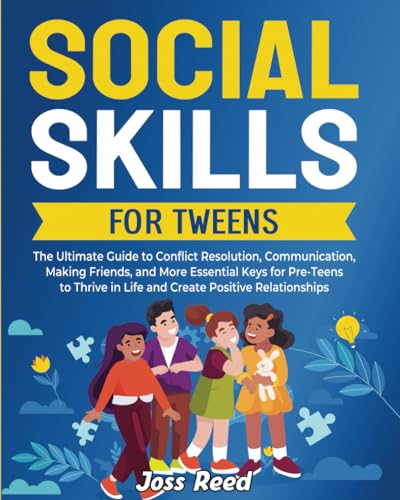

Social Skills for Tweens: The Ultimate Guide to Conflict Resolution, Communication, Making Friends, and More Essential Keys for Pre-Teens to Thrive in ... Relationships (The Emotion Detectives)
- Children's Books
- Growing Up & Facts of Life
- Friendship, Social Skills & School Life
If you want hands on practice, 101 Social Skills Activities for Kids offers simple ways to build confidence and communicate clearly that you can try at the kitchen table.
Family stress is contagious
Tweens read the mood of the house more than parents realise. If you and your partner are tense or snapping, they will pick it up, even if no one says a word. Children also learn how people disagree by watching you.
Try these habits:
Our list of relationship tips for married couples and parents has practical ideas for this. Families come in all shapes, including single parent homes, blended families and homes with several carers, and the same principle holds: calm, connected adults help children feel safe.
Say sorry when you snap
You will lose your temper sometimes. That is human. What matters most is the repair.
"I snapped at you earlier, and I'm sorry. That wasn't fair. Can we try again?"
Apologising does not weaken your authority. It shows your tween how to own a mistake.
Common mistakes
When is it more than a phase, and how do I handle the tough topics?
Most tween ups and downs are normal, but a sharp, lasting change in mood, sleep, eating, friendships or school deserves a call to your paediatrician. Start conversations about puberty, drugs and online life early, in small chunks, before your tween hears it elsewhere.
The Child Mind Institute warns that kids are starting to experiment with drugs and alcohol as early as 9 or 10. Common Sense Media also notes that this is the age when tweens may engage in risky behaviour. That sounds scary, but it is also a reason to talk early, calmly and often.
Start the tough talks early
Our toolkit for big conversations without meltdowns walks through how to raise hard subjects calmly. A few principles to start with:
Here are some scripts you can borrow:
On puberty: "Your body is going to start changing, if it hasn't already. Everyone's timing is different, and that's normal. You can ask me anything, any time."
On alcohol and drugs: "What have you heard kids say about alcohol or drugs? I'd like to know what you think. Here's where I stand and why."
On online content: "If you ever see something that scares or confuses you, come to me. You won't be in trouble."
Being honest about puberty also helps you spot when something is outside the usual range. Remember that puberty can start anywhere across a wide range of ages. Our guide to puberty timelines and when to call your paediatrician covers what to look out for.
What a normal rough patch looks like
Many tweens have a few weeks of moodiness after a big change, such as a new school, a friendship breakup or a family move. They may be quieter, more tearful or more irritable, then slowly settle. They still enjoy some things, still sleep and eat reasonably well, and still respond to comfort.
Signs to take seriously
Talk to your paediatrician if you notice:
If your tween talks about harming themselves or not wanting to live, do not wait. Get help right away from your local emergency number or crisis service, and stay with them. Ask your doctor what steps to take next.
You know your child better than anyone. If something feels off, trust that feeling and ask for advice. You do not need to wait for it to become obvious.
What to say to a tween who is struggling
Try keeping it plain and warm:
"I've noticed you seem sad lately. I'm not mad, I'm just worried about you. You don't have to explain it all right now. Can I sit here with you?"
Then listen. Avoid quick fixes like "Cheer up" or "It's not that bad." Offer to make a doctor's appointment together, and make clear you are on their side.
Common mistakes
Which family tools fit which need?
Books, games and journals will not replace time with you, but they can give a shaky conversation a starting point. Here is a quick way to compare the options we have mentioned.
| Option | Best Age Range | Primary Benefits | Main Drawbacks | Recommended Product | Price Range |
|---|---|---|---|---|---|
| Shared journal for a parent and child | From about 9 into the teens | Gives shy tweens a written way to share; builds a keepsake | Needs steady follow through; title speaks to mothers and daughters | Just Between Us: Mother & Daughter journal | $9.85 |
| Life skills reading and cooking together | From about 8 to 12 | Builds independence, confidence and everyday skills | Skills only stick with practice at home | Life Skills for Tweens | $9.65 |
| Social skills guide for friendships and conflict | From about 8 to 12 | Practical tips on communication and making friends | Works best when you read and talk about it together | Social Skills for Tweens | $13.69 |
| Silly choice game for car rides and meals | Most of the tween years | Low pressure fun; opens easy conversations | Light, so it will not cover tough topics | Would You Rather? Summer Edition | Check current price |
| Social skills activities at home | From about 8 to 12 | Hands on practice for confidence and clear communication | Takes your time and patience to run | 101 Social Skills Activities for Kids | Check current price |
| Family workbook for meetings | Tweens and older siblings | Gives family meetings a structure that includes everyone | Needs the whole family on board | Radical Family Workbook and Activity Journal | Check current price |
Frequently asked questions
Key takeaways
Key Takeaways
- Tweens are roughly ages 8 to 12, and pulling away is a normal part of the stage, not a sign you have failed.
- Parents remain important anchors in a preteen's life, so keep showing up with love, guidance and support.
- Regular one on one time, once or twice a week for many families, builds closeness without pressure.
- Talk side by side, ask fewer and more specific questions, and listen before you fix.
- Fewer, clearer rules with reasons, real chores and a weekly family meeting build responsibility and trust.
- Treat screens as a family topic: shared rules, devices out of bedrooms at night, and an open door for honest talk.
- Start tough talks about puberty, alcohol and drugs early, in small chunks, and get help for lasting changes in mood, sleep, eating or school.
Final thoughts
Family life with a tween is a bit like standing at a bus stop in the rain: you cannot make the bus come faster, but you can stay put, stay warm and be there when it arrives. Your tween is growing in ways you cannot always see, and the habits you build now will shape the teen years.
You do not need to do everything in this guide. Pick one small thing, like a Saturday walk or a phone basket by the door, and start there. Closeness at this age is built in ordinary moments, not big speeches.
If this helped, save it for a tough week and share it with a partner or friend who is in the thick of it too.
Sources & References
- childmind.org. "Understanding Tweens: A Guide for Parents."
- Common Sense Media. "THE COMMON SENSE CENSUS: MEDIA USE BY TWEENS AND TEENS."
- raisingchildren.net.au. "Pre-teen & teenage development: a guide."
- American Academy of Pediatrics. "Stages of Adolescence."
- Common Sense Media. "How We Rate and Review by Age: 10-12 Years."
- childmind.org. "10 Tips for Parenting Tweens."
- kidshealth.org. "Connecting With Your Preteen."
- Common Sense Media. "Parents' Ultimate Guide to Your 10- to 12-Year-Old's Digital World."
- Common Sense Media. "Parents' Ultimate Guide to Social Media."
- aacap.org. "Screen Time and Children."
Frequently Asked Questions
What age is a tween?
Is it normal for my tween to want more privacy and be moody?
How much screen time is okay for a tween?
When should my tween get a first phone?
Can my tween use social media if the minimum age is 13?
How do I get my tween to do chores without a fight?
Is it too early to talk to my tween about drugs and puberty?
Was this helpful?
Thanks — your feedback helps us pick what to write next.