Tween Health and Safety: Sleep, Screens, Puberty and Online Rules
Most tweens stay healthy and safe with a few steady habits: 9 to 12 hours of sleep, an hour of active play or movement every day, screens with clear family rules, open talks about puberty and online life, and a calm check in about mood. You don't need perfection, just routines yo

In this article
TL;DR: Quick summary
Most tweens stay healthy and safe with a few steady habits: 9 to 12 hours of sleep, an hour of active play or movement every day, screens with clear family rules, open talks about puberty and online life, and a calm check in about mood. You don't need perfection, just routines you repeat.
What you'll get
About 29 minutes to read. Short on time? Read the bold lines and the Key Takeaways near the end.
It's 9:40 on a school night. Your ten year old is in bed with a tablet, eyes heavy, still saying "just one more video." Tomorrow will bring a hard wake up, a grumpy breakfast and a teacher email about homework.
If that sounds familiar, you're in good company. The tween years bring a lot at once: a growing body, a bigger social world, more freedom online and more feelings than your child has words for. Family life shifts too, and that's normal for this stage.
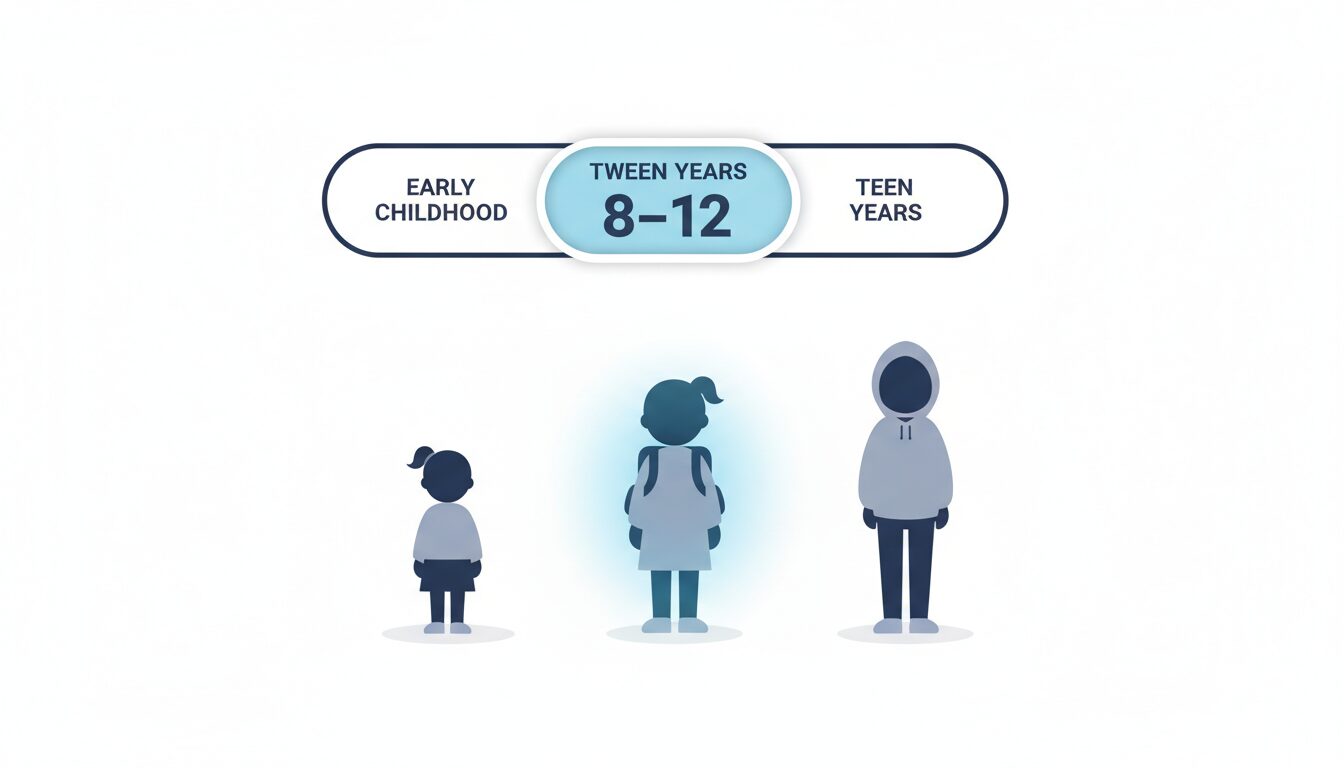
This guide is for parents and caregivers of children aged about 8 to 12. We'll cover sleep, screens, online safety, movement, puberty and hygiene, first periods, and mental health. You'll finish with routines you can start tonight, scripts for awkward conversations, and a clear sense of when to ask for help.
How much sleep does a tween need?
Most tweens need 9 to 12 hours of sleep in every 24, and the same guidance is used for children from age 6 up to 12. Needs vary a little from child to child, so watch how your tween acts in the day as well as counting hours.
What the numbers mean for your family
The American Academy of Sleep Medicine consensus statement says children aged 6 to 12 should get 9 to 12 hours regularly. Puberty guidance from Johns Hopkins Medicine gives the same range for most adolescents. The CDC counts a student aged 6 to 12 who sleeps less than 9 hours as not getting enough.
That last line is a useful floor. If your tween regularly lands below it, sleep is worth a look when you see afternoon meltdowns, forgotten homework or a short fuse.
The range is wide, so where does your child fit?
There is individual variability in sleep need.
Sleep Education by the AASM
In plain terms, a child who gets 9 hours, wakes easily and is cheerful may be fine. A child who gets 10 hours and drags through the day may need more. For a deeper look, our guide on how much sleep your tween actually needs goes further.
Work backwards from the morning
One simple method is to decide when your child must get up for school, then count back 9 to 12 hours. That gives you a window for lights out, not a single exact time.
Here is an example. Say your tween wakes at 6:45 for school. Counting back 9 to 12 hours gives a window from 6:45 pm to 9:45 pm. Lights out at 9:00 gives nearly 10 hours, which sits comfortably inside the 9 to 12 hour range.
Try it in four steps:
- Write down the school wake up time.
- Count back 9 hours (the latest lights out) and 12 hours (the earliest).
- Pick a lights out time inside that window and watch how your tween feels for a week.
- Move bedtime 15 minutes earlier or later until mornings feel easier.
Screens and the bedtime wind down
Bright screens and exciting content close to bed make it harder to switch off. Johns Hopkins Medicine puts it simply: power down at least 30 minutes before bed.
Be sure to power down at least 30 minutes before bed.
Johns Hopkins Medicine
KidsHealth, in advice written for teens, suggests no phone, tablet, computer or TV for at least 1 hour before going to bed. The two sources differ, so aim for the longer gap if your tween can manage it, and treat 30 minutes as the minimum.
What to say tonight: "Devices go on the charger in the kitchen at 8:15. After that it's shower, pyjamas, and a book or music. I'll come and say goodnight at 9."
Common mistakes:
Ask your doctor about sleep if you notice any of these:
How much screen time is okay for a tween?
There is no magic number backed by strong research. The American Academy of Pediatrics says there isn't enough evidence for specific limits, and points parents toward balance, content, watching together and talking. Quality of use matters, not just quantity.
Why the old rules fall short
Many of us grew up with "two hours and no more." The AAP is honest about this:
Unfortunately, there isn’t enough evidence demonstrating a benefit from specific screen time limitation guidelines.
American Academy of Pediatrics
The reason is that tweens use screens for school, friends, hobbies, games and video chats with grandparents. The AAP points out that what counts is the quality of those interactions with digital media and not just the quantity.
Picture two children who each spend two hours on a device. One video chats with a cousin and follows a drawing tutorial. The other scrolls late into the night. Same number, very different effect.
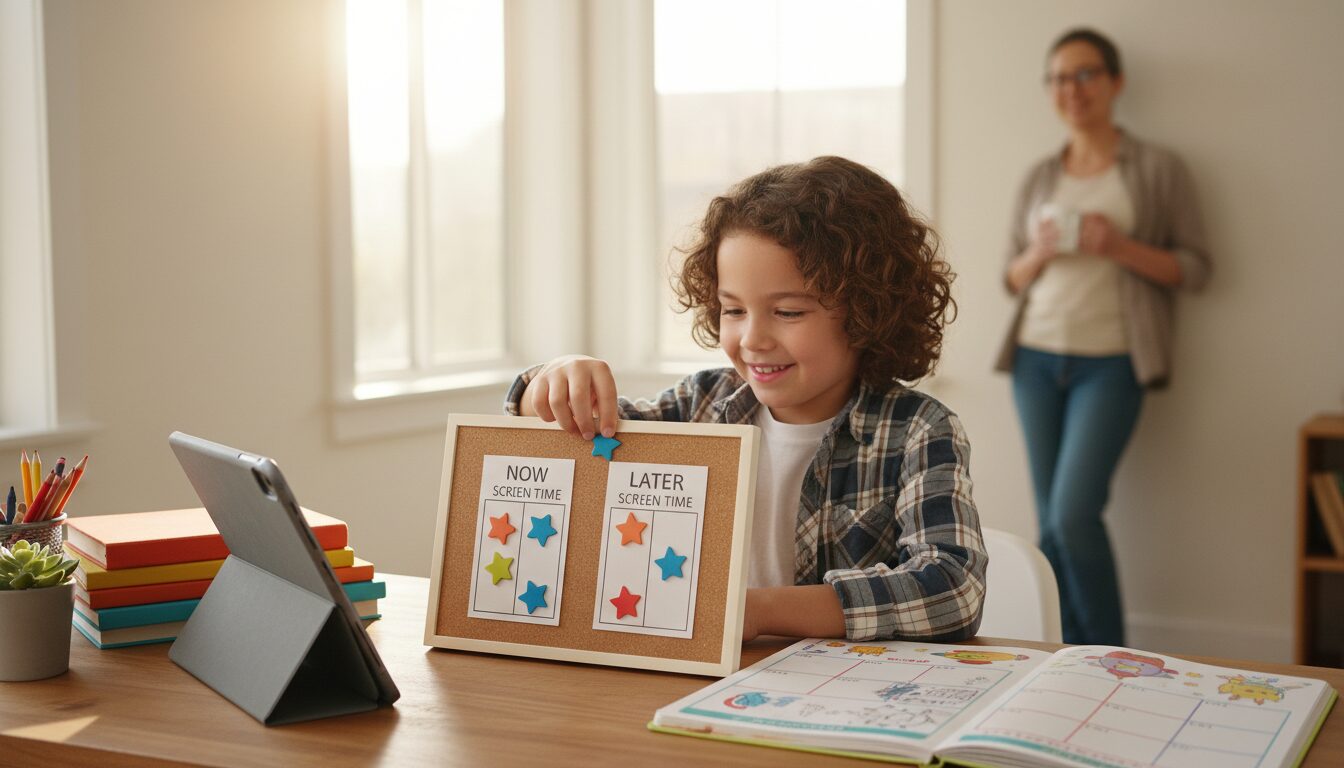
Turn four ideas into house rules
The AAP says there is evidence for household rules built around balance, content, watching together and communication. Here is how that can look at home:
- Balance. Screens shouldn't push out sleep, meals, movement, homework or real life friends.
- Content. You know what your tween plays and watches, and you check ratings.
- Watching together. Sit through a new game or show once, and let your tween teach you the rules.
- Communication. Talk about what they see, how it makes them feel, and what to do when it goes wrong.
Too much screen time combined with poor quality content is linked with problems such as poor sleep and behaviour problems. That is why the content and balance pieces matter so much.
Is there a number to start with?
If you want a starting point, KidsHealth suggests 1 to 2 hours a day of entertainment media in its guidance for teens. Entertainment media means games, videos and social apps, as opposed to schoolwork. Think of it as a starting point to adjust, not a law.
Some tweens use screens differently. A child with ADHD or autism may rely on a game to calm down or to connect with friends. If that is your child, our guide to neurodiversity support at home, school and online can help you set rules that fit.
What to say instead of "Off. Now.": "Two more minutes, then save your game. I'll set a timer, and then we eat."
Common mistakes:
Get help if you see:
How do I keep my tween safe online?
Check age ratings before you say yes, because they're a good guide to what suits your child. Decide together when, where and for how long devices are used. Teach your tween to guard names, addresses, phone numbers, school information and location.
Start with ratings and real ages
Internet Matters says it plainly:
The age ratings that come with games, apps, films and social media platforms are a good guide to whether they’re suitable for your child.
Internet Matters
It also warns that many apps now offer experiences built for certain ages, so using an app with a false age can leave children open to more risk.
Picture an eleven year old who tells an app she is 15 so she can chat with a friend. The app now shows her the experience built for a teenager, not a child. You can say: "I'm not trying to spoil your fun. The age on the account changes what the app shows you, and I want the safe version."
Agree the when, where and how long
Rather than handing down rules, make them together. Internet Matters suggests deciding together when your child can use a device, where they can use it and for how long. Tweens are often more likely to stick to rules they helped write.
A simple family agreement might look like this:
Protect personal information
Go over why it matters to protect personal information online, such as names, addresses, phone numbers, school information and location. A tween may not realise that a school uniform in a photo or a tagged location gives strangers clues.
You can say: "If anyone online asks where you live, where you go to school or for a photo, you don't answer. You come and tell me, and you will never be in trouble for telling."
Think before you post
Before your child posts, Johns Hopkins Medicine encourages you to ask them to consider how it would look to family members or a teacher.
Before your child posts something, encourage him or her to consider the impact of family members or a teacher seeing it.
Johns Hopkins Medicine
Call it the grandparent and teacher test. If it would make your tween squirm to have grandma or the teacher see it, it doesn't go up. It also helps to remember that a post can be screenshotted and shared.
When something goes wrong
Your tween might see a scary video, get a rude message or be asked for a photo. Stay calm and listen first. Then save evidence such as screenshots, block the person, and report the account.
Warning signs that an online adult isn't safe include asking for secrecy, moving the chat to a private app, offering gifts, or asking for photos. If any of that happens, report it to the app and to the police where appropriate, and tell your tween they did the right thing. For more on keeping these chats calm, see our toolkit for tough talks.
Common mistakes:
How much exercise does my tween need?
Aim for at least an hour of physical activity every day. The Raising Children Network says it should be moderate to vigorous, so think running, biking, swimming and active games, not only a slow walk.
What counts as an hour
The hour doesn't have to happen in one block. School sport, a bike ride to a friend's house, a walk to school and a game of tag all add up. The aim is to get your tween's heart beating faster and breath coming harder for at least an hour across the day.
Raising Children Network says tweens need this for good physical and mental health. That mental health link matters: a run around outside can leave many children feeling calmer and happier.
Picture a nine year old who has two soccer practices a week and sits through the rest. The family adds a daily after dinner walk with the dog and a weekend bike ride. Together, that gets closer to the hour than one more club ever would.
Make movement a family habit
Tweens are more likely to move if you move with them. You don't need a gym membership or fancy kit.
Ideas that work:
Some tweens hate team sports. That's fine. Dance, climbing, martial arts, skateboarding or walking the neighbour's dog all count. Play still matters at this age too, and our article on why play still matters at 8 to 12 explains why.
Food, water and growing bodies
Active, growing bodies need steady fuel. Regular meals, a protein and fruit or vegetable at most of them, and water through the day cover the basics. Our guide to tween nutrition has meal and snack ideas.
Avoid commenting on your tween's weight or labelling foods "good" or "bad." Tweens notice body talk more than you expect, and it can plant worries that last. Say "We eat plenty of foods that help us grow and play" instead.
Everyday safety gear
A few habits protect those active bodies:
Heavy or badly worn bags can strain growing backs, so take a look at our piece on backpack safety basics. If you're unsure how much a school bag should weigh for your child, ask your doctor or school nurse.
Common mistakes:
Ask your doctor if your tween has pain that doesn't settle, dizziness during exercise, or breathing trouble when active.
What body changes and hygiene habits should I talk about?
Start the puberty conversation before you think you need to. Short, calm, repeated chats work better than one big speech. Cover body changes, daily hygiene and periods so nothing comes as a shock, and keep reminding your tween that they can ask you anything.
Why early talks work
Puberty starts at different times for different children, and some of your tween's friends will be ahead or behind. That can feel awkward. If you explain in advance, your child won't be left guessing or relying on playground rumours.
Our guide to 9 to 12 year old development lists the changes you may notice. Common ones include growth spurts, body odour, oilier skin and hair, mood shifts and new interest in privacy.
You can open the chat like this: "Your body is going to start changing over the next few years. It's totally normal. Anything you want to ask, you can ask me, and I won't laugh."
Build a simple hygiene routine
Hygiene is often the first practical sign of puberty. Sweat glands change, and a tween may not notice their own smell. Be matter of fact, never shaming.
A good starter routine:
What to say: "I've noticed you're getting a bit sweaty these days. That's your body growing up. Here's a deodorant to try, and I'll show you how to use it."
Skin often gets oilier and spots may appear. Our article on managing oily skin and acne in puberty covers gentle routines. If breakouts are painful or leave marks, ask your doctor.
Kits for school, camp and sleepovers
A small hygiene kit can make a tween feel prepared. The 20 pack travel toiletry kits suit camp or sleepovers and cover the everyday basics for a trip.
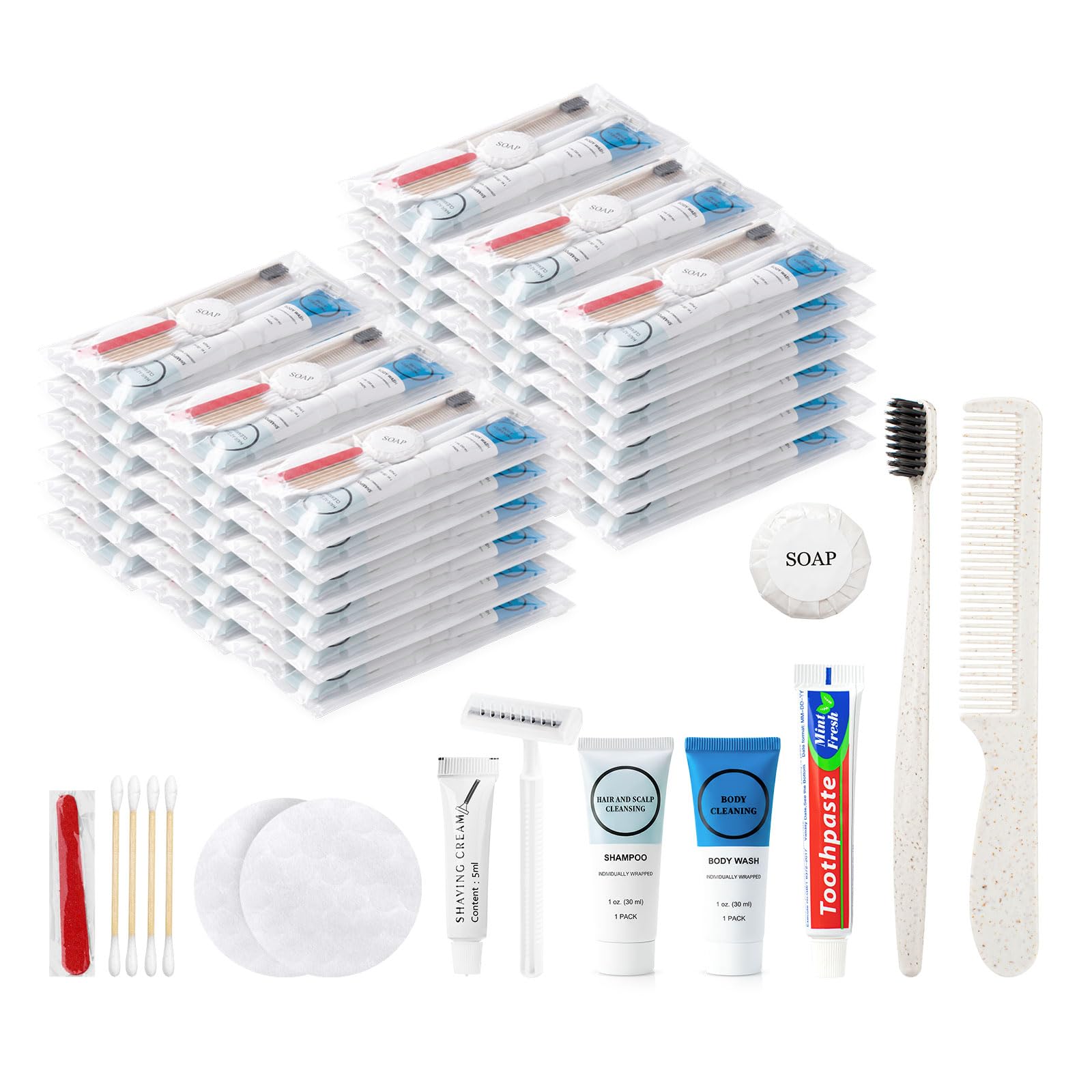
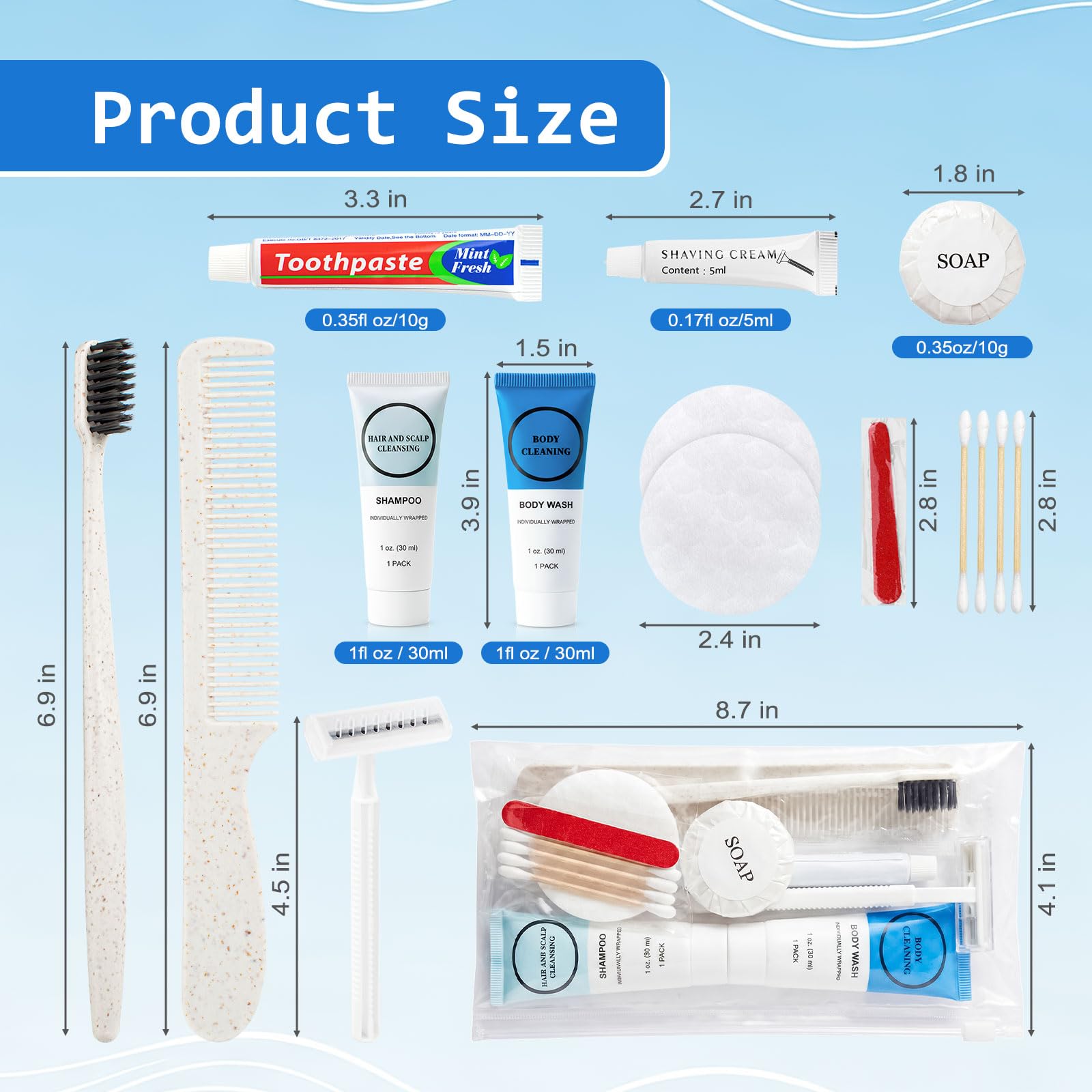
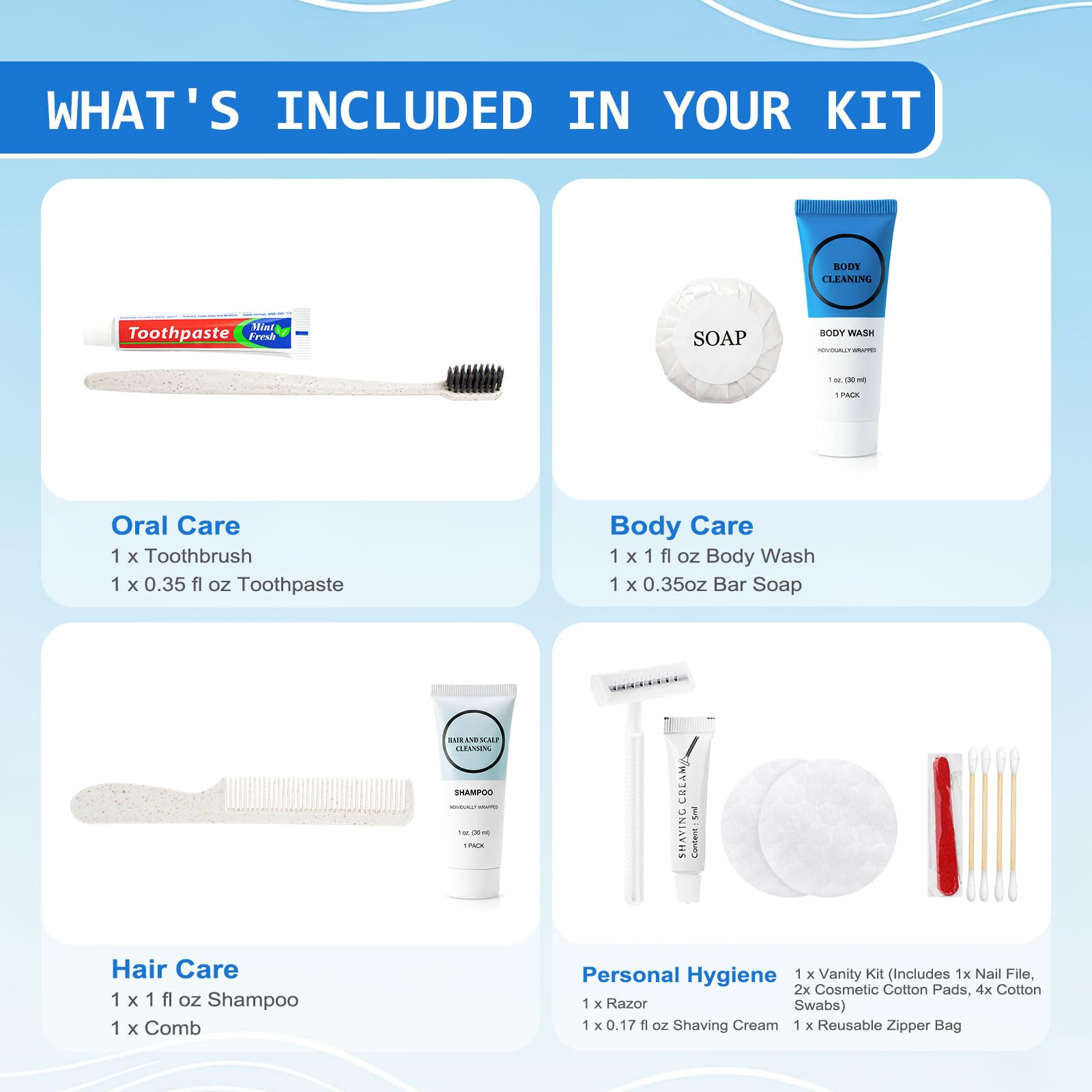
20 Kits Travel Toiletry Kit Bulk, 9-in-1 Disposable Personal Hygiene Kit
- All-in-One Hygiene Kit: You will receive 20 pack 9-in-1 travel hygiene kits. Each kit includes: 1* soap…
- Premium Quality Materials: Travel toiletry kit feature soft-bristled toothbrushes for gentle cleaning, sturdy…
- Mini Travel-Sized Toiletries: Shampoo and body wash come in sealed 30ml/1.01 fl oz bottles to prevent leaks…
Check the full contents list before you buy, because some sets include more than you need. Most tweens don't need to shave yet, and when they do, you should show them how first. If you only want the basics, take the razor out. Twenty kits is also a lot for one family, so it can work well for a school trip or to donate.
Talk about boundaries too
Puberty is also a good time to talk about privacy and body safety. Teach the correct names for body parts, the idea that private parts are private, and that no one should ask your tween to keep a secret about touch.
You can say: "Your body belongs to you. If anyone makes you feel uncomfortable, even someone you know, tell me or another adult you trust. You'll never be in trouble for telling."
Common mistakes:
Waiting until your child asks can mean the conversation never happens, so bring it up yourself.
How do I get my tween ready for a first period?
Talk about periods before the first one arrives, and put a small kit in your child's school bag. A first period is usually messy but not an emergency. Knowing what to do takes most of the fear out, for girls and for the boys who will hear about it at school.
Explain it simply
Keep your explanation short and calm. A period is the body shedding the lining of the womb as part of a monthly cycle. It usually lasts several days, and the first ones can be irregular. There is a wide range of normal, so if you're worried about timing, ask your doctor.
Say it like this: "One day you'll see blood in your underwear. It's normal and healthy. It doesn't mean something is wrong. When it happens, you don't need to panic, and we'll deal with it together."
Boys should learn about periods too. It helps them be kind and avoids teasing.
Build a first period plan
Do this at home before it happens:
- Show your tween a pad and how to stick it in underwear.
- Explain how to wrap a used pad and where to bin it. Never flush it.
- Put a small kit in their school bag, and one in a sports bag.
- Agree who they can tell at school, such as the nurse, a teacher or the front office.
- Tell them what to do if blood gets on clothes: tie a jacket around the waist, use the kit, and ask for help.
For stained clothes at home, rinse in cold water and wash as normal.
What to put in the kit
A good starter kit holds a pad or two, spare underwear in a bag, wipes and a small waste bag. Several products make this easy.
The first period pal pack is designed for tweens and comes with a discreet bag, pads, panty liners, an ebook about periods and a pair of heart earrings. It's a gentle way to make the topic feel positive, and the price is worth checking on the product page.

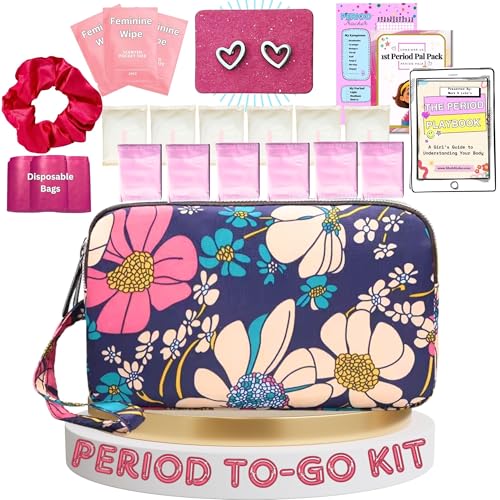
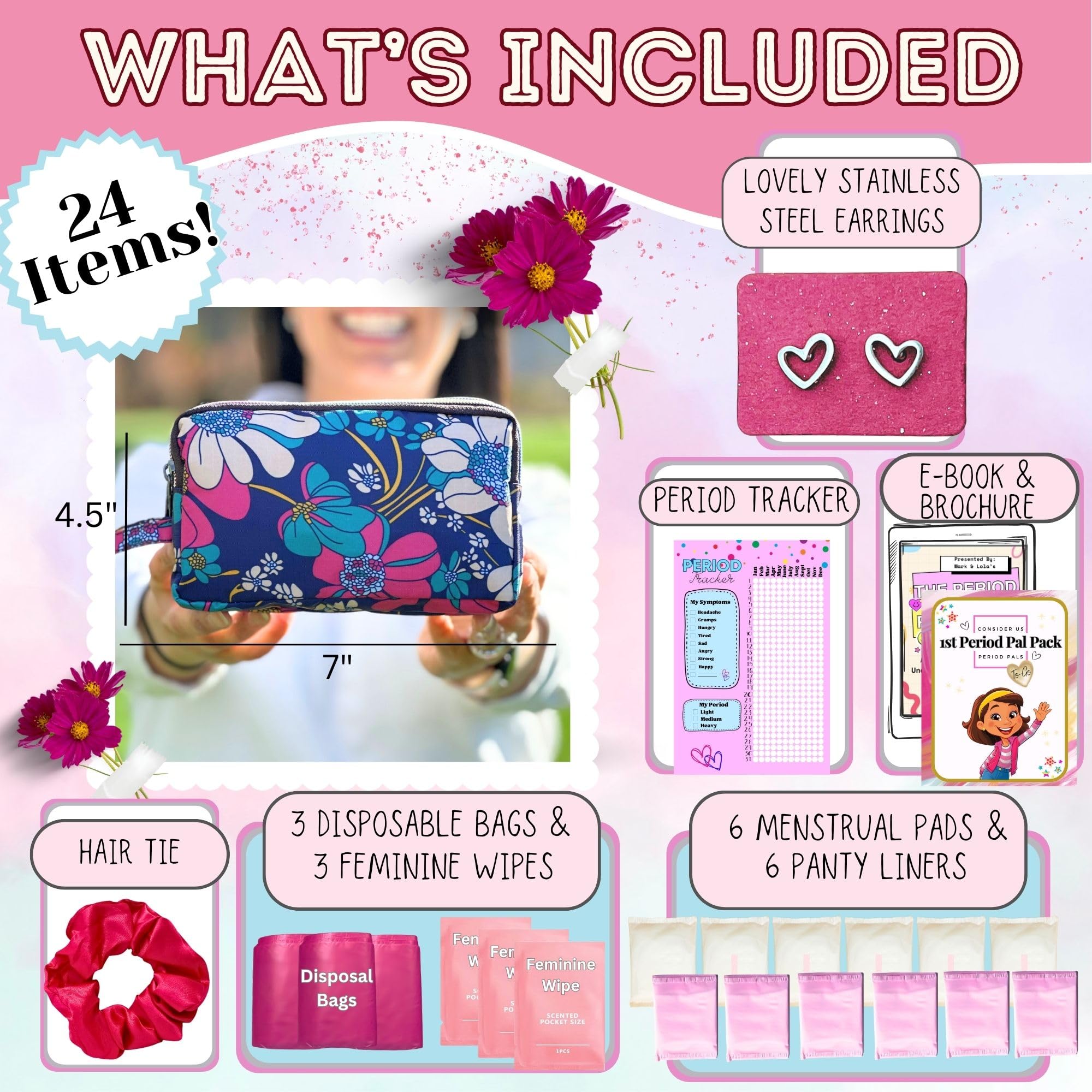

First Period Pal Pack to-Go Kit | 24 pcs | First Period Kit for Tweens | Teen Period Kit| Discrete Period Bag, Pads, Panty Liners, Period Kits for Tweens 10-12 (Flowers)
- CONFIDENCE IN DISGUISE: The discreet bag ensures privacy while carrying essentials—pads, liners, and more…
- EBOOK: Empower tweens with knowledge about menstruation through our informative ebook. Understanding their…
- HEART EARRINGS: These heart-shaped earrings symbolize strength and resilience during this milestone. They…
Another route is a pocket sized kit. The all in one menstrual kit 10 pack comes with one tampon, one pad, a disposal bag, two feminine wipes and one alcohol hand wipe, all in a zip bag. There is also the butterfly print version of the same kit if your child prefers a different pattern.
If you don't need the disposal bag, the assorted colours menstrual kit comes with a tampon, pad and wipes. For schools, scout groups or big families, the butterfly style 60 pack offers a lot of kits for the money, though it has few reviews so far.
Some kits include a tampon. Your child doesn't have to use it. If they ask about tampons, answer honestly and ask your doctor if you have questions about when to start.
Cramps, comfort and when to ask for help
Some tweens get cramps. A warm pack, a bit of rest and gentle movement can help. If you want to use pain relief, ask your doctor or pharmacist what suits your child and how much to give.
Ask your doctor if your tween:
Ask your doctor what counts as too heavy or too painful for your child, because it varies.
Common mistakes:
How do I support my tween's mood and know when to call the doctor?
Big feelings, closed bedroom doors and changing family relationships are normal at this age. Worry when changes last, get in the way of school, friends or sleep, or when your tween seems hopeless. Then talk to your doctor, and don't wait.
What's normal and what helps
Mayo Clinic says that during the tween years, around ages 9 to 12, family relationships will change as your child grows and develops. Your tween may want more privacy, argue more and care more about friends. That's part of growing up.
Our guide to tween behaviour and emotions explains the range of normal. Here we'll focus on what you can do every day.
What helps:
A tween who says "I'm fine" and slams the door is not necessarily okay or not okay. Check back later, when things have cooled, with "I'm here when you want to talk."
Friendships, bullying and school stress
Friendship dramas hit hard during the tween years. Group chats can make them worse, because arguments leave a record and can spread fast. Ask open questions such as "Who did you sit with at lunch?" or "What was the best and worst bit of your day?"
Tell your tween that bullying, online or in person, is never their fault, and that telling an adult is brave. Keep screenshots, tell the school, and follow up if nothing changes.
Red flags that need a doctor
Contact your doctor if your tween shows any of these for more than a short spell:
If your tween talks about hurting themselves or not wanting to live, take it seriously and get help straight away. Contact your doctor, a crisis line or your local emergency number. Stay with your child and stay calm.
If your tween has ADHD, autism or learning differences, extra support at school and home may help. See the neurodiversity guide we mentioned earlier for ideas.
Checkups and the basics
Regular checkups matter. Ask your doctor which vaccines and screening checks your tween is due for, and whether vision, hearing and dental checks are up to date. Schedules vary by place, so your doctor is the right source.
Put a few basics in place at home too: sunscreen, regular dental visits, a trusted adult at school, and a list of emergency numbers on the fridge.
Common mistakes:
Which period and hygiene kit suits your family?
Here is a quick side by side of the kits mentioned in this guide. Ages are loose, because tweens start puberty at different times.
| Option | Best Age Range | Primary Benefits | Main Drawbacks | Recommended Product | Price Range |
|---|---|---|---|---|---|
| First period starter pack with discreet bag, pads, liners and ebook | Tweens before or around a first period | Friendly, private and educational, with a book to read together | Includes earrings you may not need; pads only | First Period Pal Pack to Go Kit | $16.98 for 24 pieces |
| Pocket kit with disposal bag, tampon, pad and wipes (10 pack) | Tweens and teens carrying a kit to school | Everything in one zip bag, plus a bag to dispose of waste | Tampon may not be needed yet | Menstrual Kit All in One 10 Pack | $35.99 for 10 kits |
| Pocket kit without disposal bag, assorted colours (10 pack) | Tweens and teens carrying a kit to school | Compact, with tampon, pad and wipes | No separate disposal bag | Menstrual Kit All in One 10 Pack, Assorted Colors | $35.99 for 10 kits |
| Bulk pocket kits (60 pack) | Schools, clubs and larger families | Lots of kits for sharing or restocking | High price and very few reviews so far | Butterfly Style Menstrual Kit 60 Pack | $199.98 for 60 kits |
| Travel toiletry kits with soap, toothbrush, shampoo and razor | Tweens heading to camp or sleepovers | Covers basic washing and grooming in one pack | Includes a razor your tween may not need; 20 is a lot | 20 Kits Travel Toiletry Kit | $31.59 for 20 kits |
Key Takeaways
- Aim for 9 to 12 hours of sleep, and count back from the school wake up time to find bedtime.
- Switch screens off at least 30 minutes before bed, and an hour if you can.
- Use rules about balance, content, watching together and talking, rather than relying on one number.
- Check age ratings, protect personal information and agree a "no trouble" rule for online mistakes.
- Build in at least one hour of movement a day, and let your tween pick activities they like.
- Talk about puberty, hygiene and periods early, and put a small kit in the school bag.
- Ask your doctor about lasting changes in mood, sleep or eating, and act straight away if your tween talks about self harm.
Tween health and safety isn't about getting every habit perfect. It's about being the steady grown up who notices, listens and keeps showing up. A calmer bedtime, a rule you agreed together, a kit in the bag and a chat in the car do more than any big lecture.
Your tween is learning how to look after a changing body in a busy world, and they'll copy what they see you do. Healthy habits are built in small repeated moments, not in one big talk.
If this helped, save it for later, share it with another parent, and subscribe for more guides for every stage.
Sources & References
- NIH (National Library of Medicine). "Consensus Statement of the American Academy of Sleep Medicine on the Recommended Amount of Sleep for Healthy Children: Methodology and Discussion."
- Sleep Education by the AASM. "Sleep FAQs."
- Johns Hopkins Medicine. "Puberty."
- CDC. "Sleep in Middle and High School Students."
- KidsHealth. "Sleep and Your School Aged Child (for Parents)."
- Mayo Clinic. "Tween and teen health."
- KidsHealth. "How Much Sleep Do I Need? (for Teens)."
- Raising Children Network. "Puberty: helping children handle changes."
- American Academy of Pediatrics. "Screen Time Guidelines."
- KidsHealth. "Media Use Guidelines: Teens."
- Internet Matters. "Online safety for pre teens aged 11 to 13."
Frequently Asked Questions
How many hours of sleep does a 10 year old need?
Is there an ideal screen time limit for tweens?
How long before bed should screens go off?
How much exercise should my tween get each day?
Should my tween use social media apps if they're under the age limit?
What personal information should my tween never share online?
When should I talk to my tween about periods?
Was this helpful?
Thanks — your feedback helps us pick what to write next.