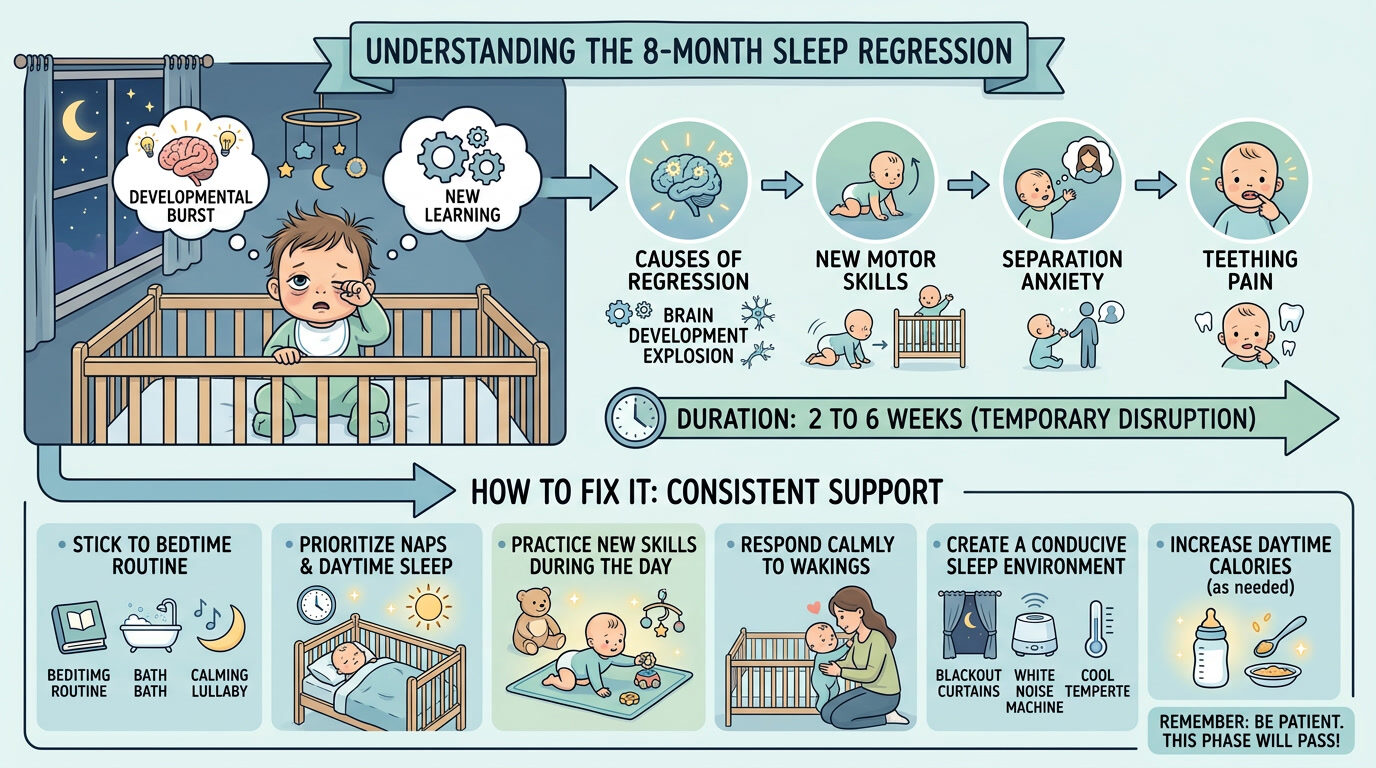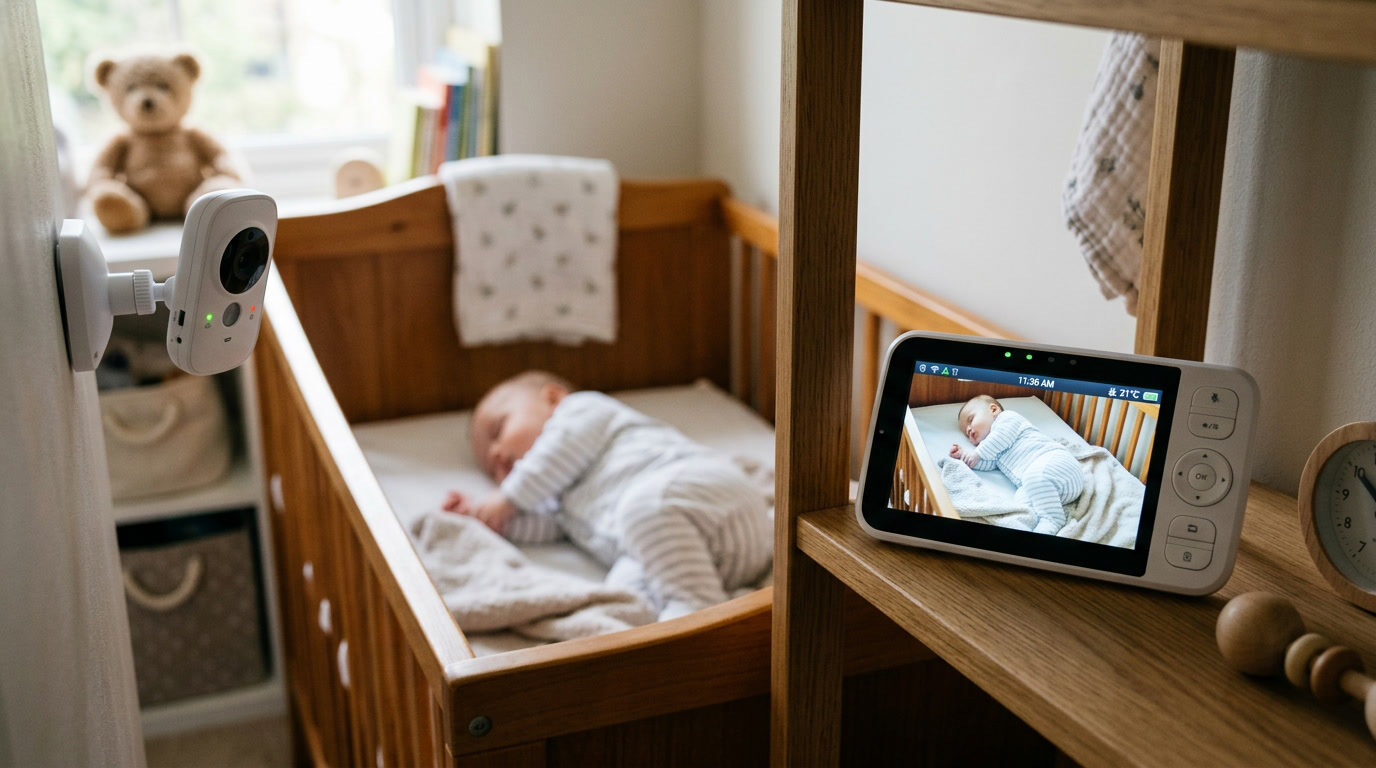
Baby Sleep Solutions: 8 Ways to Soothe Your Infant to Sleep
Consistent sleep soothing for babies aged 3 to 12 months comes down to combining environmental cues (sound, light, temperature), a predictable routine, and safe sleep practices endorsed by the American Academy of Pediatrics.
In this article
If you have a baby between three and twelve months old, you already know that sleep deprivation is not a metaphor. According to a 2019 study published in Sleep Medicine, more than 60 percent of parents of infants report clinically significant sleep disruption of their own. You are not failing. Your baby is not broken. But there are real, practical things that make a measurable difference.
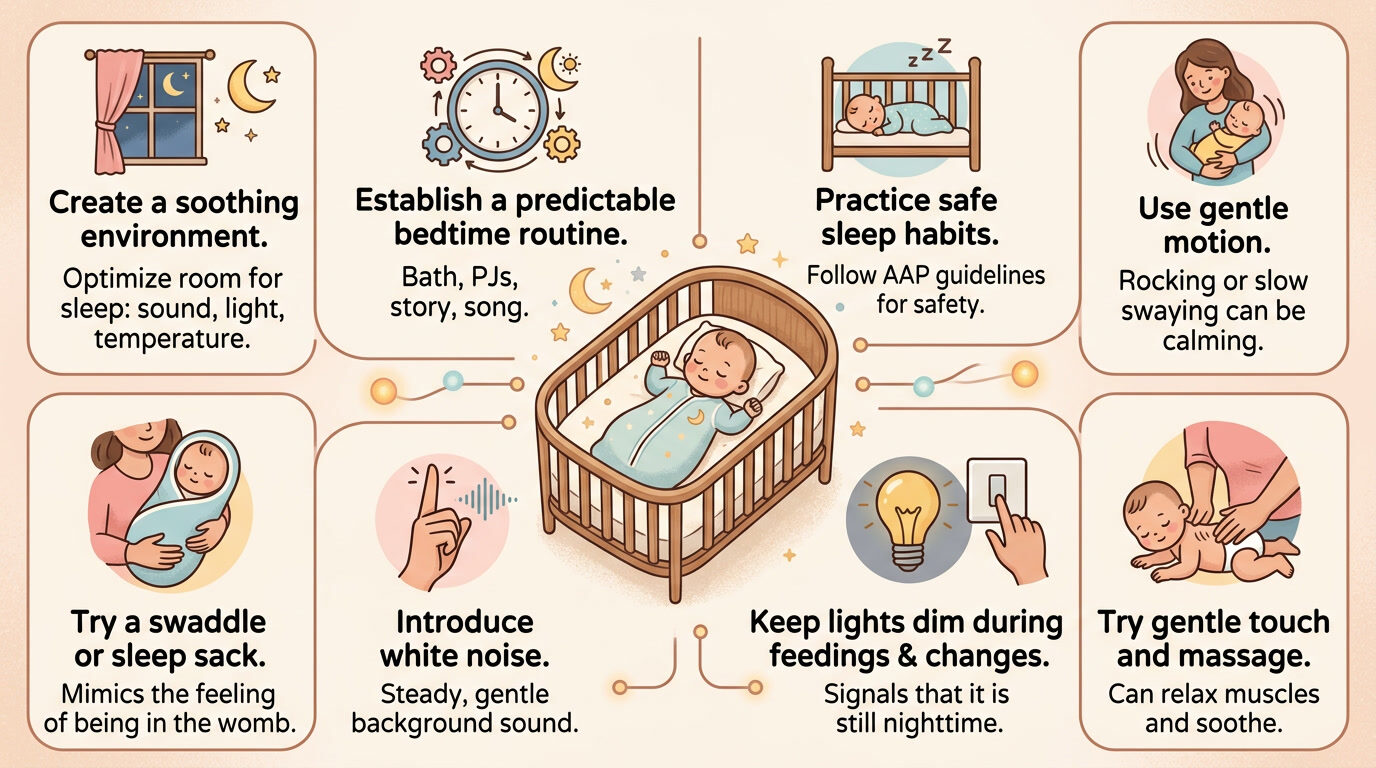
This guide covers eight of the most effective, evidence informed approaches to infant sleep soothing, in plain language you can actually use tonight. Here is what you will understand by the end:
Let us get into it.
1. White Noise: Your Baby's Best Sleep Companion
White noise is not a gimmick. It is one of the most well studied, parent approved sleep tools available for infants, and it works for a straightforward biological reason: babies spent nine months surrounded by sound inside the womb. The outside world, by comparison, is jarringly quiet and full of startling, unpredictable noise.
White noise creates a consistent sonic blanket that masks those sudden sounds (a dog barking, a door closing, older siblings) and mimics the familiar hum of the intrauterine environment.
How loud is too loud?
The American Academy of Pediatrics recommends keeping sound machines below 50 decibels when placed at least 7 feet from your baby. Do not put the machine inside the crib or directly next to your baby's ear.
For portable, travel friendly use, the Yogasleep Hushh is a compact standout. It has been trusted by parents since 1962, offers three simple sound options (bright white noise, deep white noise, and gentle surf), and includes a soft amber night light. No app, no subscription, no fuss.
For families who want more sound variety, the Dreamegg D11 Max offers 21 soothing sounds and an 1800mAh rechargeable battery that easily lasts through the night and into daytime naps.

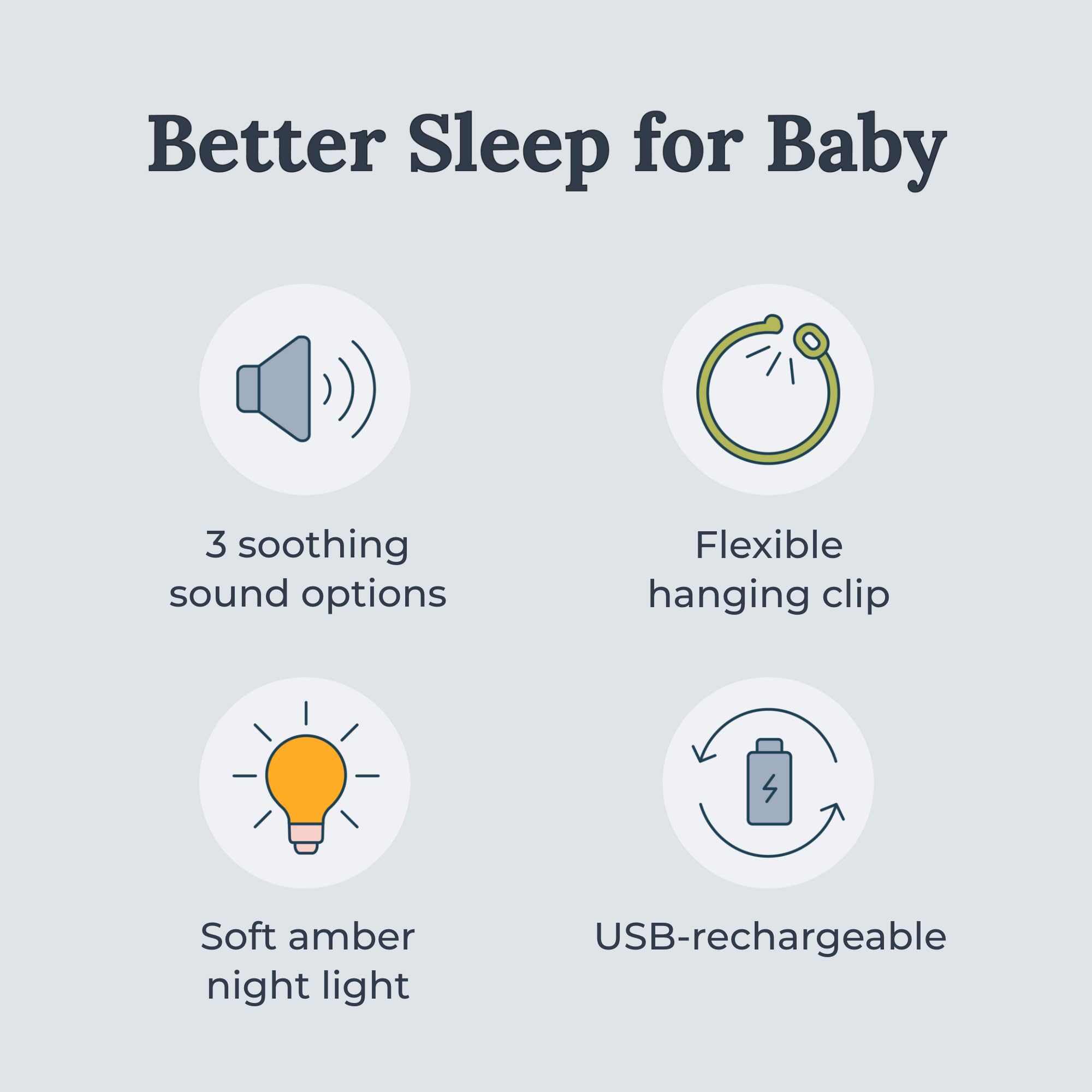


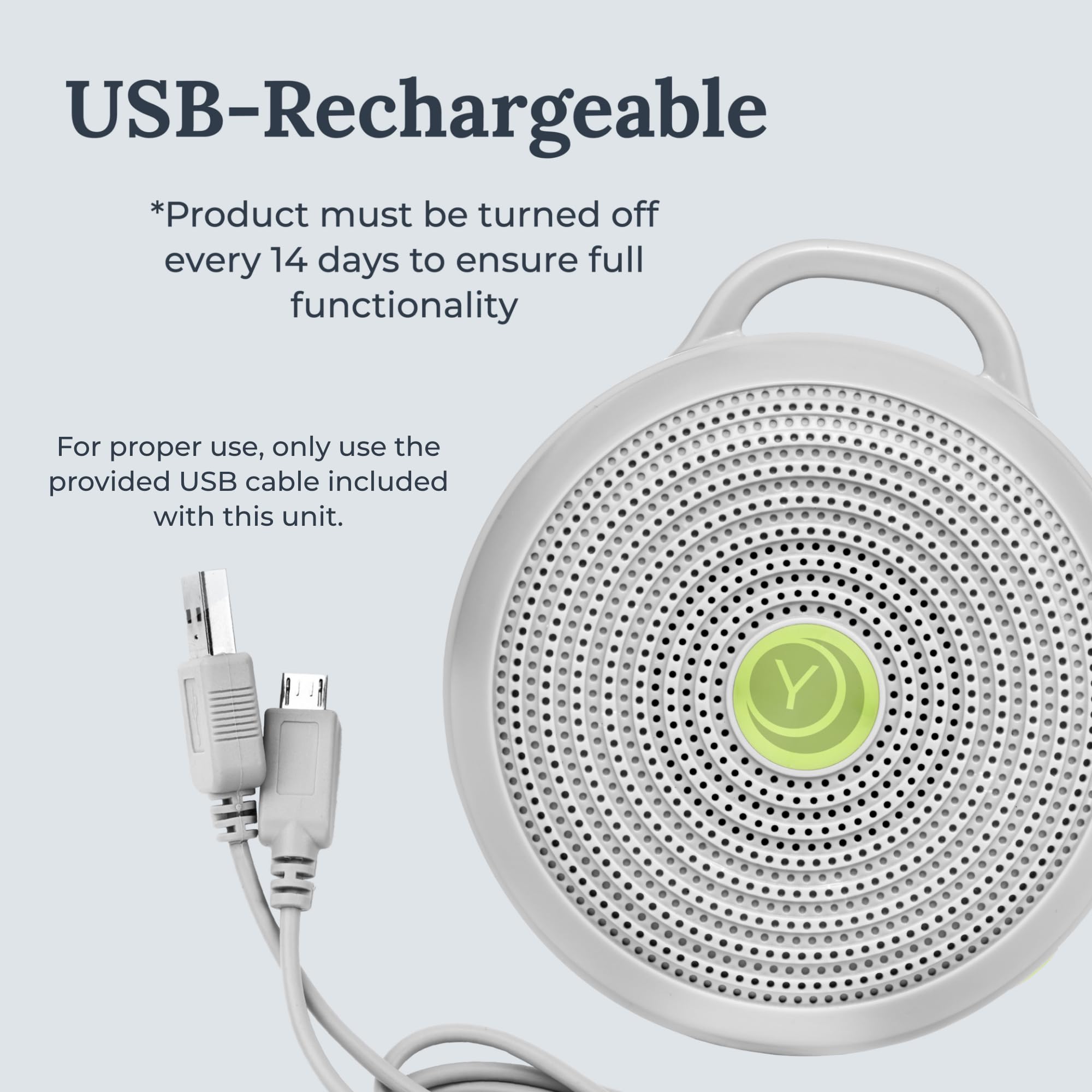
Yogasleep Hushh Portable White Noise Sound Machine for Baby, 3 Soothing Natural Sounds with Volume Control, Compact Size, Noise Canceling for Sleep Aid, Office Privacy, & Meditation, Registry Gift
- EFFECTIVELY MASKS NOISE: Beloved by generations since 1962, Yogasleep is the trusted leader in white noise mac
- 3 SOOTHING SOUNDS: Take control of your sound environment and choose from three calming sounds: bright white n
- NIGHT LIGHT: The Hushh's gentle amber LED night light emits just enough of a glow to comfort and guide you in
If you want to understand the science in more depth, the article on why white noise works at a neurological level is worth a read before you buy anything.
2. Swaddling: Calming the Startle Reflex
The Moro reflex (that full body startle that wakes a sleeping baby just as you are about to sneak out of the room) is most active in the first three to four months of life but can persist until around six months. Swaddling contains the arms and reduces how much that reflex interrupts sleep.
When to stop swaddling
This is the question I get most often in clinic. Stop swaddling the moment your baby shows any sign of rolling, usually somewhere between three and five months. A swaddled baby who rolls onto their stomach cannot push themselves back, which is a serious safety risk.
3. Sleep Environment: The Room Itself Is a Sleep Tool
Most parents focus on what they do at bedtime. The room setup does just as much work, passively, all night long.
Temperature
The ideal sleep room temperature for infants is between 68°F and 72°F (20°C to 22°C). Overheating is a recognised risk factor in the AAP's safe sleep guidelines. A simple room thermometer costs a few dollars and takes the guesswork out of it.
Darkness
Melatonin production in infants is suppressed by light. Even a small amount of ambient light from a baby monitor screen or a streetlight through thin curtains can affect sleep quality. Blackout blinds are one of the most cost effective sleep upgrades you can make.
The mattress
Firmness is non-negotiable for infant safety. The AAP is clear that soft mattresses, pillow-top surfaces, and memory foam all increase the risk of suffocation. A firm, flat mattress that fits snugly in the crib (no gap at the edges) is what you need. Nothing else in the crib: no bumpers, no pillows, no loose blankets.
4. A Predictable Bedtime Routine
A routine does not need to be elaborate. What it needs to be is consistent. Research published in the journal SLEEP in 2015 found that infants whose parents implemented a consistent nightly routine showed significantly improved sleep outcomes, including faster sleep onset and fewer night wakings, within just a few weeks.
The routine works as a set of biological cues. Your baby's brain starts associating the sequence (bath, then feed, then dim lights, then song) with sleep onset. Over time, the routine itself triggers drowsiness.
A simple routine for babies 4 to 12 months might look like this:
1. Warm bath (5 to 10 minutes) 2. Gentle massage or lotion 3. Feed (breast or bottle) 4. Into sleep sack or swaddle (if still age appropriate) 5. Dimmed lights, white noise on 6. Two to three minutes of quiet holding or rocking 7. Placed in crib drowsy but awake
The Momcozy sound machine with night light suits this routine well because it combines a soft LED lamp (adjustable to warm amber tones) with 34 sound options and an app you can control without entering the room.
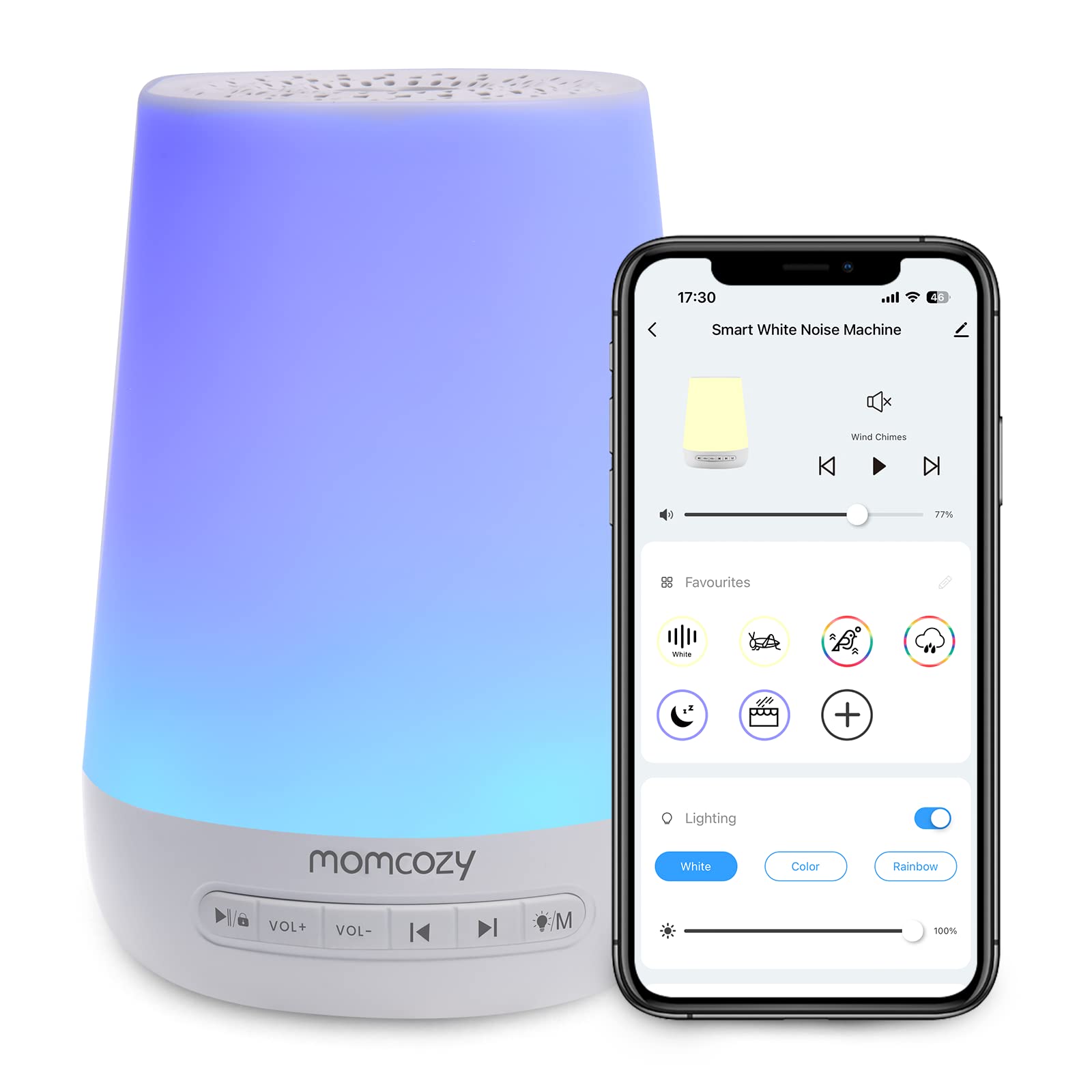


Baby Sound Machine, Momcozy White Noise Machine for Baby Sleeping with Night Light, Toddler Sleep Trainer 34 Soothing Sleep Sounds, Timer, App Remote Control, Personal Sleep Routine Alarm Clock(Blue)
- Multiple Soothing Sounds - This sound machine offers 34 high-fidelity sounds, including 11 white noises, 3 fan
- Night Light - The adjustable, soft LED lamp provides sufficient, gentle light for your bedroom at night. It al
- Convenient to use - The smart light can be adjusted remotely via your phone or manually with a soft touch. Con
Understanding the broader infant development context during this period can also help you calibrate realistic sleep expectations as your baby grows through these months.
5. Sound Machine Features That Actually Matter
Not all sound machines are equal, and more features are not always better when you are exhausted and operating on three hours of sleep. Here is what to actually look for.
Non-looping sounds
Looping recordings have a noticeable restart point that can wake a light sleeping baby. True non-looping sounds (generated, not recorded) play continuously without a seam. The Magicteam sound machine is one of the best value options here, with 20 non-looping sounds and 32 volume levels.
Battery life for travel and portability
If your baby sleeps in multiple locations (nursery, your room, grandparents' house, the car), a machine with a strong battery matters. The jaroco portable sound machine clips onto a stroller, runs for 15 hours on a single charge, and costs under $15. For naps on the go, it is hard to beat.
App control for night feeds
If you want to adjust volume or switch sounds without going into the room and disturbing your baby, app control is genuinely useful. The Momcozy (Product 3) does this well. Just note it requires 2.4G WiFi.
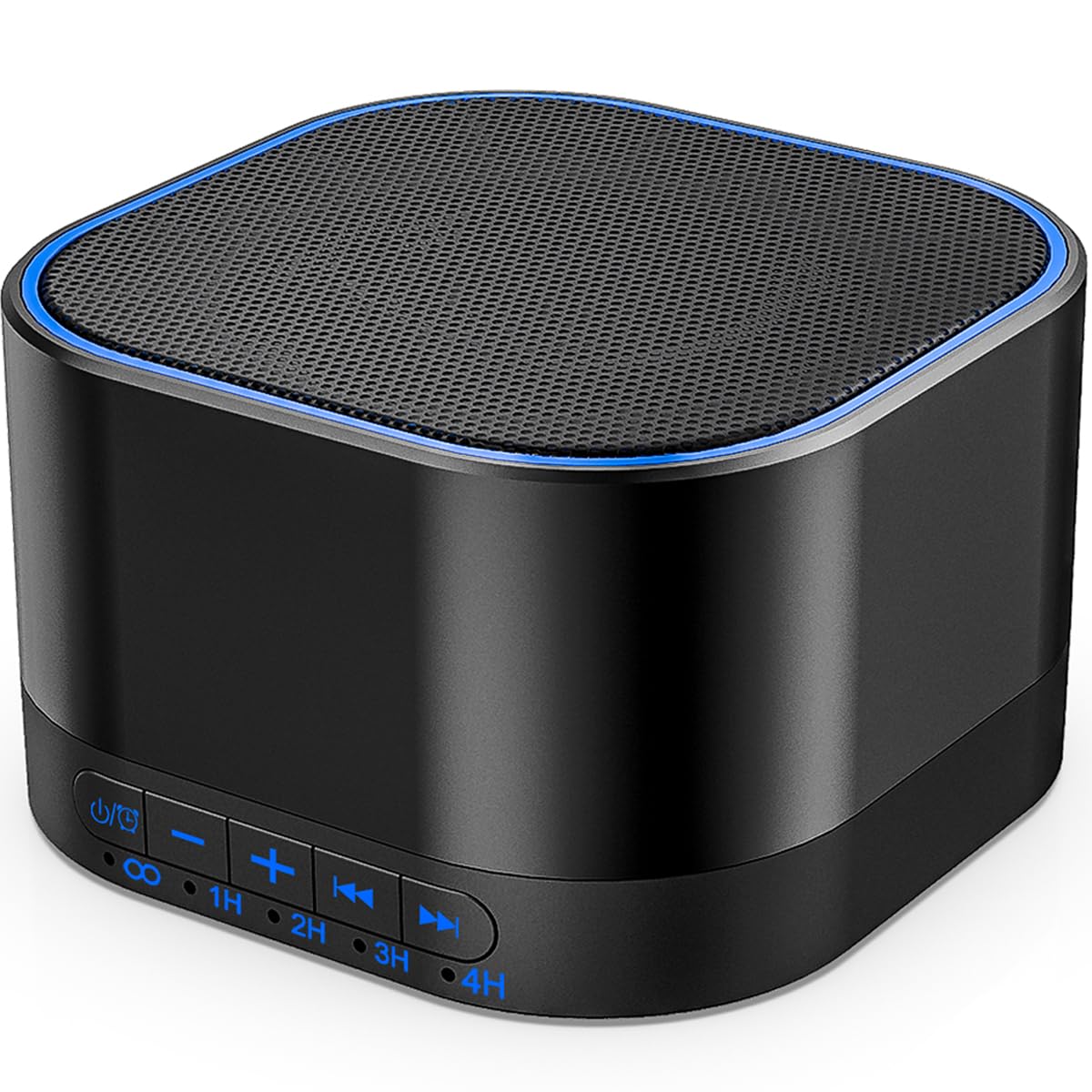

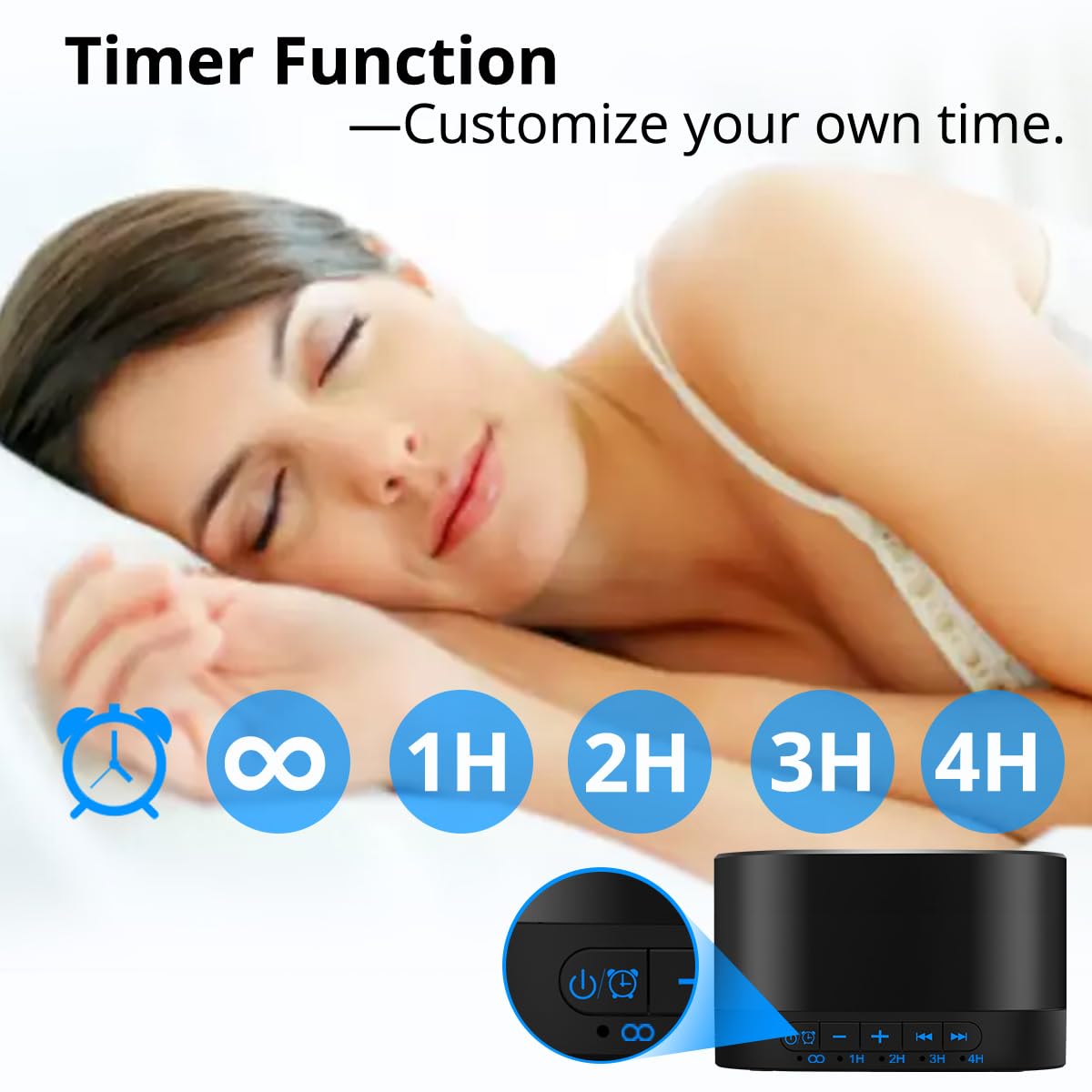
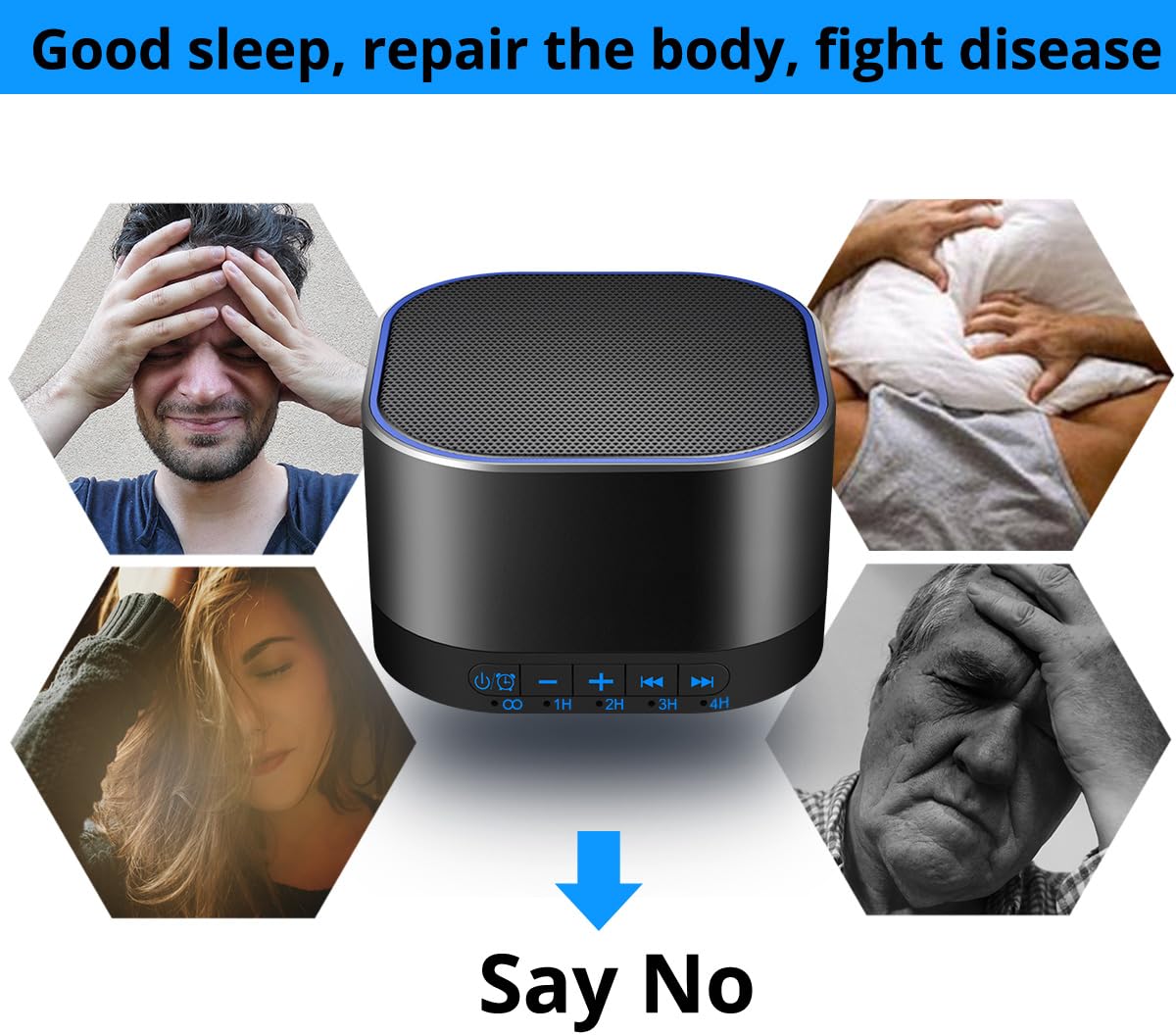
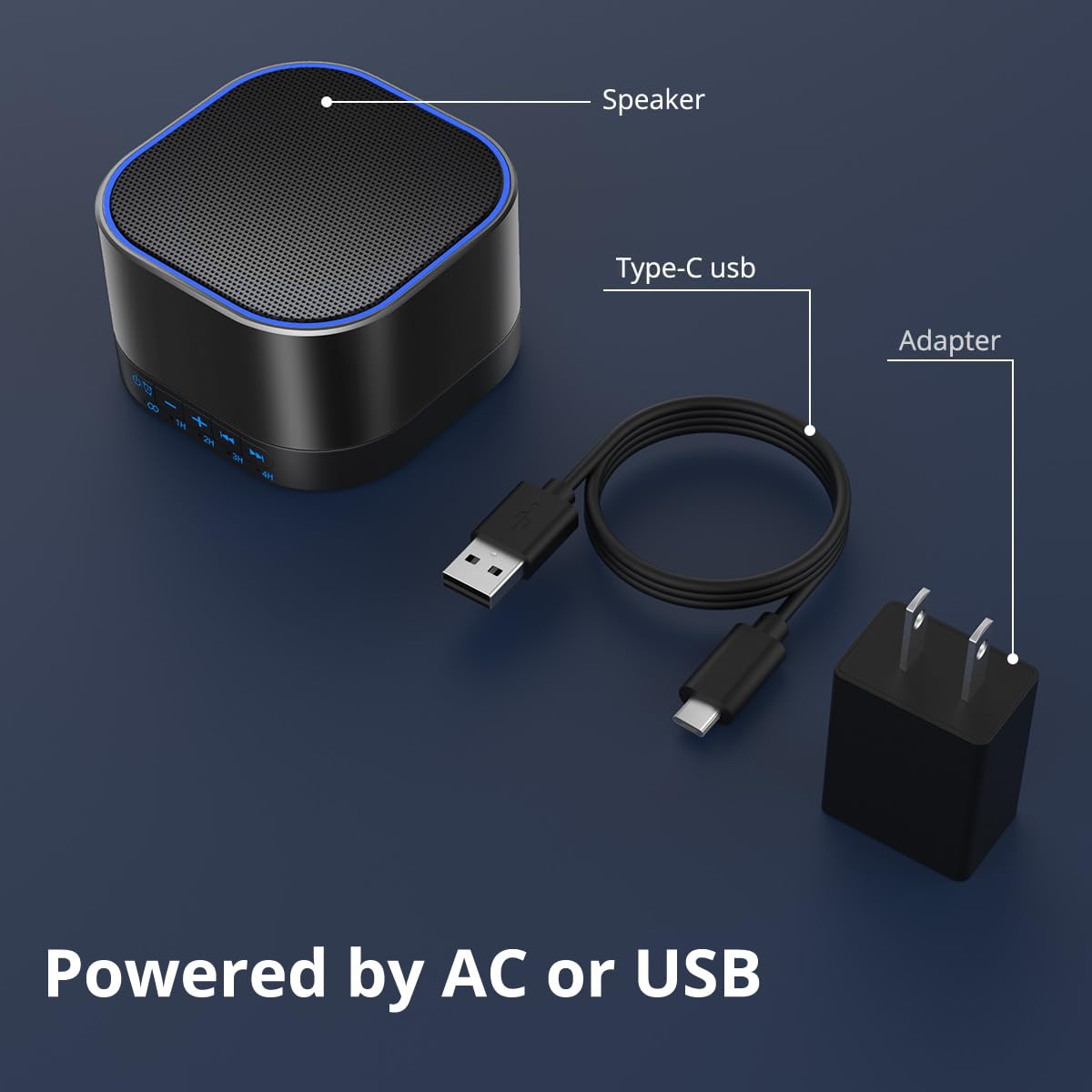
Magicteam Sound White Noise Machine with 20 Non Looping Natural Soothing Sounds and Memory Function 32 Levels of Volume Powered by AC or USB and Sleep Sound Timer Therapy for Baby Kids Adults
- ❤20 Non-Looping Sleep Sounds: White noise ,Brown noise, pink noise, blue noise, fan,brook, rain, ocean,bird an
- ❤Precise Volume & Timer Settings:With 32 Levels of Volume ,it is perfect for baby sleeping .And you can set 1
- ❤Unique Design: Solid-state design with 3.01inch*3.01inch *1.77inch,it is portable for home, office or travel,
For parents who also want a built-in night light with multiple colour options, the BrownNoise sound machine offers 30 sounds, 12 light colours, and 36 volume levels in a compact unit.
6. Motion: Using Movement Strategically
Babies are calmed by motion for the same reason white noise works: rhythmic movement replicates the sensations of the womb. Gentle rocking, swaying, or riding in a carrier activates the vestibular system and can reduce cortisol levels.
The catch is that motion-dependent sleep becomes a problem if your baby cannot settle without it. The goal is to use motion as part of the wind down, then transition to a still surface before your baby is fully asleep.
Safe motion options
Motion-assisted settling is not a bad habit in the first three months. It becomes something to gently phase out from around four months onward as your baby's sleep architecture matures.
7. Feed Timing and Hunger
A hungry baby will not sleep, and a baby who falls asleep mid-feed every night will start to associate feeding with sleep onset, which can create genuine difficulty settling independently later.
This is one of the most nuanced areas of infant sleep because hunger is a completely legitimate reason to wake up. Babies under six months genuinely need night feeds. The goal is not to eliminate feeds but to avoid feeding being the only sleep association your baby has.
A practical approach
From about four months, try offering a full feed earlier in the routine (not as the very last thing before sleep). This separates the act of feeding from the act of falling asleep. Some babies take to this easily. Others need more gradual adjustment. Neither is unusual.
The topic of what builds good sleep foundations connects directly to how your baby's brain develops during this period. The research on how the infant brain actually learns is genuinely fascinating if you want the deeper context.
8. Parental Presence and Gradual Settling
This section is not about sleep training methods or whether you should or should not use them (that is a whole separate article). It is about one practical principle: how you leave the room matters.
Babies between four and twelve months go through multiple partial arousals every night as they cycle between light and deep sleep. If the conditions present when they fell asleep (you, rocking, a feed) are not present when they surface, they fully wake and call for you.
This is not manipulation. It is neurology. Their brain is checking: are conditions safe? Is everything the same as when I fell asleep?
What you can do
Comparison: Sound Machines for Infant Sleep
| Sound Machine | Best For | Key Features | Portability | Recommended Product | Price |
|---|---|---|---|---|---|
| Yogasleep Hushh | Travel and simplicity | 3 sounds, amber night light, volume lock | Very high (clip attaches anywhere) | Yogasleep Hushh | $25.99 |
| Dreamegg D11 Max | Long battery naps and travel | 21 sounds, 1800mAh battery, USB-C | High (rechargeable) | Dreamegg D11 Max | $19.99 |
| jaroco Portable | Budget stroller use | 12 sounds, 15 hr battery, stroller clip | Very high (clips to stroller) | jaroco Portable | $14.39 |
| Magicteam | Home nursery, value pick | 20 non-looping sounds, 32 volume levels | Low (AC or USB, compact) | Magicteam | $20.89 |
| BrownNoise | Night light plus sound | 30 sounds, 12 light colors, 36 volume levels | Medium (compact, USB) | BrownNoise | $20.88 |
| Momcozy | App-controlled nursery | 34 sounds, app remote, night light | Low (requires WiFi plug-in) | Momcozy | $39.99 |
Expert Insights
Sleep is not a luxury for your baby's development. It is when their brain consolidates learning, their body releases growth hormone, and their nervous system resets. The good news is you do not need a complicated system. White noise on, room dark and cool, a short consistent routine, and a firm safe crib. That is the foundation. Everything else builds on it.
The most honest thing I can tell you from clinical practice: there is no trick that works overnight, but there is a lot that works consistently. Start with one change, give it two weeks, then add the next. Your baby will get there, and so will you.
If this article was useful, save it for that 4am moment when you need a reminder that you are doing the right things. And if you have a partner or co-parent, share it so you are both working from the same page.
Sources & References
- American Academy of Pediatrics. "Safe Sleep Recommendations." 2022. https://www.aap.org/en/patient-care/safe-sleep/
- American Academy of Pediatrics. "Noise-Induced Hearing Loss." Pediatrics, 2019.
- Mindell, J.A., et al. "A Nightly Bedtime Routine: Impact on Sleep in Young Children and Maternal Sleep Quality." SLEEP, 2015. https://doi.org/10.5665/sleep.5096
- Mindell, J.A., et al. "Bedtime Routine in Toddlers and Children: Impact on Sleep." Pediatrics, 2009.
- Karp, Harvey. The Happiest Baby on the Block. Bantam Books, 2002.
- Moon, R.Y., and Task Force on Sudden Infant Death Syndrome. "SIDS and Other Sleep-Related Infant Deaths: Safe Sleep Environment." Pediatrics, 2022. https://doi.org/10.1542/peds.2022-057990
- Sadeh, A., et al. "Infant Sleep and Parental Sleep-Related Cognitions." Journal of Family Psychology, 2007.
- Tham, E.K., et al. "Infant Sleep and Its Relation with Cognition and Growth: A Narrative Review." Nature and Science of Sleep, 2017. https://doi.org/10.2147/NSS.S125992
Frequently Asked Questions
At what age can I start sleep training?
How loud should a white noise machine be for my baby?
My baby only sleeps when held. What should I do?
Is it safe to use a sound machine every night?
How many night feeds does my baby still need at 9 months?
Should I use a night light in the nursery?
My baby sleeps well at night but fights every nap. Is that normal?
Was this helpful?
Thanks — your feedback helps us pick what to write next.