Parent-Teen Relationships: How Strong Bonds Build Healthier Adults
The quality of your relationship with your teenager is one of the strongest predictors of their physical and mental health as an adult, and you can actively strengthen that bond starting today.

In this article
Here is a number that should stop you mid-scroll: according to the CDC, nearly 1 in 5 teenagers in the United States lives with a diagnosable mental health condition, and the majority of those young people never receive treatment. Research published in the Journal of Research on Adolescence consistently points to one of the most powerful protective factors available to every parent reading this: a warm, communicative relationship between parent and teen.
This isn't about being your teenager's best friend. It's about being a reliable, honest, emotionally available presence during the most neurologically turbulent years of their life. In this guide, you'll understand:
1. What the Science Says About Parent-Teen Bonds and Adult Health
The evidence is clear: teens with strong parental relationships grow into healthier adults across almost every measure. Studies tracking young people from adolescence into their 20s and 30s find that the quality of the parent teen relationship in those formative years predicts mental health, physical health, relationship satisfaction, and even career resilience later in life.
A landmark study in the Journal of Research on Adolescence found that adolescents who described their parents as emotionally supportive and easy to talk to reported significantly fewer depressive symptoms, lower perceived stress, and reduced likelihood of engaging in risky behaviours. These effects persisted well into adulthood.
What this tells us is that the relationship itself is the intervention. You don't need to solve every problem your teenager brings to you. You need to be the kind of person they feel safe bringing problems to in the first place.
Three things the research identifies as critical
Understanding why the teenage years feel so intense for your child is genuinely useful here. The teenage brain and why everything feels enormous is not a metaphor, it is biology, and knowing that can shift how you respond in the moment.
2. Emotional Support: Being Available Without Being Overwhelming
Emotional support is not the same as solving problems, removing obstacles, or reacting to every mood. It means your teenager genuinely believes, on a gut level, that you are on their side.
Teenagers are exquisitely sensitive to tone, timing, and authenticity. They will dismiss advice instantly if they sense it comes with an agenda. What they respond to is consistency: a parent who doesn't panic when they share something uncomfortable, who doesn't immediately jump to consequences, and who can sit with them in the discomfort without rushing to fix it.
What emotional availability looks like in practice
- Put your phone down when they start talking, even if it seems trivial - Resist the urge to offer a solution in the first 60 seconds - Mirror their language back: "That sounds really frustrating" before "What did you do to cause it?" - Say "I love you" and mean it, particularly after a fight
If you want a practical tool to spark those conversations, 
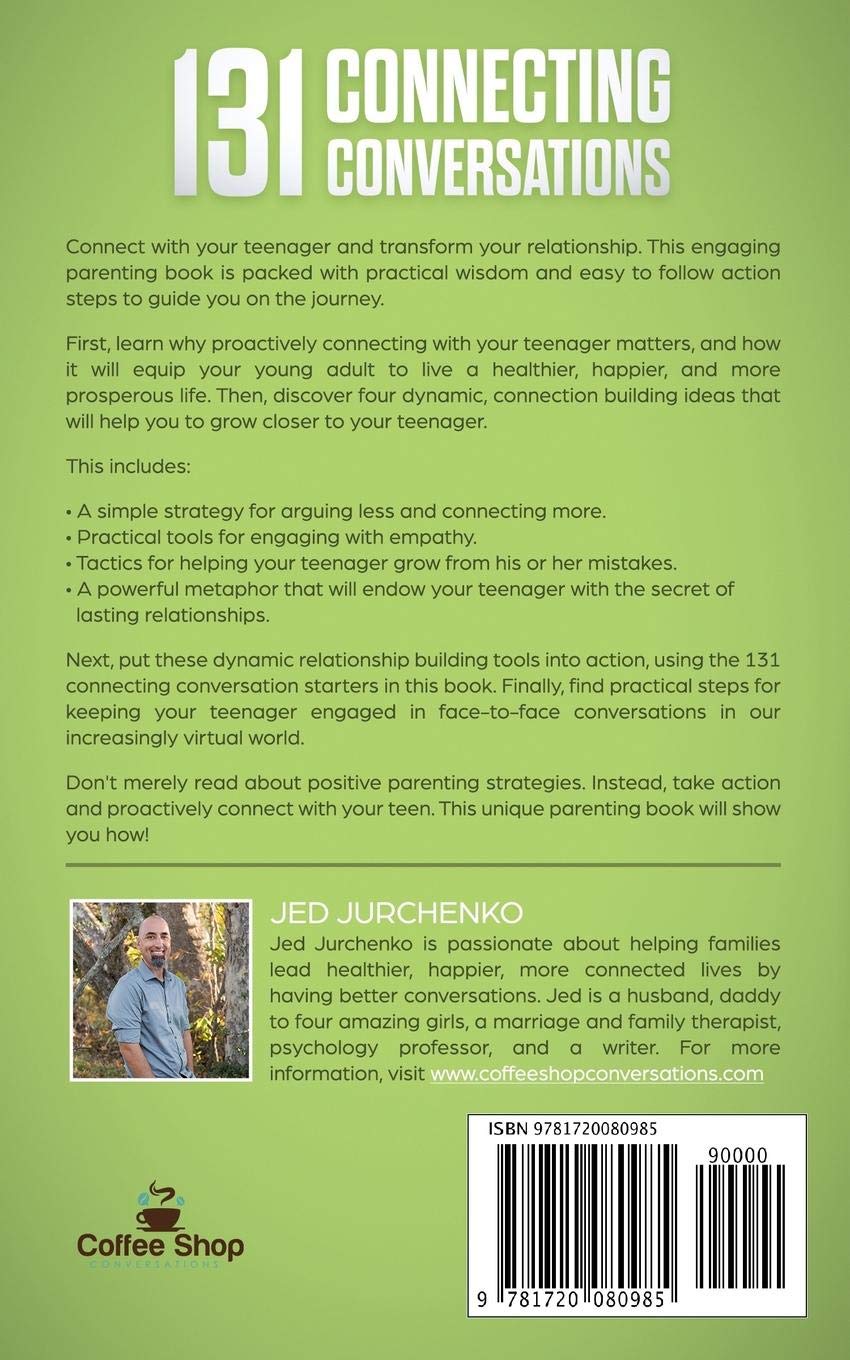
131 Connecting Conversations for Parents and Teens: How to build a lifelong bond with your teen! (Creative Conversation Starters)
3. Communication: How to Talk When They've Stopped Listening
If you feel like your teenager has stopped talking to you, you are not alone and you have not failed. The pull toward peers is biological; developmental psychology tells us that adolescents are supposed to transfer some of their emotional reliance from parents to peers. The goal isn't to reverse that; it's to stay present enough that they still come back to you when things go wrong.
The biggest communication mistake parents make is turning every conversation into a teaching moment. Teens hear this as: "I'm not interested in you; I'm interested in correcting you." The result is that they stop sharing.
Active listening is the single skill most likely to reopen those channels. It means genuinely reflecting what your teen has said before responding, asking questions out of curiosity rather than interrogation, and tolerating silence without filling it immediately.
Learning how to truly listen to your teenager is a skill, not just a disposition. It takes practice, and it's worth treating it that way.
For parents who want a structured approach, How to Talk So Teens Will Listen and Listen So Teens Will Talk
4. Conflict and Repair: Why Arguing Isn't the Problem
Parents often measure relationship health by the absence of conflict. That's the wrong metric. Some of the most connected parent teen pairs I see in clinic argue regularly. What sets them apart is that they repair.
Conflict in adolescence serves a developmental function. Your teenager is testing their own values, identity, and autonomy against yours. That process requires friction. A house with zero conflict often means one of two things: your teen has entirely withdrawn, or they're telling you what you want to hear while living a completely different inner life.
What matters is not whether you fight, but how you come back together afterward.
The repair is the relationship
If difficult conversations consistently blow up before they go anywhere useful, the tough talk toolkit for big conversations offers a practical framework for keeping things from derailing.


KEEP YOUR COOL WHEN PARENTING TEENS: 7 HACKS TO SET HEALTHY BOUNDARIES, LECTURE LESS, LISTEN MORE, AND BUILD A STRONG RELATIONSHIP
- Parenting & Relationships
- School-Age Children
- Image Unavailable Image not available forColor:
5. Independence and Privacy: Letting Go Without Losing the Connection
One of the most common tensions in my clinic is parents who feel that respecting their teen's privacy means losing oversight of their safety. It doesn't. Giving your teenager appropriate independence is not the same as stepping back entirely.
Research is consistent: teens whose parents respect their privacy and grant age appropriate autonomy are more likely to be open and honest, not less. When young people feel surveilled and distrusted, they become skilled at hiding things. When they feel trusted, they are more likely to disclose.
Finding the balance
- Invite, don't interrogate. "I'd love to know how the party was" lands very differently from "Who was there? What did you drink?" - Negotiate rather than dictate. Teens who have input into rules are more likely to follow them. - Know their world without controlling it. Know their friends' names. Know the rough geography of their social life. You don't need to read every text.
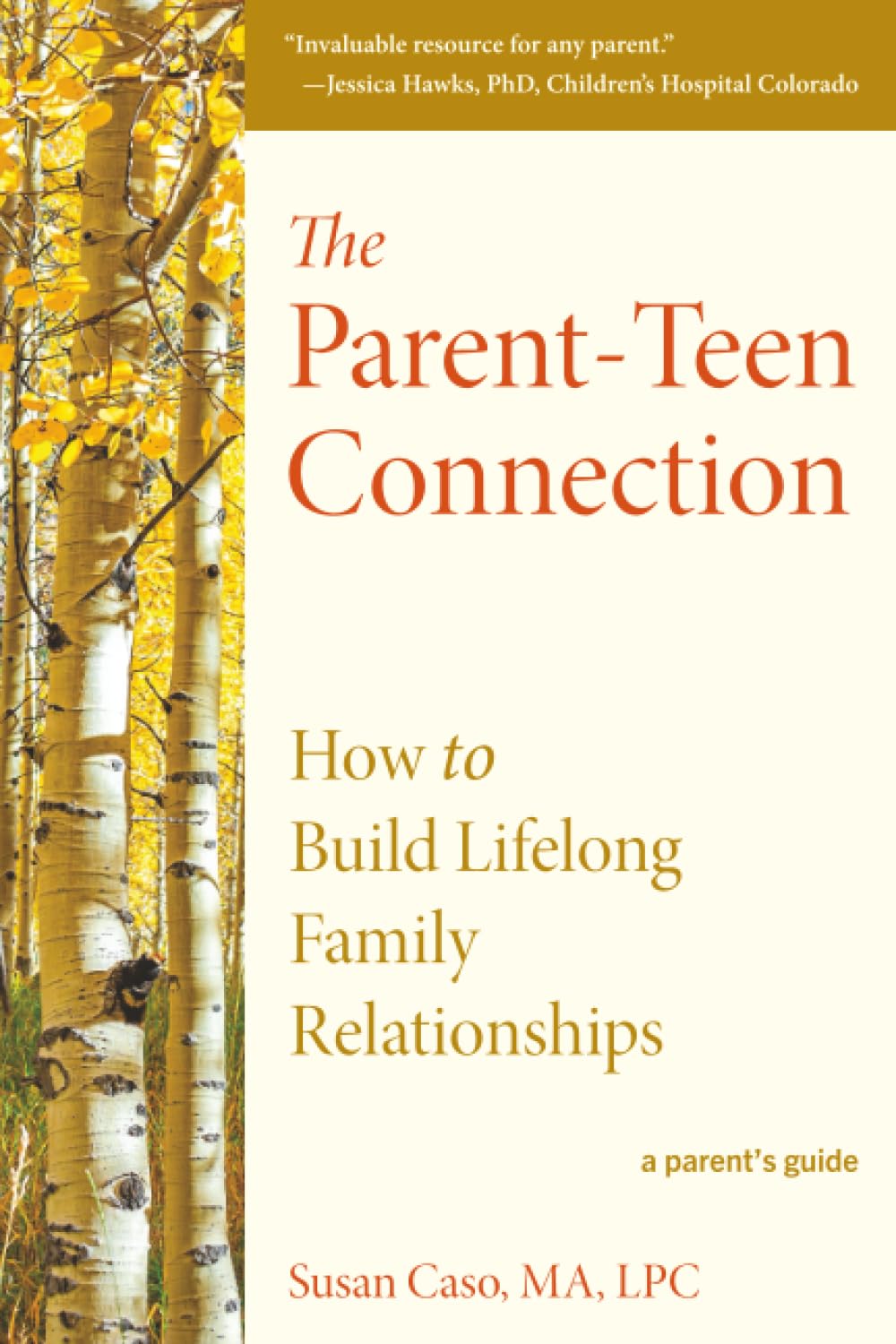
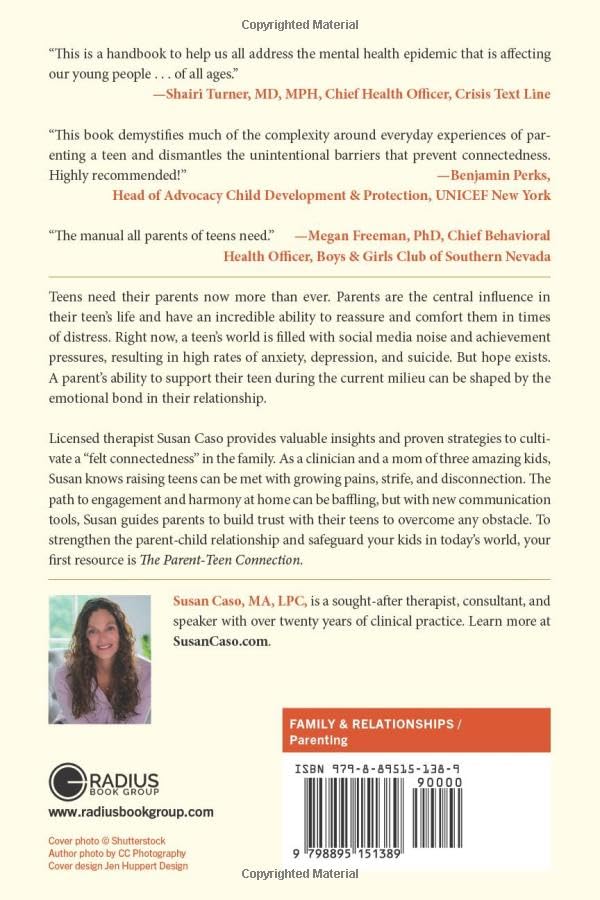
The Parent-Teen Connection: How to Build Lifelong Family Relationships
- Death & Grief
- Image Unavailable Image not available forColor:
- ASIN : B0FP5KC25Y
6. Long Term Outcomes: What a Strong Bond Actually Produces
The benefits of a close parent teen relationship don't end when your child leaves home. Young adults who reported warm, open relationships with their parents during adolescence consistently show:
Staying connected doesn't stop mattering at 17. If you're thinking about how to maintain the bond as your teenager moves through these years, the strategies around staying connected through the teen years are worth keeping in your back pocket.


Parenting Teens Through Faith: 7 Steps to an Improved Parent-Teen Relationship, Boost Your Teen's Confidence & Mental Strength to Withstand Negative Influences, Bullies & School Pressure
- Arts & Photography
- Musical Genres
- Religious & Sacred Music
Approaches to Strengthening the Parent-Teen Relationship
| Approach | Best For | Key Benefit | Main Challenge | Recommended Resource | Approx. Cost |
|---|---|---|---|---|---|
| Structured conversation prompts | Families where conversation has dried up | Removes awkward silence; gives both sides a starting point | Teens may resist initially | 131 Connecting Conversations | ~$9 |
| Parenting strategy books | Parents who want a practical framework to follow | Evidence grounded, replicable techniques | Requires reading time and self reflection | Keep Your Cool When Parenting Teens | ~$13 |
| Communication focused books | Parents struggling with conflict or silence | Improves day to day dialogue immediately | Doesn't address broader relationship dynamics | How to Talk So Teens Will Listen | ~$10 |
| Relationship approach guides | Families navigating ongoing tension | Shifts the whole dynamic, not just specific incidents | Takes longer to see results | Parent/Teen Breakthrough | ~$2 |
| Faith informed parenting guides | Families where shared values are central | Combines relational tools with spiritual grounding | Denominationally specific | Parenting Teens Through Faith | Varies |
| Comprehensive connection plans | Parents who want a long term relational strategy | Covers bonding across adolescence into adulthood | More time investment required | The Parent-Teen Connection | Varies |
Expert Insights
Conclusion
The teenage years can feel like a countdown to separation, but the science tells a different story. How connected your teenager feels to you right now is quietly shaping who they'll be at 25, at 35, and beyond. You don't have to be a flawless parent. You have to be a present one, honest enough to apologise, consistent enough to stay warm even when it's hard, and brave enough to keep reaching out even when your teenager seems determined to look the other way.
As I tell parents in clinic: the relationship is the long game. Every repair, every open conversation, every moment you choose curiosity over correction is an investment your child will draw on for the rest of their life.
If this resonated with you, save it and share it with another parent who's in the thick of the teenage years right now.
Sources & References
- Centers for Disease Control and Prevention (CDC). "Children's Mental Health: Data and Statistics." 2023. https://www.cdc.gov/childrensmentalhealth/data.html
- Steinberg, L. & Morris, A.S. "Adolescent Development." Annual Review of Psychology, 2001. Vol 52, 83–110.
- Lippold, M.A., et al. "Parental Knowledge and Adolescent Well-Being." Journal of Research on Adolescence, 2014.
- Siegel, D.J. Brainstorm: The Power and Purpose of the Teenage Brain. Tarcher/Penguin, 2013.
- Ginsburg, K.R. Building Resilience in Children and Teens. American Academy of Pediatrics, 2015.
- Damour, L. Untangled: Guiding Teenage Girls Through the Seven Transitions into Adulthood. Ballantine Books, 2016.
- American Academy of Pediatrics (AAP). "Adolescent Development." HealthyChildren.org. https://www.healthychildren.org
Frequently Asked Questions
Why does my teenager push me away but still seem to need me?
How do I connect with a teen who won't talk to me?
Is it too late to repair the relationship if things have broken down?
How much privacy should a teenager have?
Does a close parent-teen relationship make teens less independent?
My teenager is disrespectful. How do I stay connected without accepting bad behaviour?
What if my teenager is struggling with mental health? Does the parent relationship still matter?
Was this helpful?
Thanks — your feedback helps us pick what to write next.