15 Parenting Trends Parents Say Need to End Immediately
Parents across social media are pushing back hard against 15 specific parenting trends, from gentle parenting extremes to constant narration and public shaming, because they say these habits harm kids more than they help.
In this article
Parenting content on social media gets over 3 billion views a month on TikTok alone under hashtags like #momtok and #parentingtips, according to internal platform data cited by the Pew Research Center in its 2023 report on parents and social media. That's a lot of advice flooding into homes, and not all of it holds up once you look at the research behind it. Recently, a wave of parents on Reddit and Instagram have been naming the specific trends they're done with, the ones that sound good in a fifteen second clip but fall apart in real life with a real toddler at 6pm on a Tuesday.
I hear versions of this frustration in clinic constantly. Parents feel pressure to perform a parenting style rather than just parent. So let's walk through what parents are actually saying needs to stop, why some of these trends took off in the first place, and what actually works instead.
What you'll understand after reading this:
1. Public "Consequence" Videos and Shaming for Content
Filming a child's meltdown, punishment, or tearful apology for social media views tops nearly every list of trends parents want gone. Posting a child's worst moment for likes teaches them their vulnerability is entertainment, not something you protect.
This trend grew out of the "reality parenting" content boom, where authenticity got confused with exploitation. A tearful three year old apologising on camera generates engagement, but child development specialists have flagged real concerns about the message it sends: that private struggles become public spectacle when a parent needs validation.
2. Permissive Parenting Disguised as "Gentle Parenting"
Gentle parenting done wrong, meaning validating every feeling but never following through with a limit, is exhausting parents and confusing kids. The actual framework, built on connection plus clear boundaries, gets flattened online into "just talk it out" with no follow through, and that's what people are rejecting.
Real gentle parenting was never about permissiveness. It's about staying warm while still holding the line, which is a much harder skill than either strict discipline or letting everything slide.
Setting limits is not in opposition to being warm and responsive. In fact, children with parents who are both warm and consistent about limits show better self regulation over time than children raised with either extreme.
— American Academy of Pediatrics (2022)
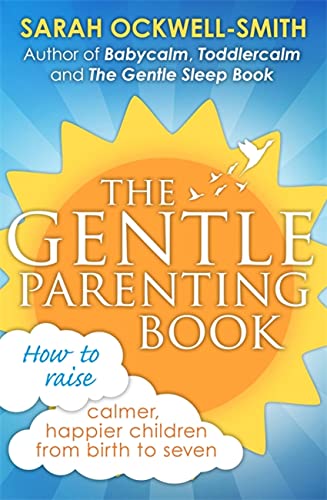
If you're trying to find the real version of this approach rather than the diluted social media one, a solid starting point is positive parenting and gentle discipline, which lays out how connection and limits work together instead of against each other.
The Gentle Parenting Book: How to raise calmer, happier children from birth to seven
- Orders are despatched from our UK warehouse next working day.
What actually works instead
- Naming the feeling ("You're really mad you have to leave the park") while still leaving - Offering choices within the limit, not around it - Following through calmly even when there's a tantrum
3. Constant Narration of Everything Your Child Does
Narrating a toddler's every move ("You're picking up the red block, now you're putting it down") started as a language development tool and turned into an exhausting, near constant habit some parents now describe as performative. Parents are saying enough, and honestly, the research never asked for this much narration in the first place.
Speech and language pathologists do recommend describing what a child is doing to build vocabulary, but that's meant to happen in short bursts during play, not as a running commentary on daily life. Kids also need quiet space to think and play without an adult voice filling every silence.
4. Screens as the Default Babysitter, Marketed as "Educational"
Labeling a tablet as "educational" doesn't cancel out the effects of hours of daily screen use, and parents are increasingly calling out the trend of justifying excessive screen time because an app has letters or numbers on it. The World Health Organization recommends no more than one hour of sedentary screen time daily for children ages 2 to 4, and none at all for children under 1.
The trend parents want gone specifically is the marketing language, apps and shows branded as developmental tools used to excuse hours of passive viewing that displaces active play, sleep, and face to face interaction.
Screen time should not be considered inherently educational simply because it involves letters, numbers, or shapes. What matters most for a young child's brain development is interactive engagement with caregivers and the physical world.
— World Health Organization, Guidelines on Physical Activity, Sedentary Behaviour and Sleep for Children Under 5 (2019)
If you're trying to reset your family's habits without a full digital detox, digital wellness strategies that actually work breaks down realistic swaps rather than an all or nothing ban, and a screen free summer plan offers a structured way to reset expectations during a lower stakes season.
5. Sharenting Every Milestone, Struggle, and Diagnosis
Posting a child's medical diagnosis, learning struggle, or private milestone without their future consent is a trend many adult children of influencer parents are now speaking out against publicly. What felt like harmless documentation to a parent can feel like a privacy violation to the child once they're old enough to have an opinion about it.
This overlaps heavily with concerns raised about kids of family vloggers, some of whom have testified before lawmakers about the impact of growing up documented online without their input.
6. "Homework First" Rigidity Regardless of the Child's Needs
Forcing every child to sit down and finish homework the moment they walk in the door, regardless of how depleted they are, is a trend parents of neurodivergent kids in particular are calling out as counterproductive. A rigid rule applied to every child ignores that some kids, especially those with ADHD, need movement and decompression before their brain can focus on anything academic.
The push against this one time only rule connects closely to a broader conversation about why the homework first rule backfires for kids with ADHD, which explains the neuroscience behind why a snack and twenty minutes outside often works better than an immediate desk sit down.

The Whole-Brain Child: 12 Revolutionary Strategies to Nurture Your Child's Developing Mind
- Bantam, A nice option for a Book Lover
- Condition : Good
- Ideal for Gifting
Quick comparison of homework approaches
Below is how different homework timing strategies stack up for typical school age kids.
| Approach | Best For | Primary Benefits | Main Drawbacks | Recommended Product |
|---|---|---|---|---|
| Homework immediately after school | Kids who transition easily, no ADHD | Gets it done early, frees up evening | Can trigger meltdowns in tired or neurodivergent kids | Tiny Humans, Big Emotions |
| Snack and break, then homework | Most kids ages 6 to 12 | Restores focus, reduces power struggles | Requires flexible evening schedule | 1-2-3 Magic |
| Homework in short chunks | Kids with ADHD or attention challenges | Matches natural attention span | Needs more parent supervision | Tiny Humans, Big Emotions |
| Weekend catch up system | Overscheduled families | Reduces daily evening stress | Can lead to weekend workload buildup | Raising Good Humans |
| Fully child led timing | Older, self motivated kids | Builds independence and ownership | Risky for kids who need structure | How to Talk So Kids Will Listen |
7. Overexplaining Every Single Boundary Mid Meltdown
Trying to deliver a calm, thorough explanation of a rule while your child is mid tantrum is a trend parents are exhausted by, largely because it doesn't work biologically. A dysregulated child's brain literally cannot process a logical explanation in that moment; the reasoning has to come after, once everyone is calm again.
When a child is flooded with big emotion, their upstairs brain, the part responsible for logic and reasoning, essentially goes offline. Trying to reason with a child in that state is like trying to have a calm conversation during a fire alarm.
— Dr. Daniel Siegel and Dr. Tina Payne Bryson, The Whole-Brain Child (2011)
The Whole-Brain Child: 12 Revolutionary Strategies to Nurture Your Child's Developing Mind
- Bantam, A nice option for a Book Lover
- Condition : Good
- Ideal for Gifting
What to do once the storm passes
- Wait until your child is calm and connected before discussing what happened - Keep the after conversation short and specific - Focus on repair and problem solving together, not a lecture
This is also where the deeper research around social and emotional learning becomes useful, since it explains how kids build the actual skills to self soothe rather than just being told to calm down in the heat of the moment.
8. "No" Being Treated as a Forbidden Word
Some corners of gentle parenting content have pushed the idea that saying "no" is inherently harmful, leading parents to construct elaborate workaround phrases instead of just setting a clear limit. Parents are increasingly saying this is overcomplicating something simple; a calm, kind "no" is not damaging to a child's development.


Expert Insights
The Gentle Parenting Book: How to raise calmer, happier children from birth to seven
- Orders are despatched from our UK warehouse next working day.
Frequently Asked Questions
Parenting has never been a performance, even though social media keeps trying to make it one. The trends parents are rejecting all share a common thread: they prioritise how parenting looks over how it actually feels for the child living through it. Your kid doesn't need you to nail a trending technique. They need you steady, warm, and willing to hold a boundary even when it's uncomfortable.
If there's one sentence worth taking from all fifteen of these trends, it's this: connection plus consistency will always outperform whatever's trending this month. Save this article, share it with another parent who's feeling the same pressure, and give yourself permission to opt out of whatever isn't working for your family.
Sources & References
- Pew Research Center. "Parents, Teens and Social Media Use." 2023. https://www.pewresearch.org
- World Health Organization. "Guidelines on Physical Activity, Sedentary Behaviour and Sleep for Children Under 5 Years of Age." 2019.
- American Academy of Pediatrics. "Discipline and Positive Parenting Strategies." 2022. https://www.healthychildren.org
- Siegel, Daniel J. and Bryson, Tina Payne. "The Whole-Brain Child: 12 Revolutionary Strategies to Nurture Your Child's Developing Mind." Bantam, 2011.
- Golinkoff, Roberta and Hirsh-Pasek, Kathy. "Becoming Brilliant: What Science Tells Us About Raising Successful Children." American Psychological Association, 2016.
- Saline, Sharon. "What Your ADHD Child Wishes You Knew." TarcherPerigee, 2018.
Frequently Asked Questions
Why do so many parenting trends end up getting criticized on social media?
Is gentle parenting itself the problem, or just how it's being applied online?
How can I tell if a parenting trend is backed by real research?
Should I stop posting about my child on social media entirely?
What's the difference between narrating my toddler's play and overdoing it?
Is it okay to just say no to my child without a long explanation?
My child has ADHD and homework right after school is a disaster. What should I try instead?
Was this helpful?
Thanks — your feedback helps us pick what to write next.