ADHD Kids and Friendships: Why It's Hard and What Helps
Kids with ADHD can absolutely build strong, lasting friendships, but they usually need direct coaching on social skills that other kids pick up on their own.
In this article
If you've watched your child get left off a birthday invite list, or come home saying "nobody wants to play with me," you already know this isn't a small problem. Research published by the American Academy of Pediatrics and CHADD (Children and Adults with Attention Deficit/Hyperactivity Disorder) suggests that 50 to 60 percent of kids with ADHD experience significant peer rejection, compared to about 10 to 15 percent of their neurotypical classmates. That's not a minor social hiccup. That's a pattern that can shape a child's sense of self well into adolescence.
Here's the part that surprises a lot of parents in my clinic: it's rarely about likability. Kids with ADHD are often funny, generous, and full of ideas. The trouble is usually timing, impulse control, and reading social cues in real time, skills that develop differently in the ADHD brain. The good news is that these are teachable skills, not fixed traits.
What you'll understand by the end of this article:
1. Why ADHD Makes Friendship Harder for Kids
The short answer is that friendship runs on split second social processing, and ADHD affects exactly the brain functions that job requires. Making and keeping friends depends on reading a face quickly, holding back an impulsive comment, remembering what a friend said last week, and adjusting your behavior based on subtle feedback. All of that leans heavily on executive function, the same set of skills that ADHD directly disrupts.
Dr. Russell Barkley, one of the most cited ADHD researchers in the world, has long described ADHD as fundamentally a disorder of performance rather than knowledge. A child with ADHD often knows the social rule ("don't interrupt," "wait your turn," "ask before grabbing a toy") but struggles to apply it in the heat of the moment. That gap between knowing and doing is exhausting for kids and confusing for the peers around them, who assume the child simply doesn't care.
The hidden cost of "quick rejection"
Studies using structured playgroup observations have found that children with ADHD are often rejected by unfamiliar peers within the first 20 minutes of play, sometimes faster. That's not because the other kids are unkind. It's because impulsive interruptions, missed turn taking cues, and big emotional reactions read as "unpredictable," and children (like adults) gravitate toward predictability.
ADHD is not a knowledge problem, it's a performance problem. The child usually knows the right thing to do, but can't reliably produce that behavior when it counts, especially under social pressure.
2. The Specific Social Skills Gaps Behind ADHD Friendship Struggles
Most ADHD friendship trouble boils down to four teachable gaps: impulse control, emotional regulation, social cue reading, and working memory for social information. Understanding which gap is driving the trouble in your child changes what you coach.
Impulse control shows up as blurting, interrupting, grabbing toys, or jumping ahead in games. It's the most visible and most misunderstood, because it looks like rudeness when it's actually a brain wiring issue.
Emotional regulation shows up as big reactions to small setbacks: losing a board game, being told "not now," or a joke that lands wrong. Peers often decide within one or two of these episodes that playing with this child is "too much work."
Social cue reading is the quieter gap. Some kids with ADHD miss the subtle stuff, a friend's bored expression, a group starting a new game without them, a joke that was sarcasm rather than literal. This is closely related to challenges some children face with self regulation, which is why coaching often needs to address both at once.
Working memory for social information means forgetting what a friend likes, missing a promise made last week, or losing track of the game's rules midway through. It's frustrating for the friend on the receiving end, who feels forgotten rather than understood.
A note on comparison
It's tempting to compare your child's social struggles to a sibling's or classmate's ease with friendship. Resist that. Some kids genuinely thrive with fewer, deeper friendships rather than a wide circle, and that's worth knowing before you push too hard toward "more friends." In fact, research on quieter, more solitary children suggests fewer, closer connections can be just as protective for wellbeing as a big friend group, something worth keeping in mind if your child seems content with one or two close buddies.
3. How to Coach Social Skills at Home, Without Nagging
The most effective approach is direct, specific coaching delivered outside the heat of the moment, not correction shouted mid meltdown. ADHD brains struggle to absorb feedback while emotionally activated, so the real teaching happens in calm windows before or after social situations, not during them.
Pre brief before playdates
Spend two minutes before a playdate or party rehearsing one specific skill: "Today, let's practice waiting until your friend finishes talking before you say your idea." One skill, stated plainly, works far better than a general "be good" pep talk.
Debrief after, gently
After the playdate, ask open, curious questions rather than critical ones: "What was the best part? Was there a moment that felt hard?" This builds the habit of reflecting on social interactions, which is a skill many ADHD kids don't develop automatically.
Children with ADHD benefit most from social skills training that is explicit, repeated across many contexts, and reinforced immediately, rather than general encouragement to 'make friends' or 'be nice.
Structured games and books can make this coaching feel like play instead of a lecture. The Social Skills Activities for Kids: 50 Fun Exercises book breaks specific skills like listening, sharing, and reading social cues into short, doable exercises that don't feel like a lesson. For families who want something more game like, the 
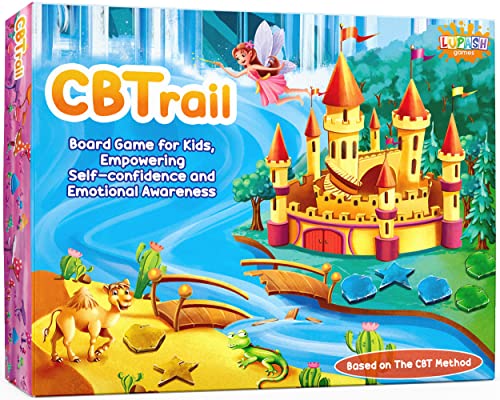
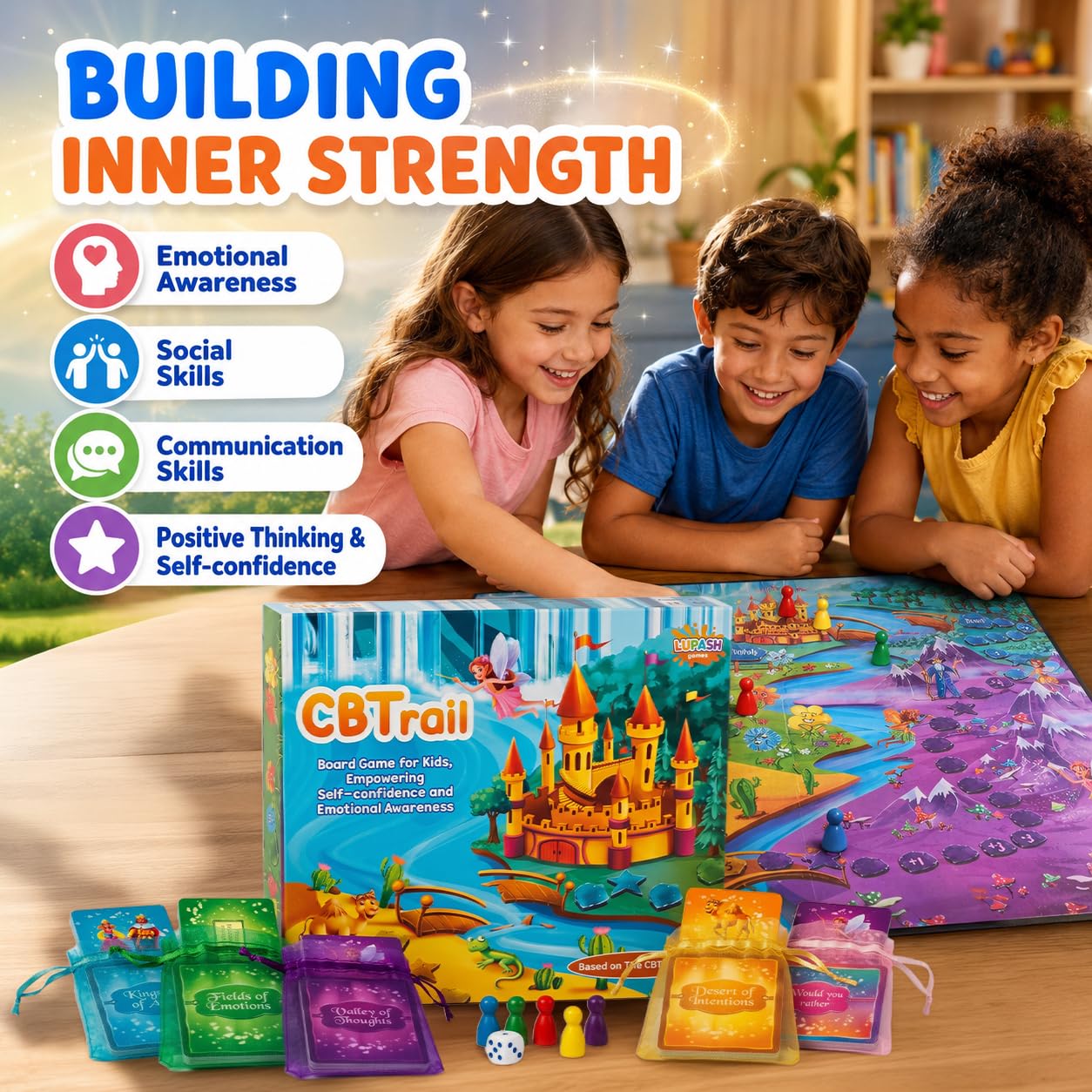
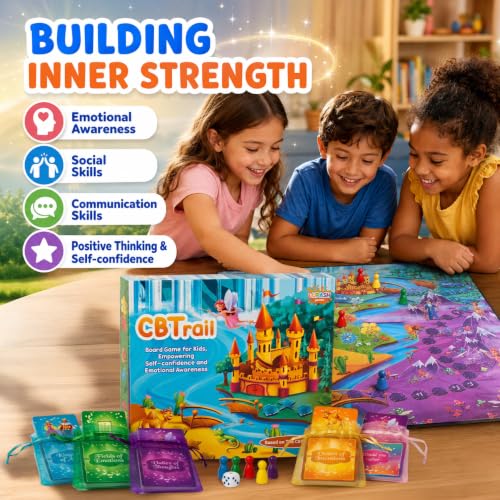
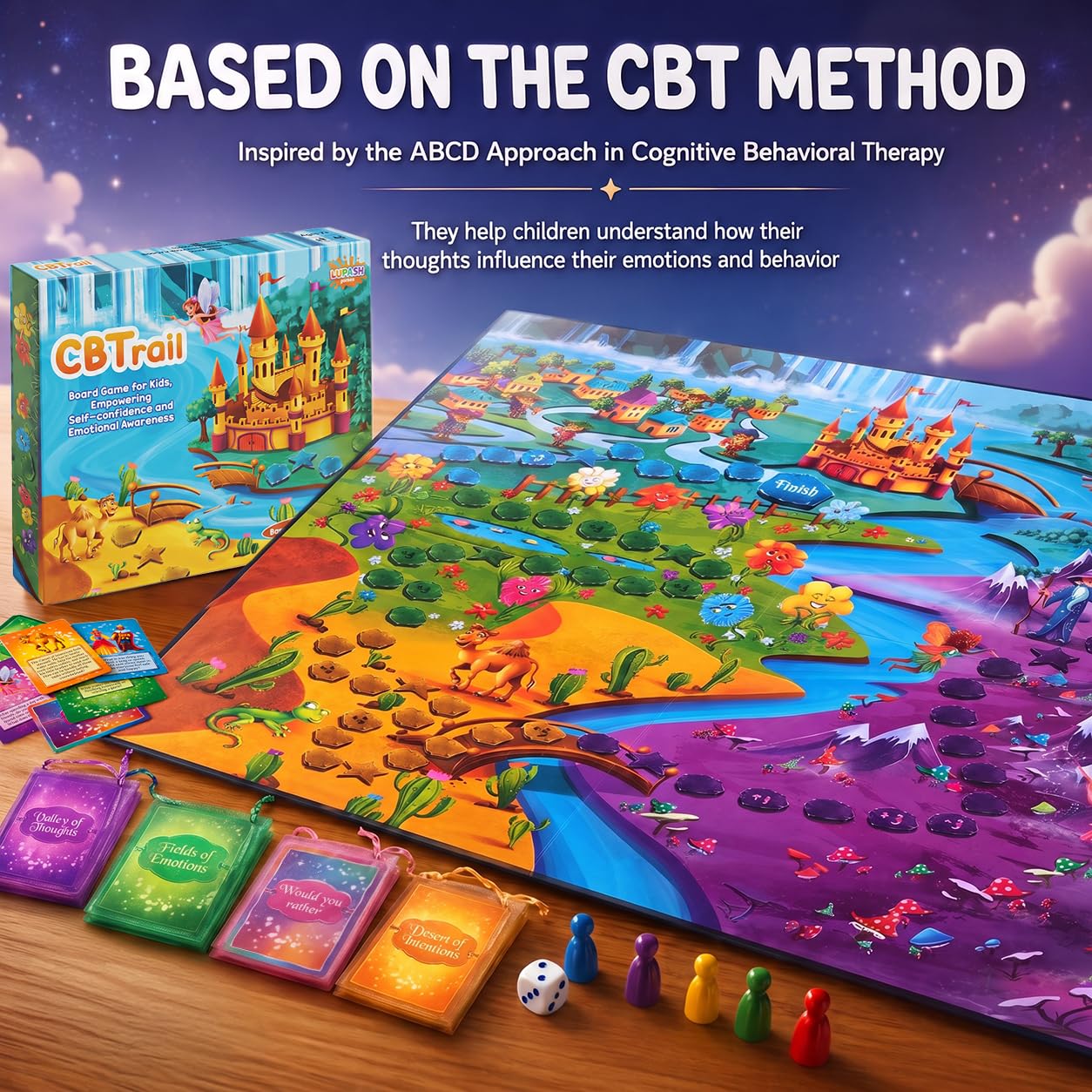
CBTrail Therapy Board Game for Kids - Social Skills & Emotions, Autism ADHD
4. Setting Up Playdates and Social Situations That Actually Work
The setting matters as much as the skill coaching, and small, structured, activity based playdates consistently outperform large free for all gatherings for kids with ADHD. A birthday party with fifteen kids and no structure is close to the hardest possible environment for a child who struggles with impulse control and overstimulation. A one on one playdate built around a shared activity is close to the easiest.
Pick the right size and structure
Two children, not five. An activity with a clear beginning, middle, and end (a craft, a cooking project, a board game) rather than open ended "just go play." Structure reduces the number of split second social decisions your child has to make, which is exactly where ADHD trips kids up.
Pick the right friend
Look for a peer who is patient, a little younger developmentally, or simply easygoing rather than trying to force friendship with the most popular kid in class. Some of the strongest childhood friendships form between an ADHD child and a calm, steady peer who doesn't need constant social reciprocity to feel good about the interaction.
Conversation cards can help take the pressure off "what do we even talk about" during a playdate, especially for kids who freeze up in unstructured social moments. The BestSelf Little Talk Deck gives both kids a shared script to work from, which lowers the social load for everyone at the table.
If your child is heading into a new school year or new classroom, the same structured approach applies. Building friendships after a school move takes deliberate setup, and for a child with ADHD, that setup matters even more.
5. Emotional Fallout: Rejection, Self Esteem, and How to Rebuild Confidence
Repeated peer rejection has a measurable, cumulative effect on self esteem, and it's one of the most under discussed parts of ADHD parenting. By age 8 or 9, many kids with ADHD have already internalized the message that something is wrong with them socially, even when no adult has said that out loud. This isn't a footnote to the friendship problem; for a lot of families, it's the actual crisis underneath the surface behaviors.
Watch for these signs
If any of these sound familiar, it's worth reading about how avoidance can escalate. Persistent social distress is one of the documented drivers behind school refusal, so catching the emotional fallout early, before it becomes avoidance of school itself, matters.
Books that let kids practice tricky social scenarios in a low stakes way, like deciding what to do when a friend says something hurtful or when a group leaves them out, can build a sense of preparedness that lowers anxiety heading into real situations. What Should I Do? Decision Making Scenarios for Kids walks through exactly this kind of practice without the pressure of a live social moment.
6. Tools, Games, and Books That Build Friendship Skills
The most effective tools for teaching ADHD kids social skills share three traits: they're short, they're repeatable, and they turn abstract social rules into something concrete a child can practice. A lecture about "reading the room" means little to an 8 year old. A card game where they practice guessing a character's feelings from a picture means a lot.
Games that teach through play
Board games designed around cognitive behavioral therapy principles give kids a structured way to talk about emotions and choices without feeling like they're in a therapy session. 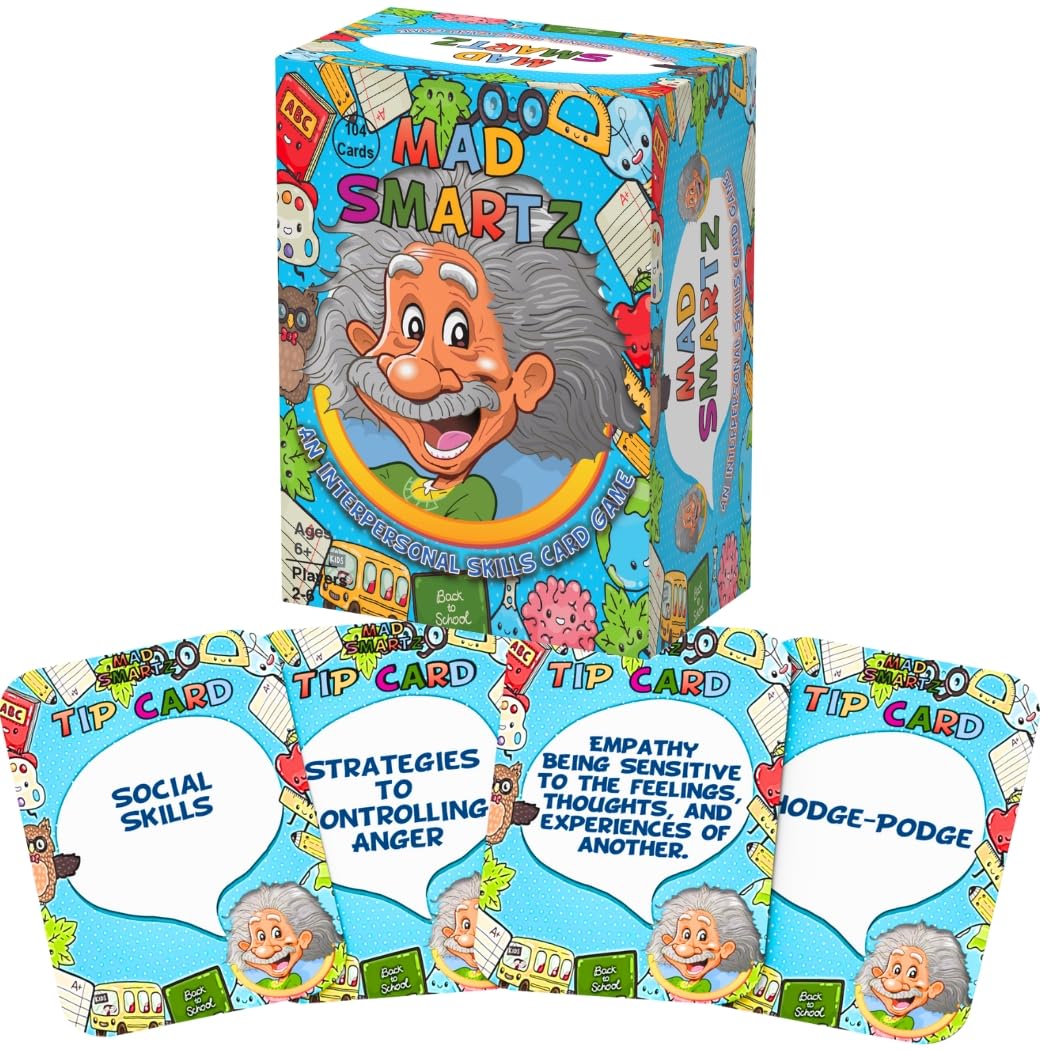
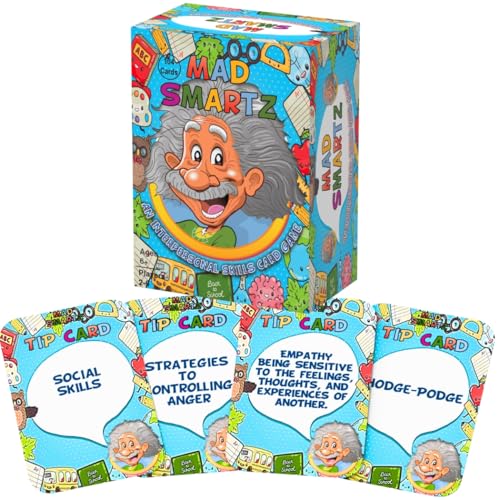

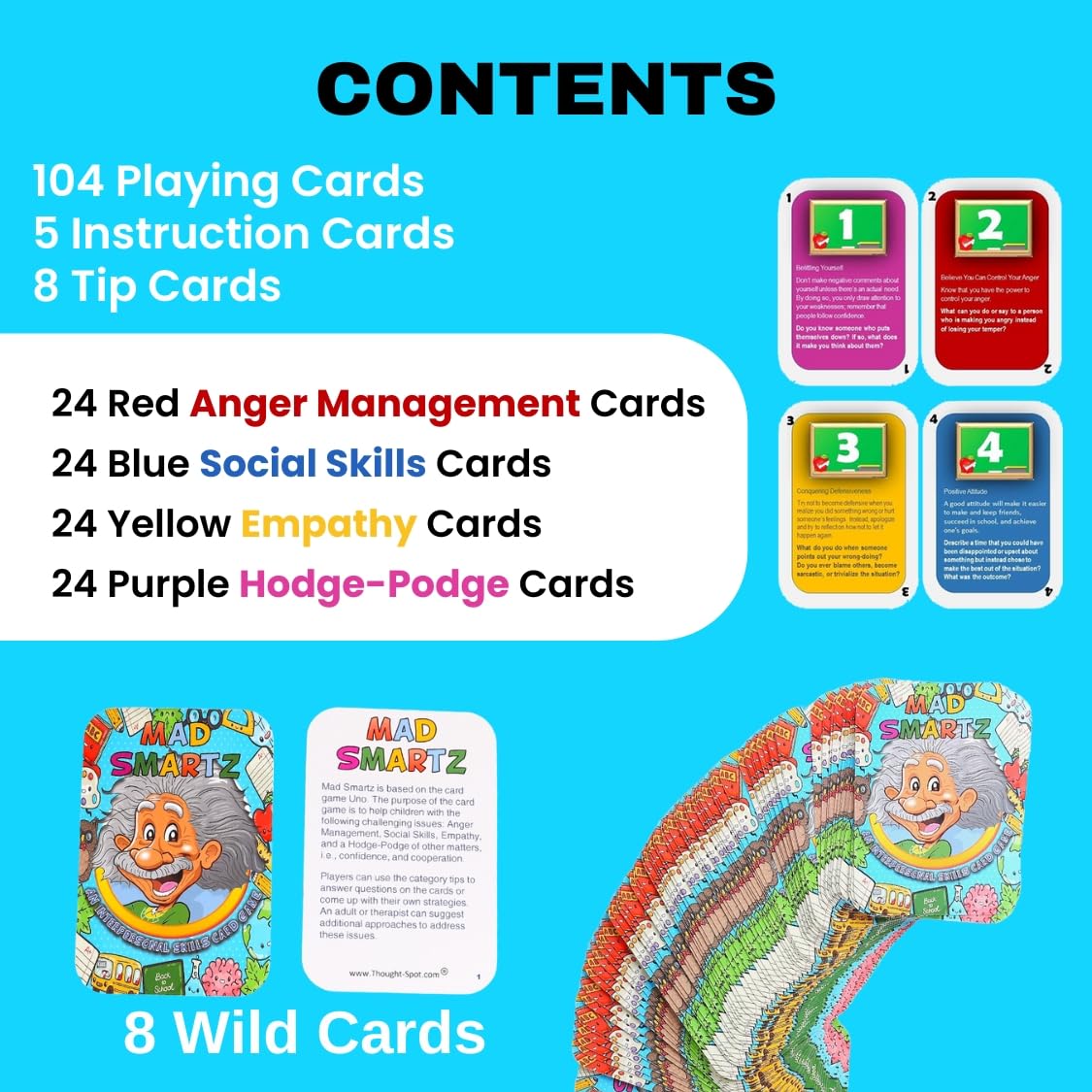
Thought-Spot Mad Smartz Anger Management & Social Skills Game for Kids & Teens | Impulse Control & CBT Tool for Emotional Regulation | for Home, School, or Therapy | Autism & ADHD Must-Have
Games that externalize the social learning process, turning it into cards, boards, or tokens, reduce the shame kids often feel when directly told 'you need to work on your social skills.
Books for repeated, low pressure practice
For younger kids or those who respond better to stories than games, the Social Skills Activity Book for Kids: Autism & ADHD Friendly Games offers short, illustrated exercises that specifically address sharing, understanding emotions, and building friendships, all designed with ADHD attention spans in mind (short sections, high visual interest, clear structure).
Many families also find that reducing unstructured device time opens up more space for these kinds of hands on social practice tools, and screen time limits that genuinely work can help protect that time without turning it into a daily battle.
| Approach | Best For | Primary Benefit | Main Drawback | Recommended Product | Price Range |
|---|---|---|---|---|---|
| Story based skills book | Ages 6 to 10, kids who like reading | Low pressure, repeatable practice | Requires parent to read along at first | Social Skills Activity Book for Kids | $10 to $15 |
| Structured exercise workbook | Ages 6 to 12, hands on learners | Covers 50 distinct social scenarios | Needs consistent scheduling to finish | Social Skills Activities for Kids: 50 Fun Exercises | $12 to $18 |
| Scenario decision book | Ages 7 to 12, kids who overthink social choices | Builds confidence before real situations | Best used with parent discussion | What Should I Do? Decision Making Scenarios | $10 to $15 |
| Therapist designed board game | Ages 6 to 12, kids who need CBT framing | Deep emotional and behavioral insight | Higher price point, needs 30+ minutes | CBTrail Therapy Board Game | $55 to $65 |
| Card based emotion game | Ages 6 to teens, group settings or therapy | Fast, engaging, works in classrooms too | Less depth than a full board game | Thought Spot Mad Smartz Game | $15 to $20 |
| Conversation card deck | Ages 4 to 12, playdates and family talk | Lowers pressure to "make conversation" | Not ADHD specific by design | BestSelf Little Talk Deck | $25 to $32 |
Expert Insights on ADHD and Friendship
Watching your child navigate friendship struggles is one of the hardest parts of raising a kid with ADHD, harder, honestly, than most of the academic or behavioral challenges people warn you about. But this is also one of the areas where consistent, specific coaching genuinely moves the needle, often faster than parents expect. Your child's brain isn't broken; it's wired for a different social learning curve, and with the right support, that curve bends upward.
If there's one thing worth holding onto: friendship skills are built, not born, and every small, structured practice session you offer your child is quietly rewriting their story about who they are with other people. Save this article, share it with a co parent or grandparent who's also in the trenches, and come back to it as your child grows into new social stages.
Sources & References
- CHADD (Children and Adults with Attention Deficit/Hyperactivity Disorder). "ADHD and Social Skills." chadd.org.
- American Academy of Pediatrics. "ADHD: Clinical Practice Guideline for Diagnosis, Evaluation, and Treatment." pediatrics.aappublications.org.
- Barkley, R. A. "Executive Functions: What They Are, How They Work, and Why They Evolved." Guilford Press.
- Maguire, C. "Why Will No One Play With Me? The Play Better Plan to Help Children of All Ages Make Friends and Thrive." TarcherPerigee.
- National Institute of Mental Health (NIMH). "Attention Deficit Hyperactivity Disorder." nimh.nih.gov.
- CDC. "Data and Statistics on ADHD." cdc.gov/adhd.
Frequently Asked Questions
Why does my child with ADHD struggle to keep friends even when they're kind and fun?
Is it normal for kids with ADHD to have only one or two close friends instead of a big group?
Should I tell other parents that my child has ADHD before a playdate?
At what age do ADHD friendship struggles usually become noticeable?
Can social skills training actually change how other kids see my child?
How do I know if my child's social struggles need more than home coaching?
Do medication and social skills work together for ADHD friendship issues?
Was this helpful?
Thanks — your feedback helps us pick what to write next.