Loner Kids May Be Happier Than You Think, Research Says
Children who prefer solitary play or small friendships aren't lonely or broken; research shows solitude by choice supports creativity, emotional processing and self knowledge, and only becomes a concern when it's driven by anxiety or rejection rather than preference.

In this article
Picture the party. Twenty kids are shrieking around a bounce house, and yours is sitting quietly at the snack table, watching, maybe chatting with one friend, seemingly content. You feel a flicker of worry. Is she okay? Should you nudge her toward the group?
Here's the reassuring part: according to a widely cited study published in the Journal of Research in Personality, roughly 25 to 40 percent of the population shows a temperament leaning toward introversion, and children in this group are not, by default, unhappy or socially deficient (Cain, 2012, drawing on research by psychologist Jerome Kagan). Preferring quieter, lower stimulation environments is a normal variation in human wiring, not a problem waiting to be fixed.
This article will help you understand:
1. Why Solitude Is Not the Same as Loneliness
The direct answer: solitude is a state a child chooses and often enjoys, while loneliness is an unwanted gap between the social contact they want and the contact they're actually getting, and confusing the two is where most parental anxiety starts.
Developmental psychologists have studied this distinction for decades. Kenneth Rubin, a professor at the University of Maryland who has spent his career researching children's social withdrawal, has repeatedly pointed out that not all withdrawal is created equal. Some kids withdraw because they're anxious and fearful of others (a pattern worth watching). Others withdraw because they genuinely prefer their own company, a pattern called "unsociability," and this group tends to show none of the depression or anxiety markers seen in the anxious withdrawal group.
Shyness and unsociability are not the same thing developmentally, and treating a child's preference for solitude as identical to social fear does that child a disservice.
— Kenneth Rubin, PhD, University of Maryland, Center for Children, Relationships, and Culture
What Solitude Actually Looks Like Day to Day
A child who enjoys solitude might:Compare that to loneliness, which often shows up as: - Sadness or flatness after being alone - Repeatedly asking to be included and getting turned down - Complaints of "nobody likes me" or "I have no friends" - Physical symptoms like stomachaches before school
Understanding this distinction matters because plenty of parenting advice out there assumes any solo time is a red flag. It isn't. A child building an elaborate Lego world by herself for two hours, then coming out for dinner in a good mood, is not the same situation as a child hiding in her room because she's been excluded at lunch every day this week.
2. What the Research Says About Introverted Children's Happiness
The direct answer: introverted children are not, on average, less happy than extroverted children; they simply derive their sense of wellbeing from different sources, and problems only arise when they're pressured to perform extroversion.
Susan Cain's landmark synthesis in 

Quiet: The Power of Introverts in a World That Can't Stop Talking
The Wellbeing Angle
Studies on adult introverts (whose patterns often trace back to childhood temperament) consistently find that introversion correlates with strong performance in tasks requiring sustained focus, careful observation and independent problem solving. None of that shows up as unhappiness. What does correlate with distress isn't the temperament itself, it's the mismatch between a child's natural style and the environment demanding they act differently all day.This is a theme that comes up again in The Hidden Gifts of the Introverted Child, where researchers on children's cognitive development note that solo, unstructured time is often when kids do their richest thinking, whether that's working through a math puzzle or narrating an imaginary world to themselves.

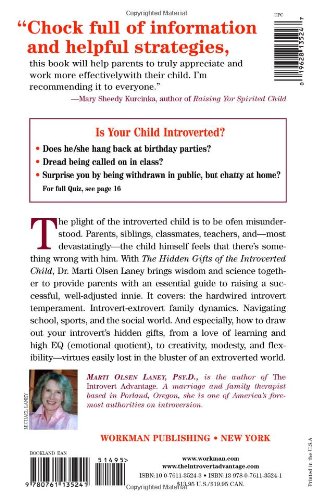
The Hidden Gifts of the Introverted Child: Helping Your Child Thrive in an Extroverted World
- Health, Fitness & Dieting
- Psychology & Counseling
- Child Psychology
3. The Difference Between a Content Loner and an Anxious Avoider
The direct answer: the key differentiator isn't how much time a child spends alone, it's whether their solitude is a comfortable choice or a fear driven retreat, and parents can usually tell the difference by watching mood and flexibility rather than just counting friends.
Rubin's research (mentioned above) breaks solitary children into roughly three groups: the unsociable (who simply prefer solitude and are generally fine), the socially anxious (who want connection but feel too fearful to pursue it), and those who are actively excluded or rejected by peers. Only the last two groups show elevated rates of low mood over time.
It's the child who wants friends and can't get them, not the child who's fine on their own, who is at higher risk for anxiety and depressive symptoms.
— Kenneth Rubin, PhD, 2018, Handbook of Child Psychology and Developmental Science
Quick Self Check for Parents
Signs pointing toward healthy, chosen solitude:
Signs pointing toward something that needs attention: - Your child wants to join in but freezes or panics when the moment comes - They've been actively excluded, teased, or bullied - Their mood has shifted noticeably (irritability, sadness, loss of interest in things they used to love) - Sleep or appetite changes accompany the withdrawal
This distinction is also relevant when thinking about your child's broader development. The milestones typical of ages 5 to 8 include forming closer, more selective friendships, which is a completely normal and healthy shift away from the "everyone is my friend" phase of early childhood.
4. Why Forcing Extroversion Can Backfire
The direct answer: pushing a naturally quiet child into constant group activity doesn't build social confidence, it often increases their anxiety and teaches them that their natural style is something to be ashamed of.
Many well meaning parents sign their quiet child up for every team sport and group class available, hoping repeated exposure will "toughen them up" socially. But that approach misunderstands the mechanism. A child who is anxious in groups doesn't become less anxious through sheer repetition of overwhelming situations; they need gradual, supported exposure, paired with genuine choice and recovery time. A child who simply prefers solitude, meanwhile, doesn't need "fixing" at all, and constant pressure to socialize can create resentment or a sense that something about them is inherently wrong.
What Backfires, Specifically
This overlaps with something we see in broader conversations about kids and stimulation. In pieces about screen time and low stimulation environments, researchers note that constant high input, whether social or digital, can leave children depleted rather than nourished. A quiet child who gets no downtime between school, activities, and social obligations is running on empty, and that shows up as irritability or meltdowns, not calm.
| Approach | Best For | Primary Benefits | Main Drawbacks | Recommended Product | Price Range |
|---|---|---|---|---|---|
| Full immersion (many group activities) | Kids who show curiosity but need confidence | Builds familiarity with groups over time | Can overwhelm anxious or introverted kids fast | The Explosive Child | $11 to $12 |
| Gradual exposure with recovery time | Socially anxious kids who want connection | Builds real confidence without shutdown | Requires patience, slower results | Raising an Introverted Child as an Extroverted Parent | Varies (ebook) |
| Honoring chosen solitude | Content, unsociable kids | Protects wellbeing and self esteem | Parents may still worry unnecessarily | The Hidden Gifts of the Introverted Child | $13 to $14 |
| One on one friendship focus | Kids who dislike big groups | Deep, stable friendships form | Smaller social network overall | Quiet Power: The Secret Strengths of Introverted Kids | $7 to $8 |
| Parent self education first | Parents unsure how to respond | Improves parent child understanding | Takes time and reflection | Introverted Mom | Free |
| General introvert framework | All ages, whole family understanding | Reframes temperament positively | Adult focused, needs translation for kids | Quiet: The Power of Introverts | $8 to $9 |
5. How to Support a Quiet or Solitary Child Without Overcorrecting
The direct answer: the most effective support isn't pushing your child toward more socializing, it's validating their preference while gently offering, never forcing, chances to connect.
Start by naming the temperament positively at home. Instead of saying "you're so shy," which frames the trait as a limitation, try "you're someone who really likes to think things through before jumping in," which frames the same trait as a strength. Language matters more than parents realize; kids absorb the words we use to describe them and build their self image around those words.
Temperament isn't destiny, but the words we use to describe a child's temperament shape how that child comes to see themselves.
— Jerome Kagan, PhD, Harvard University, developmental psychologist
Practical Strategies That Actually Work
1. Offer, don't insist. "There's a birthday party Saturday. Do you want to go for the whole time, part of the time, or skip it?" Choice reduces anxiety and builds trust. 2. Protect recovery time. After school, camp, or a busy weekend, build in unstructured quiet time before the next commitment. 3. Support one deep friendship rather than pushing a wide circle. One close friend does more for a child's social development than five acquaintances. 4. Use their interests as a bridge. A quiet child who loves drawing might connect more easily in a small art class than in a loud team sport. 5. Model your own solitude positively. If you narrate your need for quiet time as something healthy rather than something to apologize for, your child learns the same framework applies to them.
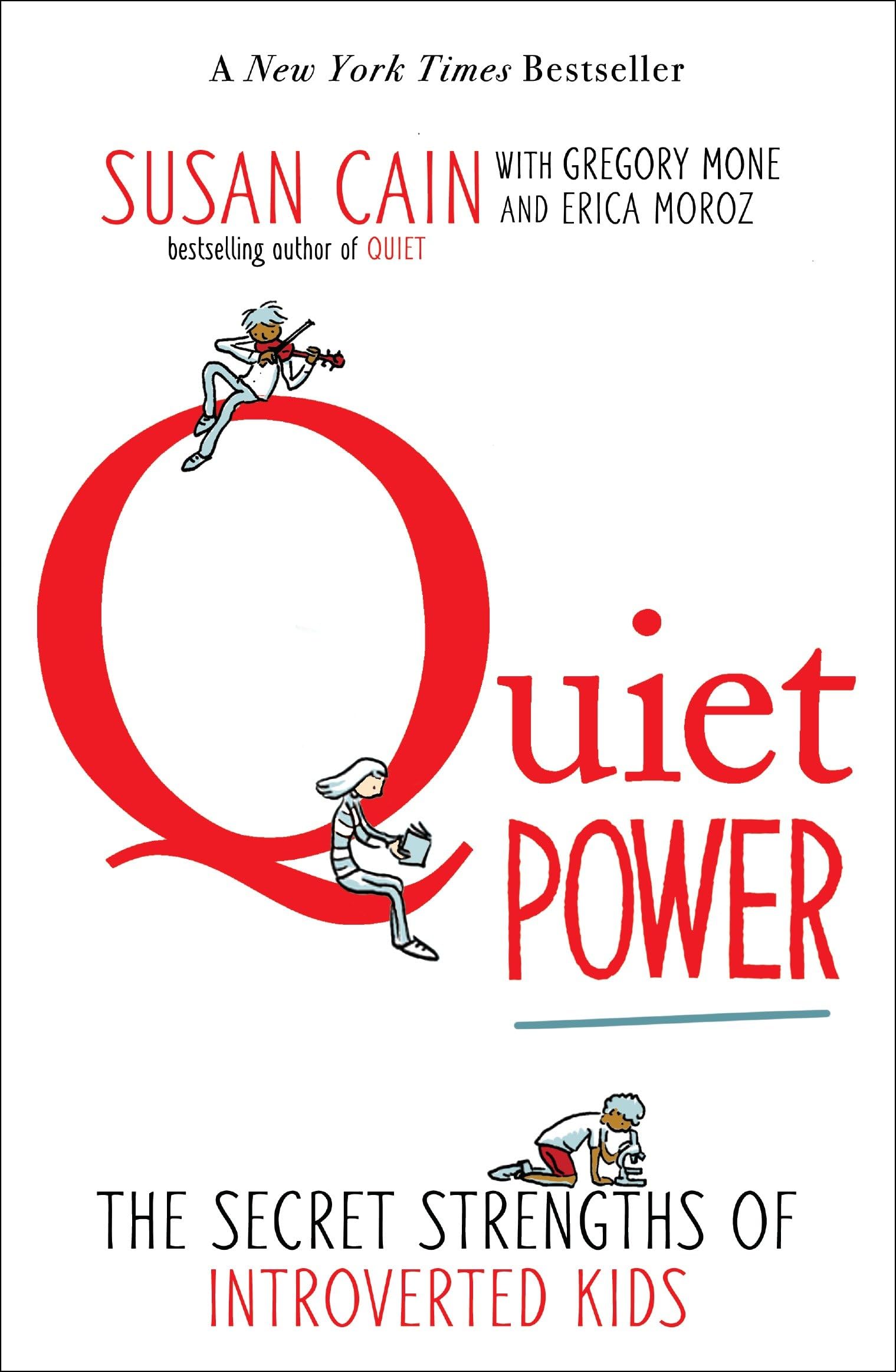
Quiet Power: The Secret Strengths of Introverted Kids
- Children's Books
- Growing Up & Facts of Life
- Friendship, Social Skills & School Life
This kind of gentle, choice based approach also mirrors what's recommended for building good habits generally. The science of how habits form in children shows that small, low pressure repeated experiences build lasting comfort far better than one big forced exposure ever could, whether the habit in question is brushing teeth or joining a birthday party.
6. Red Flags Worth Taking to a Professional
The direct answer: most quiet children are simply fine, but a small subset show patterns that warrant a conversation with a pediatrician, school counselor, or child psychologist, and it's better to check early than to wait.
The American Academy of Pediatrics notes that social withdrawal accompanied by mood changes, school refusal, or physical symptoms deserves professional evaluation, since these combinations can point to anxiety disorders or depression rather than simple temperament.
When to Seek Support
If in doubt, a conversation with your pediatrician costs you nothing and can rule things in or out quickly. Bring specific examples: what changed, when it started, and what your child says about it in their own words. That specificity helps a clinician distinguish healthy solitude from something that needs support.
Expert Insights
Watching your quiet child sit at the edge of the party can feel like an ache you can't quite name. But the research is genuinely reassuring here: a child who is content in their own company, who has even one warm friendship, and who can join in when they choose to, is not a child who needs fixing. They're a child who processes the world a little differently, and that difference often comes with real gifts, focus, empathy, imagination, that a louder childhood might have crowded out. The most loving thing you can do isn't to change how they're wired. It's to let them know, clearly and often, that the way they're wired is more than okay. If this reframed how you think about your own child, consider saving it or sharing it with another parent who might need the same reassurance today.
Sources & References
- Cain, S. "Quiet: The Power of Introverts in a World That Can't Stop Talking." Crown Publishing, 2012.
- Rubin, K. H. "Handbook of Child Psychology and Developmental Science: Socioemotional Processes." Wiley, 2015 edition, updated research 2018.
- Kagan, J. Harvard University, Department of Psychology. Longitudinal studies on temperament, 1988 to present.
- American Academy of Pediatrics. "Signs of Anxiety and Depression in Children." HealthyChildren.org, 2023.
- Laney, M. O. "The Introvert Advantage: How to Thrive in an Extrovert World." Workman Publishing, 2002.
Frequently Asked Questions
Is it normal for my child to prefer playing alone over playing with other kids?
How can I tell if my child is lonely versus just enjoying being alone?
Should I force my introverted child to attend social events like birthday parties?
Can introverted children still develop strong social skills?
At what age does a preference for solitude become something to worry about?
What's the difference between shyness and introversion in kids?
How do I talk to teachers about my quiet child without them being labeled a problem?
Was this helpful?
Thanks — your feedback helps us pick what to write next.