School Refusal in Kids: Causes, Warning Signs, and What Actually Helps
Child anxiety driven school refusal is treatable, and the most effective path combines a graduated return to school with cognitive behavioral techniques practiced at home, not prolonged time away from the classroom.
In this article
Monday morning. Your eight year old is doubled over on the bathroom floor, insisting her stomach hurts too much to go to school. You've seen this before, three times this month already, and every pediatrician visit comes back clean. If this sounds familiar, you're not imagining things, and you're definitely not alone. The American Academy of Child and Adolescent Psychiatry estimates that school refusal affects somewhere between 1 and 5 percent of school aged children, with spikes typically occurring around ages 5 to 7 and again around 10 to 13, often tied to transitions like starting kindergarten or moving into middle school.
What makes school refusal tricky is that it rarely announces itself as anxiety. It shows up as tummy aches, tears, tantrums at drop off, or a sudden interest in staying "just five more minutes" every single morning. By the time most parents realize what's happening, the pattern has already taken hold.
In this guide, you'll understand:
1. What School Refusal Actually Looks Like
School refusal is a pattern of a child resisting or refusing to attend school because of overwhelming emotional distress, most commonly anxiety, rather than defiance or a desire to skip class for fun. It's different from typical "I don't want to go" grumbling in that it's driven by genuine fear or dread, and it tends to be persistent, showing up multiple times a week over several weeks rather than as an occasional bad morning.
Clinicians usually distinguish it from truancy in a key way: kids who refuse school because of anxiety typically want to be with their parents and are often at home, visible, and cooperative in other parts of the day. Truant kids, by contrast, often hide their absences and are avoiding school for reasons unrelated to fear.
School refusal is not a diagnosis in itself, but rather a behavioral manifestation of an underlying difficulty, most commonly an anxiety disorder, that requires careful assessment before treatment begins.
— Child Mind Institute (2023)
Common Presentations
Understanding this pattern early matters because school refusal tends to snowball. The longer a child stays away, the harder returning becomes, both socially and academically. If you're noticing these signs paired with broader worry patterns, our piece on early school age milestones can help you figure out whether what you're seeing fits typical developmental wobbles or something that needs more active support.
2. What's Actually Driving the Anxiety
The anxiety behind school refusal is almost never really about school itself; it's about what school represents to that particular child. For some kids it's separation anxiety, a fear that something bad will happen to a parent while they're apart. For others it's social anxiety, worry about being judged, bullied, or embarrassed in front of peers. For still others it's performance anxiety tied to academics, or sensory overwhelm from noisy hallways, crowded lunchrooms, or fluorescent lighting.
Dr. Kearney's research has identified four broad functions that school refusal tends to serve for a child: avoiding specific fears or discomfort at school, escaping uncomfortable social or evaluative situations, seeking attention from parents, and pursuing tangible rewards outside of school (like staying home to play video games). Most children fall into the first two categories, which are anxiety driven rather than reward driven, and this distinction changes how treatment should be shaped.
Common Underlying Drivers
If bullying or peer conflict is part of the picture, it's worth pairing anxiety treatment with social skill support. Our guide on helping your child make friends at a new school has practical scripts for rebuilding peer confidence alongside the anxiety work.
3. Why Keeping Them Home Makes It Worse
Letting a child stay home when they're anxious about school provides immediate relief, but it reinforces the avoidance cycle and makes the anxiety stronger over time, not weaker. This is one of the hardest truths in school refusal treatment, because every instinct a loving parent has says "if my child is suffering, remove the source of suffering." Unfortunately, anxiety doesn't work that way.
Avoidance teaches the brain that school really is dangerous, because the relief a child feels the moment they're told they can stay home confirms, at a neurological level, that avoiding was the right call. The next school morning, the fear comes back even stronger, because now there's a proven "solution" on the table.
Every time avoidance is rewarded with relief, the anxiety pathway is strengthened. This is why children with untreated school refusal often see their symptoms escalate over weeks and months rather than resolve on their own.
— Anxiety and Depression Association of America (2022)
The Cost of Prolonged Avoidance
This doesn't mean forcing a screaming, panicking child through the school doors on day one. It means working with the school and a clinician toward a structured, gradual return rather than an open ended stay at home, which we'll cover in the next section.
4. The Graduated Exposure Approach That Works
The most effective treatment for school refusal is a graduated exposure plan built on cognitive behavioral therapy (CBT) principles, where a child returns to school in small, manageable steps rather than all at once or not at all. This approach is backed by decades of research and is the standard recommendation from child anxiety specialists worldwide.
A graduated plan typically starts with something achievable, maybe attending just for morning drop off and one class period, and builds up over one to three weeks toward a full day. Each successful step gets specific praise, and setbacks are treated as data, not failure.
Building a Graduated Return Plan
1. Meet with the school counselor to map out a realistic, staged reentry schedule 2. Start with the lowest anxiety part of the day (often a favorite class or a trusted teacher's room) 3. Use a visual chart to track each successful step and celebrate progress out loud 4. Pair school mornings with a predictable calming routine (same breakfast, same songs in the car) 5. Avoid negotiating in the moment; agree on the plan the night before, together
CBT workbooks designed specifically for anxious kids can reinforce this work between therapy sessions or school counselor meetings. The CBT Workbook for Kids is built around exactly this kind of stepwise exposure practice, with activities kids can do at the kitchen table in ten or fifteen minutes.


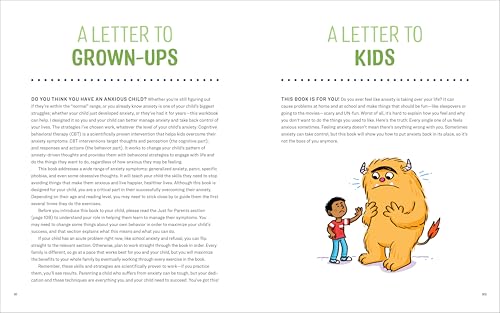

CBT Workbook for Kids: 40+ Fun Exercises and Activities to Help Children Overcome Anxiety & Face Their Fears at Home, at School, and Out in the World (Health and Wellness Workbooks for Kids)
- Children's Books
- Growing Up & Facts of Life
- Friendship, Social Skills & School Life
5. Tools and Workbooks That Actually Help at Home
Structured, workbook based CBT tools can meaningfully support school refusal treatment when used consistently alongside school reentry, not as a replacement for it. Books alone rarely resolve significant school refusal, but they give children language for what they're feeling and give parents a shared vocabulary to use during hard mornings.
For younger children, ages 5 to 9, picture based approaches that externalize anxiety (turning it into a character or a "worry monster") tend to land better than text heavy explanations. Books like When Harley Has Anxiety use exactly this technique, walking kids through CBT skills using a relatable character rather than abstract concepts.
For slightly older children, ages 8 to 12, workbooks that explain the "why" behind anxious thoughts tend to build more lasting insight. What to Do When You Worry Too Much is widely used by school counselors and child therapists specifically because it breaks down the "worry cycle" in language kids can apply themselves, without needing an adult to interpret every page.
What to Look for in an Anxiety Workbook
Bibliotherapy, using books to help children process emotions, works best as a supplement to active treatment rather than a stand alone intervention for moderate to severe school refusal.
— American Psychological Association (2021)
If your child also has ADHD alongside school anxiety, generic anxiety workbooks sometimes miss the mark because the sensory and attention pieces need extra scaffolding. The ADHD School Anxiety Workbook for Kids was built specifically for that overlap, pairing calming exercises with structure designed for kids who struggle with working memory and overwhelm together, something we also cover in more depth in our piece on working memory and reasoning games for early school age kids.


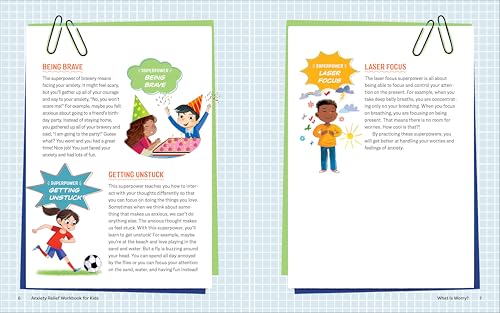

Anxiety Relief Workbook for Kids: 40 Mindfulness, CBT, and ACT Activities to Find Peace from Anxiety and Worry (Health and Wellness Workbooks for Kids)
- Children's Books
- Growing Up & Facts of Life
- Friendship, Social Skills & School Life
For families managing a broader mix of worries beyond just school, the Anxiety Relief Workbook for Kids rounds out a home toolkit with mindfulness, CBT, and ACT based activities that generalize across settings, not just the classroom.
6. When to Involve a Professional (and How to Choose One)
Professional support becomes necessary when school refusal has lasted more than two weeks, when a child is missing full days rather than partial ones, or when physical symptoms are severe enough to warrant repeated medical visits that come back clean. At that point, home strategies alone usually aren't enough, and a trained clinician can assess whether an underlying anxiety disorder, and sometimes depression, is driving the behavior.
Start with your pediatrician to rule out medical causes for physical symptoms. From there, ask specifically for a referral to a child psychologist or therapist trained in cognitive behavioral therapy for anxiety, ideally with direct experience in school refusal, since this is a specialized subset of anxiety treatment with its own protocols.
Signs It's Time to Seek Professional Help
Also loop in the school counselor early, even before therapy starts. Schools often have more flexibility than parents realize, partial schedules, a safe room to decompress in, a check in adult, and coordinating this with a therapist's exposure plan speeds up recovery considerably.
Comparing Approaches to School Refusal Treatment
| Approach | Best For | Primary Benefits | Main Drawbacks | Recommended Product |
|---|---|---|---|---|
| CBT workbook at home | Mild to moderate anxiety, ages 6 to 10 | Builds vocabulary for feelings, low cost, flexible pacing | Limited effect without adult guidance and school coordination | CBT Workbook for Kids |
| Character based picture book | Younger kids, ages 5 to 9 | Externalizes anxiety, easy for kids to relate to | Less structured skill building than a full workbook | When Harley Has Anxiety |
| Worry cycle explanation book | Ages 8 to 12, more verbal kids | Builds insight into thought patterns, widely used by counselors | Requires stronger reading comprehension | What to Do When You Worry Too Much |
| ADHD and anxiety combined support | Kids with both ADHD and school anxiety | Addresses overwhelm and attention together | Narrower audience, less useful for anxiety alone | ADHD School Anxiety Workbook for Kids |
| Broad mindfulness and CBT/ACT toolkit | Generalized anxiety beyond school | Wide range of coping tools, applies across settings | Less school specific focus | Anxiety Relief Workbook for Kids |
| Professional CBT with exposure therapy | Moderate to severe, over two weeks of refusal | Strongest evidence base, personalized pacing | Requires time, cost, and finding a trained provider | Sometimes I'm Anxious |
Expert Insights
Frequently Asked Questions
If you've been living inside those hard, tearful mornings, please hear this: you have not caused this, and it is very treatable. Most families who commit to a graduated plan and consistent support see real, lasting change within a couple of months. School refusal feels enormous at 7am on a Tuesday, but it is one of the most well understood and responsive anxiety patterns in child psychology. Save this guide for the next hard morning, share it with another parent who's white knuckling their way through drop off, and know that steady, small steps really do add up.
Sources & References
- American Academy of Child and Adolescent Psychiatry. "School Refusal." Facts for Families, 2023. aacap.org
- Child Mind Institute. "How to Help Kids with School Refusal." 2023. childmind.org
- Anxiety and Depression Association of America. "School Avoidance." 2022. adaa.org
- Kearney, C.A. "School Refusal Behavior in Youth: A Functional Approach to Assessment and Treatment." American Psychological Association, 2001.
- American Psychological Association. "The Use of Bibliotherapy in Children's Mental Health Treatment." 2021. apa.org
- Columbia University Clinic for Anxiety and Related Disorders. Faculty profile: Dr. Anne Marie Albano. columbiapsychiatry.org
- Yale Child Study Center. Program for Anxiety Disorders, faculty profile: Dr. Eli Lebowitz. medicine.yale.edu
Frequently Asked Questions
Is school refusal the same thing as truancy?
How long does school refusal usually last if treated properly?
Should I force my child to go to school if they're crying and panicking?
Could my child's stomachaches be a real medical issue and not anxiety?
Can school refusal happen even if my child isn't being bullied?
Will switching schools fix the problem?
What role does screen time play during a school refusal episode?
Was this helpful?
Thanks — your feedback helps us pick what to write next.