Baby Teething Relief: What Actually Works, By a Pediatrician
Safe, lasting teething relief comes from cold pressure on the gums (chilled teethers, cold washcloths) and appropriate pain medication when needed, not from gels, amber necklaces, or numbing products the FDA has warned against.

In this article
Somewhere around 2 a.m., most parents find themselves standing over a crib holding a screaming baby and wondering, "Is this actually teething, or is something wrong?" It's a fair question. According to the American Academy of Pediatrics (AAP), teething symptoms typically begin around 4 to 7 months of age, but the drooling, gum rubbing, and general crankiness can start weeks before that first tooth ever breaks through. In my clinic, teething is one of the top three reasons parents call in during a baby's first year, right up there with sleep problems and feeding concerns.
Here's what you'll understand by the end of this article:
1. What Teething Really Feels Like (And What It Doesn't Cause)
Teething causes localized gum discomfort, drooling, and mild irritability, but it does not cause high fever, diarrhea, or vomiting, despite how often those symptoms get blamed on incoming teeth.
This is one of the most persistent myths in pediatrics, and it's an important one to clear up because it can lead parents to overlook an actual illness. A widely cited study published in Pediatrics (Macknin et al.) tracked babies through the teething process and found that while low grade temperature elevation (usually under 101°F) and mild fussiness were common in the days surrounding tooth eruption, true fever, diarrhea, rash, and congestion were not statistically linked to teething at all.
What teething actually looks like
What it does NOT typically cause
Teething does not cause high fevers, seizures, diarrhea, or other symptoms of significant illness. If your child has fever, diarrhea, or seems significantly ill, see your pediatrician. Do not assume that teething is the cause.
— American Academy of Pediatrics (2023)
Understanding this distinction matters because it changes how you respond. A baby who is drooling and gnawing on their fist with mild fussiness needs comfort and a cold teether. A baby with a real fever needs a phone call. Getting this right saves a lot of unnecessary worry, and occasionally, catches something that actually needs treatment.
2. Cold Pressure: The Gold Standard for Teething Relief
Cold pressure applied directly to the gums is the most effective and safest way to relieve teething discomfort, and it works by numbing the area and reducing local inflammation.
This is the single piece of advice I give most often in clinic, because it's simple, cheap, and it actually works. The nerve endings in an inflamed gum respond well to cold. Think of it the same way an ice pack helps a bruised knee. A chilled (not frozen solid) teether, a cold wet washcloth, or even a chilled spoon pressed gently against the gum can bring real relief within minutes.
How to do it safely
1. Place a silicone teether in the refrigerator (not freezer) for 15 to 20 minutes before giving it to your baby. 2. Wet a clean washcloth, wring it out, and chill it in the fridge for babies who like to gnaw on fabric texture. 3. Offer gentle counter pressure by rubbing a clean finger along the gum line. 4. Always supervise chewing, and inspect teethers regularly for cracks or tears.
Silicone teethers designed with varied textures tend to work best because they hit multiple points along the gum ridge at once. The TOHIBEE Baby Montessori Sensory Teething Toy combines a textured teether ball with sensory rattle features, which is genuinely useful for babies who like to explore with both mouth and hands during the same session.


Baby Teething Toys Silicone Teethers BPA Free Silicone Rudder with Wooden Ring Soothe Babies Gums (Khaki)
- ★ SAFE MATERIAL – 100% food grade silicone and natural beech. The size of this silicone rudder teether is desi
- ★ HIGH TEMPERATURE – Our silicone rudder can withstand a high temperature of 200 degrees, so you can wash it w
- ★ SOOTHE GUMS – This teething ring has a hollow design, is lightweight and has a suitable size, which is very
The Arudyo Silicone Rudder Teether with Wooden Ring is a nice option if you want something that can be safely boiled for sterilizing between uses, since the silicone portion tolerates high heat (just remember the wooden ring itself cannot go through boiling water).
Never freeze a teether solid. Extremely cold, rock hard silicone can bruise sensitive gum tissue rather than soothe it, and it can also damage emerging teeth. Chilled, not frozen, is the rule.
3. Teethers: Choosing the Right One for Your Baby's Stage
The best teether for your baby depends on their developmental stage, hand strength, and whether they can grasp and direct objects to their own mouth yet.
Newborns and young infants (0 to 3 months) generally aren't ready for handheld teethers because they lack the grasp control to bring an object to their mouth reliably. Once babies develop the palmar grasp reflex, typically starting around 3 to 4 months, teethers become genuinely useful tools rather than just novelty toys.
By age and stage
0 to 3 months: Gum massage with a clean finger or a chilled damp washcloth is usually enough. Handheld teethers aren't necessary yet.
3 to 6 months: This is when true teething symptoms often ramp up. Babies at this stage benefit from teethers designed for early grasping. The Hooku Silicone Teething Toy is built with a remote control shape specifically because it mimics something babies see adults holding, which makes it more appealing to reach for, and its varied textures target different points on the gum.
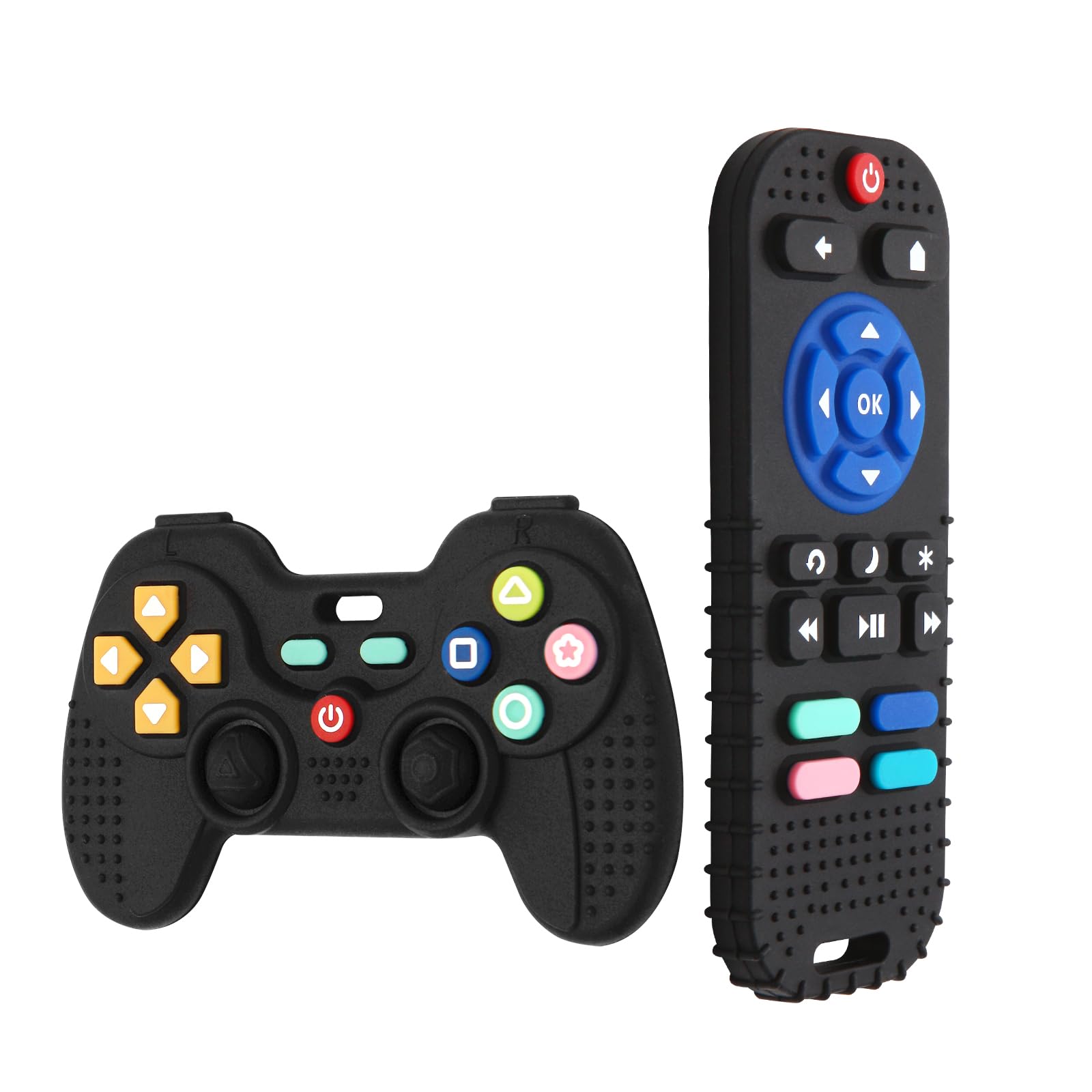

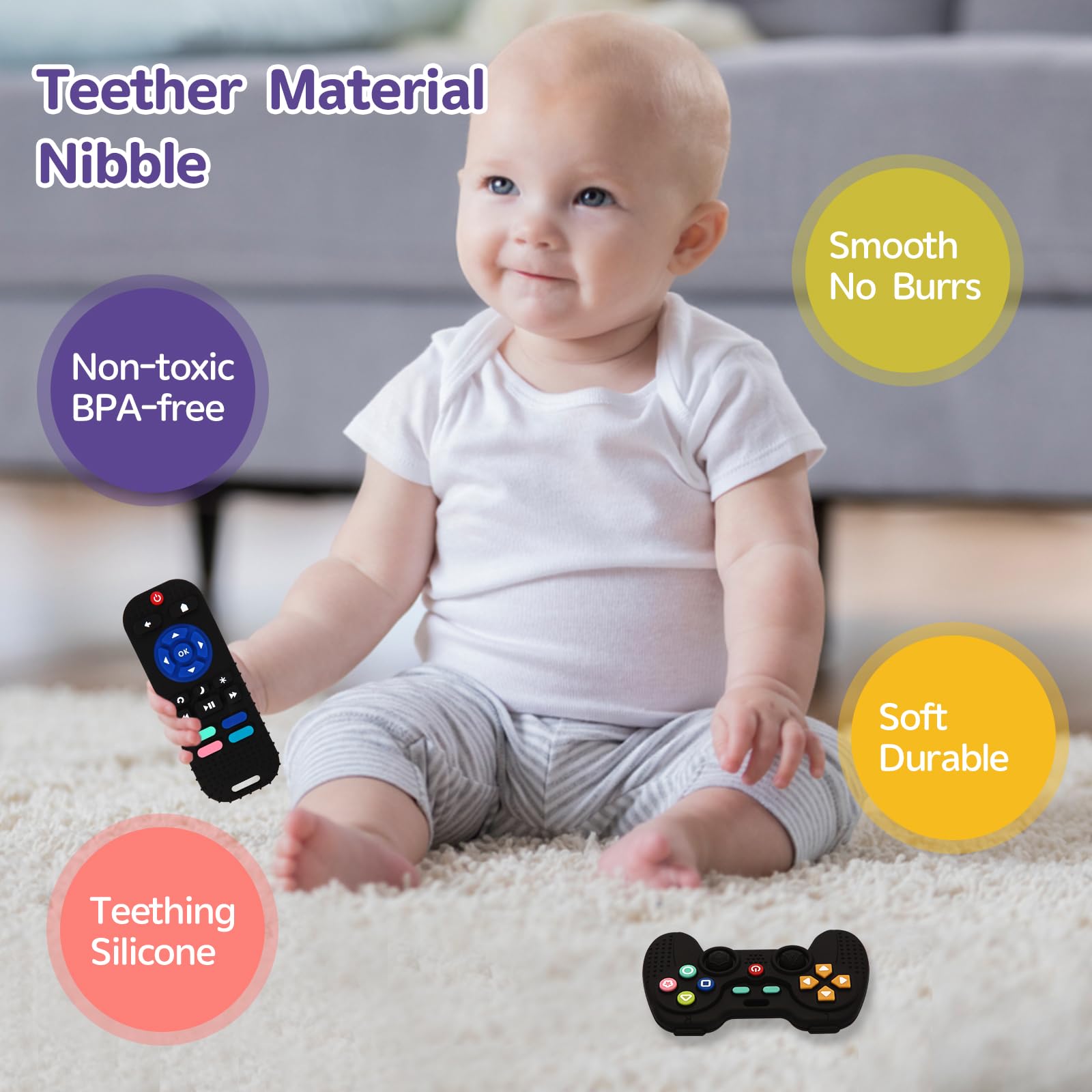

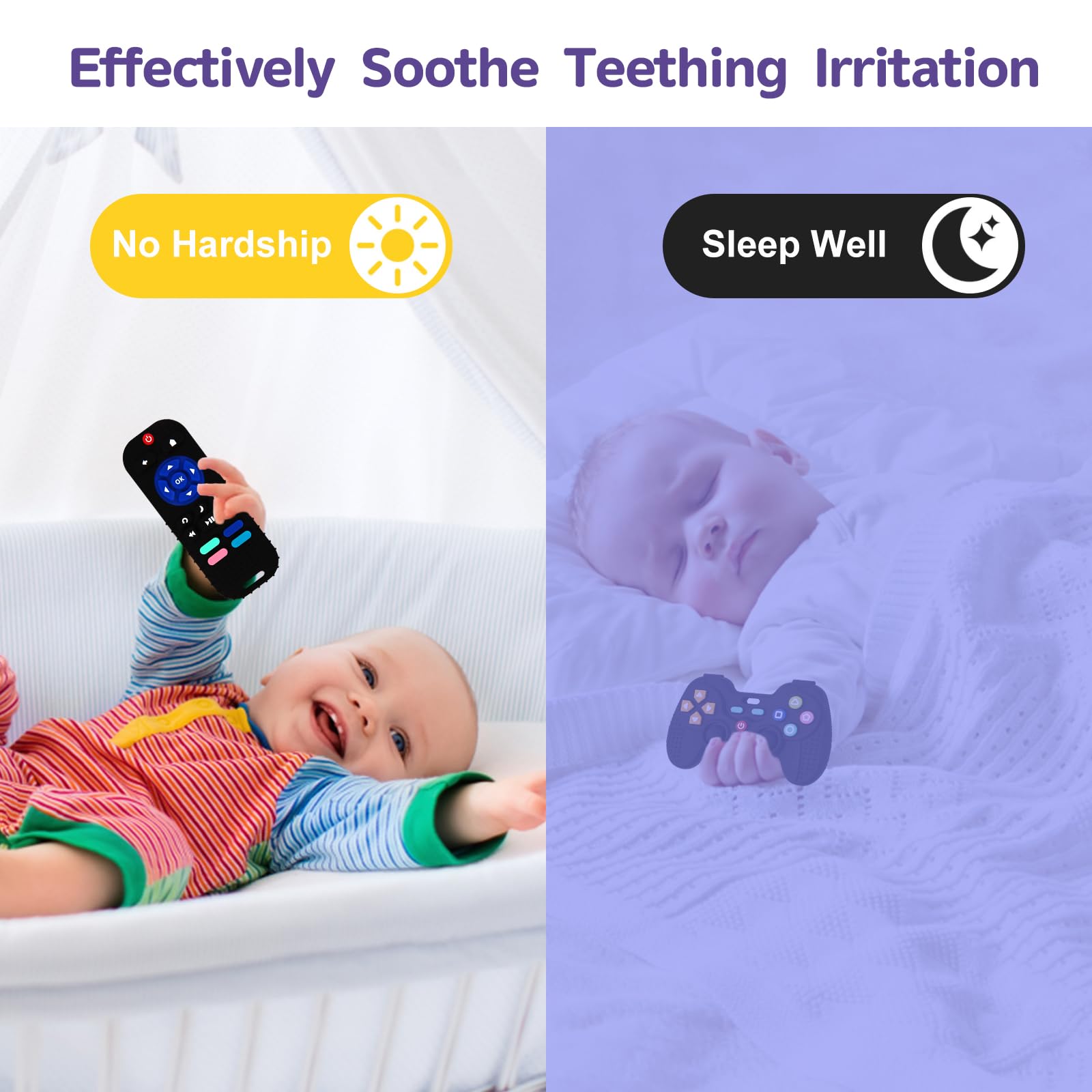
Hooku 2 Pack Silicone Teething Toys for Babies 0-6 Months, Teethers for Babies 6-12 Months, Remote Teether for Baby, Sensory Toys for Babies, Baby Chew Toys KLW8808
- 【Scientific Design For Babies】 The Silicone Baby Teether Toys are designed with the appearance of a remote con
- 【Safe High-Quality Material】Hooku Baby Remote Control Toy is made of Food Grade Silicone, Non-toxic, BPA-free,
- 【Meet Babies' Special Needs】The Infant Teething Toys are suitable for those with oral sensory needs, biting ne
Babies who struggle to hold objects: Some babies, especially those with lower muscle tone or who simply drop toys constantly, do better with wearable teethers. The ChooKaChoo Silicone Teething Mitten solves this problem directly, it fits over the hand like a mitten so the baby can self soothe by mouthing their own hand without dropping anything, and it also protects against excessive chewing on bare skin, which can cause rashes.


ChooKaChoo 2 Pack Baby Teething Toy Silicone Teething Mitten for Babies Over 3 Months Anti Dropping Wrist Hand Teethers Baby Chew Toys for Sucking Needs, BPA Free
- 【Give your little one a hand with teething】The Silicone Teething Mitten is the perfect solution for babies who
- 【Textured Surface Comforts Sore gums】The teether mitten features soft and durable textures of the bumps and lu
- 【Food Grade Soft Silicone】 Teethers are made of BPA free silicone with no small part to provide a strong, yet
6 to 12 months: Babies at this stage are often teething multiple teeth at once, including molars later on, and want variety. A multi pack like the HAILI XMGQ Baby Teething Toys 4 Pack gives different shapes and textures so you always have a fresh option and a backup in the diaper bag.
4. What to Avoid: Gels, Necklaces, and Homeopathic Remedies
Benzocaine gels, homeopathic teething tablets, and amber necklaces are not recommended by the FDA or AAP because they carry real safety risks without proven benefit.
This section matters more than any other in this article, because these products are still widely sold and marketed directly to worried parents, often with reassuring packaging that implies they're gentle and natural.
Benzocaine gels (Orajel and similar products)
The FDA issued a formal warning in 2018 stating that over the counter teething gels and liquids containing benzocaine should not be used in children under 2 years old. Benzocaine has been linked to a rare but serious condition called methemoglobinemia, which reduces the amount of oxygen carried in the blood.
Because of the risk of this serious and potentially fatal adverse effect, and because these products offer little to no benefit for treating teething, we are asking that companies stop selling these products for teething in children under 2.
— U.S. Food and Drug Administration (2018)
Homeopathic teething tablets and gels
The FDA also warned in 2016 about homeopathic teething products after reports linking them to seizures and other adverse events in infants, some products were found to contain inconsistent amounts of belladonna, a toxic plant substance, despite labeling implying trace or diluted amounts.
Amber teething necklaces
These necklaces are marketed on the claim that succinic acid released from the amber gets absorbed through the skin to relieve pain. There is no scientific evidence supporting this mechanism, and the AAP specifically warns against them due to two real hazards:
None of this means you're stuck with nothing. Cold teethers, gum massage, and, when appropriate, infant acetaminophen or ibuprofen (discussed in the next section) remain safe, genuinely effective options.
5. When and How to Use Pain Medication Safely
Infant acetaminophen or ibuprofen can be used for teething pain when cold pressure alone isn't enough, but dosing must be based on your baby's weight, not their age, and ibuprofen should only be given to babies over 6 months old.
Medication isn't the first thing I reach for in clinic, but for a baby who is genuinely miserable, especially at bedtime, appropriately dosed pain relief can make a real difference for both baby and parent.
General guidance
- Acetaminophen (Tylenol) can be used in babies as young as 2 months old, always dosed by weight per the package instructions or your pediatrician's guidance. - Ibuprofen (Motrin, Advil) is approved for babies 6 months and older, also dosed by weight. - Never alternate between the two without your pediatrician's specific direction, and never give aspirin to an infant due to the risk of Reye's syndrome.
Red flags that warrant a call to your pediatrician
Teething pain is real, but it's also temporary, and most babies do fine with a combination of cold relief and, occasionally, appropriately dosed medication rather than needing medication as a daily default.
6. Teething and Sleep: Why Nights Get Rough
Teething disrupts sleep primarily through gum discomfort that peaks in the evening and overnight hours when there are fewer distractions, not because teething itself is worse at night.
Parents often notice teething flares hit hardest right at bedtime and during the small hours. Part of this is simple attention: during the day, a busy, distracted baby doesn't dwell on gum discomfort the way they do lying still in a dark, quiet room. Sleep also naturally involves changes in blood flow and swallowing patterns that can make gum sensitivity more noticeable.
This overlap between teething and sleep disruption is one reason so many parents mistake a temporary teething flare for a full sleep regression, when it's often a much shorter lived issue. If you want a deeper look at how sleep, mood, and brain development connect in the first year, sleep's role in early emotional development is worth understanding, since disrupted sleep from teething is usually short term and resolves once the tooth erupts, unlike a true regression tied to developmental leaps.
How to manage teething related night waking
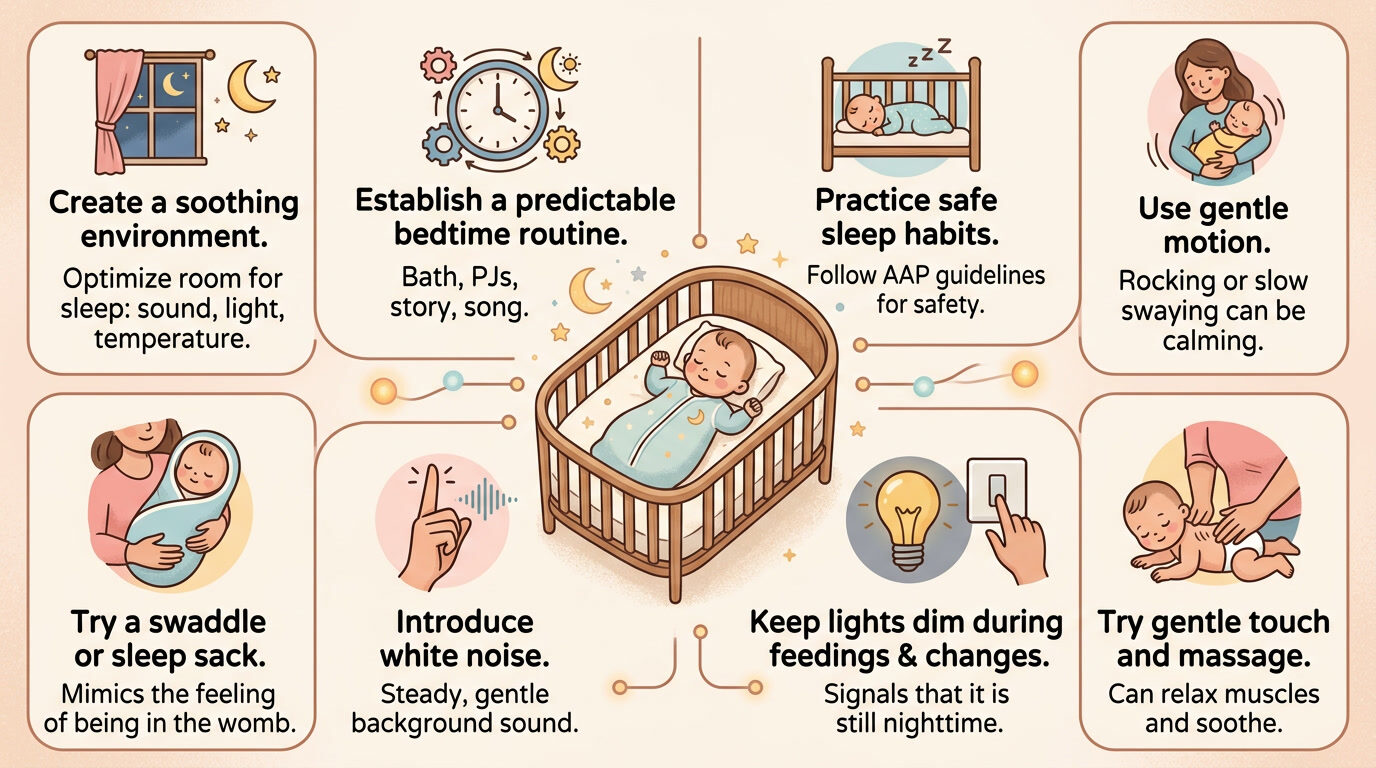
1. Offer a chilled teether about 20 to 30 minutes before your usual bedtime routine. 2. Consider an appropriately dosed pain reliever before bed on nights when symptoms are clearly flaring, with your pediatrician's guidance. 3. Keep the bedtime routine consistent, comfort without creating new sleep associations that will need to be undone later. 4. Avoid picking up and rocking to sleep every single time a baby fusses, since that can create a longer term sleep habit that outlasts the teething itself. If this is a pattern you're already noticing, rocking as a sleep association is worth reading before it becomes an entrenched routine.
Interestingly, teething discomfort sometimes overlaps in timing with other developmental sleep disruptions, like the 8 month sleep regression, which can make it genuinely hard to tell what's driving a rough patch. If disrupted sleep lasts more than a week or two with no clear improvement, it's worth mentioning at your next pediatric visit.
| Option | Best For | Primary Benefit | Main Drawback | Recommended Product | Price Range |
|---|---|---|---|---|---|
| Handheld silicone teether | Babies 3 to 6 months learning to grasp | Multiple textures target gum ridge | Can be dropped often | Hooku Silicone Teething Toy | $9.99 |
| Wearable teething mitten | Babies with weaker grasp or who chew on hands | Stays on baby, no dropping | Not ideal once teeth start biting through | ChooKaChoo Teething Mitten | $9.99 |
| Sensory teether with rattle | Babies who like combined sensory play | Doubles as developmental toy | Bulkier to carry | TOHIBEE Sensory Teething Toy | $9.99 |
| Boilable silicone teether | Parents who want easy sterilizing | Withstands high heat cleaning | Wooden ring can't be boiled | Arudyo Rudder Teether | $6.36 |
| Multi pack variety teether | Babies teething multiple teeth at once | Always a backup on hand | Some shapes get ignored | HAILI XMGQ 4 Pack Teethers | $9.99 |
| Dual purpose rattle teether | Babies who want entertainment plus relief | Combines sound and chew relief | Rattle noise may overstimulate at bedtime | Infinno Soft Teething Rattle | $8.99 |
Expert Insights
Parents should avoid teething necklaces, bracelets, or other jewelry marketed to relieve teething pain. These products have not been proven effective and can pose choking and strangulation hazards.
— American Academy of Pediatrics (2022)
Teething is one of those milestones that feels endless in the moment, but genuinely, it passes tooth by tooth, and most babies come through it just fine with a chilled teether, a little extra patience, and a parent who knows the difference between "teething fussy" and "something else is going on." The simplest truth worth remembering is this: cold and comfort do more for teething pain than almost anything sold in a fancy package. If this article helped clear things up, save it for the next rough night, and share it with another parent who's currently googling this at 2 a.m.
Sources & References
- American Academy of Pediatrics. "Teething: 4 to 7 Months." HealthyChildren.org, 2023.
- U.S. Food and Drug Administration. "FDA warns against the use of homeopathic teething tablets and gels." 2016.
- U.S. Food and Drug Administration. "FDA Drug Safety Communication: FDA recommends not using lidocaine to treat teething pain and requires new Boxed Warning." 2018.
- Macknin ML, Piedmonte M, Jacobs J, Skibinski C. "Symptoms Associated with Infant Teething: A Prospective Study." Pediatrics, 2000.
- American Academy of Pediatrics. "Amber Teething Necklaces: A Caution for Parents." HealthyChildren.org, 2022.
- Centers for Disease Control and Prevention. "Teething." CDC Oral Health, 2023.
Frequently Asked Questions
How do I know if my baby is actually teething and not sick?
What age does teething usually start?
Are amber teething necklaces safe to use?
Can I use Orajel or other benzocaine gels for my baby's teething pain?
How long does teething pain typically last for each tooth?
Is it safe to freeze teething toys?
Can teething cause a baby to refuse to eat?
Was this helpful?
Thanks — your feedback helps us pick what to write next.