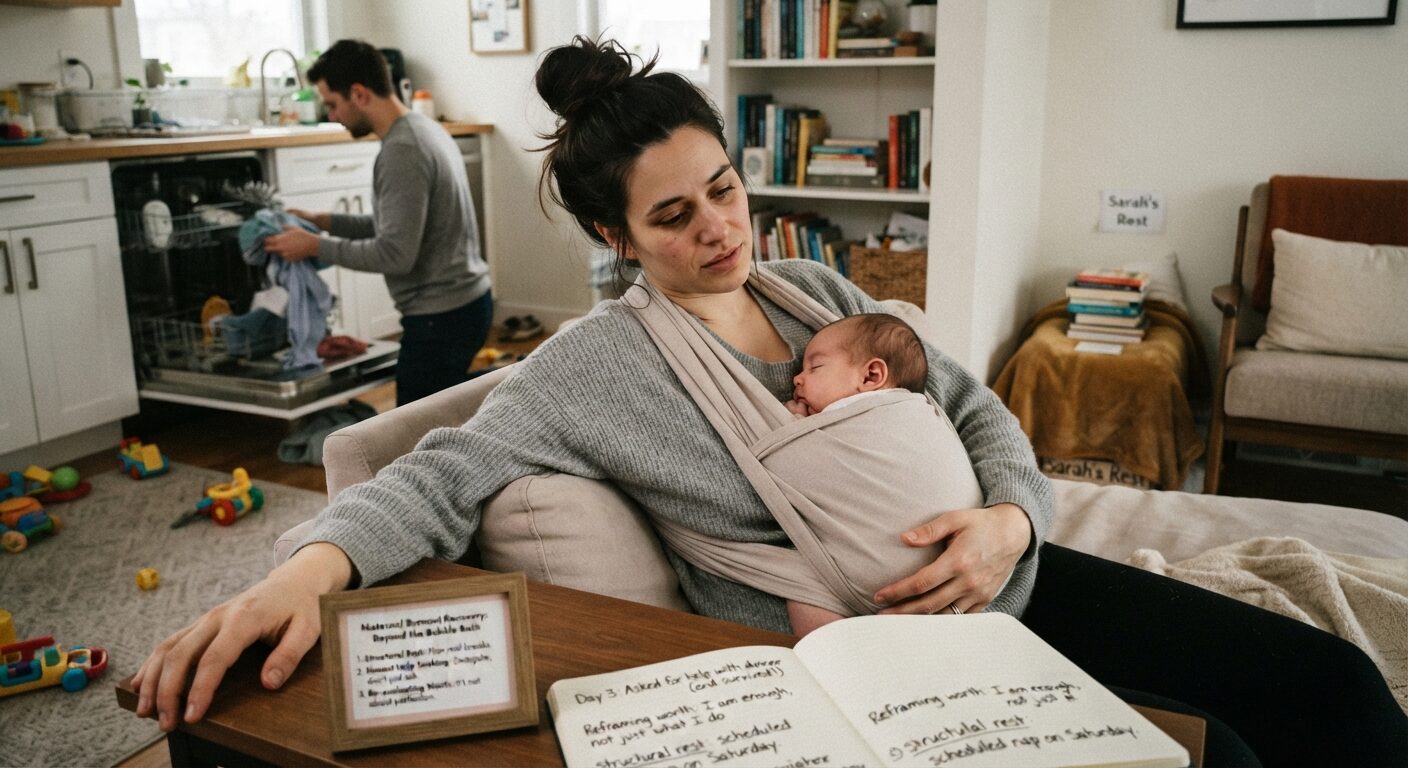
Feeling Overwhelmed? 4 Habits That Prevent Parental Burnout
Parental burnout is a real, clinically recognised condition, and four evidence informed daily habits (protecting sleep, building micro moments of recovery, seeking connection, and setting intentional limits on your mental load) can meaningfully reduce your risk and help you recov

In this article
There is a version of exhaustion that sleep doesn't fix. You've probably felt it: the kind where you wake up tired, move through the day on autopilot, and find yourself staring at your child mid-tantrum with nothing left. No patience, no warmth, no perspective. Just flatness.
That's not a character flaw. That's burnout, and it's more common than most parenting conversations acknowledge.
A 2020 study published in Clinical Psychological Science by researchers Moïra Mikolajczak and Isabelle Roskam estimated that roughly 5% of parents in Western countries meet the full clinical threshold for parental burnout at any given time, with many more hovering just below it. The World Health Organisation classifies burnout as an occupational phenomenon, and parenting (unpaid, round the clock, with no performance reviews or sick days) is among the most demanding roles a person can hold.
This article will help you understand:
1. Understand What Burnout Actually Is (So You Can Catch It Early)
Parental burnout is not the same as being tired at the end of a hard week. It's a chronic stress response with a distinct clinical profile, and catching it early is one of the most useful things you can do for yourself and your children.
Researchers Mikolajczak and Roskam, who have published extensively on this topic through the Parental Burnout Research Lab at UCLouvain in Belgium, describe parental burnout as having four core components: overwhelming exhaustion in the parental role, emotional distancing from your children, loss of the sense of fulfilment and competence you once felt as a parent, and a growing contrast between who you are now and who you were as a parent before.
That last one is the part people often overlook. It's not just that you're tired. It's that you look back at a version of yourself who used to find bath time genuinely fun, who had ideas for weekend adventures, who felt present during bedtime stories, and that person feels completely unreachable right now.
How it's different from depression
Parental burnout and depression share some surface features: withdrawal, fatigue, emotional numbness. But they differ in an important way. In burnout, the exhaustion and distancing are largely role specific. Parents experiencing burnout often report feeling fine, even energised, when they're away from the parenting context. They can enjoy a meal with friends or focus on work. In depression, the flatness tends to be pervasive. This distinction matters for how you recover.
The warning signs worth watching for
The concept of parental risk and protective factors is something I also explore in my broader piece on building emotional resilience in children, because parental mental health and child mental health are deeply intertwined. A parent who is burning out cannot model the regulation and warmth that children need to develop their own emotional skills. This isn't about guilt. It's about understanding that looking after yourself is part of looking after them.
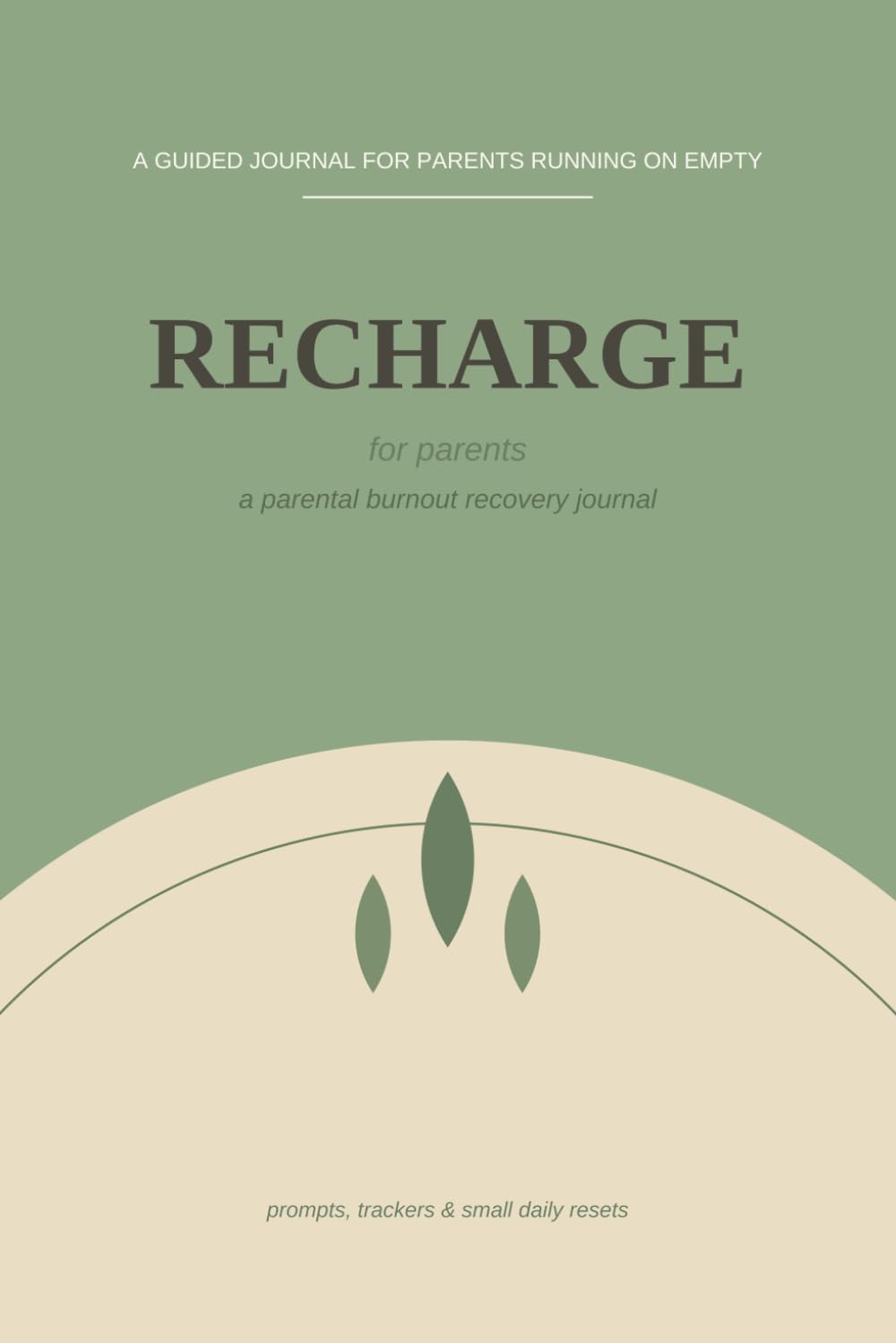
Recharge for Parents: A Parental Burnout Recovery Journal
- Stress Management
- Image Unavailable Image not available forColor:
- Understanding Burnout — a self-assessment and reflection prompts to name what you're actually carrying
2. Habit One: Protect Sleep as a Non-Negotiable Medical Priority
If there's one habit that does more structural work than any other, it's protecting sleep, yours and your children's.
This sounds obvious to the point of being unhelpful. Of course you'd sleep if you could. But the habit isn't just about getting more hours; it's about changing how you frame sleep in relation to everything else you feel you should be doing at night. Most parents I know are not awake because their baby won't sleep. They're awake because once the house is quiet, they finally have time to themselves, and they're not willing to give that up, even when they're running on fumes.
Sleep loss is not just an inconvenience. Chronic insufficient sleep impairs emotional regulation, decision making and stress tolerance at a neurological level.
— American Academy of Sleep Medicine (2021)
The physiology behind why sleep deprivation makes burnout worse
Your brain's prefrontal cortex, the part responsible for patience, problem solving, perspective and empathy, is disproportionately vulnerable to sleep loss. When you're running on five or six hours, you are literally operating with reduced capacity for the exact skills parenting demands most.
At the same time, sleep is when your stress hormone cortisol is regulated and cleared. Parents who consistently sleep fewer than seven hours show elevated baseline cortisol levels, which means they're starting each day already partway into a stress response before anything has even happened.
Practical sleep habits for parents who don't have ideal conditions
Not every parent can achieve unbroken eight hour sleep. Here's what is realistic:
3. Habit Two: Build Micro-Moments of Recovery Into Every Day
The most common myth about preventing burnout is that what you need is a big break, a weekend away, a spa day, a holiday. Those things are lovely, but they don't actually solve chronic stress accumulation. What does? Small, consistent moments of recovery woven through ordinary days.
Researchers in occupational health call this "psychological detachment," the ability to mentally disengage from role demands for short periods. A 2018 meta-analysis in the Journal of Vocational Behavior found that psychological detachment during off-job time was one of the strongest predictors of recovery and next-day energy, even when the detachment periods were brief.
The parenting version of this is finding three to five minute windows where you are genuinely not in parent mode mentally. Not scrolling Instagram while half-listening for trouble. Actually off.
What micro-recovery actually looks like
This is different for everyone, and it matters that you choose something that you personally find genuinely restorative rather than something that "should" be relaxing.
None of these require money, a babysitter, or perfect circumstances. What they require is that you stop treating every spare moment as an opportunity to be productive. Recovery is not the same as doing nothing wrong. It is doing something necessary.

A Break Deserved: A Burnout Recovery Journal for Moms: Gentle Prompts for Rest, Reflection, and Self-Care
- Journal Writing
- Image Unavailable Image not available forColor:
- Daily check-ins to track energy, stress, and emotions
Journaling as a recovery and self-awareness tool
One micro-recovery habit I recommend to parents again and again is reflective journaling, not because it's trendy, but because it does something specific: it helps you name what you're carrying. And naming it means you're processing it rather than just accumulating it.
Journals like Realistic Self-Care for Moms are built around this exact idea: short daily prompts that take five to ten minutes and help you track your own energy and emotional load. If you're a parent who finds blank pages stressful, a structured prompt journal removes the friction. You don't have to know what to write. You just answer the question in front of you.
The Overwhelmed Mom Reset Journal takes this further with a 56-day structure specifically designed for nervous system support and burnout recovery. The 56-day format is deliberate: it's long enough to build genuine awareness patterns without requiring a year-long commitment.
4. Habit Three: Choose Connection Over Isolation, Even When Isolation Feels Safer
Here is something I see in clinic more than almost anything else: burned out parents are almost always isolated ones. Not necessarily lonely in a social sense, they might have plenty of surface level contact, but isolated in a deeper way. Nobody in their life actually knows what things are like at home. Nobody knows the extent of it.
There are good reasons for this. Parenting in our culture carries enormous performance pressure, and admitting that you're not coping feels like a confession of failure. The social pressure of modern parenthood makes genuine vulnerability with other parents feel risky, even when connection is precisely what the nervous system needs.
But social connection is one of the most robust protective factors against burnout across virtually every stress-related literature. The neuroscience is straightforward: co-regulation, the way one calm nervous system helps another one settle, is not something that only works for children and their caregivers. Adults do it too. A conversation with someone who genuinely understands your situation lowers cortisol more reliably than most other interventions.
Social support from other parents was among the strongest predictors of resilience against parental burnout across 17 countries studied.
— Mikolajczak et al., "Parental Burnout and Its Six Correlates," Frontiers in Psychology (2022)
What meaningful connection looks like when you're depleted
When you're burned out, socialising can feel like another demand, another performance. Here's the key: the connection needs to be authentic rather than curated. That means:
It's also worth understanding that parental isolation is not only a maternal issue. Research on paternal wellbeing has grown significantly in recent years, and the reality is that many fathers and non-gestational parents are quietly burning out without any of the cultural language or support structures that make it easier for mothers to seek help. The hidden mental health cost of dad isolation is a real and underexplored part of this conversation, and one that shapes whole families.
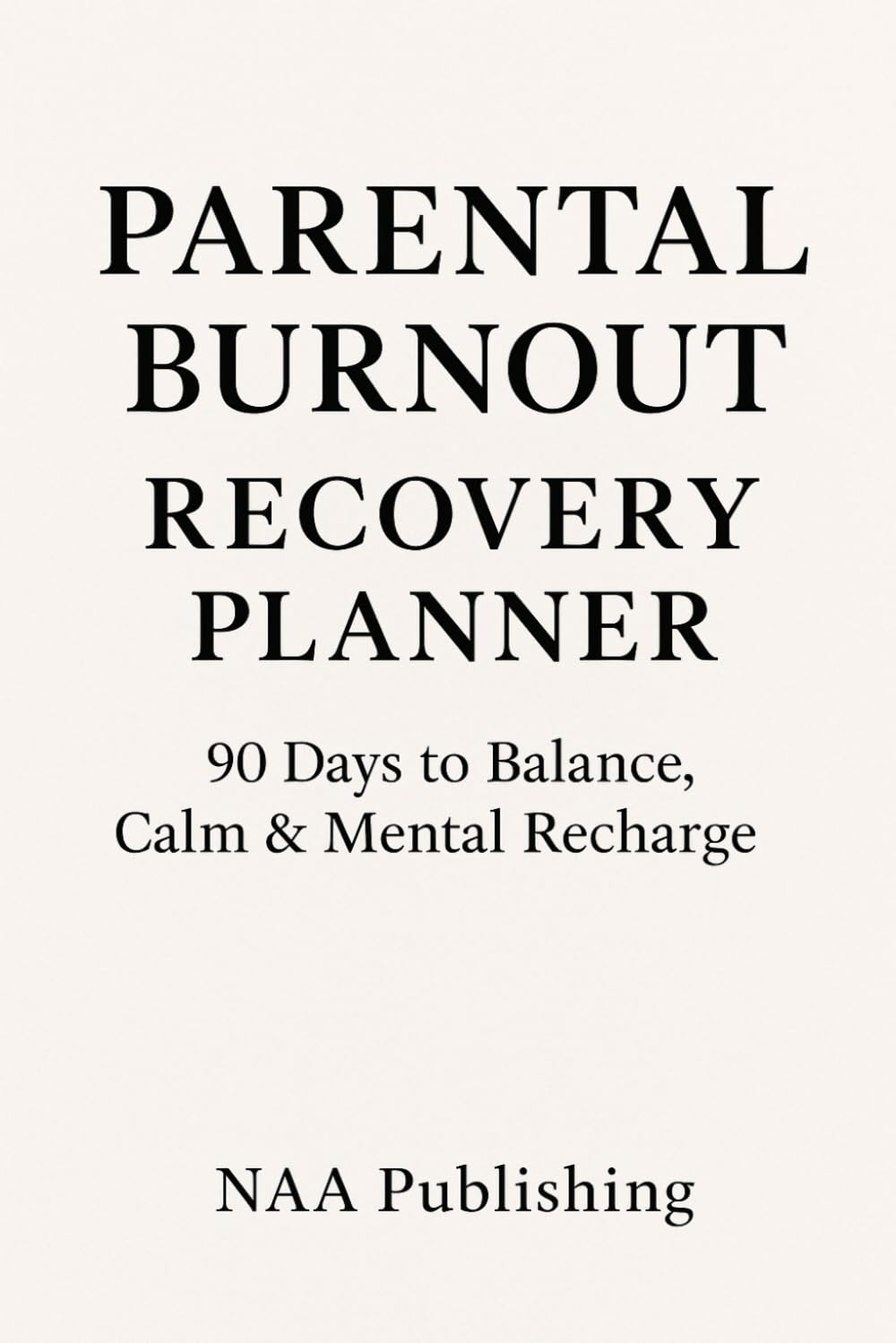
PARENTAL BURNOUT RECOVERY PLANNER: 90 Days to Balance, Calm & Mental Recharge
- Journal Writing
- Image Unavailable Image not available forColor:
- Daily Morning Reset — set simple intentions and choose one small act of self-kindness.
5. Habit Four: Actively Manage Your Mental Load, Not Just Your Task List
You can outsource tasks. You cannot easily outsource the mental load, and the mental load is often what breaks parents.
The mental load is the invisible cognitive and emotional work of running a family: remembering dentist appointments, noticing when the school shoes are too small, anticipating that next week is crazy and planning around it, managing the emotional temperature of the household, tracking everyone's needs simultaneously. Research by Allison Daminger, published in the American Sociological Review in 2019, found that this kind of anticipatory and responsive cognitive labour falls disproportionately on mothers in heterosexual partnerships, though parents of all genders and family structures describe carrying versions of it.
The problem with the mental load isn't that any individual item is hard. It's the relentlessness. There is no moment when the list closes. There is no off switch. And because much of this work is invisible (to partners, to society, often even to the parent carrying it), it doesn't get recognised or redistributed.
Three concrete strategies for reducing your mental load
1. Externalise everything you can. The brain was not designed to hold open loops indefinitely. A shared family calendar, a household task list, a running notes document: these are not laziness or unnecessary complexity. They are cognitive offloading tools that free up mental RAM for things that actually require your attention.
2. Have the explicit conversation. Research consistently shows that mental load imbalance persists largely because it's invisible. Having a direct, calm conversation with your partner or co-parent about who is actually tracking what (not just doing tasks, but thinking, anticipating, and planning) is the starting point for redistribution. This is a relationship conversation, not a blame conversation.
3. Accept that some things don't need to be done to your standard. Perfectionism and mental load are deeply linked. If you are the only person who can do something correctly, then you will always carry it. Lowering the bar on selected tasks, and genuinely letting go of the standard rather than hovering and redoing, reduces load in a real way.


BestSelf Overcoming Burnout Journal – 4-Week Self-Care & Recovery Workbook | Tackle burnout at the root — gratitude, mindfulness & daily reflection prompts for men & women. Smudge-proof paper.
- SELF-CARE WORKBOOK: The BestSelf Co. guided self-care journal is a comprehensive notebook designed for mental
- STRESS RELIEF JOURNAL: Organize your life and tackle anxiety with this templated notebook. This anxiety journa
- GRATITUDE JOURNAL: Prioritize self-care and gratitude with this guided journal. The growth guided journal allo
The BestSelf Overcoming Burnout Journal is one I particularly like for this habit because it doesn't just focus on emotional recovery; it structures daily reflection around where your energy is going and what's worth keeping. That practical lens on resource management fits the mental load conversation well.
6. When to Seek Professional Help Instead of (or as Well as) Habits
Habits are powerful, but they are not always sufficient, and one of the most important things I can tell you as a paediatrician is that knowing when to escalate to professional support is a skill, not a sign of failure.
If you've been attempting the habits above and still find yourself not improving, or if your symptoms are severe, it's time to involve a professional. Specifically:
None of these things make you a bad parent. They make you a parent whose nervous system is overwhelmed beyond what habit change alone can address.
What professional support looks like
Your first stop can be your GP, family physician, or paediatrician. Yes, your child's paediatrician. We ask about parental wellbeing routinely because we know that the parent's mental health is as important to the child's development as anything else we monitor. You won't be judged. You'll be helped.
Options include:
The mental health story behind parenting difficulty is often more layered than exhaustion alone, and professional support can help you untangle what's burnout, what's grief, what's unresolved anxiety, and what's a relationship issue wearing the costume of a parenting problem.

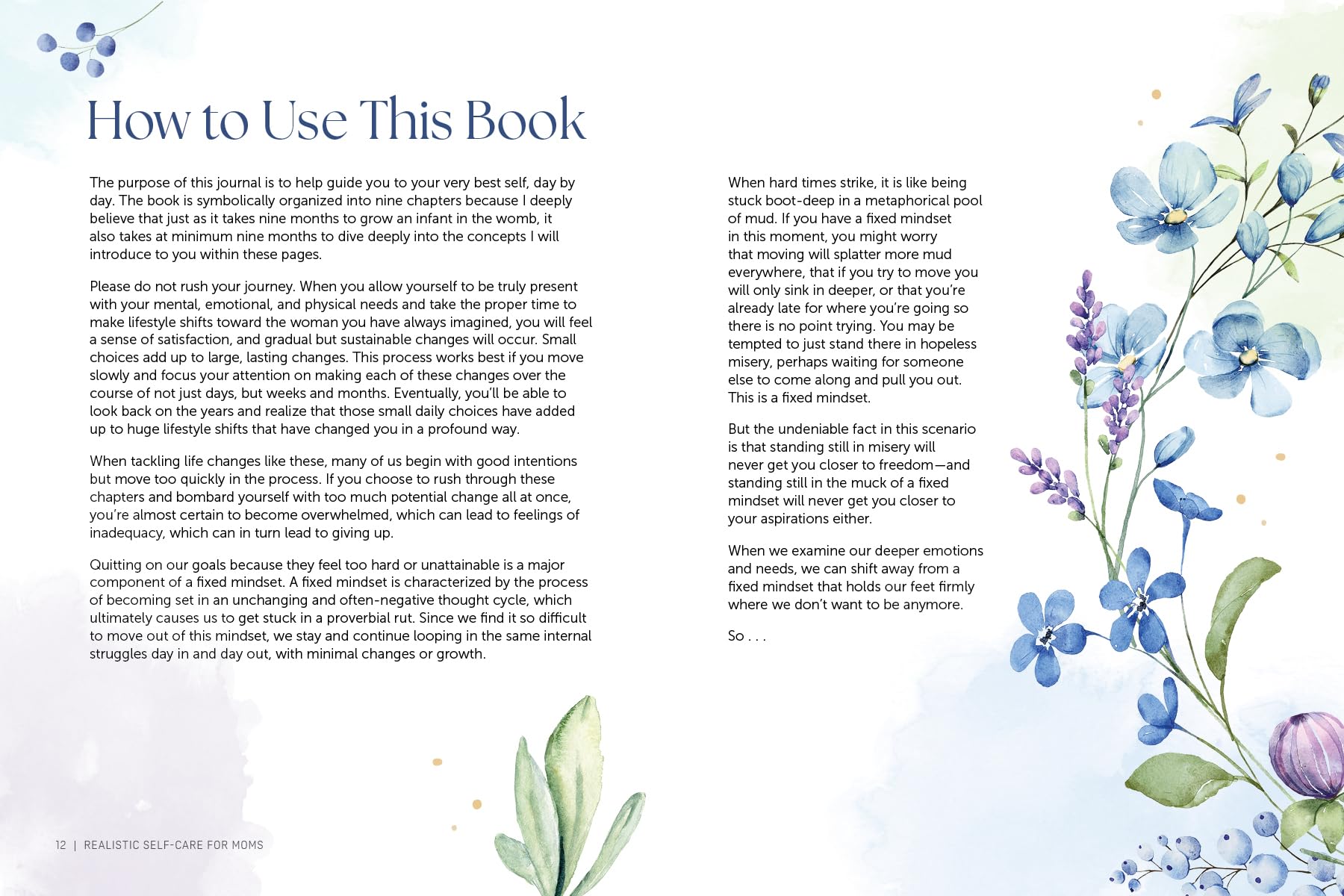
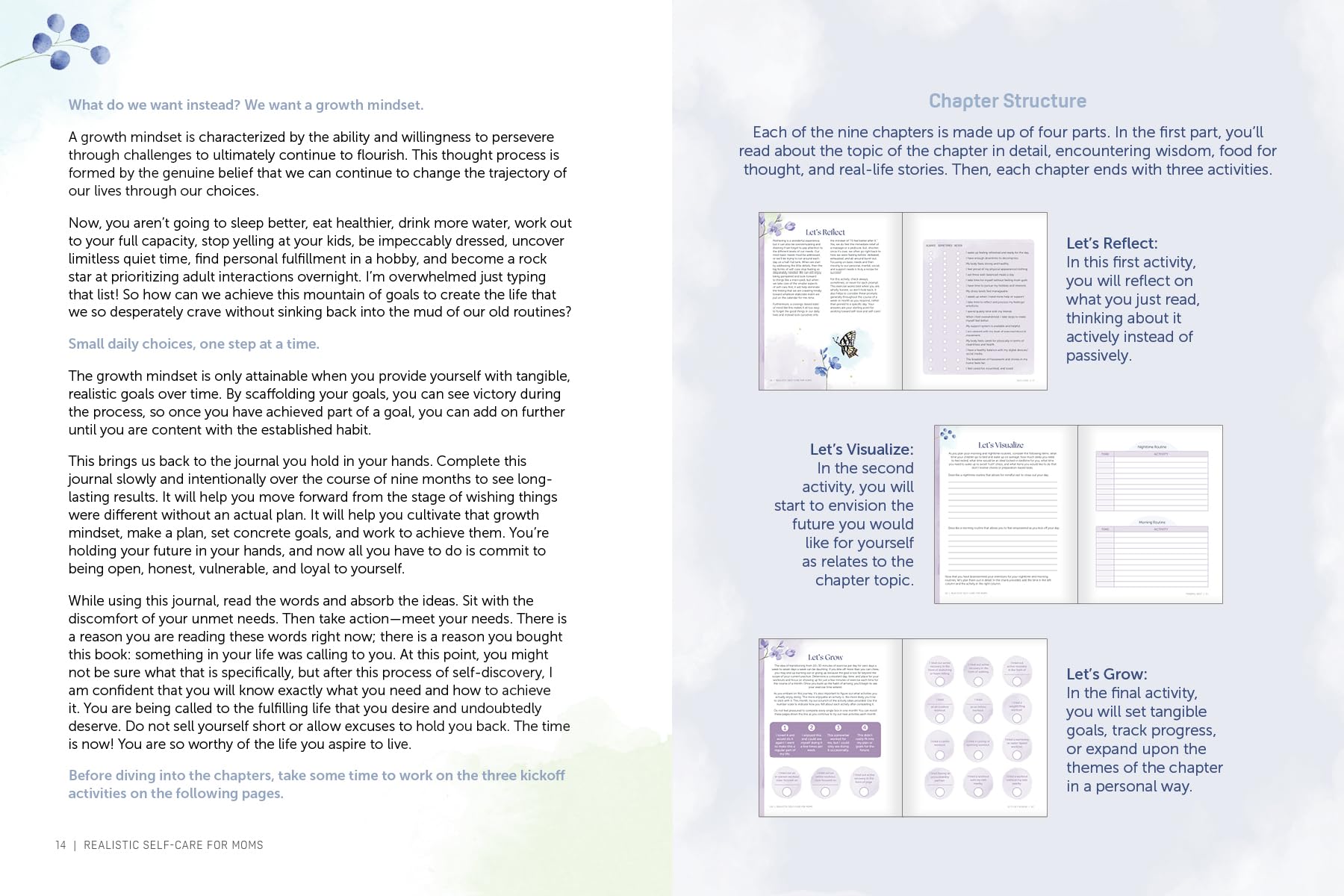
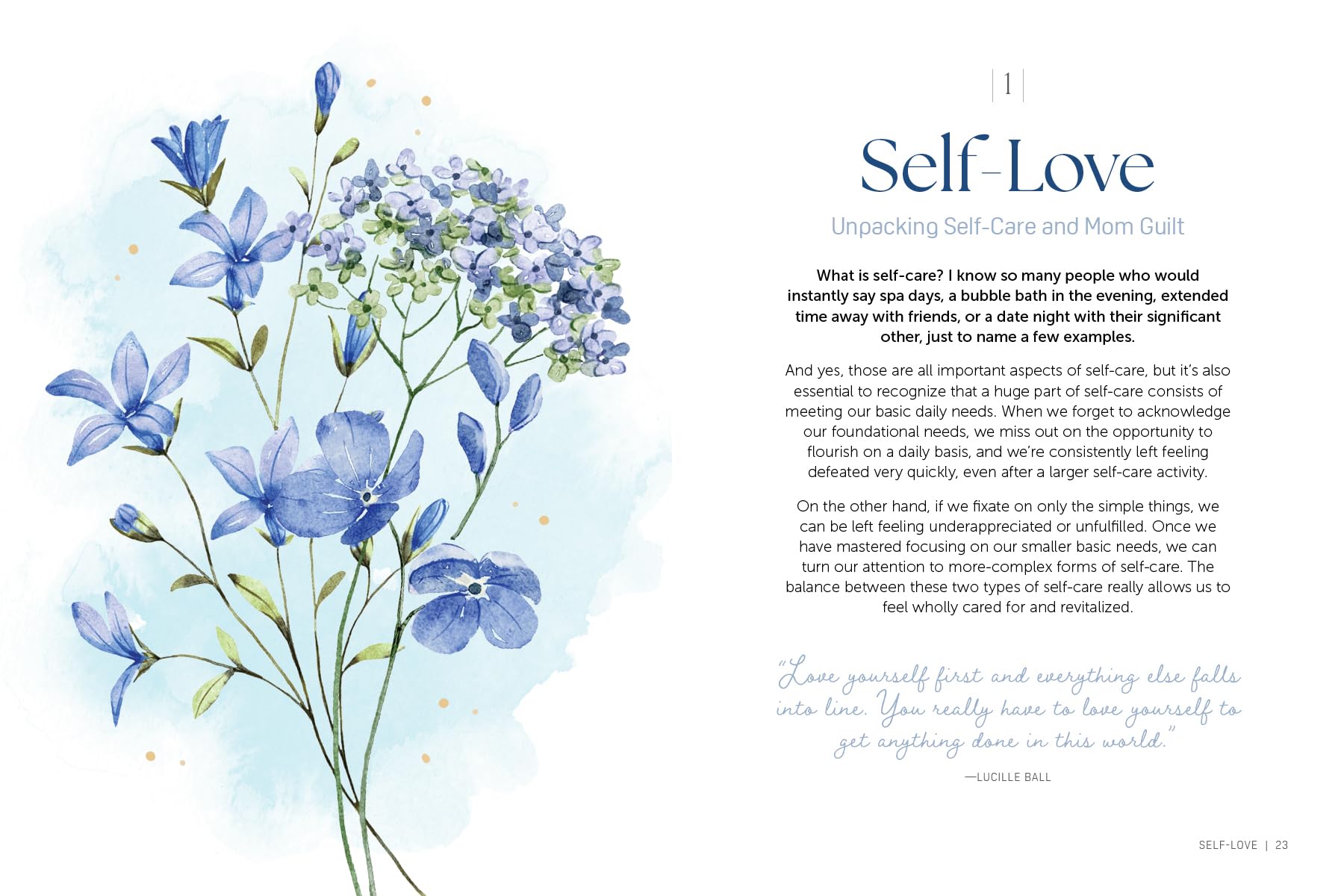
Realistic Self-Care for Moms: A Guided Journal for Taking Care of You While Taking Care of Them
- Parenting & Relationships
- Family Relationships
- Motherhood
| Burnout Stage | Key Signs | Primary Habit Focus | Self-Guided Tool | Professional Support Needed? |
|---|---|---|---|---|
| Early (mild depletion) | Irritability, less patience, low energy after rest | Sleep protection + micro-recovery | Recharge for Parents Journal | Optional but useful |
| Moderate (persistent exhaustion) | Emotional distancing, dreading parenting tasks, guilt cycle | Connection + mental load reduction | Parental Burnout Recovery Planner | Recommended |
| Significant (role detachment) | Feeling like a stranger to your children, numbness | All four habits simultaneously | Overwhelmed Mom Reset Journal | Yes, alongside habits |
| Recovery phase | Improving but fragile; fear of relapse | Consolidation + journaling | BestSelf Overcoming Burnout Journal | Maintain existing support |
| Prevention (proactive) | No current burnout; want to build resilience | Micro-recovery + connection | Burnout Recovery Journal for Moms | No (but monitoring is wise) |
Expert Insights on Parental Burnout
Conclusion
Parental burnout doesn't arrive all at once. It builds slowly, day by day, in the gap between what you're giving and what you're receiving. By the time most parents recognise it, they've been living in that gap for a long time.
The four habits in this article (protecting sleep, building in real recovery, choosing honest connection, and actively managing your mental load) won't fix everything overnight. But they do something important: they shift you from passive accumulation of stress to active maintenance of yourself. That shift matters more than any single intervention.
The most important thing I can offer you, as a clinician and a parent, is this: the fact that you're reading this and asking these questions means you still care. You haven't stopped. Burnout is not the end of the story. Recovery is possible, and it usually begins with one small honest step.
Save this article. Share it with a parent friend who needs it. And if today's the day you recognise yourself in these pages, let that be enough of a reason to start.
Sources & References
- Mikolajczak, M. & Roskam, I. "A Theoretical and Clinical Framework for Parental Burnout." Frontiers in Psychology, 2018. https://doi.org/10.3389/fpsyg.2018.00853
- Mikolajczak, M. et al. "Parental Burnout and Its Six Correlates: A Multi-Country Study." Frontiers in Psychology, 2022. https://doi.org/10.3389/fpsyg.2022.1010931
- Roskam, I., Raes, M-E., & Mikolajczak, M. "Exhausted Parents: Development and Preliminary Validation of the Parental Burnout Inventory." Frontiers in Psychology, 2017.
- Daminger, A. "The Cognitive Dimension of Household Labor." American Sociological Review, 2019. https://doi.org/10.1177/0003122419859007
- American Academy of Sleep Medicine. "Inadequate Sleep is a Public Health Problem." 2021. https://aasm.org
- World Health Organisation. "Burn-out an 'Occupational Phenomenon': International Classification of Diseases." ICD-11, 2019. https://www.who.int/news/item/28-05-2019
- Sonnentag, S. & Fritz, C. "Recovery from Job Stress: The Stressor-Detachment Model as an Integrative Framework." Journal of Organizational Behavior, 2015. https://doi.org/10.1002/job.1924
- Cropley, M. & Zijlstra, F.R.H. "Work and Rumination." Handbook of Work and Health Psychology, 2011.
- Pruett, K.D. Me, Myself, and I: How Children Build Their Sense of Self. Goddard Press, 2003.
- UCLouvain Parental Burnout Research Lab. https://psy.uclouvain.be/parental-burnout
- Centers for Disease Control and Prevention. "Mental Health: Parent Information." https://www.cdc.gov/children-mental-health
Frequently Asked Questions
What is the difference between parental burnout and normal parenting tiredness?
Can dads get parental burnout, or is it mainly a maternal issue?
How long does it take to recover from parental burnout?
Are journaling prompts actually useful for burnout, or is it just trendy?
I feel guilty for even considering that I might be burned out. What do I do with that?
Can unstructured play help burned out parents, or is that more about the child?
What should I say to my partner if I think I'm burning out?
Was this helpful?
Thanks — your feedback helps us pick what to write next.