Garden in a Box: Helping Pregnant Women Grow Nutritious Food
Garden in a Box initiatives give pregnant women hands-on access to fresh produce by supplying everything needed to grow vegetables at home, directly improving maternal nutrition and building lasting food self reliance.

In this article
Why This Matters More Than Most Pregnancy Advice You'll Read
Here is a number that should stop you mid-scroll: nearly 20 percent of pregnant women in the United States experience food insecurity at some point during their pregnancy, according to the USDA Economic Research Service. That is not a poverty statistic from a distant country. That is one in five pregnant women in one of the wealthiest nations on earth, going to bed uncertain whether they will eat well tomorrow. And what a mother eats during pregnancy does not just affect her. It shapes the architecture of her baby's brain, the strength of her baby's immune system, and the trajectory of her baby's entire early life.
Garden in a Box programs are a deceptively simple response to this enormous problem. Instead of a pamphlet about eating more vegetables, or a voucher that requires transport, budget management, and a functioning grocery store nearby, these initiatives hand a pregnant woman everything she needs to grow food herself. A box. A bed. Seeds. Soil. Instructions. And suddenly she is not dependent on a supply chain. She is the supply chain.
In this article, you will understand:
1. What Garden in a Box Programs Actually Do (and Why They Work)
Garden in a Box programs close the gap between knowing you should eat well during pregnancy and actually being able to do it, by putting the means of food production directly into a pregnant woman's hands.
The model is straightforward. A participating pregnant woman receives a kit containing some combination of a raised garden bed, potting mix or soil amendments, seeds or seedlings for nutritious vegetables and herbs, and guidance on getting started. Some programs add educational sessions, mentoring from a community garden coordinator, or ongoing seed packets through successive growing seasons. The goal is not a one-season experiment. It is the beginning of a durable food growing habit that outlasts the pregnancy and feeds a family for years.
Where These Programs Are Operating
Several distinct organisations and community health networks have built Garden in a Box style initiatives. In the United States, community health centres, WIC programs, and urban agriculture nonprofits have all piloted versions of this model. In South Africa and parts of sub-Saharan Africa, maternal nutrition programs have used kitchen garden kits as a frontline nutrition intervention. The underlying logic is the same everywhere: growing spinach, tomatoes, beans, and leafy greens in a raised bed is genuinely achievable by a first-time gardener with modest space, and the nutritional payoff is significant.


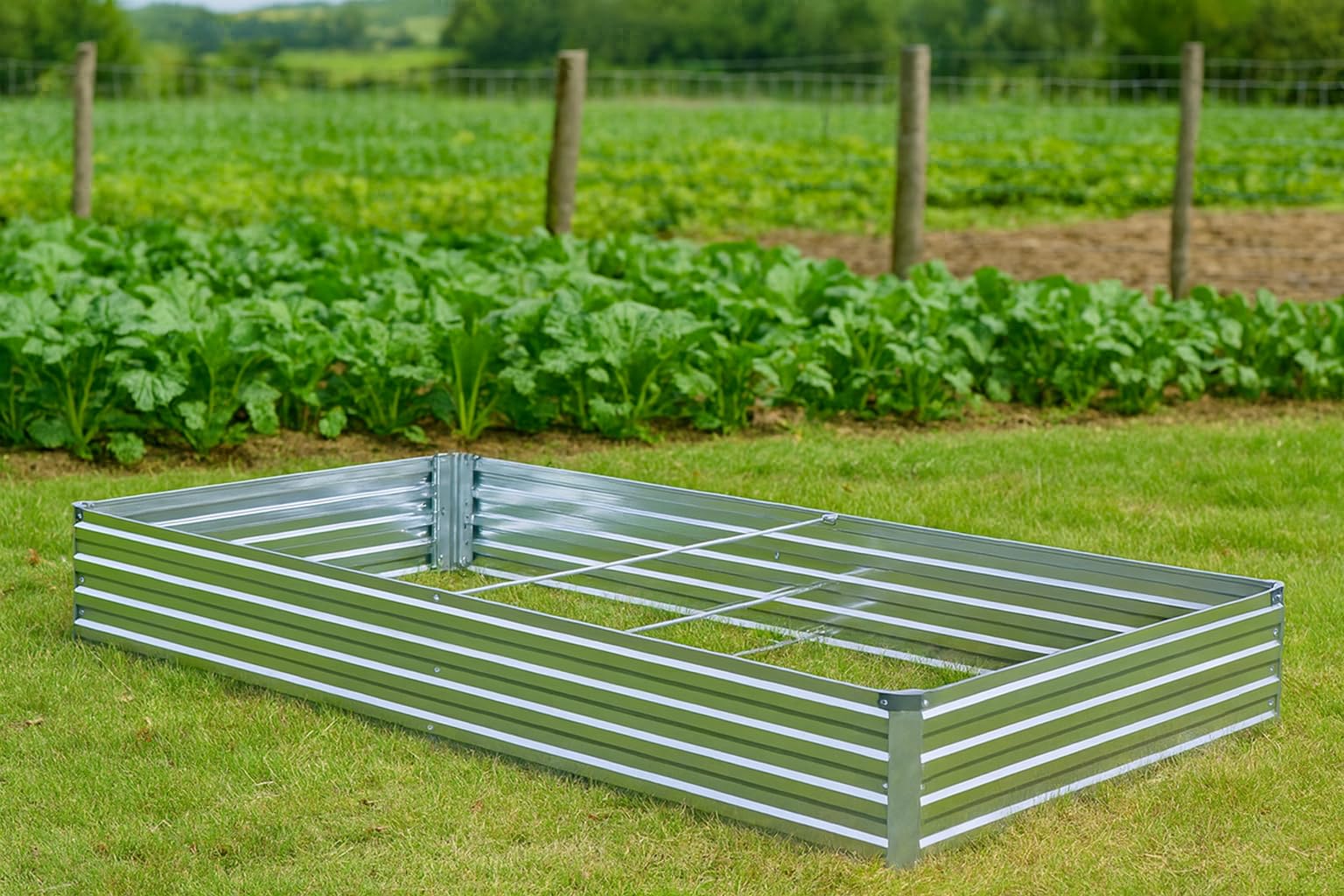

Meberam 2 Pack 6x3x1FT Galvanized Raised Garden Beds Kit Outdoor Metal Gardening Planter Box for Vegetable Elevated Flower Herbs,Silver
- Size: Accessories for 2 complete garden beds in one box!!! 72"(L) x 36"(W) x 12"(H), growing area of this gard
- Sturdy Construction: our galvanized raised garden bed is made from thick galvanized steel for superior strengt
- Natural Drainage: the open-bottom design allows for natural water drainage, promoting healthy planted soil con
What Makes It Different From Nutrition Education
Nutrition counselling during pregnancy is valuable. But research consistently shows that knowledge alone does not change what people eat. A 2020 review published in the journal Nutrients found that community gardening interventions produced significantly greater increases in fruit and vegetable consumption than education-only interventions. When a pregnant woman has a functioning raised bed and seeds in hand, she eats what she grows. The barrier between intention and action collapses.
2. The Nutritional Stakes: What a Baby Actually Needs From Its Mother's Diet
Pregnancy nutrition is not about eating for two adults. It is about supplying a rapidly developing human being with the raw materials for the most complex biological construction project that exists. Getting this right matters more than almost any other pregnancy decision you will make.
Adequate nutrition during pregnancy is critical not only for maternal health but for optimal fetal development and the long term health of the child.
— World Health Organization, Nutrition for Health and Development (2021)
The nutrients most often deficient in pregnant women who experience food insecurity include folate, iron, zinc, vitamin A, vitamin C, and calcium. Most of these are found in abundance in the vegetables that grow readily in a backyard raised bed. Dark leafy greens like spinach, silverbeet, and kale are rich in folate and iron. Tomatoes and capsicum are dense with vitamin C. Legumes grown in the garden supply zinc and plant protein.
The Fetal Programming Connection
When a baby does not receive adequate nutrients in utero, the body prioritises survival over development. This process, sometimes called fetal programming or the developmental origins of health and disease (DOHaD), means that nutritional shortfalls during pregnancy can have consequences that show up not just at birth, but in childhood health, school performance, and even adult chronic disease risk. The research here is sobering.
Low folate is linked to neural tube defects. Iron deficiency during the second trimester is associated with cognitive delays that persist into the school years, as documented by a 2017 review in the journal Nutrients. Zinc deficiency impairs immune development. These are not theoretical risks. They are real outcomes that play out in paediatric clinics every day.
Why Fresh Trumps Processed for Pregnancy
Processed and ultra-processed foods dominate low-income food environments. They are calorie-dense and nutrient-poor. A pregnant woman eating primarily from these sources may gain appropriate weight while remaining profoundly deficient in the micronutrients her baby needs. A garden does not solve all of this, but it inserts genuine nutritional density into a diet that may otherwise lack it. Even a modest 4 by 2 foot raised bed planted with spinach and cherry tomatoes will produce meaningful quantities of folate, iron, and vitamin C across a growing season.
Understanding what your body is already manufacturing to support your baby, and what it still needs from external food sources, is foundational. Learning about third trimester nutrition and colostrum can help you understand exactly why what you eat in these final months matters so much for both of you.
3. The Mental Health Dimension Nobody Talks About Enough
Gardening during pregnancy is not just about eating better. It is about feeling better, and the science on this is genuinely striking.
Perinatal anxiety and depression affect approximately one in five pregnant women globally, according to the WHO. These are not minor inconveniences. Untreated perinatal mental health conditions are associated with preterm birth, low birth weight, impaired maternal-infant attachment, and cascading effects on child development. Yet access to mental health support for pregnant women remains wildly inadequate, particularly in low-income communities.
What the Research Says About Green Spaces and Pregnancy
A 2019 study published in Environment International, which tracked more than 80,000 pregnancies across Spain, found that women with greater access to green spaces during pregnancy had lower rates of anxiety and a reduced risk of delivering small for gestational age babies. The researchers proposed multiple mechanisms: reduced exposure to urban heat and air pollution, increased physical activity, and direct psychological restoration from contact with living plants.
A garden bed in a backyard, balcony, or community space ticks several of these boxes simultaneously.
The Cortisol Connection
Elevated cortisol (the primary stress hormone) during pregnancy has been linked to preterm birth and to altered stress response development in the baby. Contact with soil itself has been studied as a cortisol modulator. Research from the University of Bristol found that a common soil bacterium, Mycobacterium vaccae, when inhaled or absorbed through skin contact, may stimulate serotonin production. Gardeners are, quite literally, getting a mood-regulating benefit just from handling soil.
This does not mean abandoning standard antenatal care or replacing mental health treatment with weeding. It means that for pregnant women who have access to a garden, there may be genuine physiological benefits to spending time in it.
4. Setting Up Your Own Garden in a Box at Home
You do not need to wait for a formal program to bring one of these setups to your door. A raised bed garden that can meaningfully contribute to your pregnancy nutrition is achievable for under $100, fits in a space smaller than a parking space, and can be assembled in under an hour.
Here is exactly how to get it done.
Choosing Your Raised Bed
The single most important first decision is the bed itself. Ground-level planting works, but raised beds offer specific advantages for pregnant women: better drainage, fewer weeds, no bending to ground level (increasingly important in later pregnancy), and much faster soil warming in spring.
Galvanised steel beds have become the most popular home gardening option for good reasons. They do not rot, they resist pests, they warm up quickly in spring, and they look tidy in a small space. For a pregnant woman starting out, a bed between 4 and 6 feet long and 2 to 3 feet wide is the practical sweet spot. Wide enough to grow a meaningful quantity of food; narrow enough to reach across from one side without straining.
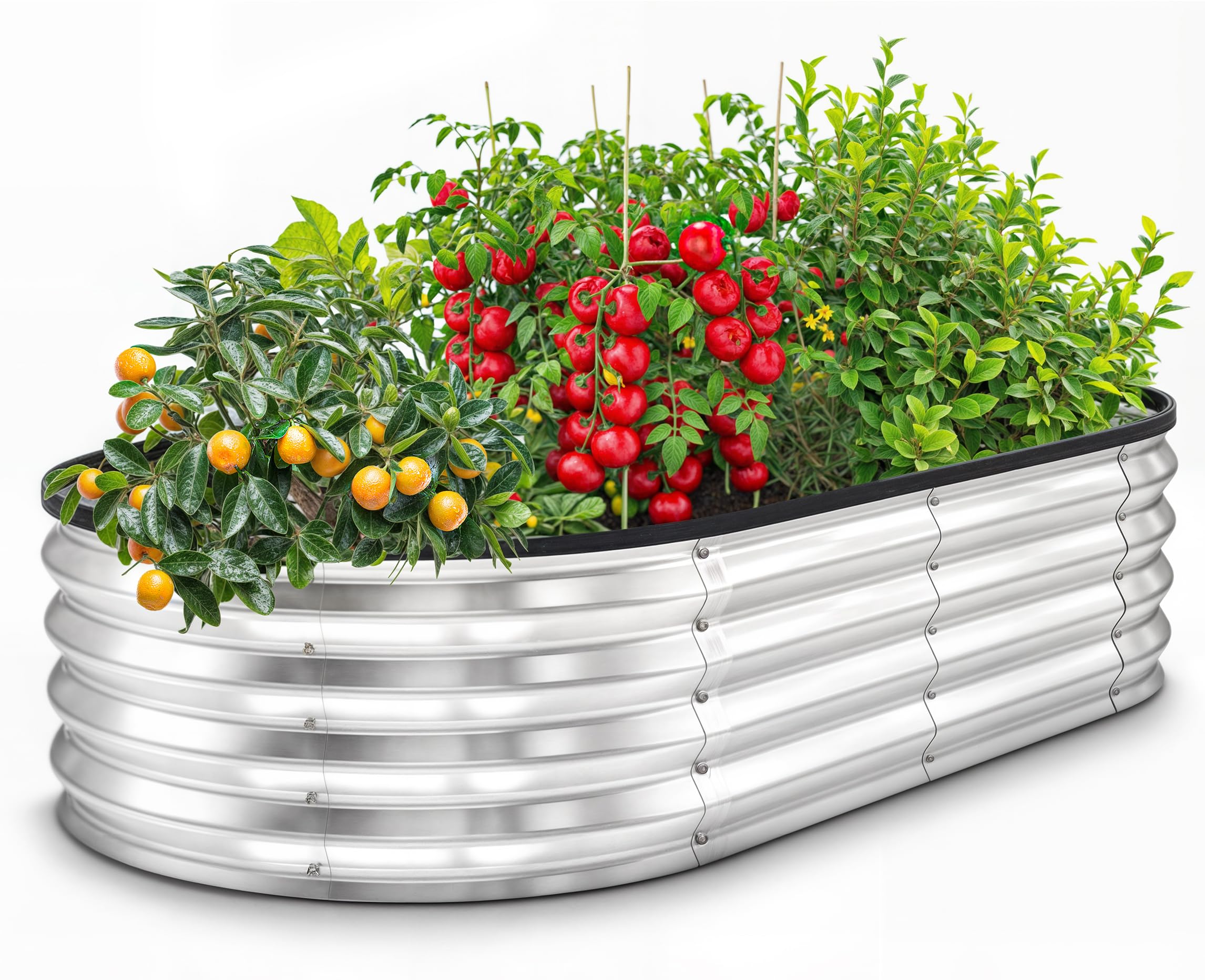
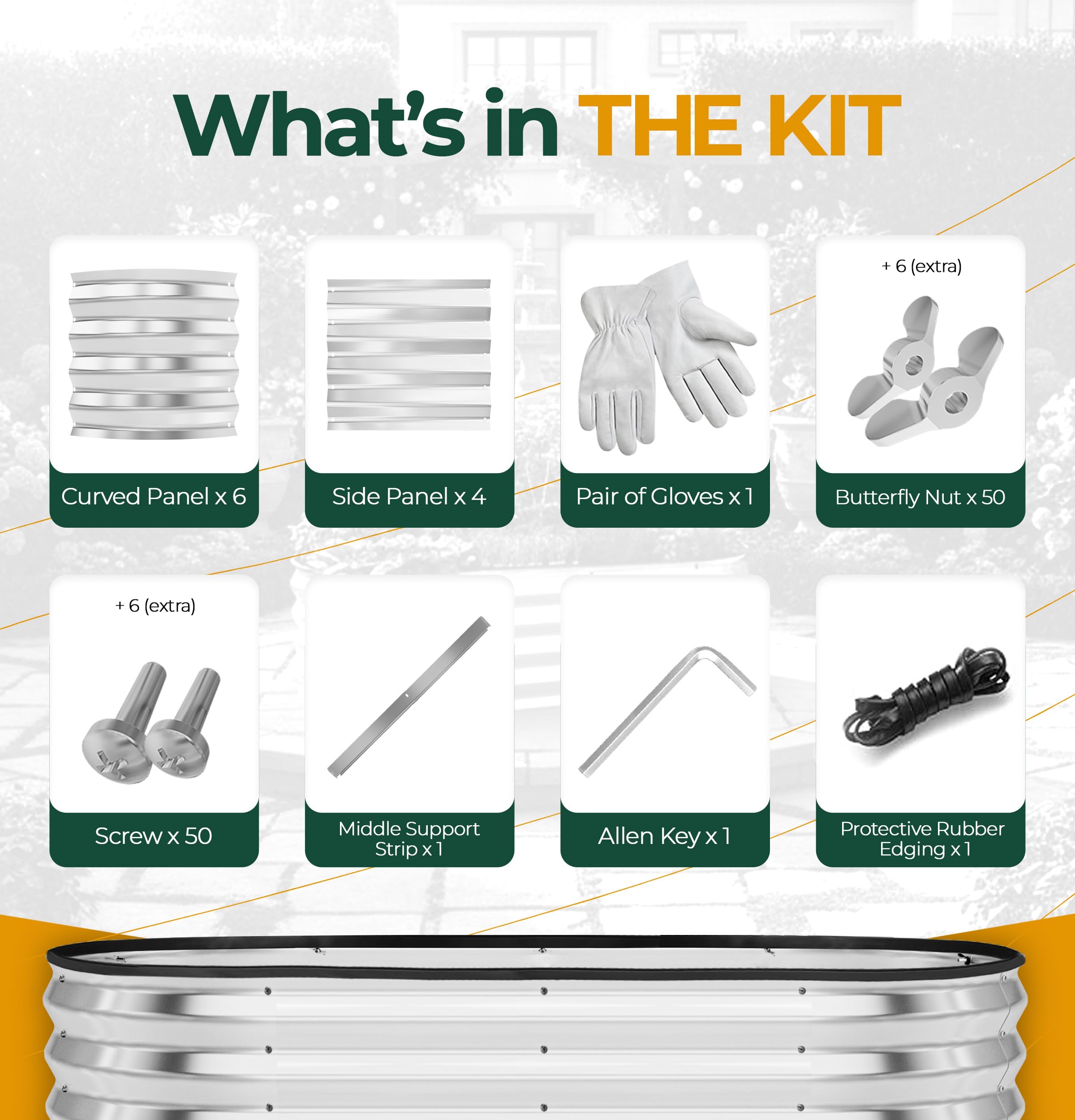


Utopia Home Galvanized Raised Garden Bed Kit 4x2x1ft, Planter Box Raised Garden Beds Outdoor, Easy Assembly Metal Raised Bed for Gardening Vegetables, Fruits, Flowers - Pack of 01 - Silver
- Raised Garden Bed - Add a new level of convenience to your gardening experience with the Galvanized Raised Gar
- Open Base Design - The open base design of the garden box let the plants' roots increase freely into the soil,
- Lightweight Galvanized Steel- The outdoor raised garden beds are made from lightweight galvanized steel, ensur
The Utopia Home raised garden bed is a sensible starting point if you have limited space. At 4 by 2 feet with an open base design, it gives roots genuine room to develop and drains naturally without waterlogging. The Land Guard oval raised bed is another compact option worth considering, and at under $25 it is the most accessible entry point in this category.
Filling the Bed
Once you have your bed, the filling matters as much as the container. A simple, reliable mix for vegetable growing is one-third quality compost, one-third potting mix, and one-third topsoil. This gives you structure, nutrition, and drainage in a single fill. If you are buying commercial soil blends, look for ones specifically marketed for vegetables; they tend to have higher organic matter content than general purpose mixes.
What to Plant First
For a pregnant woman starting a garden specifically to improve her nutritional intake, these are the highest-value starting crops:
5. Self-Reliance, Food Security, and What Happens After the Baby Arrives
One of the most compelling aspects of a garden-based food intervention is that it does not stop working when the program ends. A raised bed in a backyard or on a patio is still producing food when the baby is six months old, twelve months old, and starting solids. The skills a pregnant woman develops tending her garden do not expire with her due date.
Community gardening programs are among the most cost-effective nutrition interventions available, particularly for populations experiencing food insecurity.
— Food and Agriculture Organization of the United Nations (2022)
Building Skills That Outlast the Program
There is a real difference between receiving food (which helps immediately but creates no new capacity) and learning to grow food (which creates capacity that compounds over time). Participants in sustained garden programs report not just improved nutrition but improved confidence, better problem solving around household food planning, and a greater sense of control over their family's health. These are the outcomes that break intergenerational cycles.
For families thinking about those very first months with a newborn, and the practical realities of keeping good nutrition going when you are exhausted and recovering, it is worth understanding what your newborn actually needs during that initial period. Knowing what your newborn needs right now can help you focus energy wisely when every hour counts.
The Toddler and Child Feeding Dividend
A garden planted during pregnancy becomes a genuinely powerful tool for feeding a child once that child starts eating solid food. Research from multiple randomised controlled trials has found that children who grow vegetables are significantly more willing to eat them. The sensory engagement of touching, smelling, and harvesting a vegetable dissolves the food neophobia (fear of new foods) that makes feeding toddlers such a common source of stress.
By the time your garden-born child is 18 months old and grabbing cherry tomatoes off the vine, you will have built an environment that makes expanding their palate almost effortless.
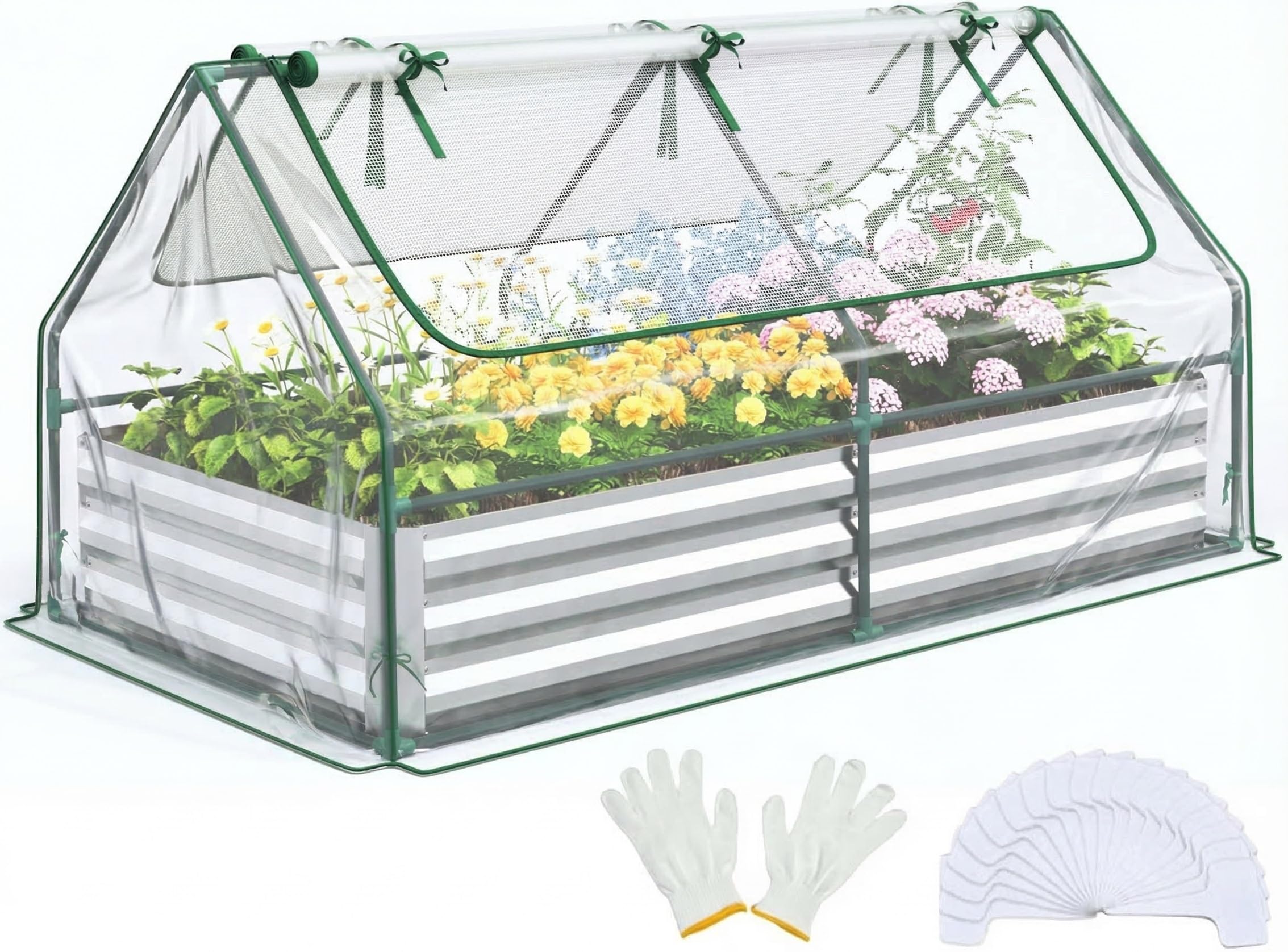
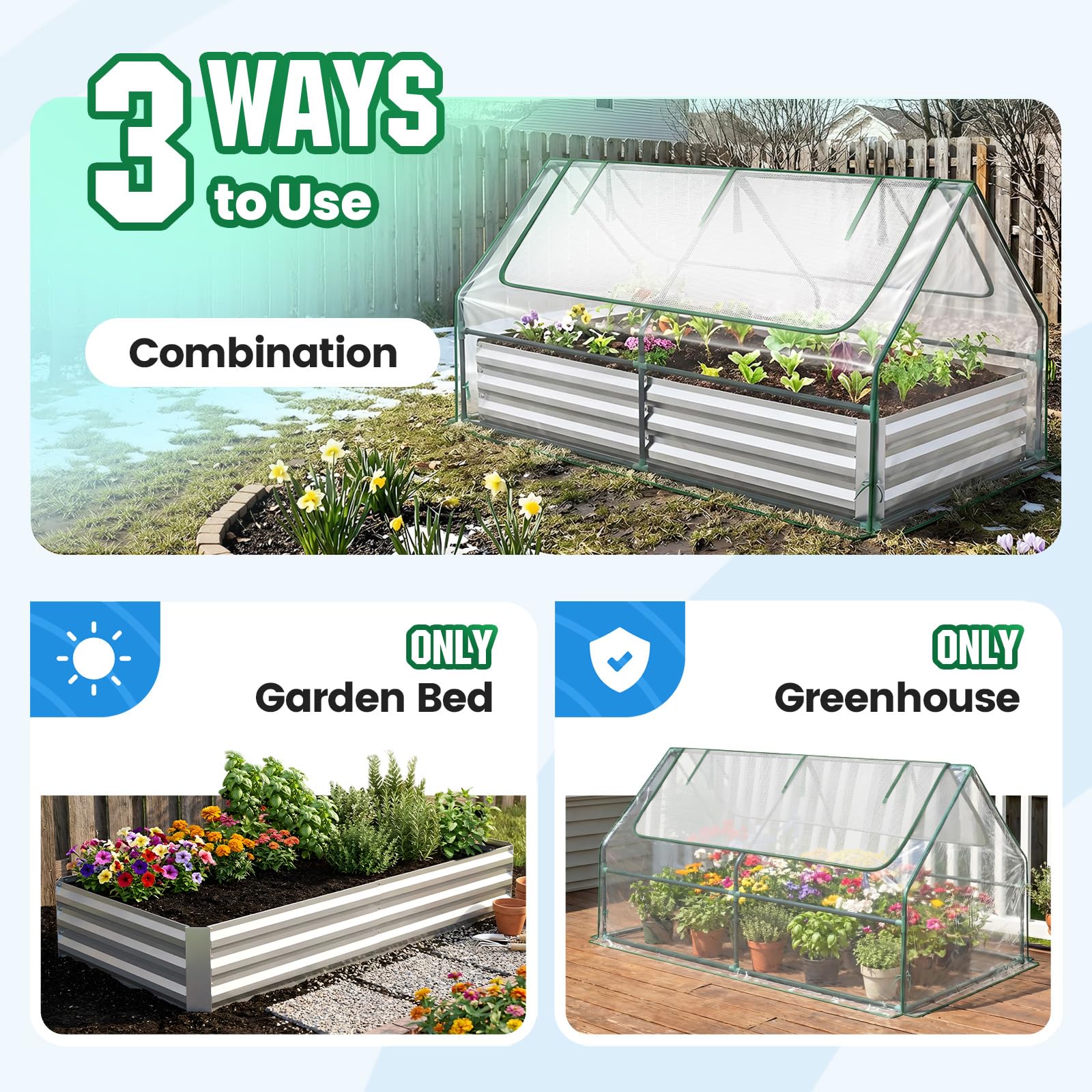
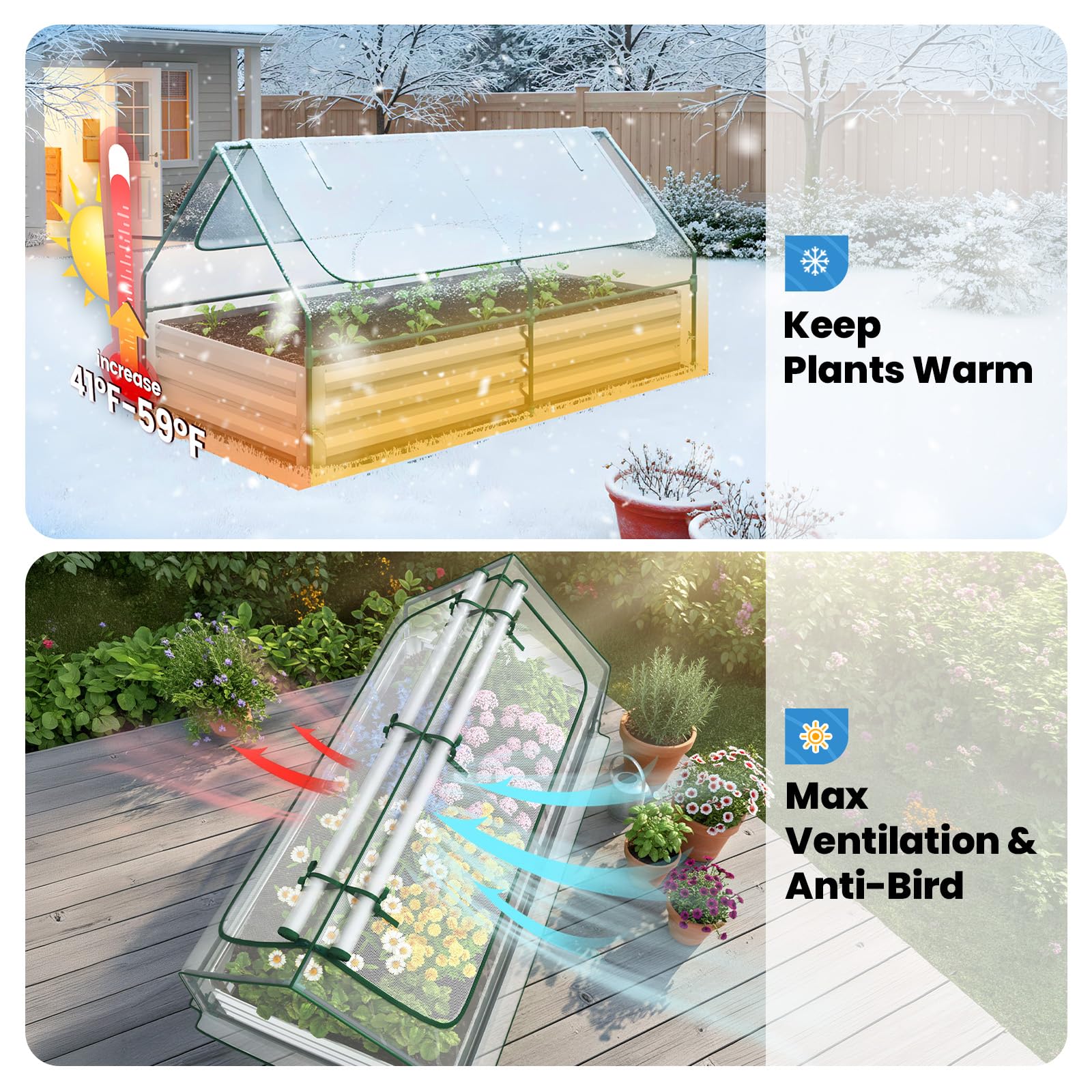
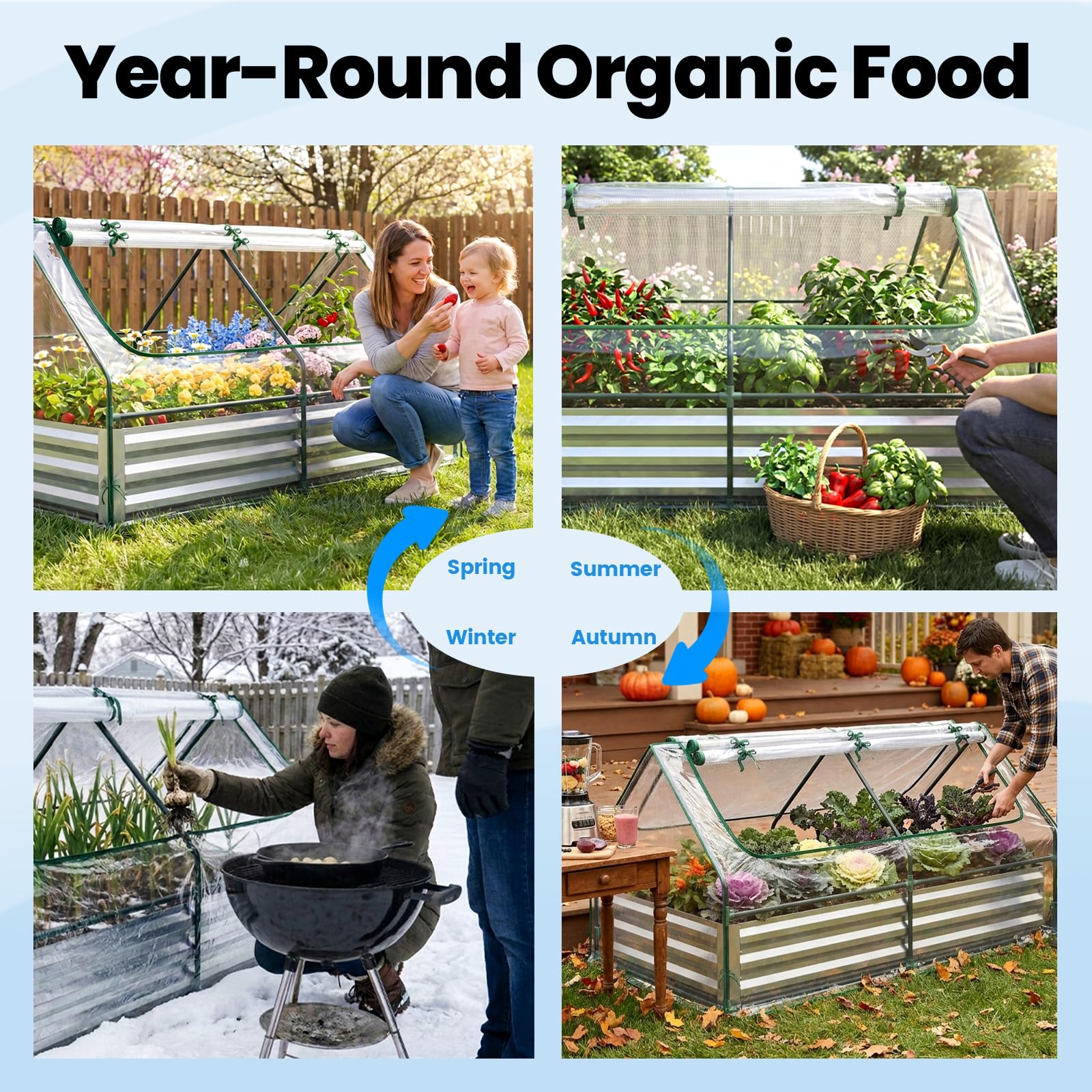
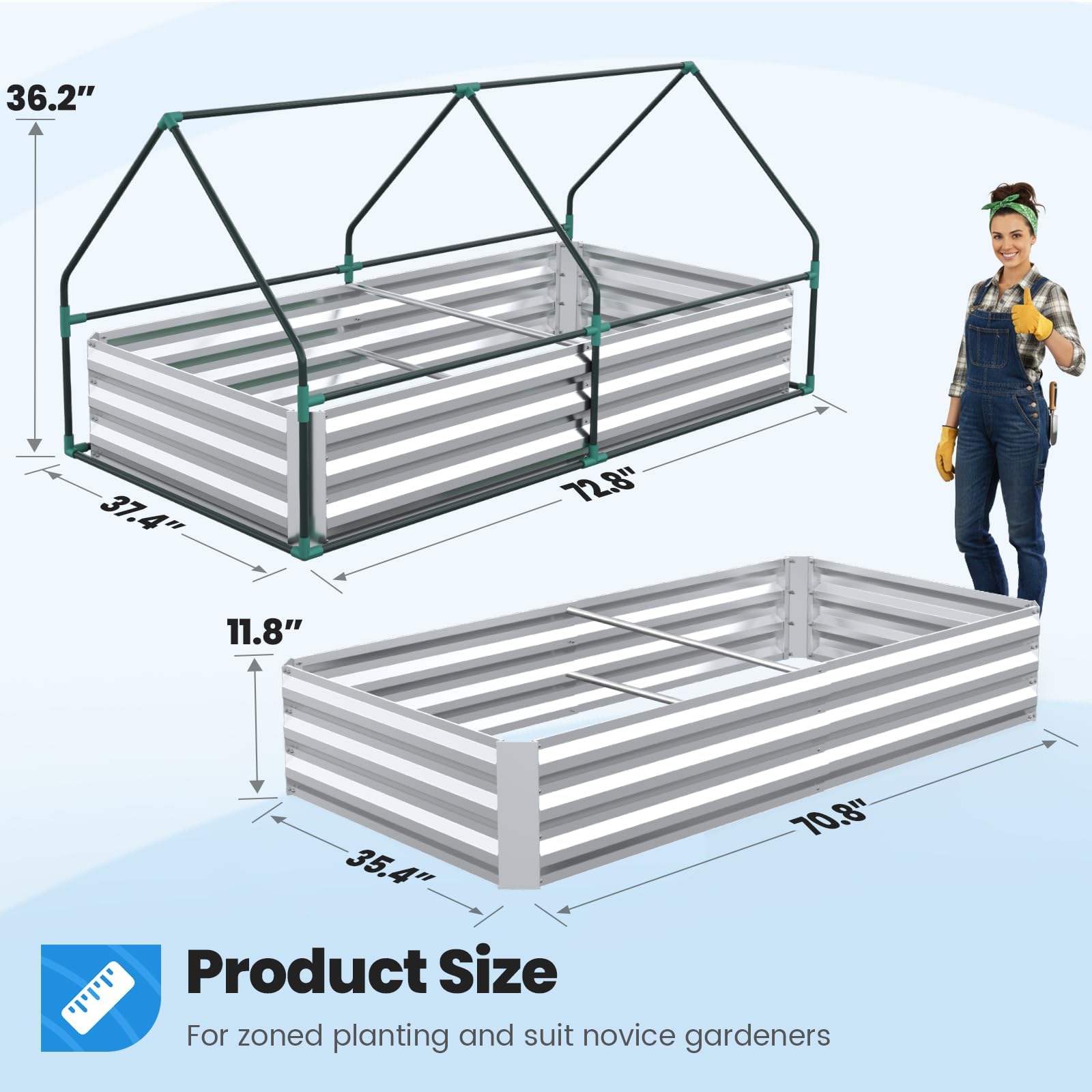
Quictent Raised Garden Bed with Cover Outdoor Galvanized Metal Planter Box Kit, w/ 2 Large Screen Windows Mini Greenhouse 20pcs T Tags 1 Pair of Gloves Included for Growing Vegetables 6x3x1ft (Clear)
- 【Garden Bed with Greenhouse Kit】3 in 1 Galvanized raised garden bed kit, 1 kit equals 3 products: garden bed,
- 【2 Zippered Screen Windows】Screen window of outdoor garden bed cover allows fresh air in and keep birds out, p
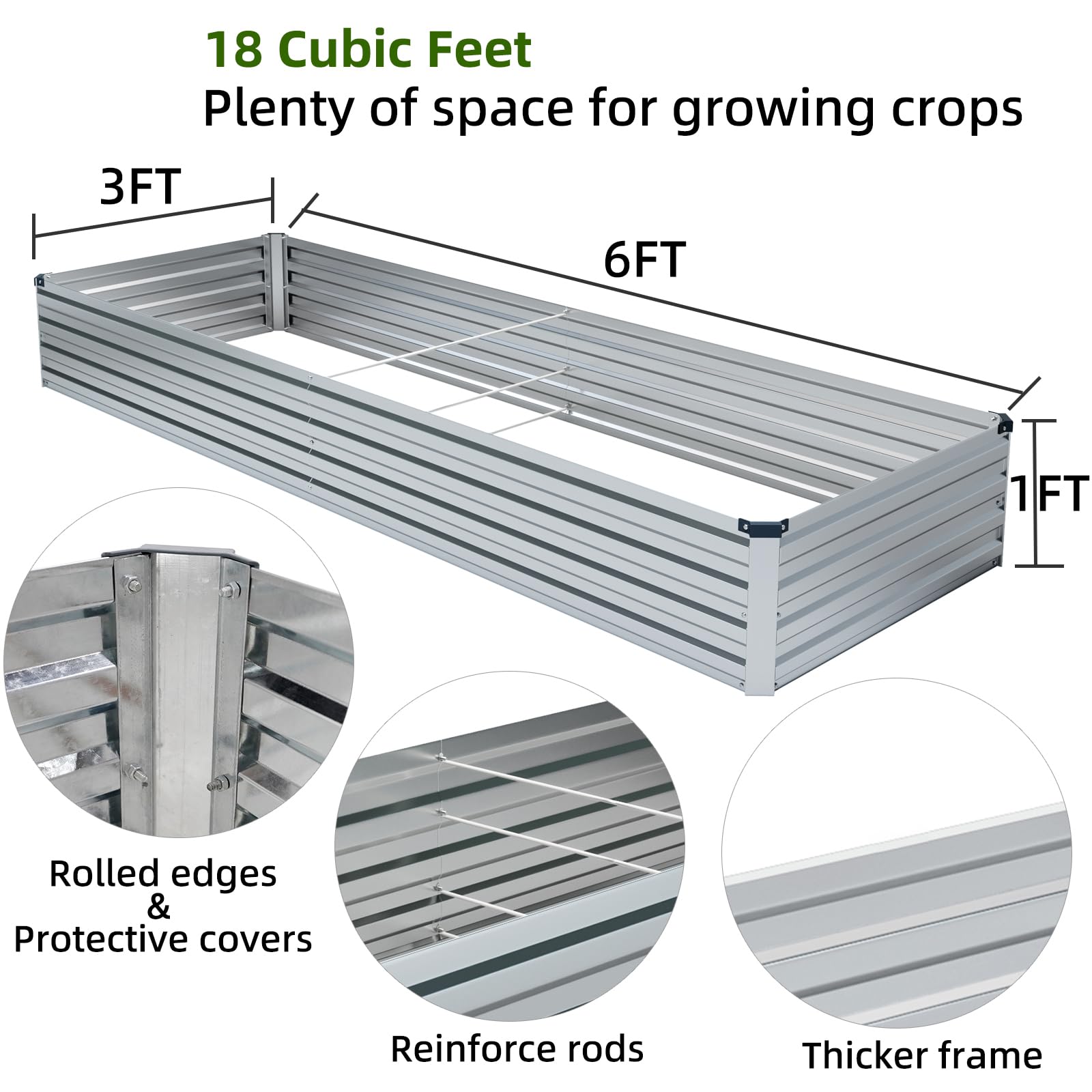
- 【Large Space】Raised planting bed mesured 6 x 3 x 1 ft, can hold about 18 cft soil, provide large growing space
For families who want to extend their growing season or protect tender seedlings from frost and pests, the Quictent raised bed with greenhouse cover offers a compelling three-in-one solution: a full-size 6 by 3 foot galvanised bed, a removable mini greenhouse cover, and two zippered screen windows for ventilation. This kind of setup lets you start seeds earlier in the season and protect crops from birds, which is genuinely useful when you are trying to maximise your output from a small growing space.
6. Choosing the Right Raised Bed for Your Space, Budget, and Situation
Not every garden setup is right for every pregnant woman's situation. The best raised bed for a suburban backyard is different from the best option for an apartment balcony, a community garden plot, or a shared housing space. Here is how to think through the decision.
The Key Variables
Available space: How much ground or floor area do you have? A 4 by 2 foot bed fits on a large balcony and produces a meaningful harvest. A 6 by 3 foot bed is the sweet spot for a small backyard plot. An 8 by 4 foot bed maximises output if you have the room.
Budget: You can get a functional, durable galvanised raised bed for between $24 and $90, depending on size and extras. Do not let budget be the reason you do not start.
Mobility needs: If you rent or may need to move, look for beds that assemble without tools and pack down flat. Most galvanised panel beds qualify.
Season length: If you live in a climate with frost, a bed with a greenhouse cover adds meaningful weeks to your growing season at each end.


Land Guard Galvanized Raised Garden Bed Kit, Galvanized Planter Garden Boxes Outdoor, Oval Large Metal Raised Garden Beds for Vegetables…………
- Each raised metal garden bed size: 4×2×1ft ,7.14Cu
- Upgraded quality and structure: raised garden beds outdoor are made of Q195 galvanized metal sheet, double-lay
- Easy to set up, this galvanized stock tank only takes about 5 minutes to easily assemble and continue planting
The Land Guard galvanised garden bed is notable because it is the most widely reviewed option in this category, with more than 12,000 customer ratings and a design that can be set up in approximately five minutes. For a pregnant woman who wants to start immediately with minimal fuss, this is the easiest entry point.
For those with more space who want to scale up, the Foxlang 8 by 4 foot oval raised bed comes in a two-pack, giving you nearly 64 square feet of growing area, enough to supply a meaningful portion of a family's vegetable needs through a full season. At $59.99 for the pair, the value per square foot of growing space is excellent.
Positioning Your Bed for Success
Most vegetables need a minimum of six hours of direct sunlight per day. This is non-negotiable. Before you decide where to put your bed, spend a day observing which parts of your outdoor space receive the most sun. Then put your bed there, regardless of whether it is the most aesthetically convenient location.
Water Access
You will need to water your bed regularly, especially in the first few weeks after planting. A drip irrigation system connected to a standard garden hose timer takes this off your mental load entirely and is worth the modest investment. If you are in late pregnancy and bending to ground-level taps is uncomfortable, a timer and drip system means the garden waters itself.
Comparison: Which Raised Garden Bed Suits Your Situation?
| Bed Option | Best For | Growing Area | Key Advantage | Main Limitation | Recommended Product | Price |
|---|---|---|---|---|---|---|
| Compact 4x2 ft single bed | Balconies, renters, first-timers | 8 sq ft | Easy assembly, lightweight | Smaller yield | Utopia Home 4x2 bed | $27.99 |
| Budget oval 4x2 ft | Anyone starting on a tight budget | 8 sq ft | Fastest assembly (5 min), oval design | Smallest size option | Land Guard oval bed | $23.49 |
| Twin 6x3 ft beds | Families, suburban backyards | 36 sq ft (combined) | Excellent value for two full beds | Requires more outdoor space | Meberam 6x3 twin-pack | $38.99 |
| 6x3 ft bed with greenhouse | Year-round growers, cooler climates | 18 sq ft | Extends season, protects from pests and birds | Higher initial cost | Quictent bed with cover | $89.99 |
| Twin 8x4 ft oval beds | Serious home growers, families | 64 sq ft (combined) | Maximum yield, durable oval structure | Needs significant outdoor space | Foxlang 8x4 twin-pack | $59.99 |
Expert Insights on Maternal Nutrition and Home Food Growing
A Garden Is the Most Honest Pregnancy Advice There Is
Most pregnancy advice asks you to make better choices within the options you already have. Garden in a Box programs do something more radical and more honest: they change what the options are.
When a pregnant woman has a raised bed outside her door producing spinach, tomatoes, and herbs, she does not need willpower to eat well. She needs to walk outside. The food is there. She grew it. Her baby is growing on it. And when her child eventually toddles across the same patch of soil and pulls a cherry tomato off the vine and eats it standing in the sun, something has been built that no pamphlet could ever have created.
This is the argument for investing in gardens during pregnancy. Not instead of prenatal vitamins or midwifery care or any of the other important things. Alongside them. Because food grown by a mother's own hands, eaten in season, at the peak of its nutritional value, is about as close to the ideal pregnancy nutrition intervention as anything we have.
If this resonated with you, save it, share it with someone who is pregnant, or pass it to a community health worker who supports pregnant families. The more people who understand this, the more gardens get planted.
Sources & References
- World Health Organization. "Nutrition for Health and Development: A Global Agenda for Combating Malnutrition." 2021. https://www.who.int/nutrition/publications/en/
- USDA Economic Research Service. "Food Security in the U.S.: Pregnant Women and Food Insecurity." 2022. https://www.ers.usda.gov/topics/food-nutrition-assistance/food-security-in-the-us/
- Vidueira P, Reed J, Bautista-Puig N, Sanchez G. "Community Gardening and Fruit and Vegetable Consumption: A Systematic Review." Nutrients. 2020; 12(5): 1485.
- Black RE, et al. "Micronutrient Deficiencies and Pregnancy Outcomes." Nutrients. 2017; 9(4): 348.
- Dadvand P, et al. "Residential proximity to major roads and term low birth weight: the roles of air pollution, heat, noise, and road-adjacent trees." Epidemiology. 2014; 25(4): 518–525.
- Dadvand P, et al. "Green spaces and adverse pregnancy outcomes." Environment International. 2019; 130: 104961.
- Matthews SG, Phillips DI. "Minireview: Transgenerational inheritance of the stress response: a new frontier in stress research." Endocrinology. 2010; 151(1): 7–13.
- Food and Agriculture Organization of the United Nations. "The State of Food and Agriculture 2022: Leveraging Automation in Agriculture for Transformation." Rome: FAO, 2022. https://www.fao.org/publications/
- Lacy-Nichols J, Scrinis G, Carey R. "The politics of ultra-processed food policy." Social Science & Medicine. 2020; 262: 113299.
- Lowry CA, et al. "Identification of an immune-responsive mesolimbocortical serotonergic system: potential role in regulation of emotional behavior." Neuroscience. 2007; 146(2): 756–772.
- Birch LL, Anzman SL. "Learning to eat in an obesogenic environment: a developmental systems perspective on childhood obesity." Child Development Perspectives. 2010; 4(2): 138–143.
Frequently Asked Questions
Is gardening safe during pregnancy?
What vegetables should I prioritise for pregnancy nutrition?
How much space do I actually need to grow meaningful food?
Can I garden on an apartment balcony while pregnant?
Do Garden in a Box programs actually improve pregnancy outcomes?
When should I start a pregnancy garden to get the most benefit?
What if I have never gardened before?
Was this helpful?
Thanks — your feedback helps us pick what to write next.