Gentle Parenting When Your Toddler Won't Listen: What Actually Works
Toddlers "not listening" is usually a brain development issue, not defiance, and gentle parenting works when you pair warm connection with clear, consistent limits rather than dropping the limits altogether.

In this article
Picture this: you've asked your two year old three times to put on shoes, your voice has climbed an octave each time, and she's still lying on the floor pretending to be a starfish. You are not doing anything wrong, and neither is she. According to the American Academy of Pediatrics, toddlers between ages 1 and 3 are developmentally wired to test limits as part of learning independence, and their brains simply are not built yet to process multi step verbal instructions the way an older child's can. That gap between what we ask and what a toddler's brain can actually do is where most of the daily friction lives.
This piece will help you understand:
1. Why Your Toddler Isn't Really "Not Listening"
The direct answer is that most toddlers hear you just fine, they just cannot yet translate hearing into immediate compliant action, especially when they're absorbed in play or emotionally flooded. This is a brain wiring issue, not a discipline failure on your part or a character flaw on theirs.
The developmental piece parents miss
The prefrontal cortex, the region responsible for impulse control, working memory, and following sequences of instructions, develops slowly and doesn't finish maturing until the mid twenties. In toddlers, it's barely online. When you say "put your shoes on, grab your bag, and get in the car," you're asking a brain that can hold maybe one instruction at a time to juggle three. The toddler isn't ignoring you on purpose; the request genuinely outpaces what their brain can process in the moment.
Young children's brains are simply not wired the same way as adults' brains. The rational part of a toddler's brain is underdeveloped, so tantrums and defiance are normal, expected parts of development, not manipulation.
— Harvey Karp, MD, pediatrician and author (2015)
What's actually happening in those moments
- ✓ Your toddler is deeply absorbed in an activity and genuinely hasn't registered your words yet - ✓ The instruction had too many steps for their working memory to hold - ✓ They're testing whether the rule is consistent, which is a normal and healthy part of learning boundaries - ✓ They're overtired, hungry, or overstimulated, all of which shrink their capacity to comply - ✓ They understood you but are asserting the only power they have: saying no
2. What Gentle Parenting Actually Means (It Isn't Permissive Parenting)
Gentle parenting means responding to your toddler's behavior with empathy and respect while still holding firm, consistent boundaries; it does not mean removing limits or letting your toddler run the household. This is the single biggest misconception that makes gentle parenting fail in practice.
The confusion that trips parents up
Many parents hear "gentle" and assume it means "no consequences" or "always give in to avoid a meltdown." In reality, developmental psychologists describe this as authoritative parenting, high warmth combined with high structure, and it consistently outperforms both permissive parenting (high warmth, low structure) and authoritarian parenting (low warmth, high structure) on measures of child cooperation and emotional health.
The three ingredients of gentle but effective limits
1. Warmth: you stay calm and connected even during pushback 2. Clarity: the rule is stated plainly, without a lecture attached 3. Consistency: the same rule holds today, tomorrow, and next week regardless of your mood or the location
Actually, let's keep that thought moving into a practical tool. 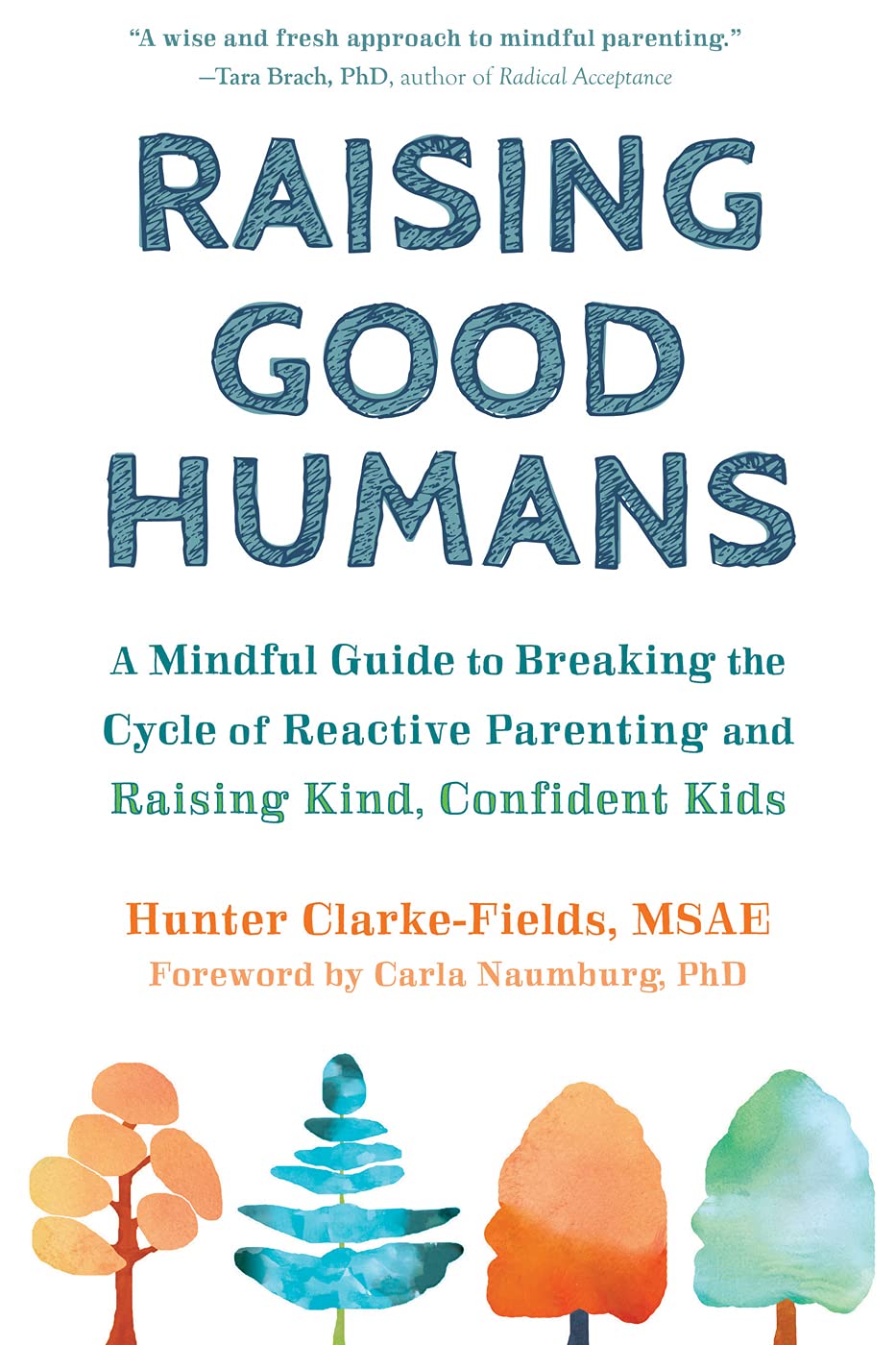


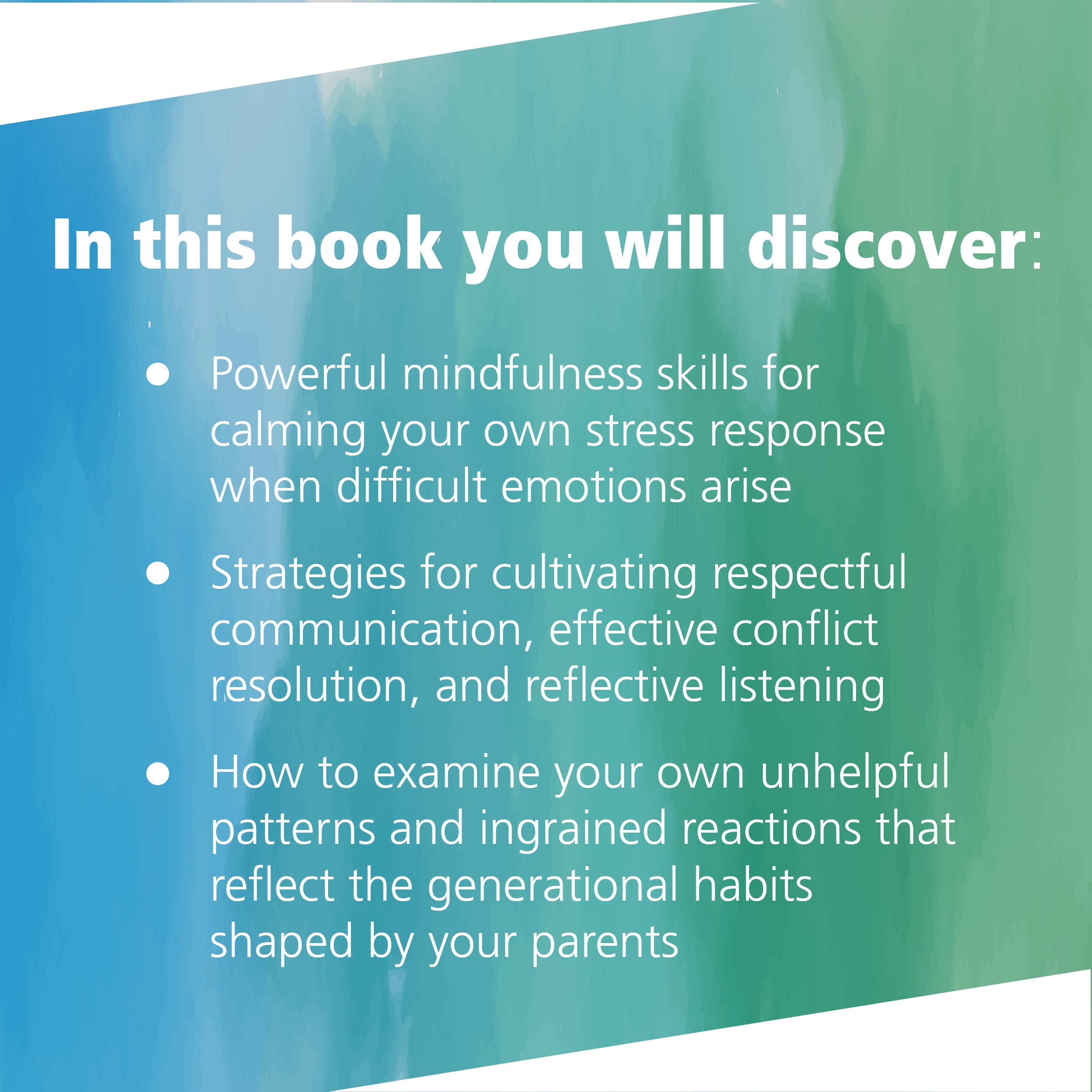
Raising Good Humans: A Mindful Guide to Breaking the Cycle of Reactive Parenting and Raising Kind, Confident Kids
Books like Raising Good Humans focus specifically on this authoritative middle ground, showing parents how to stop cycling between over permissiveness and yelling, and instead build a repeatable, calmer response pattern. If your gentle parenting has quietly slid into "anything to avoid the meltdown," this kind of resource can help you rebuild the structure without losing the warmth.
3. Scripts and Techniques That Actually Get Toddlers to Cooperate
The fastest way to improve compliance is to reduce your instructions to one short, concrete sentence delivered at eye level, rather than repeating a longer request from across the room. Specific language beats general reminders every time with this age group.
Ditch the multi step request
Instead of "Please clean up your toys, wash your hands, and come to the table," try one instruction at a time: "Toys in the bin, please." Wait. Then move to the next step. This respects the working memory limits we talked about above.
Say what you want, not what you don't want
Toddlers process positive instructions faster than negative ones. "Walking feet" lands better than "stop running." "Gentle hands" works better than "don't hit."
Telling children what not to do requires them to first imagine the undesired behavior before figuring out the alternative, which takes more cognitive effort. Stating the desired behavior directly is more effective for young children.
— Laura Markham, PhD, clinical psychologist (2019)
Offer limited choices instead of open commands
"Do you want to put on your shoes yourself or should I help?" gives your toddler a sense of control within a boundary you've already set. This taps into their developmental drive for autonomy without handing over decisions that aren't actually up for negotiation.
Some families also find that a structured, step by step framework takes the guesswork out of daily power struggles. 
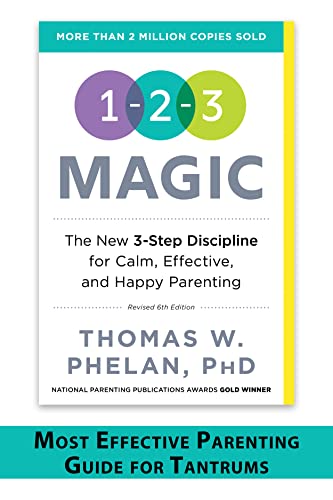


1-2-3 Magic: Gentle 3-Step Child & Toddler Discipline for Calm, Effective, and Happy Parenting (Positive Parenting Guide for Raising Happy Kids)
Programs like 1-2-3 Magic give parents an exact script to follow in the heat of the moment, which matters because most of us default to over explaining or repeating ourselves when we're tired, and that's exactly when toddlers tune out fastest.
If mealtime refusals are part of your daily "not listening" battles, the dynamics are often different from general defiance. Understanding why picky eating happens can help you separate a sensory or developmental food issue from a compliance issue, because the gentle parenting response to each looks different.
4. Why Yelling and Over Explaining Backfire
Raising your voice or launching into a long explanation actually reduces a toddler's ability to comply, because both responses flood their nervous system and shut down the part of the brain needed to process language. This is counterintuitive because yelling often produces immediate freezing, which parents mistake for the child "finally listening."
What's happening physiologically
When a toddler is yelled at, their body activates a stress response, releasing cortisol and adrenaline. This shifts blood flow and neural activity toward the amygdala (the threat detection center) and away from the prefrontal cortex (the reasoning center). In plain terms: yelling makes a toddler's brain less able to understand and follow instructions, not more.
Long explanations have the same effect
A three minute lecture about why hitting is wrong overwhelms a toddler's working memory long before you get to the point. By sentence two, they've stopped processing words and started reading your tone and face instead.
No-Drama Discipline lays out this exact neuroscience in a very approachable way, with specific scripts for staying calm while still holding the line. 
No-Drama Discipline: The Whole-Brain Way to Calm the Chaos and Nurture Your Child's Developing Mind
Warning signs you're in a yelling cycle worth interrupting
If tantrums specifically are escalating alongside the not listening, it can help to look at what actually helps when tantrums happen all day, since exhaustion and dysregulation often drive both behaviors at once.
5. Handling Public Meltdowns and Defiance Without Losing Your Cool
The direct answer here is that your job in a public meltdown is not to stop the tantrum immediately, it's to stay regulated yourself so your toddler has a calm anchor to eventually match. Trying to force an instant end to a public meltdown almost always escalates it.
Why public settings make everything harder
Grocery stores, playgrounds, and restaurants add extra sensory input (lights, noise, other people's stares) on top of whatever triggered the meltdown in the first place. Your toddler's already limited capacity to self regulate gets pushed past its threshold faster in these settings.
A child having a tantrum in public is not giving a bad performance for an audience. Their nervous system is genuinely overwhelmed, and shame based responses from parents tend to intensify, not shorten, the episode.
— American Academy of Pediatrics, HealthyChildren.org (2021)
A simple in the moment sequence
1. Lower your body to their level 2. Use a soft, low voice rather than a sharp one 3. Name the feeling: "You're really mad we have to leave" 4. Wait out the wave before attempting any instruction 5. Once calm returns, give one simple next step
One mother's approach to staying regulated during public meltdowns has resonated with a lot of readers because it's realistic rather than idealized. Her method for regulating herself during tantrums shows that you don't need to be perfectly calm, you just need to be calmer than your toddler in that moment.
6. When "Not Listening" Might Be More Than Typical Toddler Behavior
Most toddler noncompliance is completely typical, but it's worth mentioning to your pediatrician if the "not listening" is paired with other specific signs by around age 4 or 5, since it could point to a hearing issue, a language delay, or something like ADHD.
Red flags worth a conversation with your doctor
Persistent inattention or noncompliance across multiple settings, not just at home with a tired parent at the end of the day, is one of the key things we look for when distinguishing typical development from something that warrants further evaluation.
— Centers for Disease Control and Prevention, "Attention Deficit Hyperactivity Disorder," (2022)
What your pediatrician will likely ask
- How consistent is the noncompliance across different caregivers and settings? - Is there a hearing concern, including frequent ear infections? - Are speech and language milestones on track? - Are there other behaviors like extreme rigidity, sensory sensitivities, or social withdrawal?
If screens have crept into your daily routine as a way to get compliance or calm during hard moments, it's worth understanding when that actually helps versus when it backfires, since overreliance can sometimes mask or worsen underlying attention or regulation difficulties.
| Approach | Best Age Range | Primary Benefits | Main Drawbacks | Recommended Product | Price Range |
|---|---|---|---|---|---|
| One instruction at a time | 1 to 4 years | Matches working memory limits, higher compliance | Requires patience, slower for multi step tasks | 1-2-3 Magic | $9 to $10 |
| Limited choices | 2 to 5 years | Builds autonomy, reduces power struggles | Not appropriate for non negotiable safety rules | 1-2-3 Magic Parenting Book Set | Varies |
| Connection before correction | 1 to 6 years | Strengthens trust, reduces shutdown responses | Takes longer than a quick command | The Whole-Brain Child | Varies |
| Calm scripted response | 1 to 5 years | Reduces yelling, keeps parent regulated | Requires practice to become automatic | No-Drama Discipline | $14 |
| Authoritative boundary setting | 1 to 8 years | High compliance without harshness | Easy to slip into permissiveness without structure | Raising Good Humans | $11 |
| Audiobook based learning on the go | Parent resource | Fits into busy schedules, reinforces concepts | Passive learning, needs follow through | Tiny Humans, Big Emotions | $0.99/mo intro |
Raising a toddler who tests every limit you set is exhausting, and some days it will feel like nothing you say lands. But every calm, consistent moment you offer is quietly teaching your toddler a skill they'll rely on for the rest of their life: that limits are safe, feelings are allowed, and connection doesn't disappear when they push back. As one pediatric colleague likes to remind tired parents in clinic, a toddler who tests you is a toddler who trusts you enough to test you. If this piece gave you a script or a shift in perspective that helped even one hard moment today, consider saving it, sharing it with another exhausted parent, or subscribing for more guidance grounded in real pediatric and developmental research.
Sources & References
- American Academy of Pediatrics. "Discipline for Young Children." HealthyChildren.org, 2021.
- Centers for Disease Control and Prevention. "Attention Deficit Hyperactivity Disorder (ADHD)." CDC.gov, 2022.
- Karp, Harvey, MD. The Happiest Toddler on the Block. Bantam Books, 2004 (updated 2015).
- Markham, Laura, PhD. Peaceful Parent, Happy Kids. TarcherPerigee, 2019 edition.
- Siegel, Daniel J., MD, and Tina Payne Bryson, PhD. No-Drama Discipline. Bantam Books, 2014.
- Siegel, Daniel J., MD, and Tina Payne Bryson, PhD. The Whole-Brain Child. Delacorte Press, 2011.
Frequently Asked Questions
Is gentle parenting the reason my toddler doesn't listen?
How many times should I repeat an instruction before consequences?
Why does my toddler listen to daycare teachers but not me?
Should I use time outs with gentle parenting?
At what age does listening actually improve?
Can screen time make not listening worse?
What's the difference between defiance and a developmental delay?
Was this helpful?
Thanks — your feedback helps us pick what to write next.