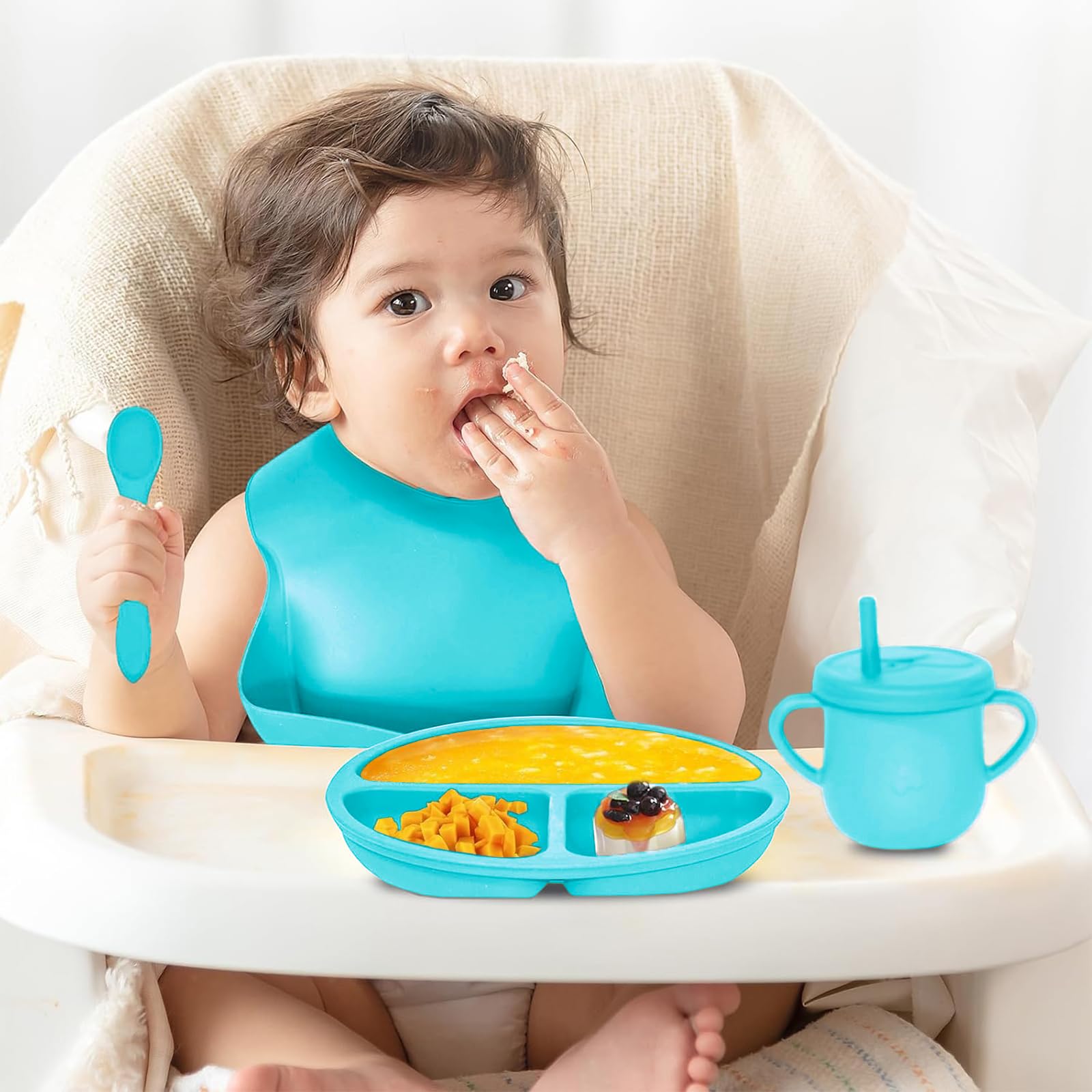
Toddler Picky Eating: Why It Happens and What Really Helps
Picky eating in toddlers is a normal developmental phase driven by biology, not bad parenting, and it usually improves when meals become low pressure, predictable, and free of bribes or battles.

In this article
Picture this: it's 6pm, dinner is on the table, and your two year old takes one look at the broccoli, pushes the plate away, and asks for crackers. Again. If this sounds familiar, you are far from alone. According to research published in the journal Pediatrics, as many as 50 percent of parents describe their toddler as a "picky eater" at some point between ages 2 and 5, and the behavior typically peaks around ages 2 to 3 before gradually easing (Journal of the Academy of Nutrition and Dietetics, 2017). Picky eating is one of the most common concerns raised at wellness visits, right up there with sleep and tantrums, and it can feel deeply personal when your child rejects the food you lovingly prepared.
The good news is that picky eating is rarely about defiance or ingratitude. It is almost always about development, biology, and the natural (if exhausting) way toddlers assert independence.
What you'll understand after reading this:
1. Why Toddler Picky Eating Happens in the First Place
Picky eating happens because toddlers are biologically wired to be cautious about new foods, not because something is wrong with your parenting or your child. Around the time a baby transitions from purees to table foods, usually between 12 and 24 months, growth slows down significantly compared to the first year of life. A baby who tripled their birth weight in year one might gain only 4 to 6 pounds in year two. Because your toddler simply doesn't need as many calories, their appetite naturally drops, and food that once felt exciting can start to feel optional.
At the same time, toddlers are entering a developmental stage psychologists call "neophobia," a normal, protective wariness of new foods that likely evolved to keep young children from eating something unfamiliar and potentially unsafe when they were mobile enough to grab things themselves but not yet able to judge risk. This wariness tends to peak between ages 2 and 6.
Food neophobia is a normal part of development, not a sign that something is wrong with your child or your parenting. It typically resolves with repeated, low pressure exposure over time.
— Jill Castle, MS, RDN, pediatric dietitian (2021)
The independence factor
Toddlers are also discovering that they have control over very few things in their day, and what goes into their mouth is one of the few decisions that is entirely theirs. Refusing food is often less about the food itself and more about testing autonomy, which is the same developmental drive behind toddler tantrums that happen all day long.
2. The Mealtime Habits That Accidentally Make Picky Eating Worse
The single biggest thing that worsens picky eating is pressure, and most of us apply it without realizing we're doing it. Phrases like "just one more bite," "you can't have dessert until you finish your vegetables," or "eat it for mommy" feel harmless, even encouraging, but research consistently shows that pressuring a child to eat backfires.
A well known 2015 review in the journal Appetite found that pressure to eat, whether through bribery, praise, or insistence, was associated with lower acceptance of foods over time and increased food refusal, not less. Children who are pressured to eat also tend to become more sensitive to the texture and appearance of food, which narrows their diet further rather than expanding it.
Common mistakes that backfire
- Bribing with dessert or screen time for finishing vegetables - Making a separate "safe" meal every time a child refuses dinner - Commenting on how much or how little was eaten during the meal - Letting mealtime stretch on for 45 minutes while negotiating one more bite - Reacting with visible frustration or disappointment at refusal
The link between food battles and general toddler behavior is stronger than most parents expect. If mealtimes are already a flashpoint, it's worth reading about why toddler tantrums seem to be getting worse, since the same underlying stress and control dynamics often show up at both the table and everywhere else.
3. The Division of Responsibility Approach That Actually Works
The most effective, widely recommended strategy for picky eating is called the "division of responsibility," and it works by clearly separating what the parent controls from what the child controls. This feeding framework was developed by dietitian Ellyn Satter and is endorsed by the Academy of Nutrition and Dietetics.
Under this approach, the parent decides what food is offered, when it is offered, and where it is eaten. The child decides whether to eat it and how much. That's it. No pressure, no negotiation, no separate short order meals.
Parents are responsible for what, when, and where. Children are responsible for how much and whether.
— Ellyn Satter, MS, RDN, MSSW, Ellyn Satter Institute
Why this reduces battles
When a toddler knows the rules never change (there will be a meal, it will include something they like and something new, and no one will beg them to eat it) the food itself stops being a battleground. Over weeks and months, most children start eating a wider variety simply because the pressure is gone.
This approach takes real patience, and it tends to work best alongside the same calm, low reactivity style that helps with other toddler behaviors. Parents who have found ways to regulate themselves during toddler meltdowns often notice that same steadiness carries over naturally into mealtime standoffs.
4. How Many Times You Need to Offer a New Food (It's More Than You Think)
Most toddlers need to see a new food between 8 and 15 times before they'll even taste it, let alone eat it willingly. This is one of the most underappreciated facts in pediatric feeding, and it explains why a single rejected bite of sweet potato does not mean your child "hates" sweet potato forever.
A frequently cited body of research on food acceptance in young children found that repeated, pressure free exposure, simply having the food present and available, without demanding it be eaten, significantly increased acceptance over time, while one time exposure had almost no effect.
It can take 10 to 15 exposures to a new food before a young child accepts it. Parents often give up after two or three tries, right before the food would have become familiar.
— American Academy of Pediatrics, HealthyChildren.org (2022)
What "exposure" actually looks like
Exposure doesn't require your toddler to eat the food at all. It can mean:
- Seeing it on the family plate without being asked to try it - Touching or playing with it during meal prep - Smelling it while it cooks - Watching a sibling or parent eat it without comment
5. Making Mealtime Feel Fun Instead of Stressful
Reducing the emotional weight of mealtime, through playful presentation rather than pressure, is one of the most effective and low effort ways to ease picky eating. This isn't about tricking your child into eating vegetables; it's about lowering their guard so the neophobia response has less to work with.
Divided plates are a genuinely useful tool here, mostly because they let toddlers see small, separate portions instead of one overwhelming mixed plate. A small serving in its own compartment feels far more manageable to a cautious eater than a full plate where everything touches.
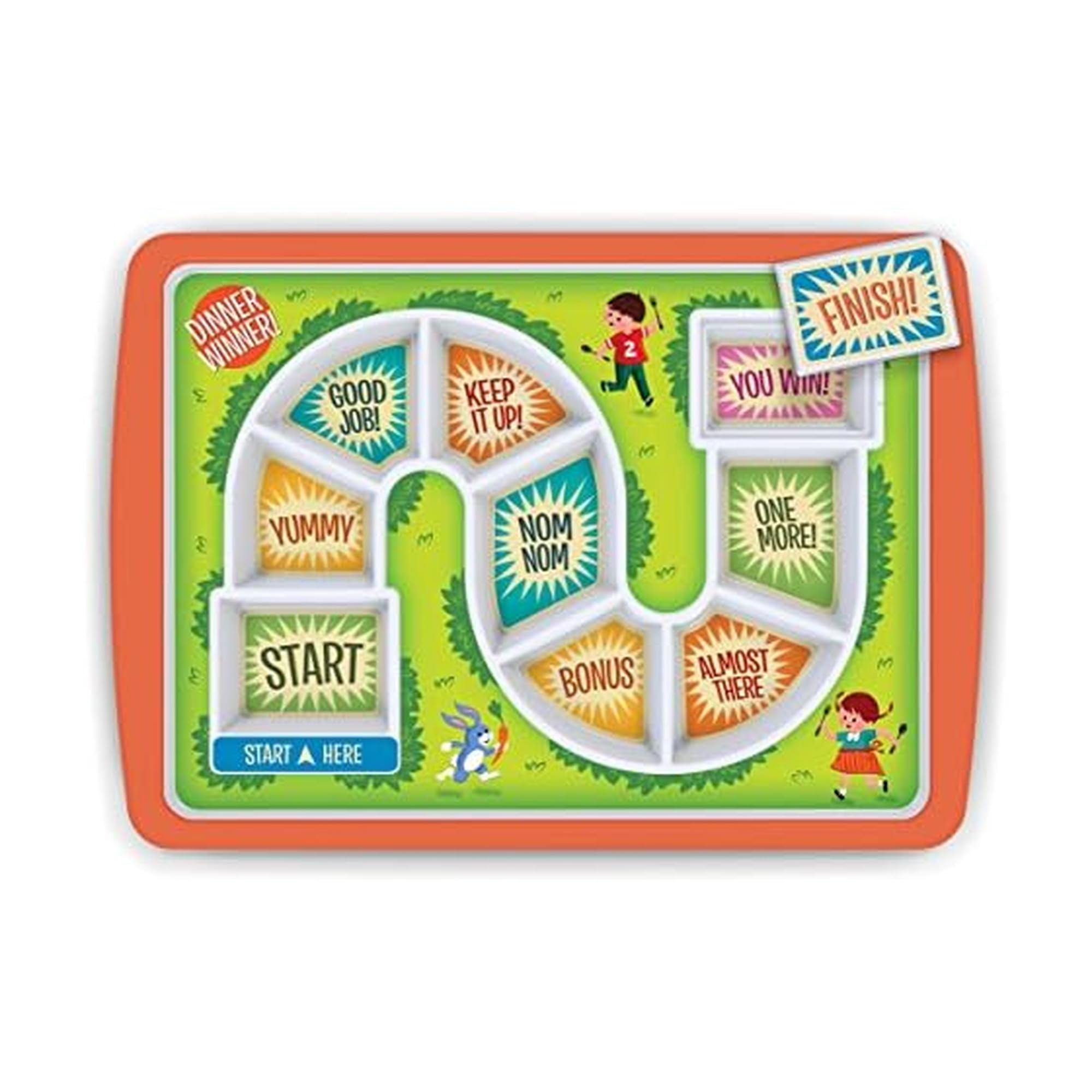
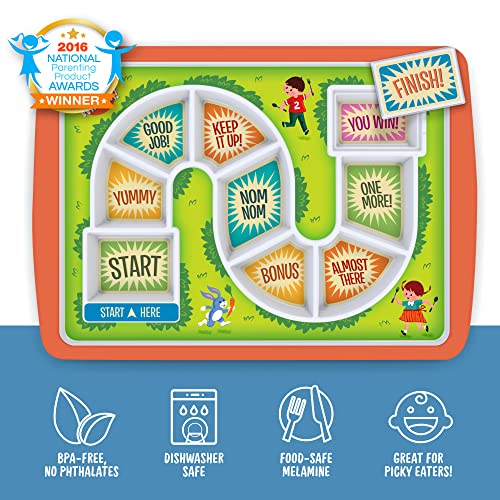

Genuine Fred DINNER WINNER, The Original Kid's Game Plate Tray - Award Winning - Picky Eater Solutions for Kids and Toddlers - Fun Mealtime - Divided Sections - Interactive Design - Dishwasher Safe
- EAT, PLAY, WIN: In order to woo your picky eater you need a great game plan. DINNER WINNER turns mealtime into
- NUTRITION MADE EASY: Each DINNER WINNER tray provides eat-as-you-go action that helps even the fussiest eaters
- SAFE & TRUSTED: You can trust the Genuine Fred brand to deliver safe products made from quality materials; DIN
The DINNER WINNER tray turns portioned eating into a game, which taps directly into a toddler's love of small wins and clear goals, without any bribery involved since the "treat" section is simply part of the built in design rather than a reward for finishing vegetables.
Other ways to lower mealtime stress
- Let toddlers help wash, tear, or stir ingredients before the meal - Use small, toddler sized portions rather than adult sized servings that feel impossible to finish - Keep new foods visually separate from familiar ones using a divided plate like the SpinMeal vegetable plate - Sit down and eat with your child rather than serving and stepping away - Keep the mood neutral to lighthearted, never anxious or pleading
Screens at the table are a tempting shortcut when a meal is dragging on, but they come with tradeoffs worth understanding before you lean on them regularly; this breakdown of when screens help and when they hurt at mealtime is a useful read if you're weighing that option.
6. When Picky Eating Is Normal vs When to See a Doctor
Most picky eating is a normal, self limiting phase, but there are specific warning signs that warrant a conversation with your pediatrician rather than waiting it out. The key difference is whether your child's growth, energy, and overall variety of accepted foods stay stable over time, even if the list of foods is short.
According to the American Academy of Pediatrics, typical picky eating involves a rotating but limited set of accepted foods, occasional refusal of entire food groups, and strong food preferences that shift week to week. This is frustrating but not medically concerning.
Red flags that need medical evaluation
If mealtime frustration is spilling into meltdowns at the table, it can help to understand that ignoring certain tantrum behavior, per experts, including some food related protests, is often more effective than engaging with every refusal.
Comparing Approaches to Toddler Picky Eating
| Approach | Best For | Primary Benefits | Main Drawbacks | Recommended Product | Price Range |
|---|---|---|---|---|---|
| Divided portion plates | Toddlers overwhelmed by full plates | Reduces visual overwhelm, makes portions feel manageable | Doesn't address underlying food refusal alone | Genuine Fred DINNER WINNER Tray | $18 to $22 |
| Themed character plates | Toddlers who respond to novelty and play | Makes mealtime feel fun rather than tense | Novelty can fade after a few months | GSM Brands Rainbow Unicorn Plate | $8 to $10 |
| Themed dinnerware sets | Toddlers who love a specific interest (dinosaurs, construction) | Builds excitement and routine around meals | Slightly higher cost for a set | 4Es Novelty Divided Plate Set | $18 to $21 |
| Self feeding focused plates | Newly independent eaters, ages 18 months to 3 years | Encourages independence, builds confidence | Compartments can be small for older toddlers | PHEENOWL Airplane Plate Set | $14 to $17 |
| Non tip divided plates | Toddlers who push, tip, or throw plates | Stays put during meals, reduces mess | Fun theme may lose appeal by preschool | Deinyi Construction Non Tip Plate | $16 to $18 |
| Vegetable focused portion plates | Families targeting vegetable acceptance specifically | Small compartments reduce overwhelm around new vegetables | Works best paired with repeated exposure strategy, not alone | SpinMeal Vegetable Plate | $22 to $25 |
Expert Insights on Toddler Picky Eating
If there's one thing every parent of a picky eater deserves to hear, it's that you are not failing, and neither is your child. This phase is loud and exhausting, but it is also temporary for the overwhelming majority of toddlers, and the calmest table usually wins in the end. Progress with picky eating rarely looks dramatic; it looks like one more bite tried this month than last, one more food quietly added to the list. Save this guide for the next hard dinner, share it with another parent in the trenches, and remember that patience, not pressure, is what actually moves the needle.
Sources & References
- Journal of the Academy of Nutrition and Dietetics. "Prevalence and Correlates of Picky Eating in Young Children." 2017.
- American Academy of Pediatrics. "Picky Eating in Toddlers." HealthyChildren.org, 2022.
- Appetite journal. "Parental Feeding Practices and Children's Eating Behaviors: A Review." 2015.
- Ellyn Satter Institute. "The Division of Responsibility in Feeding." ellynsatterinstitute.org.
- Castle, Jill, MS, RDN. "The Picky Eating Solution." 2021.
- Kimball, Katie, CSME. "Picky Eating Isn't About the Food." TEDxHartford, 2019.
Frequently Asked Questions
Is picky eating a phase or will my toddler always eat this way?
Should I make a separate meal if my toddler refuses dinner?
How long should I let a toddler sit at the table before ending the meal?
Will my picky eater get enough nutrition?
Does using a fun or divided plate actually help with picky eating?
At what age does picky eating usually peak?
Can screen time during meals make picky eating worse?
Was this helpful?
Thanks — your feedback helps us pick what to write next.