How One Mom Regulates Herself During Toddler Tantrums (And Why It Works)
A viral video of a mom calmly narrating her own breathing during her toddler's meltdown works because it models nervous system regulation, and child development experts confirm this "co regulation" approach is more effective than trying to talk a toddler out of a tantrum.
In this article
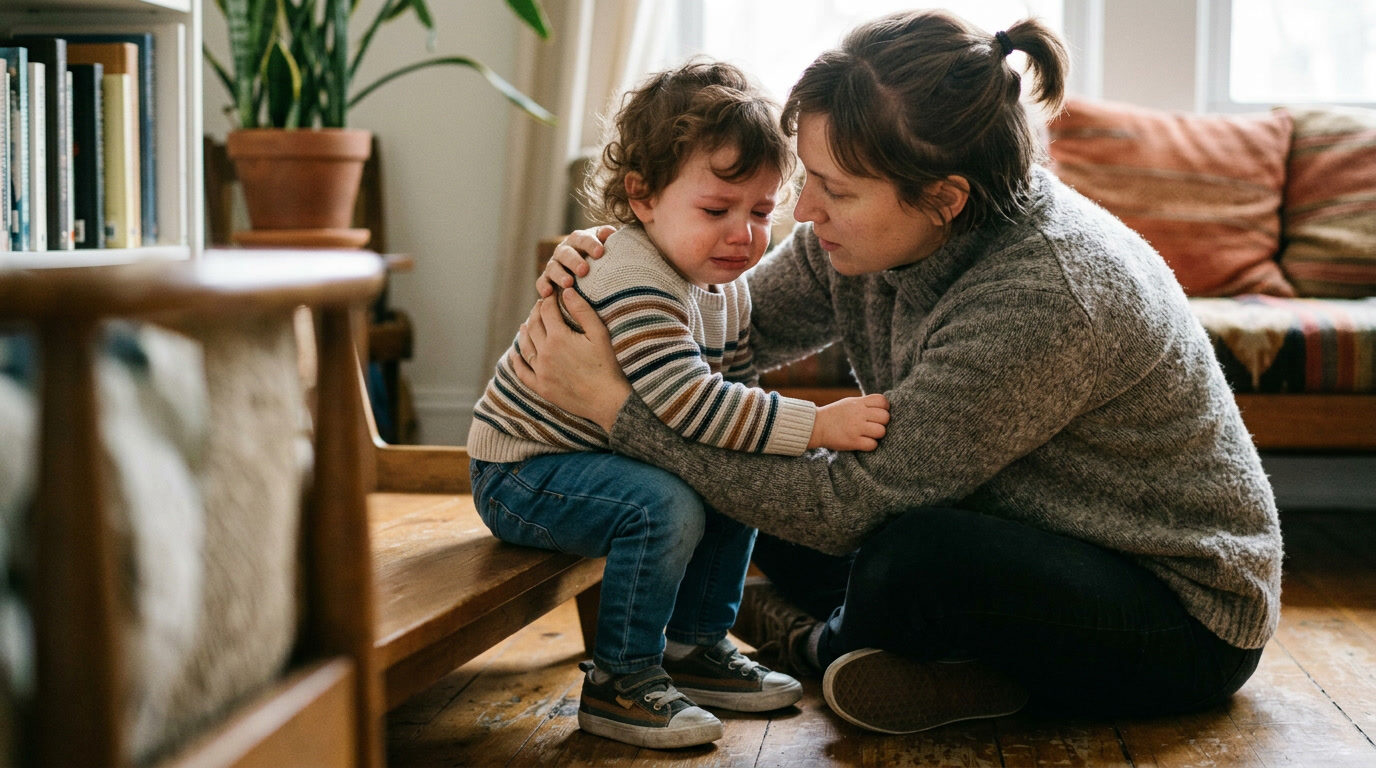
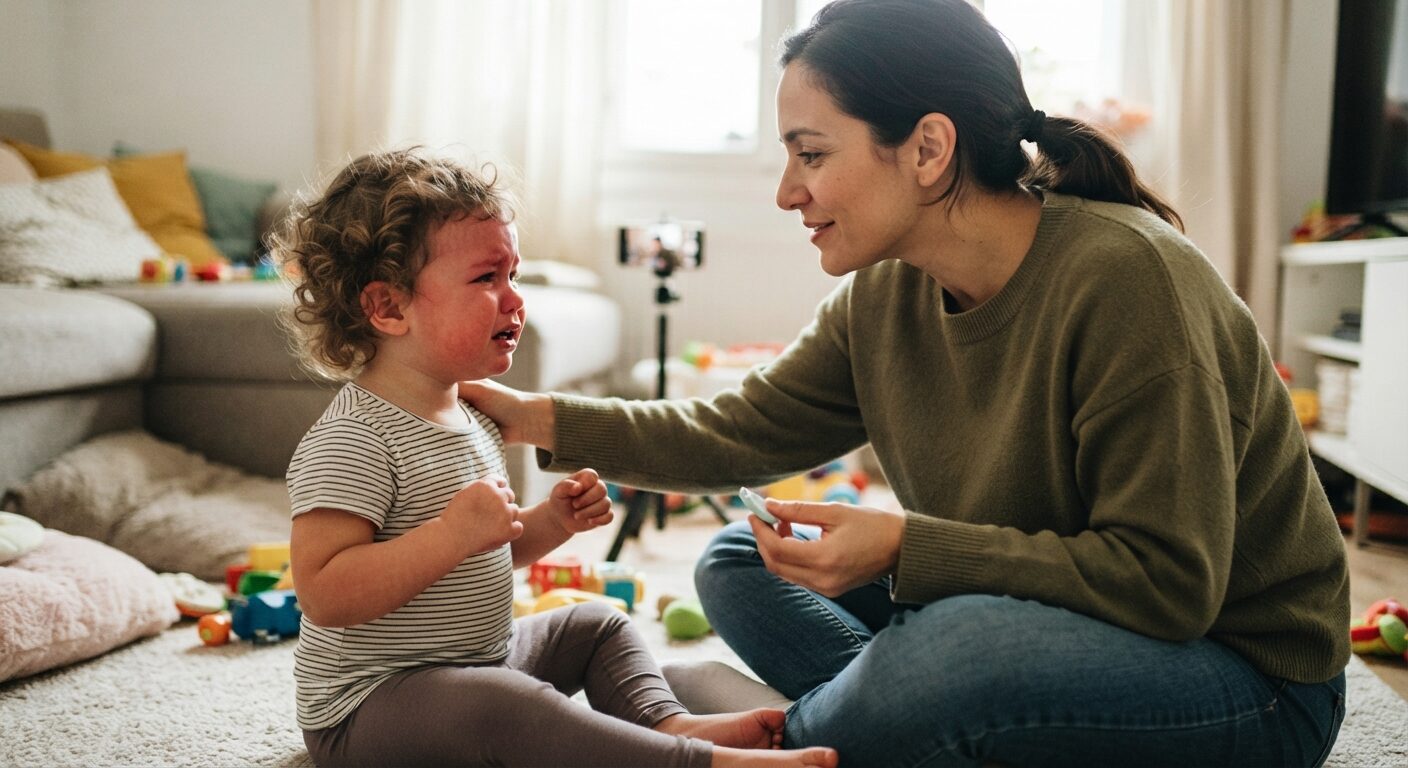
A video of a mother sitting on the floor next to her screaming toddler, breathing slowly and narrating her own calm out loud, has been viewed millions of times. She doesn't try to stop the tantrum. She doesn't bargain, distract, or raise her voice. She just breathes, names what she's doing, and waits. Parents in the comments call it "the moment everything clicked."
According to the American Academy of Pediatrics, tantrums peak between ages 1 and 3 and happen because a toddler's brain simply does not yet have the wiring to manage big feelings on its own. That means the calm has to come from somewhere else first: you. This is the idea behind what child development specialists call co regulation, and it is exactly what that viral mom was doing without ever using the clinical term.
In this article, you'll understand:
1. Why Toddler Tantrums Aren't a Parenting Failure
Tantrums are not a sign you are doing something wrong; they are a sign your toddler's brain is doing exactly what it is supposed to do at this age. The part of the brain responsible for impulse control, patience, and calming down (the prefrontal cortex) is one of the last regions to mature, and it isn't fully online until the mid twenties. In a toddler, it barely exists yet.
The Brain Science in Plain English
Think of a toddler's brain like a house with a fully wired downstairs (the amygdala, which fires off big emotions instantly) and an upstairs still under construction (the prefrontal cortex, which would normally help calm things down). When your two year old melts down over the wrong colored cup, there is no upstairs helper available to say "let's think this through." There's just the alarm system, going off at full volume.
What This Means for You
Understanding this doesn't make the tantrum easier to sit through, but it does change what you're aiming for. You're not trying to stop the tantrum. You're trying to be the calm your child cannot yet generate on their own.
2. What Co Regulation Actually Looks Like
Co regulation means using your own calm nervous system to help your child's dysregulated one settle, and it is the exact technique the viral mom demonstrated. Rather than trying to fix the tantrum from the outside, she became a steady, predictable presence her toddler's brain could borrow calm from.
Children develop the capacity for self regulation through repeated experiences of co regulation with a caring adult. It is not something they are born knowing how to do; it is something we teach them, moment by moment, by staying regulated ourselves.
— National Scientific Council on the Developing Child, Harvard University (2004)
The Three Elements She Used
1. Slow, visible breathing. She breathed audibly and slowly, giving her toddler's brain something rhythmic and calm to sync with. 2. A quiet, low voice. No raised tone, no rapid speech. A slower, lower voice signals safety to a dysregulated nervous system. 3. Physical stillness. She stayed near her child without hovering or grabbing, which communicated "I'm here" without adding pressure.
Why This Works Better Than Talking
Toddlers, and honestly most humans mid meltdown, cannot process complex verbal instructions when their stress response is activated. This is backed by research on co regulation used in early childhood mental health, which shows that a calm adult presence lowers a child's cortisol faster than verbal reasoning does. If you've ever wondered why "calm down" never actually calms anyone down, this is why: it's a verbal instruction aimed at a brain that's temporarily offline for verbal processing.
This same principle explains why simply ignoring a toddler tantrum rather than lecturing through it often produces a faster resolution; the child isn't being punished with silence, they're being given space to reset without additional verbal stimulation to process.
3. The Breathing Script This Mom Actually Uses
The specific script matters less than the tone, but having words ready helps you stay steady when your own patience is running thin. In her video, the mom used short, repeatable phrases rather than long explanations, which matches what pediatric mental health specialists recommend for moments of high emotion.
A Sample Script You Can Borrow
- "I'm right here." - "You're safe. I've got you." - "This is hard. I'm not going anywhere." - "I'm going to breathe until you're ready."
Notice what's missing: no "stop crying," no "you're fine," no explanations about why the toy can't come in the bath. Those come later, once the storm passes.
Using Tools to Stay Consistent
Some parents find it easier to have physical prompts nearby rather than relying on memory in a stressful moment. Card based tools designed specifically for meltdown moments can help you (and eventually your child) build a repeatable script.
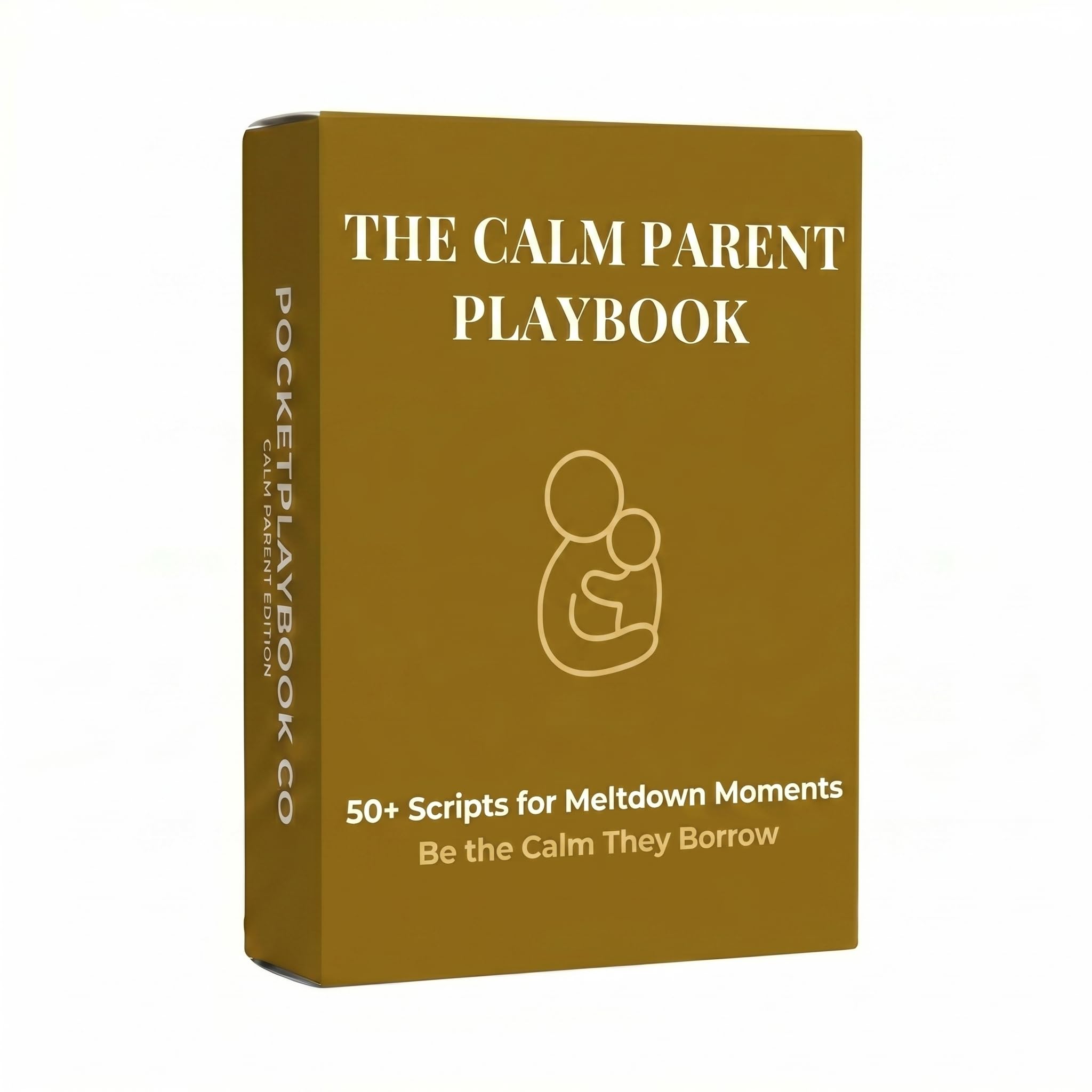
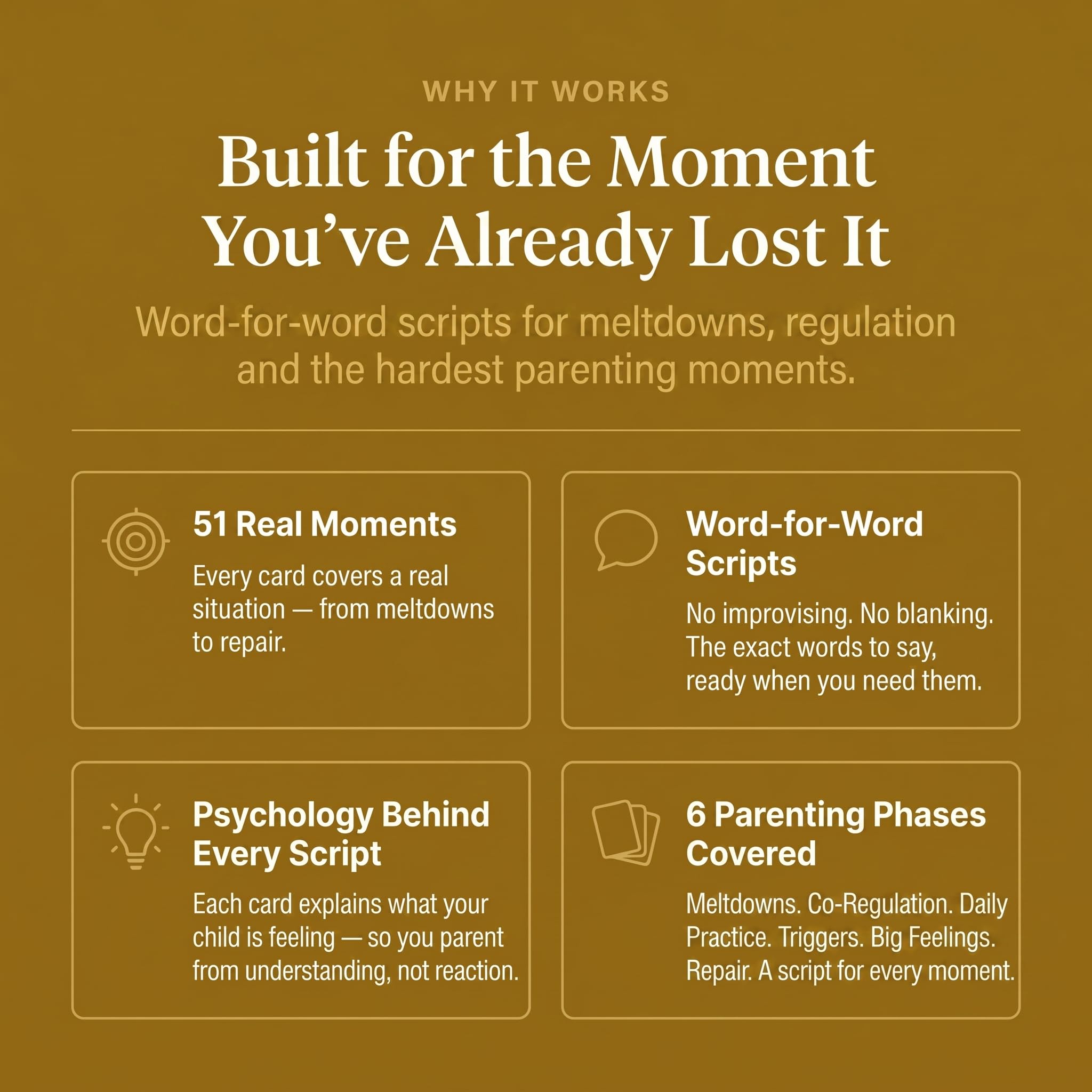
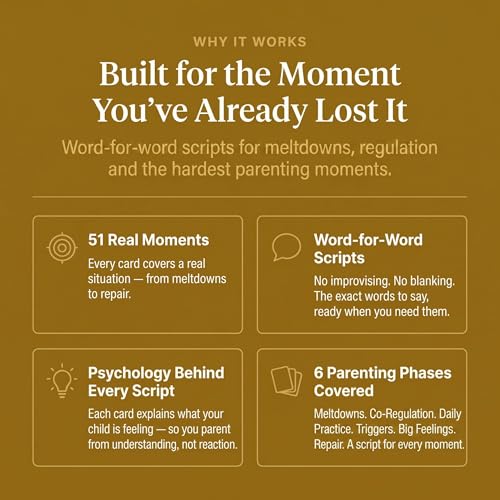
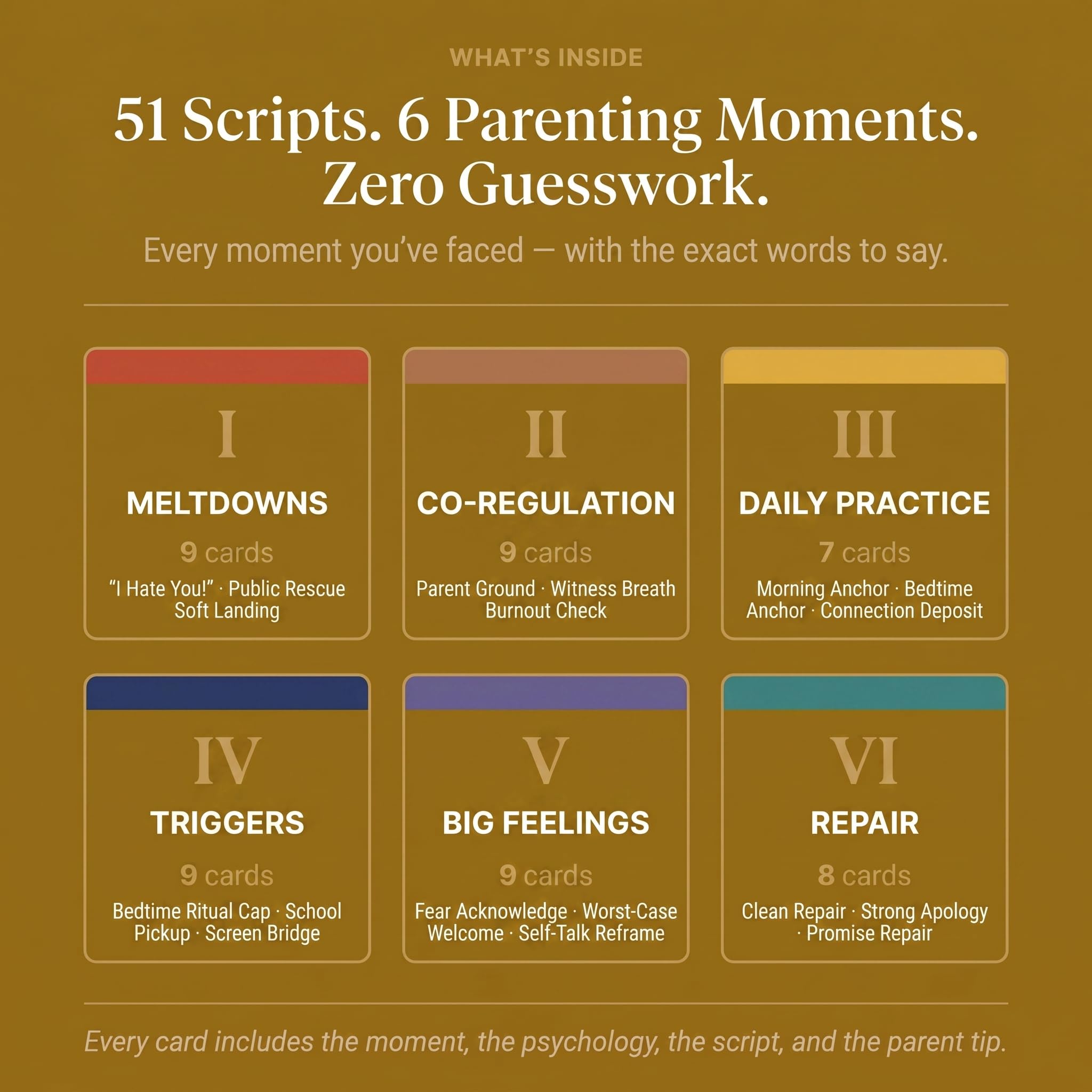
The Calm Parent Playbook — 55 Parenting Cards & Scripts for Tantrums, Meltdowns & Big Feelings in Kids Ages 2-12 | Emotional Regulation Deck | New Mom Dad Gift, Baby Shower
- STOP YELLING THINGS YOU REGRET WHEN YOUR KID LOSES IT. You don't need another parenting book. You need words f
- 55 CARDS · 51 PARENTING SCRIPTS FOR KIDS AGES 2-12 ACROSS 6 PARENT-CHILD STATES — Meltdowns (the "I hate you"
- EACH CARD FOLLOWS THE SAME PROVEN FORMAT — The Moment (the situation you're in), What's Really Going On (what
This deck is built around exactly the kind of word for word scripts described above, organized by scenario (meltdowns, triggers, repair) so you're not improvising while your toddler is mid scream. Parents who struggle to find calming language in the heat of the moment often find having a script physically in hand takes the pressure off having to invent one on the spot.
4. Grounding Tools That Help You (Not Just Your Toddler)
Regulating yourself first is not optional; it is the entire mechanism behind co regulation, and there are concrete physical techniques that work faster than willpower alone. The viral mom's breathing wasn't performative, it was a real nervous system technique that lowers her own heart rate and stress hormones in real time.
Techniques Grounded in Physiology
Building the Habit With Visual Prompts
Many parents find it easier to practice these skills, both for themselves and eventually for their child, with visual cards that walk through specific grounding exercises step by step.
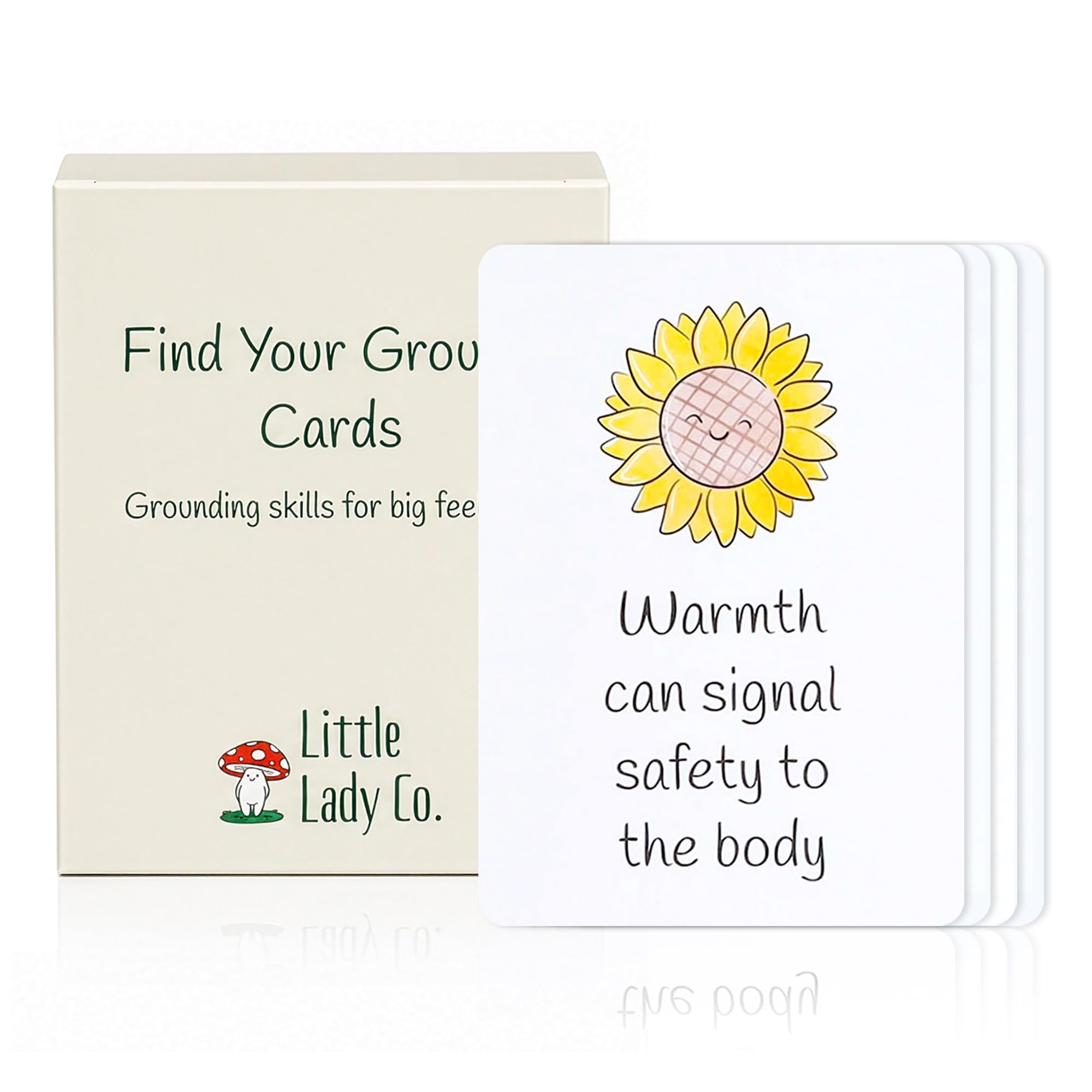

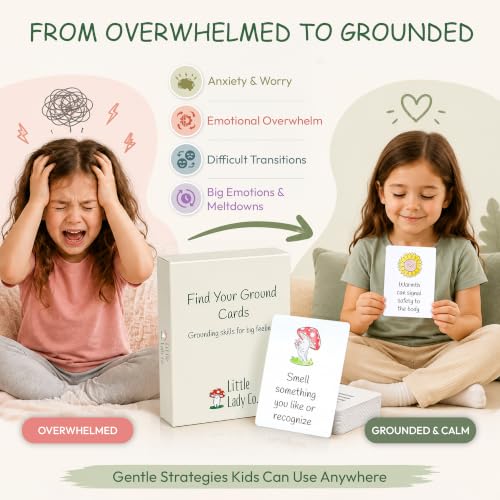
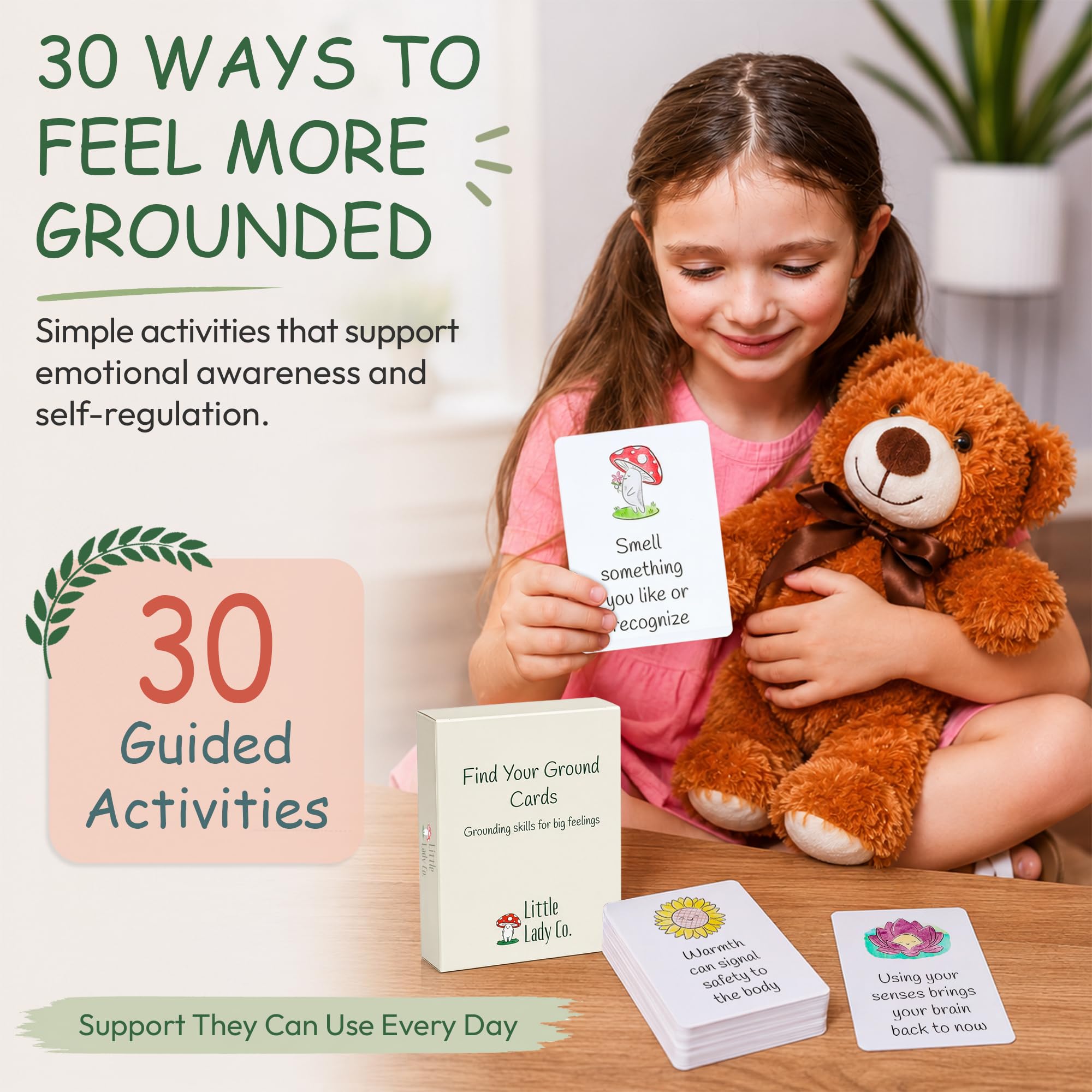
Emotional Regulation Cards, Calm Down Coping Skills Activities for Big Feelings and Self Regulation, Find Your Ground Cards, 30 Card Deck with Parent Guide
- HELPS KIDS NAVIGATE BIG EMOTIONS- Give children practical tools for managing frustration, anxiety, overwhelm,
- 30 EASY TO USE REGULATION CARDS- Includes grounding, breathing, movement, minduflness, and emotional awareness
- CREATED FOR HOME, SCHOOL, AND THERAPY- A valuable resource for parents, teachers, counselors, therapists, home
This deck includes grounding, breathing, and mindfulness activities designed specifically to be simple enough to use in a stressful moment without needing to remember complicated steps. Keeping a set in the diaper bag or by the front door means you have a prompt ready wherever the meltdown happens to strike.
For a related approach that shifts a dysregulated moment through activity rather than stillness, some families also lean on outdoor time. Movement and fresh air genuinely do change a child's stress chemistry, which is part of why outdoor play supports healthy development beyond just burning energy.
5. When Screens and Distraction Help (And When They Backfire)
Distraction can calm a tantrum in the short term, but it does not teach the regulation skill that co regulation builds, so the two tools serve very different purposes. Handing over a phone mid meltdown might stop the crying in ninety seconds, but it also skips the step where your toddler's brain learns what calming down actually feels like from the inside.
Occasional screen use to de escalate a specific moment is different from using screens as a default coping strategy. The concern is not the occasional tool, it's the absence of any other tool in the toolbox.
— American Academy of Child and Adolescent Psychiatry, Screen Time Guidelines (2020)
A Practical Way to Think About It
- If the tantrum is happening in a genuinely unsafe or unavoidable situation (a plane, a waiting room mid procedure), a screen as a bridge is reasonable. - If the tantrum is happening at home with time and space to sit with the feeling, co regulation teaches more than distraction does. - If screens become the only tool reached for every single time, your toddler misses repeated practice at coming down from big feelings with support.
For a deeper breakdown of exactly where this line sits, using screens to de escalate meltdowns covers the research on when this tool helps versus when it quietly becomes a crutch.
6. Building the Skill Over Time (What Comes After the Tantrum Ends)
The real goal of co regulation is teaching your child to eventually regulate themselves, and that transfer of skill happens in the calm minutes after the storm, not during it. Once your toddler's body has settled, that's when the actual teaching moment arrives, and it should be short, warm, and specific.
After the Storm Passes
1. Reconnect physically first. A hug, sitting close, holding hands. Connection before conversation. 2. Name the feeling simply. "You were really frustrated when the tower fell down." 3. Offer one small tool for next time. "Next time we can take a big breath together, want to practice?" 4. Skip the lecture. Long explanations about behavior are lost on a toddler brain; short and concrete sticks better.
Practicing During Calm Windows
Toddlers, like all of us, learn regulation skills far better when they're not already in crisis. Practicing breathing games or naming feelings during calm, playful moments, not just during meltdowns, builds the muscle memory that shows up later when it's needed most. This same principle underlies why imaginative play builds stronger problem solvers: rehearsing skills through low stakes play gives children a reservoir to draw from when real stress hits.
Card based games designed around naming feelings and coping strategies work well here, since toddlers and young kids engage with them as play rather than as a lesson.

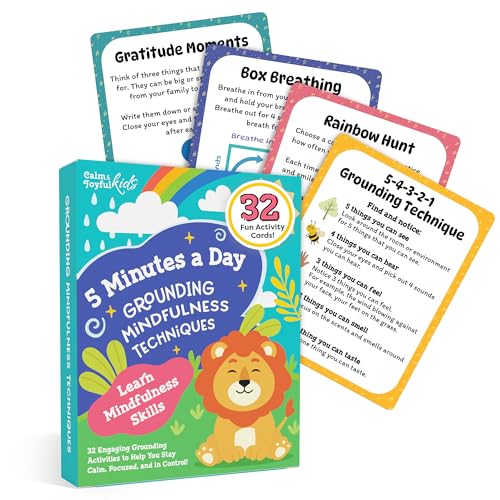
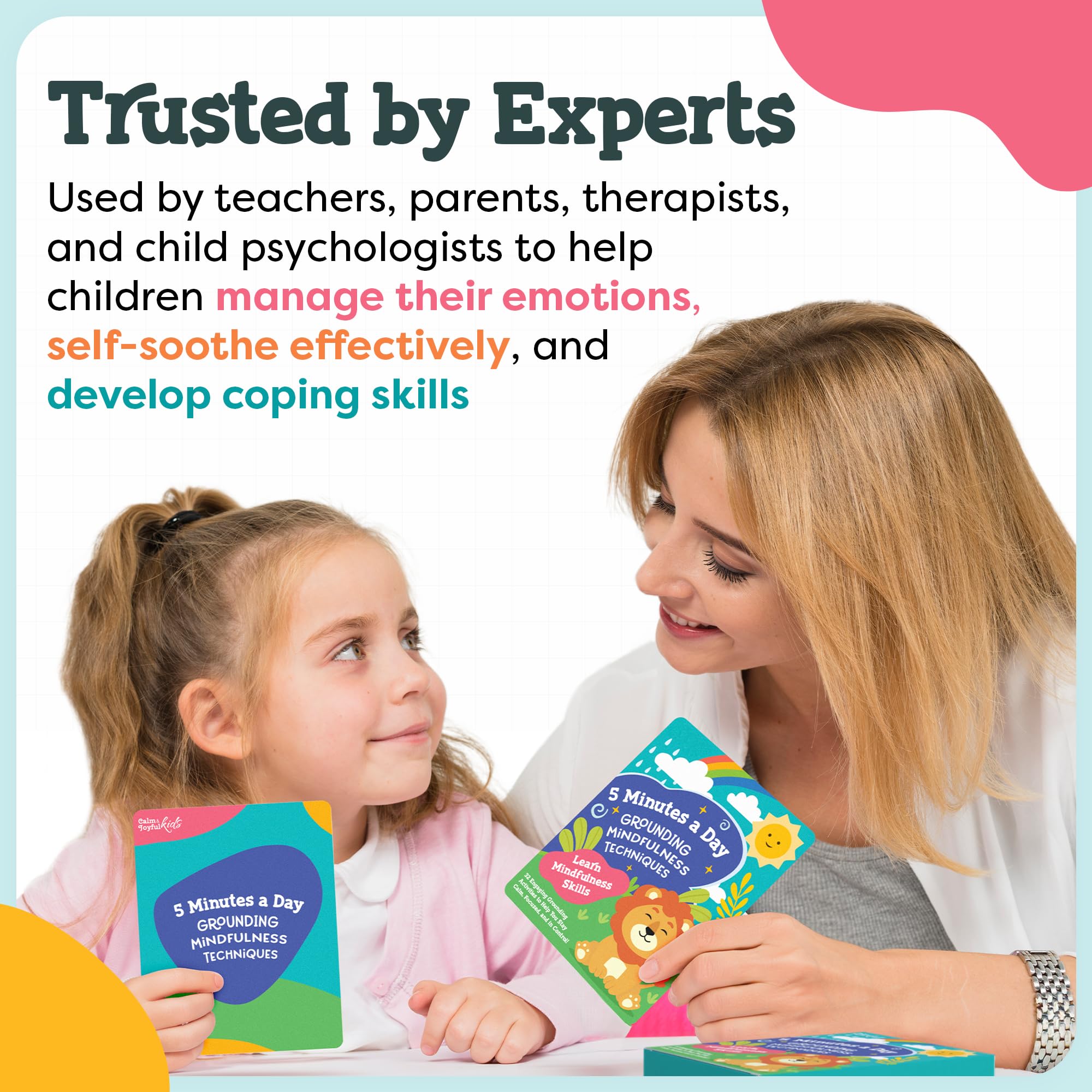
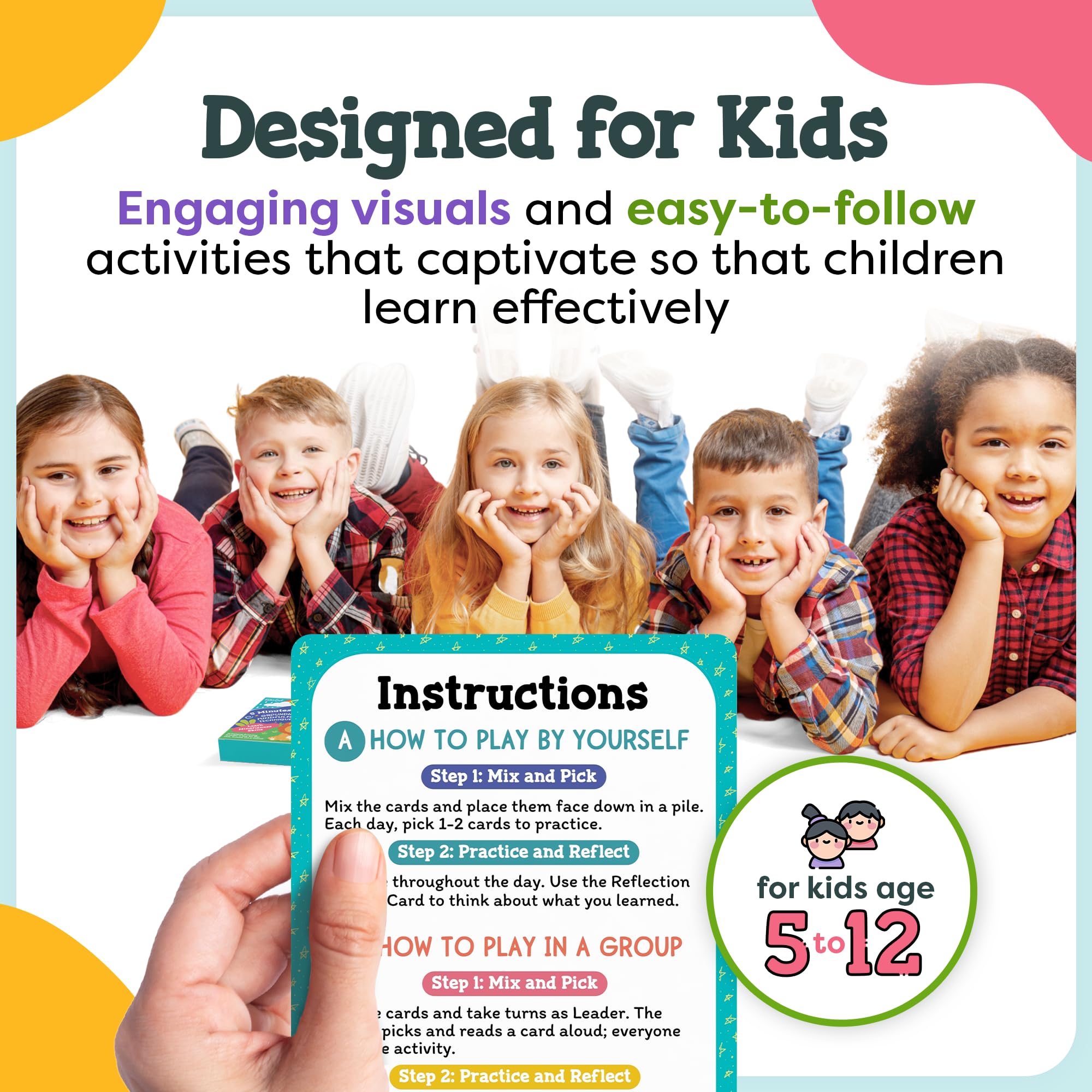
Mindfulness Cards for Kids, SEL Coping Skills, Self-Regulation Flash Cards
- Support Emotional Regulation: These mindfulness cards for kids provide gentle guidance to help children unders
- Develop Consistent Mindfulness Habits: A simple daily routine helps children feel secure, grounded, and ready
- Portable and Sensory Friendly: Ideal for travel or quick calming moments, sensory friendly mindfulness cards w
These mindfulness cards are built around a five minute routine, making them easy to slot into a bedtime or morning ritual so your child gets regular, low pressure practice with regulation language, well before the next big meltdown ever starts.
| Approach | Best For | Primary Benefit | Main Drawback | Recommended Product | Price Range |
|---|---|---|---|---|---|
| Breathing scripts / verbal scripts | Parents who freeze up mid meltdown | Gives you exact words when you can't think of any | Requires practice before it feels natural | The Calm Parent Playbook | $24.99 |
| Grounding and coping cards | Toddlers and young kids, ages 3 and up | Simple, visual, repeatable steps for calming down | Needs adult guidance for younger toddlers | Emotional Regulation Cards | $19.99 |
| Daily mindfulness routine | Building long term regulation skills | Practice happens outside of crisis moments | Requires consistency to see results | Mindfulness Cards for Kids | $18.99 |
| CBT based coping skill decks | Slightly older kids, ages 5 to 14 | Names specific, reusable strategies for big feelings | Some concepts need adult explanation | Mind Brain Emotion 52 Essential Coping Skills for Kids | $24.99 |
| Screen based distraction | Emergency, unavoidable public situations | Fast, short term de escalation | Doesn't teach regulation skill on its own | Mind Brain Emotion 52 Essential Coping Skills Cards | $24.99 |
| Connection based repair conversations | After the tantrum ends, all ages | Builds long term trust and emotional vocabulary | Requires a genuinely calm window to work | BestSelf Deeper Talk Deck | $28.99 |
Expert Insights
Watching your toddler scream on the floor of a grocery store is never going to feel easy, no matter how many breathing techniques you have in your back pocket. But there's something deeply freeing in knowing you don't have to fix the feeling, stop the crying, or say the perfect thing. You just have to stay. Your calm, even an imperfect, wobbly version of it, is doing more work than you know.
If there's one thing worth remembering from that viral video, it's this: you are not failing every time your toddler falls apart, you are simply the steady place they fall apart against, and that is exactly what they need.
If this was helpful, save it for the next hard afternoon, and share it with another parent who needs to hear they're doing better than they think.
Sources & References
- American Academy of Pediatrics. "Temper Tantrums: A Normal Part of Toddler Development." HealthyChildren.org, 2021.
- National Scientific Council on the Developing Child. "Excessive Stress Disrupts the Architecture of the Developing Brain." Harvard Center on the Developing Child, Working Paper 3, 2004.
- American Academy of Child and Adolescent Psychiatry. "Screen Time Guidelines for Children and Adolescents." 2020.
- Siegel, Daniel J. and Bryson, Tina Payne. "The Whole-Brain Child: 12 Revolutionary Strategies to Nurture Your Child's Developing Mind." Delacorte Press, 2011.
- Kennedy, Becky. "Good Inside: A Guide to Becoming the Parent You Want to Be." Harper Wave, 2022.
Frequently Asked Questions
Why does staying calm during a tantrum actually help my toddler?
What if I can't stay calm myself during a meltdown?
Should I ignore my toddler's tantrum completely?
At what age do tantrums usually stop?
Are calm down cards actually effective for toddlers?
Is it okay to use a screen to stop a public meltdown?
How is co regulation different from just distracting my child?
Was this helpful?
Thanks — your feedback helps us pick what to write next.