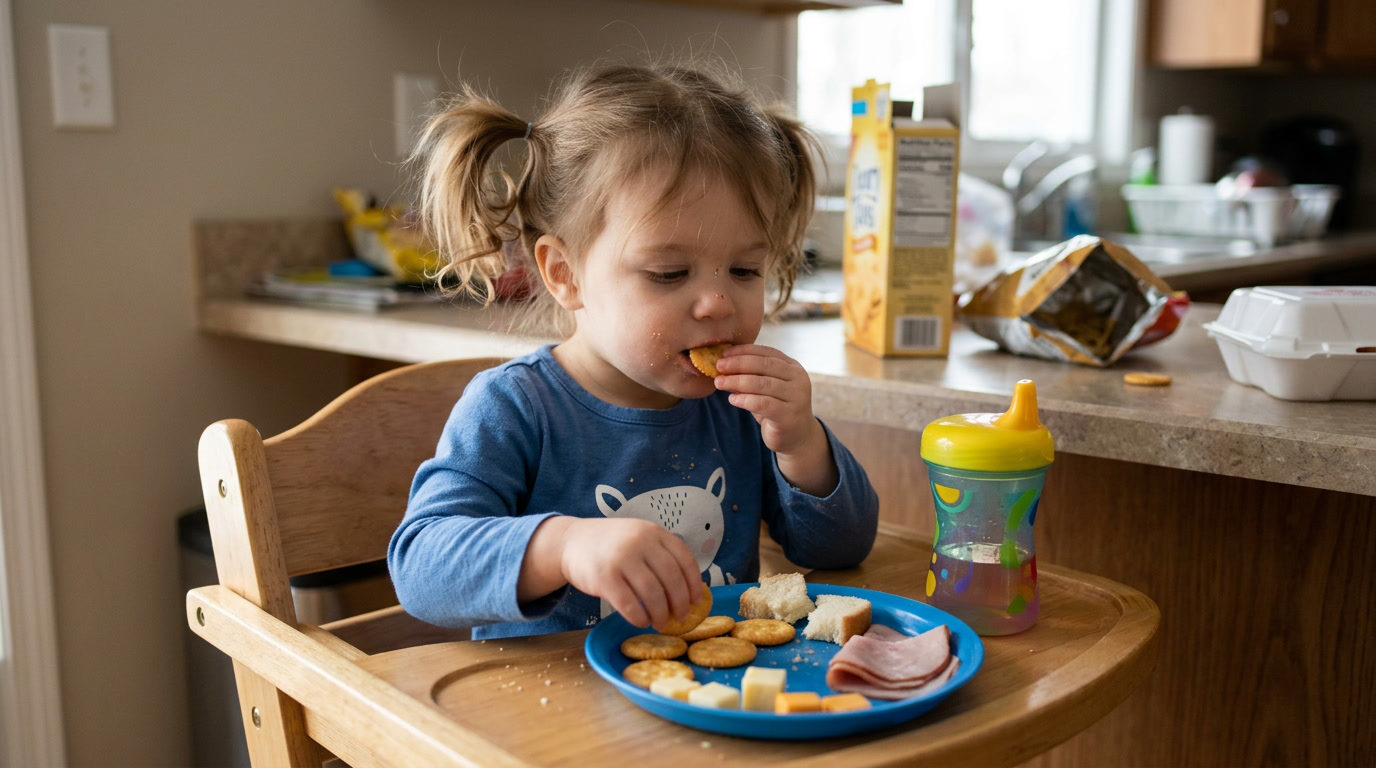
Picky Eater? What Every Parent Actually Needs to Know
Picky eating is extremely common in young children and is usually a normal part of development, not a parenting failure — but there are real signs that tell you when to seek help.

In this article
You put a colourful plate of food in front of your child. They take one look, cross their arms, and announce, "I don't eat that." Sound familiar? You are far from alone. According to a large scale review published in the journal Appetite, roughly 13 to 22% of children show persistent picky eating behaviours during the preschool years, with some studies putting the number as high as 50% when you count milder phases. Picky eating is, statistically speaking, one of the most common things parents worry about.
This article will help you understand:
1. Why Picky Eating Happens: The Biology Behind the Fussiness
Picky eating is not a character flaw or a parenting mistake. It is, for most children, a biologically programmed phase with roots that go back to our evolutionary past.
Here is the short version: young children are hardwired to be suspicious of new foods. Researchers call this neophobia, which literally means fear of the new. From an evolutionary standpoint, a toddler who refused to put unfamiliar things in their mouth was a toddler who didn't accidentally eat a poisonous berry while unsupervised. That protective wariness is baked into the developing brain, and it tends to peak right around the same time children become mobile enough to explore independently: ages 2 to 6.
Food neophobia is a normal and common phenomenon during childhood, particularly in the preschool years, and appears to have a strong genetic component.
— Wardle et al., Appetite (2001)
The texture and sensory piece
Beyond neophobia, sensory sensitivity plays a huge role. A child who gags on anything mushy is not being dramatic. Their nervous system is genuinely registering an unpleasant signal. Children have more taste buds per square centimetre than adults, which means bitter compounds in vegetables taste significantly stronger to them. Add to that individual differences in sensitivity to texture, smell, and even the visual presentation of food, and you can see why a child might reject a meal that looks perfectly fine to you.
If your child seems particularly overwhelmed by sensory input in other areas of life too, not just food, it is worth reading up on how sensory processing differences show up in young children. Some picky eaters are highly sensitive children whose food fussiness is just one piece of a broader picture.
The control piece
Toddlers and preschoolers are in the thick of asserting independence. Food is one of the very few domains where they can exercise genuine control. Refusing a meal is often less about the meal itself and more about the developmental work of saying, "I am a separate person with opinions." Knowing this doesn't make the dinner table less stressful, but it does help you respond without taking it personally.
2. Normal Picky Eating vs. Something More Serious
Most picky eating is entirely normal, but parents deserve a clear framework for knowing when to worry.
Normal developmental picky eating looks like this: your child eats a reasonably varied diet overall even if the list of accepted foods feels short; they can sit at the table without distress; they sometimes try new foods if exposed to them many times; and their growth is tracking normally on the chart. It tends to improve gradually over time, especially in a low pressure home environment.
Something worth discussing with your paediatrician looks more like this:
What is ARFID?
ARFID stands for Avoidant Restrictive Food Intake Disorder. It was officially added to diagnostic manuals in 2013 and describes a persistent pattern of eating that leads to nutritional deficiency, significant weight loss or growth failure, reliance on oral supplements, or marked interference with daily functioning. ARFID is not the same as typical picky eating. It is a clinical condition that usually needs support from a multidisciplinary feeding team including a paediatric dietitian, occupational therapist, and sometimes a psychologist.
The important thing to know is that ARFID is more common in children with neurodevelopmental differences. If you have ever wondered whether your child's food refusal might connect to something broader, it is worth exploring what neurodiversity can look like in the preschool years for a more complete picture.
3. The Division of Responsibility: The Feeding Framework That Actually Works
The single most evidence informed approach to picky eating is something called the Division of Responsibility, developed by registered dietitian and feeding therapist Ellyn Satter.
The framework is beautifully simple. Parents are responsible for what food is offered, when it is offered, and where the meal happens. Children are responsible for whether they eat and how much. Full stop.
Why this works
When parents take over the child's job (forcing bites, bribing with dessert, turning every meal into a negotiation), children lose access to their own hunger and fullness signals. Over time, eating becomes associated with anxiety, power struggles, and performance rather than enjoyment and nourishment. Research consistently shows that pressure to eat tends to increase food refusal rather than reduce it.
When parents stay clearly in their own lane (I made this dinner, I'm putting it on the table, we're eating together at this time), and children stay in theirs (I will eat what I want from what's available), mealtimes tend to get calmer over weeks to months.
What this looks like in practice
4. Repeated Exposure: How Many Times Does It Actually Take?
Research on food acceptance in children consistently points to one thing above almost everything else: repeated, low pressure exposure to new foods over time.
Studies by the Monell Chemical Senses Center in the United States and researchers at University College London have both found that children may need to be exposed to a new food anywhere from 8 to 15 times before they are willing to taste it, and several more times after that before they accept it reliably. This is much more than most parents offer before concluding their child simply doesn't like something.
Repeated exposure to a food in the absence of pressure is one of the most reliably effective strategies for increasing acceptance in young children.
— Birch & Marlin, Child Development (1982)
What counts as an exposure?
This is important. An exposure does not have to mean eating the food. In fact, forcing eating makes the association with that food more negative. Exposures that genuinely build familiarity include:
The goal is to reduce novelty and threat. Every time your child sees broccoli florets on the table, even without eating them, the novelty fades a little more.
Serving size matters too
One floret. That's it. A large portion of a new food on a plate is overwhelming. A small, non-threatening amount alongside familiar foods is much easier for an anxious eater to tolerate. Divided plates and portion controlled dinnerware make this genuinely easier in practice because they naturally limit the amount of any one food that appears in front of your child.


Healthy Nutrition Plate for Picky Eaters - Spin the Arrow - Meals are Fun Again
- Interactive Mealtime Fun: Spin the arrow to mix up your child's meal, encouraging them to try new foods and ma
- Durable & Reusable: Crafted from high-quality ceramic, this plate is built to last and can be reused time and
- Dishwasher & Microwave Safe: Easy to clean and heat up, perfect for busy parents on the go
5. The Mealtime Environment: Small Changes, Big Difference
What happens around the food matters as much as what food you're serving. The physical and emotional environment of mealtime has a measurable effect on whether children eat well.
Sit down, screens off
Research from the AAP (American Academy of Pediatrics) consistently shows that eating in front of screens is associated with poorer food awareness and less healthy intake in children. When children are distracted by a screen, they are not paying attention to hunger and fullness cues, which are the very cues you want them to reconnect with if picky eating is your challenge.
Sitting down together as a family, even just a few times a week, is associated with children having a more varied diet overall. Family meals don't have to be elaborate. Ten minutes at the table together counts.
Take the pressure off the plate
How you talk about food at the table is worth auditing. Phrases that tend to increase pressure: "Just try one bite", "You won't get dessert if you don't eat that", "Your brother eats everything, why won't you?", "I worked really hard on this meal." Phrases that tend to reduce pressure: silence, or neutral comments that have nothing to do with what the child is eating.
This can feel unnatural at first, especially if you're worried about nutrition. But your child's nutritional balance is better assessed over a week than over a single meal. A child who eats almost nothing at dinner but ate reasonably well at breakfast and lunch is probably fine.
The plate itself
Here is something that might surprise you: the plate your child eats from genuinely matters to some children. Children who feel anxious about foods touching each other, or who are overwhelmed by a mixed meal, often eat more calmly from divided dinnerware. It sounds simple, but it removes a whole layer of sensory distress from the equation.
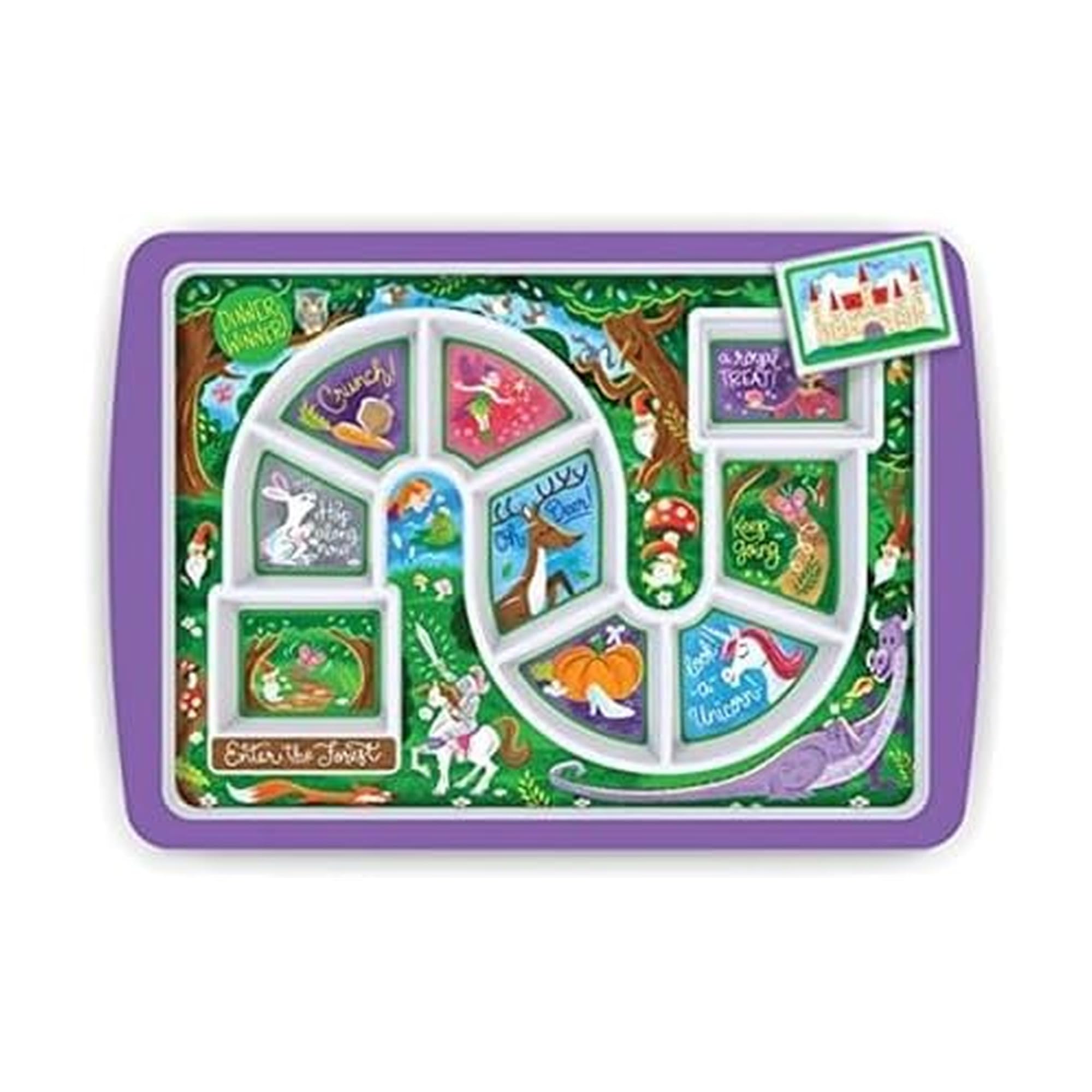


Genuine Fred DINNER WINNER, Enchanted Forest Kid's Dinner Tray - Award Winning - Picky Eater Solutions for Kids and Toddlers - Fun Mealtime - Divided Sections - Interactive Design - Dishwasher Safe
- EAT, PLAY, WIN: In order to woo your picky eater you need a great game plan. DINNER WINNER turns mealtime into
- NUTRITION MADE EASY: Each DINNER WINNER tray provides eat-as-you-go action that helps even the fussiest eaters
- QUALITY MATERIALS: Fred's DINNER WINNER is constructed from 100% virgin melamine that is BPA-free, certified f
The 4E's Novelty divided plates and PLASKIDY zoo divided trays are great budget options for keeping foods neatly separated, which for some children is genuinely the difference between sitting down and walking away. Bright designs and fun themes engage children who respond well to playful presentation.
Nutrition is closely tied to how children eat, not just what. If you're thinking more broadly about what your preschooler needs from food day to day, a good starting point is understanding preschool nutrition including appropriate portion sizes and which nutrients matter most at this age.
6. When to Get Help and What Kind of Help to Look For
Knowing when to move from home strategies to professional support is one of the most important things a parent of a picky eater can understand.
If you have been consistently applying a low pressure, exposure based approach for three to six months and your child's accepted food list is still shrinking, or if the behaviours described earlier in the ARFID section sound familiar, it is time to loop in your paediatrician.
Who can help?
Your paediatrician or GP is the right first stop. They can check growth, rule out underlying medical causes (reflux, constipation, and oral motor difficulties can all drive food refusal), and refer on appropriately.
A paediatric dietitian assesses nutritional adequacy and helps you build a realistic food exposure plan without compromising your child's nutrition in the meantime.
A feeding therapist or occupational therapist with feeding expertise works on the sensory and motor aspects of eating. They use structured, play based approaches like the Sequential Oral Sensory (SOS) approach to help children build tolerance for new textures and flavours in a low pressure setting.
A paediatric psychologist may be involved if anxiety around food is significant, or if the family dynamic around mealtimes has become very distressed.
What to say at the appointment
Be specific. Rather than "she's a picky eater", tell your doctor: "She currently accepts around 12 foods, she has lost three foods in the last two months, she gags when new foods are within touching distance, and mealtimes are causing her visible distress." Specificity helps clinicians triage appropriately.


GSM Brands Kids Dinner Plate for Picky Eating Toddlers: Healthy Constructive Fun Meal Time, Divided Portions, Rainbow Unicorn Themed
- MEAL TIME FUN: Make a game out of dinner with a colorful portioned plate! Your picky eater has met their match
- SMART DESIGN: Bright, fun colors, positive, encouraging messages and adorable unicorns cheer your toddler on t
- PERFECT SIZE: At 8 x 11" our picky eater plate features 7 divided portions, ready to accommodate every part of
The GSM Brands space themed plate is a practical pick if your child is in a feeding therapy programme; therapists often recommend divided, visually engaging plates to reduce the overwhelm of a mixed meal during structured exposure work.
7. Building a Broader Food World: Practical Strategies for the Long Haul
The goal is not a child who eats everything. The goal is a child who grows up with a healthy relationship with food, can eat enough variety to stay nourished, and doesn't experience mealtimes as a battleground.
Get them involved in food before it hits the plate
Children are dramatically more likely to try foods they have had a hand in preparing. This doesn't mean elaborate cooking projects. It means:
The kitchen is a low pressure food exposure space. A child who spent ten minutes washing cherry tomatoes is far more likely to taste one than a child who encounters them cold on a dinner plate.
Food chaining
Food chaining is a technique used by feeding therapists that moves children toward new foods in very small steps, always starting from something they already accept. It was developed and popularised by Cheri Fraker and colleagues and is described in detail in their book Food Chaining.
The idea is that you identify the properties a child accepts (this crunch, this colour, this shape, this brand) and you make tiny modifications over time. For example, if your child eats only one brand of cracker, you might introduce a different shape of the same cracker, then a different cracker from the same brand, then a different brand entirely. You're building toward new foods in steps small enough that the child barely notices.
Smoothies and hidden vegetables: a note on honesty
Many parents ask about hiding vegetables in sauces or smoothies. Does it work nutritionally? Sometimes, yes, in the short term. But most feeding specialists would say that hiding food doesn't help your child learn to eat that food. It bypasses the exposure process rather than supporting it. A child who has broccoli pureed invisibly into pasta sauce has not become more comfortable with broccoli. Mixing the two approaches (offering visible vegetables at the table regularly while also using some hidden ones) is probably a reasonable middle ground.


GSM Brands Kids Dinner Plate for Picky Eating Toddlers: Healthy Constructive Fun Meal Time, Divided Portions, Space Themed
- MEAL TIME FUN: Make a game out of dinner with a colorful portioned plate! Your picky eater has met their match
- SMART DESIGN: Bright, fun colors, positive, encouraging messages and adorable astronauts cheer your toddler on
- PERFECT SIZE: At 8 x 11" our picky eater plate features 7 divided portions, ready to accommodate every part of
What about supplements?
If your child's diet is very restricted, a daily children's multivitamin is a reasonable short term safety net while you work on expanding their diet. Talk to your paediatrician about whether omega-3 supplementation is worth considering, particularly if fish and nuts are on the refused list. Supplements are a bridge, not a solution, but they can reduce the urgency and anxiety around individual meals, which is a genuine practical benefit.
Comparing Mealtime Plate Options for Picky Eaters
| Plate Style | Best Age Range | Key Benefit | Main Drawback | Recommended Product | Price Range |
|---|---|---|---|---|---|
| Game-style divided tray | Ages 3 to 7 | Turns eating into a game with a treat reveal; motivates engagement | More expensive; not all children are motivated by game formats | Genuine Fred Dinner Winner tray | $24–25 |
| Fun-themed divided plates (set) | Ages 2 to 8 | Themed designs (dinosaurs, fire engines) hold attention; full sets for siblings | Melamine only; no heat retention | 4E's Novelty divided plates | $21–22 |
| Interactive spinner plate | Ages 3 to 8 | Spinning arrow adds an element of chance; encourages trying new sections | Ceramic is heavier; not shatterproof | SpinMeal spinner plate | $23–24 |
| Budget space-themed divided plate | Ages 2 to 6 | Bright astronaut design; 7 sections; encouraging messages | Sold individually; fewer sections than sets | GSM Brands space themed plate | $12–13 |
| Budget unicorn-themed divided plate | Ages 2 to 6 | Unicorn design appeals to many preschoolers; cheerful positive messages | Sold individually; fewer colour options | GSM Brands unicorn themed plate | $12–13 |
| Value zoo divided tray set | Ages 18 months to 5 years | Best value per plate; four colours; zoo animal design; raised edges | Fewer sections (4 vs. 7 or 8) | PLASKIDY zoo divided tray set | $7–8 |
Expert Insights on Picky Eating
Conclusion
If there is one thing I want you to take away from this, it is that picky eating almost never says anything meaningful about you as a parent. It says something about the developing nervous system and the very human need for safety and predictability. Children eat best when mealtimes feel calm, familiar, and free from pressure, and that environment is genuinely something you can build, one meal at a time.
The days feel long when you're scraping a full plate into the bin for the third night running. But the research is genuinely on your side here: children who are exposed repeatedly to a wide variety of foods, without pressure, in families that eat together, gradually and quietly expand what they eat. Most picky eaters do get there.
"Your job is to keep showing up to the table. Their job is to learn to eat."
If this helped you, save it, share it with another parent who needs it, or send it to the grandparent who keeps commenting about what's on the plate.
Sources & References
- Wardle, J., Carnell, S., & Cooke, L. "Parental control over feeding and children's fruit and vegetable intake: How are they related?" Journal of the American Dietetic Association, 2005.
- Wardle, J., Cooke, L. J., Gibson, E. L., Sapochnik, M., Sheiham, A., & Lawson, M. "Increasing children's acceptance of vegetables; a randomized trial of parent-led exposure." Appetite, 2003.
- Birch, L. L., & Marlin, D. W. "I don't like it; I never tried it: effects of exposure on two-year-old children's food preferences." Appetite, 1982.
- Birch, L. L., & Fisher, J. O. "Development of eating behaviors among children and adolescents." Pediatrics, 1998.
- American Academy of Pediatrics. "Picky Eaters." HealthyChildren.org. https://www.healthychildren.org
- Satter, E. "Secrets of Feeding a Healthy Family." Kelcy Press, 2008. Ellyn Satter Institute: https://www.ellynsatterinstitute.org
- Cooke, L. "The importance of exposure for healthy eating in childhood: a review." Journal of Human Nutrition and Dietetics, 2007.
- Fraker, C., Fishbein, M., Cox, S., & Walbert, L. "Food Chaining: The Proven 6-Step Plan to Stop Picky Eating, Solve Feeding Problems, and Expand Your Child's Diet." Da Capo Press, 2007.
- American Psychiatric Association. "Diagnostic and Statistical Manual of Mental Disorders, Fifth Edition (DSM-5)." 2013. (Includes ARFID criteria.)
- Taylor, C. M., & Emmett, P. M. "Picky eating in children: causes and consequences." Proceedings of the Nutrition Society, 2019.
Frequently Asked Questions
Is picky eating a phase or will it last forever?
How many foods should my child be eating?
Should I make a separate meal for my picky eater?
Do divided plates actually help?
Is bribery with dessert a bad idea?
My child only eats beige food. Is that normal?
At what age should I be really worried about picky eating?
Was this helpful?
Thanks — your feedback helps us pick what to write next.