
Self Care Won't Fix Parental Burnout. Redefining Motherhood Might
Bubble baths and solo coffee runs treat the symptoms of parental burnout, not the cause, because the real problem is a cultural definition of motherhood that demands constant, invisible, unpaid labor with no structural support.
In this article
Sarah puts her toddler down for a nap, opens her phone, and instead of resting, she scrolls a list titled "50 Self Care Ideas for Busy Moms." She has tried the bath. She has tried the journal. She still feels like she is running on fumes with a smile stapled to her face. Researchers at the University of Louvain in Belgium, who developed one of the most widely used parental burnout assessment tools, estimate that between 5 and 8 percent of parents in Western countries meet the clinical threshold for parental burnout, with rates climbing in cultures that prize individual achievement and perfectionism (Roskam & Mikolajczak, 2019). That is millions of parents, and the number likely undercounts fathers and caregivers who never get asked the question.
This article is not another list of ten minute self care hacks. It looks at why self care alone rarely resolves burnout, what the research actually says causes it, and what redefining motherhood in practical terms looks like in your own home.
What you'll understand:
1. What Parental Burnout Actually Is (and Why Self Care Misses It)
Parental burnout is a specific, measurable syndrome, not a mood or a bad week. Moïra Mikolajczak and Isabelle Roskam, the psychologists who built the Parental Burnout Assessment scale used in over 40 countries, define it through four core symptoms: exhaustion related specifically to the parenting role, emotional distancing from your children, a sense of being fed up with parenting, and a loss of parental self efficacy, meaning you no longer feel like you're any good at this job you're doing around the clock (Roskam, Brianda & Mikolajczak, 2018).
That specificity matters. A parent can be exhausted at work and still feel energized picking their kid up from school. Parental burnout is when the parenting role itself has become the thing draining you dry, regardless of how much sleep you get or how many pedicures you book.
Why bubble baths don't touch it
Self care culture treats burnout as a personal energy deficit that you refill with pleasant activities. But parental burnout research points to something closer to chronic, unmitigated stress exposure combined with an imbalance between the risk factors in a parent's life (financial strain, lack of support, perfectionism) and the resources available to offset them (partner support, community, realistic expectations). A hot bath does nothing to change that ratio. It's a pause button, not a fix.
Parental burnout results from a chronic imbalance between the risks and the resources in the parenting context. It is not solved by rest alone; it requires reducing the risks or increasing the resources, ideally both.
— Isabelle Roskam, Professor of Psychology, University of Louvain (2018)
2. Why Self Care Advice Can Backfire for Exhausted Parents
Self care advice backfires when it becomes one more task on an already unmanageable list, which is exactly what happens for most burned out parents. Telling a mother running on four hours of broken sleep to "make time for herself" assumes she has spare time, spare money, or a partner willing to cover the gap. For many, she doesn't. The advice lands as another failure: one more thing she's not doing right.
The guilt trap
Self care messaging is often wrapped in the language of deserving rest, which quietly reinforces the idea that rest is a reward for good behavior rather than a basic human need. Parents already prone to guilt (and burnout correlates strongly with perfectionism and guilt proneness, per Mikolajczak's research) hear "you deserve a break" and translate it internally to "I haven't earned one yet."
What tends to actually help
Research on burnout recovery across professions (not just parenting) consistently points to reducing the demand or increasing support, rather than simply adding recovery activities on top of an unchanged load. Christina Maslach, the psychologist whose burnout inventory remains the gold standard across occupational research, has argued for decades that burnout is primarily an organizational and structural problem, meaning the environment needs to change, not just the individual's coping skills (Maslach & Leiter, 2016). Parenting has no HR department, but the same principle applies at home.
If you're navigating this while also juggling remote work, the way you physically and mentally separate roles matters more than people expect. Setting up a workspace that signals work mode to your brain and your kids can reduce the constant task switching that quietly drains parents throughout the day, even before burnout symptoms show up.
3. The Cultural Root: How "Good Mother" Standards Fuel Burnout
The modern definition of a "good mother" is a major driver of burnout because it demands constant availability, endless patience, and self sacrifice as proof of love. Sociologist Sharon Hays coined the term "intensive mothering" in 1996 to describe an ideology that positions mothers as the primary, ever present, endlessly resourced architects of their children's development, emotional health, education, and future success. Three decades later, that ideology has not faded. If anything, social media has amplified it by turning private parenting choices into public performance.
The invisible workload
A lot of what exhausts mothers isn't the visible tasks (feeding, driving, homework) but the mental load underneath them: remembering the pediatrician appointment, tracking which shoes still fit, noticing the school project deadline before the teacher's email even arrives. Sociologist Allison Daminger's research on cognitive labor in households found that this anticipating, identifying, and monitoring work falls disproportionately on mothers even in households that describe themselves as egalitarian (Daminger, 2019).
The mental load is not evenly distributed even when physical tasks are. Women disproportionately carry the cognitive work of noticing what needs to be done and deciding when.
— Allison Daminger, Sociologist, Harvard University (2019)
Signs your standards have quietly become unsustainable
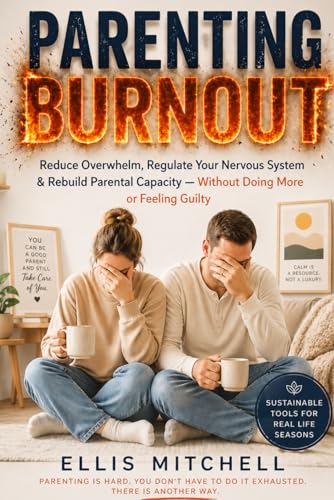
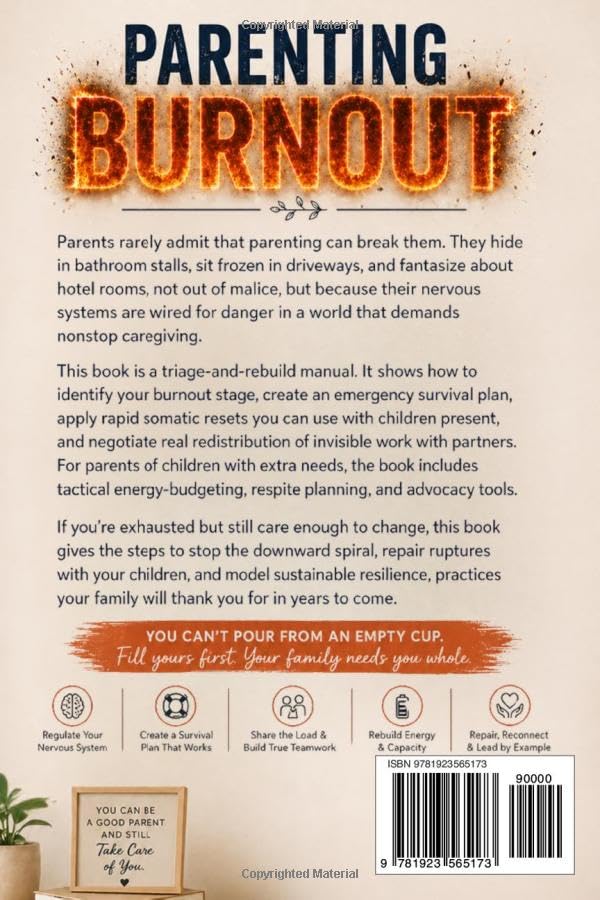
Parenting Burnout: Reduce Overwhelm, Regulate Your Nervous System & Rebuild Parental Capacity — Without Doing More or Feeling Guilty (The Burnout Reset Guides)
- Parenting & Relationships
- Family Relationships
- Dysfunctional Families
4. Redefining Motherhood: What It Looks Like in Practice
Redefining motherhood means replacing an impossible, all consuming ideal with a version of the role that is sustainable, shared, and honest about limits. This isn't about loving your children less. It's about refusing a definition of love that requires your own erosion.
Shifting from solo hero to shared system
Family therapist and burnout researcher Dr. Sheila McCarthy, alongside decades of family systems literature, points to a consistent pattern: households where caregiving responsibilities are explicitly named, divided, and reviewed regularly show lower burnout scores than households operating on assumed roles. The word "explicitly" matters. Vague intentions to "help more" rarely survive a hard week.
Three concrete shifts that reduce burnout risk
1. Name the invisible tasks out loud. Write down every recurring mental task for one week, appointments, permission slips, gift buying, and assign an owner to each one, not a helper. 2. Lower the bar on non essential standards. Decide together which household expectations are actually necessary and which are inherited performance (matching outfits, homemade everything, a spotless house at all times). 3. Build in recovery that doesn't depend on someone else's goodwill. A recurring, protected block of time that exists regardless of how the week has gone, not a reward contingent on how well you managed.
This mirrors a broader shift happening in families generally. As more fathers take on primary caregiving roles, research is showing that the rise of the stay at home dad is forcing a useful reexamination of which parenting tasks are actually gendered by biology and which were simply gendered by habit. Families who question that split early tend to distribute the mental load more evenly from the start.
| Approach | Best For | Primary Benefit | Main Drawback | Recommended Product | Price Range |
|---|---|---|---|---|---|
| Solo self care routine | Mild, occasional stress | Quick, low effort relief | Doesn't address root causes | Burnout: The Secret to Unlocking the Stress Cycle | $9 to $10 |
| Structured burnout workbook | Parents wanting a guided plan | Step by step, trackable progress | Requires consistent time investment | Burnout Recovery Workbook for Women | $15 to $20 |
| Nervous system focused recovery | Chronic stress, physical symptoms | Addresses stress response, not just mindset | Slower, less immediate results | BURNOUT RECOVERY FOR WOMEN Practical Guide | $12 to $18 |
| Autonomy supportive parenting shift | Parents wanting less control, more delegation | Reduces daily decision fatigue | Requires partner or co parent buy in | Autonomy Supportive Parenting | $17.70 |
| Structural, household level reset | Families with uneven task distribution | Fixes imbalance at the source | Requires honest, sometimes hard conversations | Parenting Burnout: The Burnout Reset Guides | $14 to $19 |
| 30 day guided reset | Parents wanting a defined timeline | Clear start and end point | Not designed for ongoing maintenance | Burnout Recovery Workbook: Understanding Mental Overload | $10 to $16 |
5. When Redefining Isn't Enough: Recognizing Clinical Burnout
Sometimes structural changes and cultural reframing help, but the exhaustion still doesn't lift, and that is a signal to look at the nervous system itself, not just the schedule. Chronic parenting stress activates the same physiological stress response as any other prolonged threat: elevated cortisol, disrupted sleep architecture, and a nervous system that stays in a low grade fight or flight state long after the actual demand has passed. Emily Nagoski and Amelia Nagoski, authors of the widely cited book on the stress cycle, describe this as an incomplete stress response, meaning the body needs a physical or physiological signal that the stressor is over, not just an intellectual understanding that things are fine now.
Why "I know I should relax" doesn't work
You can rationally know your children are safe and still feel your body braced for the next demand. That gap between knowing and feeling is exactly why nervous system focused recovery work (breathing techniques, movement, co regulation with a partner or friend) tends to outperform purely cognitive advice like "just think positive" or "try to let it go."
Red flags that warrant professional support
6. Building a Sustainable Version of Motherhood, Long Term
A sustainable version of motherhood requires ongoing maintenance, not a one time fix, because both the child's needs and your own capacity keep changing over time. What worked when your baby was six months old will not work when they are six years old and have opinions, homework, and a social calendar of their own. Redefining motherhood is a practice you return to, not a decision you make once and file away.
Revisit the definition as your family changes
Every major transition (a new baby, a child starting school, a move, a partner's job change) is a natural checkpoint to ask again: what does a good enough version of this role actually require right now, and what have we been doing out of habit rather than necessity?
Technology's role, used carefully
Some families are finding that AI powered tools can quietly absorb some of the invisible mental load, tracking appointments, generating meal plans, managing schedules, freeing up cognitive space that used to be spent remembering rather than parenting. Understanding what AI parenting technology actually does and where its limits are can help you decide which tasks are worth automating and which still need your full presence.
A practical checklist for sustainable motherhood
Fatherhood is shifting alongside motherhood in this conversation too. Research on how fatherhood has changed in the digital era shows fathers increasingly want to be seen as equal partners in the mental load, not just backup help, which opens real room for renegotiating the default assumptions that fuel maternal burnout in the first place.


Burnout: The Secret to Unlocking the Stress Cycle
- Health, Fitness & Dieting
- Women's Health
- Image Unavailable Image not available forColor:
Expert Insights
Motherhood was never supposed to be a solo performance measured against an impossible standard, and the exhaustion so many parents feel is not a personal failing, it's a reasonable response to an unreasonable expectation. Real recovery starts when you stop asking "how do I cope better" and start asking "what actually needs to change." If this article helped you see your exhaustion differently, save it, share it with another parent who needs the permission, and keep building a version of motherhood that you can actually sustain.
Sources & References
- Roskam, I., & Mikolajczak, M. "Gender Differences in the Nature, Antecedents and Consequences of Parental Burnout." Sex Roles, 2019.
- Roskam, I., Brianda, M. E., & Mikolajczak, M. "A Step Forward in the Conceptualization and Measurement of Parental Burnout: The Parental Burnout Assessment (PBA)." Frontiers in Psychology, 2018.
- Maslach, C., & Leiter, M. P. "Understanding the Burnout Experience: Recent Research and Its Implications for Psychiatry." World Psychiatry, 2016.
- Daminger, A. "The Cognitive Dimension of Household Labor." American Sociological Review, 2019.
- Hays, S. "The Cultural Contradictions of Motherhood." Yale University Press, 1996.
- Nagoski, E., & Nagoski, A. "Burnout: The Secret to Unlocking the Stress Cycle." Ballantine Books, 2019.
Frequently Asked Questions
Is parental burnout the same thing as depression?
Can fathers experience parental burnout too?
How is parental burnout different from just being a tired parent?
Does self care have any place in burnout recovery?
What is the mental load and why does it matter for burnout?
When should I see a doctor about parenting burnout?
How can partners help reduce parental burnout at home?
Was this helpful?
Thanks — your feedback helps us pick what to write next.