Why Outside Is the Best Place for Kids to Grow Up
Outdoor play is not optional enrichment; it is a biological need for children ages 0–12, supporting physical health, emotional regulation, cognitive development, and long term wellbeing in ways that no indoor environment can fully replicate.
In this article
There is a statistic that stops parents cold every time I share it in clinic: according to a 2016 survey by the National Trust in the UK, children today spend an average of just four hours a week playing outside. Prison inmates in many US states are guaranteed at least two hours of outdoor time per day. That is more than double what the average child gets. Let that land for a moment.
We live in an era of enrichment activities, structured learning, and careful supervision, and somehow we have engineered the outdoors almost entirely out of childhood. The result is a generation of kids who are more anxious, less physically robust, and less confident than any previous cohort on record.
This article will walk you through exactly what the science says and what you can do about it today.
What you'll understand after reading:
1. The Outdoor Play Crisis: What the Numbers Actually Tell Us
The situation is more serious than most parents realise, and it has gotten dramatically worse in the past three decades. Children in the United States, UK, Australia, and most of Western Europe now spend the majority of their waking hours indoors, a shift that carries measurable health consequences.
The American Academy of Pediatrics (AAP) has described the decline in outdoor, unstructured play as a genuine public health concern. In a landmark policy statement, they noted that children who engage in regular free play outdoors show stronger executive function, better emotional regulation, and lower rates of anxiety and depression compared to peers with highly scheduled, indoor-heavy days.
The numbers from the Centers for Disease Control and Prevention are equally sobering. Only one in three children in the US gets daily physical activity, and rates of childhood obesity, type 2 diabetes, and myopia have all tracked upward in parallel with declining outdoor time. That is not a coincidence; it is causation that researchers have now established across multiple independent studies.
Why this happened
The decline has multiple drivers: - Longer school days with reduced or eliminated recess - More homework in the early years - Increased screen based entertainment in the home - Parental anxiety about outdoor safety (even as crime rates have actually fallen) - Urban design that prioritises cars over children's movement - A cultural shift toward measurable, resumé friendly activities over free time
What "enough" actually looks like
The WHO recommends that children ages 5–17 accumulate at least 60 minutes of moderate to vigorous physical activity daily, with the emphasis that a significant portion of this should happen outdoors. For children under 5, the guidance is even more generous: active play throughout the day, as much as possible outside.
Sixty minutes is the floor. The research on cognitive and emotional benefits points to even greater gains from two or more hours of outdoor time daily, especially when it involves some unstructured free play rather than adult directed sport alone.
2. What Nature Does to a Child's Brain and Body
Being outside is not just "getting some air." Nature exposure is a measurable biological intervention, and the research behind it is some of the most consistent in developmental paediatrics.
The attention restoration effect
Attention Restoration Theory, developed by Rachel and Stephen Kaplan at the University of Michigan, proposes that natural environments restore depleted attention resources in a way that built environments simply cannot. Urban and indoor spaces demand what researchers call "directed attention," the effortful, willed focus we use to complete tasks. Nature, by contrast, engages "involuntary attention," a gentler, effortless form of engagement that allows the brain's directed attention system to recover.
In children, this has direct clinical relevance. A study published in the American Journal of Public Health by Frances Kuo and Andrea Faber Taylor found that children with ADHD showed significantly reduced symptom severity after activities in green, natural settings compared to indoor or urban outdoor settings. The effect was comparable in magnitude to a dose of methylphenidate (Ritalin), though obviously not a replacement for medical treatment when indicated.
Doses of nature might serve as a safe, inexpensive, widely accessible new tool in the management of ADHD.
— Frances Kuo and Andrea Faber Taylor, American Journal of Public Health (2004)
Myopia and the role of natural light
Myopia (short sightedness) has reached epidemic proportions among children in East Asia, and rates in Western countries are climbing fast. The culprit, researchers now believe, is not screen time per se but rather the absence of bright, natural light. Studies from multiple groups, including a large meta-analysis published in Ophthalmology, have found that each additional hour of outdoor time per day reduces a child's risk of developing myopia by around 2%. Natural light triggers dopamine release in the retina, which regulates eye growth and reduces the axial elongation that causes myopia.
This single finding alone is a compelling reason to get your child outside every day, regardless of weather.
Vitamin D and immune function
Natural sunlight remains the most efficient way for children to produce vitamin D, which is essential for bone development, immune regulation, and mood. Vitamin D insufficiency is common in children who spend most of their time indoors, particularly in northern latitudes through the winter months. The AAP notes that many children in the US are not meeting recommended vitamin D levels through diet alone, making outdoor sun exposure (with appropriate age appropriate sun protection) genuinely important.
The stress response
Cortisol levels in children drop measurably after time in natural, green environments. A study from the University of Illinois found that children who played in greener, more natural settings showed lower physiological stress markers compared to those who played on conventional, hard-surface playgrounds. Over time, regular nature exposure appears to recalibrate the body's stress response system, building a more resilient, less reactive nervous system. That has implications for anxiety, sleep quality, and even immune function.
3. Unstructured Outdoor Play: The Brain Builder Adults Keep Undervaluing
Here is one of the most important and consistently under-appreciated findings in developmental science: unstructured play, particularly outdoors, builds executive function more effectively than structured adult directed activities do.
Executive function is the umbrella term for the cognitive skills that allow children to plan, focus, follow instructions, juggle multiple tasks, and regulate their own emotions and behaviour. It is, arguably, the single strongest predictor of academic success, healthy relationships, and life outcomes, more predictive than IQ on many measures.
Why outdoors specifically?
Indoor play is valuable, but outdoor environments offer something indoors cannot: genuine unpredictability. When a child navigates a hill, manages a conflict with a peer over territory in the garden, works out how to dam a stream, or coordinates a game of tag with children of different ages and abilities, they are exercising real world problem solving in a context where the stakes feel real but the consequences of failure are manageable.
Research from the University of Sydney and from Scandinavian outdoor kindergarten studies consistently shows that children in more naturalistic outdoor play environments demonstrate stronger planning skills, better impulse control, and richer social negotiation than children in highly structured settings.
Learning how imaginative play shapes creative thinking is worth understanding alongside the outdoor play research, because the two reinforce each other powerfully: outdoor environments are the richest possible setting for imaginative, open-ended play.
Risk and resilience
There is a growing body of evidence that what researchers call "risky play" (play that involves height, speed, rough and tumble contact, sharp tools, or elements of danger) is not only safe in relative terms but is actively necessary for healthy development.
Risky play builds:
Professor Ellen Sandseter at Queen Maud University College in Norway has published extensively on this topic, noting that children who are consistently protected from all risk do not develop the internal resources to manage it. The outdoor environment, with its natural variation in terrain, weather, and social opportunity, is the ideal setting for this kind of calibrated challenge.
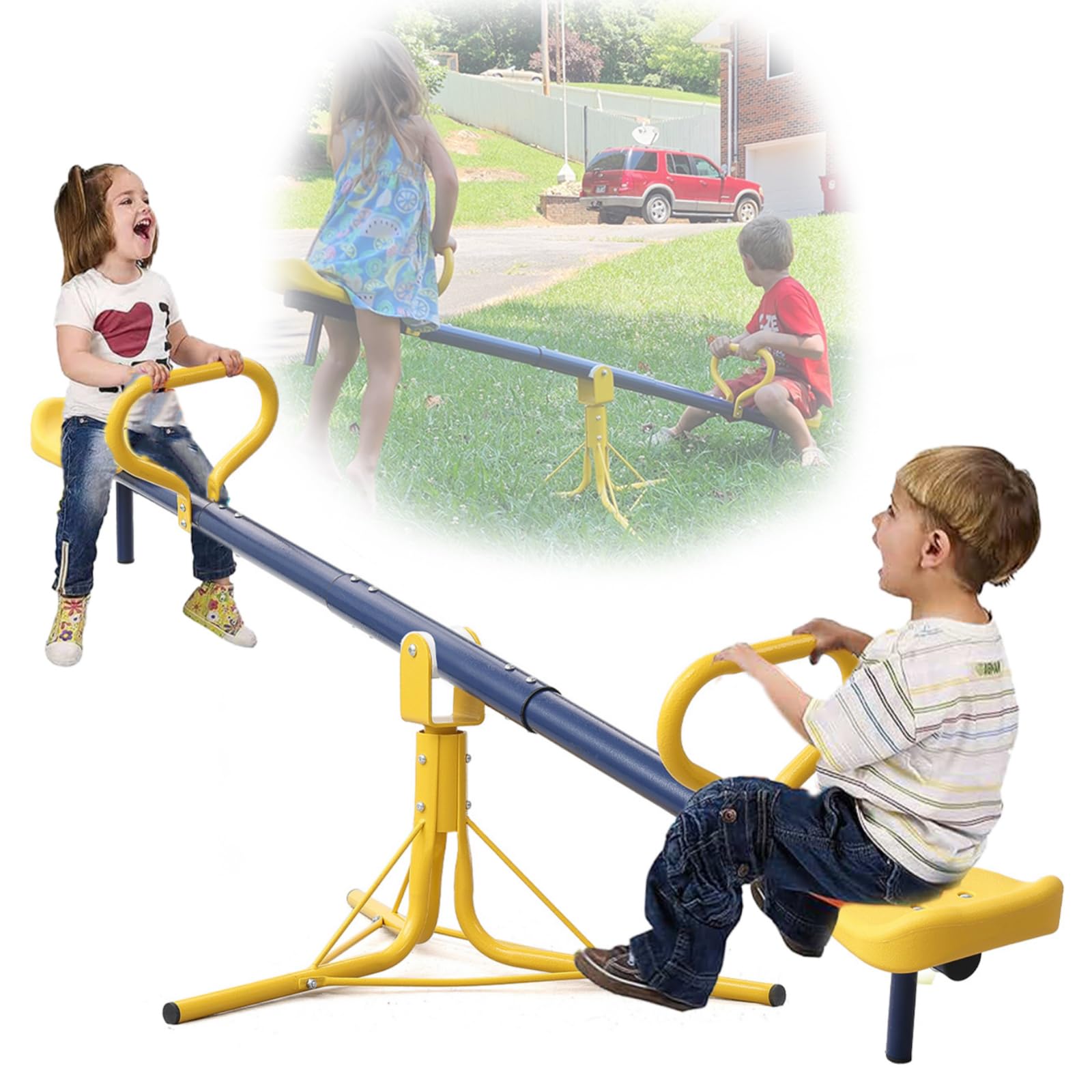

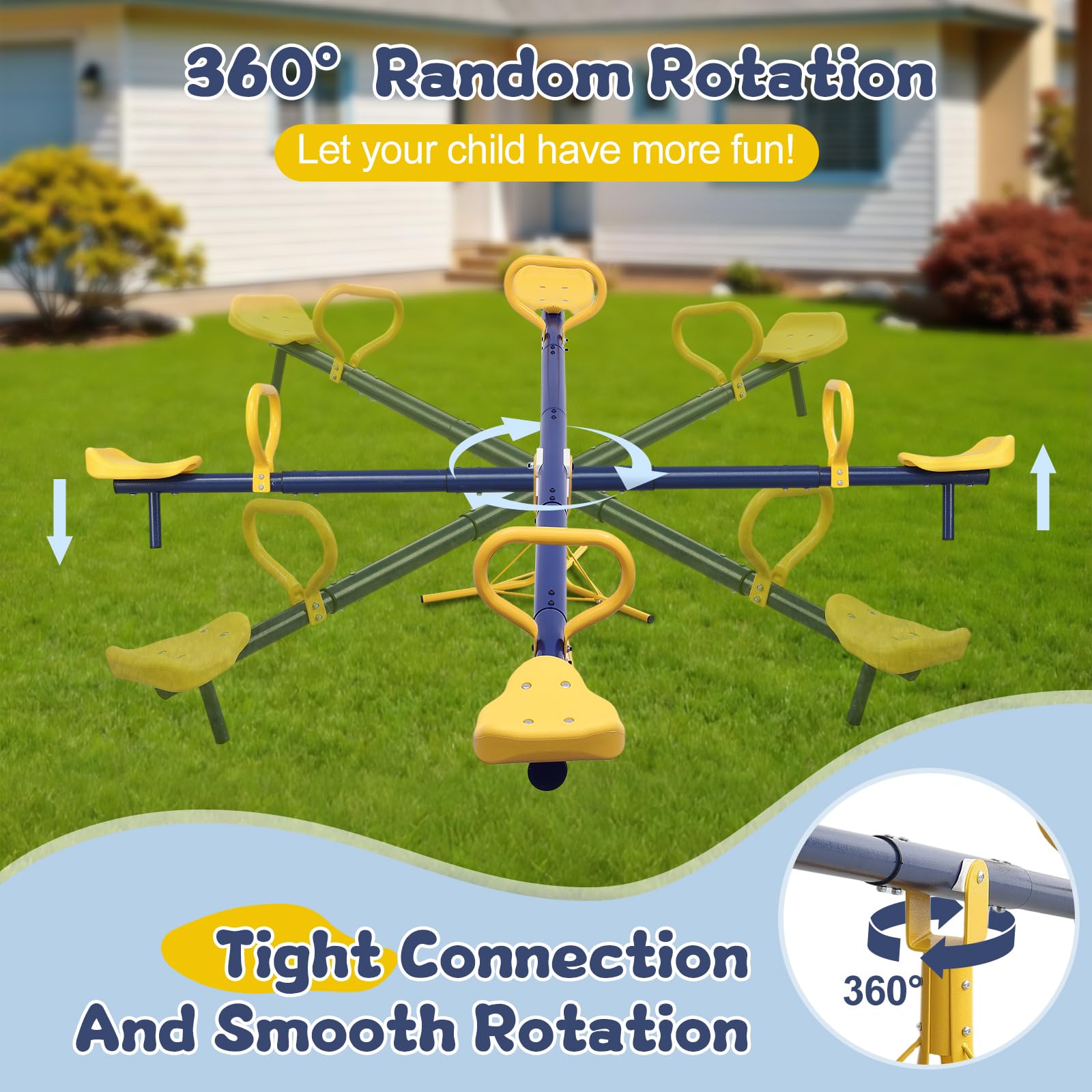
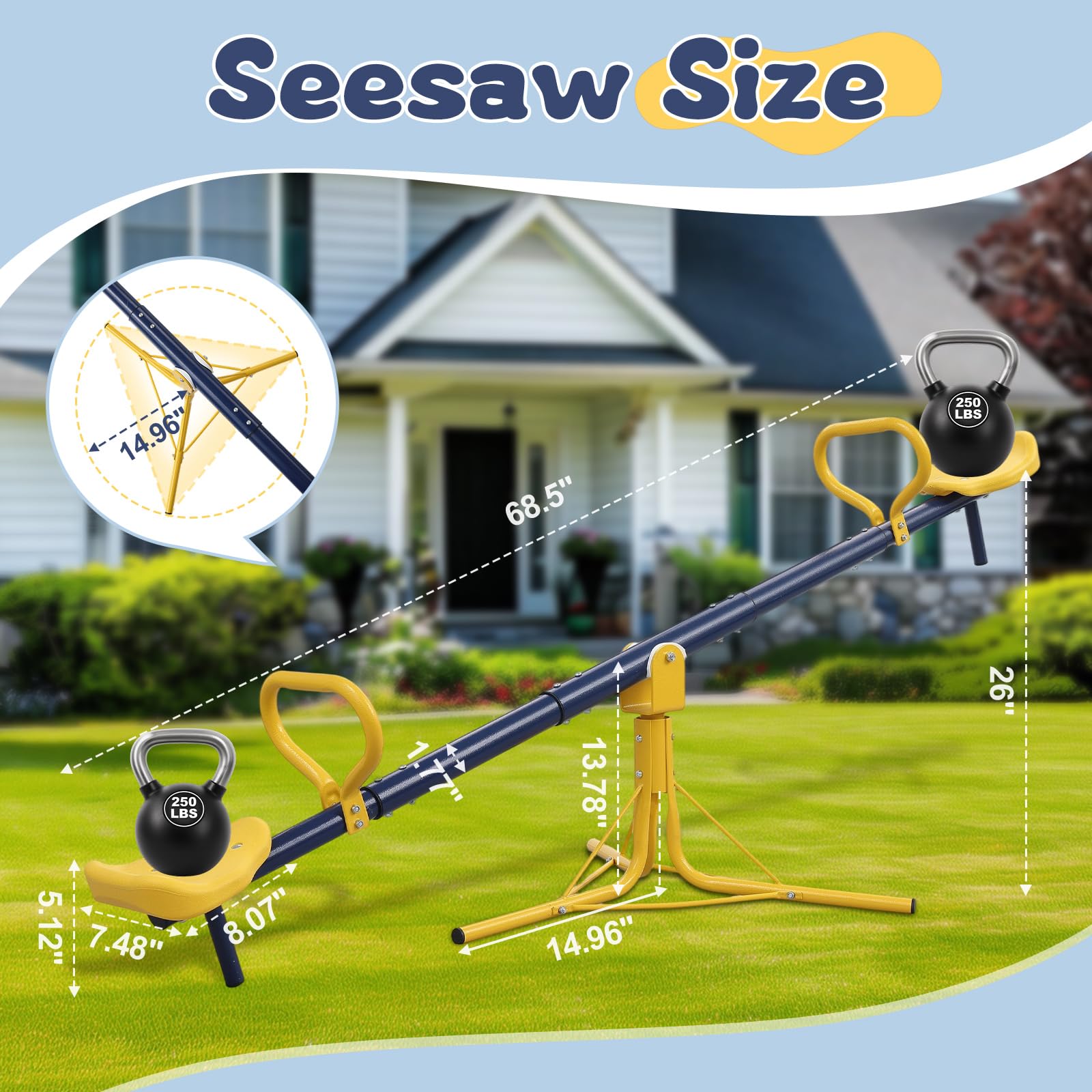
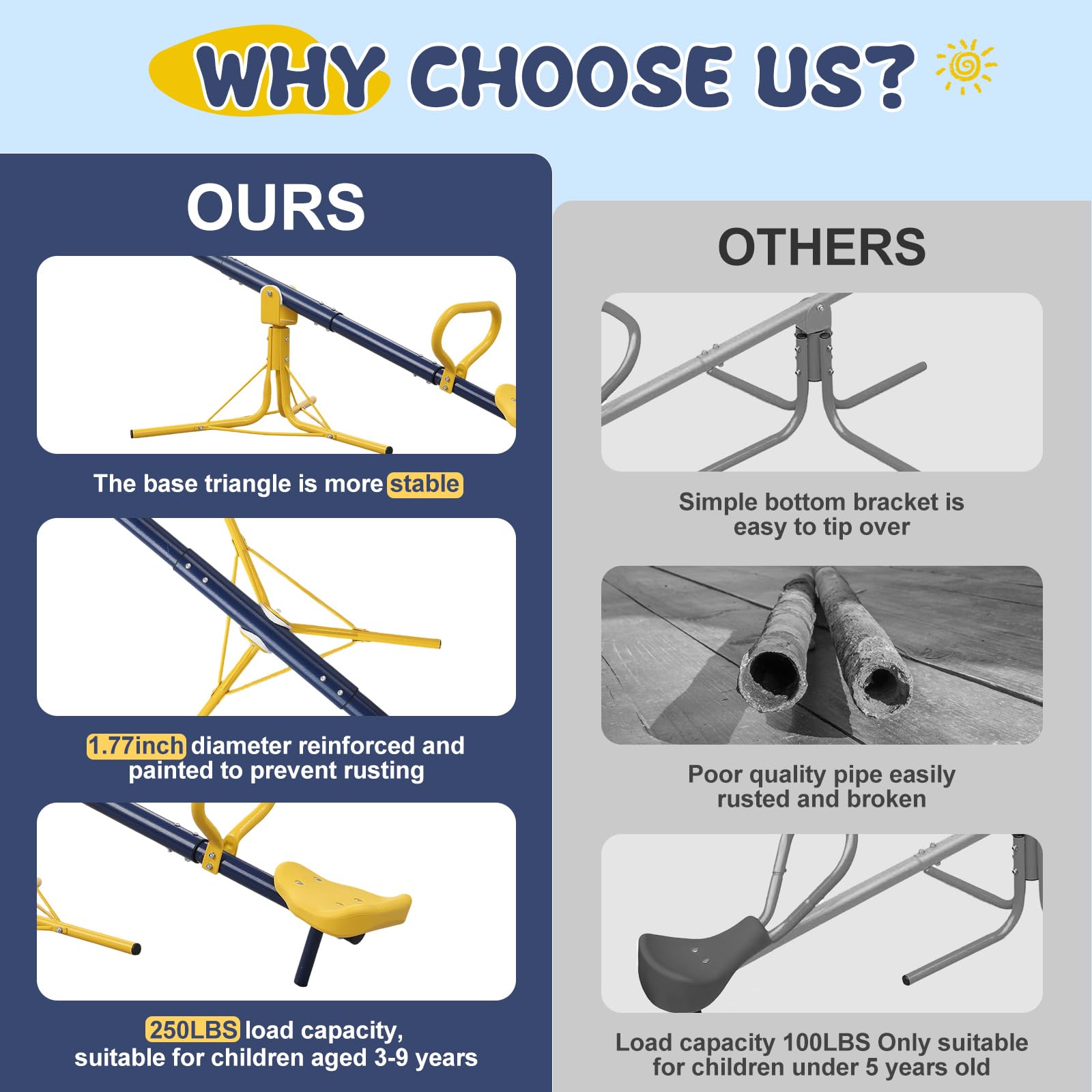
Seesaw for Kids Outdoor, Heavy Duty 250LB 360° Rotating Seesaw Outdoor Teeter Totter with Sit and Spin Design for Backyard Park & Balcony Ideal Outdoor Toys for Kids Ages 3 4 5 6 7 8
- STRONG AND DURABLE: The children's teeter totter made from high-strength steel tubing with a rust-resistant co
- 360° DESIGN: This innovative teeter totter for kids outdoor breaks through the traditional way of playing and
- KID-SIZED: Features smooth triangular handles for a secure grip and a heavy-duty frame supporting up to 250 lb
4. Physical Development: What Outdoor Play Does That PE Class Cannot
Physical education is valuable, but it is not a substitute for free outdoor movement. The distinction matters, and the research spells it out clearly.
Structured PE classes typically involve adult direction, uniform tasks, and a relatively predictable physical environment. Outdoor free play involves unpredictable terrain, self selected movement, social negotiation, and the intrinsic motivation that comes from choosing your own activity. These two experiences train different physical and cognitive systems.
Gross motor development in the early years
For children under 6, outdoor free play is the primary driver of gross motor skill development. Running on uneven ground, climbing, jumping, hanging, rolling, and balancing on natural surfaces develop the proprioceptive system (the body's sense of its own position in space) in ways that flat indoor surfaces simply cannot.
A child who regularly plays on natural, varied terrain develops:
For babies and very young toddlers, the outdoor environment offers sensory richness that supports neurological development. Different textures underfoot, moving leaves overhead, wind on skin, the sound of birds and traffic and rain: all of these provide the varied sensory input that a developing nervous system is designed to process. If you want to understand what your baby or young toddler needs physically in their first year, the developmental milestones at three months give a useful foundation from which to track how outdoor experience should grow.
Games, equipment, and the role of structured outdoor play for older children
For school age children, structured outdoor games occupy a productive middle ground: they involve physical challenge and rule following, but the social negotiation, spontaneous adaptation, and peer management remain in the children's hands.
Classic outdoor games like tetherball, bean bag toss, ring toss, and soccer have survived generations of play for good reason. They require whole-body coordination, strategic thinking, communication, and tolerance of both winning and losing. These are not trivial skills.


unanscre 31PCS 3 in 1 Carnival Outdoor Games Combo Set for Kids, Soft Plastic Cones Bean Bags Ring Toss Game, Gift for Birthday Party/Xmas
- Carnival Outdoor Games Combo Set: Still considering what carnival game to play? unanscre 3 in 1 Carnival Outdo
- Suitable for Children: Multiple color discrimination and activity props not only let you and your kids enjoy i
- Multiple Game Combinations: 3 in 1 carnival games for kids party, Soft Plastic Cones Bean Bags Ring Toss can c
Ring toss and cone games like the unanscre Carnival Games Set are particularly good for ages 4 and up because they develop hand-eye coordination and spatial judgment while remaining accessible to children across a wide ability range. The social element, negotiating rules, keeping score, managing disputes, is part of the developmental benefit.
For children who love competitive play, a proper soccer setup can transform a backyard or park visit. The MUROZA Pop Up Soccer Goal Set is a practical option: it comes with goals, a ball, and cones, so you have everything needed for a proper game without a large footprint. The AAP specifically endorses physical activity that is enjoyable and chosen by the child as more likely to become a lifelong habit.

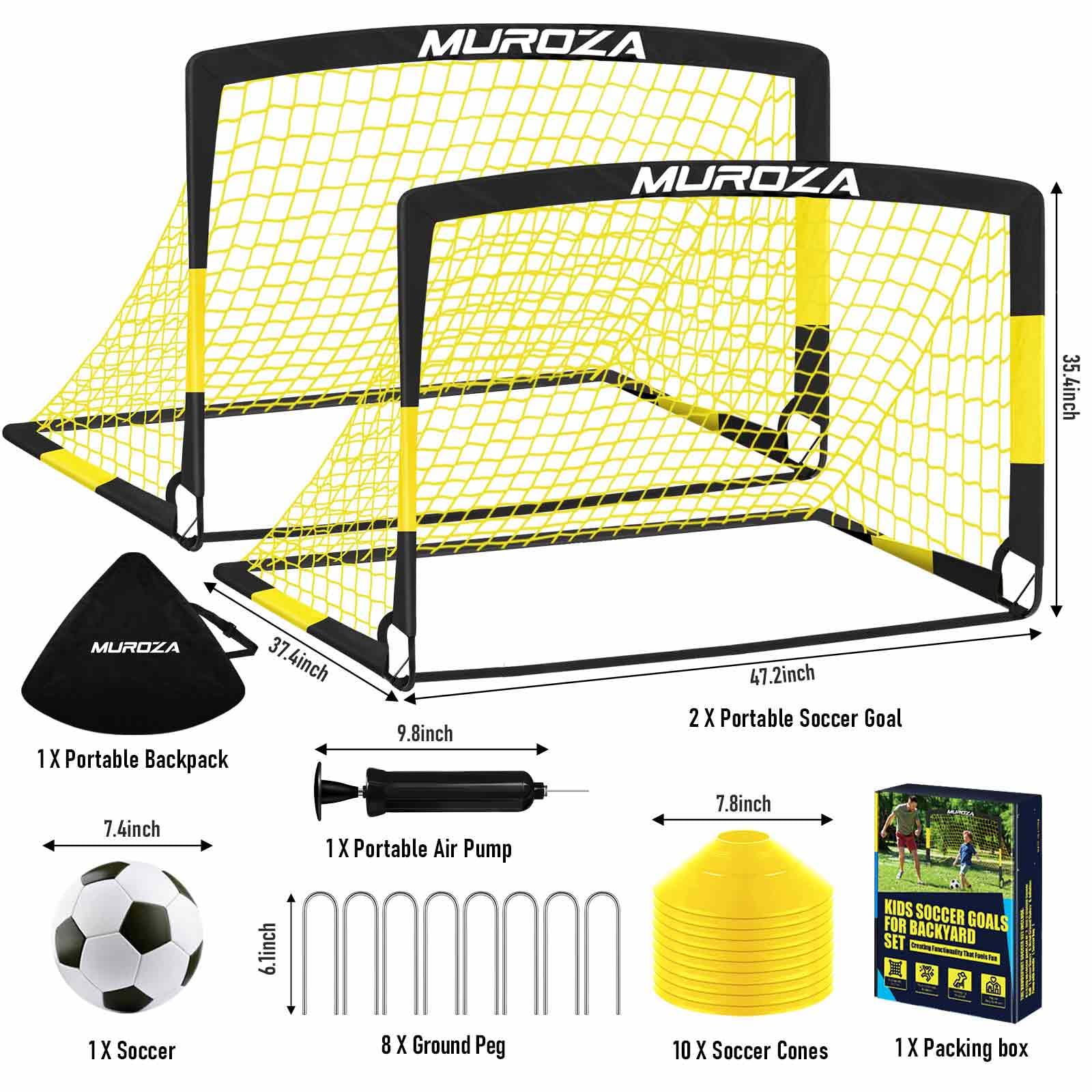


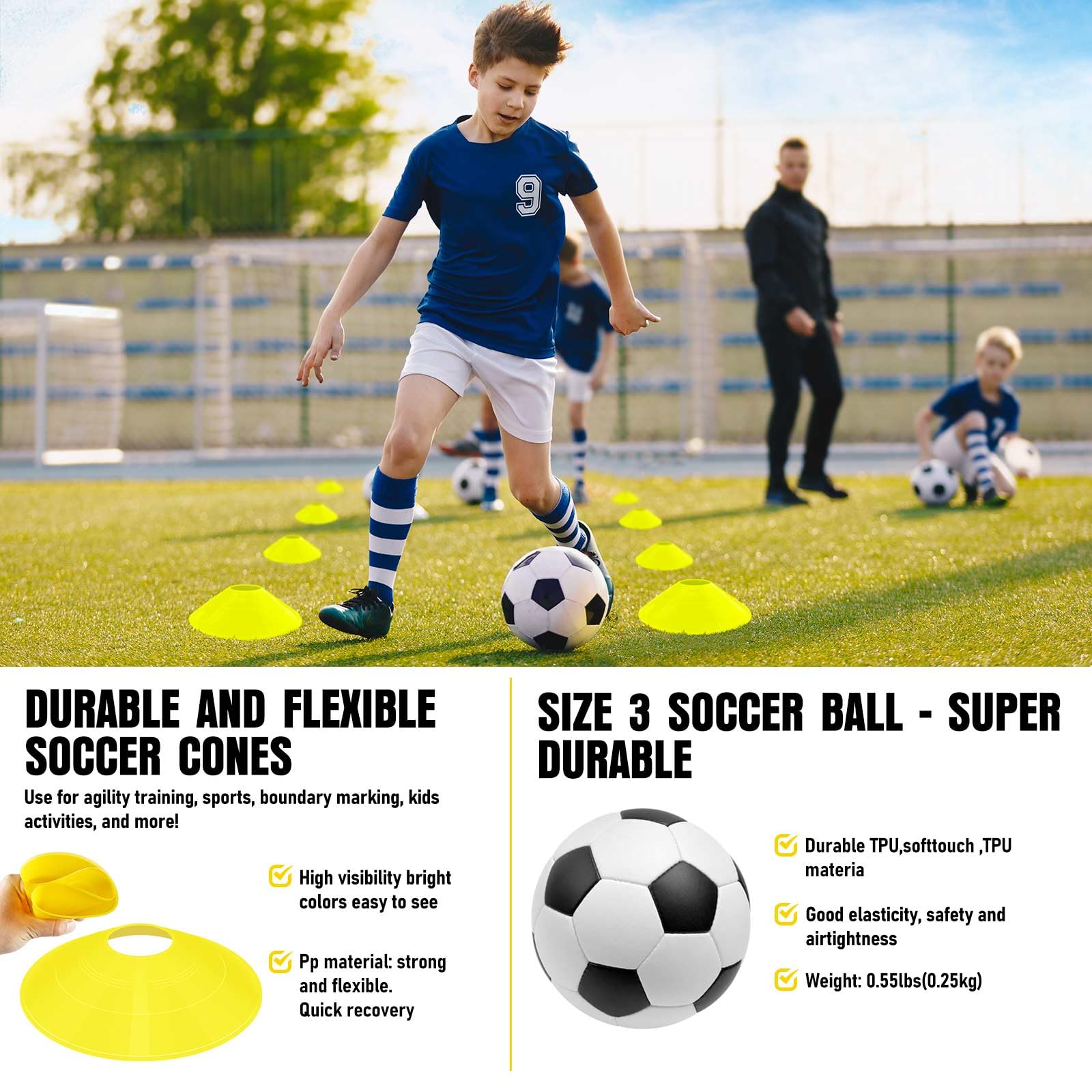
Soccer Goal, Kids Soccer Goals for Backyard Set, 2 Pack of Portable Pop Up Soccer Net with Soccer Ball, Cones, Complete Training Equipment for Youth, Toddler Outdoor Sports Games
- Backyard Soccer Goal: Kids will go crazy for this soccer goal set! Complete with all necessary accessories, so
- Durable Kids' Soccer Goal: Built with robust 450D Oxford fabric, High-strength fiberglass poles, a tough 3-lay
- Easy to Assemble & Portable: Setting up your kids' soccer net is a breeze! With our user-friendly design and c
Fine motor development outdoors
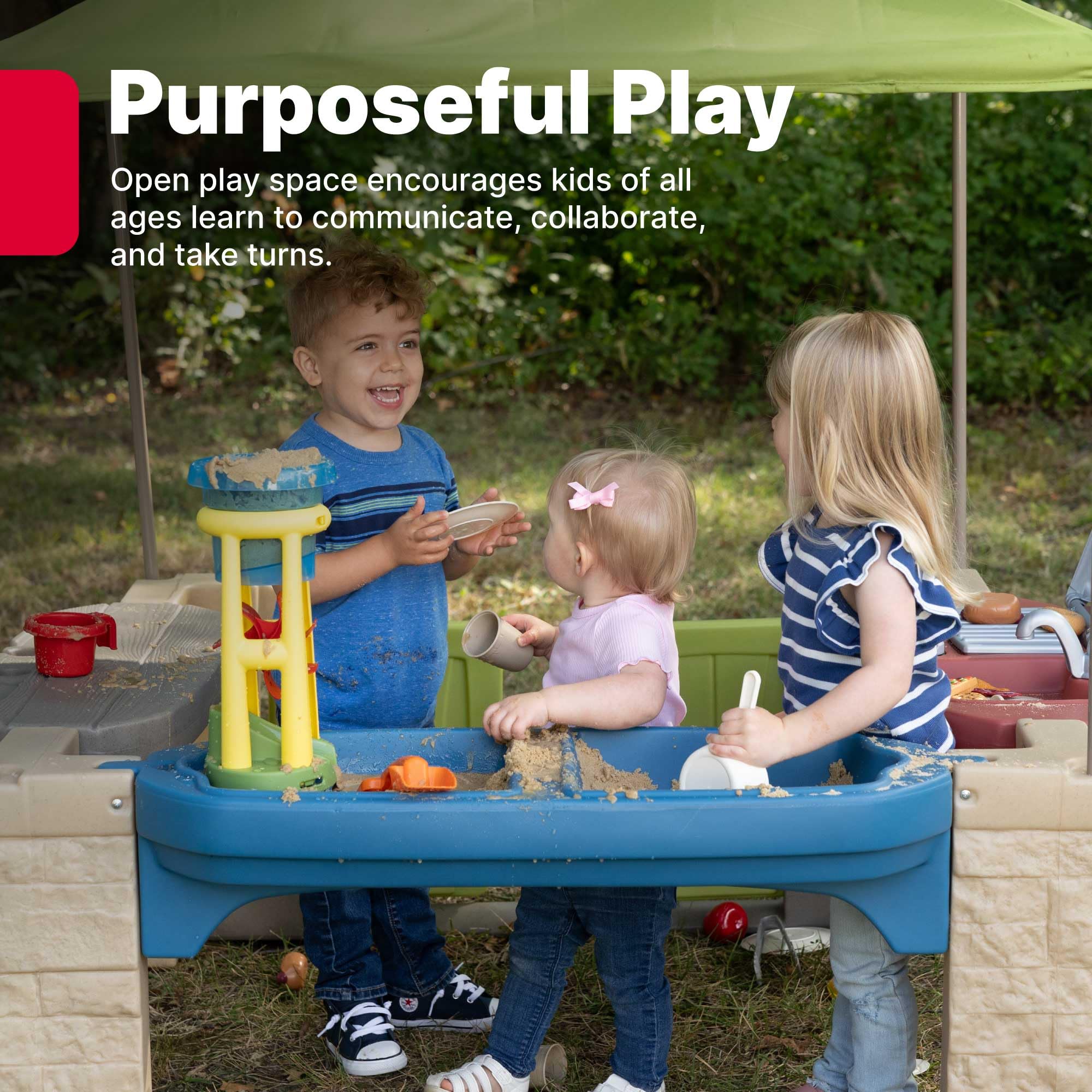
Outdoor play is not only about large muscle groups. Digging in soil, picking up small stones, threading sticks, collecting and sorting natural objects, all of these activities develop the fine motor precision and hand strength that children need for writing, self care, and manual tasks. A sand and water table like the one built into the Step2 Patio Playset provides this kind of fine motor work within a structured outdoor play space, even for toddlers who are not yet ready for roaming free play.
5. Emotional and Social Development: The Outdoor Advantage
The outdoors is where children learn to be human with each other in ways that adult-managed indoor environments rarely allow. This is not romantic sentiment; it is documented, peer reviewed developmental science.
When children play outdoors without constant adult intervention, they are required to: - Negotiate the rules of games themselves - Resolve conflicts without a referee - Read social cues and adjust their behaviour accordingly - Tolerate frustration when things do not go their way - Include, exclude, and navigate the complex social dynamics of a peer group
Each of these is a genuine skill. Each requires practice. And the outdoor environment, with its relative freedom from adult supervision, is where children get to practice them at volume.
Self regulation and emotional control
Self regulation, the ability to manage emotions, impulses, and attention in the service of goals, is one of the most important capacities a child can develop. It predicts school readiness, relationship quality, academic achievement, and mental health outcomes across the lifespan.
Outdoor play builds self regulation through two main pathways. First, through physical movement: vigorous outdoor activity reduces cortisol and adrenaline, and raises serotonin and dopamine, creating a neurochemical environment more conducive to emotional balance. Second, through the social demands of unstructured play: children who must negotiate their own conflicts and manage their own frustration in play contexts are building exactly the self regulation muscles they need everywhere else in life.
Toddler tantrums and the big emotions of the 1 to 3 year age group are closely connected to this. Research shows that toddlers who have regular outdoor free play tend to have shorter, less intense tantrums overall. Understanding what triggers toddler meltdowns can help you connect the dots between outdoor time and emotional equilibrium at home.
The social laboratory of outdoor play
Mixed-age outdoor play, which was the norm for children throughout most of human history and is now increasingly rare, is particularly valuable for social development. When a seven year old plays with a four year old and a ten year old in the same outdoor space, all three children are learning things they cannot learn from same-age peers:
This kind of organic social complexity is what outdoor neighbourhood play used to provide automatically. Recreating it requires intention now, but it is worth it.


HEY! PLAY! Hopscotch Rings Game - Ten 11-Inch Plastic Rings and 15 Connectors for Indoor and Outdoor Use - Play Set for Girls and Boys (Multicolored)
- HOPSCOTCH RINGS GAME - This set of exercise rings is easily portable for indoor and outdoor use, making it a g
- MOTOR SKILLS - Not only is this colorful hopscotch outdoor sports game fun and engaging for children of most a
- FAMILY FUN - Although designed for kids aged 3 and up, this is one of those exciting outdoor games for family
Hopscotch ring games like the HEY! PLAY! Hopscotch Ring Set are a good entry point for mixed-age outdoor play because the rules can be simplified or complicated on the fly. A four year old and an eight year old can genuinely play together, and the older child naturally adapts the game, which is its own learning experience.
Outdoor play and mental health
The connection between regular outdoor time and reduced rates of childhood anxiety and depression is now well established. A 2019 study published in the International Journal of Environmental Research and Public Health found that children who spent more time in natural outdoor environments had significantly lower rates of emotional and behavioural difficulties, even after controlling for socioeconomic factors and parental mental health.
This is not correlation disguising some third variable. The mechanism is increasingly well understood: nature exposure reduces physiological stress, improves sleep, increases physical activity, provides restorative attention, and creates social opportunities. Each of these independently supports mental health. Together, they are powerful.
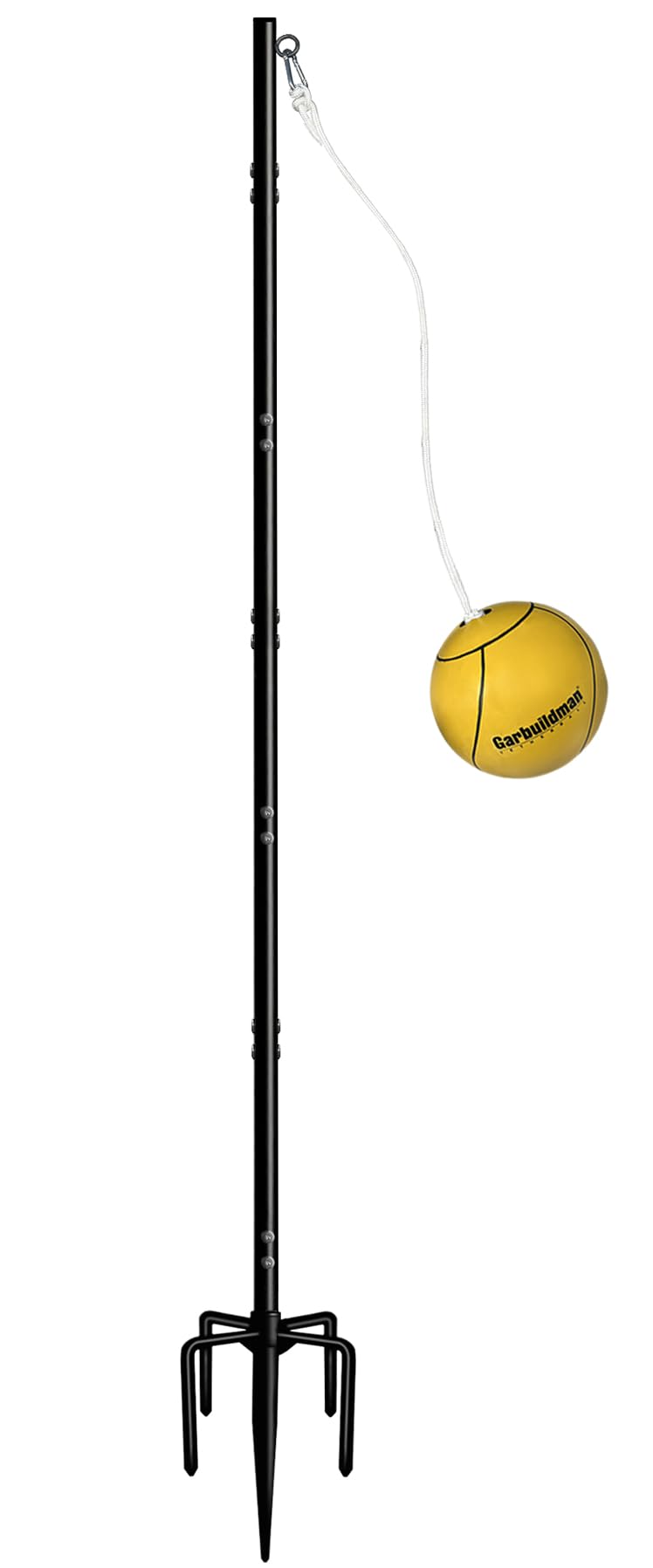
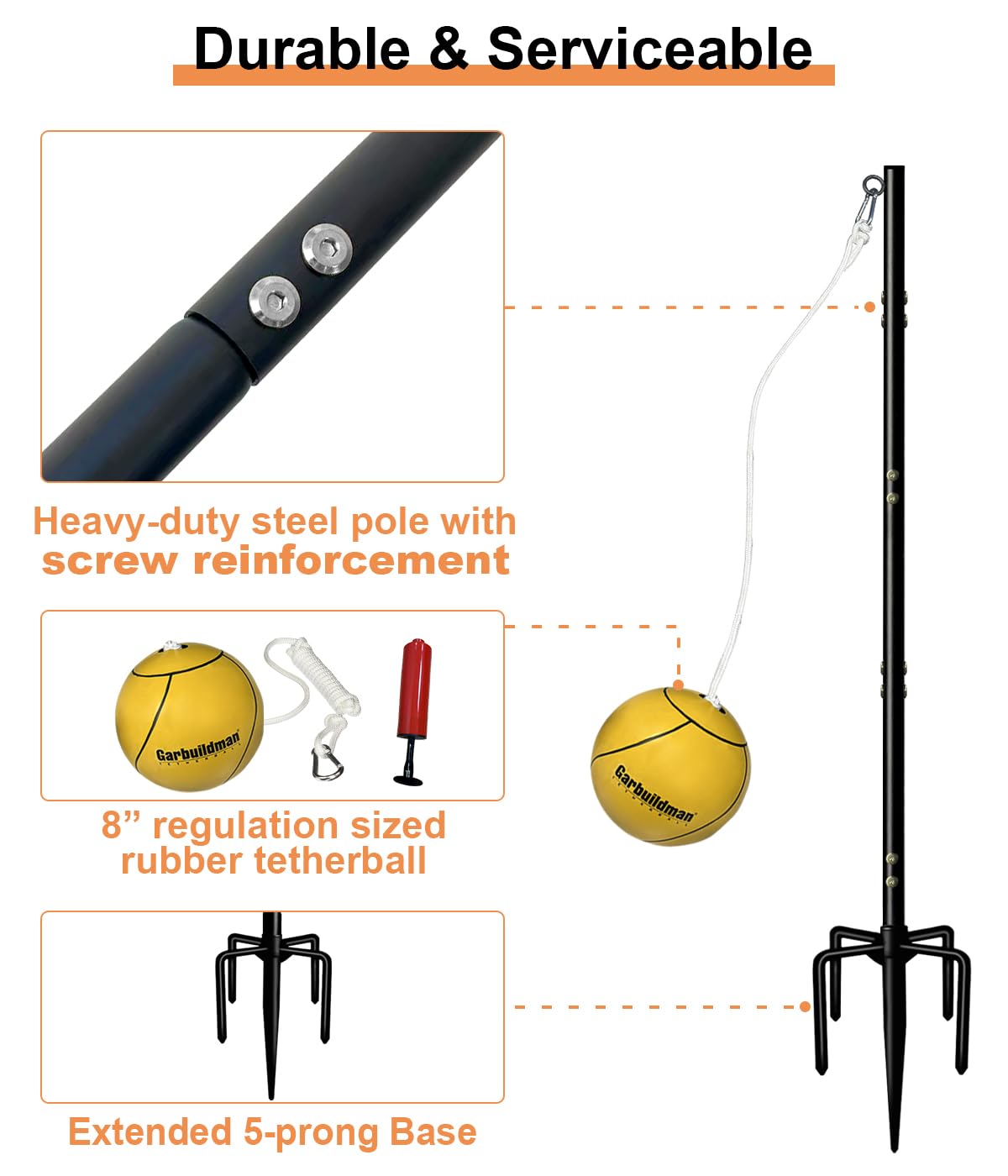
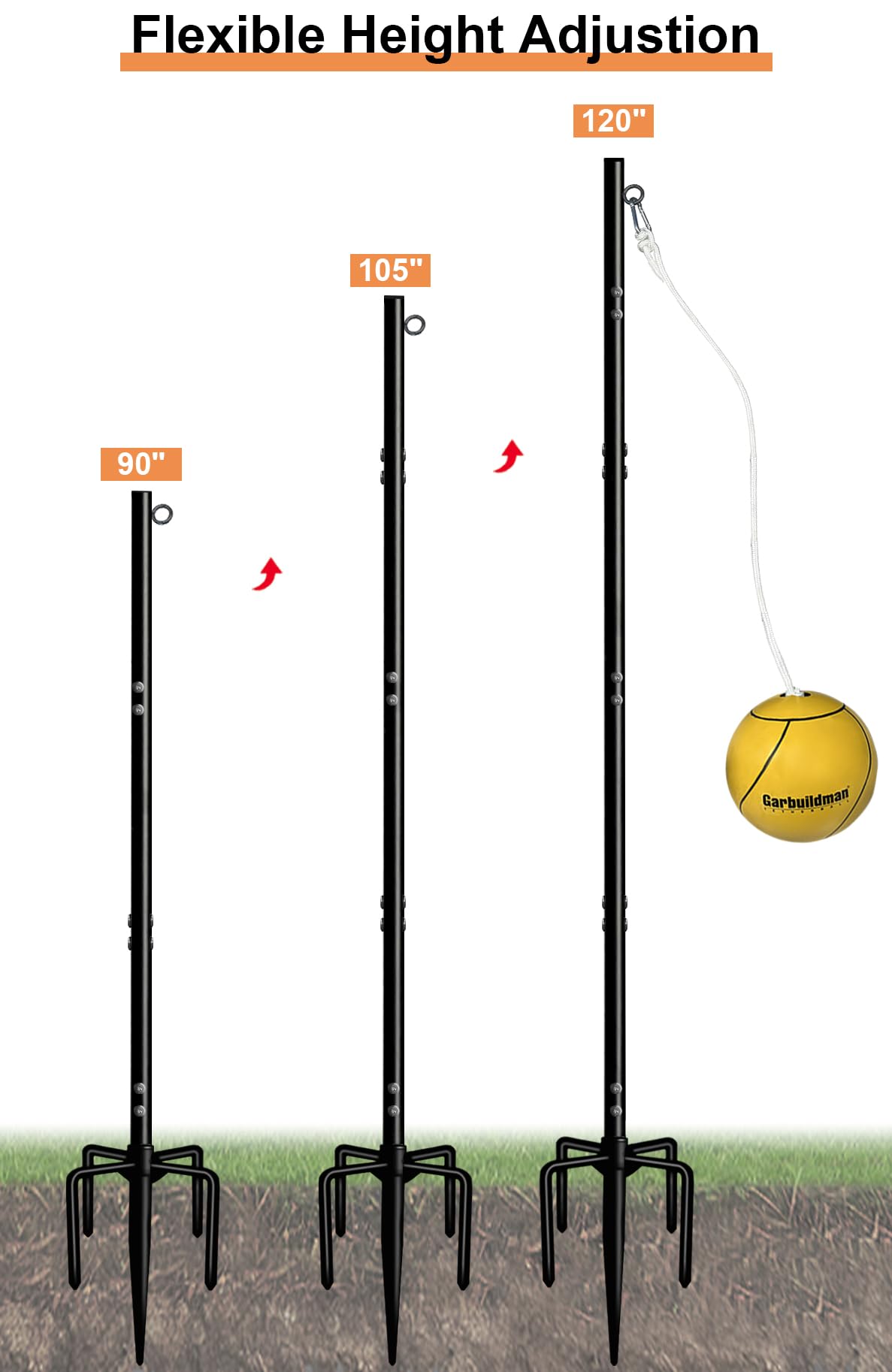
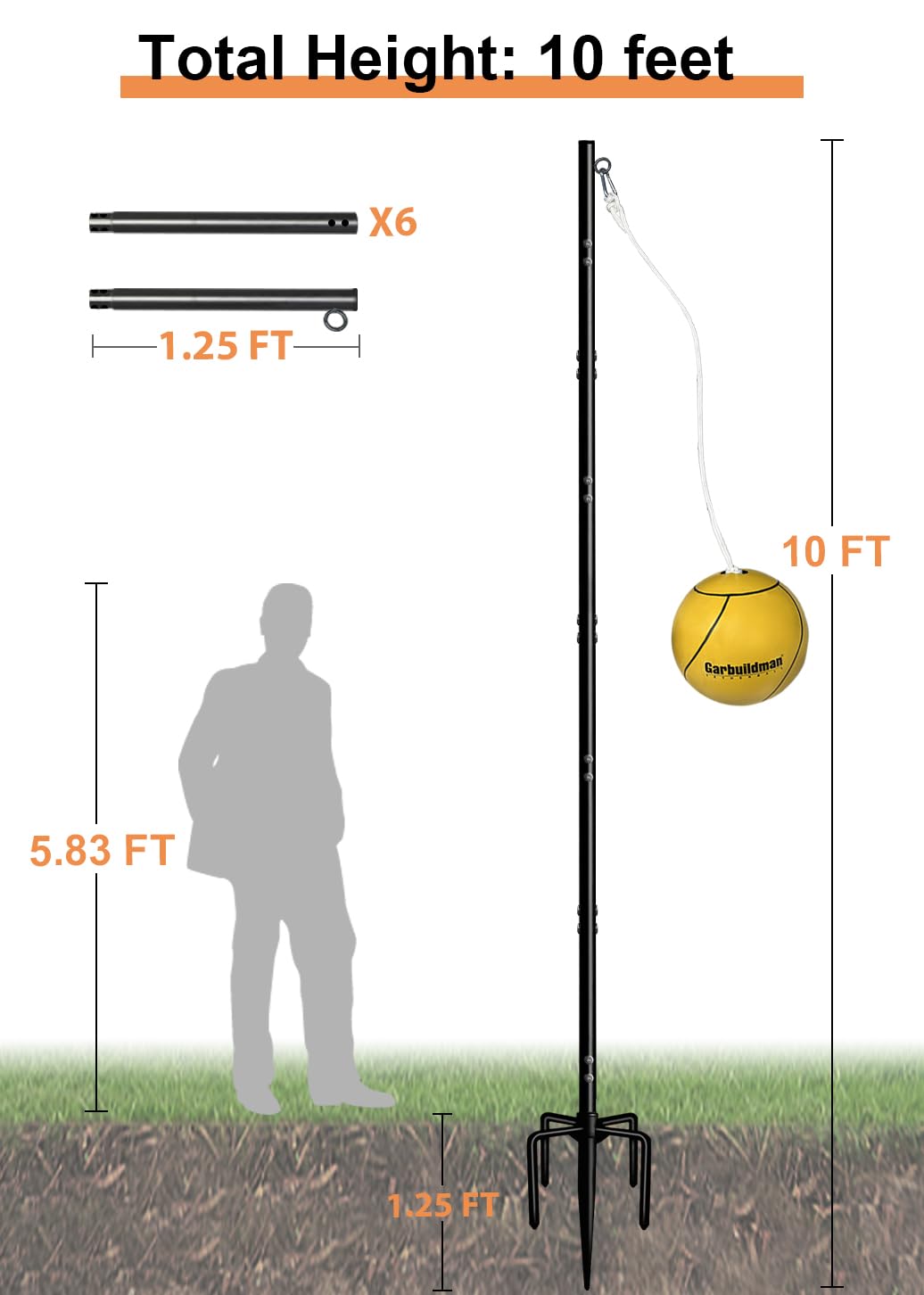
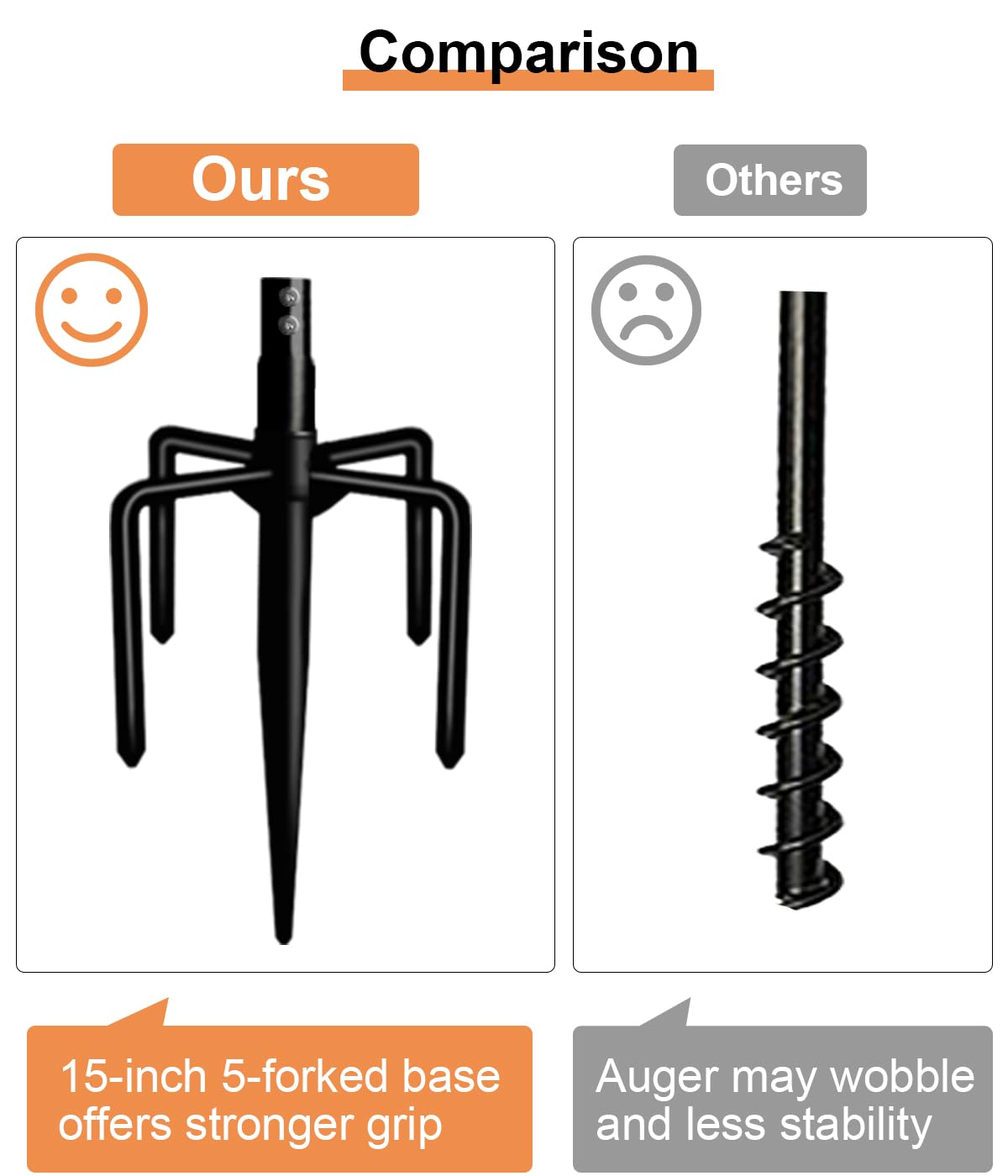
Garbuildman Tetherball Set with Ball & Rope for Outdoor Backyard, Adjustable Tether Ball Pole with Screw Reinforcement 5-Prong Base for Playground, Outside Ball Games Sports for Kids & Adults
- Upgraded Screw Reinforcement: 15-inch extended 5-prong base provides this tetherball pole set with stronger su
- Easy Installation & Flexible: Our tetherball game set is designed to be simple and comes with easy-understand
- Durable & Serviceable: Heavy-duty steel with black lacquer spraying ensure this tether balls and rope set with
6. Creating an Outdoor Life for Your Child: Practical Strategies That Actually Work
Knowing that outdoor play is important is the easy part. Making it happen consistently, across school terms, across seasons, across the competing demands of modern family life, is where most families need practical support.
The good news is that you do not need a large garden, an expensive schedule of outdoor classes, or perfect weather. What you need is intention, a few reliable pieces of equipment, and a willingness to lower the bar on what counts as "good enough" outdoor time.
Start with time, not location
The single most effective thing most families can do is to commit to a daily outdoor window, treated with the same non-negotiability as mealtimes or school. Not "we'll go out if the weather is nice" but "we go out every day, and we find appropriate clothing for the conditions."
Scandinavian countries, where the outdoor culture in early childhood is strongest, have a phrase: "There is no bad weather, only bad clothing." It is a useful reframe. Rain, wind, and cold are not obstacles; they are sensory experiences with developmental value of their own.
Building the outdoor environment at home
You do not need a park or a forest. A back garden, a balcony, a front step, or a shared outdoor space can all be made richer with simple equipment and thoughtful design.
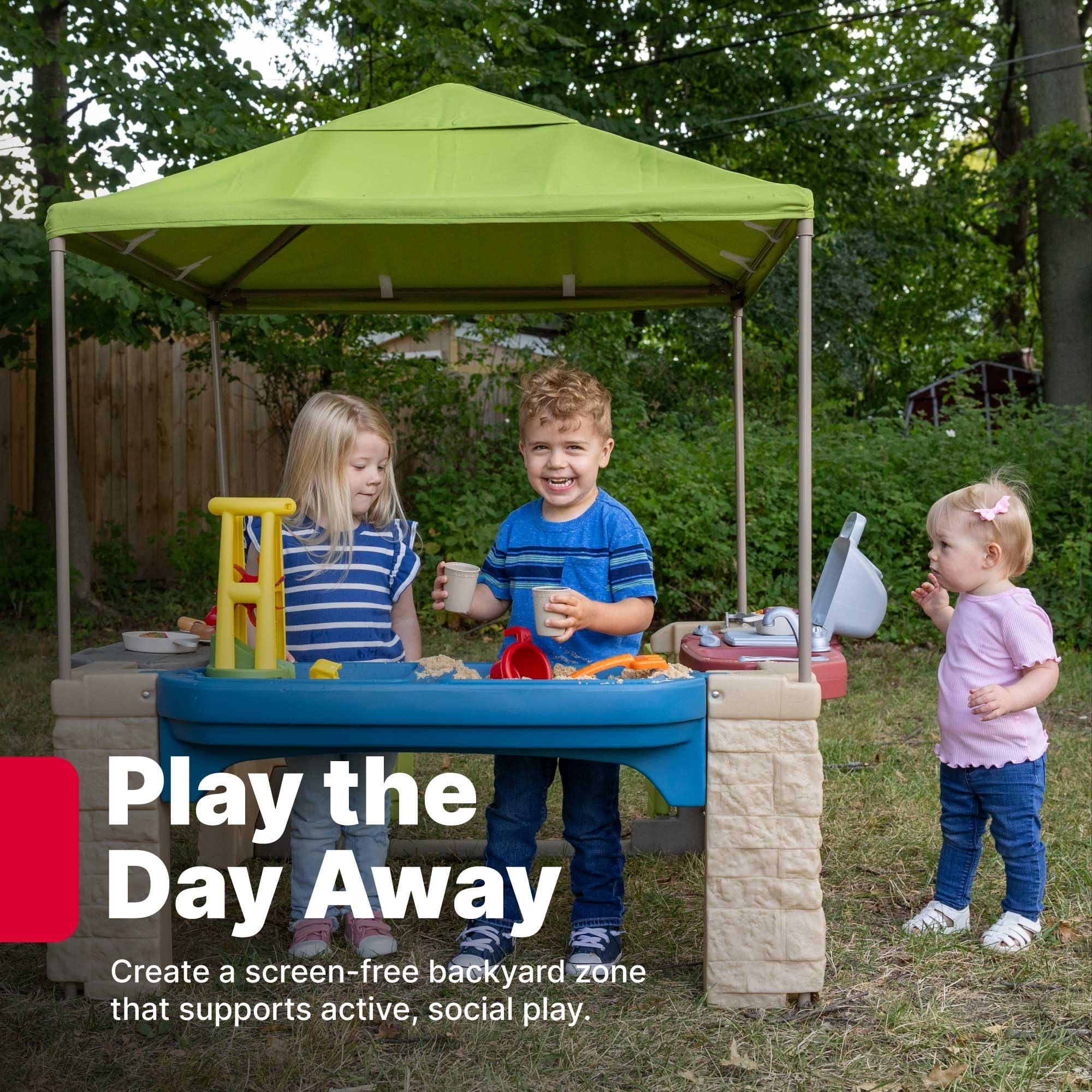
For toddlers and preschoolers, a versatile outdoor play space like the Step2 All Around Playtime Patio provides a structured base with a canopy for weather protection, a sand and water table, and a pretend kitchen area. This kind of setup supports social play, fine motor development, imaginative play, and physical activity simultaneously, and it works even in a small outdoor space.
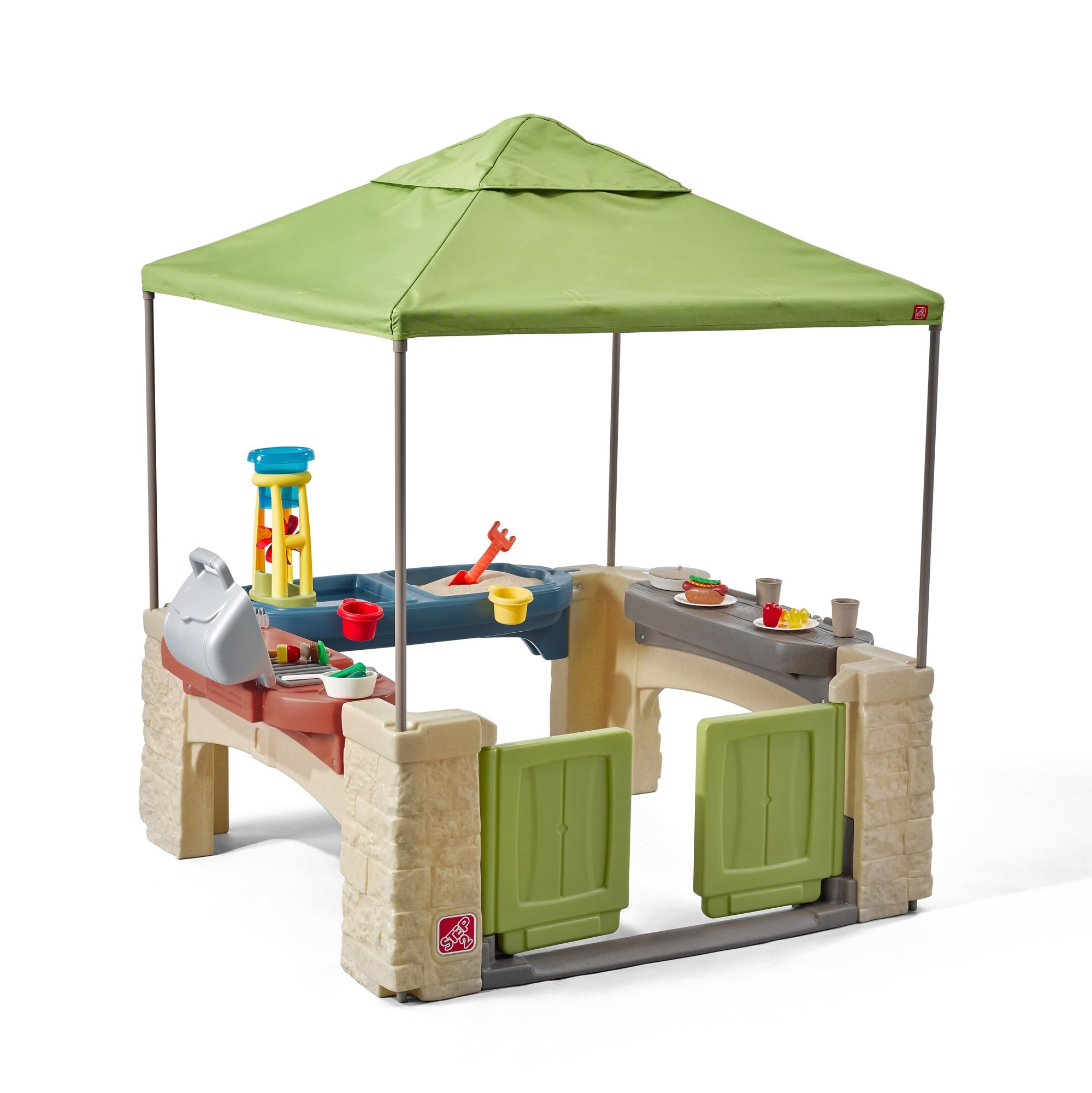
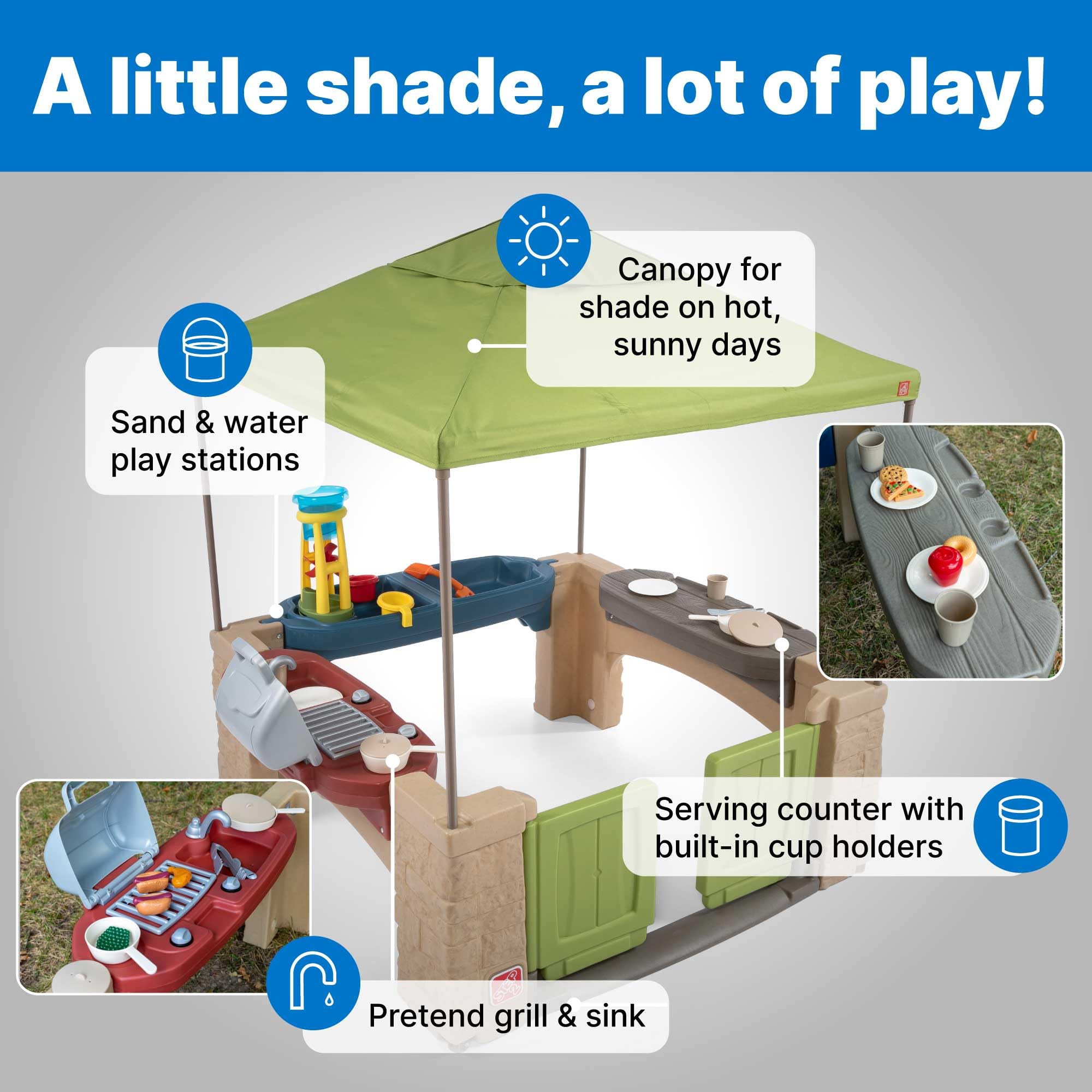
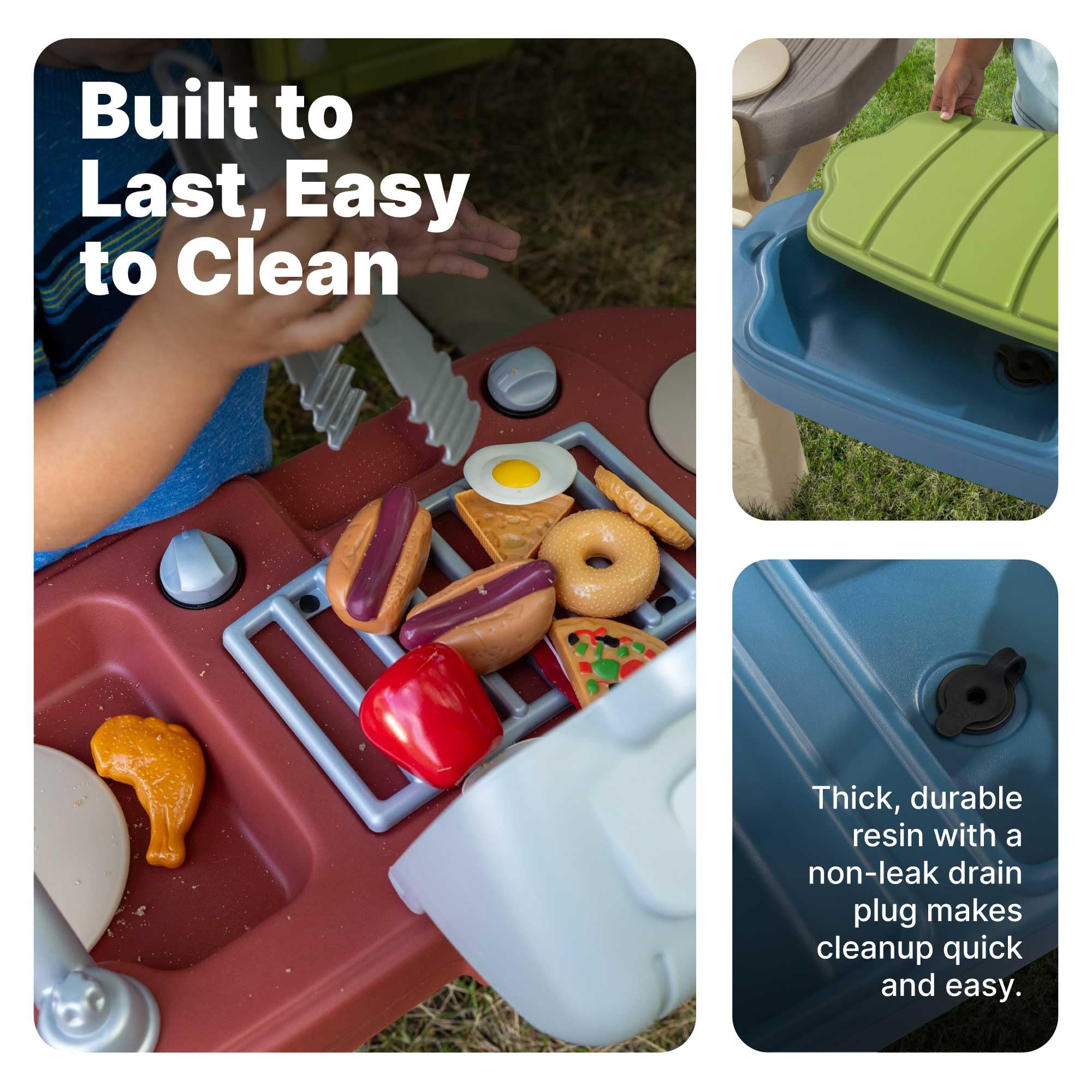
Step2 All Around Playtime Patio with Canopy Playset – Shaded Outdoor Playhouse for Kids with Realistic, Interactive Features, Room for Multiple Toddlers to Play – Dimensions: 60" H x 47.5" W x 47.5" D
- FUN PLAYTIME: Entertain your little children for hours with pretend grill, large countertop, water and sand ta
- INTERACTIVE PLAY: Accommodates wheelchairs, 16-piece toy kitchen play set, enhance playtime with pots, pans, s
- REMOVABLE CANOPY: Sun protection during outdoor fun or easy to remove for space-saving indoor play, assembled
For school age children, the key is to provide equipment that enables child-led, self-sustaining play: things children can pick up, put down, and return to without adult management.
The TAILERNRUYE Seesaw is a good example of equipment that children return to repeatedly because it demands constant adjustment, cooperation, and physical engagement. The 360-degree rotating design means children can invent new ways to use it rather than exhausting the single-mode play pattern of a traditional seesaw.
Tetherball is one of the great underrated outdoor games. It requires no second player (children can play alone), scales in difficulty as children get stronger, and is intensely physically engaging. The Garbuildman Tetherball Set has an adjustable pole height so it grows with your child, and the screw-reinforced base provides stability on most outdoor surfaces.
The role of boredom
I tell parents in clinic that boredom is not an emergency. It is, in fact, a prerequisite for creative play. When a child says "I'm bored" and is then sent outside with no specific plan, the first 10 to 15 minutes are often genuinely uncomfortable for them. What follows, if adults resist the urge to intervene, is almost always creative, inventive, engaged play that no screen or structured activity could have produced.
Screen time and the outdoor balance
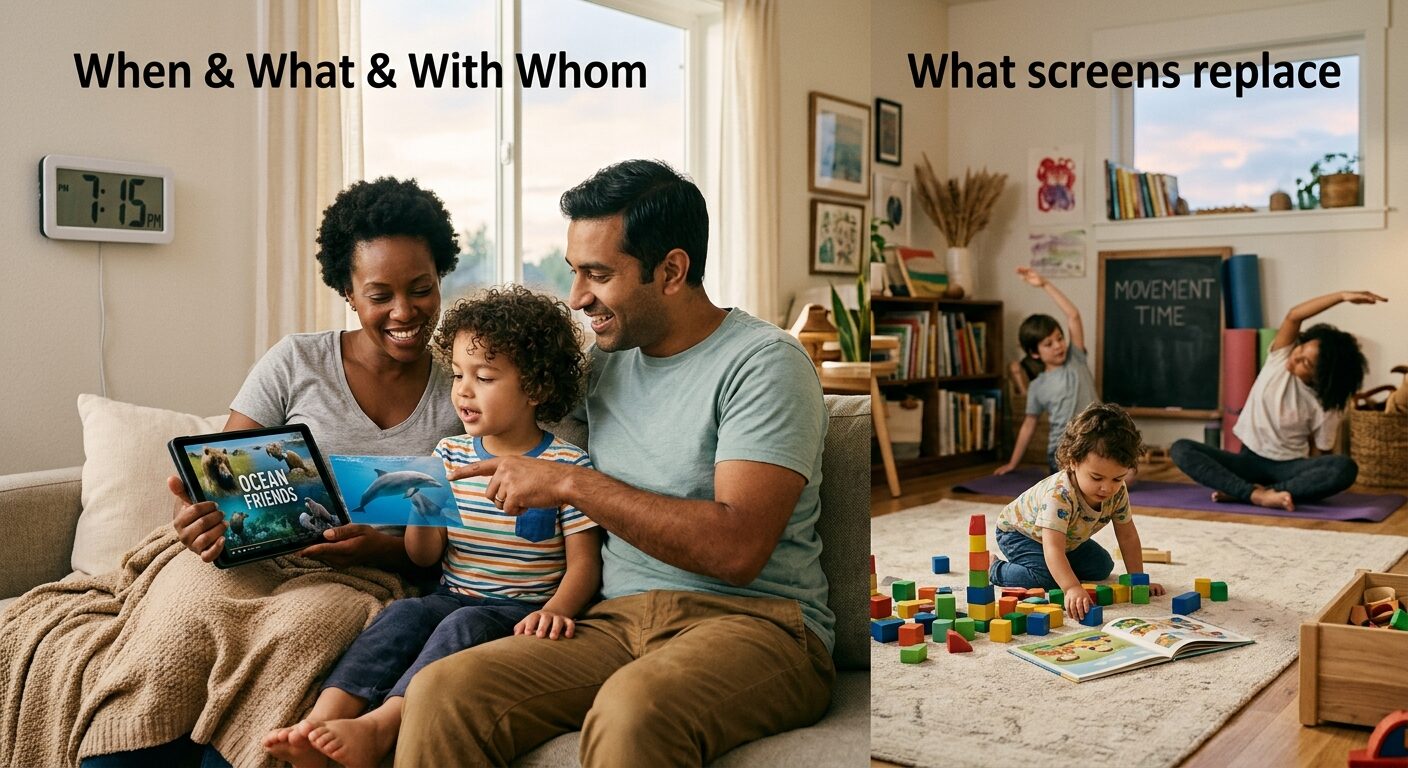
Screen time gets discussed endlessly, often in ways that are not especially useful. The most practical frame is not "screens versus no screens" but "does my child's day include enough movement, outdoor time, and face-to-face social interaction?" When those boxes are ticked, a reasonable amount of screen time is unlikely to cause lasting harm. When they are not, screen time fills the gap and the gap grows.
The AAP's current guidance suggests that for children ages 2 to 5, screen time should be limited to one hour per day of high quality programming, and that for school age children, the emphasis should be on ensuring screen time does not displace physical activity, sleep, or in-person socialisation. Outdoor time is the most direct and effective way to ensure those priorities stay intact.
When weather or space is genuinely limiting
Even in genuinely limited environments, there are practical options:
The HEY! PLAY! Hopscotch Ring Set is explicitly designed for both indoor and outdoor use, which means on days when weather is genuinely prohibitive, it keeps the large-muscle, coordination-building play happening inside. It is a reasonable compromise for the occasional terrible week, but should not become the default.
Comparison: Outdoor Play Options by Age and Development Goal
| Play Type | Best Age Range | Primary Developmental Benefit | Key Limitation | Recommended Product | Price Range |
|---|---|---|---|---|---|
| Structured outdoor playset (water, sand, pretend play) | 18 months to 5 years | Fine motor, imaginative play, social skills | Limited physical challenge | Step2 Patio Playset | $195–200 |
| Seesaw and rotating ride-on | Ages 3 to 8 | Balance, coordination, cooperative play | Needs a partner | TAILERNRUYE Seesaw | $60–70 |
| Carnival games (ring toss, bean bags, cones) | Ages 4 to 12 | Hand-eye coordination, rule-following, social negotiation | Low aerobic challenge | unanscre Carnival Games Set | $20–25 |
| Soccer goal and ball training | Ages 4 to 12 | Aerobic fitness, team play, gross motor | Needs open space | MUROZA Soccer Goal Set | $35–45 |
| Tetherball | Ages 5 to 12+ | Upper body strength, solo and competitive play | Setup requires stable ground | Garbuildman Tetherball Set | $45–55 |
| Hopscotch rings | Ages 3 to 10 | Gross motor, balance, number skills | Low complexity for older children | HEY! PLAY! Hopscotch Rings | $18–22 |
Expert Insights
The Bottom Line: Give Them the Outdoors
I want to leave you with this, because it is the thing I say most often in clinic and the thing parents seem most relieved to hear: you do not need to be perfect at this. You do not need a sprawling garden, a nature school, or an after-school programme. You need to walk out the door.
The outdoors is the oldest developmental tool we have. It is where every generation of children before ours grew up. It is where brains are built, bodies are strengthened, and the social skills that matter most in adult life are practised in their rawest, most honest form. A child who grows up with daily access to the outdoor world, with time to be bored, to be physical, to take small risks and recover from them, is a child with deep roots.
There is a version of childhood where the best moments happen not on a screen, not in a structured class, but in a back garden at dusk, covered in mud, trying to build something that keeps falling over. That version of childhood is still available. It is just waiting for you to open the door.
Share this with another parent who needs the nudge. They will thank you.
Sources & References
- American Academy of Pediatrics. "The Power of Play: A Pediatric Role in Enhancing Development in Young Children." Pediatrics, 2018. https://publications.aap.org/pediatrics/article/142/3/e20182058/38649
- World Health Organization. "Guidelines on Physical Activity, Sedentary Behaviour and Sleep for Children under 5 Years of Age." 2019. https://www.who.int/publications/i/item/9789241550536
- World Health Organization. "Global Recommendations on Physical Activity for Health." 2010. https://www.who.int/publications/i/item/9789241599979
- Kuo, Frances E. and Andrea Faber Taylor. "A Potential Natural Treatment for Attention-Deficit/Hyperactivity Disorder: Evidence From a National Study." American Journal of Public Health, 2004. 94(9):1580–1586.
- Kaplan, Rachel and Stephen Kaplan. "The Experience of Nature: A Psychological Perspective." Cambridge University Press, 1989.
- Sandseter, Ellen Beate Hansen. "Characteristics of Risky Play." Journal of Adventure Education and Outdoor Learning, 2009. 9(1):3–21.
- He, Mingguang et al. "Effect of Time Spent Outdoors at School on the Development of Myopia Among Children in China." JAMA, 2015. 314(11):1142–1148.
- Louv, Richard. "Last Child in the Woods: Saving Our Children from Nature-Deficit Disorder." Algonquin Books, 2005.
- National Trust (UK). "Childhood and Nature: A Survey on Changing Relationships with Nature Across Generations." 2016. https://www.nationaltrust.org.uk/documents/read-our-natural-childhood-report.pdf
- Diamond, Adele. "Executive Functions." Annual Review of Psychology, 2013. 64:135–168.
- Shonkoff, Jack P. and Deborah A. Phillips, eds. "From Neurons to Neighborhoods: The Science of Early Childhood Development." National Academies Press, 2000.
- Hoare, E. et al. "The associations between sedentary behaviour and mental health among adolescents: a systematic review." International Journal of Behavioral Nutrition and Physical Activity, 2016. 13:108.
- Engemann, Kristine et al. "Residential green space in childhood is associated with lower risk of psychiatric disorders from adolescence into adulthood." Proceedings of the National Academy of Sciences, 2019. 116(11):5188–5193.
- Centers for Disease Control and Prevention. "Physical Activity Facts." Updated 2023. https://www.cdc.gov/healthyschools/physicalactivity/facts.htm
Frequently Asked Questions
How much outdoor time does my child actually need each day?
Is outdoor play beneficial in cold or rainy weather?
My child has ADHD. Will outdoor time actually help with symptoms?
What if we do not have a garden or safe outdoor space?
At what age can children play outside unsupervised?
Is nature play different from outdoor play in a playground?
How do I reduce screen time to make room for outdoor play without a battle?
Was this helpful?
Thanks — your feedback helps us pick what to write next.