Breastfeeding Not Working? How to Troubleshoot a Painful Latch
Most breastfeeding trouble comes down to latch, positioning or milk transfer, and most of it can be fixed with small adjustments and the right support; if feeding hurts beyond the first week or your baby isn't gaining weight, get hands on help early rather than pushing through.

In this article
If you are reading this at 3 a.m. with a hungry baby, sore nipples and a growing sense that you are failing at something that is supposed to be natural, I want you to hear this first: you are not failing. Breastfeeding is a learned skill for both of you.
The numbers show how common the struggle is. The CDC Breastfeeding Report Card shows that more than 8 in 10 babies born in the US start out breastfed, yet only about 1 in 4 are exclusively breastfed at six months. In my clinic, the parents who stop earlier than they hoped rarely tell me they stopped because they wanted to. They tell me it hurt, nobody could watch a feed, or they weren't sure the baby was getting enough.
Here is what you'll understand by the end of this article:
1. Is Breastfeeding Not Working, or Is It Just Hard?
Early breastfeeding is often awkward and tiring even when everything is going well, so the real question is whether your baby is getting enough milk and whether you are being hurt. Feeding that is clumsy but pain free, with a baby who has plenty of wet nappies and is gaining weight, is usually fine and just needs time. Feeding that is painful, or leaves your baby hungry, sleepy or losing weight, needs attention.
What is normal in the first two weeks
Your milk changes over the first days. You make small amounts of thick colostrum at first, and your mature milk usually "comes in" between about day 3 and day 5. Newborns have tiny stomachs, so they feed often. The American Academy of Pediatrics (AAP) describes about 8 to 12 feeds in 24 hours as typical for a breastfed newborn, and that includes long cluster feeds in the evening that can make you feel as though your baby is never satisfied.
Some tenderness in the first few days is common as your skin gets used to the pull. It should be mild, it should ease within a few seconds of the baby latching, and it should improve week by week rather than get worse.
Weight is also a normal part of the picture. Many newborns lose some weight in the first days; most are back to birth weight by about 10 to 14 days. Your midwife or paediatrician will tell you which threshold they act on, but a loss approaching 10 percent deserves a feeding assessment (NICE postnatal care guidance takes this approach).
Signs breastfeeding genuinely isn't working
It usually isn't your fault
Many of the things that make latching hard are anatomical or circumstantial: a baby with a restricted tongue, nipples that are flat or inverted, a fast delivery of milk, a baby born a little early, or a tough birth. Researchers are even working on a screening tool that predicts breastfeeding problems before birth, which tells us something I see in practice every week: many struggles are predictable and not the result of anything a parent did wrong.
2. How to Tell if Your Baby's Latch Is Good or Poor
A good latch is deep, comfortable and quiet, with your baby's mouth wide open and a large mouthful of breast tissue, not just the nipple. The nipple should sit far back in the mouth, near the junction of the hard and soft palate, where it is protected from friction.
Signs of a good latch
Signs of a shallow or poor latch
Why latch matters for milk, not just comfort
Milk transfer depends on the baby's tongue and jaw working together to draw the nipple back and compress the breast. A shallow latch pinches the nipple and hurts you, but it also moves less milk. That sets up a cycle: a baby who gets less milk feeds longer and more often, which means more friction and more pain. Fixing the latch breaks the cycle at both ends.
Watching a good latch in action is far easier than reading about it, so here is a short demonstration from a registered nurse and IBCLC (International Board Certified Lactation Consultant).
3. How to Fix a Breastfeeding Latch Step by Step
To fix a shallow latch, bring your baby to the breast with their head slightly tilted back, wait for a wide open mouth, and aim the chin first so the lower jaw takes in plenty of breast. If it hurts after the first few seconds, unlatch and start again. Re latching three or four times is normal and does not mean you are doing it wrong.
The step by step method
1. Get comfortable. Support your back, relax your shoulders and bring pillows to you. Do not hunch over your baby. 2. Start with a calm, awake baby. Hunger cues such as rooting, hand to mouth movements and lip smacking are the best time. Crying is a late cue, and a screaming baby cannot latch well. If your baby is upset, settle them with skin to skin contact for a minute first. 3. Line up baby's body. Tummy to tummy, ear, shoulder and hip in a straight line, so the baby does not have to twist their neck to feed. 4. Nose to nipple. Your baby's nose should sit opposite your nipple, with the chin slightly tucked towards your chest. 5. Tickle and wait. Brush the nipple gently from the nose down to the top lip. Wait for the mouth to open wide, like a yawn. 6. Chin first. Bring the baby to the breast, not the breast to the baby. The chin should touch first, with the nipple aimed at the roof of the mouth. 7. Check the latch. Lips flanged, chin in, more areola visible above than below, and a deep tug without sharp pain. 8. Break the suction if it hurts. Slide a clean fingertip into the corner of the baby's mouth to release the seal, then try again. Pulling the baby off without breaking suction can damage your nipple.
Positions to try
Different positions suit different babies and different breasts. If one isn't working, try another before assuming the problem is you.
Breast compression and sleepy babies
If your baby falls asleep after a few sucks, gentle breast compression can help. Hold your breast with a C shape of your hand, away from the areola, and squeeze gently when the baby pauses. It keeps milk flowing and keeps a drowsy baby interested. If sleepiness is a constant problem, mention it to your care team, because very sleepy newborns need prompt checking for jaundice or poor milk intake. Our guide with newborn sleep tips also explains how to tell normal newborn drowsiness from sleepiness that needs medical advice.
What not to do
4. Why Latching Fails: Tongue Tie, Flat Nipples, Engorgement and Other Hidden Causes
When technique adjustments don't fix the latch, there is usually an underlying cause, and finding it is the quickest way to feel better. The most common ones are a restricted tongue, nipple shape, engorgement, an oversupply or fast flow, and a baby who is sleepy or small.
Tongue tie (ankyloglossia)
A tongue tie means the strip of tissue under the tongue (the frenulum) is short or tight enough to limit tongue movement. Some babies with a tie feed perfectly well, and some without an obvious one struggle. What matters is function: can your baby lift and extend the tongue enough to draw the breast deeply into the mouth?
Signs that suggest a tongue tie may be involved:
Ask for assessment by a trained practitioner who looks at how the baby feeds, not just at the tongue. NICE guidance on dividing tongue tie for breastfeeding found the procedure to be safe enough for routine use when carried out by a trained practitioner and with proper assessment. Do not assume a quick snip is the only fix, and do not let anyone dismiss your concerns without watching a feed.
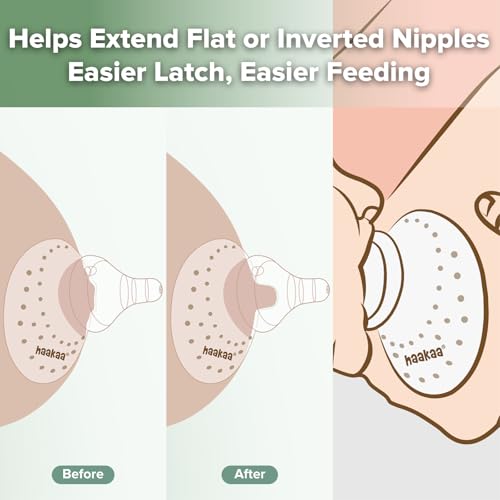
Flat or inverted nipples
Nipples vary a lot. Some are flat, some turn inward, and some only look flat until the baby draws them out. Many babies latch perfectly well to these nipples because they take the breast, not just the nipple, into their mouth. If your baby struggles, a few things can help: laid back positions, hand expressing a little milk so the baby tastes it, gentle nipple stimulation just before a feed, and a cold cloth to firm the nipple briefly.
A thin silicone shield is a recognised short term tool when a baby cannot draw the nipple out. These are designed for exactly this situation, for example the ultra thin [Medela Contact Nipple Shield](/) ...




Medela Contact Nipple Shields, For Breastfeeding Comfort, Size S 16mm, 2ct
- FROM THE #1 BREAST PUMP BRAND IN US HOSPITALS: These Contact Nipple Shields bring that same care to the moment
- A LATCH THAT ACTUALLY WORKS: Whether you are dealing with a painful latch or sore skin, these soft and ultra-t
- PROTECTION WITHOUT THE DISTANCE: Made from ultra-thin, soft silicone, these Contact Nipple Shields help protec
Use it with guidance, and I'll explain why in the shield section below.
Engorgement and a very full breast
When your milk comes in, your breasts can become hard, swollen and tight, and the nipple can flatten, which makes latching nearly impossible. Try these steps:
Fast flow, oversupply and overactive letdown
If your baby gulps, coughs, clamps down, pulls off with milk spraying, or is gassy and fussy at the breast, you may have a fast flow. Babies often clamp the nipple to slow the flow, and that hurts. Laid back positions help, since the baby is working against gravity. You can also try feeding on one breast for a block of time, and burp your baby mid feed. A lactation consultant can help you decide whether a fast flow is a problem to manage or just a phase.
Low milk transfer, prematurity and sleepy babies
Babies who are born early, small, jaundiced or recovering from a difficult birth can be too sleepy or weak to feed effectively, even with a good latch. In that situation, protecting your supply with hand expression or pumping and getting expert help quickly matters more than any single trick. I'll cover this more in section 6.
5. Nipple Shields for Latch Problems: When They Help and When They Don't
A nipple shield is a thin silicone cover that sits over your nipple during a feed, and it can help babies latch when the nipple is flat, inverted, sore or when a baby has trouble staying attached. Think of it as a temporary bridge, not a permanent fix. The evidence base is limited and mostly small studies, so professional guidance (the Academy of Breastfeeding Medicine and lactation consultants alike) recommends using a shield with a plan for follow up and, where possible, weaning off.
When a shield can help
The real risks to know about
A shield can reduce how well milk is transferred in some mothers, and that can affect your supply over time if the baby is not fully emptying the breast. That is why babies using shields need closer checks on weight, wet nappies and feeding patterns. Other points to be aware of:
Getting the size right
Nipple shield sizes are not standard across brands, and sizing is one of the most common reasons shields don't work. The tip should allow your nipple to move freely without rubbing at the sides, and the baby's chin should still touch your breast. Check each brand's sizing chart and ask your lactation consultant to confirm the fit. As an example of how much labels vary, the listings below describe a 16mm shield as "small" on one brand and "medium" on another.
How to put one on and take it off
1. Wash your hands and make sure the shield is clean and dry. 2. Turn the shield partly inside out and place the tip over your nipple, then roll the rim back onto the breast so the nipple is drawn into the tip. 3. A dab of expressed milk on the outside rim helps it stay in place. 4. Bring your baby to the breast with the same step by step technique from section 3. 5. After the feed, check that the shield contains milk, and look at your nipple shape afterwards. 6. As things improve, try offering the breast without the shield at the start of a feed, when the baby is calm. Many babies make the switch over a few days or weeks.
Choosing between the options
Here is how the shields on offer differ in what they emphasise. I would still check fit with a professional first.
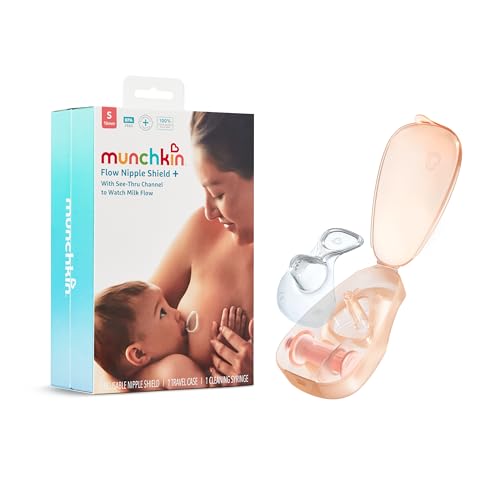

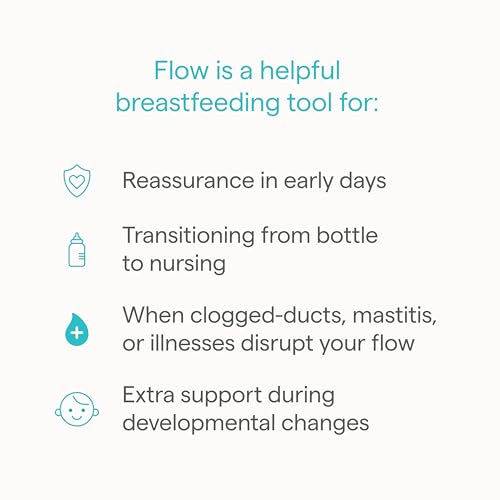
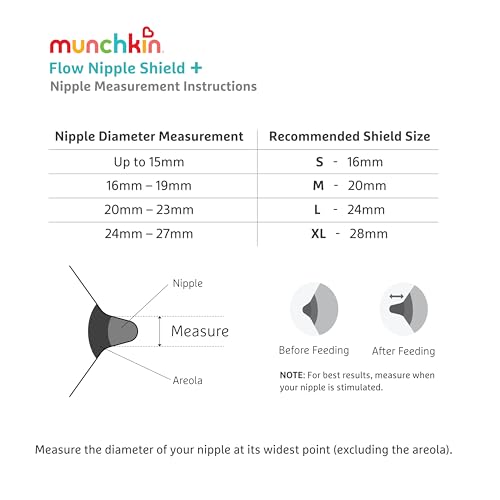

Munchkin Flow 16mm Nipple Shield for Breastfeeding Newborns, Silicone Latch Monitor with Visible Milk Flow Channel, Nursing Support for Sore Nipples
- See Milk Flow While Nursing: Patented nipple shield with built-in channel lets you see breast milk flow, helpi
- Comfortable Silicone Nipple Shield: Thin, flexible 100% food-grade silicone is BPA free and designed for skin-
- Latch Support for Newborn Feeding: Breastfeeding nipple shield can help support baby's latch, giving added con
If you are putting together a list of newborn essentials, I'd treat a shield as an "in case" item rather than a must buy, and I'd rather you spoke to a lactation consultant before leaning on one.
6. When to Get Help, Protect Your Milk Supply and Look After Yourself
Get professional help the same day if your baby has very few wet nappies, seems unusually sleepy, looks yellow, or is losing weight, and book a lactation consultant visit sooner rather than later if feeding hurts. Waiting it out rarely helps, and early support protects both your baby's nutrition and your milk supply.
Red flags that need prompt medical advice
Who can help
Protect your supply while you sort the latch out
Milk supply works on supply and demand. If the baby is not draining the breast well, the signal to make milk can drop, so while you work on the latch:
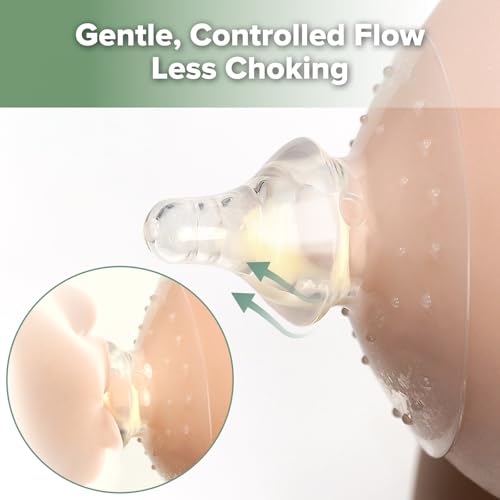
If you are using a shield alongside a bottle, the [haakaa silicone nipple shield](/) has an extended, bottle like teat that can ease the move back and forth between breast and bottle for some babies.
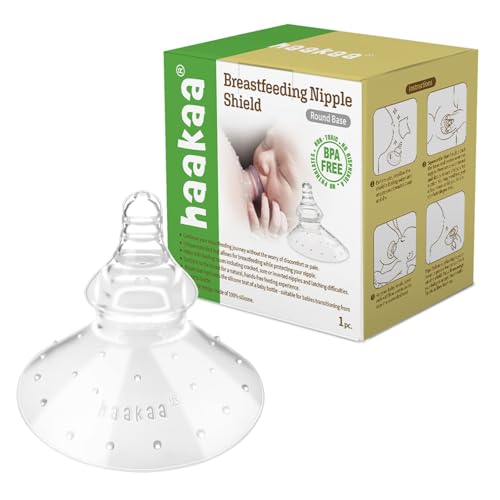
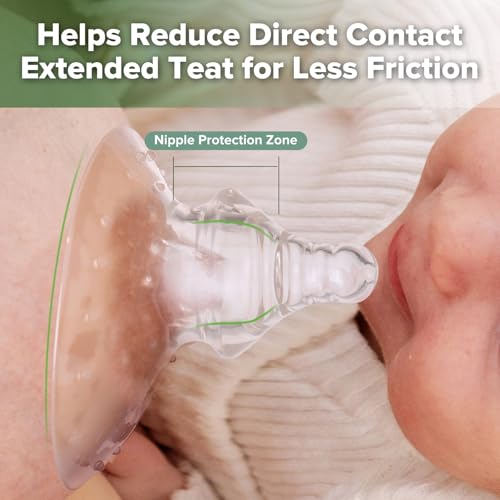
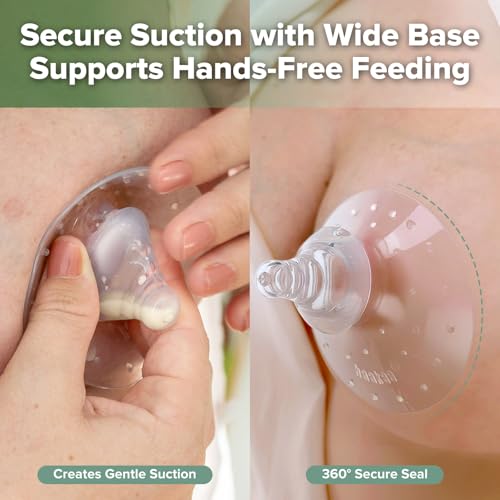
haakaa Silicone Nipple Shield for Breastfeeding with Case, 1 Pack
- HELPS WITH FEEDING ISSUES - haakaa breastfeeding nipple shields are designed to assist with latch difficulties
- SAFE FOR MUM & BABY - haakaa silicone nipple shield for breastfeeding is made of soft food-grade silicone, BPA
- ROUND BASE NIPPLE SHIELD - The extended teat design increases the distance between mum's nipple and the shield
Your wellbeing matters too
Painful, anxious feeding wears parents down. I see exhausted parents who are doing everything right and still crying at every feed. Please tell someone. Sleep deprivation, pain and worry about whether your baby is fed can feed into low mood or anxiety, and postnatal depression is common and treatable. If you are struggling, speak to your doctor or health visitor. A baby who is fed (by breast, pumped milk, formula or a mix) with a parent who is coping is a successful outcome. You can read more about the early weeks in our guide to family life in the first three months.
Comparing Your Nipple Shield Options
Use this table to match a shield style to your situation, and again, confirm size and fit with a lactation consultant before relying on one.
| Option | Best For | Primary Benefits | Main Drawbacks | Recommended Product | Price Range |
|---|---|---|---|---|---|
| Ultra thin contact shield | Sore or cracked nipples, flat or inverted nipples | Thin silicone, cut out for skin to skin contact | Needs correct sizing; check milk transfer | Medela Contact Nipple Shields | About $10 |
| Contact shield, two pack with case | Parents who want a spare ready | Same contact style, two included, carrying case | Still needs correct fit and a weaning plan | Lansinoh Contact Nipple Shields | About $8.50 |
| Petal style contact base | Newborns with latch difficulties and sore nipples | Designed for more skin contact, case included | Fit varies between mothers | YIYEE Nipple Shields | About $11 |
| Textured, cut out shield | Latch support with a natural skin feel | Soft textured surface, lets baby smell your skin | Check size labelling against the brand chart | Floravyn Nipple Shield | About $8 |
| Extended teat, round base | Babies who bite or move between breast and bottle | Teat sits further from the nipple, variable flow design | Can feel bulkier; watch milk transfer | haakaa Silicone Nipple Shield | About $17 |
| Visible flow channel | Sleepy feeds, cluster feeds, bottle to breast transitions | You can see milk flowing during a feed | Higher price; still needs fit check | Munchkin Flow Nipple Shield | About $18 |
What the Experts Say
Here is where the major organisations and clinical guidance land. I am summarising their positions in my own words, not quoting them.
American Academy of Pediatrics
The AAP's policy on breastfeeding and the use of human milk supports exclusive breastfeeding for about the first six months, with continued breastfeeding alongside solid foods after that for as long as you and your baby wish. It also stresses that parents need practical support, including skilled help with latch, and that newborn feeding should be reviewed in the first days after birth.
World Health Organization and UNICEF
WHO and UNICEF recommend skin to skin contact soon after birth, feeding on cue, and skilled support for mothers who run into trouble. The Baby Friendly Initiative, which UNICEF UK runs in the UK, focuses on supporting parents to build close relationships and on helping babies to feed, whichever way they are fed.
Academy of Breastfeeding Medicine and lactation professionals
The Academy of Breastfeeding Medicine's clinical protocols cover problems such as engorgement, the mastitis spectrum and supplementation. A consistent theme is that persistent pain should lead to a feeding assessment rather than reassurance, and that tools like shields work best as part of a plan with follow up.
Frequently Asked Questions
Key Takeaways
Conclusion
When breastfeeding isn't working, it feels personal, but it almost never is. It is usually a puzzle of positioning, anatomy and timing, and puzzles have solutions. Trust the signs your baby gives you, ask for help early, and remember that a fed baby and a supported parent are what success looks like, whichever path gets you there.
Breastfeeding is a skill you and your baby learn together, and asking for help is part of learning it.
If this guide helped, save it for the next 3 a.m. feed, share it with a friend who is expecting, and subscribe for more clinic style advice for the early months.
Sources and References
Sources & References
- Centers for Disease Control and Prevention. "Breastfeeding Report Card, United States." https://www.cdc.gov/breastfeeding/data/reportcard.htm
- American Academy of Pediatrics. "Breastfeeding and the Use of Human Milk." Pediatrics, 2022. https://publications.aap.org/pediatrics
- American Academy of Pediatrics. "Breastfeeding" pages on HealthyChildren.org. https://www.healthychildren.org/English/ages-stages/baby/breastfeeding/Pages/default.aspx
- World Health Organization. "Infant and young child feeding" fact sheet. https://www.who.int/news-room/fact-sheets/detail/infant-and-young-child-feeding
- Academy of Breastfeeding Medicine. Clinical protocols, including the protocol on the mastitis spectrum. https://www.bfmed.org/protocols
- National Institute for Health and Care Excellence. "Postnatal care" (NG194), 2021. https://www.nice.org.uk/guidance/ng194
- National Institute for Health and Care Excellence. "Division of ankyloglossia (tongue tie) for breastfeeding" (IPG149). https://www.nice.org.uk/guidance/ipg149
- UNICEF UK. Baby Friendly Initiative. https://www.unicef.org.uk/babyfriendly/
- NHS. "Breastfeeding problems." https://www.nhs.uk/conditions/baby/breastfeeding-and-bottle-feeding/breastfeeding/problems/
Frequently Asked Questions
Why does breastfeeding hurt even though my baby seems to latch?
How do I know if my baby is getting enough milk?
Can I use a nipple shield from day one?
Will a nipple shield hurt my milk supply?
Is a tongue tie always the reason for a poor latch?
When should I stop trying and switch to formula or pumping?
How long does it take for latch problems to improve?
Was this helpful?
Thanks — your feedback helps us pick what to write next.