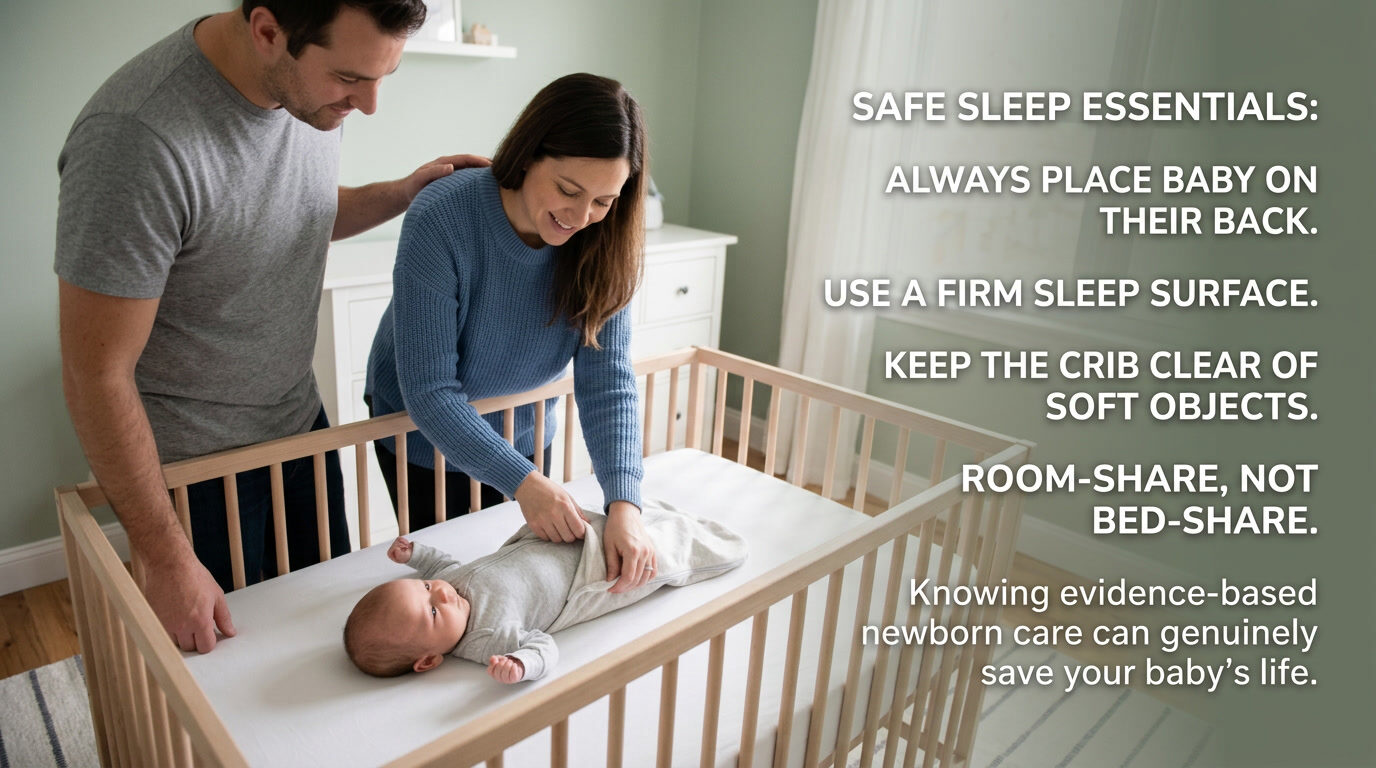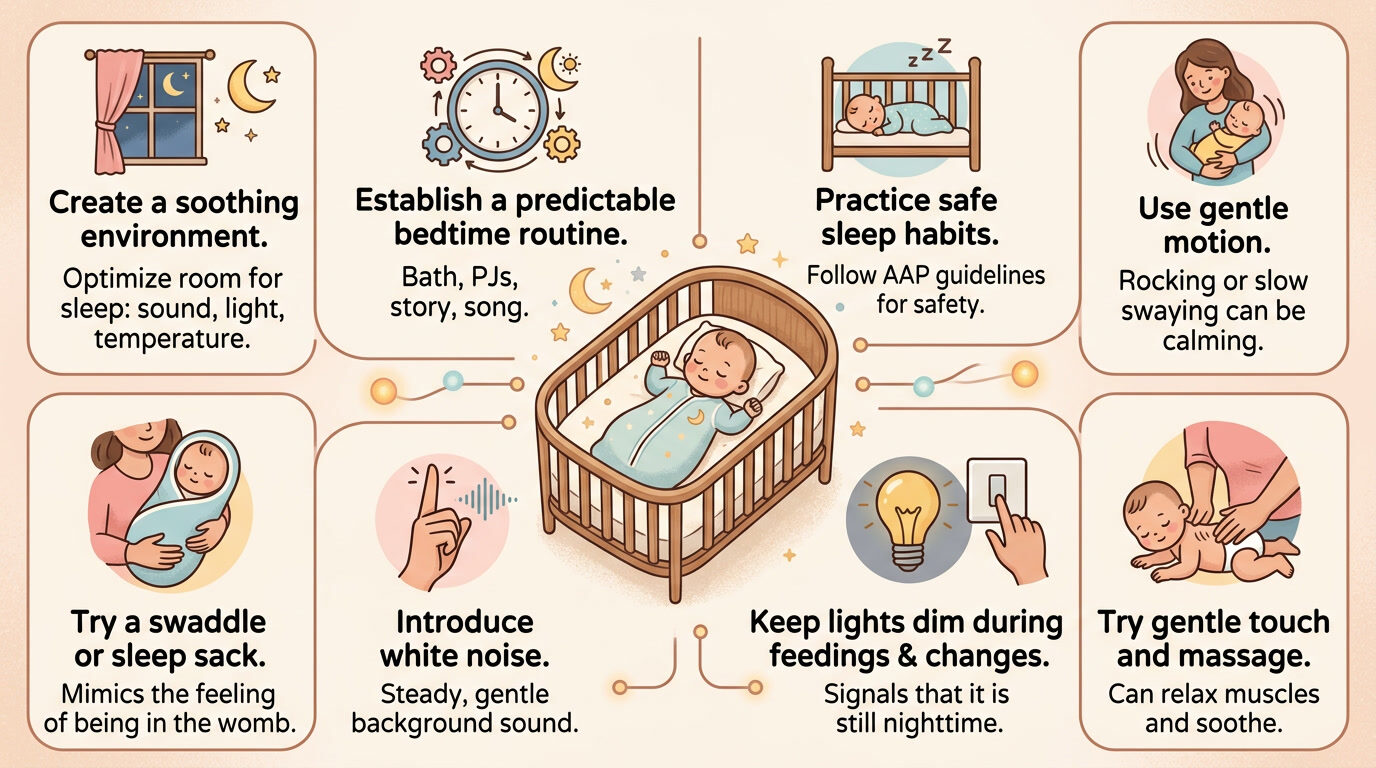
Newborn Sleep Tips for the First Week, From a Paediatrician
In the first week, newborns sleep about 14 to 17 hours in every 24, but in short, unpredictable stretches, so your job is to make every sleep safe (flat, on the back, in your room), feed often, and rest when you can, not to build a schedule.

In this article
About 3,500 babies in the United States die suddenly and unexpectedly during sleep every year, according to the American Academy of Pediatrics (AAP). That number is why I start every newborn sleep conversation with safety. It is also why I never want a parent to feel silly for checking a sleeping baby's chest for the tenth time at 3 a.m.
At the same time, the National Sleep Foundation recommends 14 to 17 hours of sleep in every 24 for babies up to 3 months old, and almost none of it will arrive in the tidy blocks you are hoping for. The first week is a strange, blurry, wonderful, exhausting stretch. Your baby is learning the difference between day and night, you are learning your baby, and nobody is getting much rest.
Here is what you'll understand by the end of this article:
1. What Normal Newborn Sleep Looks Like in the First Week
Normal newborn sleep in week one is short, frequent, and scattered across the whole day and night. Most newborns sleep somewhere between 14 and 17 hours in 24, usually in stretches of 1 to 4 hours, and they have no sense yet of day versus night.
Why it feels so chaotic
Your newborn's body clock (the circadian rhythm) has not switched on yet. The hormone melatonin, which helps set a day and night pattern, is only starting to be produced and regulated over the first couple of months. In the meantime your baby runs on a much simpler system: hungry, fed, sleepy, repeat.
Newborn sleep itself is also different from yours. A large share of it, roughly half, is "active" sleep, which is the lighter stage where babies twitch, grunt, squeak, flutter their eyelids, and sometimes startle awake. Newborn sleep cycles are short too, around 40 to 50 minutes, so your baby passes through a light, easily disturbed stage many times a night. Parents often assume the noise means the baby is awake or in trouble. Usually it does not.
The first 24 to 48 hours versus days 3 to 5
Many babies are very sleepy on the first day. Birth is hard work, and some babies are also a little jaundiced or have had medications pass through the placenta. Then, around day 2 or 3, a lot of babies "wake up" and suddenly want to feed constantly, especially in the evening. This is often called cluster feeding. It is normal, it helps bring in a breastmilk supply, and it is the point where many new parents say, "Is something wrong?" Usually the answer is no.
By days 4 and 5, feeding and sleeping slowly start to take on a bit more pattern, although it is still far from a schedule. Please do not try to impose one this week. For a wider view of what to expect, our guide to family life in the first 3 months walks through how the whole household adjusts.
What normal does not include
Short, noisy, wriggly sleep is normal. These things are not:
We will come back to these in the last section. For now, the headline is that a restless sleeper is common, and a hard to wake or poor feeding baby deserves a phone call.
What about the "sleep when baby sleeps" advice?
It is well meant, and it is often impossible, because the laundry, the feeding, the visitors and the phone calls all happen in the same hours. Treat it as a loose principle: when you get a chance to lie down, lie down, even if you do not fall asleep. Resting with your eyes closed still helps. We will talk about practical ways to do this in section 6.
Please also remember that newborns vary. Some sleep 18 hours, some sleep 11, and both can be healthy. The range matters less than how your baby feeds, gains weight, and looks when awake.
2. Safe Sleep Setup for a Newborn: The Rules That Matter Most
The safest newborn sleep setup is simple: your baby sleeps on their back, on a firm and flat surface designed for infants, with nothing else in the sleep space, in your room. This is the single most important part of this article, and it is not up for negotiation.
The AAP updated its safe sleep recommendations in 2022, and the US National Institute of Child Health and Human Development (NICHD) runs the Safe to Sleep campaign built on the same advice. UK guidance from NICE and The Lullaby Trust lines up closely with it.
The core checklist
Sofas, armchairs, and car seats
This is where I see the most avoidable danger. Falling asleep with a baby on a sofa or armchair carries a very high risk, much higher than sleeping in your bed. If you feel yourself getting drowsy while feeding on the sofa, stop, and move to a safer setup before you nod off.
Car seats, swings, bouncers and strollers are fine for travel and for awake time, but they are not safe for routine sleep. A baby's head can flop forward in a sitting position and narrow the airway. If your baby falls asleep in one, move them to a flat surface when you can.
The AAP also warns against inclined sleepers and sleep positioners, and says that weighted sleep products and weighted swaddles should not be used. If a product promises to "reduce SIDS risk", be sceptical. The AAP does not recommend relying on home devices that make that claim.
The honest conversation about falling asleep with your baby
Many parents, especially breastfeeding parents in the middle of the night, are scared to admit they have fallen asleep with the baby. I would much rather you tell me than hide it, because there is a safer way to plan for it.
The AAP advises against bed sharing, and risk is higher if anyone has smoked, if anyone has had alcohol or sedating medicines, or if the baby was born early or small. If you think you might fall asleep while feeding, it is safer to feed in your bed, with pillows and loose bedding cleared away from your baby, than on a sofa. Then put your baby back in their own sleep space as soon as you wake. That is harm reduction, not a recommendation to share a bed.
Pacifiers and monitors
The AAP says offering a pacifier at nap time and bedtime is associated with lower SIDS risk. If you are breastfeeding, the usual advice is to wait until breastfeeding is going well, often around 3 to 4 weeks, before introducing one. Never attach a pacifier to a cord around the baby's neck.
On monitors, video baby monitors can be a comfort for parents, especially if your baby sleeps in a separate room during the day. Just remember that they do not make sleep safer on their own. The rules above do that.
If you are building your newborn kit and wondering what is truly necessary, our list of newborn essentials under $200 is a good starting point, and a safe sleep surface is at the top of every sensible list.
3. Swaddling a Newborn Safely in the First Week
Swaddling can help a newborn settle by reducing the startle reflex, but it only counts as safe when your baby is on their back, the hips can move freely, the fabric is snug on the chest but loose below, and you stop once your baby shows signs of rolling.
Why swaddling often works
Newborns have a built in startle reflex, called the Moro reflex. A sudden noise or a feeling of falling makes their arms fling out, and that jolt can wake a baby who was nearly asleep. A snug wrap keeps the arms contained and gives a feeling of being held, which many babies find calming. Some babies love it from the first night. Others fight it. Both are normal.
Be realistic about the benefits. Swaddling can help some babies settle and stay asleep a little longer. It is not a guarantee of long sleeps, and it is not a requirement. Swaddling does not lower SIDS risk on its own, and the AAP is clear that swaddled babies must always be placed on their back.
The risks to know about
How to swaddle step by step
1. Lay your baby on their back on a flat, firm surface with their shoulders just below the top edge of the swaddle. 2. Wrap snugly around the chest and arms, snug enough that it does not come loose, but not so tight that your baby cannot breathe deeply (you should be able to slide a couple of fingers in at the chest). 3. Leave the hips and legs loose, so your baby can bend their knees up and out. 4. Check that the fabric stays well below the chin and does not cover the mouth or nose. 5. Place your baby on their back to sleep, and use no extra blankets over the top.
Choosing a swaddle
Fiddly blanket folds are hard to do at 3 a.m. with a crying baby, so most parents in my clinic prefer a shaped swaddle with fasteners. Here are the options I get asked about most.
The KeaBabies organic swaddle is in the mid price range, comes in a lightweight 0.5 TOG for warm rooms, and the listing says it is certified as hip healthy by the International Hip Dysplasia Institute. It has well over 9,000 reviews and a 4.5 star rating. That hip certification is a genuine selling point, because hip positioning is one of the main things to get right.

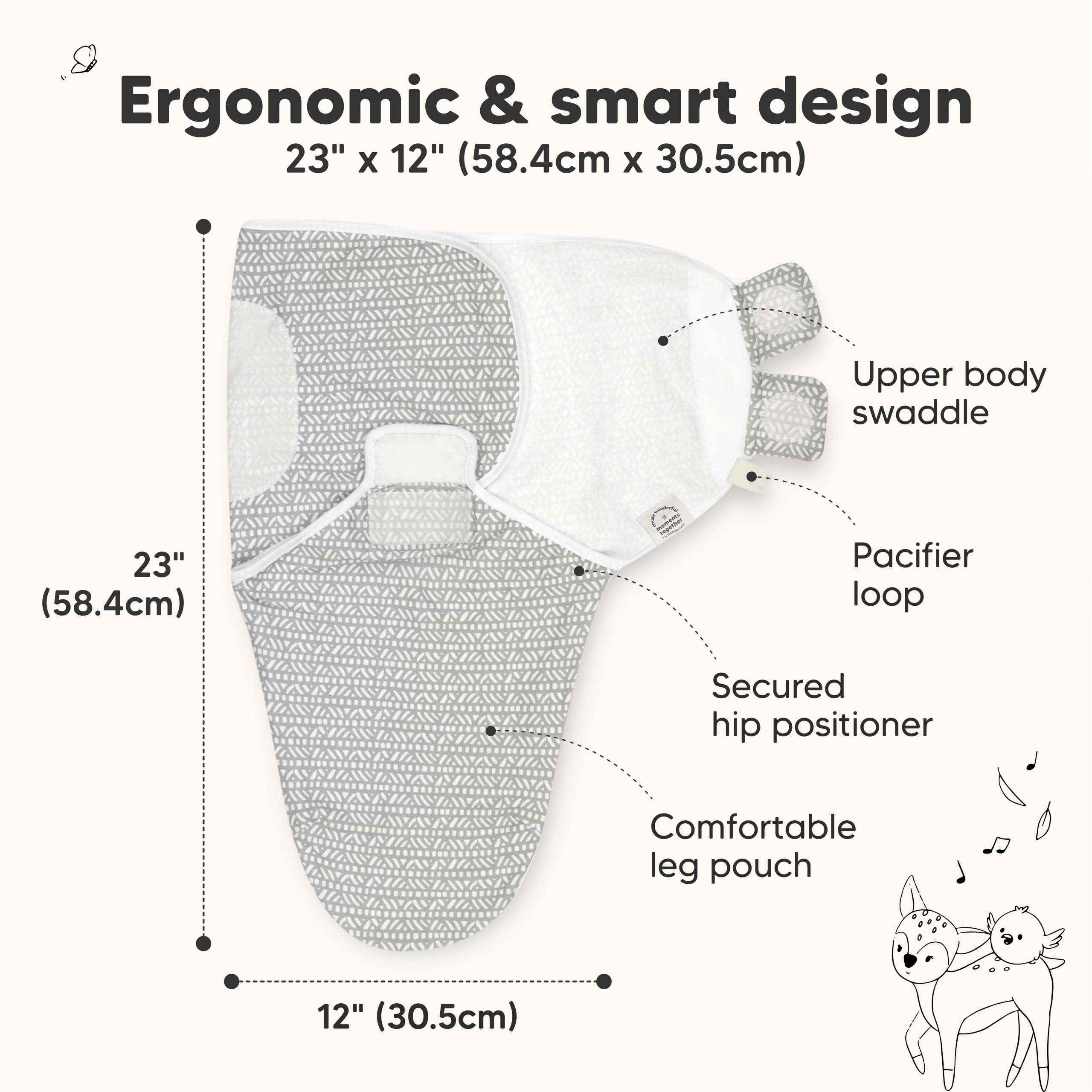
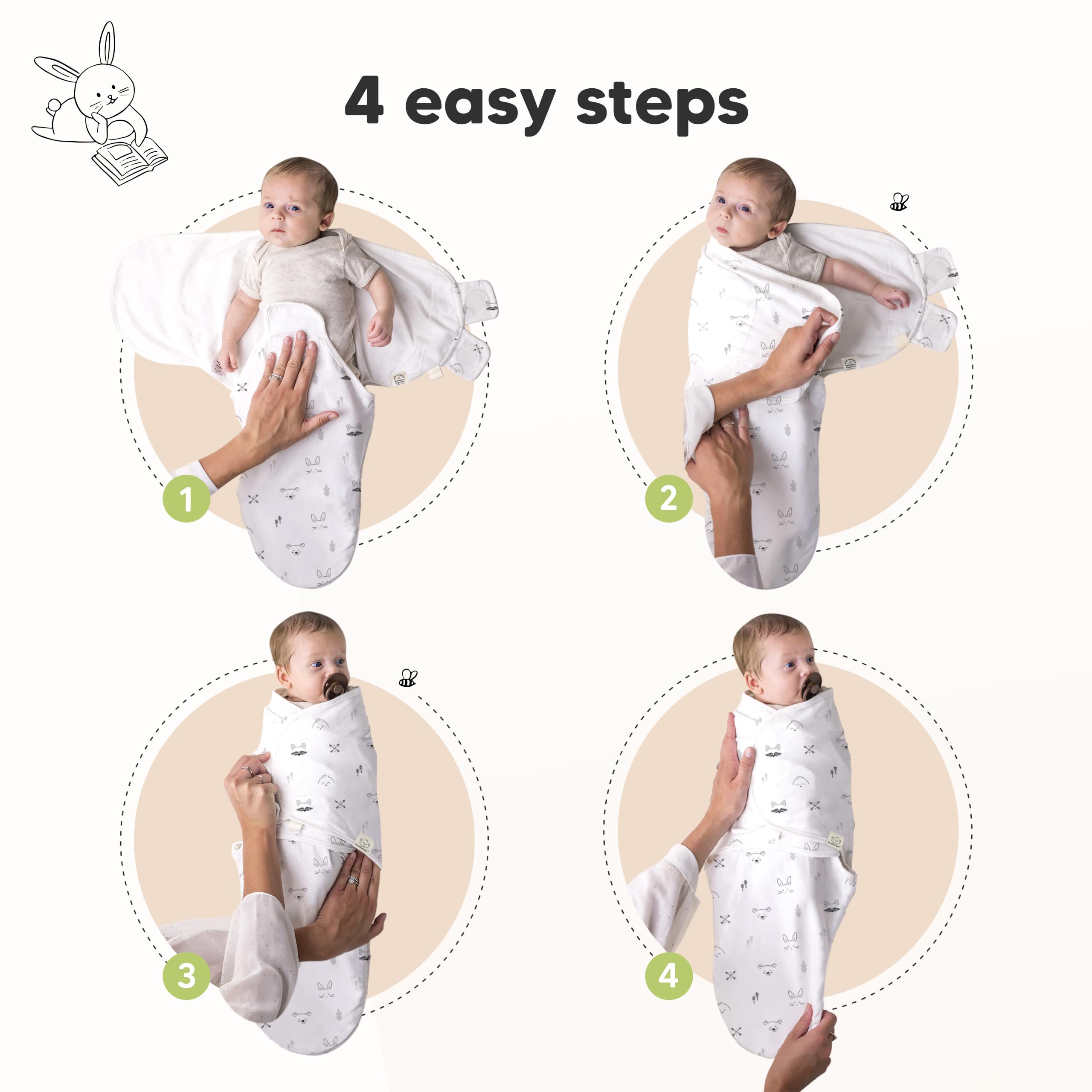
KeaBabies 3pk Organic Baby Swaddles for Newborns, 0.5 TOG Nordic, 0-3M
- Ergonomic for Newborn Growth - Certified as a hip-healthy product by the International Hip Dysplasia Institute
- Breathable & Temperature-regulating - Our Soothe Swaddle for newborns is made with ultra-soft organic cotton,
- Soft & Gentle - Use our newborn swaddle as a baby swaddle blanket. We use soft and durable hook-and-loops, whi
The same set also comes in a bunny print, the KeaBabies bunnies design if you prefer it.
Wait, I should keep this clean. If you like a different look, the [KeaBabies bunnies swaddle set](PRODUCT_PLACEHOLDER) is the same fabric and fit.
Two practical notes
First, check the size range before you buy. Many wraps are made for roughly 7 to 14 pounds. Plenty of full term babies are born between 6 and 9 pounds, so a small baby may swim in a wrap for the first few days. If a swaddle is too loose, it is not doing its job and can ride up toward the face.
Second, plan the end of swaddling now. The AAP advises stopping as soon as a baby shows signs of trying to roll, which can be as early as 2 to 4 months and is sometimes sooner. Do not wait for a full roll. Many parents then move to a wearable sleep sack with arms free.
4. Feeding and Sleep: Night Feeds, Waking Your Baby, and Day Night Confusion
In the first week your baby's sleep is organised around feeding, so most newborns need 8 to 12 feeds in 24 hours, including during the night, and sleepy babies sometimes need to be woken to eat. Feeding comes first, and sleep fits around it.
How often, and when to wake your baby
The AAP says breastfed newborns usually feed 8 to 12 times a day, and formula fed babies often feed every 2 to 4 hours. In the early days, if your baby is sleeping for longer than about 4 hours without a feed, wake them up to eat, at least until your baby has regained their birth weight and your doctor says it is fine to let them sleep longer.
Most babies lose some weight in the first few days (a loss of up to about 7 to 10 percent of birth weight is common) and are back to birth weight by about 2 weeks. This is why those night feeds matter so much. They are not a bad habit. They are how your baby gets back to birth weight.
How to wake a sleepy newborn
How do you know your baby is getting enough?
Wet diapers are one of the best indicators. As a rough guide, expect 1 wet diaper on day 1, 2 on day 2, 3 on day 3, 4 on day 4, and about 6 or more heavy wet diapers a day from day 5. Stools change from black and sticky meconium to green and then to yellow over the first week. If the numbers are falling short, or your baby seems too sleepy to feed properly, call your care team rather than waiting for the next appointment.
If feeding is not going well, get help early. Many families run into breastfeeding problems, and researchers are looking at ways to identify who might struggle before they have even given birth, so that support can start sooner. In the meantime, a lactation consultant or midwife in the first week can make a huge difference.
Night feeds without waking everyone fully
The aim is to keep nights boring. Dim lighting, quiet voices, no chatting, and a minimal diaper change. Change only if the diaper is dirty or your baby tends to wet through, because unnecessary changes can wake a baby who is settling. Feeding to sleep is completely normal at this age. You cannot spoil a newborn, and sleep training is not something to think about in week one.
Keep your bottle feeding safe too: hold your baby during feeds and never prop a bottle, which can lead to choking and increases the risk of milk reaching the ears and teeth over time.
Starting to teach day from night
Day night confusion is common. Your baby spent months in a dark, constantly moving environment where daytime rocking was the norm, and may now be wide awake at 2 a.m. You cannot fix it in a week, but you can nudge:
Be ready for leaks and laundry
Here is the part nobody warns you about. A newborn can soak through a swaddle with milk, spit up, or an overflowing diaper in a single night, and at 4 a.m. you do not want to discover you only own one. I recommend having at least 3 swaddles in rotation.
A budget friendly option is the MOON PARK set, which is 3 wraps for around $12, made of cotton, with soft edged fasteners meant to be quiet in the dark. It is rated 4.6 stars across 181 reviews, which is a smaller sample than some of the bigger brands, but it is a sensible way to build up your rotation without spending much.
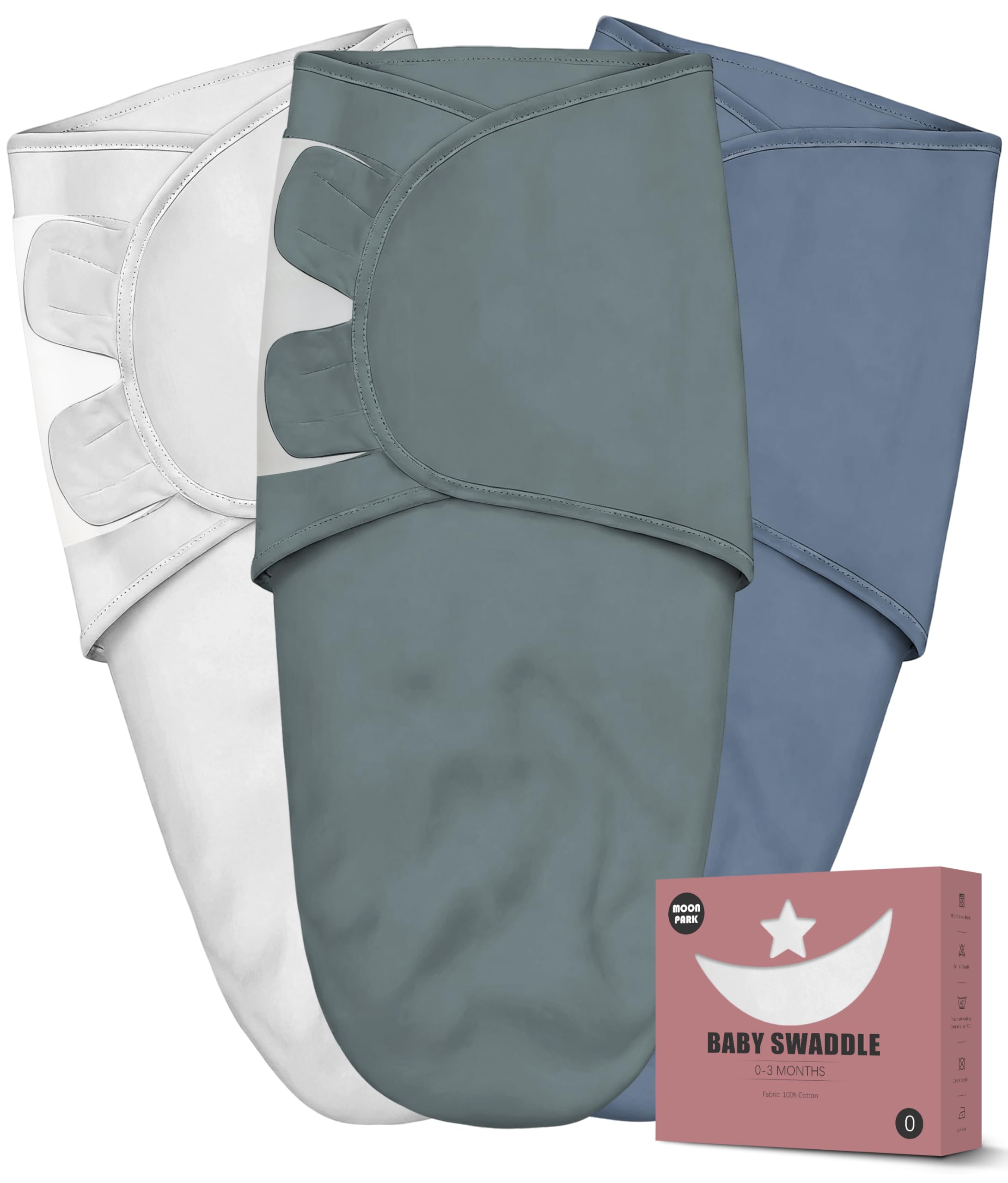
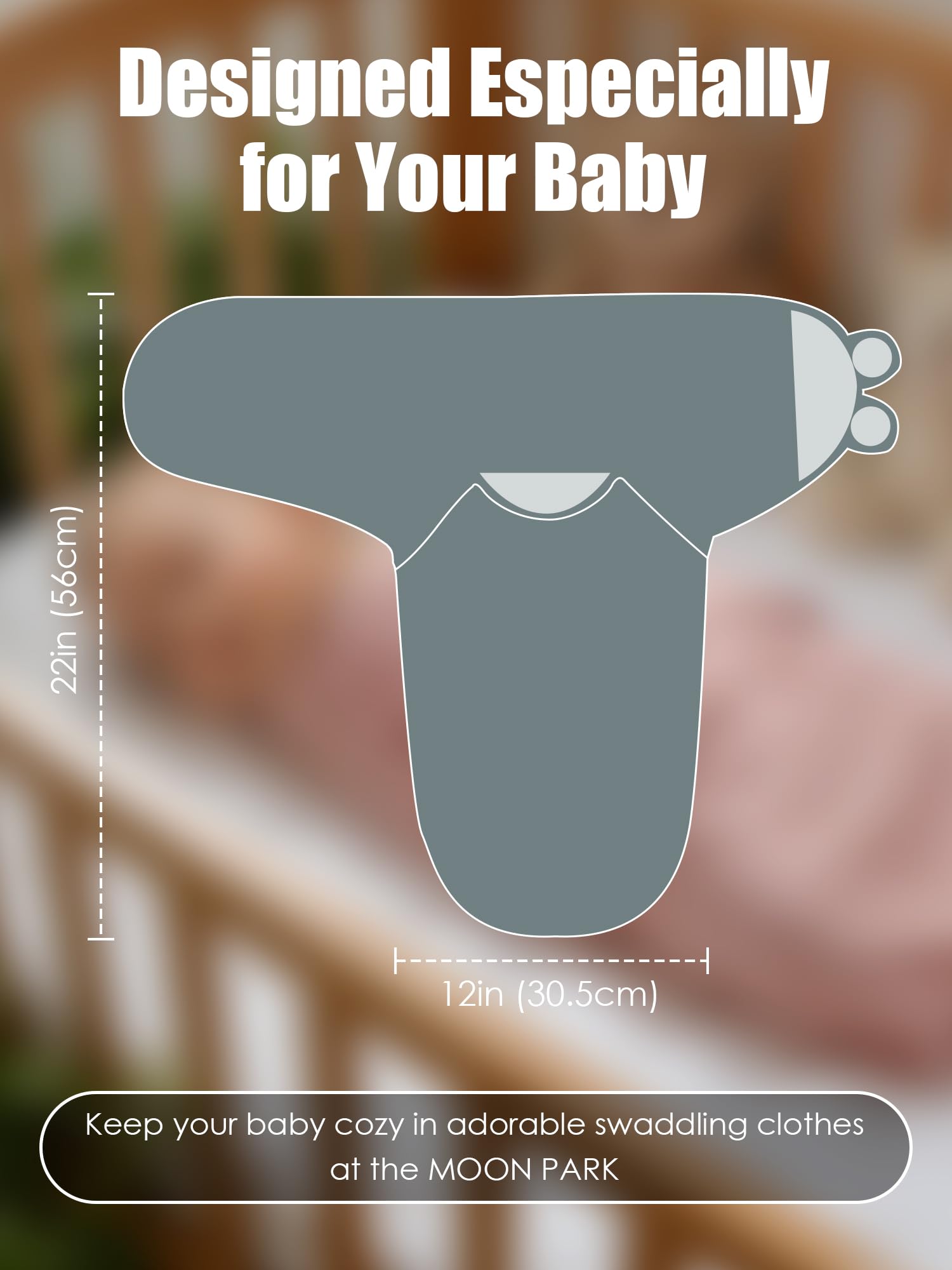
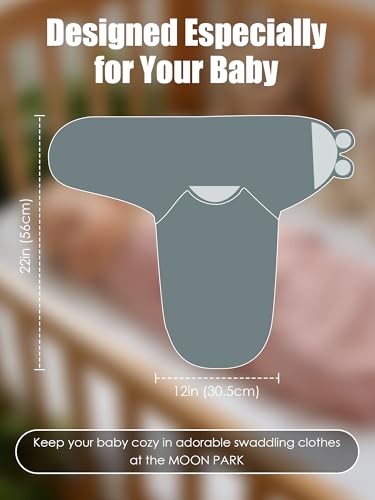
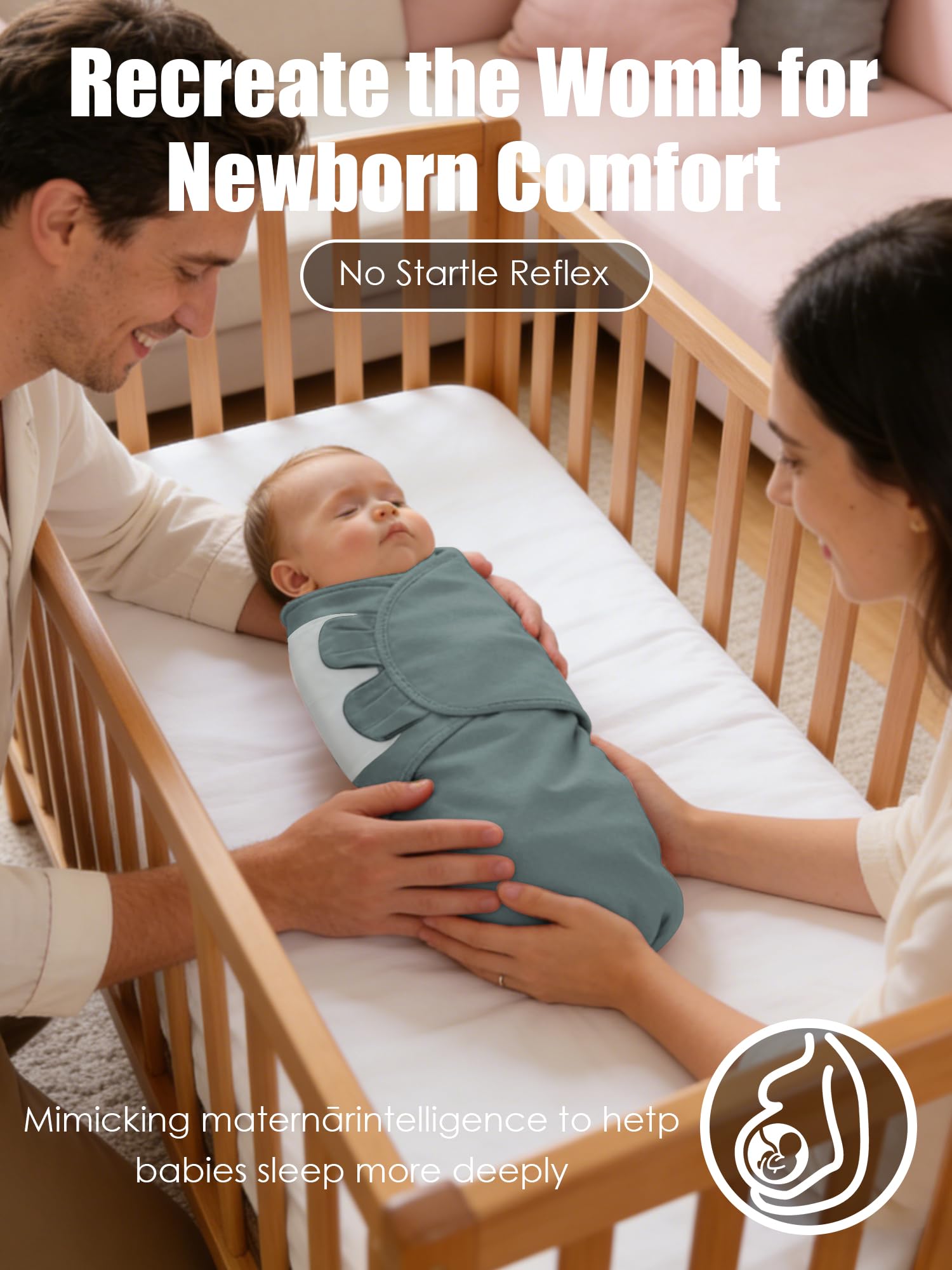
Newborn Swaddle Blanket Wrap 0-3 Months (3-Pack) - Adjustable Infant Sleep Sack, 100% Cotton Anti-Startle Soothing Sack, Soft Breathable Nursery Bedding - Midnight Navy + Slate Blue + Aegean Mist
- 【SLEEP LONGER, CRY LESS】 Recreates the secure, cozy feeling of the womb to calm your newborn instantly. Our sn
- 【100% BREATHABLE COMBED COTTON】 Made for delicate skin, our lightweight premium cotton fabric promotes airflow
- 【SCRATCH-FREE "SOFT-EDGE" FASTENERS】 Unlike generic wraps with sharp, loud tapes that scratch skin and wake ba
The same set is also available in a [warm harvest colourway](PRODUCT_LINK_PLACEHOLDER) and a softer palette.
5. Settling a Newborn: Soothing Techniques That Actually Work
The most reliable ways to settle a newborn are the ones that copy the womb: holding, swaddling, rhythmic movement, a low steady sound, and a feed if hunger is part of the problem. There is no trick that works every time, and that is not your failure.
Start by checking the basics
Before you try anything clever, run through the list of boring causes of crying:
A newborn who is crying may also simply be adjusting to the world. Crying in the first weeks is normal, and it often peaks around 6 to 8 weeks.
The 5 S's
Paediatrician Dr. Harvey Karp popularised a well known routine in his book The Happiest Baby on the Block, called the 5 S's: swaddling, side or stomach position (while held, never for sleep), shushing, swinging, and sucking. Many of my patients find it helpful. The key safety point is that the side or stomach position is only for calming your baby while you are holding them. Sleep is always on the back.
Sound, movement and touch
White noise or a steady "shhh" sound can help babies settle. A study published in Pediatrics in 2014 looked at infant sleep machines and found that some could produce sound levels high enough to be a concern for infant hearing. Keep any machine across the room, not in the cot, and keep the volume low, around the level of a soft shower or quieter.
Gentle motion, like rocking in your arms, walking, or using a baby carrier, also helps. If you use a carrier or sling, keep your baby's face visible and uncovered, keep the airway clear, and make sure they are held close and upright and supported. Many UK sling groups teach this with the TICKS checklist.
Drowsy but awake
You will hear that you should put your baby down "drowsy but awake" so they learn to fall asleep alone. That is a fine idea for later. In week one, it is okay if your baby only falls asleep on your chest, at the breast, or in your arms. Just move them to their own flat sleep surface once they are deeply asleep, and do not feel guilty. Newborns are not ready for sleep training, and no one expects them to be.
Handling the awake time
Awake time in the first week is brief. Many newborns can only stay alert for about 45 to 60 minutes, or less, before they need to feed again and sleep. Awake time does not need to be elaborate. A feed, a diaper change, a cuddle, some eye contact, and some talking are all it takes. If you want some gentle ideas, our newborn learning and play activities for the early weeks are simple and take only a few minutes.
An easy one handed option for night changes
At 3 a.m., speed matters. The Comfy Cubs swaddle has adjustable tabs designed to close quickly and stay put. It is a 3 pack at about $30, rated 4.6 stars across more than 11,000 reviews. It sits at the higher end of the price range in this article, so whether it is worth it comes down to how much you value an easy closure when you are half asleep.
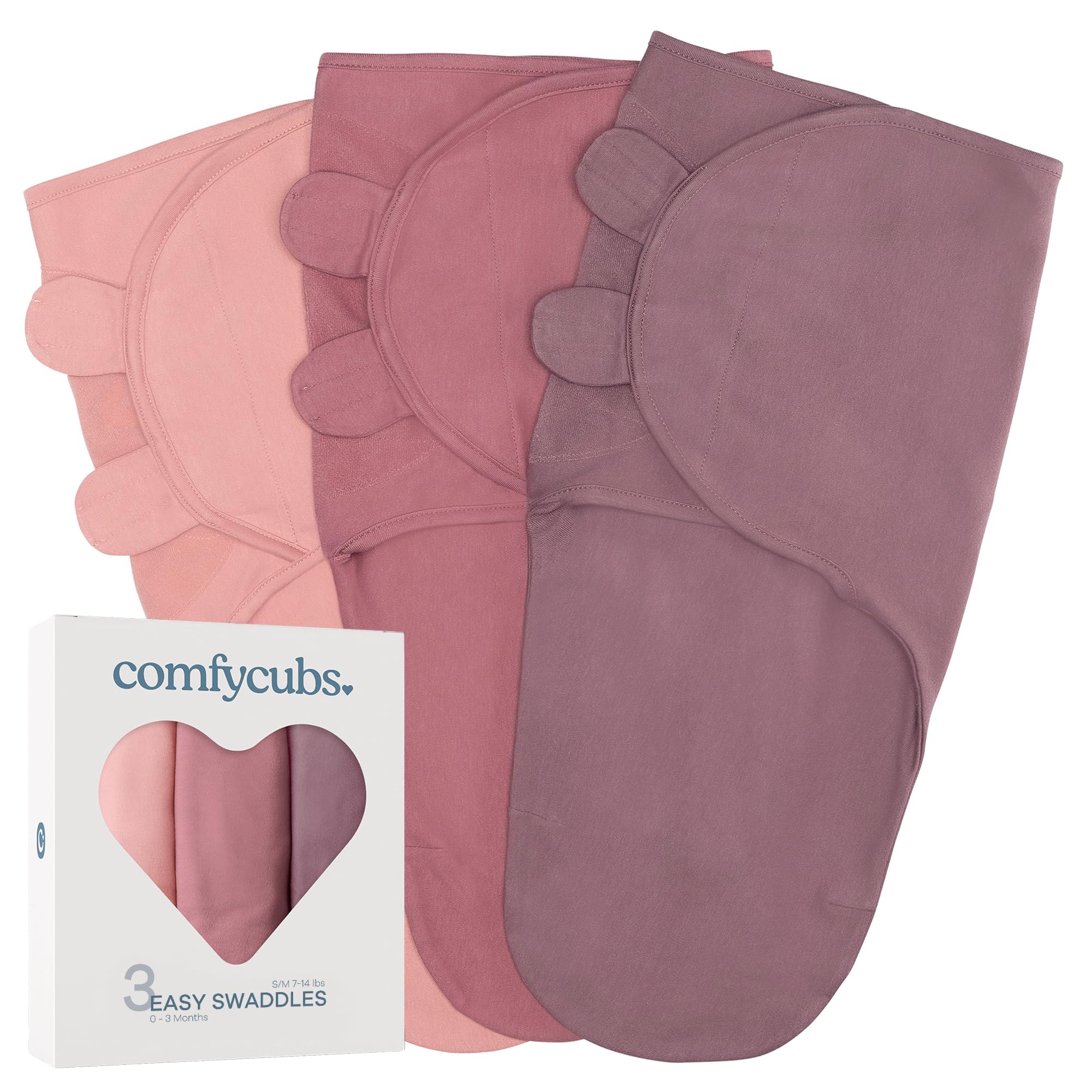
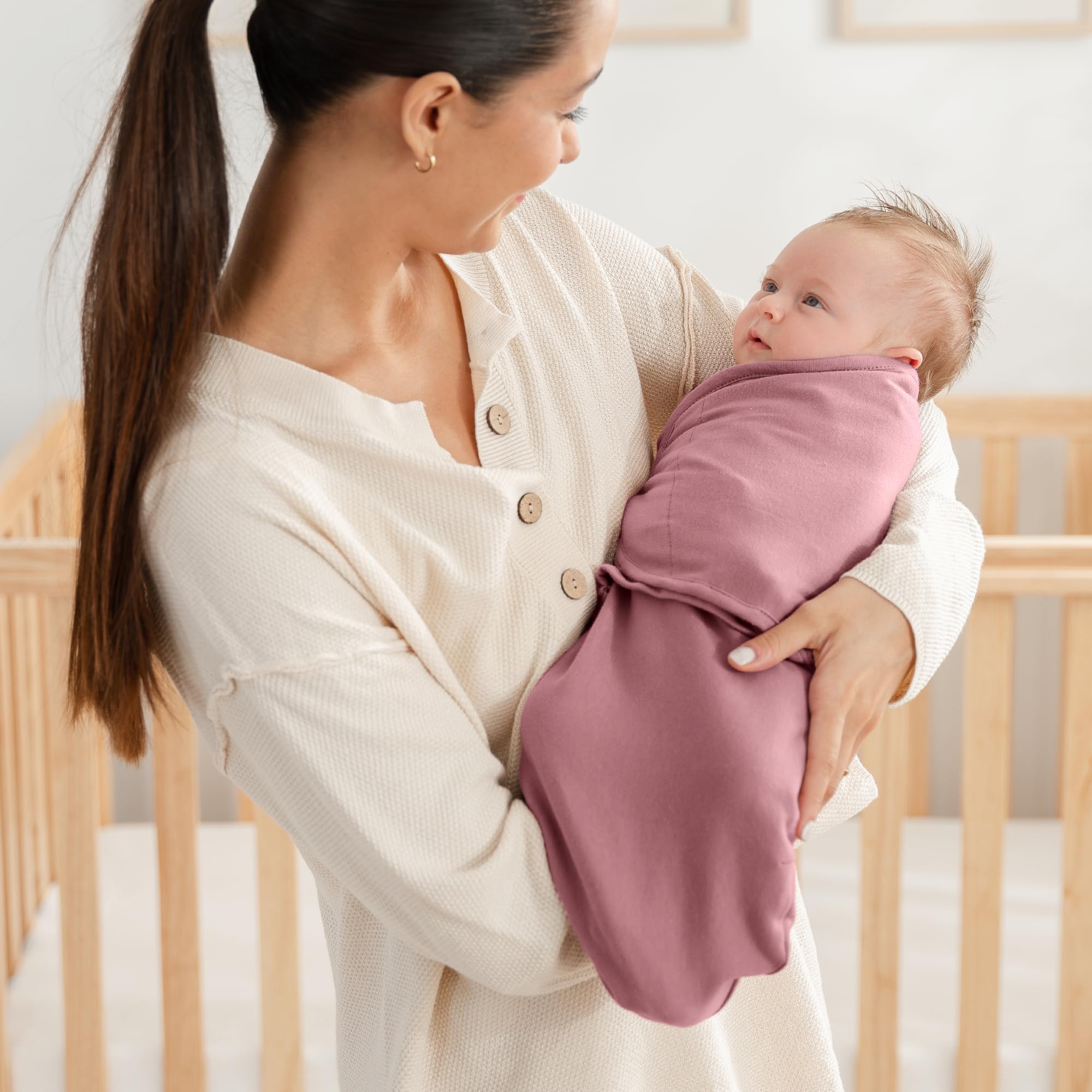

Comfy Cubs Easy Swaddle Blanket, 3 Pk Small - Blush Mauve Mulberry
- Recreate the Womb for Newborn Comfort: Mimic the snug, secure feeling of a mother's womb with Comfy Cubs swadd
- Breathable and Temperature-Regulating Baby Swaddle Blankets: Made with 100% breathable cotton, these newborn s
- Secure Fit with Adjustable Swaddle Tabs: Sturdy hook-and-loop closures keep the swaddle blankets for newborns
When you are at your limit
Every parent I have ever treated has had a moment, usually in the early hours, when the crying felt unbearable. If you are at that point and your baby is fed, changed and safe, it is okay to put them down on their back in the cot, close the door, and step out for a few minutes to breathe, drink some water, or phone someone. Never shake a baby. A few minutes of crying in a safe cot will not harm your baby, but shaking can cause serious brain injury.
6. Protecting Your Own Sleep and Knowing When to Call Your Doctor
The best thing you can do for your baby's sleep this week is to protect your own, and the second best thing is to know which warning signs mean you should call a doctor right away.
Sleep is a health issue for you too
Extreme sleep deprivation affects mood, memory, judgement and physical recovery. This matters more after birth, when you may be healing from a vaginal birth, a caesarean section, or complications. NICE postnatal care guidance emphasises that parents' wellbeing is part of newborn care, not separate from it.
Practical ways to get more rest
If you have no partner around, ask a relative or friend to take one night time block so you can sleep in a quiet room. Asking for help is a skill, not a weakness.
When low mood is more than tiredness
The Centers for Disease Control and Prevention (CDC) reports that about 1 in 8 women who have recently given birth experience symptoms of postpartum depression. Partners can be affected too. Exhaustion can look similar, but there are differences. If you cannot sleep even when the baby is asleep, feel persistently hopeless or numb, have frightening thoughts, or feel unable to cope for more than a couple of weeks, speak to your doctor or midwife. These conditions are common and very treatable.
When to call your doctor about your newborn
Please never feel you are overreacting. Call your paediatrician, midwife or urgent line the same day if you see:
Call emergency services if you see
Many newborns have "periodic breathing", where they take quick breaths and then pause briefly, for up to around 10 seconds, before starting again. This is typically normal in newborn sleep, but if a pause seems long or your baby changes colour, treat it as an emergency.
Newborn Swaddle Options at a Glance
Here is how the swaddles discussed above compare for different situations. Prices are from the listings at the time of writing and can change.
| Option | Best For | Main Benefits | Watch Out For | Recommended Product | Price Range |
|---|---|---|---|---|---|
| Budget cotton wrap | Building a laundry rotation on a tight budget | 3 wraps for about $12, soft edged fasteners | Listed for 7 to 14 lbs, so check fit on a small baby | MOON PARK 3 pack swaddle | About $12 for 3 |
| Hip certified organic sack | Parents who prioritise hip health | Listed as certified by the International Hip Dysplasia Institute, organic cotton | Costs roughly double the budget option | KeaBabies Nordic swaddle | About $22 for 3 |
| Easy tab wrap | Fast closures during night changes | Sturdy adjustable tabs, breathable cotton | Highest price of the group | Comfy Cubs Easy Swaddle | About $30 for 3 |
| Lightweight 0.5 TOG sack | Warm rooms or summer babies | Light, breathable fabric, hip certified listing | Check room temperature and avoid extra layers | KeaBabies Bunnies swaddle | About $22 for 3 |
Expert Insights: What the Major Guidelines Agree On
I have chosen to paraphrase the guidance below rather than put words in anyone's mouth, because I would rather be accurate than quotable. Here is where the main bodies agree.
The American Academy of Pediatrics (2022). The AAP says babies should sleep on their backs on a firm, flat surface, in the parents' room but on a separate sleep surface, with no soft bedding. It also advises against inclined sleepers, weighted sleep products, and sleeping on sofas or armchairs, and says swaddling should stop when a baby shows signs of rolling.
NICE (UK National Institute for Health and Care Excellence). Its postnatal care guideline (NG194) treats early feeding support, safe sleep information and parents' emotional wellbeing as part of routine care in the first days and weeks, not extras.
The Lullaby Trust. This UK charity recommends keeping the room at about 16 to 20°C (61 to 68°F), avoiding overheating, and always placing babies on their back for every sleep, mirroring the AAP's advice.
The message from all of them is consistent. Safe sleep is a short list of habits, and the rest, including routines, gadgets and "sleep through the night" targets, can wait.
Conclusion
The first week is not a test, and nobody is grading your baby's sleep. You are learning a tiny person who is learning the whole world, and the only things that really matter right now are that your baby is safe, fed and loved, and that you stay well enough to keep doing it.
If you remember one thing, make it this: a safe sleeper and a fed baby are a success, whatever the clock says. The rest will come.
If this guide helped, save it for the 3 a.m. moments, and share it with whoever is about to meet their own newborn.
1. Moon RY, Carlin RF, Hand I; AAP Task Force on Sudden Infant Death Syndrome. "Sleep-Related Infant Deaths: Updated 2022 Recommendations for Reducing Infant Deaths in the Sleep Environment." Pediatrics. 2022;150(1):e2022057990. 2. Hirshkowitz M, et al. "National Sleep Foundation's sleep time duration recommendations: methodology and results summary." Sleep Health. 2015;1(1):40 to 43. 3. American Academy of Pediatrics. HealthyChildren.org guidance on swaddling, newborn feeding and newborn weight. healthychildren.org. 4. Eunice Kennedy Shriver National Institute of Child Health and Human Development (NICHD). "Safe to Sleep" campaign. safetosleep.nichd.nih.gov. 5. National Institute for Health and Care Excellence (NICE). "Postnatal care. NICE guideline NG194." 2021. nice.org.uk/guidance/ng194. 6. The Lullaby Trust. Safer sleep advice, including room temperature and overheating. lullabytrust.org.uk. 7. Hugh SC, et al. "Infant sleep machines and hazardous
Frequently Asked Questions
How long should a newborn sleep at a time in the first week?
Should I wake my newborn to feed at night?
Is it safe for my newborn to sleep on my chest?
Why does my newborn only sleep when held?
Should I swaddle my newborn for every sleep?
When do newborns start sleeping through the night?
How warm should my newborn's room be?
Was this helpful?
Thanks — your feedback helps us pick what to write next.