Toddler Behaviour and Emotions: What's Normal and What Helps
Tantrums and big feelings are a normal part of toddlerhood, because your child has strong emotions but few words and little impulse control to manage them. Stay calm, name the feeling, hold the limit kindly, and teach new skills once everyone is calm. Talk to your doctor if tantr

In this article
TL;DR: Quick summary
Tantrums and big feelings are a normal part of toddlerhood, because your child has strong emotions but few words and little impulse control to manage them. Stay calm, name the feeling, hold the limit kindly, and teach new skills once everyone is calm. Talk to your doctor if tantrums are intense, frequent or get worse after age 4.
What you'll get
About 28 minutes to read. Short on time? Read the bold lines and the Key Takeaways near the end.
Picture a two year old at the supermarket checkout. The banana you handed over has snapped in half, and the world has ended. She is on the floor, face red, and every adult in the queue is looking at you.
If that scene is familiar, you are in very good company. Toddler behaviour can feel personal, loud and unpredictable, but most of it has a simple cause and a simple response.
This guide is for parents and caregivers of children from about 1 to 3 years old. We will look at why big feelings arrive so early, how to stay steady in the middle of a meltdown, and how to teach your child to name what they feel. We will also cover hitting and biting, limits that stick without a battle, and the signs that mean it is time to ask for help.
Why does my toddler have such big tantrums?
Toddlers feel strong emotions before they have the words, the impulse control or the brain maturity to manage them. Tantrums are common, normal and often a healthy way to release emotional energy. They ease as language and self control grow.
What is happening inside a tantrum
Your toddler's feelings arrive at full volume. Wanting, frustration, tiredness and disappointment all hit at once, and she cannot yet say "I'm cross because you cut my toast the wrong way." Tantrums are common because toddlers cannot always communicate their needs.
Toddlers are also not yet able to stop their impulses. That means grabbing, throwing and shouting are not signs of a "bad" child. They are signs of a brain that is still under construction.
The first tantrums may appear around 12 to 15 months, as toddlers become more mobile. A child who can crawl or walk away from you can also want things you say no to. Between ages 1 and 3, children are learning to express emotions, test limits, explore and assert their independence. Frequent use of the word "no" and big reactions when routines change are completely normal at this age.
This is a normal behavior and a healthy way for toddlers and preschoolers to release emotional energy and return to a calmer state.
CDC, Tips for Noticing and Naming Emotions
How long do tantrums last?
Most toddler tantrums last from a few minutes up to about 15 minutes, and most children recover and move on with their day. That can feel like an hour when you are in the middle of one. Knowing it will pass helps you stay steady.
Most children also begin to have fewer tantrums by age 3 and a half. Your child is not stuck in this stage forever.
What normal looks like at this age
Common mistakes in how we read tantrums
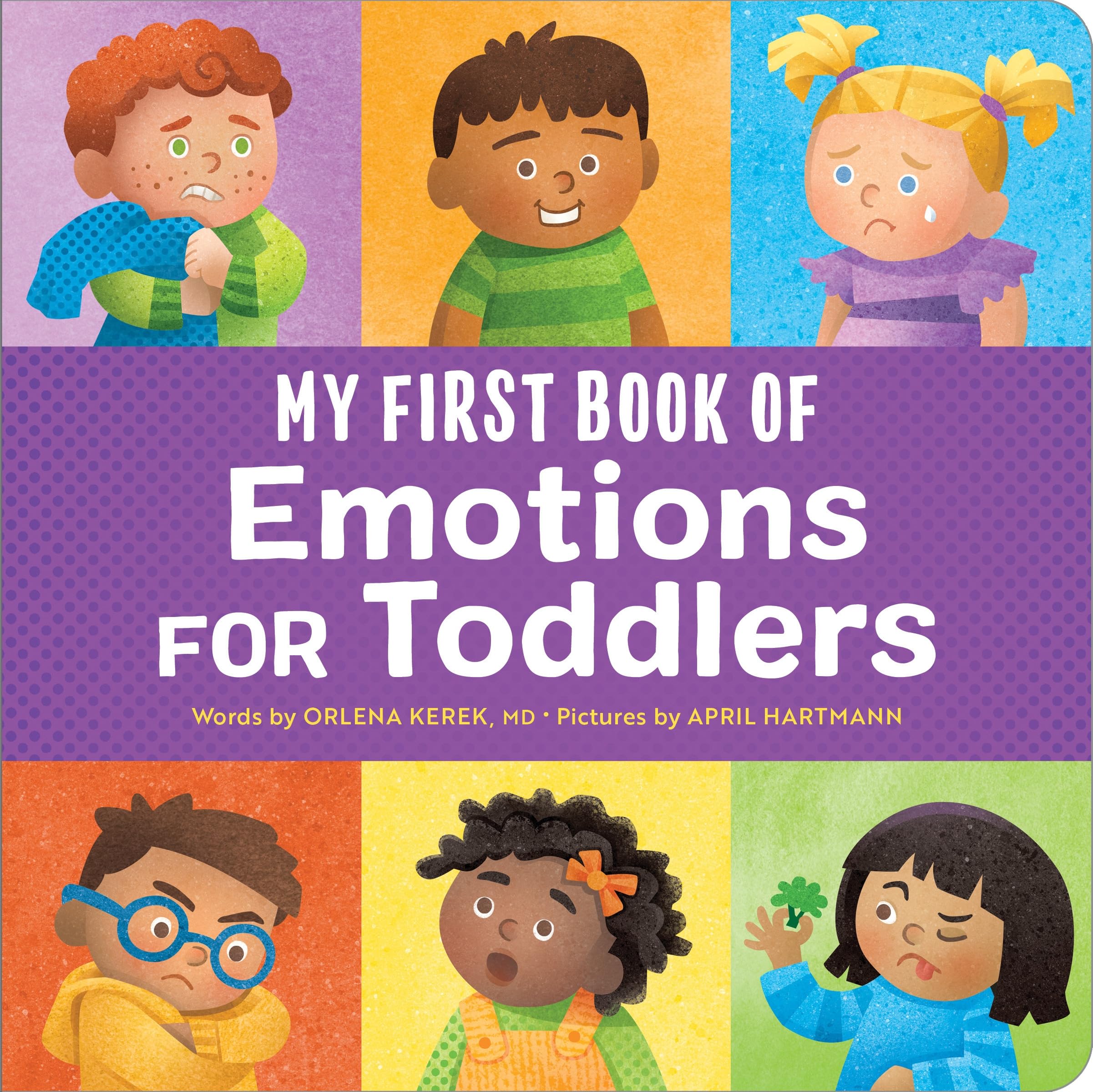
Emotions are also a thing toddlers need to learn about, like colours or animals. A picture book can give you both a shared language on a quiet afternoon. My First Book of Emotions for Toddlers is one simple way to start pointing at faces and naming "happy", "sad" and "cross" together.


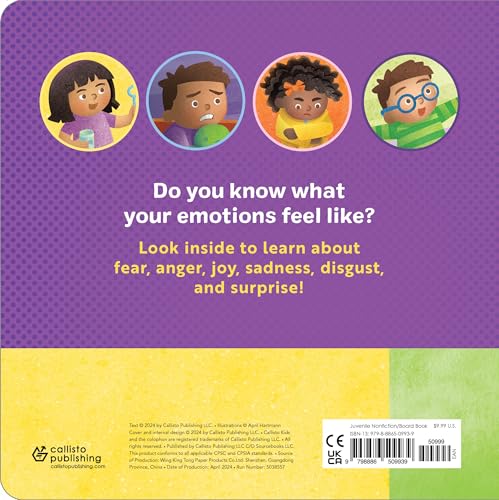

My First Book of Emotions for Toddlers
- Children's Books
- Growing Up & Facts of Life
- Friendship, Social Skills & School Life
How do I stay calm when my toddler is melting down?
Your calm is the main tool you have. Keep your voice low, use very few words, stay close and keep your child safe. A big emotional response, punishment, shaming, bargaining or demanding an apology will not help.
Why your reaction matters so much
A toddler in a meltdown cannot borrow your logic, but she can borrow your calm. When you shout, plead or negotiate, you add more noise to a brain that is already overloaded.
This is hard, because tantrums are more likely when children are tired, hungry or frustrated, and that is often when you are tired too. If you want a real life example of a parent who learned to steady herself first, read how one mom stays calm during tantrums.
A five step reset you can use in the moment
- Pause and breathe out slowly. One long breath out before you speak or move.
- Get low. Crouch or sit near your child so you look smaller and safer.
- Say very little. "I'm here. You're safe. I won't let you hurt anything."
- Make the space safe. Move breakables, or gently carry your child somewhere quieter if needed.
- Wait. Stay close until the crying slows, then offer a cuddle or a drink of water.
What to say (and what to skip)
Short and boring beats clever and long. Try one of these:
Then stop talking. Many parents find the urge to explain, and explain again, is the hardest thing to hold back.
Mistakes that keep the storm going
What about the audience?
In public, the strangers watching are the hardest part. Most other parents have been exactly where you are, and the ones who look annoyed are not the ones you need to please. If you can, pick your child up and move somewhere quieter, such as the car or a corner of the shop. Then use the same short words.
A story can help afterwards, when you are both calm. Little Monkey Calms Down shows a young character finding ways to settle, and toddlers often love repeating the calming actions. You can copy those moves together next time feelings run high.


Little Monkey Calms Down (Hello Genius)
- Children's Books
- Growing Up & Facts of Life
- Daily Activities
How do I help my toddler name and manage feelings?
Teach feelings words when your child is calm, not mid tantrum. The CDC suggests emotion coaching: notice, connect, listen, name and find good solutions. Wait until both you and your child are calm before you begin.
Why naming feelings works
Toddlers cannot control what they cannot yet name. When you give a feeling a word, you give your child a handle for it. Over months, "I'm mad!" slowly replaces screaming or throwing.
This fits with how toddler brains learn, through repetition, play and relationships rather than lectures. Many small, calm moments matter more than one big talk.
The five steps, with words you can use
Here is how the CDC's steps might sound at home. The steps come from the CDC; the example words are mine.
- Notice. Spot the early signs: clenched fists, a whine, going quiet. "I see your face is scrunched up."
- Connect. Move close and keep your tone gentle. "Come here, I'm with you."
- Listen. Let your child show you with sounds, gestures or words. Do not rush to fix it.
- Name. Give the feeling a word. "You're frustrated. The tower fell down."
- Find good solutions. Once calm, offer simple options. "Do you want to build it again, or take a break?"
An example from a normal afternoon
Picture a two and a half year old whose block tower keeps collapsing. He bangs the floor and whines. You crouch down and say, "That keeps falling. You're so frustrated." He pauses and looks at you.
You wait a moment, then offer a choice: "Shall we try a wider bottom, or have a snack first?" You have named the feeling, shown you are on his side and handed him a small way forward.
Building a feelings vocabulary
By around age 3, most toddlers start to feel other big emotions like guilt and shame. That makes calm, kind naming even more important, because a child who feels ashamed may find it harder to take in what you say. Keep your words warm and about the feeling, not about the child's character.
Everyday moments are the best classroom:
Harper Handles Big Feelings is a picture book that walks through anger, worry and frustration in simple language. Reading it at bedtime is a calm moment, which is when children can actually take the lesson in.
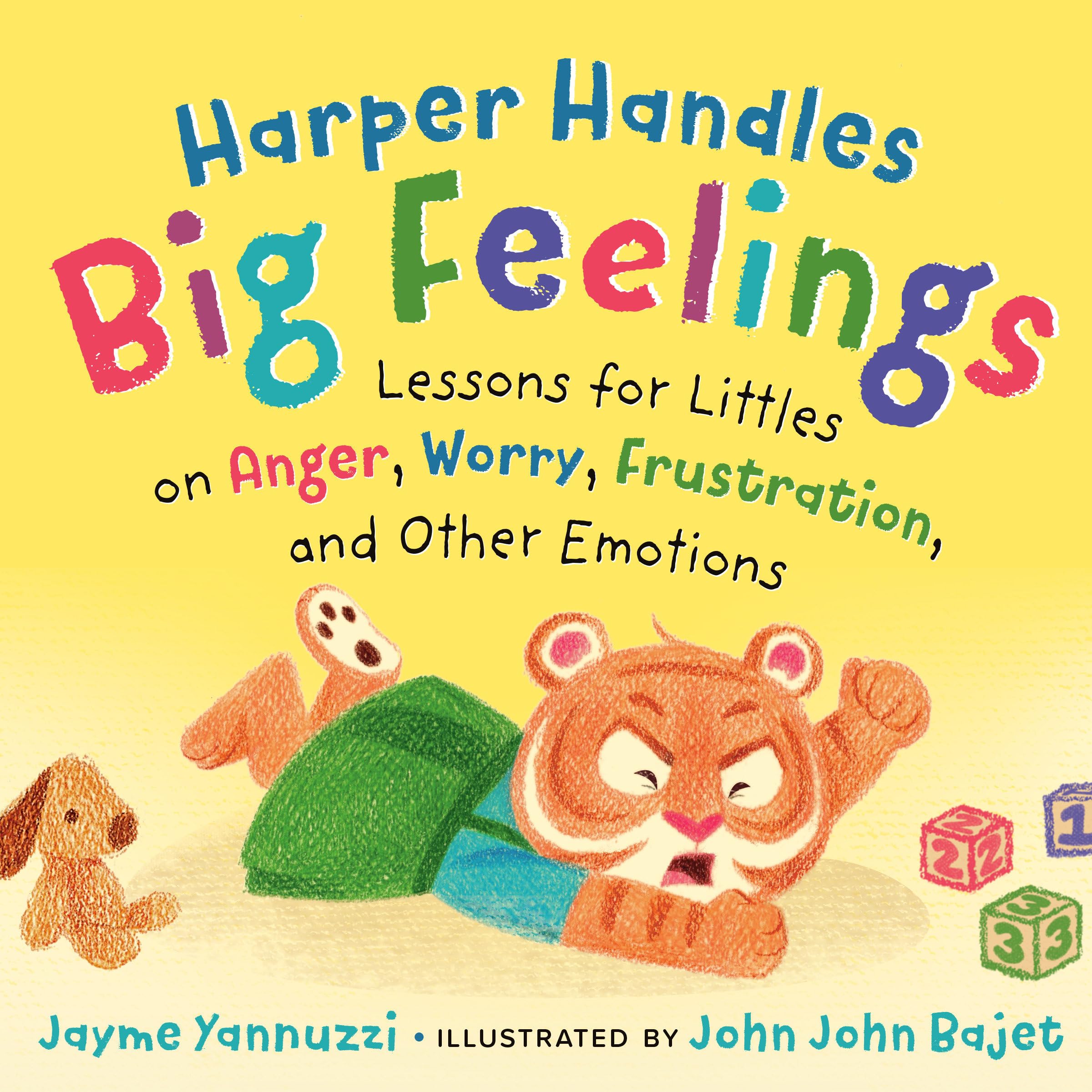

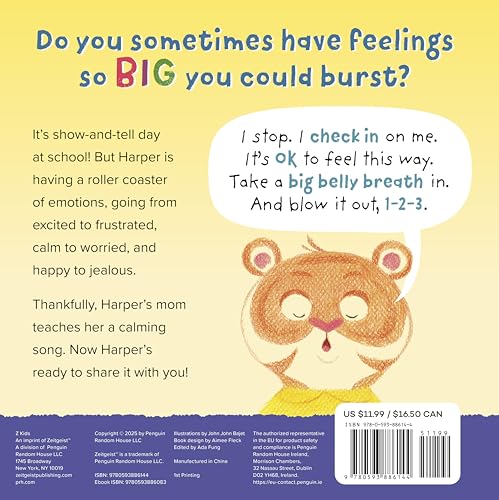
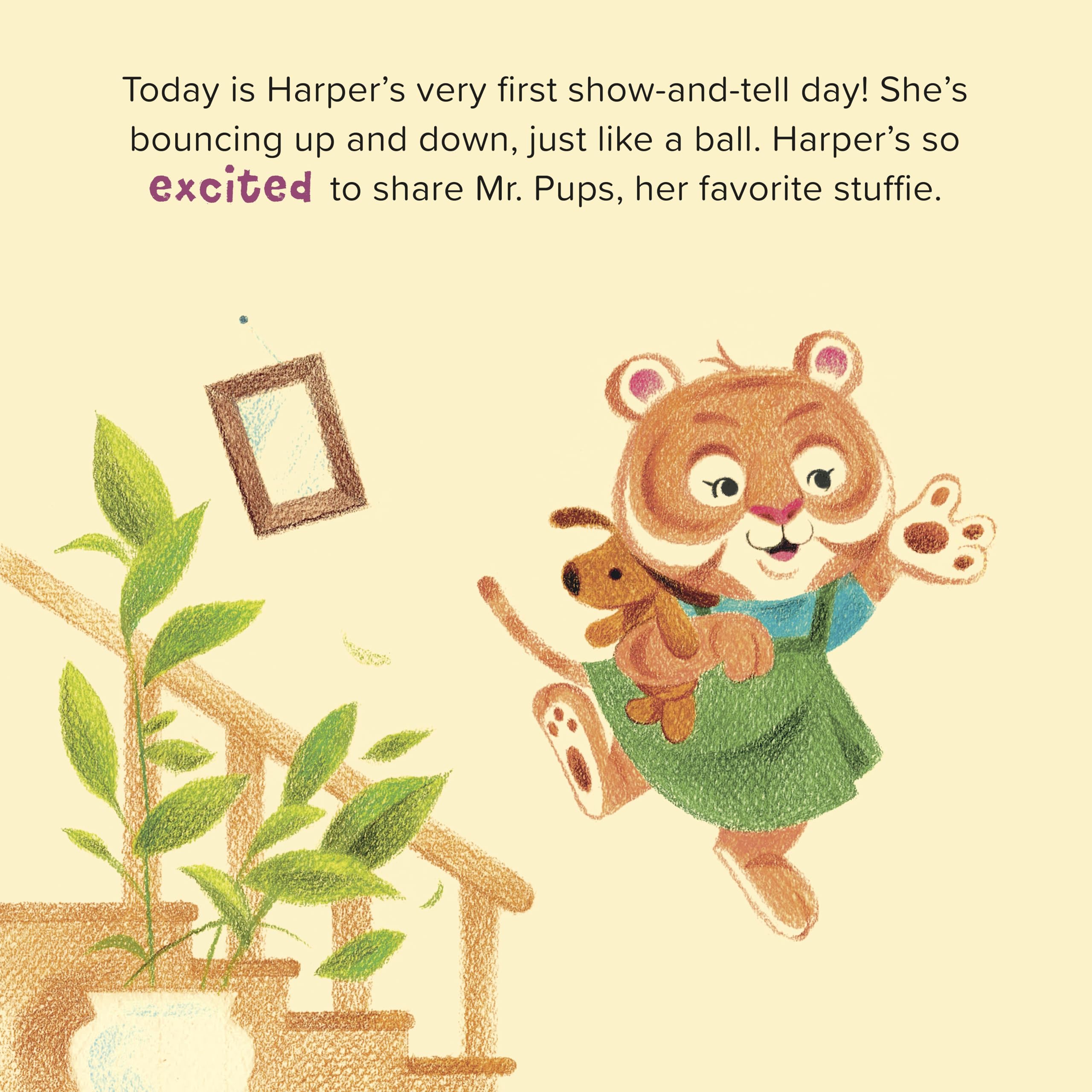
Harper Handles Big Feelings: Lessons for Littles on Anger, Worry, Frustration, and Other Emotions
- Children's Books
- Growing Up & Facts of Life
- Friendship, Social Skills & School Life
Common mistakes when coaching feelings
What should I do when my toddler hits, bites or throws?
Stop the behaviour calmly, keep everyone safe and name the feeling behind it. Toddlers are not yet able to stop their impulses, so they need help, not punishment. Physical discipline, shouting at, or isolating a child can be harmful.
Why toddlers hit and bite
Toddlers hit, bite, push and throw because feelings arrive faster than words. A child who wants a toy and cannot say "That's mine, give it back" may grab, shove or bite. It is communication, even if it is messy communication.
It is also a sign of limited impulse control, which is expected at this age. Your job is to teach what to do instead, many times over.
A simple script for the moment
- Move in fast and calm. Gently stop the hand or put yourself between the children.
- Use few words. "I won't let you hit. Hitting hurts."
- Check the hurt child first. Give the other child your attention so hitting does not become a way to get yours.
- Name the feeling. "You were so cross he took your truck."
- Offer what to do instead. "You can say 'Stop!' or stamp your feet. Let's try."
Taking a short break
Sometimes your child needs a short pause from the situation that caused the distress. A quiet space or a change of environment may help. Keep it short. The goal is to support your child through their feelings, not to isolate them.
Keep the break short. The goal is to support your child through their feelings, not to isolate them.
rch.org.au, Kids Health Info: Understanding behaviour
In practice, that means you stay nearby, sit with your child in a calm corner or move to another room together. A toddler who is left alone with a flood of feelings is not learning anything useful.
Mistakes that make hitting worse
Expecting a quick fix, when it often takes many repeats of the same calm response
Teaching gentle hands
Toddlers learn gentleness through practice. Model it, show it and praise it.
Books give you a shared script for this. What to Do When You Feel Like Hitting speaks straight to toddlers about the feeling and about what hands can do instead. I Play Nicely. I Am Gentle! is another that pairs well with the "gentle hands" practice at home.


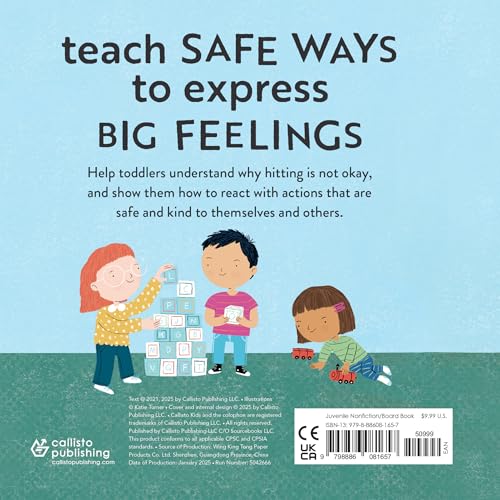

What to Do When You Feel Like Hitting: A No Hitting Book for Toddlers (Big Feelings Books for Toddlers)
- Children's Books
- Growing Up & Facts of Life
- Friendship, Social Skills & School Life
When hitting needs more help
Most hitting fades as language grows. If your child hurts themselves or someone else often, damages property during a tantrum, or the behaviour is violent, contact your child's healthcare provider.
How do I set limits without a power struggle?
Keep rules few, clear and the same every day. Give your child attention and praise for good behaviour, and limit attention for defiant behaviour like tantrums. Use clear, consistent consequences, always follow through, and briefly explain the reason.
Why toddlers push back
Between ages 1 and 3, children are testing limits and asserting their independence. A toddler who says "no" many times a day is not being rude; she is discovering that she is a separate person with opinions. The trick is to give her room to choose where it is safe, and hold firm where it is not.
Caregivers can keep calm, validate the child's feelings, give choices, look for patterns and direct toward acceptable behaviour. That list is a useful skeleton for everything in this section.
Make the limit short, clear and kind
Long explanations sound like noise to a toddler. Say what you want in a few words and name the feeling.
Always follow through. If you say mealtime is over, it is over. Briefly explain the reason once, and then stay calm.
Offer two choices you can live with
Choices give a toddler a sense of control without giving up the limit. Keep them small and real.
- "Do you want the red cup or the blue cup?"
- "Shoes on by yourself, or shall I help?"
- "Do you walk to the car, or shall I carry you?"
Do not offer a choice you are not willing to honour. If the answer to "Do you want to go to bed?" is no, the question was a mistake.
Catch the good moments
Parents often notice the shouting and miss the quiet cooperation. Give attention and praise when your child follows an instruction and shows positive behaviour, and limit attention for defiant behaviour like tantrums.
Make the praise specific: "You put your plate on the counter, thank you." That tells your toddler exactly what earned your attention.
Are consequences the same as punishment?
They are not the same thing. Punishment, shaming and big emotional reactions do not help. A calm consequence is different: it is clear, consistent, brief and linked to what happened.
Picture a two year old who keeps throwing her toy at the dog. You say, "Toys are not for throwing. I'll put it up on the shelf for now." You do it calmly, offer another toy for rolling, and move on. No shouting, no lecture.
Common mistakes with limits
For parents who want a wider framework, the guide on positive parenting and gentle discipline lays out how kindness and firm limits work together at each age.
A routine example for the hardest times
Transitions, such as leaving the park or turning off a show, trigger many battles. A simple pattern helps:
Do sleep, routines and temperament change my toddler's behaviour?
Yes. Tired, hungry or overstimulated toddlers melt down faster, and toddlers often react strongly when routines change. Predictable days, enough sleep and an eye on your child's own temperament can help prevent many tantrums before they start.
The usual suspects behind a meltdown
Many "behaviour problems" are really needs in disguise. Before you decide your toddler is being difficult, run through a quick check:
Big reactions when routines change are completely normal. That is why the same child can be calm on Tuesday and a puddle on Saturday.
Sleep and behaviour
A short night or a messy nap makes feelings harder to manage. If your toddler's sleep has suddenly fallen apart, toddler sleep regression may be part of the picture, and calm nights often bring calmer days.
Keep bedtime steady, keep the routine short and predictable, and protect naps where you can. If you are unsure how much sleep your child needs, ask your doctor or health visitor what is right for your child's age.
Make the day predictable
Toddlers feel safer when they know what comes next. You do not need a strict timetable, just a rhythm.
- Keep anchors steady. Meals, naps and bedtime at roughly the same times.
- Narrate the day. "First breakfast, then shoes, then park."
- Warn about changes. "Tomorrow Grandma is coming. She'll be here after lunch."
- Use a visual. A few simple pictures on the fridge can show the day's order.
- Build in downtime. A quiet half hour after busy outings.
Temperament matters
Some toddlers are easygoing; some feel everything intensely. A child who is easily overwhelmed by noise, textures or changes may need more preparation and more quiet. If that sounds like your child, understanding your highly sensitive child explains the signs and how to support them calmly.
You cannot change your child's temperament, but you can change the fit between her and her day. A sensitive child may do better with one playdate than three, a quieter shop trip, or a gentle warning before loud noises.
Common mistakes with routines
Giving anger a story
Older toddlers and young preschoolers often love stories about characters with big feelings. Roaring Mad Riley is a story about anger that you can read together, then talk about when your child has felt "roaring mad" too. Do it when the house is calm, not in the middle of a storm.


Roaring Mad Riley: An Anger Management Story for Kids
- Children's Books
- Growing Up & Facts of Life
- Friendship, Social Skills & School Life
When should I worry about my toddler's behaviour?
Worry when tantrums are very intense, last longer than 15 minutes, happen many times a day, involve hurting people or breaking things, or keep going or get worse after age 4. Talk to your child's healthcare provider if any of these sound familiar.
The red flags in plain words
Contact your child's healthcare provider about temper tantrums if:
Johns Hopkins Medicine adds that if tantrums are more severe, last longer, happen multiple times per day, or occur regularly in a child older than 5, it may be time to talk to your pediatrician or get a psychologist involved.
Why "typical" still matters
Most toddler tantrums last a few minutes up to 15, and most children recover and move on. Most children begin to have fewer tantrums by age 3 and a half. If your child fits that pattern, it is likely to be normal development, however exhausting it feels.
Most children begin to have fewer tantrums by age 3 1/2. If tantrums get worse after age 4, talk with your child's healthcare professional.
Mayo Clinic, Temper tantrums in toddlers
Three questions the Child Mind Institute suggests
The Child Mind Institute says it is time to get help if tantrums go on past preschool age and are persistent, pervasive and impairing. Here is what that means:
- Persistent: Do they keep happening, week after week, without easing?
- Pervasive: Do they happen everywhere, not just at home or at school?
- Impairing: Are they getting in the way of your child's learning, family life or friendships?
If the answer is yes to all three, do not wait. Book an appointment.
What to bring to the appointment
You will get more from a visit if you arrive with specifics. A few days of notes go a long way.
Other things to raise with your doctor
Tantrums are not always about behaviour. Frustration can build when a child cannot make herself understood, so mention any worries about speech, hearing or understanding. You know your child better than anyone, and a gut feeling that "something is different" is well worth voicing to your doctor.
Ask your doctor or health visitor what support is available locally, such as parenting programmes or child development services.
Do not blame yourself
Needing help is not a parenting failure. Early support can make a real difference, and many families find that a few new strategies and some reassurance change the whole feel of the day. If you are exhausted, snapping at your child or feeling low, tell your doctor about that too. A supported parent is a calmer parent.
Mistakes that delay help
Which feelings books fit which behaviour?
Books will not fix a tantrum on their own, but they give you and your toddler a shared script on calm days. Here is a quick way to match the book to the moment. Ages are loose guides, so follow your own child's interest.
| Option | Best Age Range | Primary Benefits | Main Drawbacks | Recommended Product | Price Range |
|---|---|---|---|---|---|
| Naming everyday feelings | From about 1 year | Simple faces and words for happy, sad, cross | Teaches vocabulary, not what to do next | My First Book of Emotions for Toddlers | $8.02 |
| Big feelings like anger and worry | About 2 to 3 years | Walks through anger, worry and frustration | Needs a parent to talk it through | Harper Handles Big Feelings | $7.18 |
| Hitting and lashing out | About 2 to 3 years | Gives alternatives to hitting | Works best when read before, not during, an incident | What to Do When You Feel Like Hitting | $7.45 |
| Practising gentleness | About 2 to 4 years | Affirming, repeatable gentle language | Short, so it needs regular rereading | I Play Nicely. I Am Gentle! | See listing |
| Calming down | From about 2 years | Shows calming moves a child can copy | Calming skills still need your help | Little Monkey Calms Down | $8.38 |
| Understanding anger | About 3 years and up | Story about anger and what to do with it | Better for older toddlers and preschoolers | Roaring Mad Riley | $2.05 |
Key Takeaways
- Tantrums are common and a normal way for toddlers to release big emotions, usually lasting a few minutes up to about 15.
- Your calm is your best tool: few words, low voice, close by, no bargaining, shaming or demanding apologies.
- Teach feelings words when you and your child are both calm, using notice, connect, listen, name and find good solutions.
- For hitting and biting, stop it calmly, name the feeling and teach what to do instead, without physical discipline, shouting or isolation.
- Set short, clear, consistent limits, offer small choices, and give attention to the behaviour you want to see more of.
- Sleep, hunger and routine changes cause many meltdowns, so prevention often beats cure.
- Talk to your doctor if tantrums are long, frequent, violent, or still getting worse after age 4.
One last thing before you go
Toddlerhood is loud, messy and over faster than it feels. Behind every meltdown is a small person learning to handle feelings far bigger than herself, and you are the one teaching her how.
You will lose your cool sometimes, and that is human. What matters is the pattern: calm more often than not, kind limits, and plenty of repair afterwards.
A tantrum is not a test of your parenting; it is a lesson your child is still learning, and you are the teacher.
If this helped, save it for the next hard day, and share it with the other adults who care for your child.
Sources & References
- CDC. "Tips for Noticing and Naming Emotions."
- ZERO TO THREE. "Toddlers and Challenging Behavior: Why They Do It and How to Respond."
- rch.org.au. "Kids Health Info: Understanding behaviour."
- CDC. "Positive Parenting Tips: Toddlers (2 to 3 years old)."
- CDC. "Tips for Responding to Behavior."
- ZERO TO THREE. "Understanding Toddler Behavior: What's Typical and When to Seek Help."
- raisingchildren.net.au. "Toddler emotions: learning & play ideas."
- raisingchildren.net.au. "Toddler development at 2 to 3 years."
- NASP. "Temper Tantrums: Guidelines for Parents and Teachers."
- Mayo Clinic. "Temper tantrums in toddlers: How to keep the peace."
- Johns Hopkins Medicine. "When to Worry about Toddler Temper Tantrums."
- Cleveland Clinic. "What Are Temper Tantrums & How Can I Stop Them?"
- Child Mind Institute. "When Should I Worry About Tantrums?"
Frequently Asked Questions
Is it normal for my one year old to have tantrums?
How long should a toddler tantrum last?
Should I ignore a tantrum?
Is a time out okay for toddlers?
My toddler hits when angry. What should I do?
When do tantrums get better?
When should I see a doctor about my toddler's behaviour?
Was this helpful?
Thanks — your feedback helps us pick what to write next.