What Is a Parenting Partner? Roles, Research and How to Build One
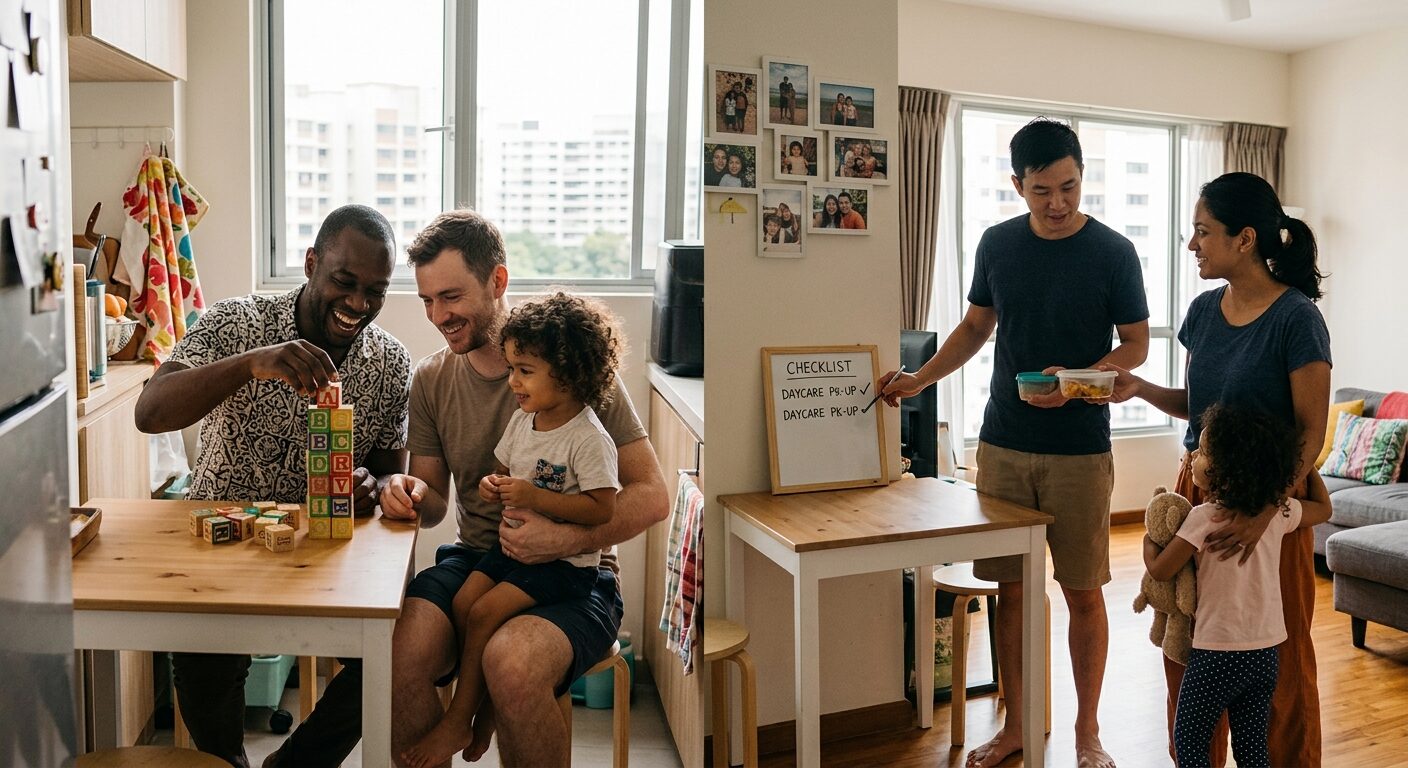
A parenting partner is the person you share the daily work, decisions and emotional load of raising your child with, whether you are a couple, separated, or simply teammates.
In this article
About two thirds of couples report a drop in relationship satisfaction in the first three years after their first baby arrives, according to a widely cited study by Shapiro, Gottman and Carrère in the Journal of Family Psychology (2000). Nobody warns you about this at the antenatal class. You prepare for sleep deprivation and feeding. You rarely prepare for the new, unglamorous job of running a small human with another adult.
That is where the idea of a parenting partner comes in. It sounds simple, but I find that many parents in my clinic have never actually named it. They are doing the work, often exhausted, and wondering why it feels lonely even when someone else is in the house.
In this article, I will walk you through what a parenting partner is and why it matters to your child.
What you'll understand by the end:
1. What Is a Parenting Partner? A Plain English Definition
A parenting partner is the person (or people) with whom you share the responsibility for raising a child, including daily care, big decisions and emotional support. The key word is "share". It describes a working relationship around the child, and it does not depend on love, marriage or even living in the same home.
Researchers who study this call it co parenting. Psychologist James McHale, who has studied the topic for decades, describes it as the way adults relate to each other in their roles as parents. Notice what that definition leaves out. It does not say "romantic". It does not say "married". It focuses on the team.
Who can be a parenting partner?
The list is wider than most parents expect:
You do not need to tick every box. The test is simple: do you and this person make decisions about the child together, and do you rely on each other to carry out those decisions?
What a parenting partner is not
A parenting partner is not a helper. This distinction matters more than anything else in this article. A helper does tasks when asked. A partner owns part of the job, including noticing what needs doing.
I see this pattern often. One parent says "just tell me what to do", and the other parent hears "I will not think about this unless you assign it to me". The thinking is the heavy part. A partner shares the thinking.
A parenting partner is also not a judge, a rival, or someone you are trying to win against. The research on conflict between parents is consistent, and I will come to it shortly.
Why the term matters
Putting a name on the role gives you a way to talk about it. "We need to be better parenting partners" is a different conversation from "you never help". The first is about the team. The second is an accusation, and accusations make people defensive.
2. The Four Jobs a Parenting Partner Shares
Research on co parenting points to four main jobs that partners share: agreeing on how to raise the child, dividing the work, supporting each other, and managing family life as a unit. This framework comes from psychologist Mark Feinberg, whose 2003 paper in Parenting: Science and Practice is one of the most cited in the field. I find it very helpful in clinic because it turns a vague complaint ("we are not on the same page") into something you can fix.
Job 1: Agreeing on how to raise the child
This is about the big picture and the small rules. Do you agree on bedtime, screen limits, discipline, food, school, and medical decisions? You do not need identical views. You need enough overlap that your child is not getting two different rulebooks.
Where parents disagree, children notice quickly. A toddler who has learned that "Mum says no but Dad says yes" will test both of you. That is not naughtiness. It is clever learning.
When you do need to say no together, it helps to agree on how. A positive no gives your child a clear boundary without a battle, and it works best when both of you use the same approach.
Job 2: Dividing the work fairly
There are two kinds of work in parenting. The first is visible: feeds, bath time, school runs, laundry. The second is invisible: remembering the vaccination is due, noticing the winter coat no longer fits, tracking who has a birthday party on Saturday, and knowing the school is asking for non uniform money on Friday.
Author Eve Rodsky, in her book Fair Play (2019), describes three parts of any task: conception (noticing it needs doing), planning (working out how), and execution (actually doing it). In many homes one parent does the doing and the other does the noticing and planning too. That second parent is carrying a mental load that nobody can see.
A fair partnership means one person owns a task from start to finish. That includes the noticing. If you have to remind your partner to do the dentist booking, you have not handed it over.
Job 3: Supporting each other (and not undermining)
Feinberg's third component is support versus undermining. Support looks like "I know you had a hard day, I'll take bedtime". It also looks like backing your partner's decision in front of the child even if you would have done it differently, and then discussing it privately later.
Undermining looks like eye rolling, correcting your partner in front of the child, or criticising them to your child. Sometimes it is subtle: "Well, if Mummy lets you, I suppose it's fine."
Job 4: Managing family life as a team
The fourth job is about the family as a whole. When you are all in a room together, who leads, who joins in, and does everyone feel included? Does one parent become the "fun one" while the other becomes the "rule enforcer"? Is one parent quietly shut out of the closeness the other has with the child?
Co parenting research calls this joint family management. It is what makes a family feel like a unit rather than two parents who each have a separate relationship with the child.
3. Why Your Parenting Partnership Matters to Your Child
The quality of your parenting partnership is linked with how your child develops emotionally and behaviourally, and the link appears across many studies. A meta analysis by Teubert and Pinquart (2010), which pooled the results of dozens of studies, found that cooperative co parenting was associated with better child adjustment, while conflict and undermining between parents were associated with more emotional and behavioural difficulties.
I want to be careful here. These are associations, not guarantees. Plenty of children thrive in imperfect households, and plenty of loving parents disagree. What the research shows is a pattern, and the pattern is worth taking seriously.
Babies and toddlers notice more than you think
Developmental research from the Lausanne group (Fivaz-Depeursinge and Corboz-Warnery, 1999) suggests that babies can take part in three way interactions with both parents from the first months of life. They notice when the adults around them are in tune, and when they are not. They do not understand the words, but they read the tone.
Harvard's Center on the Developing Child describes "serve and return" exchanges, the back and forth of eye contact, babble and response, as the foundation of healthy brain development. A parent who is exhausted, resentful or isolated has less capacity for those exchanges. A good partnership protects them. When one parent is depleted, the other can step in.
Older children learn how adults treat each other
School age children learn how to handle disagreement by watching you. If they see you argue, calm down, and repair, they learn that conflict is survivable. If they see contempt, stonewalling or silent tension, they learn something quite different. Psychologist Urie Bronfenbrenner argued that a child needs sustained, committed involvement from adults to develop well. You will find his thinking in the Expert Insights section below.
What a strong partnership gives your child
If you want practical ideas for the bonding side, our guide to building a stronger parent child connection pairs well with this one.
It protects you, too
Parenting partnerships are not only about children. A 2010 meta analysis in JAMA (Paulson and Bazemore) found that about 10.4% of fathers experienced depression in the prenatal and postpartum period. The World Health Organization notes that around 1 in 10 pregnant women, and about 13% of women who have just given birth, experience a mental health disorder, most commonly depression. NICE guidance on antenatal and postnatal mental health in the UK also recognises the role of partners and family.
Your partner is often the first person to notice that something is off with you, and you with them. A strong partnership means you are watching out for each other, not just for the baby.
4. Parenting Partner vs Romantic Partner: When They Are the Same Person
If your parenting partner is also your romantic partner, you are doing two jobs at once, and the first often squeezes out the second. Many couples describe the shift as going from lovers to "a very efficient small business". That is not a disaster, but it is something to notice.
The research gives us a useful warning. In the Shapiro, Gottman and Carrère study I mentioned earlier, about two thirds of couples saw their relationship satisfaction fall in the first three years of parenthood. Importantly, the same study found that couples who kept a strong friendship, expressed fondness and stayed involved with each other were better protected. The relationship did not have to decline.
Why the drift happens
If any of this sounds familiar, you are in very good company. It is also common for one parent to feel guilty for wanting adult time. You are allowed to want it. A thriving couple relationship is part of what your child needs, not a selfish extra.
Do you love your kids more than your partner?
This is a surprisingly common worry, and it is not a sign that something is wrong with you. Our article on loving your kids more than your partner goes into what the research says. The short version is that children and partners are different kinds of love, and putting your child first in an emergency does not mean the couple relationship has to wither in the everyday.
For mothers in particular, reconnecting with desire and romance after having children can feel like another job on the list. If that sounds like you, reclaiming passion after kids offers gentle, realistic starting points.
Small habits that keep the couple alive
Gottman's research on "bids for connection" shows that small everyday moments matter. A bid is any attempt to get your partner's attention, such as "look at that" or a sigh or a hand on the arm. Partners who regularly turn toward each other's bids, rather than ignoring or snapping at them, tend to build stronger relationships. You can read more in Gottman and Silver's The Seven Principles for Making Marriage Work (1999).
A tool for couples who want structure
Some couples find that talking is easier when they are also doing something together. A workbook can give you both a script and a shared task. [The Two-Pen Relationship Workbook for Couples](/) is built around 15 minute exercises that you each fill in side by side across eight weeks, covering trust, conflict and closeness.
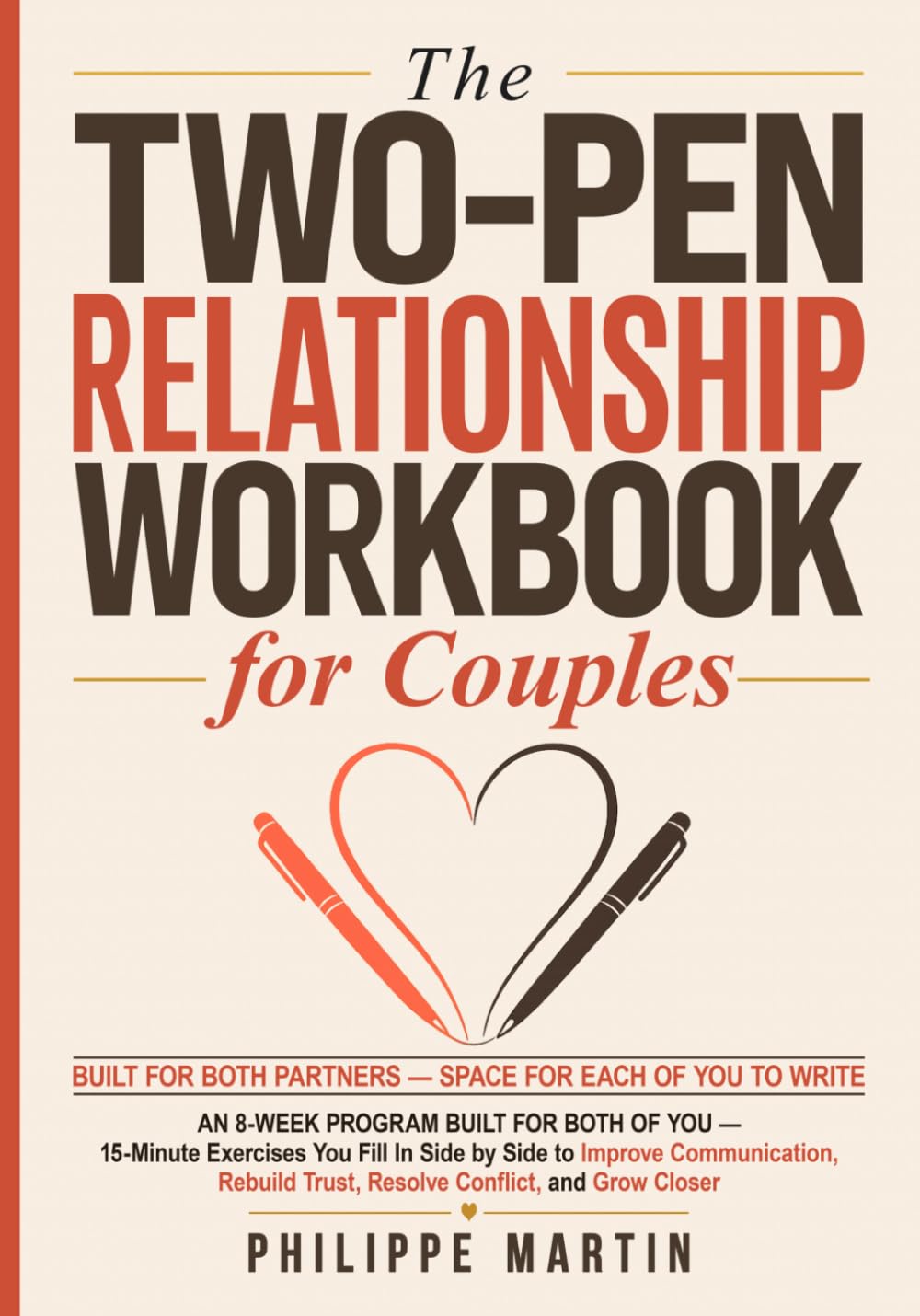
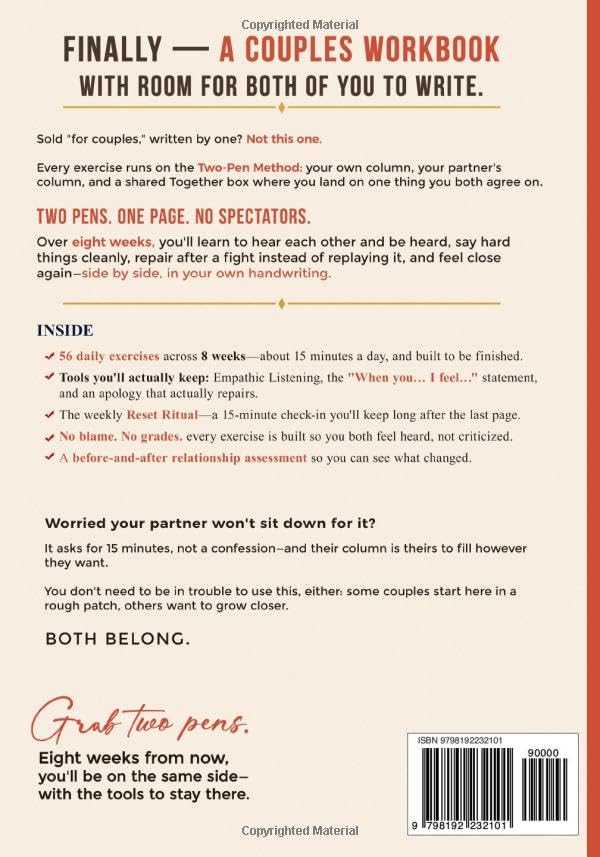
The Two-Pen Relationship Workbook for Couples: An 8-Week Program Built for Both of You — 15-Minute Exercises You Fill In Side by Side to Improve ... Trust, Resolve Conflict, and Grow Closer
- Relationships
- Conflict Management
- Image Unavailable Image not available forColor:
I like this kind of tool because it makes the conversation smaller and less loaded. Fifteen minutes feels doable at 9pm. A "big relationship talk" often does not.
5. Co Parenting After Separation: Staying Partners When You Are Not Together
You can remain parenting partners after a relationship ends, and for your child's sake it is one of the most valuable things you can do. According to the Pew Research Center (2019), about 23% of children in the United States live with one parent and no other adults, which is the highest share in the world. Many more children move between two homes. Separation is common. How you handle it is the part we can influence.
What good co parenting looks like
The American Academy of Pediatrics, through its HealthyChildren.org resources, advises separated parents to keep children out of the middle of adult conflict, to stay consistent where possible, and to focus on the child's needs. In practice, that means:
Cooperative vs parallel parenting
Not every co parenting relationship can be warm. If there is high conflict, parallel parenting can work better. Parallel parenting means you each run your own household with minimal direct contact, communicate mostly in writing, and stick closely to a written plan. It is not ideal, but it can reduce the amount of conflict your child is exposed to.
If there has been domestic abuse, coercive control or any safety concern, please seek specialist advice before using any of the approaches in this article. A family law solicitor or a domestic abuse service can help you plan safely. Co parenting advice written for ordinary disagreement does not fit those situations.
Why a written record helps
When communication is strained, a simple record takes pressure off memory and takes heat out of arguments. A log lets you note schedules, handovers, expenses, medical visits and messages in one place. Done well, it helps both parents stay on the same page. It is a tool for keeping things factual, not for keeping score.
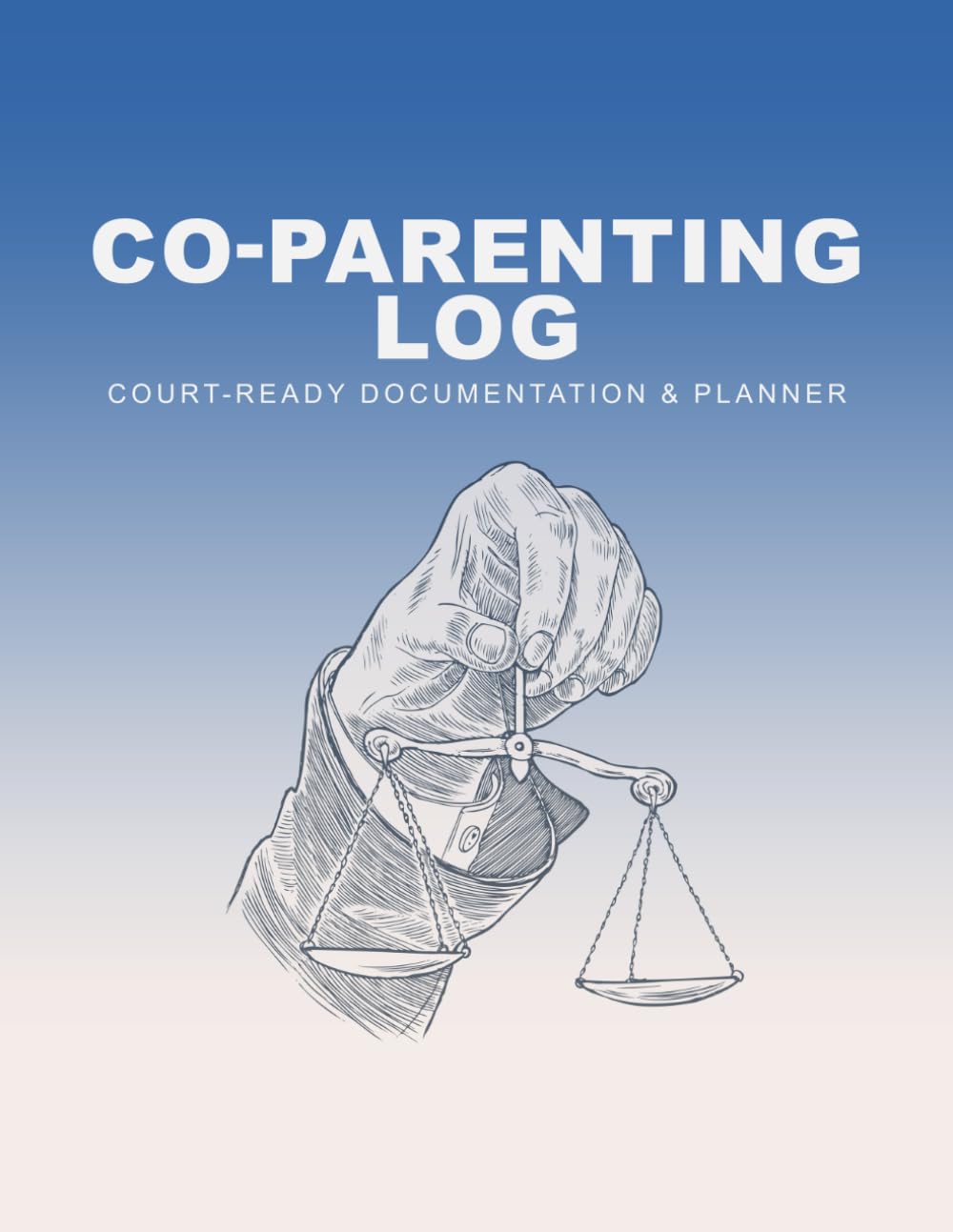

Co-Parenting Log: Court-Ready Documentation & Planner Track Visitation, Communication, Expenses, Medical Visits & Important Records
- Parenting & Relationships
- Family Relationships
- Image Unavailable Image not available forColor:
There are several options, depending on how much structure you want. [The Complete Child Custody Journal](/) is a larger 8.5 by 11 inch organiser for visitation, communication, spending and child support. If you want a more focused record of exchanges, missed time and incidents, [the Co-Parenting Communication and Parenting Time Log](/) is built for that. For a long term, general purpose record with space for medical visits and schedules, [the 130 page Co-Parenting Communication Log Book](/) offers plenty of room. Many are described as "court ready". That is a marketing phrase, so check with a family law professional about what a court in your area will actually accept.
Platonic co parents and other new family shapes
Some people choose to raise a child with a friend, outside a romantic relationship. These arrangements work best when the expectations are clear from the start, in writing, and revisited often. Our practical guide to platonic co parenting covers how to set that up. The same principles apply as in any other partnership: agree on the big decisions, divide the work fairly, and communicate with respect.
6. How to Build a Strong Parenting Partnership: Practical Steps
You build a strong parenting partnership by agreeing the basics, dividing the work fairly, communicating regularly, and repairing quickly when things go wrong. It is a skill, not a personality trait, which means both of you can improve it.
Step 1: Hold a short weekly meeting
Fifteen to 20 minutes, once a week, at a time when you are not exhausted. Cover three things: what is coming up (appointments, events, travel), who owns what, and one thing that is not working. End with one thing that is going well.
This sounds clinical, and the first time it may feel awkward. Keep going. Most of the couples I know who do it say it removes dozens of small arguments, because the topics have a home.
Step 2: Agree your must haves
You will not agree on everything, and you do not need to. Agree on a short list of must haves: safety rules, medical decisions, how you respond to hitting or biting, how much screen time is reasonable, and what happens at bedtime. Everything else can be flexible.
For toddlers and school age children, keeping your rules and consequences consistent matters. For babies, you are mostly aligning on sleep, feeding and who does what at night.
Step 3: Split the invisible work
Make a list of everything that needs to happen in your family in a month, including the mental work: booking appointments, buying birthday presents, checking the school email, sorting out clothes sizes. Then divide ownership. Not "you remind me", but "this is yours, from start to finish".
Review it every few months. Children grow, jobs change, and what was fair last year may not be fair now.
Step 4: Have the tough talks calmly
Disagreements are inevitable. Handled badly, they teach children that conflict is frightening. Handled well, they teach that people can disagree and stay connected. Our toolkit for tough conversations has scripts and a structure you can adapt for conversations between adults as well as with children.
A few simple rules help:
Step 5: Repair quickly
Every couple and every co parenting pair will have bad days. What matters is how fast you reconnect afterwards. A repair can be as simple as "I am sorry I snapped. Can we try that again?" You can do this in front of your children too. It is one of the most valuable things they can see.
Step 6: Keep a simple shared record
A shared notebook can hold appointments, handover notes, expenses and decisions, so neither of you has to hold it all in your head. It works for couples in one home as well as separated parents. [A Co-Parenting Communication Log](/) is designed as a shared notebook for conversations, schedules, expenses and exchanges, and it can be a calm, neutral place to write things down.


Co-Parenting Communication Log: A Shared Notebook for Parents to Track Conversations, Schedules, Expenses & Custody Exchanges
- Relationships
- Conflict Management
- Image Unavailable Image not available forColor:
Step 7: Know when to ask for help
Some patterns are a sign that you need support from outside:
Your GP, health visitor, a couples counsellor, or a family therapist are all appropriate places to start. Asking for help is a sign of strength, and it is usually cheaper and easier than waiting until things reach crisis point.
Comparing Parenting Partner Arrangements
Different families need different tools. This table gives a quick comparison of the main arrangements and a record keeping or relationship tool that fits each one.
| Arrangement | Who it suits | Primary Benefits | Main Challenges | Recommended Product | Price Range |
|---|---|---|---|---|---|
| Partners in one household | Married or living together couples | Shared daily routines, easy communication | Couple relationship can get squeezed out | The Two-Pen Relationship Workbook for Couples | $9.79 |
| Amicable co parenting | Separated parents who communicate well | Flexibility, child sees cooperation | Boundaries can blur over time | Co-Parenting Communication Log | See listing |
| Co parenting with a formal plan | Parents with a custody order or agreement | Clear schedule and expectations | Needs careful record keeping | The Complete Child Custody Journal | See listing |
| Parallel parenting | High conflict situations | Reduces direct contact and arguments | Less flexibility, less shared decision making | Co-Parenting Communication and Parenting Time Log | $8.99 |
| Platonic co parenting | Friends raising a child together | Choice and clarity from the start | Needs clear written agreements | Co-Parenting Communication Log Book | See listing |
| Blended or step family | Families with step parents or new partners | More adults to support the child | Roles can be unclear | Co-Parenting Log | See listing |
Expert Insights
The idea that children develop within a web of relationships is not new. Three voices from paediatrics and child development say it better than I can.
Winnicott went on to explain that whenever you see a baby, you also see someone caring for them. The child and the caregiver come as a unit. That is the heart of the parenting partner idea: the people around the child matter as much as the child.
Bronfenbrenner's point is that children do best when at least one adult is deeply, consistently invested in them. A good parenting partnership multiplies that, and makes sure no single adult carries it alone.
Dr Spock's famous opening line is a reminder that you and your partner are the experts on your own child. Books, articles and professionals can guide you, but the day to day knowledge sits with you both.
Frequently Asked Questions
Key Takeaways
Conclusion
Parenting is the most important job most of us will ever do, and it was never meant to be done alone. A parenting partner is simply the person who shares the weight of it with you. They may be your spouse, your ex, your friend or your own mother. What matters is that you are a team, and that your child can feel it.
You will not get this right every day. Nobody does. What your child needs is a pair of adults who keep trying, who repair when it goes wrong, and who put the child's needs at the centre.
Here is the sentence I would like you to remember: a good parenting partnership is not about having perfect parents, it is about having parents on the same side.
If this article helped, save it for the next tough week, share it with your partner, and subscribe for more clinic tested advice from tinymindsworld.com.
Sources & References
- Shapiro, A. F., Gottman, J. M., & Carrère, S. "The baby and the marriage: Identifying factors that buffer against decline in marital satisfaction after the first baby arrives." Journal of Family Psychology, 14(1), 59 to 75. 2000.
- Feinberg, M. E. "The internal structure and ecological context of coparenting: A framework for research and intervention." Parenting: Science and Practice, 3(2), 95 to 131. 2003.
- Teubert, D., & Pinquart, M. "The association between coparenting and child adjustment: A meta analysis." Parenting: Science and Practice, 10(4), 286 to 307. 2010.
- McHale, J. P. Charting the Bumpy Road of Coparenthood: Understanding the Challenges of Family Life. Zero to Three Press. 2007.
- Fivaz-Depeursinge, E., & Corboz-Warnery, A. The Primary Triangle: A Developmental Systems View of Mothers, Fathers, and Infants. Basic Books. 1999.
- Center on the Developing Child at Harvard University. "Serve and Return." https://developingchild.harvard.edu/resources/serve-and-return/
- Paulson, J. F., & Bazemore, S. D. "Prenatal and postpartum depression in fathers and its association with maternal depression: a meta analysis." JAMA, 303(19), 1961 to 1969. 2010.
- World Health Organization. "Maternal mental health." https://www.who.int/teams/mental-health-and-substance-use/promotion-prevention/maternal-mental-health
- National Institute for Health and Care Excellence (NICE). "Antenatal and postnatal mental health: clinical management and service guidance (CG192)." https://www.nice.org.uk/guidance/cg192
- Pew Research Center. "U.S. children more likely than children in other countries to live with just one parent." 2019. https://www.pewresearch.org/short-reads/2019/12/12/u-s-children-more-likely-than-children-in-other-countries-to-live-with-just-one-parent/
- American Academy of Pediatrics. HealthyChildren.org guidance on divorce, separation and helping children cope. https://www.healthychildren.org
- Rodsky, E. Fair Play: A Game Changing Solution for When You Have Too Much to Do (and More Life to Live). G. P. Putnam's Sons. 2019.
- Gottman, J. M., & Silver, N. The Seven Principles for Making Marriage Work. Crown. 1999.
- Winnicott, D. W. "The theory of the parent infant relationship." International Journal of Psycho Analysis, 41, 585 to 595. 1960.
- Bronfenbrenner, U. Widely cited statement on the importance of sustained adult involvement in child development, associated with his ecological systems work at Cornell University.
- Spock, B. The Common Sense Book of Baby and Child Care. Duell, Sloan and Pearce. 1946.
Frequently Asked Questions
What is a parenting partner in simple terms?
Is a parenting partner the same as a co parent?
Can a parenting partner be someone I am not romantically involved with?
What if my parenting partner and I disagree about discipline?
How do I get my partner to share the mental load?
How do I co parent with someone I find difficult?
When should we seek help for our parenting partnership?
Was this helpful?
Thanks — your feedback helps us pick what to write next.