
Phubbing Your Kids: What the Research Says and How to Stop
When parents regularly prioritise their phones over face-to-face interaction, children as young as infants notice the withdrawal and show measurable emotional and developmental effects that can strain the parent-child relationship over time.

In this article
There's a word for what happens when someone ignores you in favour of their phone: "phubbing" (phone snubbing). And according to a 2023 survey by Common Sense Media, American teenagers report that their parents check their phones during conversations, meals, and family time far more than parents themselves admit. Fifty-two percent of teens said they felt their parent was "often" or "sometimes" distracted by a phone when trying to talk to them. That gap between what parents perceive and what children actually experience is where a lot of relationship damage quietly accumulates.
This article is not a guilt trip. It's a clinical briefing on what is genuinely happening in your child's brain and body when your eyes go to the screen, what the research says about cumulative effects across development, and what actually works to change the pattern without white-knuckling it.
By the end, you'll understand:
1. What Children Actually See When You Look at Your Phone
Children are not wrong about what they're seeing. When you pick up your phone mid-conversation, your child receives a very clear social signal, and their brain processes it as such.
Developmental psychologists call this "social referencing." From around eight months of age, infants scan a caregiver's face to decide whether the environment is safe, interesting, or threatening. They are exquisitely tuned to whether you are emotionally available. When you're not, they don't simply wait patiently. They escalate.
The Still Face Experiment: What One Minute of Blankness Does
Developmental psychologist Dr. Edward Tronick's still face paradigm, developed at Harvard, is one of the most replicated findings in developmental psychology. When a mother (or father) is asked to go blank and unresponsive for just 60 seconds during normal interaction, infants first try to re-engage the parent, then become visibly distressed, then withdraw and self-soothe. Heart rate and cortisol (the stress hormone) rise measurably.
Now think about what your face looks like when you're reading a work email. Blank. Unresponsive. Still-face adjacent.
Researchers at the University of Michigan published a study in 2022 in the journal Child Development finding that mothers who used their phones more during a lab-based play session had toddlers who showed more negative emotion and less persistence when faced with a frustrating task. The children were reading the disruption in real time and it was changing their behaviour within the same session.
2. The Brain Science You Need to Know (in Plain English)
This isn't about making you feel bad. It's about understanding what's actually at stake developmentally, because once you see it clearly, the phone habit stops feeling trivial.
Serve-and-Return: The Architecture of a Developing Brain
The single most important concept in early childhood neuroscience for parenting is "serve and return." The Harvard Center on the Developing Child describes it as the back-and-forth exchange between a child and caregiver: the child "serves" (a sound, a look, a gesture, a word), the caregiver "returns" (responds with warmth and engagement), and the child serves again. This cycle, repeated thousands of times a day, literally builds neural connections in the developing brain.
Language acquisition, emotional regulation, executive function, the early architecture of social cognition, all of it depends on these rapid, contingent interactions. When the caregiver is distracted, the serve goes unreturned. The rally ends. The neural pathway doesn't get reinforced.
Dopamine: Their Brain and Yours
Your phone is engineered to hijack the same dopamine reward pathway that drives eating, social bonding, and learning. Every notification, every scroll, every little ping delivers a small dopamine hit that makes the brain want to return to the source. This is not a moral failing. It is neuroscience. The problem is that your child's developing brain is running on a different, more urgent timeline than your notification feed.
The prefrontal cortex, the brain region responsible for impulse control and the ability to put the phone down, isn't fully developed until the mid-twenties. Which means you are, quite literally, fighting your own neurobiology when you try to ignore a notification. Knowing this doesn't excuse the habit, but it does explain why willpower alone rarely fixes it.
3. Age by Age: How Phone Distraction Shows Up Differently
The harm doesn't look the same at every developmental stage. Here's what to watch for.
Infants (0 to 12 Months)
At this age, your face is the whole world. Responsiveness isn't just emotionally important; it's how babies learn cause and effect for the very first time. "I make a sound, you look at me. I make a bigger sound, you come closer." When you're scrolling, that cause-and-effect loop breaks down.
Research published in JAMA Pediatrics in 2019 found that parent smartphone use during feeding was associated with reduced mother-infant vocalisation and fewer verbal interactions overall. Feeding time is one of the richest windows of developmental interaction, and the phone was closing it.
Toddlers (1 to 3 Years)
Toddlers are in the middle of the most explosive language development period of their lives. They need hundreds of "conversational turns" per day. They also lack the cognitive capacity to understand that you're busy, not rejecting them. What they conclude, emotionally, is simpler: "When I need you, you're not there."
Emotionally, this age group responds to phone distraction with what looks like bad behaviour: whining, clinging, hitting, throwing. These are bids for reconnection. The more phones interrupt the connection, the louder those bids get.
School-Age Children (4 to 12 Years)
This is where the emotional script gets written. School-age children are developing their sense of self-worth, their understanding of relationships, and their models for how adults behave. A parent who consistently chooses a phone over conversation is teaching all three lessons simultaneously, and not the lessons you want to teach.
A 2016 study in the Journal of Developmental and Behavioral Pediatrics found that 170 caregivers at a fast-food restaurant used mobile devices during meals with their children. Children who received less caregiver attention as a result showed more attempts to seek attention and more emotional outbursts. The children weren't oblivious. They were responding.
The connection you build now also matters for what comes next. Understanding how to build a stronger parent child bond becomes especially important during these years, when children are still close enough to accept your repair attempts but old enough to remember if you don't make them.
4. "But I Have to Be Reachable": The Working Parent Dilemma
This section is for every parent who felt defensive reading section three. You are not wrong that modern work expectations are unreasonable. Many parents have no clean boundary between work and family time because their employer doesn't permit one. This is a real constraint, and it deserves acknowledgement.
But here's the clinical reality: children under about eight cannot distinguish between "Mum is looking at her phone for work" and "Mum is looking at her phone instead of me." The impact on the child is determined by their experience, not your intent.
What You Can Do Within Real World Constraints
The goal is not zero phone use during parenting time. That's not realistic and is probably not necessary. The goal is what researchers call "psychological availability," which means that when you are present, your child can actually access you.
A few strategies that work within real constraints:
1. Communicate the situation out loud. "I have to send one work message, and then I'm all yours for 20 minutes." Children as young as three can understand this if it is followed through consistently. What harms them is unpredictability, not the occasional necessary check-in.
2. Create a visible ritual around transitions. Put the phone away in the same place every day when you walk through the door. Make it a physical, observable act. Children are watching for signals that you've arrived not just physically but emotionally.
3. Use technology to manage technology. A timed lock box takes the decision entirely out of your hands during designated family time. This is not weakness; it is using your prefrontal cortex to pre-commit before dopamine hijacks the decision.



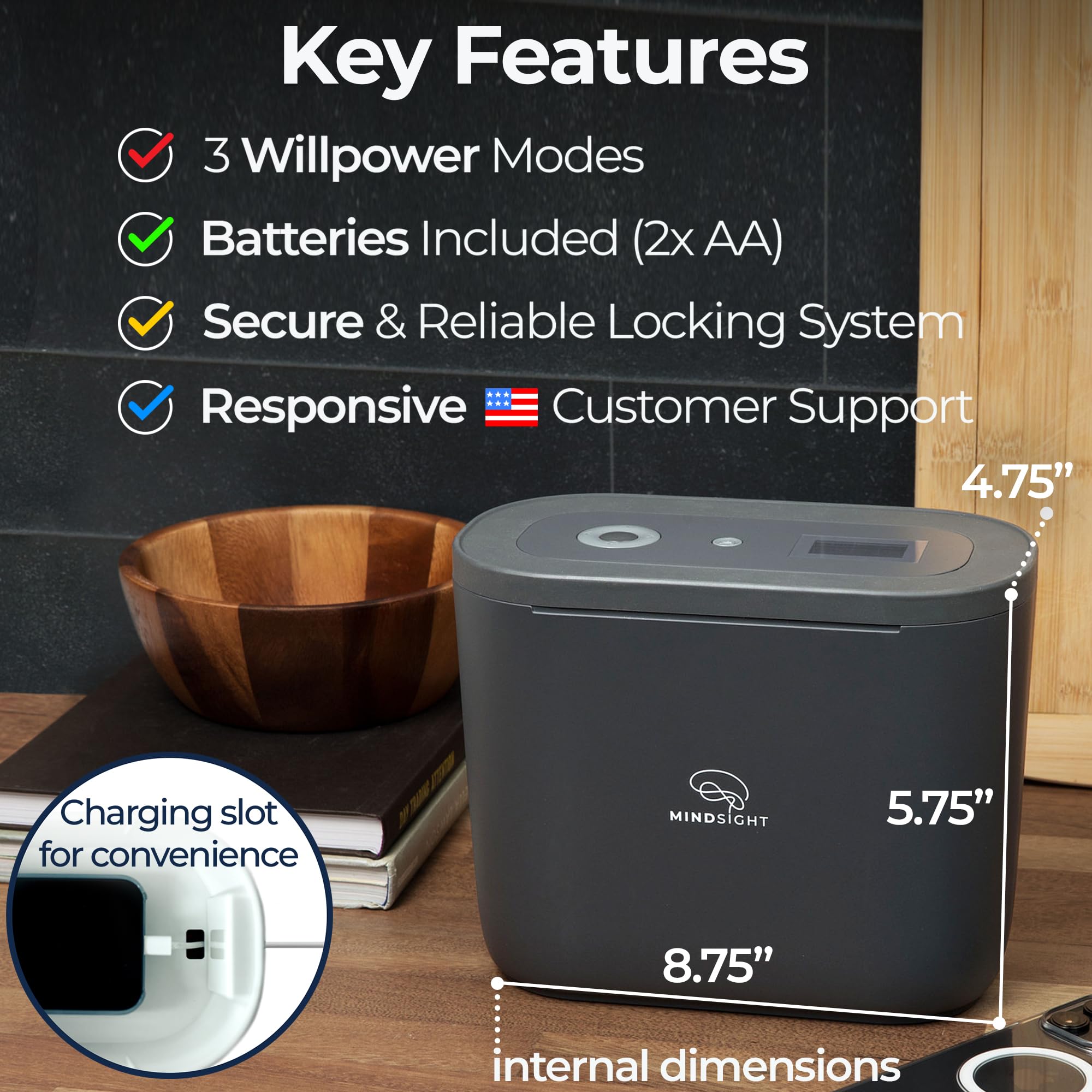
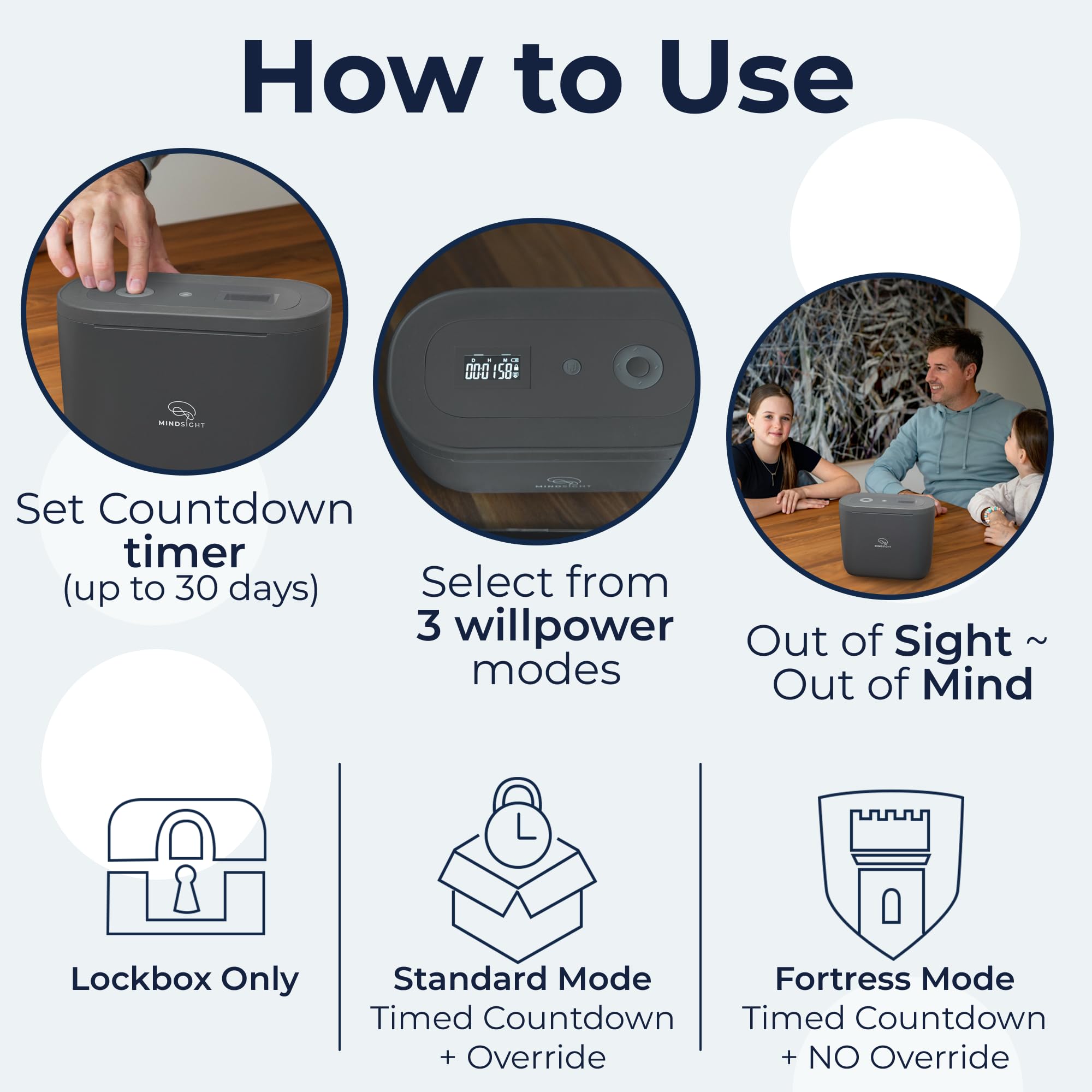
Mindsight Timed Lock Box Plus | Fits Small Tablets (iPad Mini), Phones (10+) & More | Great for Schools & Families | Helps Reduce Screen Time & Build Better Habits | Out of Sight ~ Out of Mind
- 🔒 WHAT ITS FOR – Building better habits in today’s busy world. The Mindsight Timed Lockbox helps you disconnec
- 🔒 HOW TO USE IT – Out of Sight ~ Out of Mind. Set countdown timer and select Commitment Level. 3 unique modes
- 🔒 WHO ITS FOR – Those who spend too much time on their phones, screens, social media & other unhealthy habits
The Mindsight Timed Lock Box is genuinely clever for this scenario because it has three commitment levels, including a mode where even you can't open it once the timer is set. For parents who know their own willpower limits, that's a useful feature.
The "Available But Distracted" Parent
Research by Brandon McDaniel at Illinois State University coined the term "technoference" to describe the way technology interrupts family interactions. His 2015 study found that even low-to-moderate levels of technoference were associated with poorer child behaviour, more child emotional dysregulation, and lower parent-child relationship quality as rated by parents themselves. This wasn't just parents who were glued to their phones. It was parents who checked in occasionally, whose children still registered the disruption.
5. What Your Children Are Telling Themselves About It
Children are not passive observers of your phone habits. They are active interpreters. And the stories they tell themselves about what your phone use means are often more harmful than the distraction itself.
The Attribution Problem
When a parent repeatedly looks at a phone instead of a child, the child does not think "my parent has a technology addiction driven by dopamine reward pathways." They think one of two things, depending on their age and temperament:
Younger children tend to attribute it to themselves. "I am not interesting enough." "If I were more fun, they would look at me." This is called egocentric attribution and it is developmentally normal, but it is also genuinely damaging to a young child's developing self concept.
Older children and preteens tend to externalise the attribution but personalise the conclusion. "I am less important than whatever is on that screen." "Adults don't actually want to talk to me." These conclusions about relationships, about their own value, about whether adults can be counted on, they don't evaporate when you put the phone down. They accumulate.
When Kids Copy the Pattern
Here's the twist that parents in clinic often don't see coming: children who grow up watching parents escape into screens learn to do exactly the same thing. By the time they have their own devices, screen use as emotional avoidance is already a deeply familiar pattern. You are, without meaning to, modelling the coping strategy you most want them to avoid.
A 2021 study in Computers in Human Behavior found that parental phone use was positively associated with adolescent phone use, even after controlling for personality traits and peer influence. The modelling effect is real.
This is also why having the tough conversations without meltdowns matters so much when it comes to phones in the family. Children need to know they can bring this frustration to you without the conversation collapsing into a fight.
6. Practical Strategies That Actually Work (Backed by Research)
Awareness changes nothing by itself. Here's what the evidence and clinical experience suggest actually works.
Phone-Free Zones: Simple, Effective, Under-Used
The most consistently supported environmental intervention is the simple designation of phone-free zones and times. Research supports two in particular: mealtimes and the hour before bed. These are the highest-density windows for family connection, emotion processing, and language-rich interaction, and they're the times phones most commonly intrude.
The key is that the rule applies to everyone, including parents. Children are immediately sceptical of rules that only apply downward. If the phone goes in the box, it goes in for everyone.
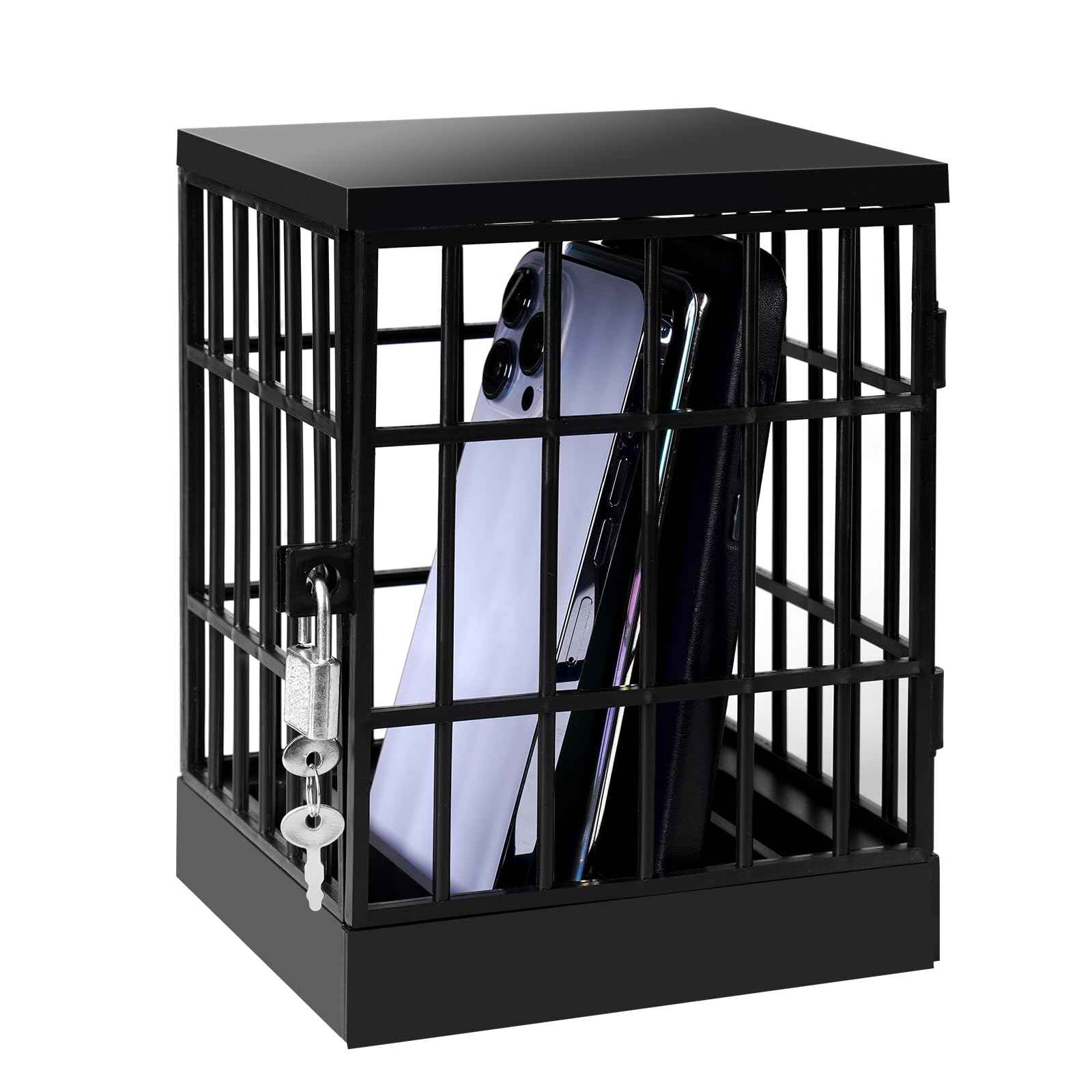
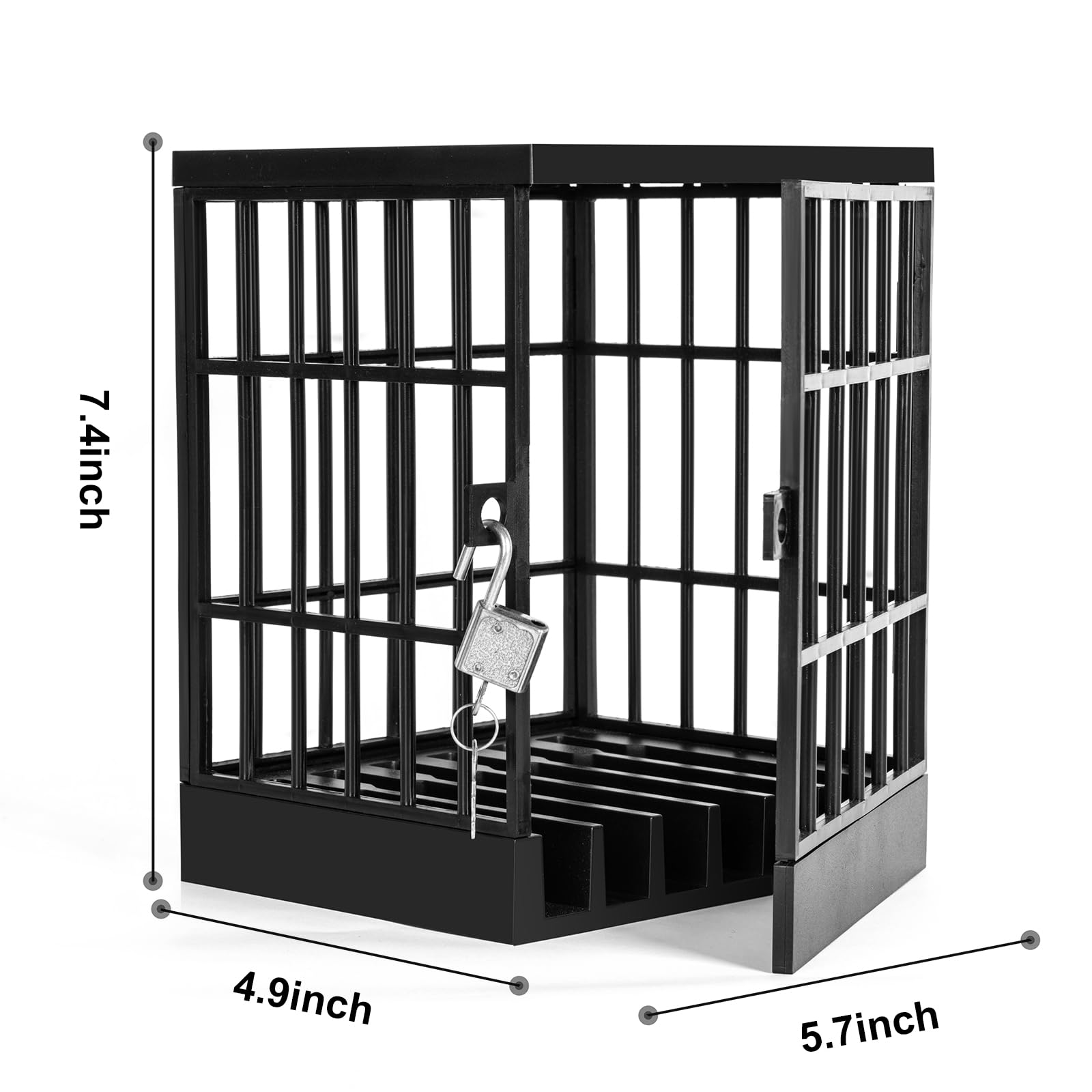
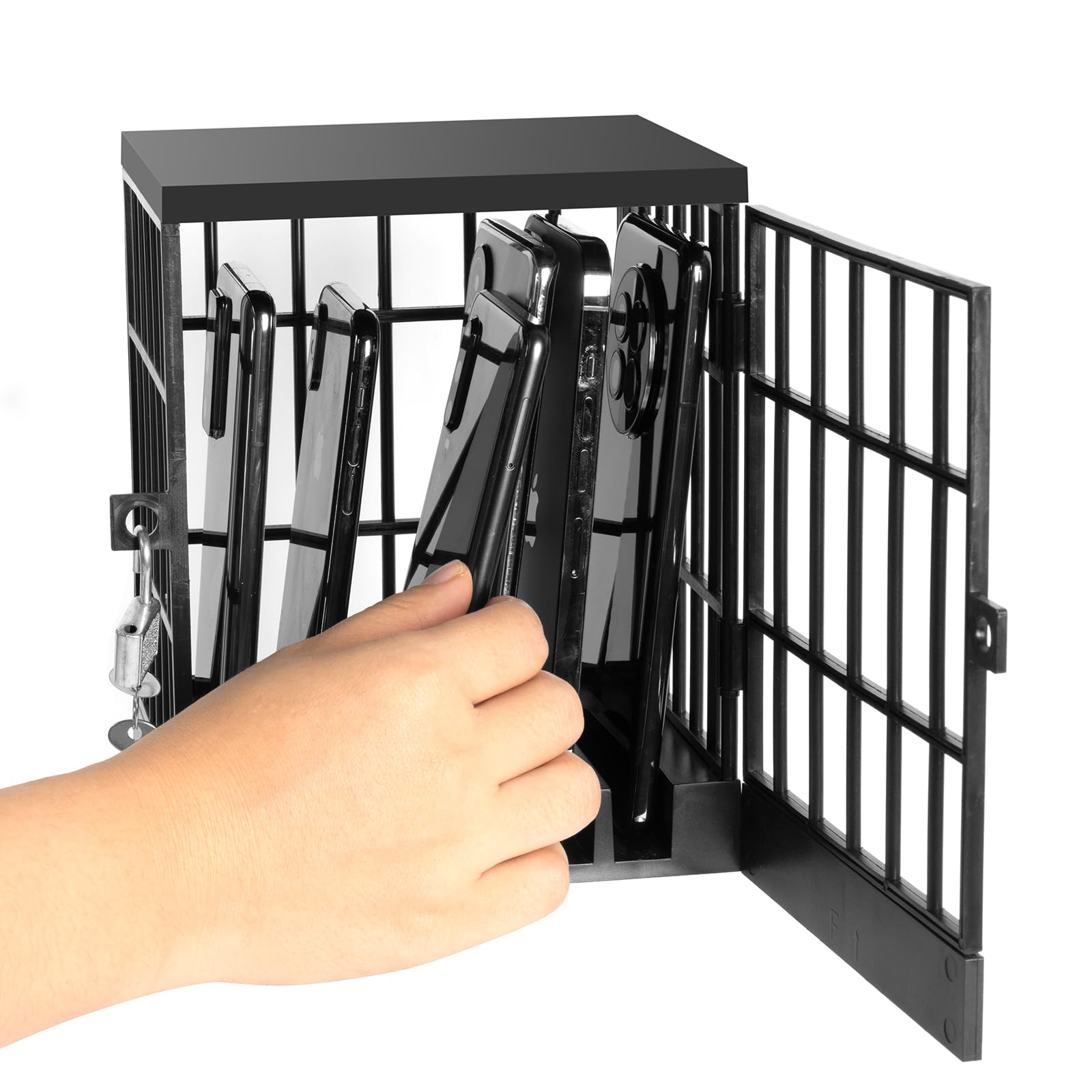

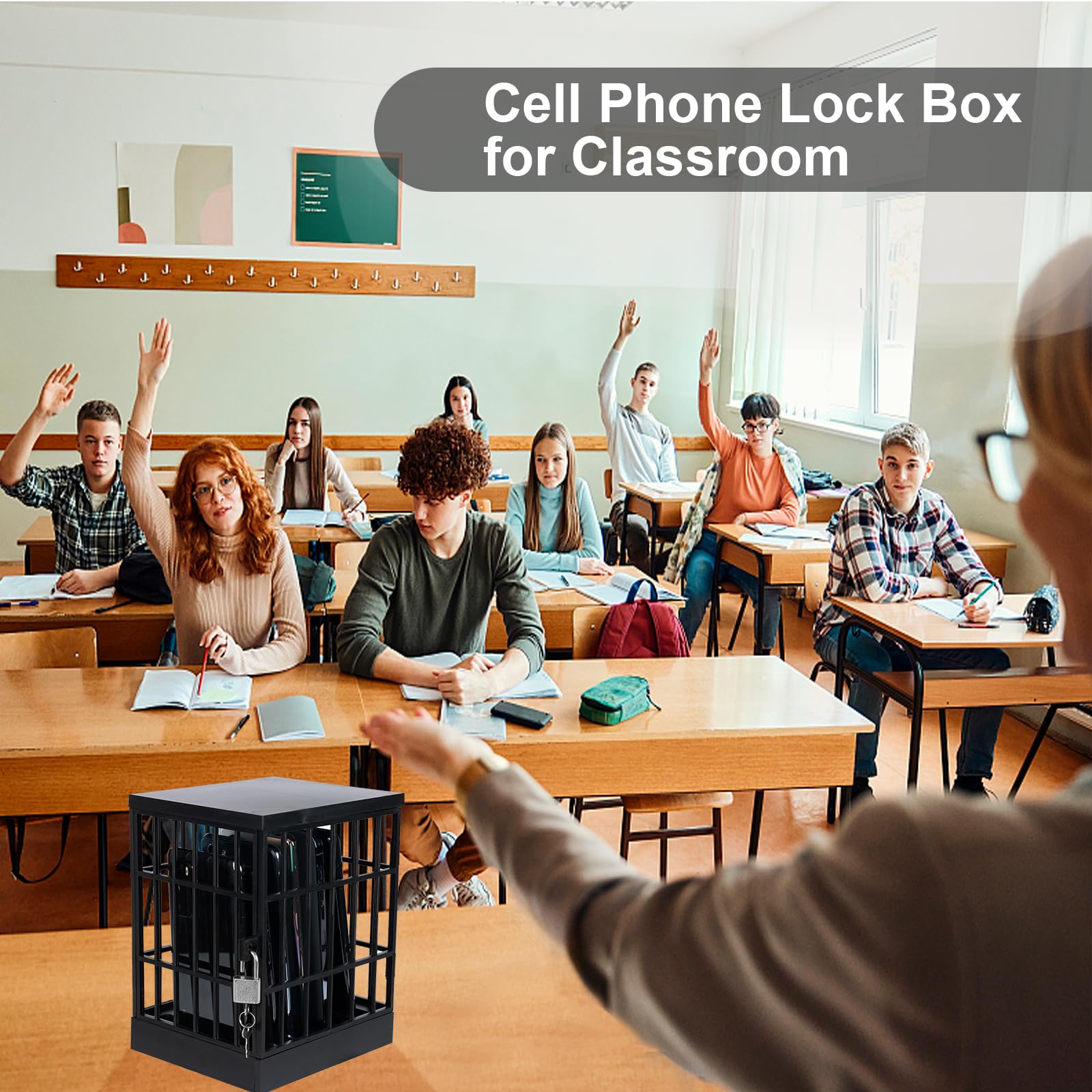
Gemaxvoled Cell Phone Jail Lock Box, Mobile Phones Prison Lockable Cage for Classroom Family Time Party
- Enjoy Your Face to Face Time-If you want to replace screen tapping with talking during family time, your home
- Don’t Let Phone Addict in Your Life - Use this Cell Phone Jail when someone needs to pull their nose out of th
- Big Size- 5.9*5.12*7.48inches.Standing 7.48inch tall, this fun grey and black plastic jail comes in six easy t
The Gemaxvoled Cell Phone Jail is the low-friction, low-cost entry point for this. Six devices, one box, two keys. The "jail" framing is genuinely useful because it makes the whole thing feel like a family game rather than a punishment, which matters enormously for buy-in from older children and teenagers.
Timed Commitment Devices: Pre-Committing Before Dopamine Wins
The most effective behaviour change strategies work with your neurobiology rather than against it. Pre-commitment means making the decision before you're in the moment of temptation, because in that moment, you will reliably make the worse choice.
A timed lock box is a physical pre-commitment device. You put the phone in, set the timer, and the choice is made. No willpower required.

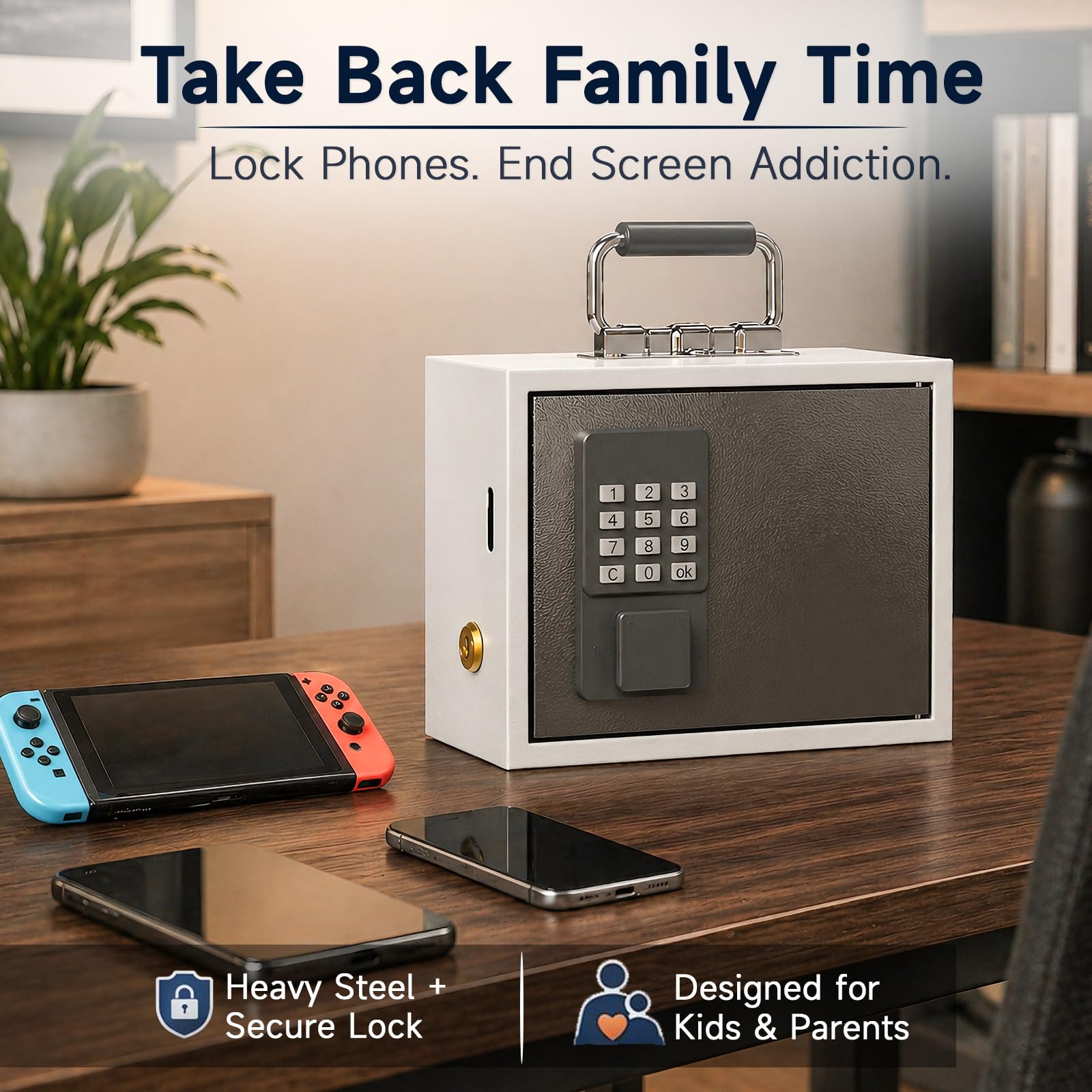
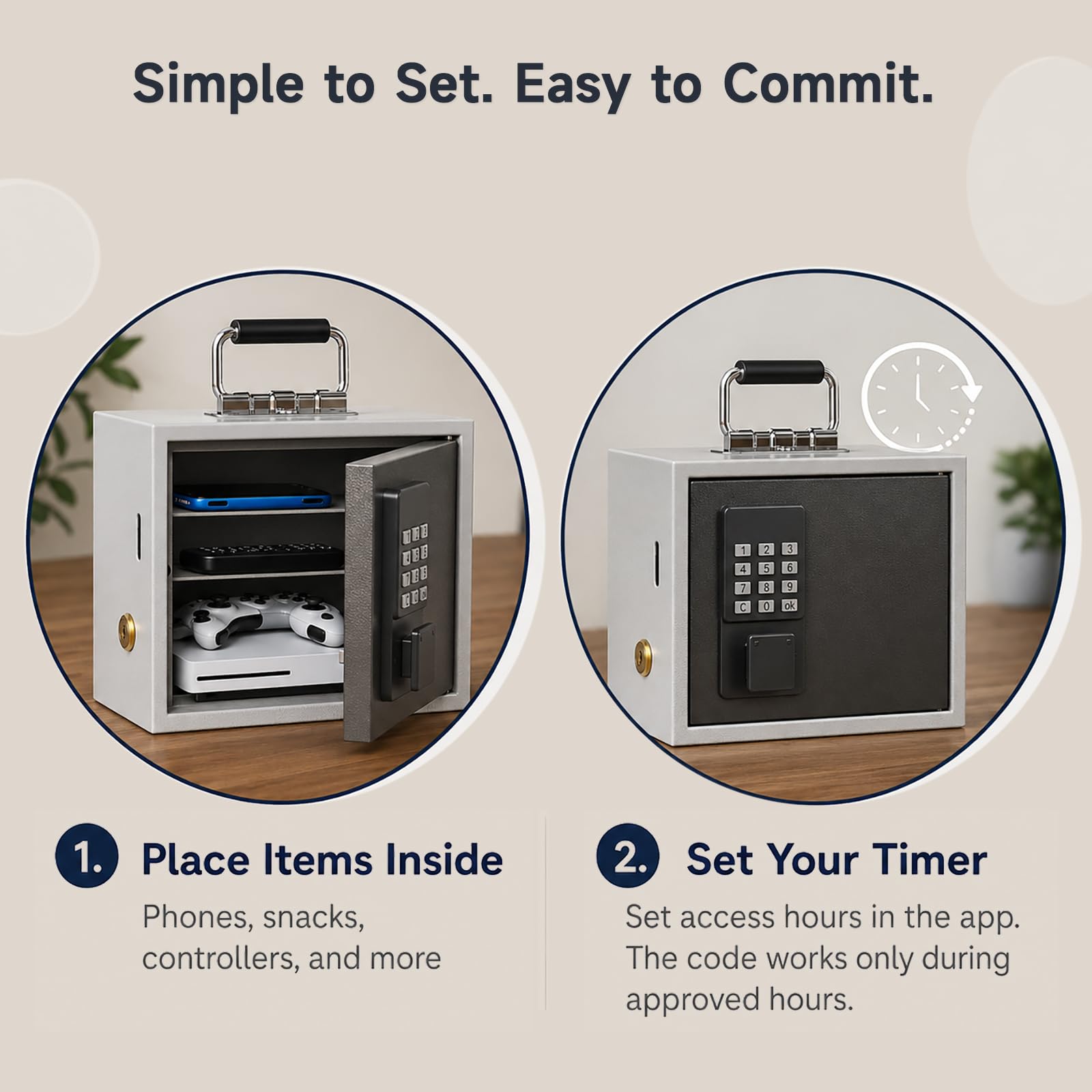
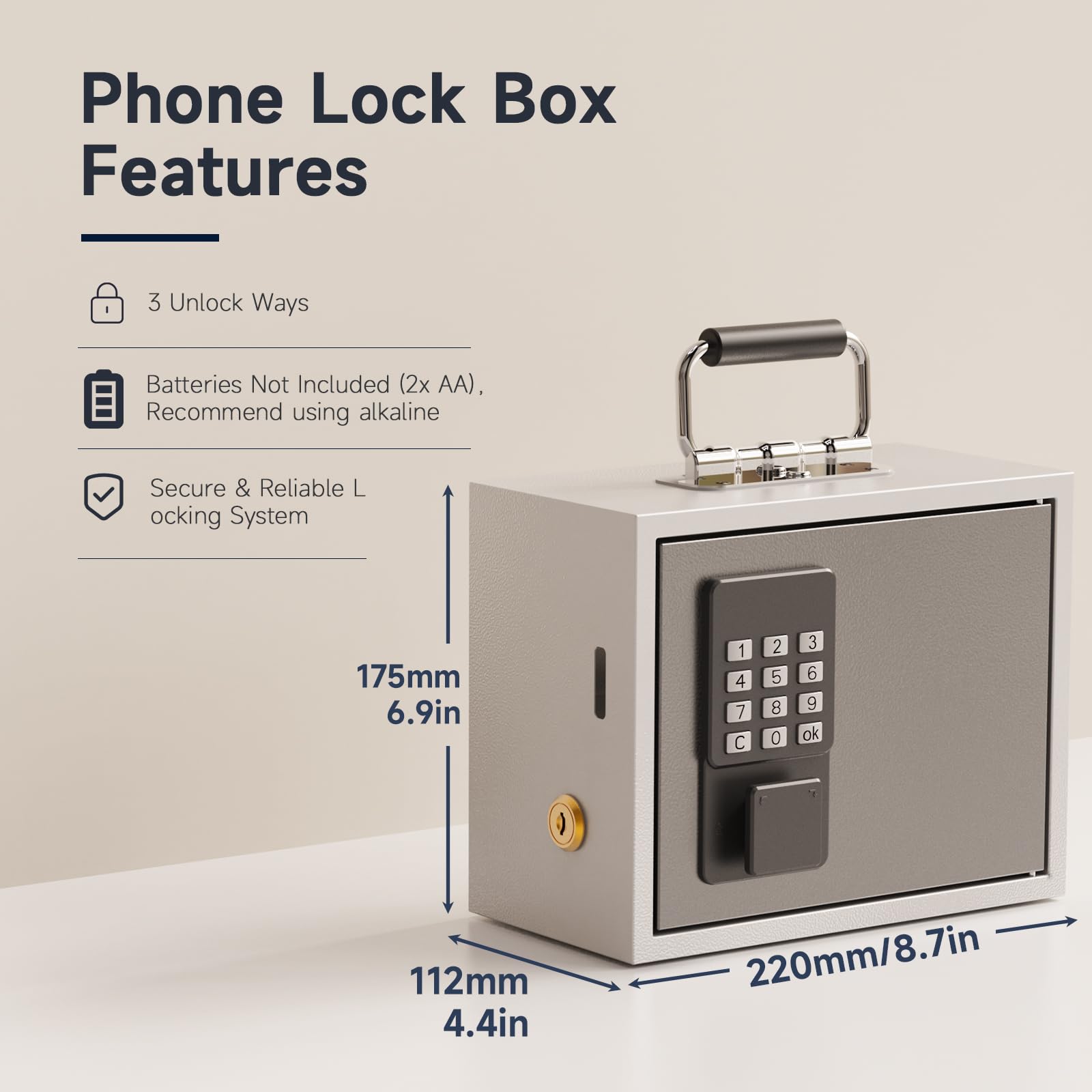

WeHere Phone Lock Box, Reduce Screen Time & Cravings, Time Lock Box with Time Period Password & App, 3 Unlock Modes, Phone Jail for Kids & Adults Focus Back
- 100% steel
- Phone Lock Box for Screen Time Control – Lock phones away to reduce screen addiction and help kids and teens s
- App-Based Time Scheduling- Set access windows directly in the app. The password will only unlock the box durin
The WeHere Phone Lock Box takes this further with app-based time scheduling, so you can build family time into your week the same way you'd block a meeting in a work calendar. The box won't open outside approved windows, which removes even the option of "just a quick check."

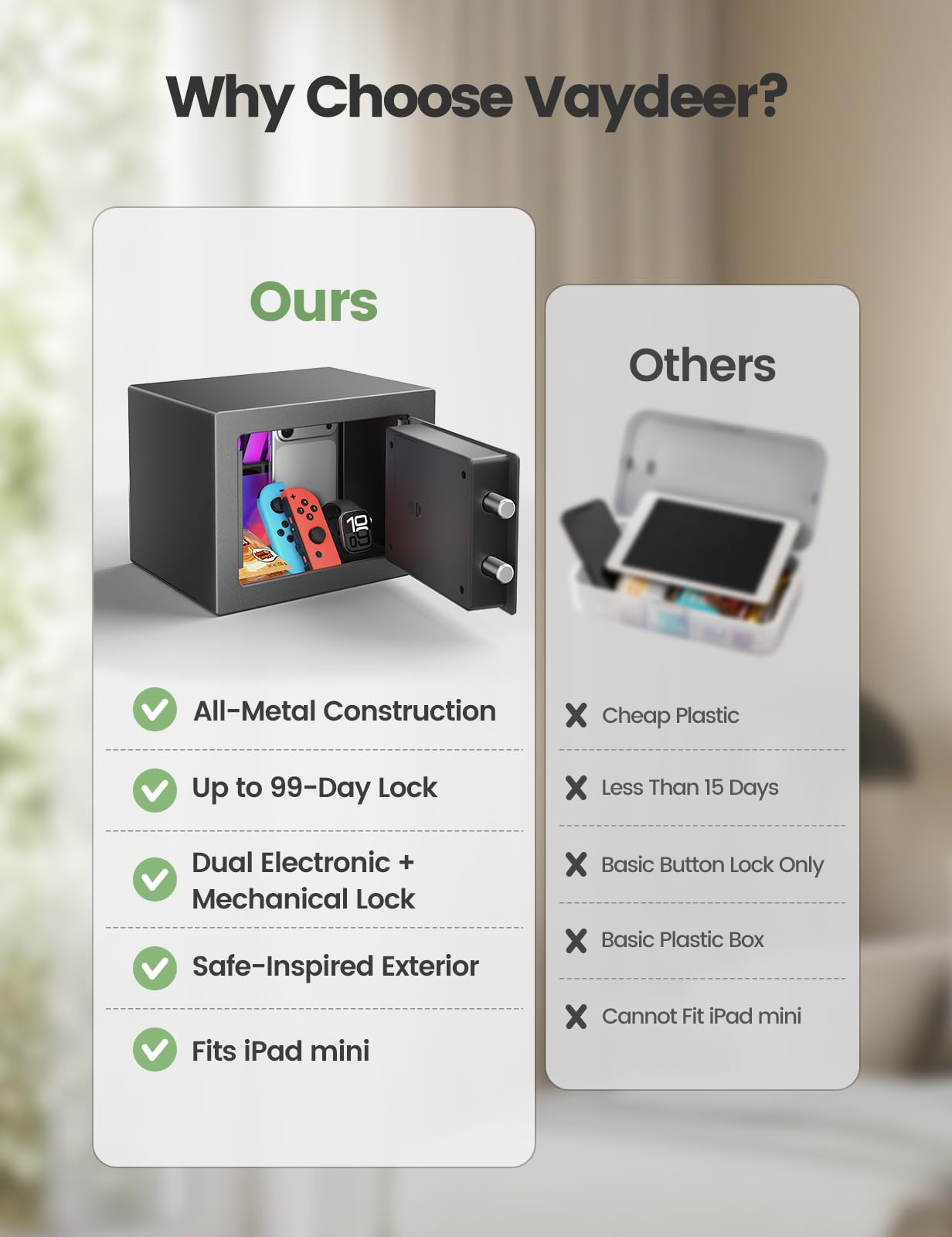



Vaydeer Metal Safe Timed Lock Box, Phone Lock Box with Timer, Sturdy Time Lock Safe for Phones, Game Controllers, Snacks & Cravings, Helps Manage Social Media, Focus and Self-Control
- 【Safe-Inspired Metal Design】More than an ordinary plastic timer box, this Vaydeer timed lock box features a st
- 【Helps Build Better Habits】Designed for phones, snacks, remotes, keys, small gaming accessories,cigarettes, pi
- 【Spacious Metal Time Lock Safe】Designed with a 9.03 × 6.77 × 6.71 in size, this timer lock box can hold up to
The Vaydeer Metal Timed Lock Box works well for families who want something that feels more serious and permanent. The metal construction and safe-style design genuinely changes the psychological weight of the decision. It doesn't feel like something you'd idly open. That friction is the point.
The Five-Minute Rule
Clinically, one of the simplest resets I recommend is what I call the five minute rule: when you first arrive home, or when your child comes home from school, put the phone face-down and give five completely undivided minutes. No agenda, no questions about homework, just following their lead. Five minutes of genuine, phone-free presence has a disproportionate effect on a child's felt sense of being valued. It doesn't have to be long. It has to be real.
Repairing the Rupture
If you've noticed this pattern in your own parenting, the worst thing you can do is feel too guilty to address it directly. Children are remarkably forgiving when adults take responsibility. A simple, age-honest conversation ("I've been on my phone too much and I'm going to change that") is not a confession of failure. It's a model of self-awareness and repair that your child will carry into their own relationships.
Thinking about how your relationship with your partner models healthy boundaries is part of this picture too. The way adults manage attention and connection in the household is one of the most powerful silent curricula children absorb.
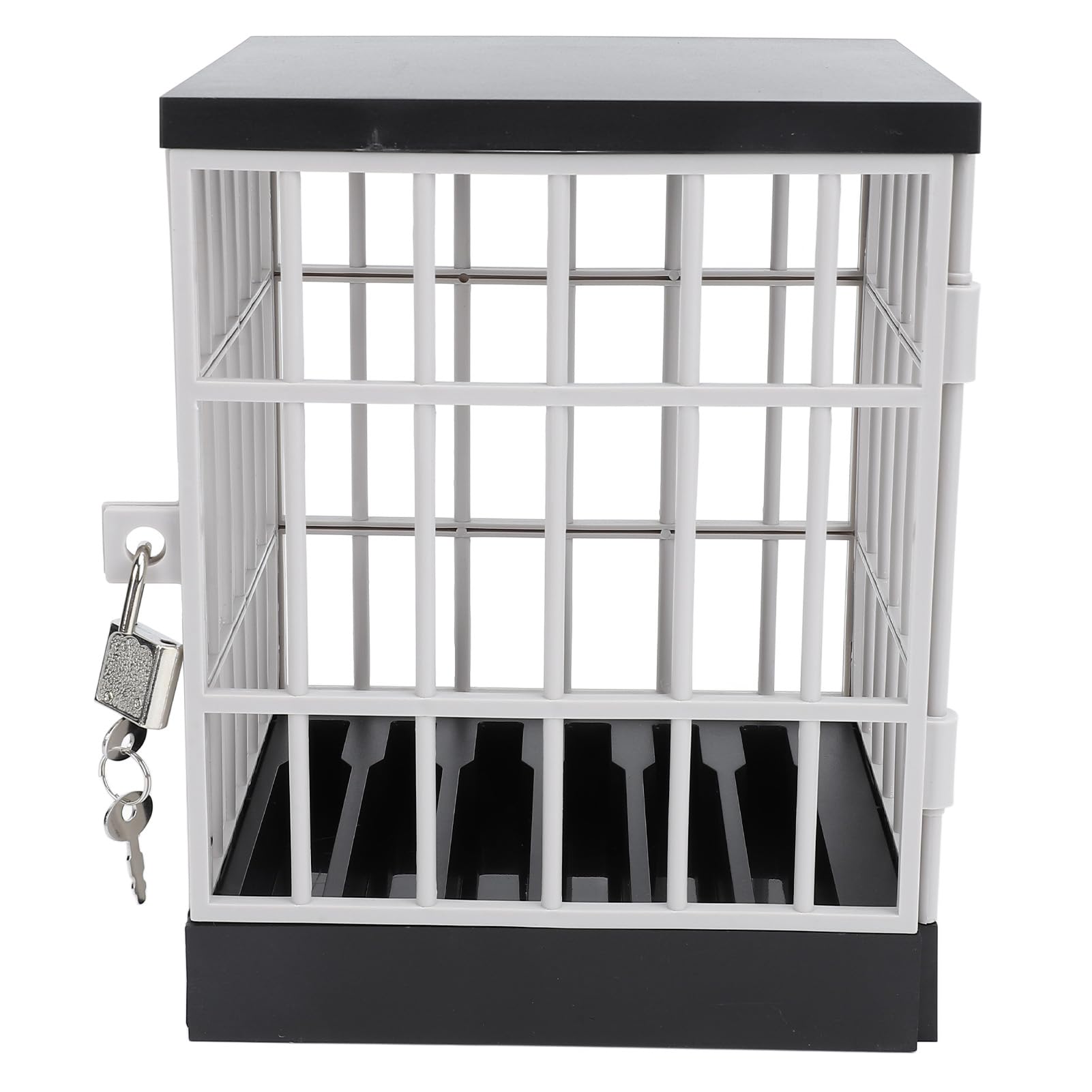
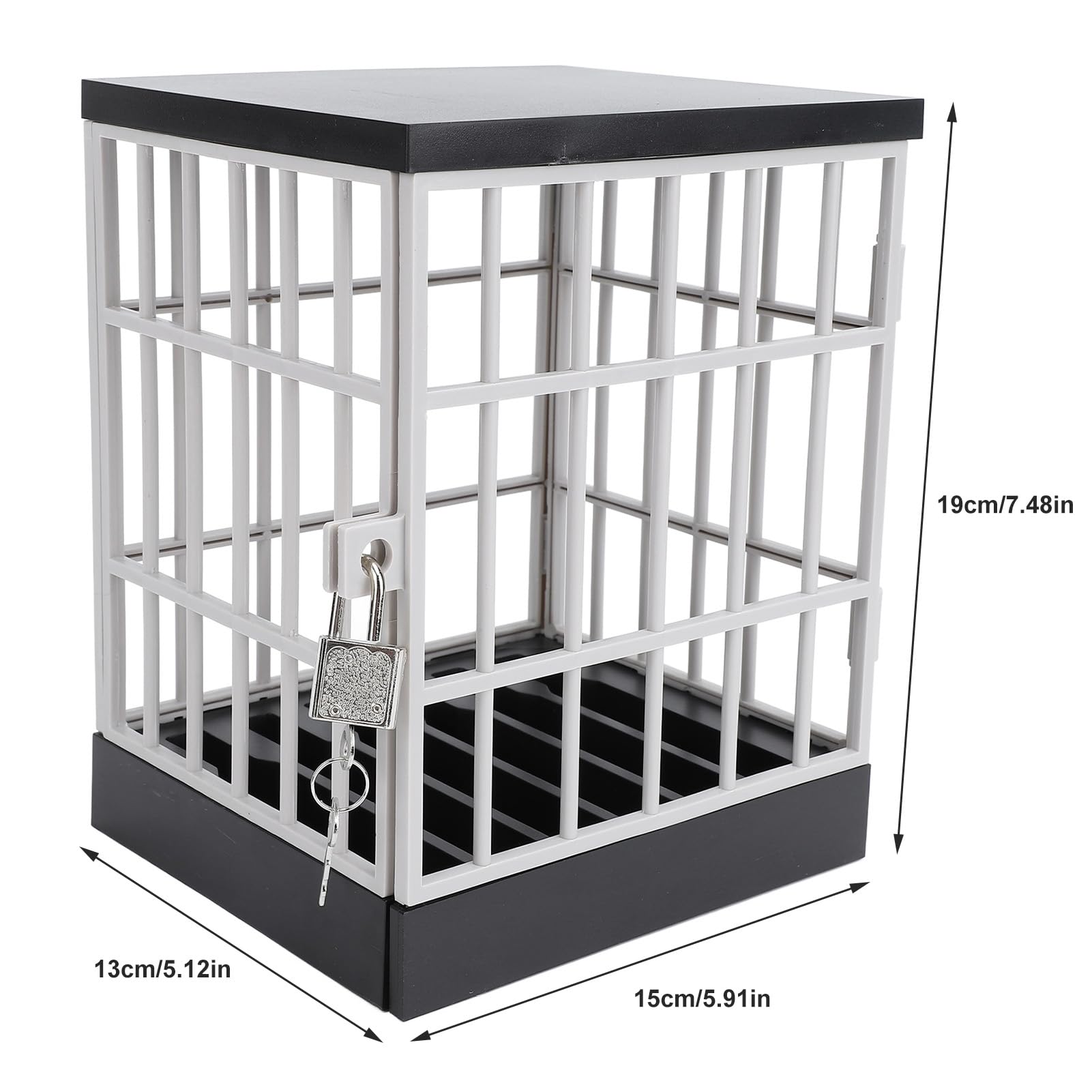
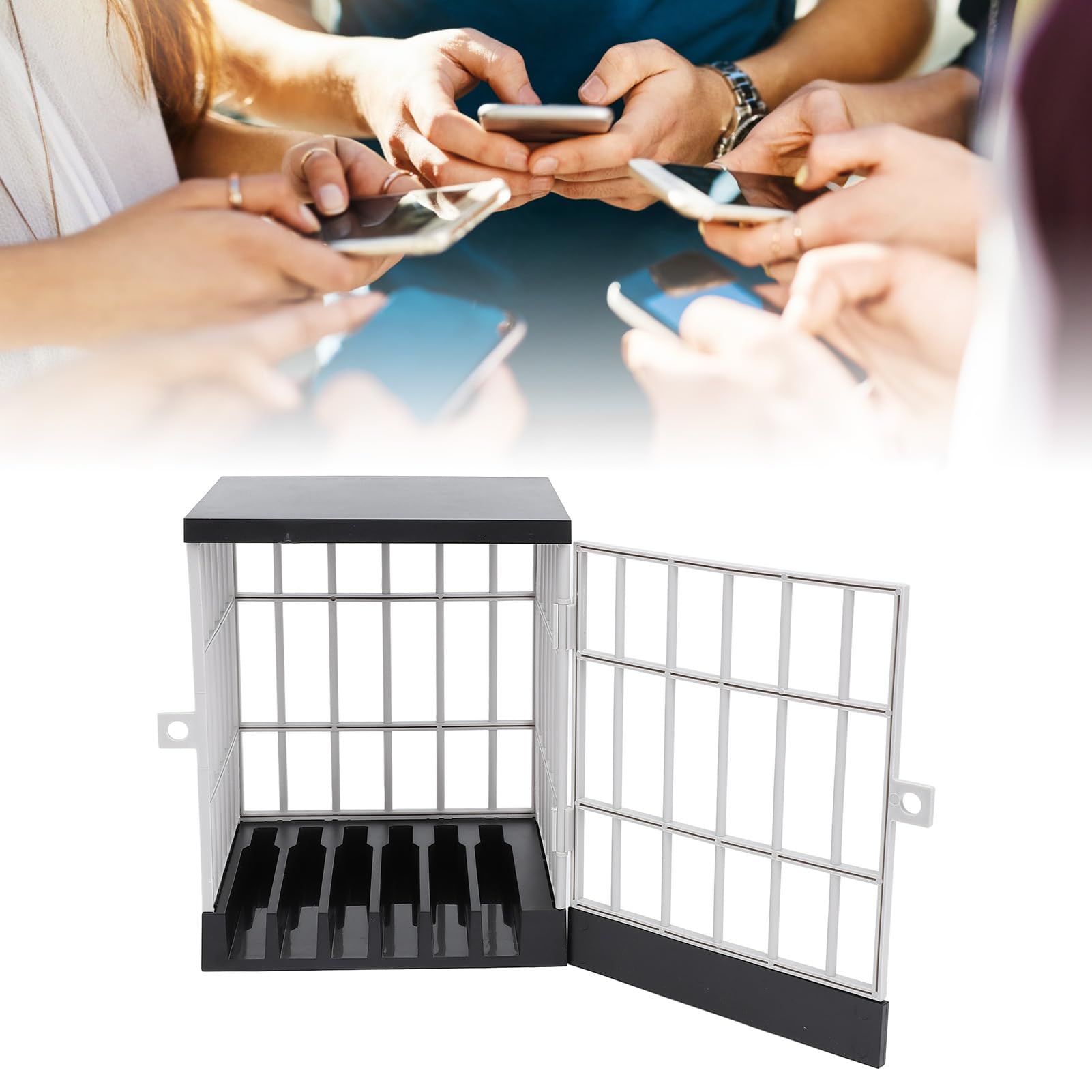
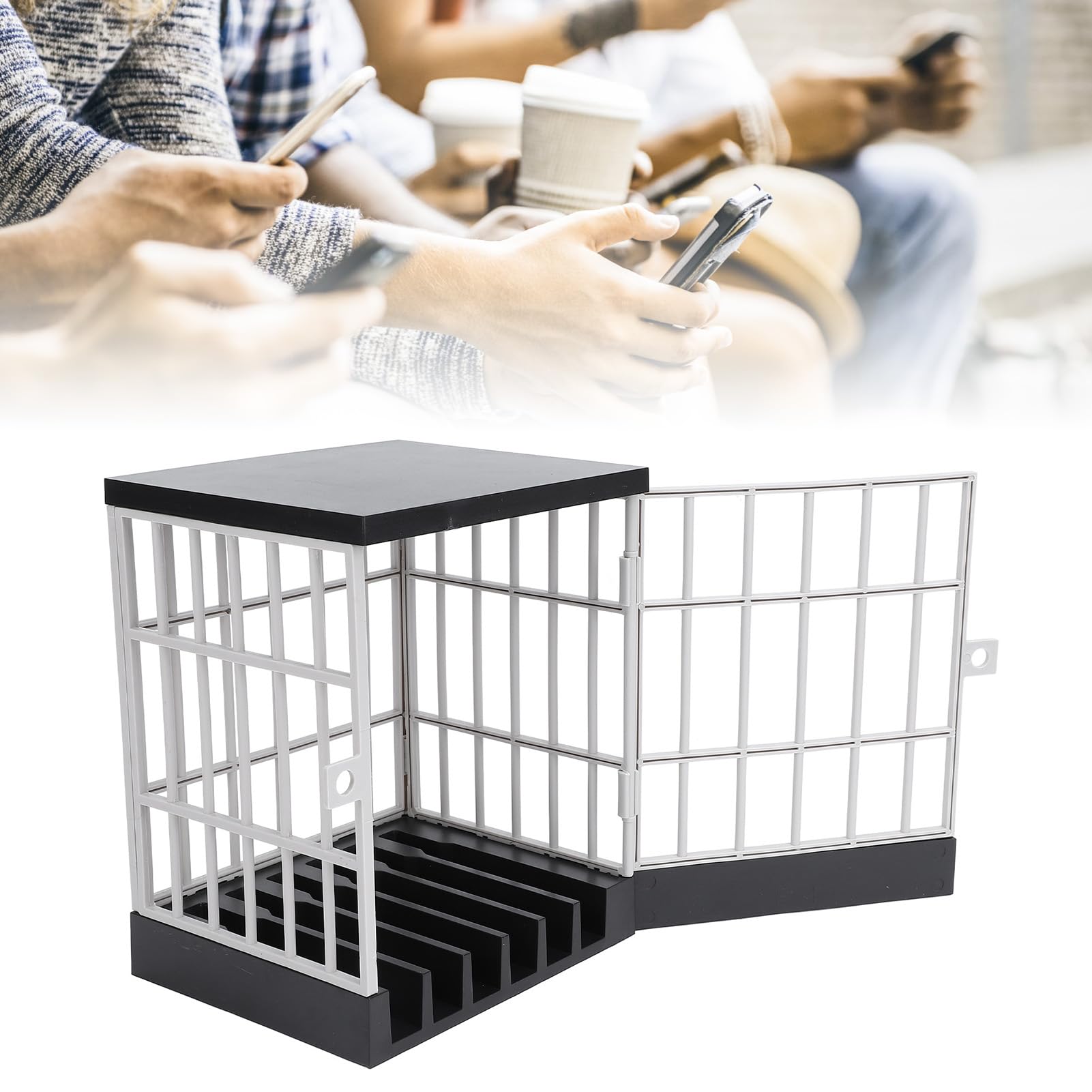
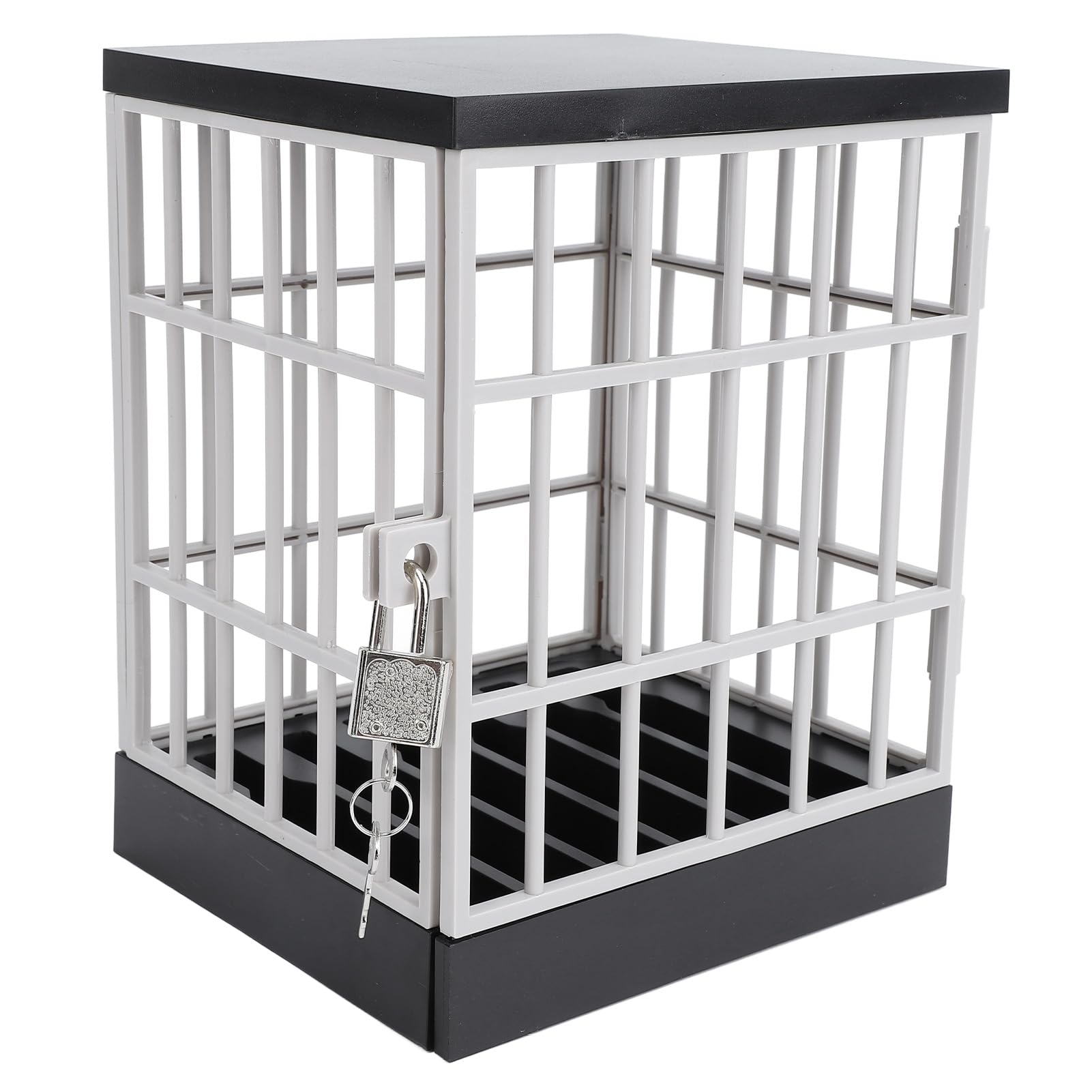
Cell Phone Jail Lock Box, 6 Device Capacity Family Phone Lock Box, Portable Screen Time Control Cage with Secure Keys for Home Office Classroom Family Time Party (Black Grey)
- Image Unavailable Image not available forColor:
- Only 3 left
- Only 1 left
For families where the phone problem is shared across multiple adults, a communal solution works better than individual willpower. The Family Phone Lock Box with six device capacity makes it a household-wide norm rather than a personal struggle. When everyone's phone is in the box, no one is being singled out and the conversation shifts from blame to shared commitment.
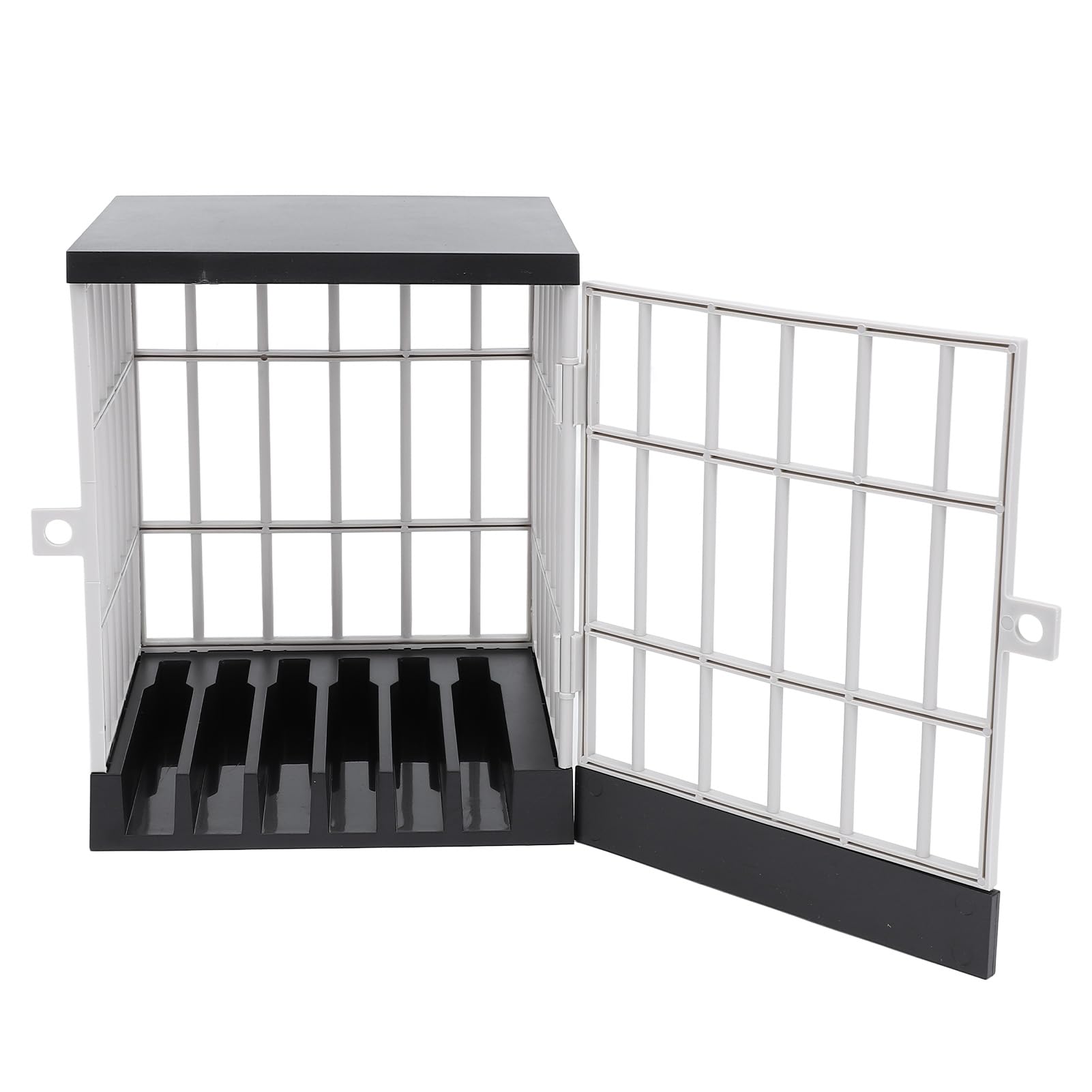
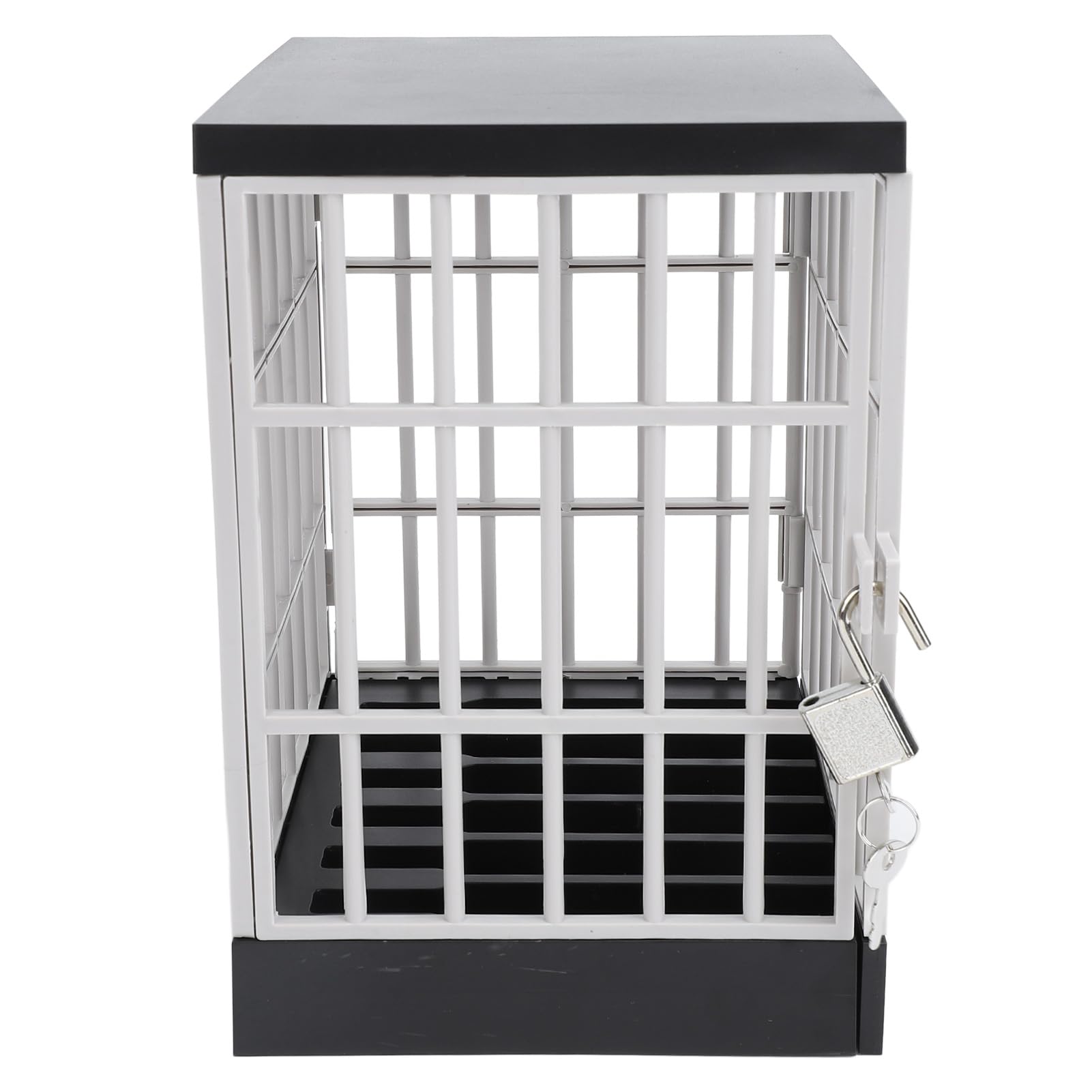
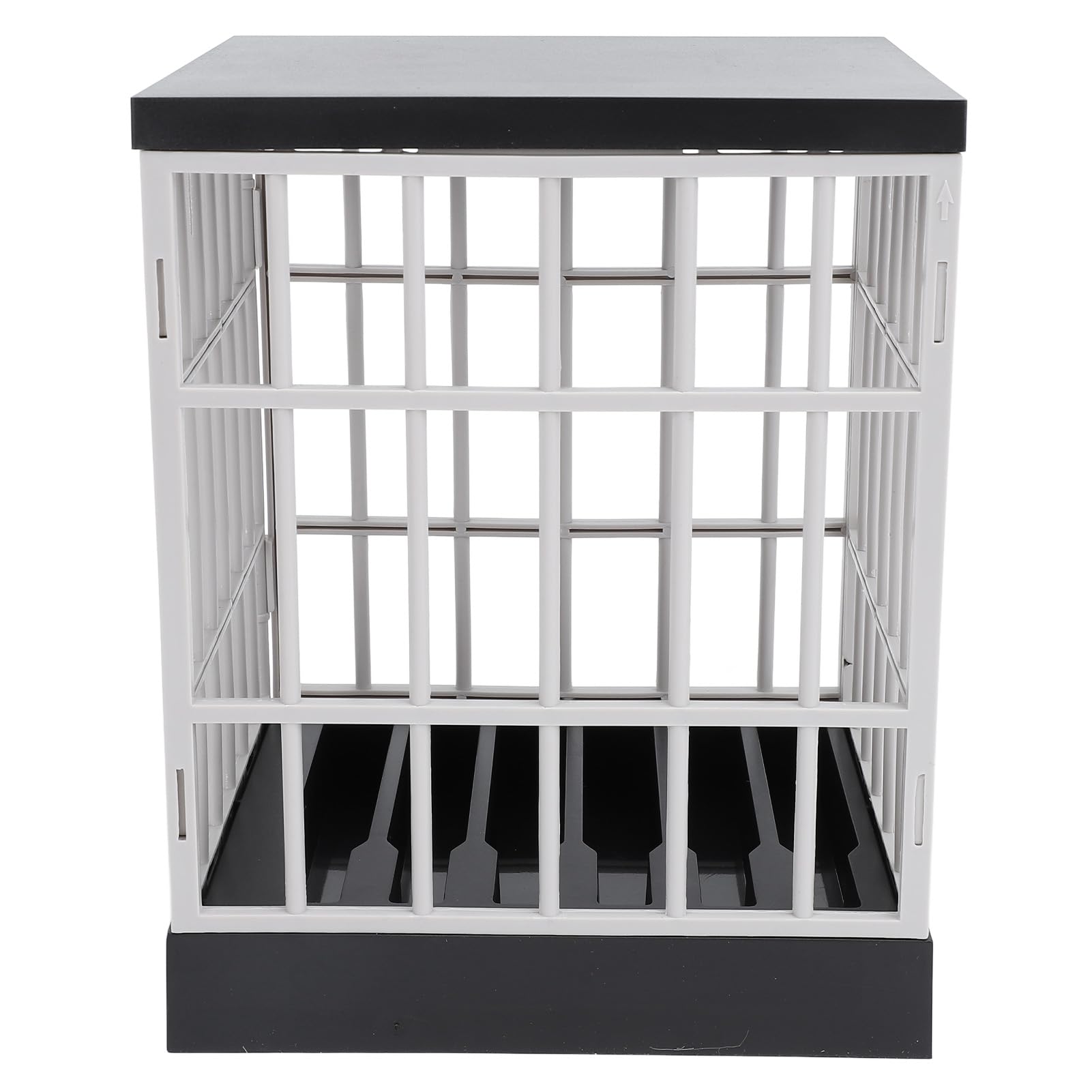
Cell Phone Jail Lock Box, 6 Device Capacity Family Phone Lock Box, Portable Screen Time Control Cage with Secure Keys for Home Office Classroom Family Time Party (Black Grey)
- Image Unavailable Image not available forColor:
- Only 5 left
- Only 3 left
For households with multiple children and multiple adults all needing to surrender devices, the six-device Family Phone Lock Box handles the volume without creating a complicated system. The padlock-and-key format means someone has to make a deliberate physical choice to reopen it, which is exactly the kind of friction that works.
7. Comparison of Phone Management Strategies for Families
| Strategy | Best For | Main Benefits | Main Drawbacks | Recommended Product | Price Range |
|---|---|---|---|---|---|
| Simple communal lock box | All ages, multi-adult households | Low cost, fun "jail" framing, builds shared norms | No timer, relies on mutual agreement to open | Gemaxvoled Phone Jail | ~$12 |
| Six-device family box with padlock | Households with 4+ devices | High capacity, everyone included, no tech needed | No timer function, padlock can be opened early | Family Phone Lock Box | Budget tier |
| Metal timed lock box (individual) | Parents or older kids who need solo accountability | Sturdy build, timer prevents early opening, spacious | Pricier, requires batteries | Vaydeer Timed Lock Box | ~$46 |
| App-scheduled timed lock box | Parents with predictable routines, working-from-home | App integration, set weekly windows, firm lockout | Requires smartphone to set up (ironic but functional) | WeHere Phone Lock Box | ~$69 |
| Mindsight Timed Lock Box (Fortress Mode) | Adults who genuinely cannot trust themselves | Three commitment levels, emergency override available, fits tablets | Pricier, Fortress Mode is non-reversible without customer support | Mindsight Timed Lock Box Plus | ~$50 |
8. Expert Insights on Parental Phone Use and Child Development
FAQ
Conclusion
Your child is not asking you to be perfect. They're asking you to be there. The research is consistent, across infancy, toddlerhood, school age, and adolescence: children who feel they have a parent's genuine attention develop better, cope better, and grow into more securely attached adults. The phone is not the enemy; it's just a very well-engineered competitor for your attention, and right now it's winning more often than you'd like.
The most quotable truth from everything in this article is simply this: presence is a skill, and like every skill, it can be practised, protected, and rebuilt.
If this article landed somewhere real for you, save it, share it with your co-parent or partner, or pass it to a friend who needed to read it. And then go put your phone somewhere it can't interrupt the next hour.
Sources & References
- Common Sense Media. "Constant Companion: A Week in the Life of a Young Person's Smartphone Use." 2023. commonsensemedia.org
- Radesky, J.S., et al. "Patterns of Mobile Device Use by Caregivers and Children During Meals in Fast Food Restaurants." Pediatrics, 2014. pediatrics.aappublications.org
- McDaniel, B.T., and Radesky, J.S. "Technoference: Parent Distraction with Technology and Associations with Child Behavior Problems." Child Development, 2018. doi.org/10.1111/cdev.12822
- Tronick, E.Z. "The Still Face Paradigm." Harvard University Department of Psychology. 1975 (original); replicated extensively since. Available via Harvard Center on the Developing Child.
- Harvard Center on the Developing Child. "Serve and Return." developingchild.harvard.edu
- Shonkoff, J.P., et al. "The Lifelong Effects of Early Childhood Adversity and Toxic Stress." Pediatrics, 2012. doi.org/10.1542/peds.2011-2663
- Kildare, C.A., and Middlemiss, W. "Impact of Parents Mobile Device Use on Parent-Child Interaction: A Literature Review." Computers in Human Behavior, 2017. doi.org/10.1016/j.chb.2016.11.012
- Coyne, S.M., et al. "Parental Media Use and Adolescent Media Use: An 8-Year Longitudinal Study." Pediatrics, 2021. doi.org/10.1542/peds.2020-1662
- Radesky, J.S., et al. "Parent and Child Smartphone Use During Laboratory Observation." Academic Pediatrics, 2022. doi.org/10.1016/j.acap.2021.08.021
- American Academy of Pediatrics. "Media and Young Minds." Pediatrics, 2016. pediatrics.aappublications.org
- McDaniel, B.T. "Parent Distraction with Phones, Reasons for Use, and Impacts on Parenting and Child Outcomes." Human Behavior and Emerging Technologies, 2019. doi.org/10.1002/hbe2.139
Frequently Asked Questions
How much phone use around kids is actually harmful?
My baby can't talk yet. Can they really be affected by my phone use?
What's the difference between checking my phone occasionally versus being addicted to it?
Is it too late if my children are older and this has been going on for years?
Should I tell my children why I'm putting my phone in a lock box?
What if my partner and I disagree about phone use at home?
Are timed lock boxes actually effective, or is this just a gimmick?
Was this helpful?
Thanks — your feedback helps us pick what to write next.