Skills AI Can't Replace: Raising Kids From Preschool to Career
The skills that will keep your child valuable in an AI driven world (empathy, communication, emotional intelligence, and creative problem solving) are built in early childhood through play, conversation, and human connection, not through screens or academic drilling.
In this article
Picture two ten year olds. One can solve algebra problems a grade level ahead. The other struggles with long division but can read a room, calm a frustrated sibling, and pitch an idea to four skeptical classmates until they say yes. Ask any hiring manager in 2035 which kid they want on their team, and you already know the answer isn't the one who's better at arithmetic. A calculator solved that problem decades ago. AI just finished the job.
The World Economic Forum's Future of Jobs Report 2023 found that among the top skills employers say will grow in importance through 2030, seven of the top ten are human skills: analytical thinking, creative thinking, resilience, curiosity, motivation, empathy, and leadership. Technical skills like programming still matter, but they're sliding down the list precisely because AI is getting so good at doing them itself.
This isn't a call to panic or throw out the tablet. It's an invitation to rethink what "getting ahead" actually means for your child. Here's what you'll come away understanding:
1. Why Emotional Intelligence Beats IQ in an AI Economy
Emotional intelligence, the ability to recognize, understand, and manage feelings in yourself and others, is becoming the single most predictive skill for future success because it's the one thing artificial intelligence structurally cannot do.
AI systems can mimic empathetic language. They can generate a comforting sentence when you type "I'm having a bad day." But they don't feel anything, and more importantly, they can't read the subtle, shifting emotional cues a human picks up in a face, a pause, a tone of voice. That reading of other people, what psychologists call social cognition, develops in childhood through thousands of small interactions: a parent narrating feelings during a meltdown, a sibling squabble that gets talked through instead of shut down, a friend who needs comforting at recess.
Daniel Goleman, the psychologist who popularized the term emotional intelligence, has long argued that IQ predicts about 20 percent of life success, leaving the rest to factors like self awareness, self regulation, and social skill. That ratio matters more, not less, in a world where AI has flattened the value of raw information recall.
What This Looks Like Day to Day
Games that make emotional literacy fun rather than a lecture tend to stick better than direct instruction. 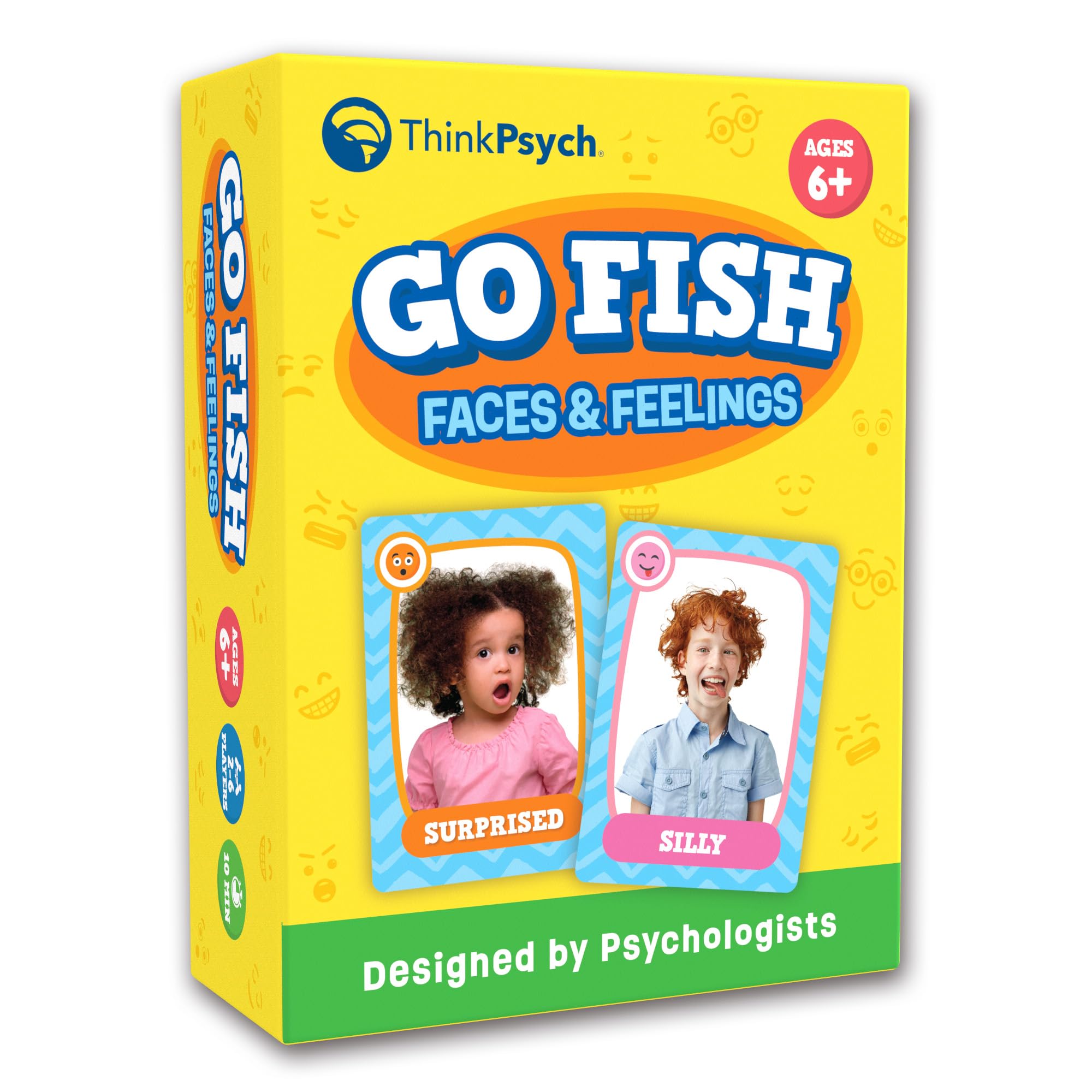
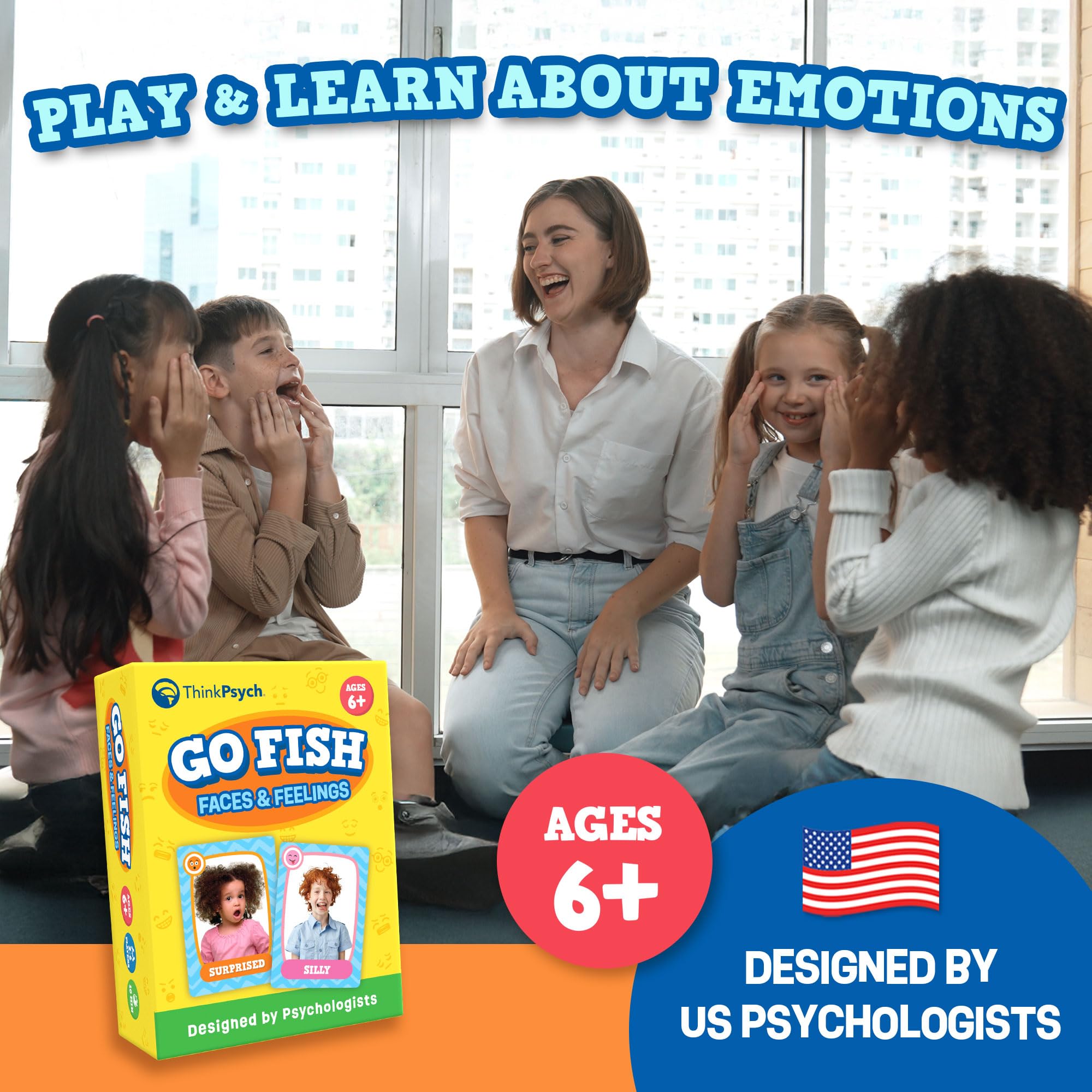
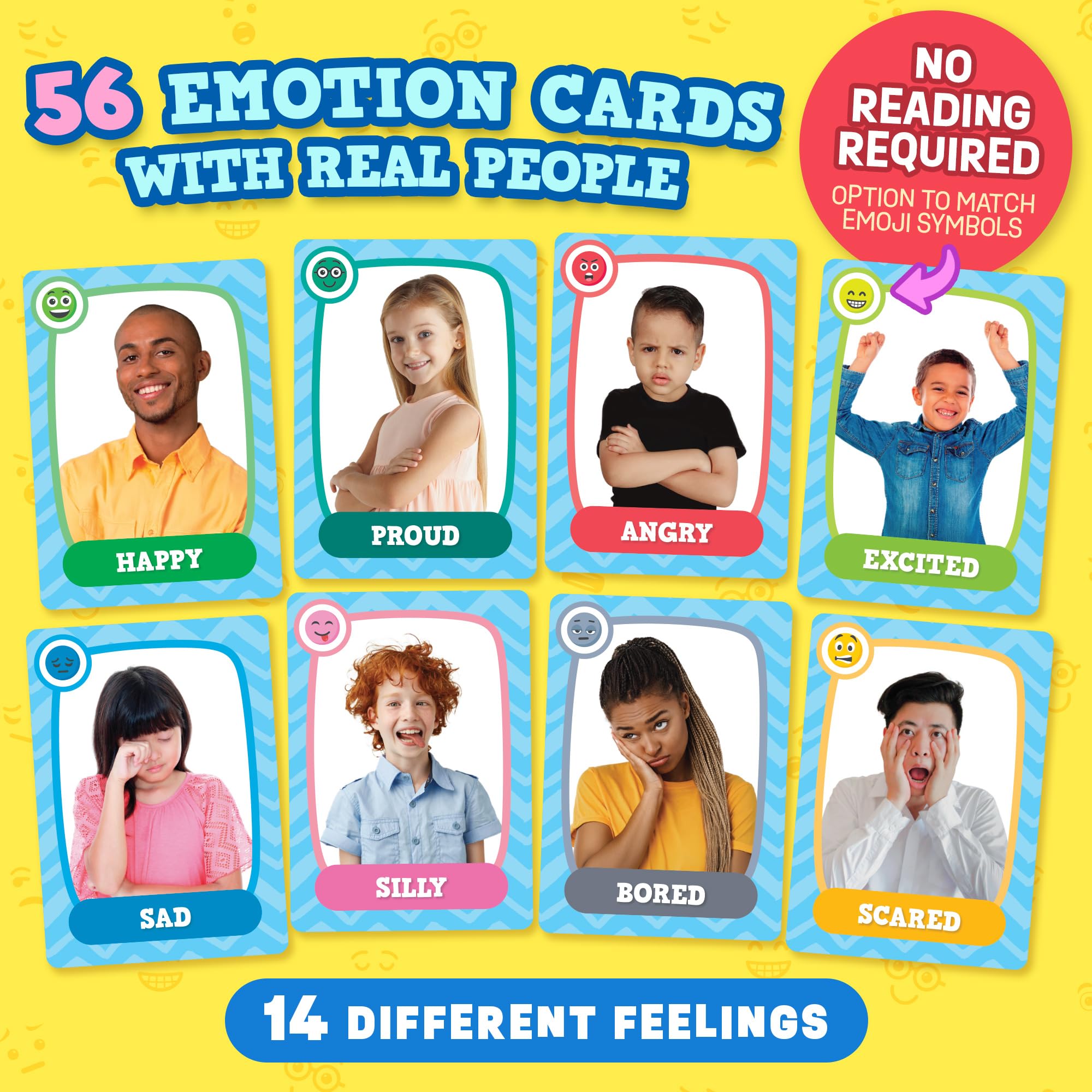
ThinkPsych Go Fish - Faces & Feelings Card Game | Social Emotional Learning Game for Kids Ages 6+ | Learn Emotions Through Play | 2-6 Players | Home, Therapy & Classroom Use
2. Communication Skills That No Chatbot Can Teach
Strong communication, the ability to explain, persuade, listen, and negotiate with another human being, is a skill that develops almost entirely through live practice, not passive consumption.
Children learn to communicate by communicating, in real time, with people who respond unpredictably. A conversation with a voice assistant or a chatbot follows a script; the child asks, the machine answers, and there's no messy back and forth negotiation, no reading of body language, no waiting for someone to finish a thought before jumping in. Genuine conversational skill, the kind that lets an adult later negotiate a raise, resolve a conflict with a coworker, or comfort a grieving friend, is built through thousands of small, imperfect exchanges with real people starting in toddlerhood.
Children's early conversational experiences with responsive adults are among the strongest predictors of later language and social competence, more so than the sheer number of words they hear.
— American Academy of Pediatrics (2021)
This is part of why pediatricians increasingly caution against letting devices substitute for face time. Studies on parental phone use have found that even brief interruptions in parent child interaction, sometimes called "technoference," can measurably affect how securely a child bonds and how quickly they pick up language. If you want a deeper look at how this plays out at home, research on divided attention during parent child moments is worth reading closely.
Building Communication Through Play
3. Creative Problem Solving: The Skill AI Automates Around, Not Away
Creative problem solving, generating original approaches to open ended, ambiguous situations, remains one of the hardest things to automate because it requires combining knowledge in ways that haven't been done before.
AI is remarkably good at pattern matching against enormous datasets of what's already been solved. It is far weaker at genuinely novel situations with no clean precedent, the kind that come up constantly in parenting, in business, in medicine, in any messy human field. Kids who grow up with unstructured time to invent games, build forts out of couch cushions, or figure out how to include a younger sibling in a game meant for older kids are quietly rehearsing exactly this skill.
Research from the LEGO Foundation and multiple child development labs consistently finds that open ended, child led play, play without a predetermined "right" answer, builds flexible thinking better than structured, adult directed activities. This doesn't mean structure is bad. It means both matter, and unstructured time shouldn't get squeezed out entirely by enrichment schedules.
Strong foundational readiness in the preschool years sets the stage for this kind of flexible thinking to flourish later; if you're curious how early skills connect to later academic confidence, research on school readiness lays out the long arc clearly.
4. Social Skills and Collaboration: Building the Human Network AI Can't Join
Collaboration, the ability to work productively with other people toward a shared goal, matters more than ever because as routine tasks get automated, the remaining human work increasingly happens in teams solving problems together.
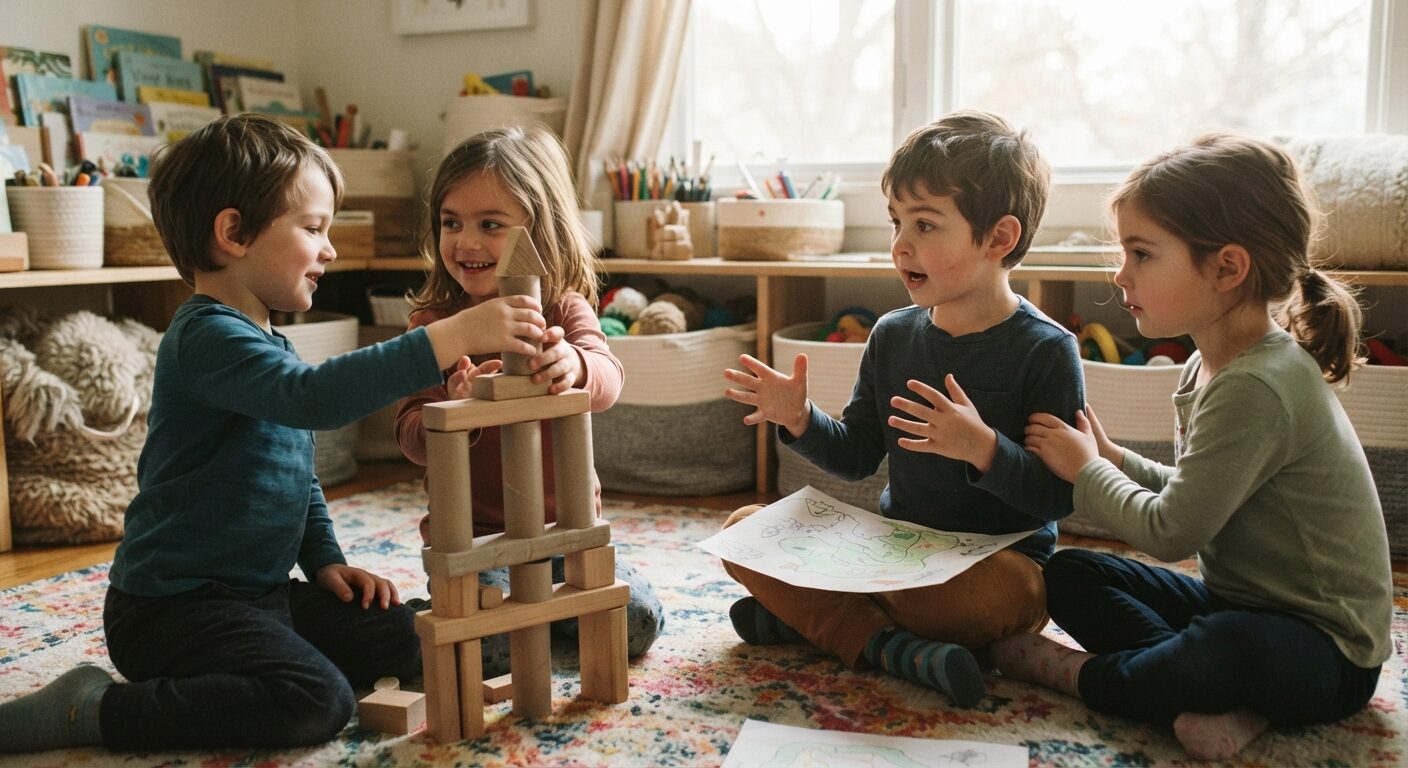
Kids build collaborative skill the same way they build every other social skill: through supervised, repeated practice with real conflict and real resolution. A group of kids negotiating the rules of a game in the backyard, deciding who goes first, arguing about whether a rule was broken, and eventually agreeing on a fix, are doing something no app can simulate convincingly. The stakes are real, the disagreement is real, and the resolution has to satisfy actual other people with actual feelings.
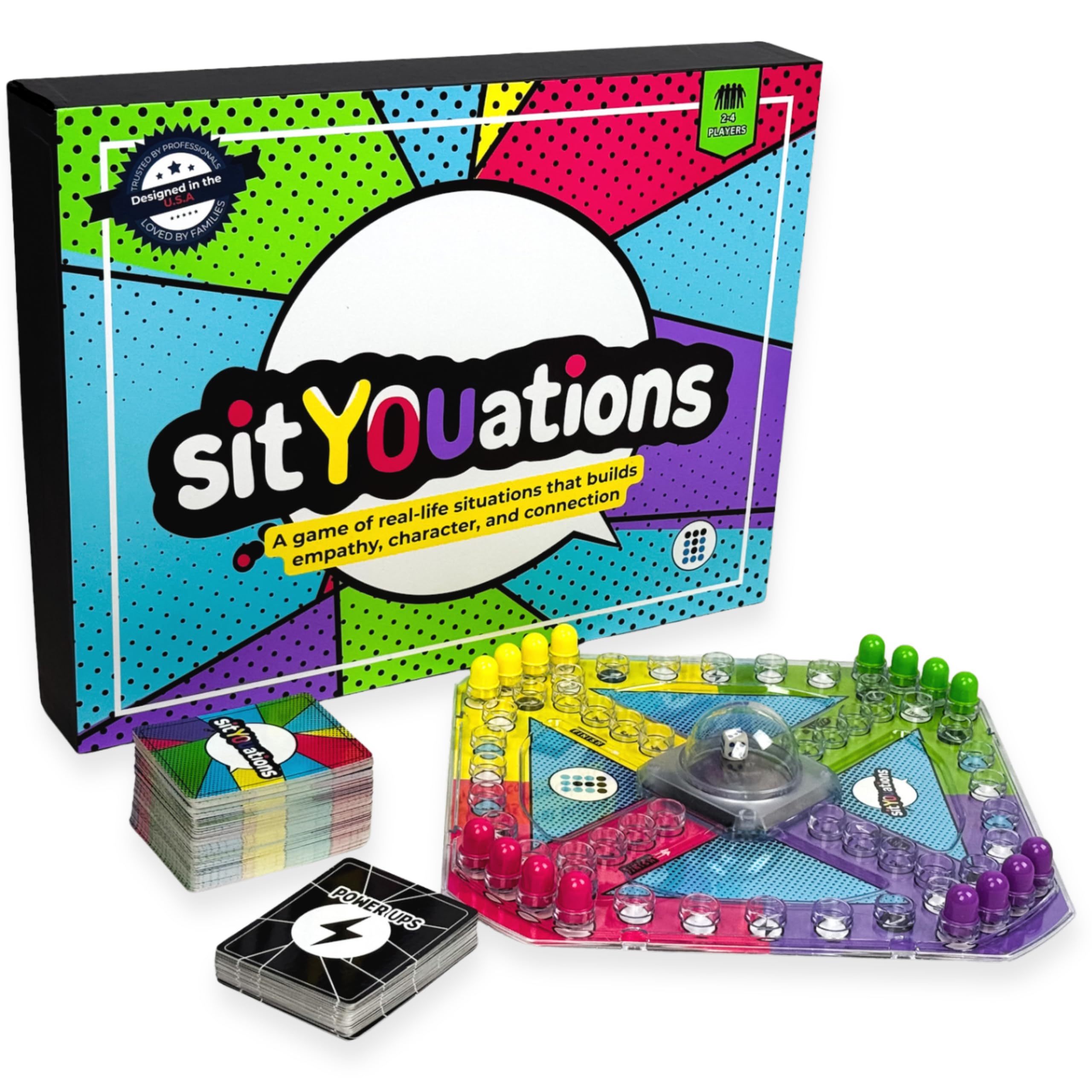
Card games built around scenarios and turn taking are particularly good at this because they force kids to read a situation, decide how to respond, and live with the consequences of that choice in a low stakes setting. Garybank's Emotion River and Ladders game is built specifically around scenario cards that put kids in exactly these small social dilemmas, then talk through the "who, what, why" of each one.
Peer collaboration in childhood is one of the strongest training grounds for adult teamwork. Children who get regular, supervised practice negotiating with peers show stronger cooperative skills years later.
— Harvard Center on the Developing Child (2020)
Signs Collaboration Skills Need More Support
5. Adaptability and Resilience: The Muscle Behind Every Other Skill
Adaptability, the ability to adjust to change, setbacks, and new information without falling apart, is arguably the master skill underneath everything else on this list, because a rapidly changing job market will demand constant retraining and reinvention from every worker, not just a few.
Resilience isn't something you can lecture into a child. It's built through repeated, manageable exposure to frustration, followed by support that helps them get back up rather than rescue that skips the struggle entirely. A toddler who falls while learning to walk and tries again, a six year old who loses a board game and plays another round anyway, a nine year old who bombs a spelling test and studies differently next time, these are all small deposits into the same resilience account.
Children build resilience not by being protected from every difficulty but by being supported through manageable ones, with a trusted adult nearby.
— Center on the Developing Child, Harvard University (2015)
Sleep and nutrition play a bigger role here than most parents realize; a chronically under slept or under fed child has far less capacity to bounce back from a hard day. If bedtime battles have been eating into your child's resilience reserves, a closer look at how much sleep preschoolers actually need is a good place to start troubleshooting.
Common Resilience Killers to Watch For
6. Critical Thinking and Ethical Judgment: Teaching Kids to Question, Not Just Consume
Critical thinking, the ability to evaluate information, spot bias, and make sound judgments, is becoming urgent precisely because AI generated content, some accurate and some confidently wrong, is now everywhere kids look.
Children who grow up asking "how do you know that?" and "who benefits if I believe this?" are building a defense system that will serve them for life, whether they're evaluating a viral video, a chatbot's answer, or a friend's rumor. This isn't a skill that clicks on suddenly in adolescence. It starts as early as age four with simple questions like "Do you think that's really true? How could we find out?"
Ethical judgment, knowing not just what's possible but what's right, is the piece AI is furthest from replicating convincingly, because ethics require weighing context, consequence, and human values, not just pattern matching against training data.
Scenario based conversation cards are one of the simplest tools for building this muscle at home, since they present a situation and ask a child to reason through the "why" rather than just react. 

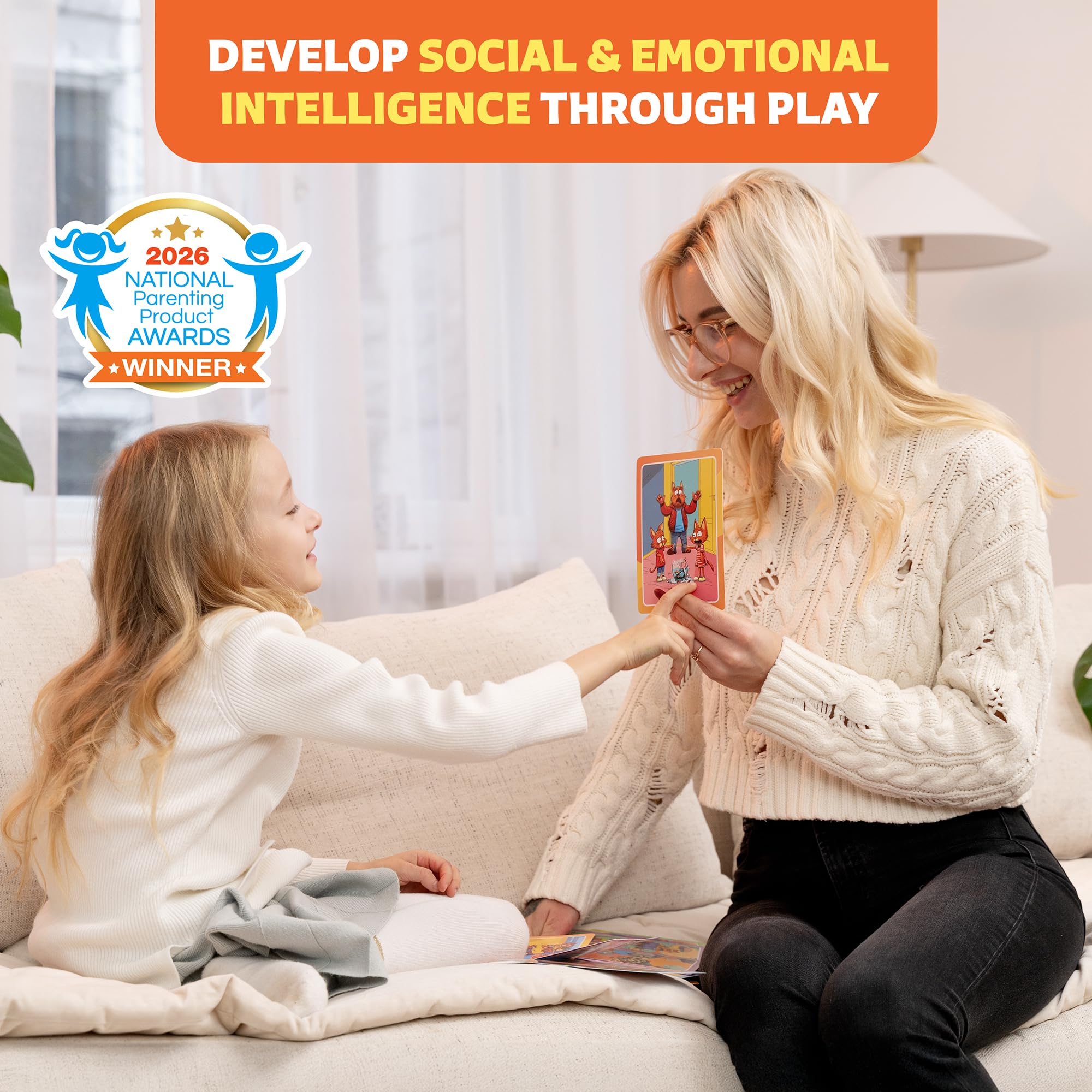
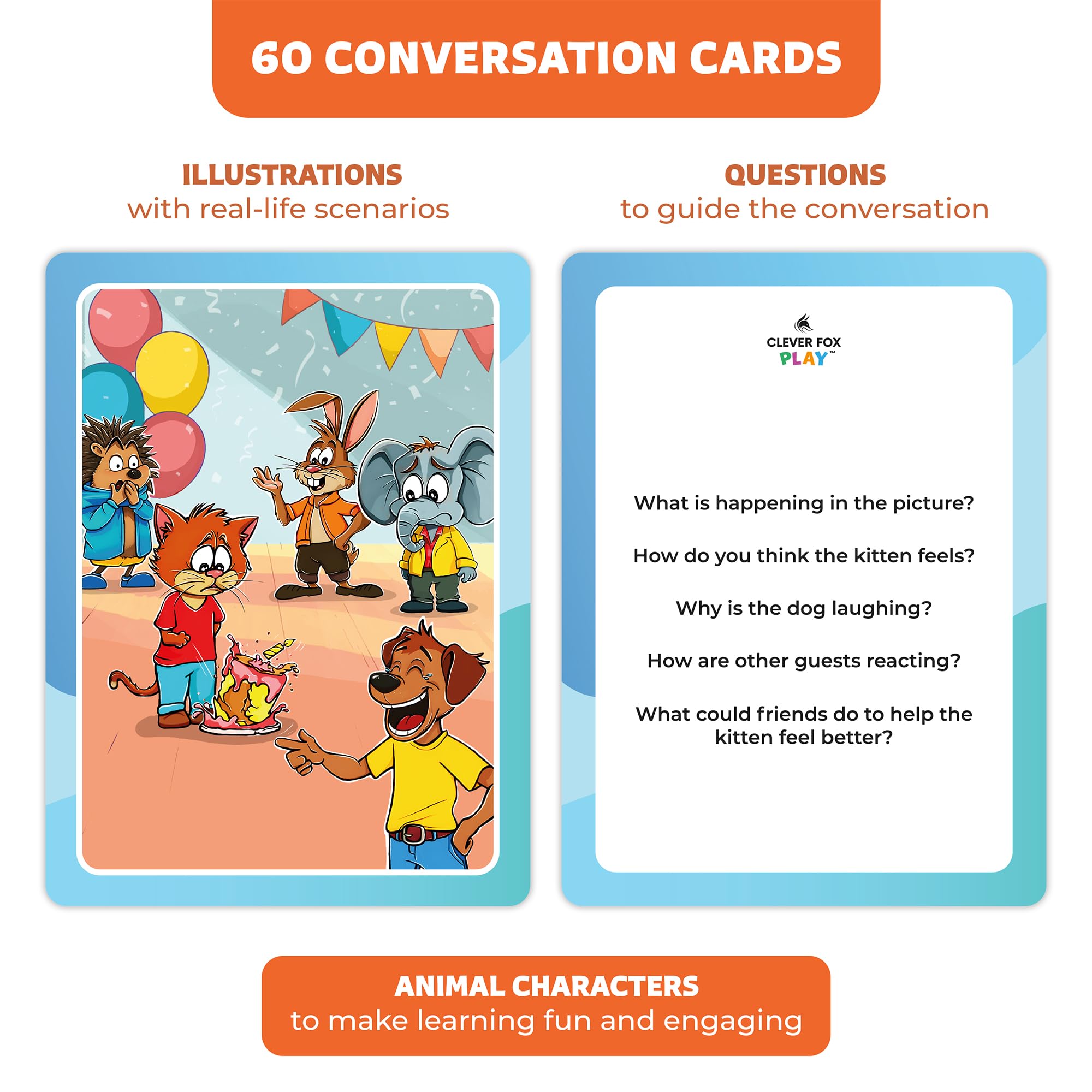
Who What Why Conversation Cards for Kids, Speech Therapy Materials, Ages 4+ | Educational game, social skills flash cards, emotional regulation tool, sequencing activity, therapy toy, learning resource
Anxiety about an uncertain, AI saturated future is real for kids too, not just parents; if your child has started expressing worry about school, screens, or the future in ways that feel outsized, understanding the actual roots of childhood anxiety can help you tell the difference between normal worry and something needing more support.
Comparing Tools That Build These Skills at Home
| Skill Focus | Best Age Range | Primary Benefit | Main Drawback | Recommended Product | Price Range |
|---|---|---|---|---|---|
| Emotional literacy through play | Ages 6 and up | No reading required, builds feelings vocabulary fast | Best with adult facilitation for younger kids | ThinkPsych Go Fish Faces and Feelings Card Game | $15–18 |
| Cognitive behavioral skill building | Ages 6 to 14 | Therapist designed, strong for anger management | More structured, less freeform play | CBTiger Therapy Card Game | $20–24 |
| Scenario based social reasoning | Ages 5 and up | Builds empathy through real life scenarios | Requires some reading ability | Garybank Emotion River and Ladders Game | $20–24 |
| Nonverbal emotion recognition | Ages 5 and up | Screen free, active, great for groups | Needs 2 to 6 players, less solo friendly | ThinkPsych Feelings Bingo | $20–24 |
| Critical thinking and observation | Ages 4 and up | Sharpens the "who, what, why" reasoning habit | Younger kids need adult guidance | Who What Why Conversation Cards | $15–18 |
| Social scenario practice | Ages 6 and up | Huge variety, 100+ real life situations | Best used a few cards at a time, not all at once | Social Scenario Task Cards for Kids | $9–12 |
What the Experts Are Saying
Frequently Asked Questions
Raising a child for a future none of us can fully predict is unsettling, and no parent gets it perfect. But the good news is quietly reassuring: the skills that matter most, warmth, curiosity, the ability to keep trying, the willingness to really listen to another person, have always been the ones worth building. AI just made it obvious. As one simple way to put it: the best preparation for an uncertain future isn't a better algorithm, it's a more connected childhood. If this gave you something useful, save it, share it with another parent, and come back for more as we keep tracking what actually helps kids thrive.
Sources & References
- World Economic Forum. "Future of Jobs Report 2023." 2023. weforum.org
- American Academy of Pediatrics. "Media and Young Minds." 2021. aap.org
- Center on the Developing Child, Harvard University. "Resilience." 2015. developingchild.harvard.edu
- Goleman, Daniel. "Emotional Intelligence: Why It Can Matter More Than IQ." Bantam Books, 1995.
- LEGO Foundation. "Learning Through Play: A Review of the Evidence." 2017. learningthroughplay.com
Frequently Asked Questions
Should I limit screen time to build these skills faster?
What age should I start teaching emotional intelligence skills?
Is academic achievement still important if human skills matter more?
My child struggles socially. Are card games actually effective, or just a nice idea?
How do I know if my child's emotional development is behind where it should be?
Can AI tools like speech apps actually help identify developmental delays early?
What's the single best thing I can do this week to build these skills in my child?
Was this helpful?
Thanks — your feedback helps us pick what to write next.