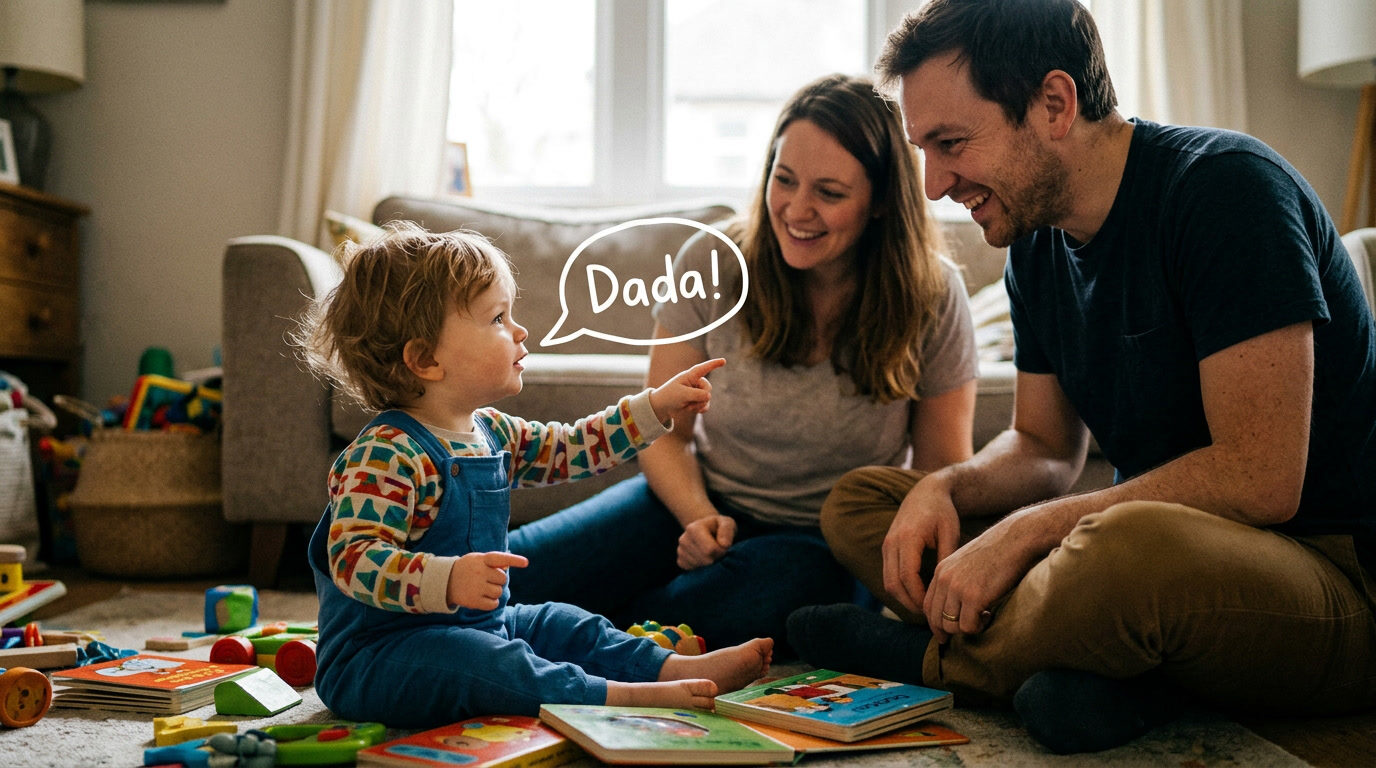
Toddler Tantrums Getting Worse? Here's What's Really Going On
Tantrums usually get worse before they get better because your toddler's brain is developing faster than their ability to manage big feelings, and the fix is calm, consistent responses rather than punishment or ignoring the root cause.

In this article
Nearly every parent of a toddler hits a point where they wonder if something is wrong. One day your two year old has a meltdown over the wrong colored cup, the next it's a full body collapse in the cereal aisle, and you find yourself googling this at 11pm wondering if it's normal or a sign of something bigger. According to the American Academy of Pediatrics, tantrums occur in up to 87 percent of toddlers ages 18 to 24 months, and for many kids they intensify before age 3, not because parenting is failing, but because a toddler's brain is going through one of the fastest periods of emotional development in the entire human lifespan.
What you'll understand after reading this:
1. Why Toddler Tantrums Get Worse Before They Get Better
Tantrums intensify around ages 2 to 3 because your toddler's emotional needs are outpacing their brain's ability to regulate them. The part of the brain responsible for impulse control and emotional regulation, the prefrontal cortex, is one of the last areas to mature, and it will not be fully online until the mid twenties. Meanwhile, toddlers are absorbing new words, new independence, and new frustrations every single day. That gap between "I want" and "I can calmly express or wait for it" is where tantrums live.
The Escalation Curve
Most pediatric behavioral specialists describe tantrums as following a predictable arc: a trigger, a rising wave of frustration, a peak (often screaming, dropping to the floor, or hitting), and then a decline as the nervous system resets. When tantrums seem to be "getting worse," it's usually one of three things happening:
Tantrums are not a sign that your child is spoiled or that you are doing something wrong as a parent. They are a normal part of development, particularly between one and three years of age, as toddlers experience big emotions but haven't yet developed the language or self control to express them appropriately.
— American Academy of Pediatrics (2021)
Understanding this timeline takes the guilt out of the equation. Your toddler is not manipulating you; they are practicing, badly at first, a skill that takes years to build.
2. The Brain Science Behind Big Emotions
Toddler tantrums escalate because the emotional brain (the amygdala) develops years ahead of the thinking brain (the prefrontal cortex). This mismatch means toddlers genuinely cannot "just calm down" on command, no matter how reasonable the request sounds to an adult.
What's Happening Neurologically
When a toddler is denied something, or overwhelmed by noise, transitions, or fatigue, their amygdala floods the body with stress hormones before the prefrontal cortex can step in and modulate the response. This is sometimes called "flipping your lid," a term popularized by psychiatrist Dr. Daniel Siegel to describe what happens when the emotional brain overrides the rational brain.
This is why reasoning mid meltdown rarely works, and often backfires. You cannot talk a toddler out of a tantrum any more than you can talk yourself out of a full body panic response. The nervous system needs to complete its cycle first.
Common Escalation Triggers
If you notice tantrums cluster heavily around one of these triggers, addressing the trigger directly often does more than any in the moment technique.
3. How Your Own Reaction Shapes the Tantrum's Intensity
Your calm (or lack of it) is one of the strongest predictors of how long and how intense a tantrum becomes. Toddlers borrow regulation from the adults around them, a process developmental psychologists call co regulation. When a parent stays steady, the toddler's nervous system has an external anchor to sync with. When a parent escalates (yelling, threatening, pleading), the toddler's stress response often climbs higher, not lower.
Why Yelling Backfires
Shouting adds a second stressor to an already overwhelmed nervous system. Instead of de escalating, it frequently prolongs the meltdown because now the toddler is reacting to both the original trigger and your visible distress. One mother's approach to managing her own reactions during meltdowns, detailed in this breakdown of how she stays calm through toddler tantrums, shows how a parent's own regulation directly changes the outcome of the meltdown.
Children are wired to co regulate with a trusted adult before they can self regulate independently. A calm caregiver presence is often the single most powerful tool available in the moment.
— Dr. Tina Payne Bryson, Ph.D., co author of The Whole Brain Child (2011)
A Simple Reset Script
When you feel your own frustration rising:
1. Pause and take one slow breath before responding 2. Lower your body to their eye level 3. Name the emotion out loud ("You're really upset that we have to leave") 4. Wait. Resist the urge to fill silence with explanations 5. Offer comfort once the peak has passed, not during it
Some parents worry that staying calm and quiet looks like ignoring the behavior. Research actually supports a version of this: ignoring the tantrum itself, while staying present and safe nearby, has been … far more effectively than lecturing through them.
4. Sleep, Hunger, and Overstimulation: The Hidden Multipliers
Tantrums that seem to be "getting worse for no reason" are frequently being driven by an accumulating physical deficit rather than a behavioral one. Sleep debt is the single most underrated multiplier of tantrum severity. A toddler who is even 30 to 45 minutes short on sleep shows measurably reduced impulse control the following day, according to sleep researchers at the University of Colorado Boulder.
The Big Three Physical Triggers
Feeding Related Tantrums
Mealtime battles are a particularly common tantrum trigger, and picky eating can create a daily flashpoint that compounds over time. If food refusal is a recurring theme in your tantrums, these strategies for ending food battles at the table can reduce one major daily source of friction.
The Overstimulation Connection
Toddlers who spend most of their day indoors, especially in small, visually busy spaces, tend to show higher rates of dysregulation. Time outdoors, even 20 to 30 minutes, has been associated with improved mood regulation in early childhood research. Outdoor time offers meaningful benefits for a developing nervous system, and many pediatricians recommend it as a daily non negotiable rather than an optional extra.
5. Building the Emotional Vocabulary That Prevents Meltdowns
Tantrums decrease significantly once a toddler has the words to name what they're feeling instead of only the ability to act it out. Language is one of the most powerful tools for emotional regulation, and toddlers who can say "I'm frustrated" or "I'm scared" have measurably fewer physical meltdowns than peers who lack that vocabulary, according to research published by the Yale Center for Emotional Intelligence.
Why Naming Emotions Works
When a toddler labels a feeling, it activates the prefrontal cortex and calms activity in the amygdala, a process researchers call "affect labeling." In plain terms: naming the feeling literally helps turn down the intensity of the feeling.
When we put feelings into words, we help children develop the neural pathways that allow them to manage those feelings rather than be overwhelmed by them.
— Marc Brackett, Ph.D., Director, Yale Center for Emotional Intelligence (2019)
Practical Tools for Building Feelings Vocabulary
Emotion cards are one of the simplest, most consistently recommended tools pediatric therapists use to build this vocabulary outside of a meltdown, when the brain is calm and receptive to learning.
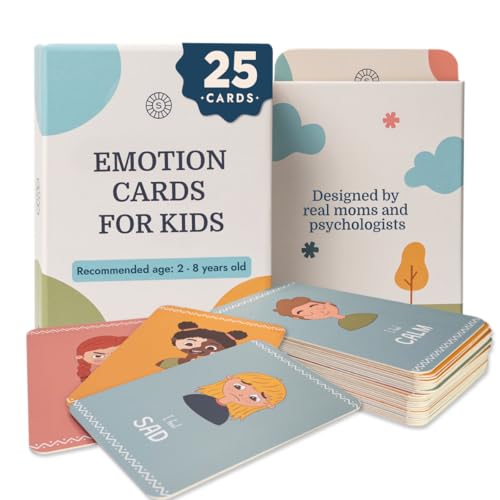
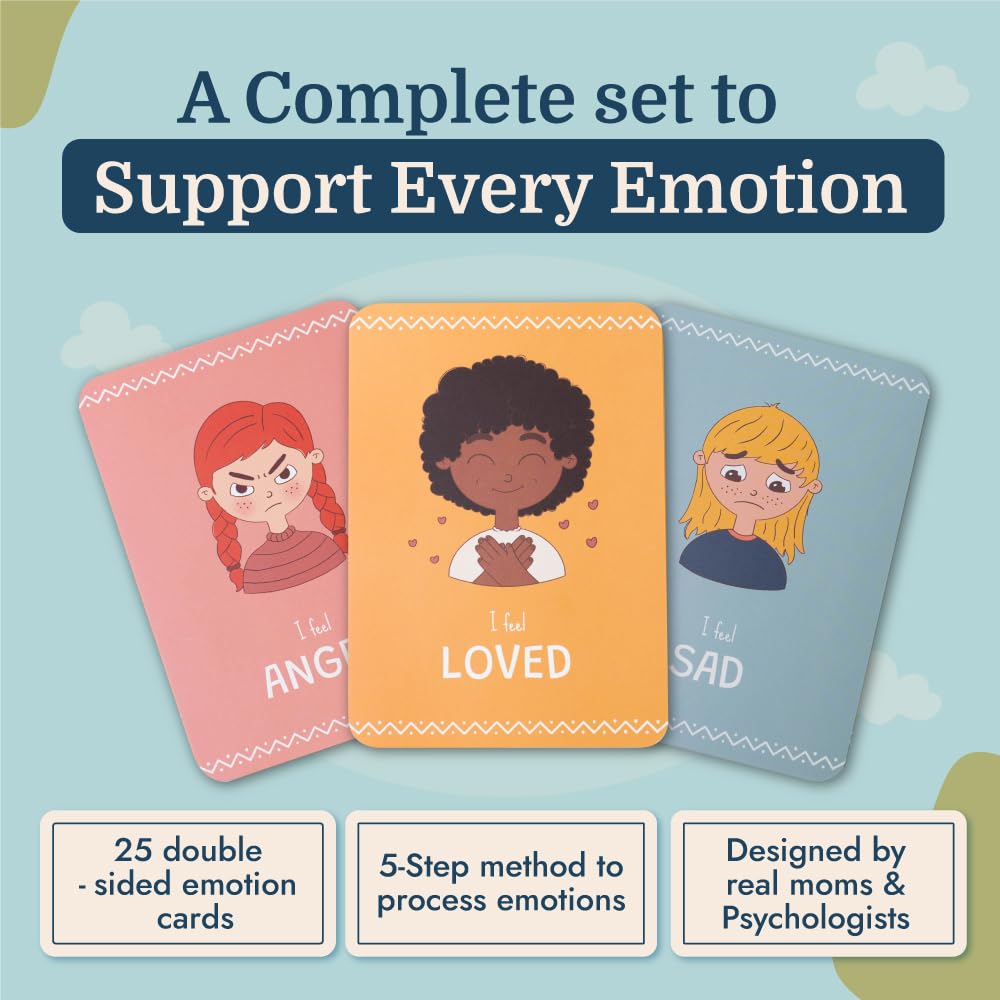
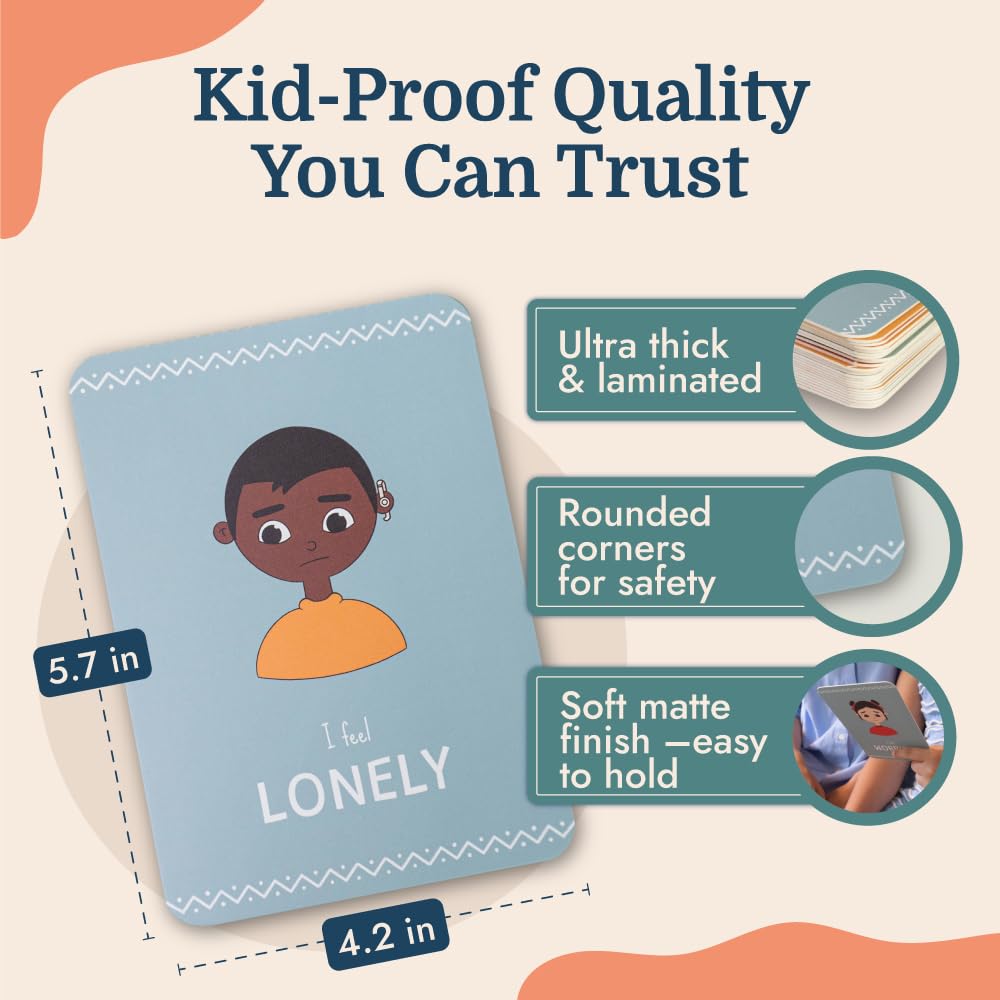
Samma Sati Emotion Flashcards for Toddlers, 25 Feelings Cards, Ages 2-8
- 25 Emotion Cards for Kids – Includes 25 emotions flash cards for kids with expressive, colorful illustrations
- Essential Skill Development: Build emotional intelligence with emotion flash cards for toddlers; this big feel
- Child-Safe Design: Crafted from high-quality materials, this feelings flash cards deck is safe & durable for t
The Samma Sati flashcards work well for toddlers just starting to name basic feelings, since the illustrations are simple and the deck focuses on the core emotions kids encounter daily: happy, sad, angry, scared. For families who want a more layered approach that grows with the child, the SkillEase Exploding Emotions Flashcards and Game adds a game format with coping strategies on the back of each card, designed by a speech therapist, which makes it useful even as children move into elementary school.
For families managing a toddler alongside a child with autism or a sensory processing difference, cards with built in visual supports can help even more. The Broytain Emotion Cards with Built-In Mirror let kids see their own facial expression paired with the emotion word, which many speech therapists use specifically for children who benefit from visual and physical feedback together.
Related Behavior Patterns
Tantrums sometimes include hitting or physical aggression, which understandably alarms parents. If this is part of your child's pattern, responding calmly to toddler hitting without escalating uses many of the same co regulation principles covered here.
6. When Worsening Tantrums Signal Something More
Most escalating tantrums are developmentally normal, but certain patterns are worth flagging to your pediatrician rather than waiting them out. The vast majority of toddlers who have frequent, intense tantrums at age 2 or 3 will show significant improvement by age 4, once language and self regulation catch up. However, a smaller subset of tantrum patterns can indicate an underlying issue such as a sensory processing difference, an emerging anxiety pattern, or a developmental delay.
Red Flags Worth Mentioning to Your Pediatrician
While tantrums are a normal part of toddlerhood, parents should discuss patterns with their pediatrician if tantrums are frequent, prolonged, involve self harm, or if the child cannot be consoled at all. These can sometimes point toward an underlying developmental, sensory, or emotional regulation difference that benefits from early support.
— American Academy of Pediatrics, Healthychildren.org (2022)
What Your Pediatrician Will Likely Ask
Before your visit, it helps to track: how often tantrums occur, how long they last, what typically triggers them, and how your child responds once calm returns. This kind of pattern tracking often reveals a trigger (a specific time of day, a specific environment) that isn't obvious in the moment.
Comparing Approaches to Tantrum Management
| Approach | Best For | Primary Benefit | Main Drawback | Recommended Product | Price Range |
|---|---|---|---|---|---|
| Ignore and stay present | Attention seeking tantrums, minor triggers | Reduces reinforcement quickly | Requires patience, not for meltdowns involving safety risk | Lachilly Emotions Learning Flashcards | $6.99 |
| Co regulation and calm presence | Big emotional overwhelm, sensory overload | Shortens meltdown duration | Requires the parent's own regulation first | Tinlade 540 Pcs Feelings Emotions Cards | $20.99 |
| Emotion labeling and vocabulary building | Prevention, ages 2 to 6 | Builds long term self regulation skills | Takes weeks of practice to show results | Samma Sati Emotion Flashcards for Toddlers | $19.99 |
| Sensory and physical needs check | Tantrums with no obvious trigger | Addresses root cause directly | Requires tracking patterns over time | SpriteGru Emotions Flashcards with Coping Skills | $11.99 |
| Game based social emotional learning | Preschool and early elementary | Builds empathy and perspective taking | Best for calm, non meltdown practice time | SkillEase Exploding Emotions Flashcards and Game | $24.99 |
| Visual and mirror based feedback | Sensory sensitive kids, autism spectrum | Combines visual and physical self awareness | Smaller deck, fewer emotion options | Broytain Emotion Cards with Built-In Mirror | $17.99 |
Expert Insights
Watching your toddler dissolve into a screaming, kicking heap in the middle of a store is one of the hardest parts of early parenting, and it can feel deeply personal even when it isn't. The truth is, escalating tantrums are usually a sign that your child's brain is doing exactly what it's supposed to do at this age: reaching for independence faster than it can manage the feelings that come with it. Your calm, your consistency, and a little bit of vocabulary building will do more than any single trick or technique. As one pediatrician put it simply, your toddler isn't giving you a hard time, they're having one. Save this guide for the next hard afternoon, and share it with another parent who needs the reminder that this phase, however loud it gets, does pass.
Sources & References
- American Academy of Pediatrics. "Tantrums and Your Toddler." HealthyChildren.org, 2021 and 2022 updates. healthychildren.org
- Siegel, Daniel J. and Bryson, Tina Payne. "The Whole Brain Child." Bantam Books, 2011.
- Brackett, Marc. Yale Center for Emotional Intelligence. "Permission to Feel," 2019.
- Karp, Harvey. "The Happiest Toddler on the Block." Bantam Books, 2004.
- Kennedy, Becky. "Good Inside: A Guide to Becoming the Parent You Want to Be." Harper Wave, 2022.
- University of Colorado Boulder, Sleep and Development Lab. Research on sleep debt and toddler self regulation, published findings summarized in developmental psychology literature.
Frequently Asked Questions
Why are my toddler's tantrums getting worse instead of better?
Should I ignore my toddler during a tantrum?
How long is too long for a toddler tantrum?
Can screen time make tantrums worse?
Is it normal for tantrums to include hitting or throwing things?
Do emotion cards actually help reduce tantrums?
What's the difference between a tantrum and a meltdown?
Was this helpful?
Thanks — your feedback helps us pick what to write next.