
Tummy Time Tips for 1 to 3 Month Olds: A Paediatrician's Plan
For babies aged 1 to 3 months, tummy time means short, supervised sessions on a firm surface while your baby is awake, starting at 1 to 3 minutes a few times a day and building toward roughly 30 minutes in total spread across the day by around 3 months.

In this article
If you have ever put your one month old on their tummy, watched their face crumple, and quietly scooped them back up while wondering if you are failing, you are in very good company. Tummy time is one of the most common things parents ask me about in clinic, and one of the most commonly dreaded.
Here is why it matters. Since the Back to Sleep campaign began in the United States in 1994, the American Academy of Pediatrics (AAP) reports that SIDS rates have fallen by more than half. That is a huge win, and back sleeping stays non negotiable. But babies who spend nearly all their time on their backs need extra practice on their tummies while awake. A Canadian cohort study by Mawji and colleagues, published in Pediatrics in 2013, found that 46.6% of babies had some flattening of the head at 7 to 12 weeks. Most cases are mild, but it shows how much time babies spend lying in one position.
What you'll understand by the end of this article:
1. Why Tummy Time Matters for 1 to 3 Month Olds
Tummy time is supervised play on your baby's front while they are awake, and it gives their neck, shoulder, arm and back muscles the practice they need to lift their head, push up and eventually roll, sit and crawl.
Think of it as the first gym session of your baby's life. A newborn arrives with a very heavy head (about a quarter of their body length) and a neck that cannot yet hold it up. Lying on their back, gravity works against them only a little. On their front, they have to push against it, and that is exactly the effort that builds the muscles.
The Back to Sleep, Tummy to Play message, from the AAP, was designed to keep both halves of this in balance: back for sleep, tummy for play.
What the research says
A 2020 systematic review in Pediatrics by Hewitt and colleagues looked at tummy time and infant health outcomes. It found that more time on the tummy was linked with better gross motor development and with a lower chance of head flattening. The review also noted that the certainty of the evidence was low to moderate, which is honest science speak for "the trend is consistent, but we need bigger and better studies". I tell parents the same thing in clinic: the benefits are plausible, the risks (when done awake and supervised) are tiny, so it is worth doing.
The World Health Organization (WHO) includes tummy time in its physical activity guidance for infants who are not yet mobile, and the Centers for Disease Control and Prevention (CDC) lists pushing up on the elbows and forearms during tummy time as a milestone by 4 months.
What tummy time does for your baby
What it is not
Tummy time is not sleeping on the tummy. It is not something you do when you are about to doze off on the sofa with your baby on your chest. And it is not a way to "toughen up" a baby who is crying hard; if your baby is distressed, you change the position or end the session. We will cover how in section 6.
A note on gear
You do not need to buy anything. A clean blanket on the floor is all the equipment this job requires. That said, some parents find a soft mat with a few toys makes it easier to commit to a daily routine, and if you want to try one, a lightweight option like the [Blissful Diary 5 zone play gym](PRODUCT_LINK_PLACEHOLDER) is the sort of thing to consider. I will talk more about the pros and cons of mats in sections 2 and 5.
2. How to Start Tummy Time Safely
You can start tummy time from your baby's first days at home, as long as your baby is awake, you are right beside them, and they are on a firm, flat surface.
That sentence has three conditions, and each one matters. Let me go through them the way I would with you in clinic.
The three golden rules
The AAP's 2022 safe sleep policy statement is clear that babies should sleep on their backs on a firm, flat surface. For a deeper look at how easily dangerous sleep advice spreads, you might read what secret filming revealed about dangerous baby sleep advice. The short version: anything that makes sleep look cosy is probably not safe, and tummy time must never slide into tummy sleep.
When is the best time of day?
Pick a time when your baby is calm and alert: awake, fed but not full, with a clean nappy. Many babies manage best 20 to 30 minutes after a feed. A baby who is hungry will fuss; a baby with a full tummy may spit up. If your baby has reflux, you may want to leave a little longer, and I will cover that in section 6.
What about the umbilical cord stump?
If your baby still has a cord stump, tummy time on your chest is gentler, and the floor is fine as long as the stump is kept clean and dry. The stump normally falls off between one and three weeks. Check with your midwife or health visitor if the area looks red, smells or oozes.
Setting up the space
Choosing a mat (if you want one)
Mats and play gyms are optional, but plenty of families like them. A soft, foldable mat such as the [Blissful Diary baby play gym mat in sage green](PRODUCT_LINK_PLACEHOLDER) is easy to wipe down, assembles without tools and has detachable toys, so you can remove the overhead bar while your baby is on their tummy and use it later when they are on their back.
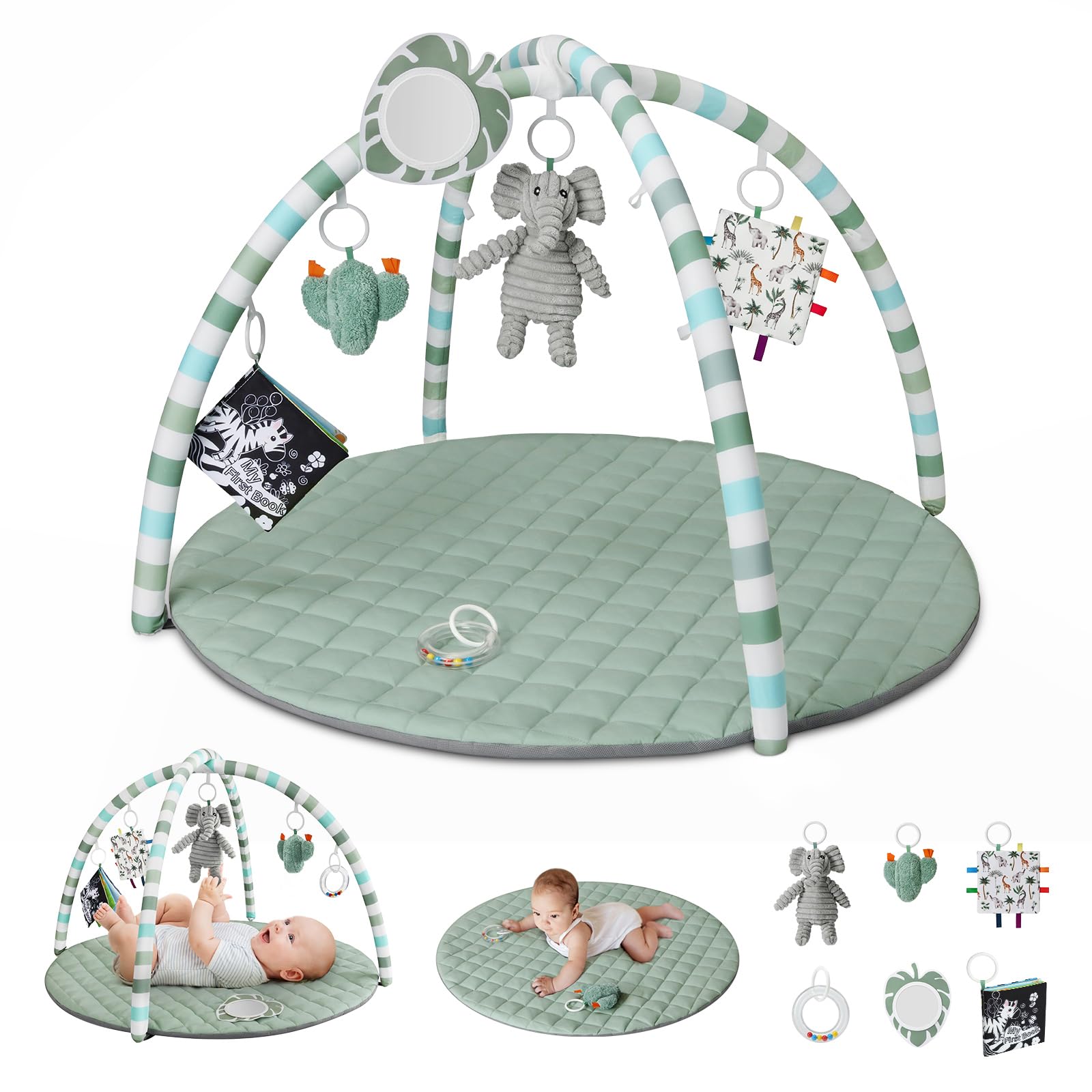
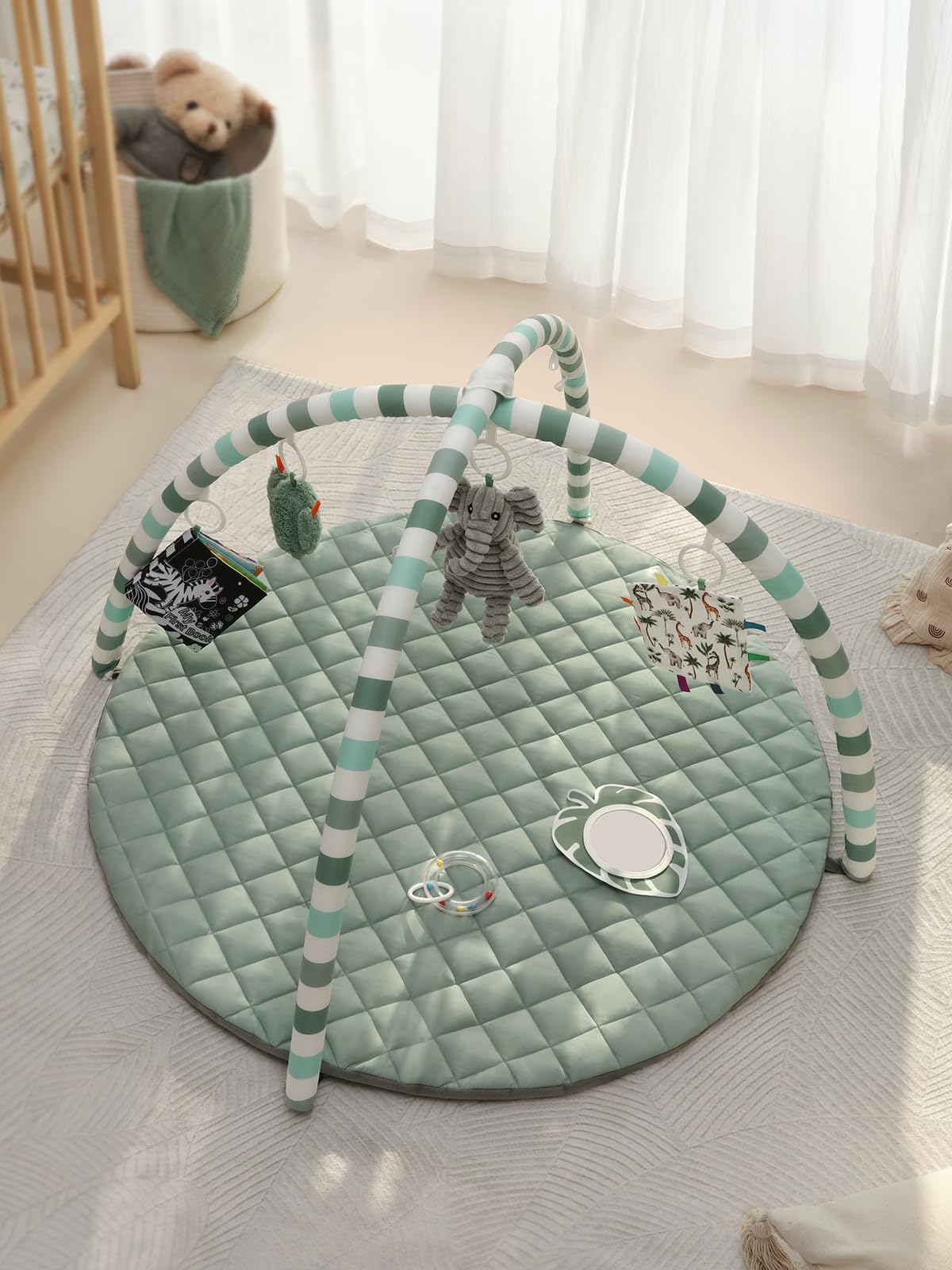
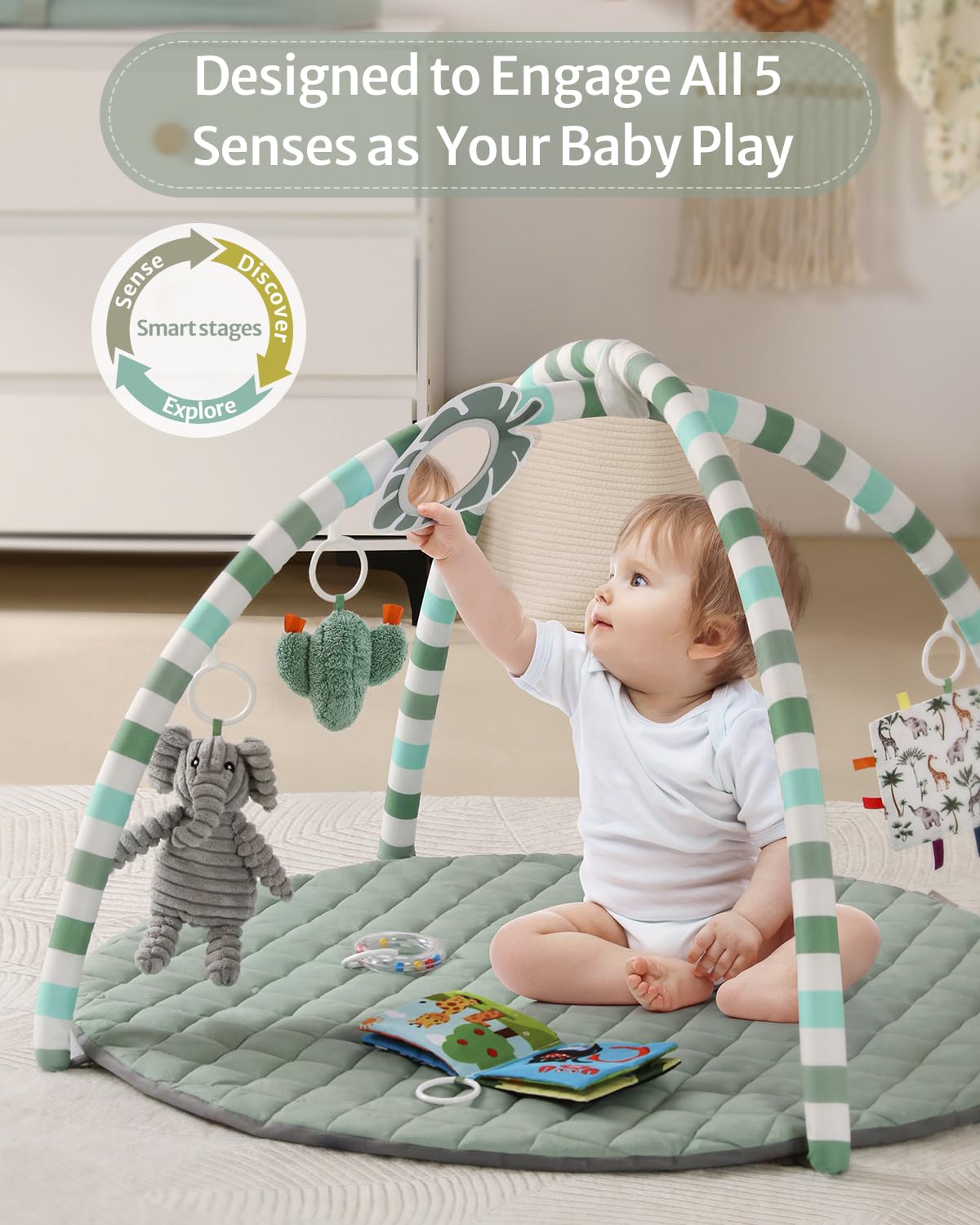
Blissful Diary Baby Play Gym Mat, Play Mat Activity Mat with 6 Detachable Toys for Stage-Based Sensory & Motor Skill Development, Easy to Install & Clean, Baby Essentials Gift, Sage Green
- Newborn Baby Essentials - The baby play gym is designed to develop stage-based sensory and motor skill. The so
- All-Round Early Development - The activity gym has 6 detachable toys which fully engage 5 senses as your baby
- Easy to Assemble & Take Down - The tummy time activity mat's size is 33.46x33.46 inch, crafted using ethically
A quick word of caution: product descriptions often promise a lot about "developing" senses and motor skills. A mat does not make your baby develop faster. What develops your baby is time spent practising, with you nearby. The mat just makes the practice more comfortable and gives you something to point at.
Tummy time and safe sleep: the bit that gets muddled
Parents sometimes ask me, "If tummy time is good, why not let them sleep that way?" The reason is that sleeping and playing are very different states. Awake, your baby can lift and turn their head, and you are watching. Asleep, the protective reflexes that rouse a baby are quieter, and tummy sleeping is linked with a higher risk of SIDS. So the rule is simple: tummy to play, back to sleep, every time.
3. Tummy Time in the First Month: Weeks 0 to 4
In the first month, aim for one to three minutes at a time, a few times a day, and start with positions on your body rather than on the floor.
A newborn's neck muscles are very weak, and that is completely expected. You are not building strength yet so much as introducing the position, so your baby gets used to it before it asks much of them. Think of this month as a gentle introduction.
What your baby can do at this stage
If your baby cannot lift their head at all in the first couple of weeks, that is normal. Newborns get better gradually, and the lifts are tiny at first.
Position 1: Chest to chest
This is the easiest way to start. Lie back on a sofa or bed with your upper body slightly reclined (propped on pillows, not flat). Place your baby on your chest, tummy down, with their head turned to one side and their cheek resting on your skin. Keep your hands on their back. Talk to them, sing, or just breathe together. They get the tummy time position, you get the cuddle, and they are warm and secure.
If you feel yourself getting sleepy, stop. Parents falling asleep with a baby on their chest is a real safety concern, particularly on sofas and armchairs. Have a second adult nearby, or move to the floor.
Position 2: The football hold (tummy down carry)
Slide your forearm under your baby's tummy with their head resting in the crook of your elbow and their legs straddling your arm. Hold them against your side. Many babies who hate the floor love this one, and it is also a good way to settle a windy baby.
Position 3: Lap soothe
Lay your baby across your lap, tummy down, with their head supported on your knee and your hand patting their back. You are close, your voice is right there, and the slight incline helps if they are a bit uncomfortable.
Position 4: Floor time with a blanket
Once your baby is calm, try the floor for a minute or two. A folded blanket or a play mat is fine. Lie down so your face is a short distance from theirs. High contrast black and white cards placed a hand's width in front of their face can encourage them to look up, and simple faces work even better.
How to build up
Here is a realistic first month plan:
Making it more interesting
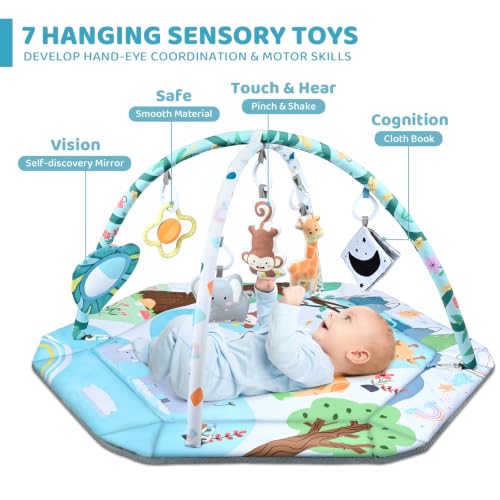
Newborns have limited vision, so what you give them to look at should be simple. A mirror at eye level (unbreakable), a high contrast card, or your face is plenty. If you are looking for a basic mat with a few hanging toys and a mirror, something like the [STACTCUTE baby play mat](PRODUCT_LINK_PLACEHOLDER) covers the essentials at a modest price, though again, the real magic is you getting down to their level.
What if my baby cries every time?
In the first month, a few minutes of fussing is normal; sustained crying is not a sign to power through. If your baby is crying hard, pick them up, comfort them, and try again later, perhaps in a different position. We will talk more about this in section 6. If breastfeeding or feeding feels stressful at the same time, remember that the two are connected, since a hungry or uncomfortable baby will not enjoy any position. If you are worried about feeding, signs that breastfeeding is not working are worth reading about, because an unsettled baby is often a hungry baby.
4. Tummy Time at 2 Months: Building Strength
At 2 months, aim for sessions of 3 to 5 minutes (stretching toward 10 for some babies), two to four times a day, with your baby pushing up on their forearms and lifting their head more steadily.
Something shifts around week six to eight. Your baby becomes more awake, more social and more curious. They start to smile at you, follow your face and enjoy being engaged. This is the sweet spot for tummy time, because they now have a reason to lift their head: to look at you.
What you might see
The CDC's revised milestones list "holds head up when on tummy" around 2 months, which tells you roughly where most babies are. Remember that milestone charts describe what most babies do, and a few weeks either way is perfectly normal.
How long and how often?
The AAP's healthychildren.org guidance suggests building toward a total of 15 to 30 minutes of tummy time per day by around 7 weeks, which sounds like a lot until you remember it is the sum of lots of small sessions. In practice, that might look like:
Do not worry if you are not hitting the total exactly. Several tiny sessions throughout the day are fine, and the chest to chest and football hold positions count too.
Note that the WHO figure is for infants who are not yet mobile across the whole first year, and it is a target to grow toward, not a daily minimum for a one month old.
Make it social
At 2 months, babies are starting to love faces. Use this:
This is also the time when emotions become more visible. If you are curious about what your baby is feeling when they grin or fuss, what your baby feels from 3 to 12 months is a helpful read.
Mats and gyms at this age
Many parents start looking at play gyms around now, as their baby becomes more alert. If you do, remember that overhead toys are mostly for back time; when your baby is on their tummy, you want something at floor level. The [Baby Einstein 4 in 1 Kickin' Tunes play gym](PRODUCT_LINK_PLACEHOLDER) includes a tummy time pillow and a kick piano, and the [Fisher-Price Glow and Grow Kick & Play Piano Gym](PRODUCT_LINK_PLACEHOLDER) has a removable piano with lights and music. Both let you swap between lying back and tummy time modes.


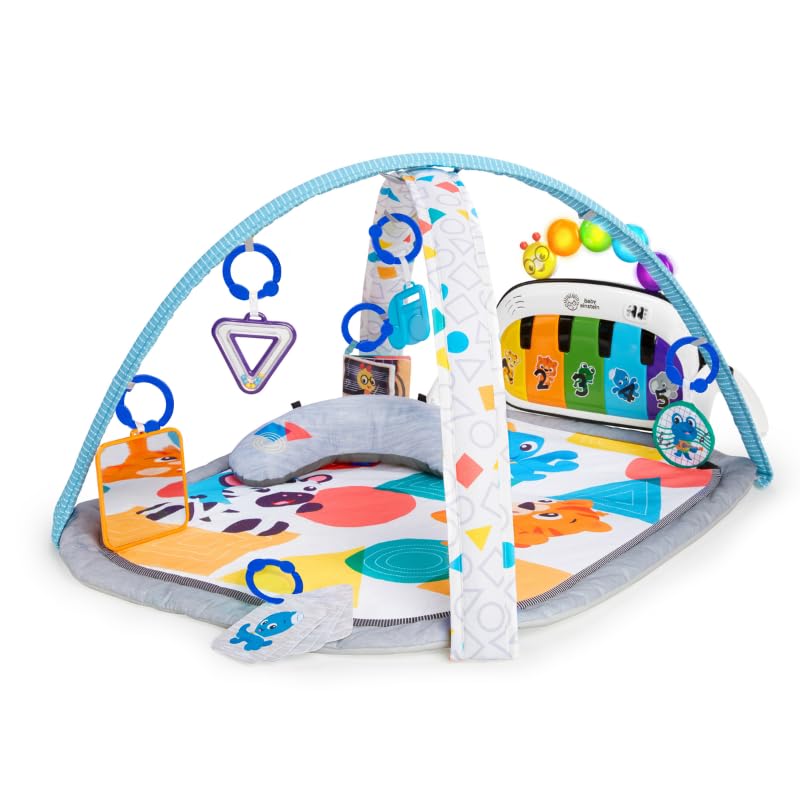
Baby Einstein 4-in-1 Kickin' Tunes Music and Language Play Gym and Piano Tummy Time Activity Mat
- The best-selling Baby Einstein 4-in-1 Kickin’ Tunes Music & Language Discovery Activity Gym supports fine and
- 4 modes include lay and play, sitting up, tummy time, on the go; Helps baby strengthen neck muscles during tum
- 7 sensory toys engage and promote fine and gross motor skills like reaching, pressing, and kicking; crinkle me
If you do buy one, I suggest keeping the music volume low. Constant lights and sound can overstimulate a young baby, and an overstimulated baby is not a happy tummy time baby.
Tummy time and sleep: a quick link
Parents often ask whether tummy time helps with sleep. There is no firm evidence that it does, but a baby who has had some active floor time during the day often feels more settled in the evening, and that is a perk. If sleep is a struggle at the moment, you may find a paediatrician's view on how sleep shapes children's mental health useful context, since good sleep and good play are closely linked.
5. Tummy Time at 3 Months: Pushing Up and Looking Around
By 3 months, most babies can lift their head to about 90 degrees and prop on their forearms, and your goal is to work toward roughly 30 minutes of tummy time across the day, in several short sessions.
This is where all that practice starts to pay off. Your baby may now lift their chest off the floor, look around the room, and bat at toys. Their neck is stronger, their vision has improved, and they are more interested in the world.
What you might see
The CDC places pushing up onto elbows or forearms on tummy at around 4 months. If your baby is a bit earlier or a bit later, that sits within the normal range.
How much and how often?
Aim for 3 to 6 sessions a day of 5 to 10 minutes each, building toward a daily total of about 30 minutes, which matches WHO and Canadian movement guidance for infants who are not yet crawling. Some babies reach this by 3 months; others take until 5 or 6 months. If you are behind, simply add one more session rather than extending a single one.
New positions to try
Tummy time on a play mat. The classic. Add toys at your baby's eye level, not above them.
Tummy time over your legs. Sit with your legs outstretched, and drape your baby across your thighs. You can bounce gently or sing while they lift their head.
Tummy time on a wedge or rolled towel. Gives a little incline and helps babies who find the flat floor hard work.
Side lying play. Not strictly tummy time, but a great way to introduce a different posture and give the neck a different stretch. Place your baby on their side with a rolled blanket behind their back, and put a toy within reach. Stay close.
Tummy time with a mirror. Babies love faces, and their own face is a fascinating one.
Do I need a gym or mat at this age?
Honestly, no. But if you want a bit of variety, a mat with a little more going on can hold attention for those precious extra minutes. The [Blissful Diary 5 zone play gym](PRODUCT_LINK_PLACEHOLDER) comes with an activity guide and sensory toys including a high contrast ball and mirror, and it grows with your baby. It costs more than the others, so I would only go there if the price feels reasonable to you.
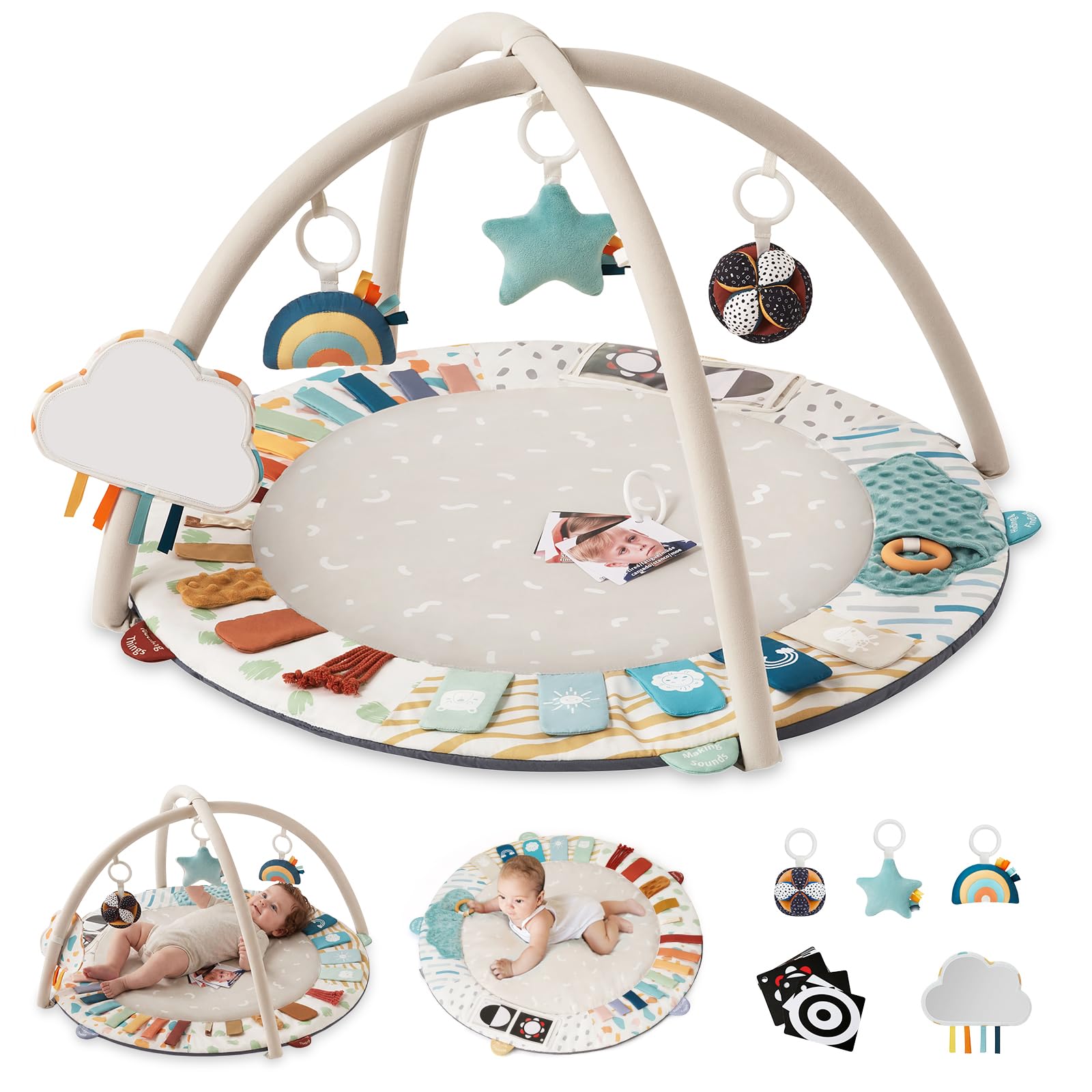
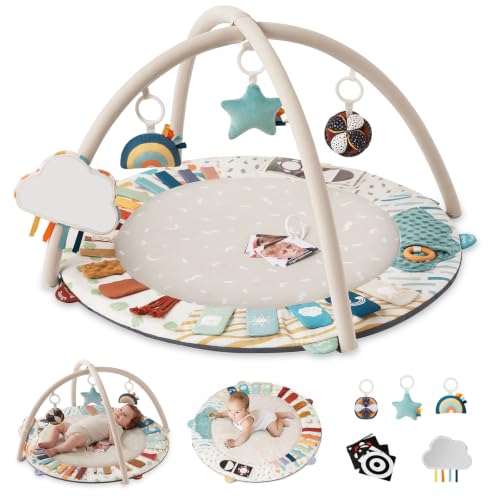
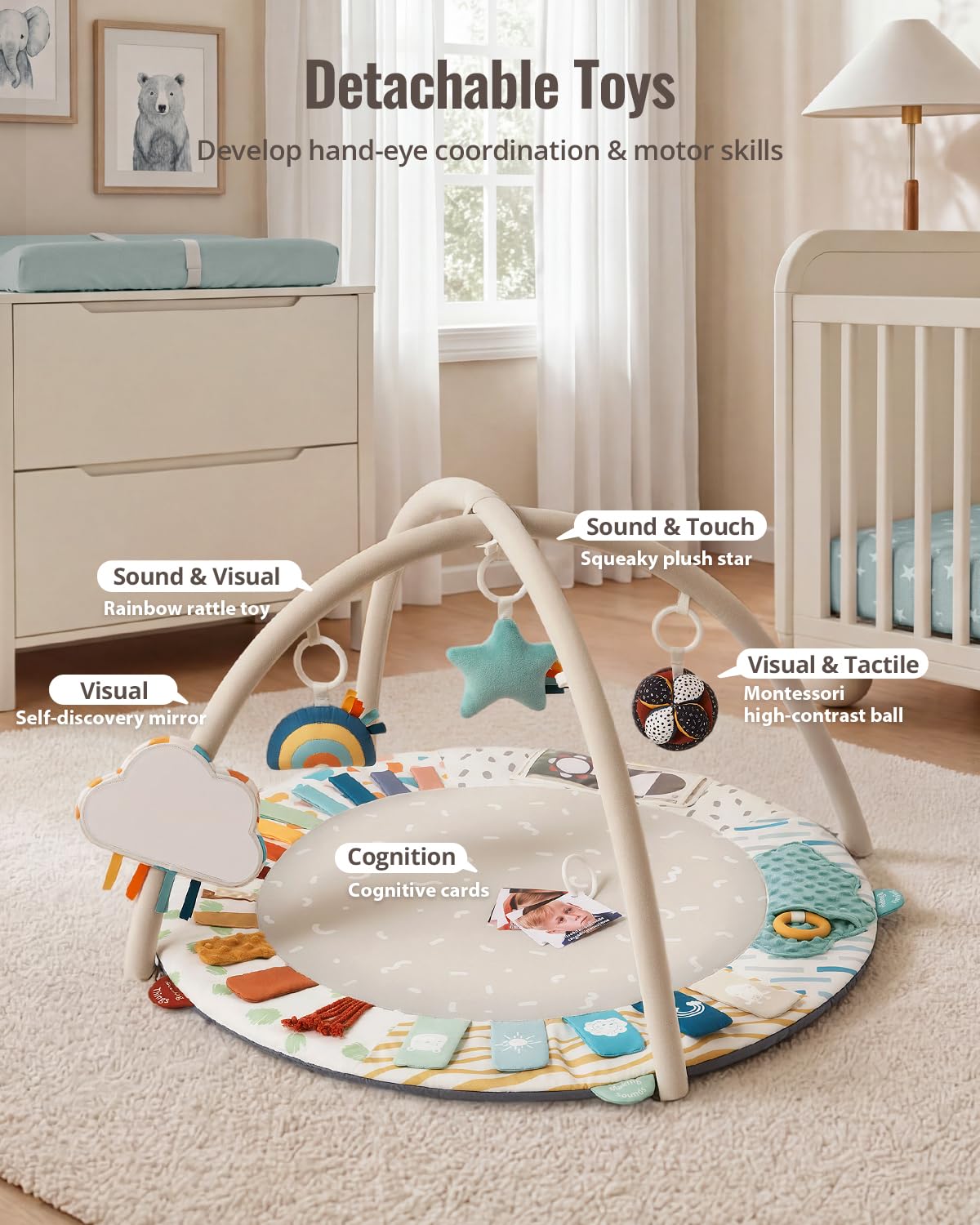
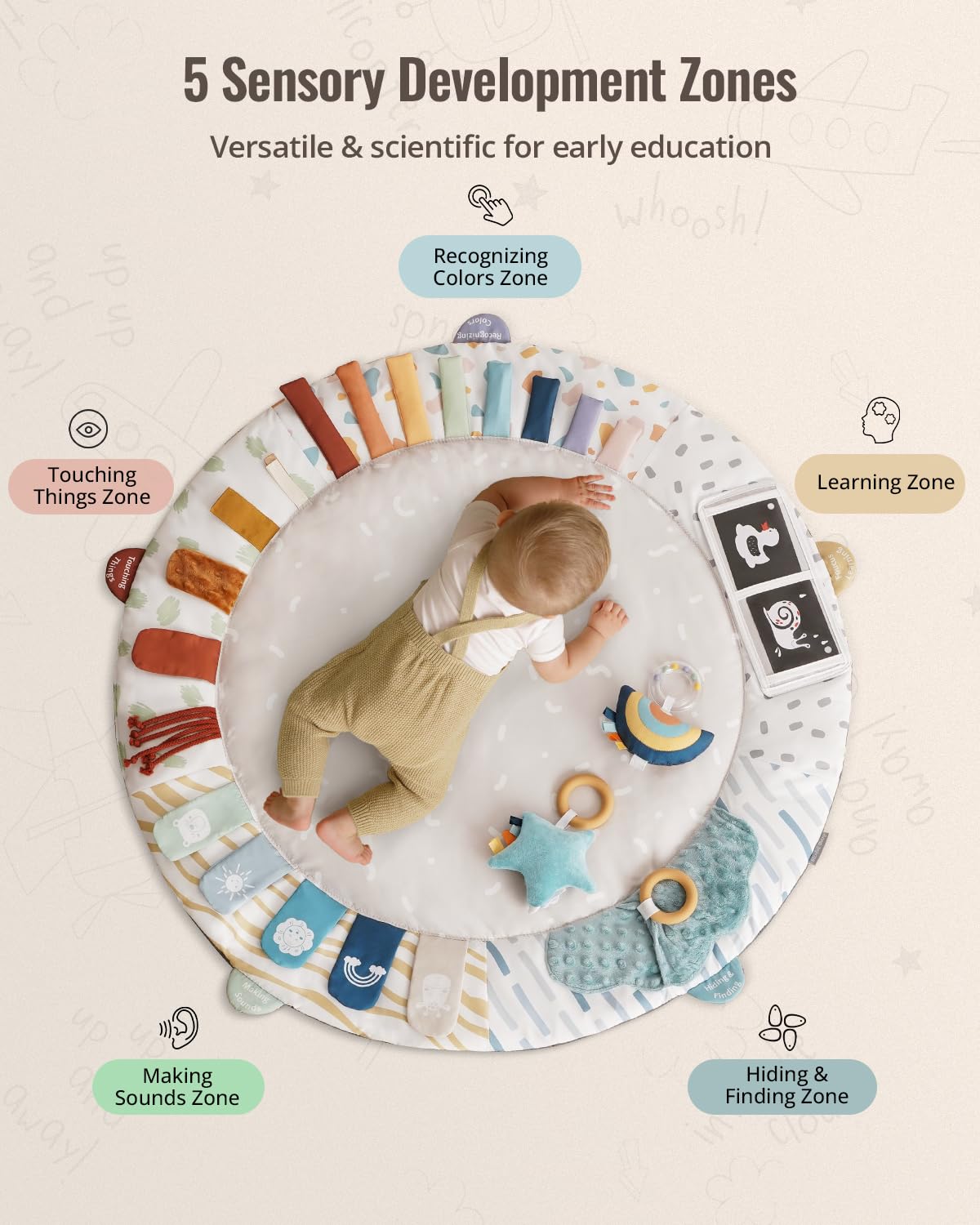
Blissful Diary Baby Play Gym, 5 Development Zones Activity Tummy Time Mat
- Grow With Your Baby: The baby play gym is designed with 5 developmental zones (Learning, Hide & Find, Sound, T
- Early All-around Development: Includes 5 detachable sensory toys: Montessori high-contrast ball, self-discover
- Soft & Comfortable Play Mat: This baby activity mat is made from high-quality fabrics with thick texture. It c
For a more budget friendly option, the [Fisher-Price piano gym](PRODUCT_LINK_PLACEHOLDER) mentioned earlier is a widely owned choice. Whatever you pick, check that it has no loose small parts, wipe it down regularly and remove hanging toys when your baby is on their tummy.
Let tummy time evolve
By 3 months, tummy time should start to look like play, not exercise. A few ideas:
A word on sleep regressions
Developmental leaps can sometimes coincide with changes in sleep. If your baby suddenly starts waking more often, it may be linked to the 4 month sleep change. A baby sleep regression chart can help you recognise the pattern. Keep up daytime tummy time through those weeks, since the extra movement practice can be a good thing even when nights are rough.
6. Troubleshooting: Fussy Babies, Reflux, Flat Heads and Red Flags
If your baby hates tummy time, the fix is almost always shorter sessions, different positions and better timing, not giving up.
This is the section I wish every parent had in their back pocket, because it is where most worries live.
"My baby screams as soon as I put them down"
Very common, and usually it is one of five things:
Try several tiny sessions: 30 seconds, then a cuddle, then another 30 seconds. It adds up. And do not take it personally; a baby who fusses on the floor is not telling you that you are doing it wrong, only that this is hard work.
Reflux and spitting up
If your baby has reflux or spits up a lot, tummy time can feel uncomfortable after feeds. Wait at least 30 minutes after feeding, keep sessions short, and try the football hold or the lap position, which give a gentle slope. If your baby is arching, crying in pain, refusing feeds or not gaining weight, talk to your doctor, because that is more than simple reflux and may need treatment.
Flat head (positional plagiocephaly)
Babies' skulls are soft and shape easily. The Mawji study I mentioned earlier found that nearly half of babies had some degree of flattening in the first three months. Mild flattening is very common and usually improves as your baby gets more mobile. What helps:
Helmets are rarely needed and are not part of routine advice for mild cases. If the flattening looks significant, or your baby's ears or forehead appear to be shifting, ask your doctor or health visitor to take a look.
Torticollis and a baby who prefers one side
If your baby always turns their head to one side, tilts it, or resists turning the other way, they may have torticollis, which is a tightness in the neck muscles. It is treatable, usually with simple stretches and positioning, and early help makes a difference. Ask your doctor for a referral to a paediatric physiotherapist.
When to call your doctor
Also stop tummy time and seek urgent help if your baby turns blue, gasps, has trouble breathing, or goes limp.
Premature babies
If your baby was born early, use their corrected age (the age they would be if born on their due date) when thinking about milestones. A baby born at 32 weeks will be roughly 8 weeks behind on a typical timeline, and that is normal. Ask your neonatal team how they would like you to approach tummy time, because some premature babies need extra care.
Making it stick when you are exhausted
Tummy time often falls off a busy day's to do list. A few ways to protect it:
Mats for older babies
If your baby is a roller or a wriggler, a larger mat with a raised edge can be useful. The [Jyusmile baby gym play mat](PRODUCT_LINK_PLACEHOLDER) is a bigger, 8 in 1 style mat with a surrounding fence that you can also use as a ball pit later (balls are not included, and loose balls are not appropriate for a young baby). Treat the fence as a way to keep toys in, not as a safety barrier that frees you to look away.


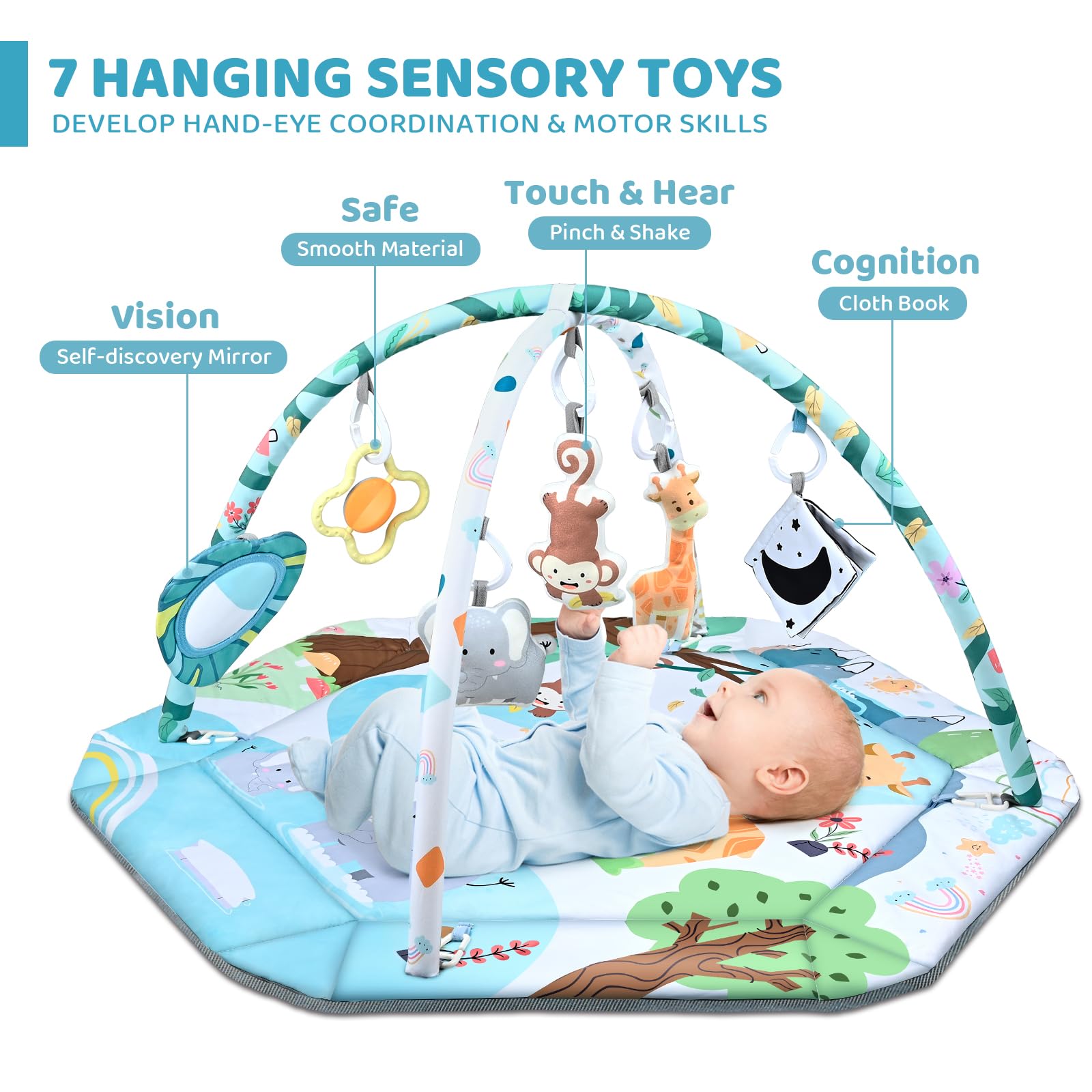

Baby Gym Play Mat, 8-in-1 Tummy Time Mat & Ball Pit with 6 Toys, Washable Baby Activity Play Mat for Visual, Hearing, Sensory, Motor Development, Baby Toys Gift for Toddler Infant 0-3-6-9-12 Months
- 8-in-1 Baby Activity Play Mat - Our baby play mat with a forest theme comes with some interesting enlightenmen
- All-Round Early Development - The baby play gym is designed to develop stage-based sensory and motor skills. T
- Multipurpose Baby Gym Center - Our baby gym play mat measures 43" x 39", providing babies plenty of space for
Comparing Play Mat and Gym Options
If you have decided you would like a dedicated mat, here is a quick comparison. None of these is essential, and a folded blanket does the job just as well. Prices are approximate and may change.
| Option | Best Age Range | Primary Benefits | Main Drawbacks | Recommended Product | Price Range |
|---|---|---|---|---|---|
| Music and light piano gym with tummy time pillow | Newborn to toddler | Multiple play modes, includes a tummy time pillow, lots of sensory toys | Pricier; music and lights can overstimulate a young baby | Baby Einstein Kickin' Tunes play gym | $49.97 |
| Soft foldable mat with detachable toys | Newborn to 6 months | Tool free setup, easy to wipe and store, calm design | Smaller mat; fewer features | Blissful Diary sage green play gym | $39.99 |
| Simple mat with five hanging toys | 0 to 6 months | Budget friendly, rattles and reach toys | Fewer reviews; basic design | STACTCUTE baby play mat | $39.99 |
| Piano gym that grows with baby | Newborn to 12 months | Removable piano, lights and sounds, learning levels | Electronic features may be too much for a newborn | Fisher-Price Glow and Grow piano gym | $42.97 |
| Larger mat with raised edge | 3 months and up | Roomy, doubles as a play space for older babies | Takes more floor space; the edge is not a safety barrier | Jyusmile baby gym play mat | $39.99 |
| Five zone gym with activity guide | Newborn to toddler | Detachable high contrast toys, guided activities | Highest price; fewer reviews | Blissful Diary 5 zone play gym | $69.99 |
Expert Insights
Here is where the major organisations land, in their own words where I can quote them accurately and in my own summary where I cannot.
That WHO recommendation applies to babies who are not yet mobile, and it is the ceiling to build toward across the first months, not a requirement for a newborn.
The AAP's guidance, as summarised on healthychildren.org, is to start tummy time from the early days, begin with a few minutes once or twice a day, and gradually increase as your baby gets stronger and more comfortable. Its safe sleep policy statement of 2022 is equally clear that babies should always be placed on their backs to sleep.
The CDC's developmental milestones give a reassuring map of what to expect: head lifts around 2 months, pushing up onto forearms around 4 months. They also stress that milestones are guides, and that you should tell your doctor if you have any concerns.
From my own clinic experience, the parents who do best are the ones who relax about the numbers. They do some tummy time every day, they pay attention to their baby's cues, and they ask for help early if something does not feel right.
Frequently Asked Questions
Key Takeaways
Conclusion
Tummy time is one of those jobs that sounds simple until you are on the floor with a furious two month old and a pile of laundry. But those few minutes are some of the most useful you will spend in the early months: strengthening your baby, shaping their view of the world, and giving you a daily moment of face to face play.
Here is the sentence I would like you to remember: a little tummy time, done often and with love, beats a lot of tummy time done through tears.
Start small, follow your baby's lead, and be kind to yourself on the days it does not go to plan. If this guide helped, save it for your next tummy time slump, share it with a friend who has a new baby, and subscribe to tinymindsworld.com for more clinic tested advice.
Sources & References
- American Academy of Pediatrics. "Back to Sleep, Tummy to Play." HealthyChildren.org. https://www.healthychildren.org/English/ages-stages/baby/Pages/Back-to-Sleep-Tummy-to-Play.aspx
- Moon RY, Carlin RF, Hand I; AAP Task Force on Sudden Infant Death Syndrome. "Sleep-Related Infant Deaths: Updated 2022 Recommendations for Reducing Infant Deaths in the Sleep Environment." Pediatrics. 2022;150(1):e2022057990.
- World Health Organization. "Guidelines on physical activity, sedentary behaviour and sleep for children under 5 years of age." 2019. https://www.who.int/publications/i/item/9789241550536
- Centers for Disease Control and Prevention. "Learn the Signs. Act Early. Milestones by age." https://www.cdc.gov/ncbddd/actearly/milestones/index.html
- Hewitt L, Kerr E, Stanley RM, Okely AD. "Tummy Time and Infant Health Outcomes: A Systematic Review." Pediatrics. 2020;145(6):e20192168.
- Mawji A, Vollman AR, Hatfield J, McNeil DA, Sauvé R. "The Incidence of Positional Plagiocephaly: A Cohort Study." Pediatrics. 2013;132(2):298.
Frequently Asked Questions
When can I start tummy time with my newborn?
How long should tummy time be for a 1 month old?
Does tummy time on my chest count?
My baby hates tummy time. What should I do?
Can my baby sleep on their tummy if they fall asleep during tummy time?
Does tummy time prevent a flat head?
Do I need to buy a play mat or gym?
Was this helpful?
Thanks — your feedback helps us pick what to write next.


