
What Age Does Tween Start? A Paediatrician's Clear Answer
Most paediatric and child development experts define "tween" as ages 8 to 12, the stretch between early childhood and the true teen years.

In this article
Ask ten parents when their child stopped being "a kid" and started being "a tween," and you will get ten different answers, usually tied to some specific moment: the day she asked for privacy in the bathroom, the day he rolled his eyes at a joke that used to make him laugh, the day the toy aisle stopped being interesting. According to the American Academy of Pediatrics, the tween years, generally ages 8 to 12, represent one of the most significant periods of brain and body change outside of infancy, yet it is also one of the least talked about in mainstream parenting advice. Most books cover toddlers or teenagers. The years between get a shrug and a marketing term borrowed from the word "between."
In this article, you will understand:
1. What Age Range Actually Counts as "Tween"?
The tween years generally run from age 8 to age 12, though you will see some sources narrow it to 9 to 12 or stretch it to include 13.
The word itself is a marketing invention from the 1980s, not a clinical term, which is exactly why the boundaries feel fuzzy. Retailers coined "tween" to describe the demographic sitting between "kid" and "teen," a group old enough to have opinions about clothes and music but too young for full teen marketing. Paediatricians and developmental psychologists later adopted the term because it usefully describes a real developmental phase, even though it was never designed as a clinical category the way "infant" or "adolescent" are.
The tween years, roughly ages 8 to 12, are marked by rapid brain development second only to the first three years of life.
— American Academy of Pediatrics (2023)
That quote matters because it grounds a marketing term in real biology. The AAP's framing of ages 8 to 12 has become the most commonly cited definition in paediatric literature, and it lines up with when most children begin the early hormonal shifts of puberty, even if visible physical changes have not started yet.
Why the Range Feels Blurry
- Some organisations, including certain school psychology groups, start the tween window at 9 because that is when self conscious social comparison reliably increases. - Retail and media use "tween" loosely for ages 8 to 14, which confuses parents trying to find a clinical answer. - Individual development varies so widely that a calendar age is only ever a rough guide, not a diagnosis.
What This Means for Your Family
If your seven year old is already asking to pick her own outfits and negotiating bedtime like a lawyer, that is not "too early" to be tween like. If your twelve year old still wants bedtime stories, that is not "behind." The age range is a useful planning tool, not a strict rulebook.
2. How Puberty Timing Changes the "Tween Start" Answer
Puberty, not birthdate, is often the real trigger point that makes a child feel like a tween, and puberty can start anywhere from age 8 to age 13.
This is the piece that trips up a lot of parents. You can have two nine year olds in the same classroom, one who is biologically still very much a "little kid" and one who has already started breast budding or testicular growth. Both are perfectly normal, and both are, by the standard definition, tweens. But their day to day experience of being a tween looks completely different.
Girls Typically Start Earlier
- Breast development often begins between ages 8 and 13 - The average age for the first period in the United States sits around 12, though anywhere from 10 to 15 is considered typical - Growth spurts frequently arrive a year or two before the period starts
Boys Typically Start Slightly Later
- Testicular growth, the first visible sign of puberty in boys, usually begins between ages 9 and 14 - Voice changes and growth spurts tend to lag behind the earliest hormonal shifts by a year or more - Facial hair and other visible markers often do not appear until well into the young teen years
Understanding these ranges in detail, including when a variation is worth a doctor's visit, is covered thoroughly in this breakdown of puberty timelines and when to call your paediatrician, which is worth bookmarking regardless of your child's current age, since the "normal" window is wider than most parents expect.
3. Brain Development: The Real Engine Behind "Tween" Behaviour
The tween brain undergoes a dramatic reorganisation starting around age 8, and that reorganisation, not the calendar, is what actually produces "tween behaviour."
Between roughly ages 8 and 12, the brain begins a long process of pruning unused neural connections while strengthening the ones that get used often, particularly in areas tied to social reasoning, emotional processing, and reward sensitivity. This is also when the prefrontal cortex, the part of the brain responsible for planning, impulse control, and weighing consequences, starts its slow, multi year march toward maturity, a process that will not fully finish until the mid twenties.
Between ages 8 and 12, children experience a surge in brain connectivity related to social reasoning that helps explain why peer relationships suddenly matter so much more.
— National Institute of Mental Health (2022)
What This Looks Like Day to Day
- ✓ Sudden intense interest in what friends think, sometimes more than what parents think - ✓ Mood swings that seem to come out of nowhere, tied to fluctuating stress hormone sensitivity - ✓ New capacity for abstract thinking, sarcasm, and understanding other people's perspectives - ✓ Increased risk taking curiosity, even before any physical puberty signs appear
Understanding why play, not just structured activity, remains crucial to this brain development is explored in depth in this piece on why unstructured play still matters at this age, which explains how imaginative and physical play continues to build the same neural pathways that formal academic work does not reach.
For a fuller picture of what counts as typical emotional behaviour at this stage versus what warrants extra support, what's considered normal tween behaviour and emotion lays out the specific patterns paediatricians watch for.
4. Physical Milestones That Mark the Start of the Tween Years
Physical growth spurts and early body changes are usually the first visible sign that a child has entered the tween stage, often appearing before any emotional or social shifts are obvious.
Growth during these years is famously uneven. A child might grow two inches in three months and then not grow again for half a year. This is completely normal and reflects the same hormonal surges driving puberty, even in children who have not started other visible changes yet.
Common Physical Signs, Roughly Ages 8 to 12
- ✓ Growth spurts in height, often preceding weight gain, which can temporarily make a child look "lanky" - ✓ Increased appetite that can feel almost constant - ✓ Early body odour, often the very first sign parents notice, sometimes starting as young as 8 - ✓ Skin changes including early oiliness around the nose and forehead - ✓ Changes in sleep needs, with many tweens needing more sleep than they did as younger children, not less
Skin changes in particular catch a lot of parents off guard because they assume acne is a teen problem. It is not. Managing early oiliness and breakouts is covered thoroughly in managing oily skin and early acne during puberty, which walks through gentle, age appropriate routines that will not overwhelm a child's changing skin.
Sleep also shifts meaningfully during this window, and getting it right matters more than most parents realise for mood, growth, and school performance. The specifics of how much sleep tweens genuinely need, and why so many are chronically short on it, are laid out in how much sleep your tween actually needs.
5. Social and Emotional Shifts That Signal the Tween Stage Has Begun
Increased peer influence and a growing need for privacy are usually the clearest social signs that a child has entered the tween years, typically becoming noticeable between ages 9 and 11.
Where a younger child's world revolves largely around parents and immediate family, the tween world starts to reorganise around friend groups, social status, and comparison. This is not a rejection of you. It is a developmentally necessary rehearsal for the independence that comes later.
Social Signs to Watch For
- ✓ Wanting closed doors, private conversations, or a diary - ✓ Friend group drama that feels intensely important, even over small disagreements - ✓ Increased comparison to peers around appearance, possessions, or achievement - ✓ New interest in social media, texting, or online gaming communities - ✓ Testing boundaries with more sophisticated arguments than a younger child would attempt
By age 10, most children rank peer approval as equally or more important than parental approval in specific social contexts, a shift that is developmentally appropriate rather than alarming.
— Society for Research in Child Development (2021)
School becomes a bigger emotional stage during these years too, both socially and academically. If you are noticing new friction around homework, organisation, or motivation, what parents need to know about tween school success breaks down what shifts are typical and where extra support genuinely helps.
It is also worth remembering that neurodivergent tweens may hit these social markers on a different timeline or express them differently altogether, and that variation is entirely normal. A complete guide to neurodiversity in tweens is a useful resource if your child's social development does not match the typical pattern described above.
6. When Tween Development Signals a Need for Extra Support
Most tween changes, physical, emotional, and social, are normal, but a few specific patterns are worth flagging to your paediatrician rather than waiting them out.
Knowing the difference between "this is a phase" and "this needs a professional opinion" is one of the most common questions I get in clinic. Here is the honest breakdown.
Generally Normal, No Action Needed
- ✓ Occasional moodiness or irritability that resolves within a day or two - ✓ Growth spurts that come in bursts rather than steadily - ✓ New interest in privacy, friend drama, or appearance - ✓ Puberty starting anywhere between ages 8 and 13
Worth a Conversation With Your Paediatrician
- Puberty signs appearing before age 8 in girls or age 9 in boys - No puberty signs at all by age 13 - Persistent sadness, withdrawal, or anxiety lasting more than two weeks - Sudden, dramatic changes in appetite or sleep that do not resolve - Extreme difficulty with friendships or a complete loss of interest in previously enjoyed activities
For a broader sense of what typical development looks like across this entire age band, including cognitive, social, and physical milestones side by side, milestones parents need to know for 9 to 12 year olds is a helpful reference to keep handy through the coming years.
Comparing the Tween Years by Stage
| Stage | Typical Age Range | What's Happening | Common Parent Concerns | Recommended Product |
|---|---|---|---|---|
| Early tween | 8 to 9 | First hormonal shifts, early body odour, growing independence | "Is this too early?" | R RUCKERCO Girls DIY Diary Set |
| Mid tween | 10 to 11 | Growth spurts, social comparison, early skin changes | Mood swings, friend drama | Lip Smacker Pink Lemonade Glam Bag Set |
| Late tween | 12 | Visible puberty progress, stronger opinions, privacy needs | Preparing for teen years | CHESACE Birthday Gift Basket for Teens |
| Puberty onset, girls | 8 to 13 | Breast development, growth spurt, eventual first period | Timing worries | Suhctuptx Gifts for Teenage Girls Set |
| Puberty onset, boys | 9 to 14 | Testicular growth, later voice change and growth spurt | Delayed changes | JTEWB Birthday Gift Box for Girls |
| Celebrating the transition | 11 to 13 | Milestone birthdays, first "grown up" gifts | Finding age appropriate gifts | MHSMHL Gifts for Teen Girls Set |
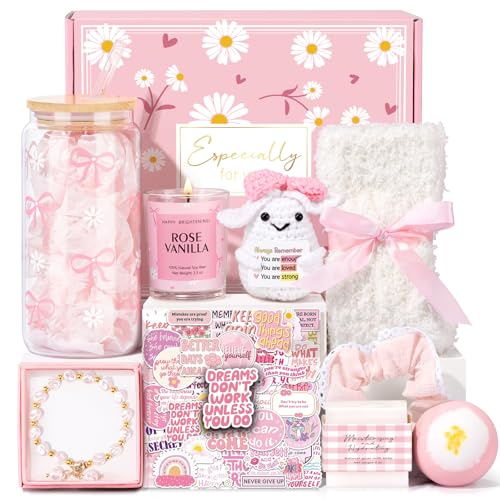



Gifts for Teenage Girls, Teen Girl Gifts Trendy Stuff, Birthday Gifts Preppy Valentines Day Gift for Teen Girls Coquette Cute Set for Girly Tween 12-14 Sweet 16-18 Daughter Sister Niece Friend Pink
- GIFTS FOR TEENAGE GIRLS: Searching for a gift she’ll actually love? This sweet and inspirational pink gift set
- TEEN GIRL GIFTS TRENDY STUFF: This set includes 11 trendy girl items: Daisy glass cup with lid and straw, posi
- INSPIRATIONAL GIFT FOR TEEN GIRLS: This gift set is designed to boost her confidence and brighten her day. Fro
Expert Insights
Watching your child move through these years can feel like standing at the edge of something new, part pride, part grief for the little kid who is quietly stepping back to make room for someone more complicated and more interesting. There is no exact birthday that flips a switch. The tween years arrive gradually, on their own biological schedule, and your job is simply to notice, stay steady, and keep the door open. If you found this useful, save it for the moment you need it again, and share it with another parent who is standing at that same edge, wondering what just happened to their kid.
Sources & References
- American Academy of Pediatrics. "Middle Childhood: Ages 8 to 12 Years." 2023. healthychildren.org
- National Institute of Mental Health. "The Teen Brain: 7 Things to Know." 2022. nimh.nih.gov
- Society for Research in Child Development. "Peer Relationships in Middle Childhood." 2021. srcd.org
- Kaiser Permanente Division of Research. Greenspan L. "Puberty Timing Trends in American Girls." 2020.
- Seattle Children's Hospital. Breuner CC. "Early Signs of Puberty in Children." 2021. seattlechildrens.org
- Icahn School of Medicine at Mount Sinai. Trachtenberg J. "Guiding Families Through Preadolescence." 2022.
Frequently Asked Questions
What age does tween officially start?
Can a seven year old already be a tween?
Is 13 still considered a tween or already a teen?
Do girls become tweens earlier than boys?
What is the biggest difference between a tween and a teenager?
Why do some of my child's friends seem so much more "grown up" already?
Should I talk to my child about puberty before the tween years officially start?
Was this helpful?
Thanks — your feedback helps us pick what to write next.