Why Play Is How Preschoolers Actually Learn, Not Just Have Fun
Play is not a break from learning for preschoolers, it is the primary way their brains build language, math, social skills, and emotional control, which is why leading child development groups recommend hours of unstructured and guided play every day.
In this article
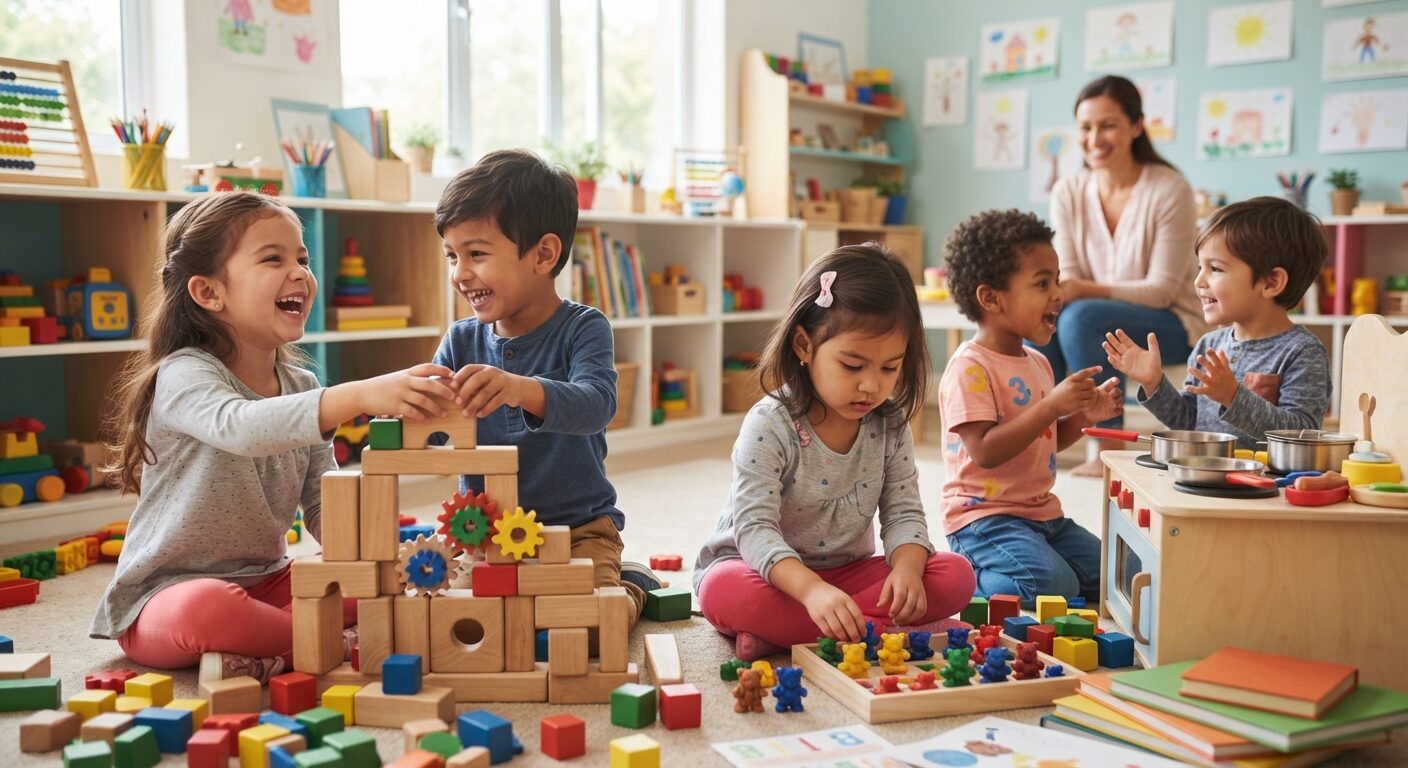
If you've ever watched a three year old spend twenty minutes lining up plastic animals by color, then suddenly declare them a "zoo family" going on an adventure, you've watched more brain development happen in that stretch than most flashcard sessions manage in a week. The American Academy of Pediatrics has stated plainly that play is essential to healthy brain development, and a 2018 clinical report from the AAP found that time for free and unstructured play has been declining for decades in American childhoods, even as pressure to accelerate academic skills has grown. That gap matters, because the research keeps pointing the same direction: play is not the opposite of learning, it is the engine of it.
In this piece, you'll come to understand:
1. What the Research Actually Says About Play and Learning
The direct answer is that decades of developmental research show play activates the same brain systems used for language, math reasoning, emotional regulation, and social problem solving, which is why it produces measurable academic gains later on.
This isn't a fuzzy feel good claim. Researchers at Temple University and the University of Delaware, led by developmental psychologists Kathy Hirsh-Pasek and Roberta Michnick Golinkoff, have spent years studying what they call "guided play," a middle ground between totally free play and adult led instruction. Their work, published across multiple peer reviewed journals, found that children who engaged in guided play (an adult sets up the learning goal, but the child leads the exploration) showed stronger gains in early math and spatial reasoning than children in either purely free play or direct instruction groups.
Play is the way children learn about the physical properties of objects, about cause and effect, about social interactions, and about their own capabilities.
— Kathy Hirsh-Pasek, PhD, Temple University (2013)
Why the Brain Responds This Way
When a child sorts colored balls into bowls, negotiates a pretend tea party with a sibling, or figures out how to make a wooden robot's arm click into place, several things happen at once: they practice fine motor control, they test cause and effect, they use language to narrate and negotiate, and they regulate frustration when something doesn't fit. That combination of physical, cognitive, and emotional engagement is exactly what strengthens neural connections in early childhood, a period when the brain is forming roughly a million new neural connections every second, according to the Center on the Developing Child at Harvard University.
2. Free Play vs. Guided Play: What's the Difference and Why It Matters
The direct answer is that free play is child led with no set goal, while guided play has an adult set learning target but lets the child choose how to reach it, and preschoolers benefit from a healthy mix of both rather than only one.
Free play looks like your child building an elaborate blanket fort with no plan beyond "this needs to be bigger." Guided play looks like you setting out a color sorting toy and saying "let's see which bowl these go in," then stepping back while your child experiments, makes mistakes, and figures it out. Both matter, but for very different reasons.
Free Play Builds Independence and Creativity
Free play, sometimes called child led or open ended play, gives children full control over the activity. There's no wrong way to do it. This is where imagination, independent problem solving, and self direction develop. A child pretending a cardboard box is a spaceship isn't wasting time, they're practicing symbolic thinking, which is a precursor skill for reading comprehension and abstract math later on.
Guided Play Builds Specific Academic Skills
Guided play is where a lot of the measurable academic gains show up. Research published in journals like Psychological Science has found that children who practiced shape and spatial concepts through guided play with an adult lightly steering the activity outperformed children who were simply given the same materials with no adult involvement at all, and also outperformed children who received direct verbal instruction with no hands on exploration.
A toy like the Wooden Gumball Machine Color Sorting Toy works well for guided play because a parent can introduce a simple challenge ("can you sort these by color before the timer's up?") and then let the child figure out the mechanics themselves.
3. How Pretend Play Builds Language and Social Skills
The direct answer is that pretend play forces children to use more complex language, take another person's perspective, and negotiate social rules, all of which are core building blocks for both literacy and emotional intelligence.
When a child plays "restaurant" and has to decide what the customer wants, what the cook says back, and what happens if the order is wrong, they're doing something linguists call decontextualized language, meaning language about things not physically present. That skill predicts reading comprehension years later far better than simply knowing letter sounds in isolation.
The Social Layer of Pretend Play
Group pretend play, whether it's a pretend kitchen, a pretend market, or a pretend robot repair shop, requires children to negotiate roles ("I'll be the cashier, you be the customer"), handle disagreement, and repair the play when someone gets upset. This is some of the earliest, lowest stakes practice a child gets in real social negotiation, well before it matters in a classroom or friendship context with higher stakes.
Sociodramatic play is one of the richest contexts for language development because it requires children to use language to plan, negotiate, and represent ideas not physically present.
— Laura Berk, PhD, Distinguished Professor Emerita, Illinois State University (2009)
A play food and sorting set, like the JOYIN Learning Toys Play Food Set, gives children the physical props to build these scenarios themselves, sorting fruits and vegetables into baskets while inventing a whole pretend market in the process.
For parents wondering whether emotional wobbles during play are typical or a sign of something more, it's worth reading about what's really driving anxiety in young children, since some of the answer connects directly to how much unstructured play time kids actually get.
4. Building and Construction Play: The Quiet Engine of STEM Thinking
The direct answer is that building and construction play, from blocks to snap together toys, is one of the strongest early predictors of later math and spatial reasoning skills, according to longitudinal research tracking children from preschool into adolescence.
A widely cited study led by Brian Jacob and colleagues, using data from the Longitudinal Study of American Youth, found that block play and other spatial activities in early childhood correlated with stronger math achievement in middle and high school, even after controlling for family income and general cognitive ability. Spatial reasoning, the ability to mentally rotate and manipulate objects, underlies not just geometry but also engineering, coding logic, and even reading maps.
Why Snap Together and Construction Toys Work So Well
When a child works with something like the Coogam Snap Together Robot Builders, they're not just having fun assembling a colorful robot. They're figuring out which piece fits which slot, testing what happens when a limb goes on backward, and adjusting when a design doesn't balance. That trial and error loop, fail, adjust, retry, is exactly how engineers work, and it's happening in a four year old's living room.
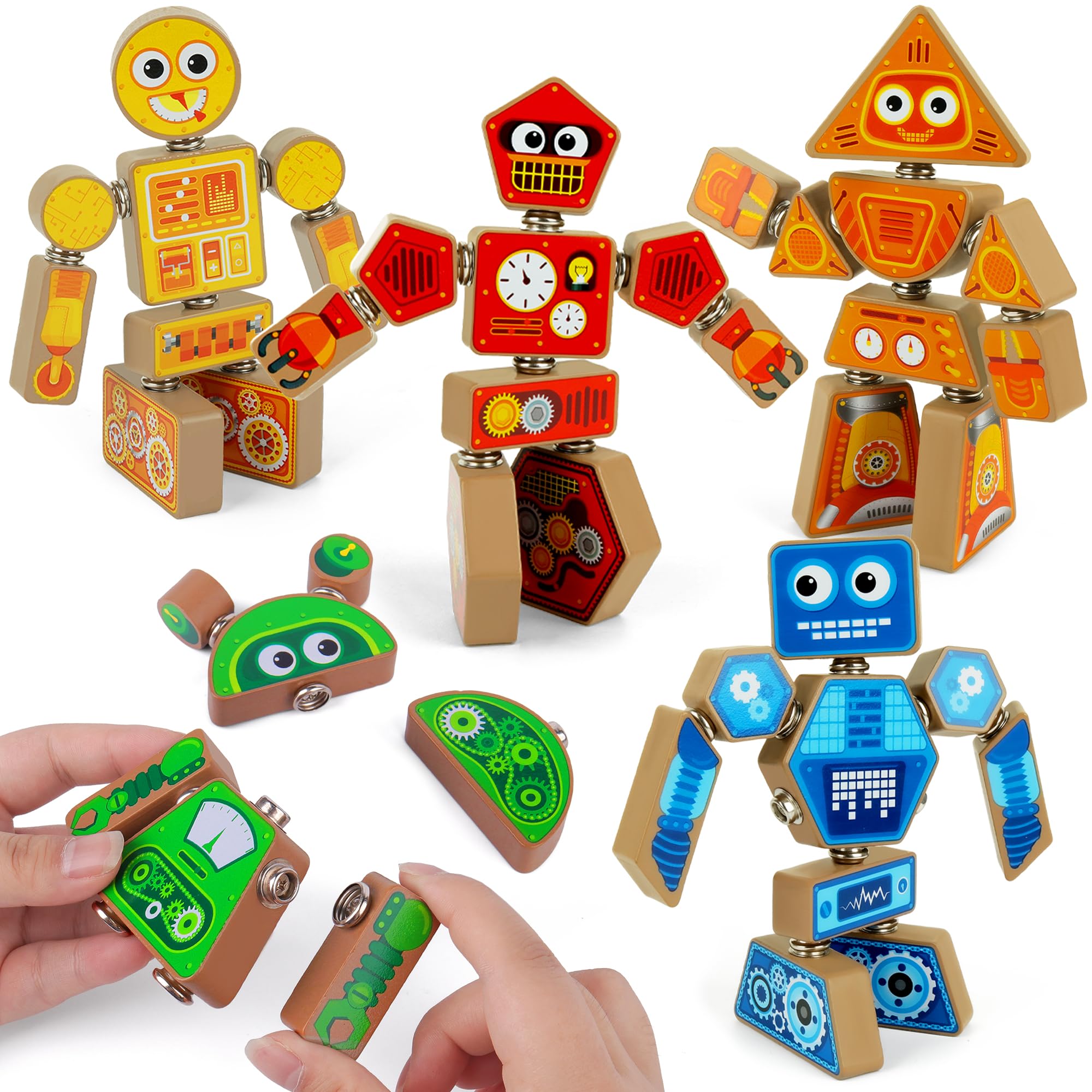

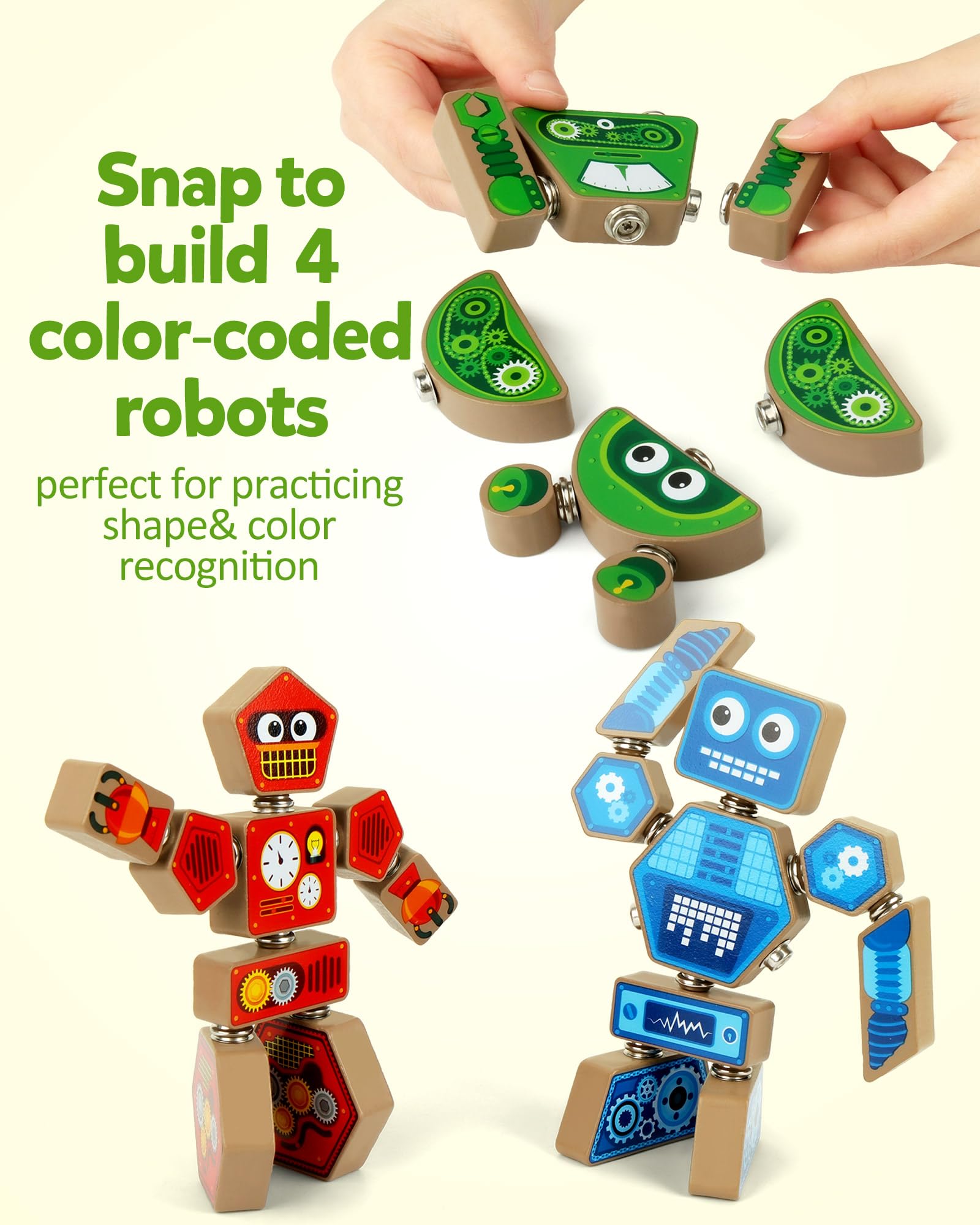
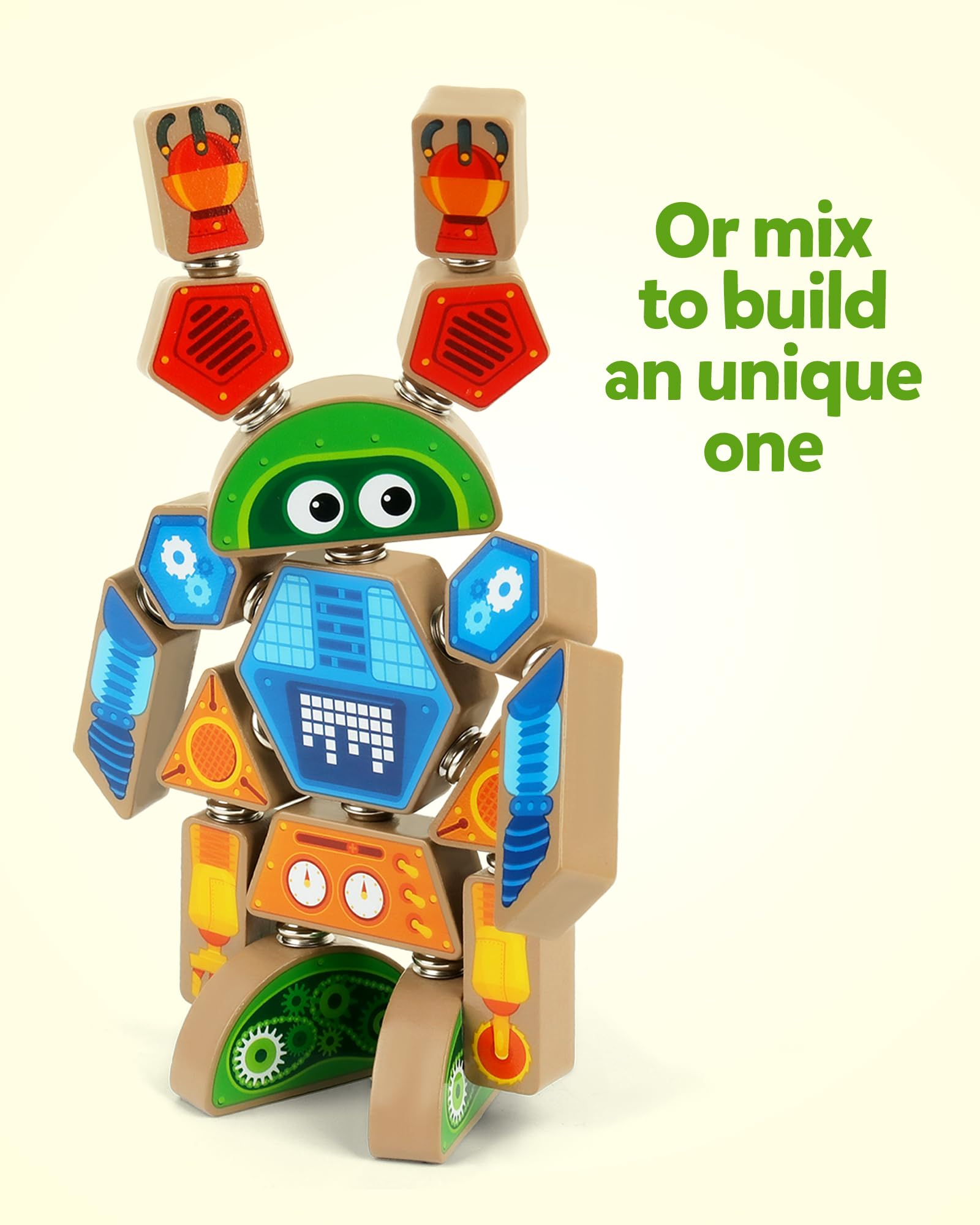
Coogam Snap Together Robot Builders for Toddlers
- 【Interactive Take Apart Robot Toy】Build 5+ unique colored robots with 44 wooden snap-together robot blocks! Ki
- 【Snap-Together Robot Builder with Metal Clips】Easy-click metal buckles let toddlers snap Shape robot builders
- 【Fine Motor STEM Robot Blocks for Learning】This robot building block toy provides kids a free and open way to
5. Sorting, Matching, and Early Math Through Play
The direct answer is that sorting and matching activities are how preschoolers build the foundation for number sense, categorization, and logical reasoning long before they ever see a worksheet with numbers on it.
Before a child can meaningfully understand what "5" means, they need to grasp concepts like one to one correspondence (one ball goes in one bowl), classification (these are all red, these are all round), and seriation (arranging things from smallest to largest). These are the building blocks of number sense, and children absorb them far more durably through repeated hands on sorting than through memorizing counting songs alone.
What Good Sorting Play Looks Like
A sorting activity doesn't need to be complicated. A child using tweezers to move small colored balls into matching bowls, as with the Wooden Gumball Machine Color Sorting Toy, is simultaneously practicing fine motor precision, color recognition, and early categorization logic. Add a simple challenge, like racing against a sibling or a timer, and you introduce light guided play without turning it into a drill.
Children construct mathematical understanding through repeated, self directed interactions with objects long before formal instruction begins.
— National Association for the Education of Young Children, Position Statement on Early Math (2010)
Alphabet based sorting and matching toys extend this same logic to early literacy. A set like Learning Resources Mini ABC Pops lets children match uppercase and lowercase letters while also sorting by color, layering two skills into one playful activity.


Learning Resources Mini ABC Pops – Alphabet Toys, ABC Puzzle, Phonics Games for Toddlers, Fine Motor Toys, Play Food Set, Preschool Activities, Sensory Bin Letters, Gifts for Kids
- LETTER RECOGNITION - Develop essential early literacy skills through colorful, hands-on play with 26 popsicle-
- MULTI-LEARNING APPROACH - Engage children with multiple educational concepts including color matching, letter
- FINE MOTOR DEVELOPMENT - Strengthen little fingers and improve hand-eye coordination as children pop tops on a
For families thinking about how these early foundations connect to formal schooling, it helps to understand why kindergarten readiness predicts scores for years afterward, and play based sorting and matching is a major, low pressure part of building that readiness.
6. Balancing Play With Screens and Structured Learning Apps
The direct answer is that hands on, physical play consistently outperforms screen based learning apps for building fine motor skills, social negotiation, and deep conceptual understanding in children under six, even when the app content is educational.
This isn't an anti screen argument, screens have a place, but the research is fairly consistent: physical manipulation of real objects builds neural pathways that tapping a screen simply doesn't reach in the same way. A 2019 policy statement from the American Academy of Pediatrics recommends limiting screen use for preschoolers to high quality, co viewed content, and prioritizing hands on play, physical activity, and unstructured time.
Why Physical Toys Have an Edge
When a child physically sorts letters, builds a robot, or arranges pretend food into baskets, they get tactile feedback, they negotiate space and gravity, and often they share the activity with a sibling or parent, adding a social layer a screen rarely provides. A literacy focused physical game, like The Fidget Game Unicorns vs Dragons ABC Learning Toy, blends the appeal of a game with hands on letter and number recognition, giving children the tactile engagement screens can't replicate.

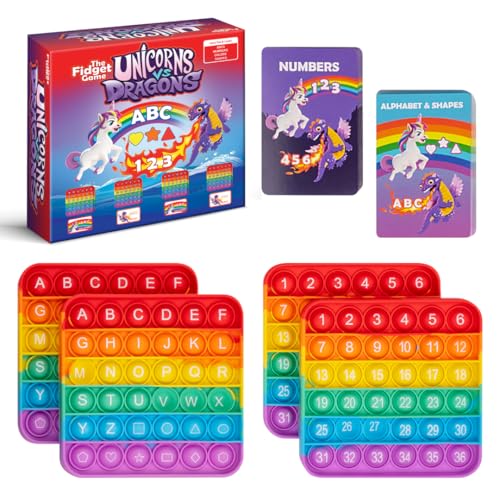

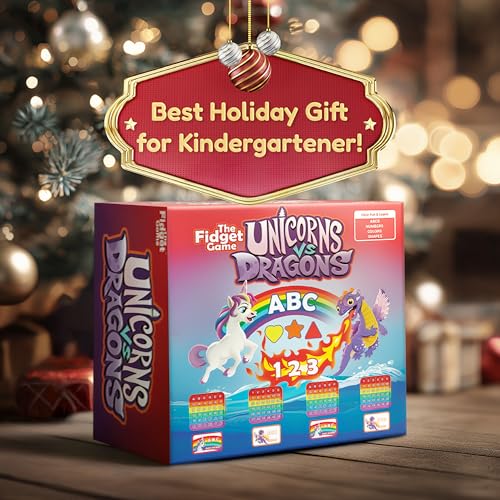

THE FIDGET GAME Unicorns vs Dragons, Fun Educational ABC Toys to Learn Alphabet, Numbers, Shapes & Colors, Interactive Learning Tools for Pre-K & Kindergarten
- 𝙎𝙆𝙄𝙇𝙇𝙎 𝘾𝙊𝙑𝙀𝙍𝙀𝘿: Kids will identify all letters of the alphabet, master letter sounds, recognize every color of
- 𝘽𝘼𝘾𝙆𝙀𝘿 𝘽𝙔 𝙎𝘾𝙄𝙀𝙉𝘾𝙀: Developed by educators and grounded in the Science of Reading (SoR), this magical game blen
- 𝘼𝙇𝙄𝙂𝙉𝙀𝘿 𝙒𝙄𝙏𝙃 𝙎𝙏𝘼𝙉𝘿𝘼𝙍𝘿𝙎: Designed to meet both U.S. State Standards and Canadian Provincial Standards, ensuring
If screens are already a bigger part of your household routine than you'd like, it's worth reading about how being on your phone around your child affects your bond, since the same principle that makes physical play valuable, undivided attention, applies to how you show up during it.
Comparing Play Types: Which One Builds What
| Play Type | Best Age Range | Primary Skill Built | Adult Involvement | Recommended Product | Price Range |
|---|---|---|---|---|---|
| Free pretend play | Ages 2 to 6 | Language, imagination, emotional processing | Minimal, observe only | JOYIN Play Food Learning Set | $20 to $25 |
| Guided sorting play | Ages 3 to 5 | Early math, categorization, fine motor skills | Light, set the challenge | Wooden Gumball Machine Color Sorting Toy | $25 to $30 |
| Construction and building play | Ages 3 to 6 | Spatial reasoning, persistence, problem solving | Light to moderate | Coogam Snap Together Robot Builders | $25 to $30 |
| Literacy focused game play | Ages 4 to 6 | Letter recognition, phonics, early reading | Moderate, play alongside | The Fidget Game ABC Learning Toy | $28 to $32 |
| Alphabet matching play | Ages 3 to 5 | Letter and color matching, fine motor skills | Light | Learning Resources Mini ABC Pops | $12 to $16 |
| Farmers market pretend play | Ages 18 months to 5 years | Color recognition, food identification, sorting | Minimal to light | Learning Resources Farmer's Market Color Sorting Set | $30 to $35 |
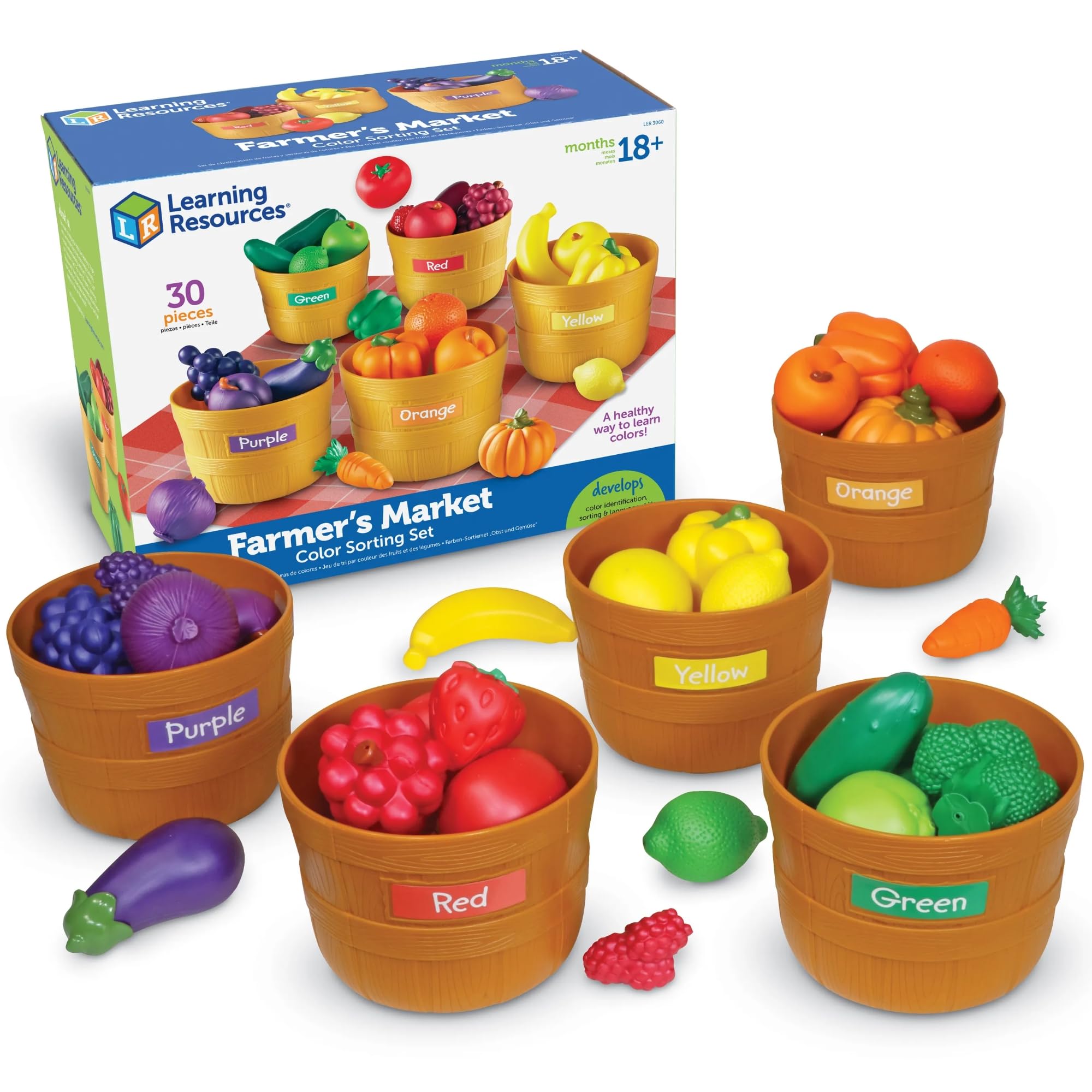
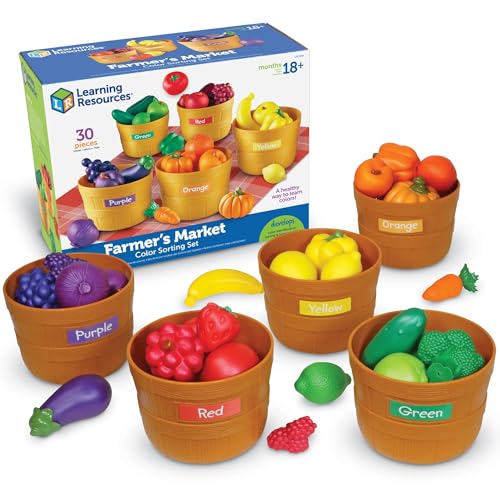
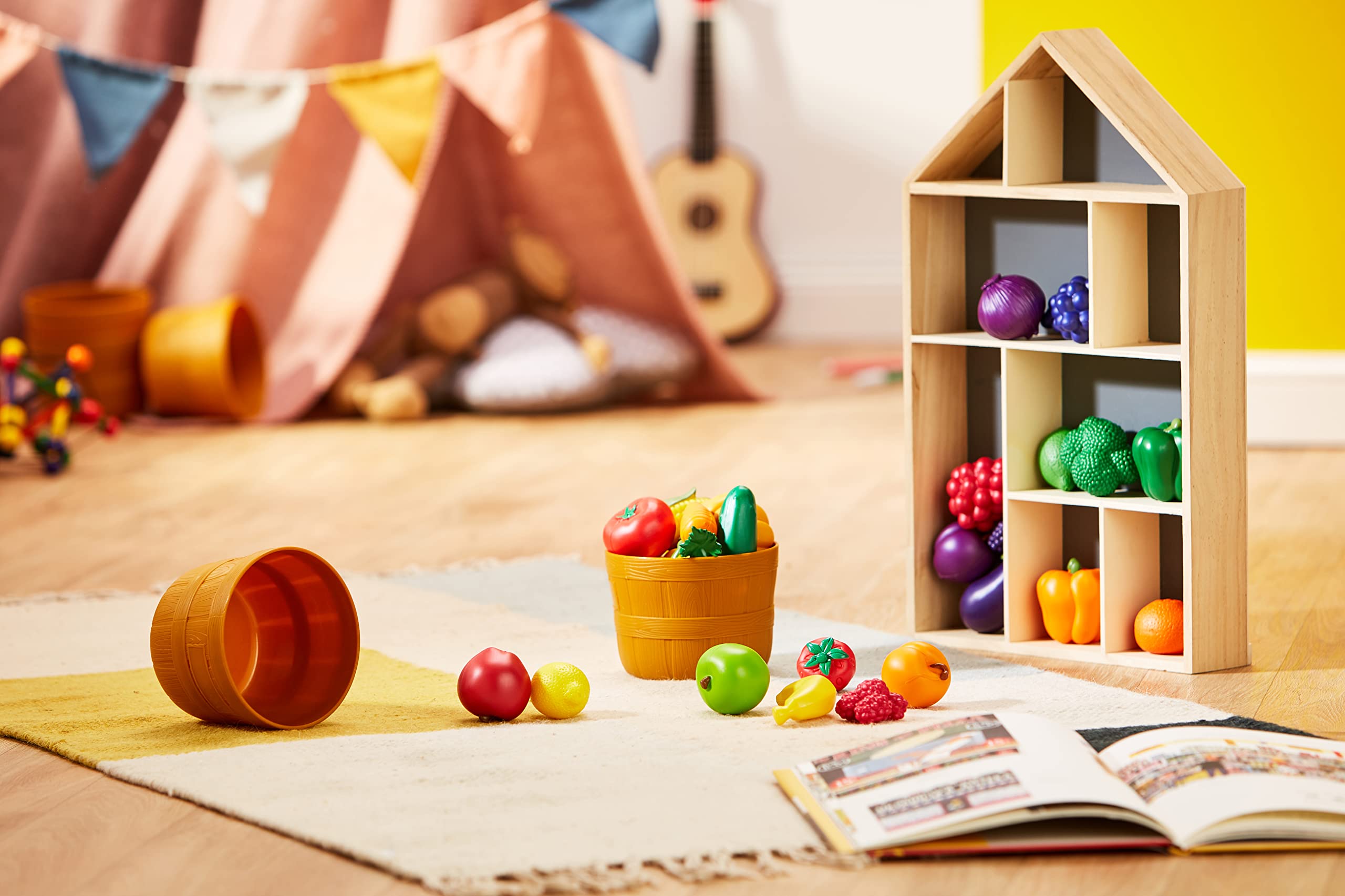
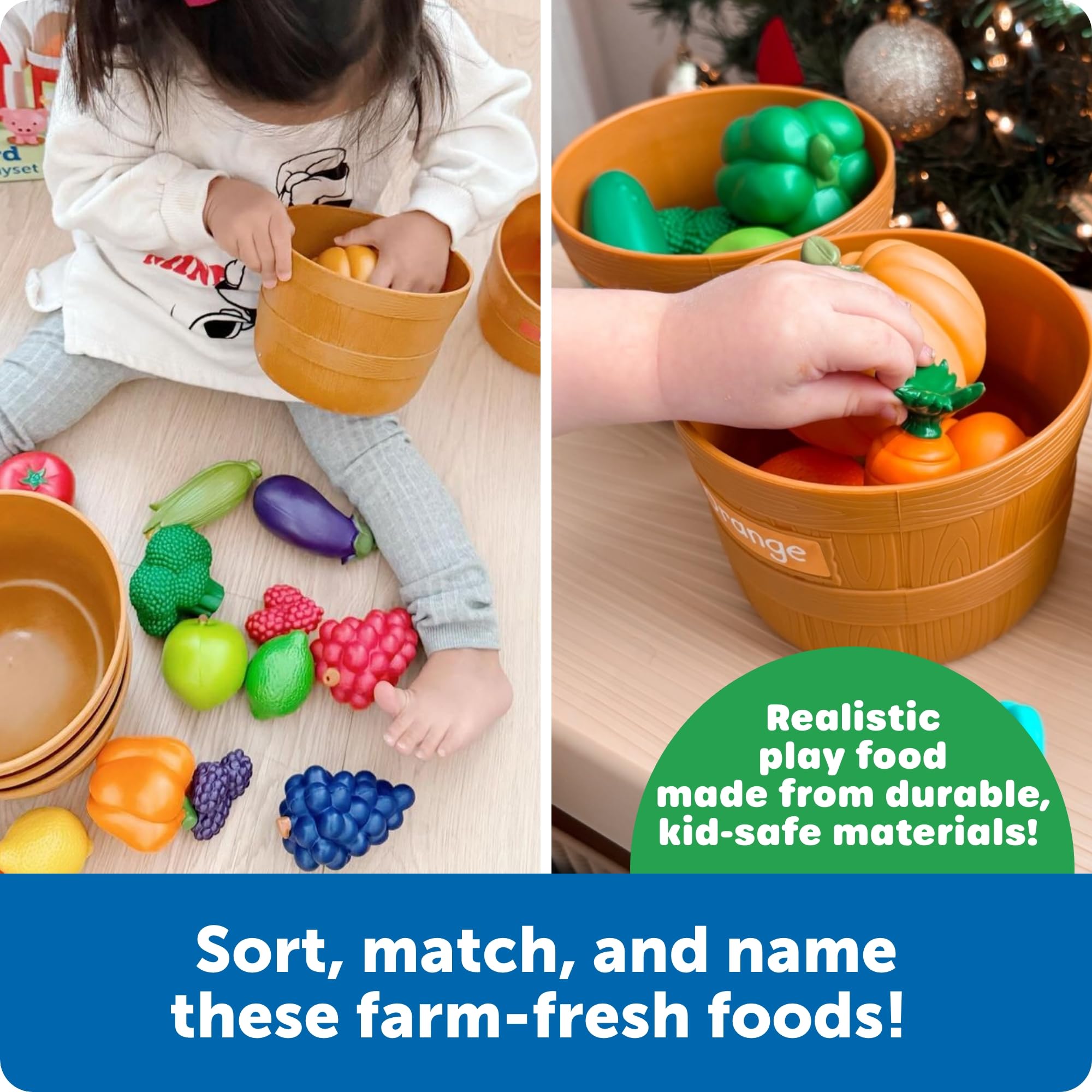
Learning Resources Farmer's Market Color Sorting Set
- DEVELOPS ESSENTIAL LEARNING SKILLS - This toddler learning toy and color sorting game helps children build col
- SUPERIOR QUALITY CONSTRUCTION - Made from soft, durable rubber-like plastic, these realistic play food fruits
- GROWS WITH YOUR CHILD - Designed for ages 18 months and up, this sorting toy for toddlers supports early color
What Early Childhood Experts Want Parents to Know
Frequently Asked Questions
There's a quiet kind of relief in realizing you don't need a packed schedule of enrichment classes to give your child a strong start. What preschoolers need most is time, real unhurried time, to sort, build, pretend, and figure things out with their hands. The next time your child spends half an hour turning a pile of blocks into a "castle for the dragons," you're not watching downtime. You're watching their brain do exactly what it's built to do at this age. If this helped clarify what your child actually needs from playtime, consider saving it or sharing it with another parent who's wondering the same thing.
Sources & References
- American Academy of Pediatrics. "The Power of Play: A Pediatric Role in Enhancing Development in Young Children." Pediatrics, 2018.
- Hirsh-Pasek, K., Golinkoff, R.M., et al. "Guided Play: Principles and Practices." Current Directions in Psychological Science, 2016.
- Center on the Developing Child, Harvard University. "Brain Architecture." 2021. developingchild.harvard.edu
- Berk, L.E. "Vygotsky's Theory: The Importance of Make Believe Play." Young Children, 2009.
- National Association for the Education of Young Children. "Early Childhood Mathematics: Promoting Good Beginnings." Position Statement, 2010.
- Jacob, B., Levine, S.C., et al. "Spatial and Mathematical Reasoning in Early Childhood." Longitudinal Study of American Youth data analysis, published research on block play and later math achievement.
- American Academy of Pediatrics. "Media and Young Minds." Pediatrics, 2016.
- Zero to Three. "Early Learning Through Play." zerotothree.org
Frequently Asked Questions
Is play really as important as academic instruction for preschoolers?
How much unstructured play time does my preschooler need each day?
Wait, that's wrong format. Let me redo.
How much unstructured play time does my preschooler need each day?
What's the difference between a toy that "teaches" and one that's just fun?
Should I intervene when my child is playing to make it more educational?
Are screens ever okay as part of preschool learning?
My child gets frustrated during building or sorting play. Should I step in?
How does play connect to how my child will do in kindergarten?
Was this helpful?
Thanks — your feedback helps us pick what to write next.