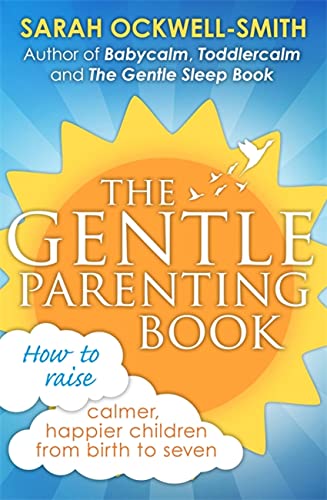
Why Saying No Is Still Gentle Parenting (And Actually Required)
Gentle parenting was never about saying yes to everything; it means holding firm limits while staying warm and connected, and saying no clearly is one of the most caring things you can do for your child.

In this article
Somewhere along the way, "gentle parenting" got confused with "no rules parenting." A 2023 survey by the parenting research group Zero to Three found that nearly 46 percent of parents who identify as gentle parents reported feeling unsure whether they were "allowed" to say no to their child without breaking the approach. That confusion is understandable; social media clips of gentle parenting often show a parent narrating a child's feelings without ever mentioning a limit. But that's not the whole method, and it's not what child development research actually supports.
Real gentle parenting, the kind grounded in attachment theory and decades of child psychology, rests on two pillars at once: warmth and structure. You can say no and still be gentle. In fact, you have to.
What you'll understand after reading this:
1. What Gentle Parenting Actually Means (And What It Doesn't)
Gentle parenting means responding to your child's emotions with empathy while still holding clear, consistent limits on behavior; it does not mean removing limits so your child never feels upset.
The term traces back to authoritative parenting research from developmental psychologist Diana Baumrind, whose work in the 1960s identified four parenting styles: authoritarian (high control, low warmth), permissive (low control, high warmth), neglectful (low on both), and authoritative (high control, high warmth). Decades of follow up research, including longitudinal studies published through the American Psychological Association, consistently link the authoritative style, warmth paired with firm expectations, to the best outcomes for children's emotional regulation, academic performance, and social skills. Gentle parenting, as most credible child psychologists describe it today, is really authoritative parenting rebranded for a generation that wanted to move away from punishment and shame.
The mistake happens when "gentle" gets stretched to mean "no consequences" or "no disappointment allowed." That's permissive parenting, and it's a different thing entirely, with different outcomes.
Children need both love and limits. Emotion coaching without boundaries doesn't produce secure kids; it produces anxious ones who don't know where the edges are.
— Dr. John Gottman, Raising an Emotionally Intelligent Child (1997)
The core confusion, unpacked
- Permissive parenting: high warmth, low structure, few enforced limits - Authoritarian parenting: low warmth, high structure, limits enforced through fear or punishment - Gentle (authoritative) parenting: high warmth, high structure, limits enforced with empathy
If you're trying to sort out which patterns in your own home are helping versus quietly working against you, it's worth reading through common parenting habits that experts say need to stop, since several of them trace back to this exact yes or no confusion.
2. Why Children Actually Need Limits to Feel Safe
Children need limits because boundaries give their nervous system a predictable structure to relax into; without them, kids experience the world as unpredictable, which raises anxiety rather than lowering it.
This isn't just parenting folklore. Attachment research going back to Mary Ainsworth's "strange situation" studies in the 1970s found that securely attached children weren't the ones with the fewest rules; they were the ones whose caregivers were consistent and predictable, including in what they allowed and didn't allow. A child who never hears no has no reliable map of the world. They test constantly, not because they're manipulative, but because they're trying to find the edges that should already be there.
Neurologically, toddlers and young children are running mostly on their amygdala, the brain's alarm system, because the prefrontal cortex responsible for impulse control and reasoning doesn't finish developing until the mid twenties. When a parent holds a limit calmly, the child's brain gets external regulation it can't yet provide for itself. When the limit disappears the moment a child protests, the child's alarm system stays activated longer, because the environment just proved it's negotiable.
What research shows happens without limits
For a deeper look at how emotional coaching and structure work together rather than against each other, social and emotional learning frameworks built for classrooms use the exact same combination: name the feeling, hold the expectation.
3. The Difference Between a Firm No and a Harsh No
A firm no is calm, brief, and consistent; a harsh no is loud, shaming, or attached to a threat, and it's the tone and delivery that determine whether a limit feels safe or scary to a child, not the word itself.
Parents worried about becoming "too gentle" sometimes overcorrect into old authoritarian habits: raised voices, sarcasm, or comparisons ("Your sister never acted like this"). None of that is necessary to hold a boundary. A limit delivered with a steady voice and a neutral face is just as firm as one delivered with anger, and it's far less likely to trigger shame, which research links to worse behavior over time, not better.
Shame is not a useful motivator for children. It teaches them to hide their mistakes from you rather than bring them to you.
— Dr. Daniel Siegel, No-Drama Discipline (2014)
How to tell them apart
| Firm No | Harsh No | | --- | --- | | Said once, calmly | Repeated with rising volume | | Focuses on the behavior | Attacks the child's character | | Followed by a reason, briefly stated | Followed by a lecture | | Delivered at eye level | Delivered from a distance or while walking away |
If a limit is landing as harsh even though you didn't intend it that way, look at your body language first: crossed arms, a pointed finger, or looming over a small child can make a calm sentence feel like a threat. Kneeling to their eye level changes the whole tone.
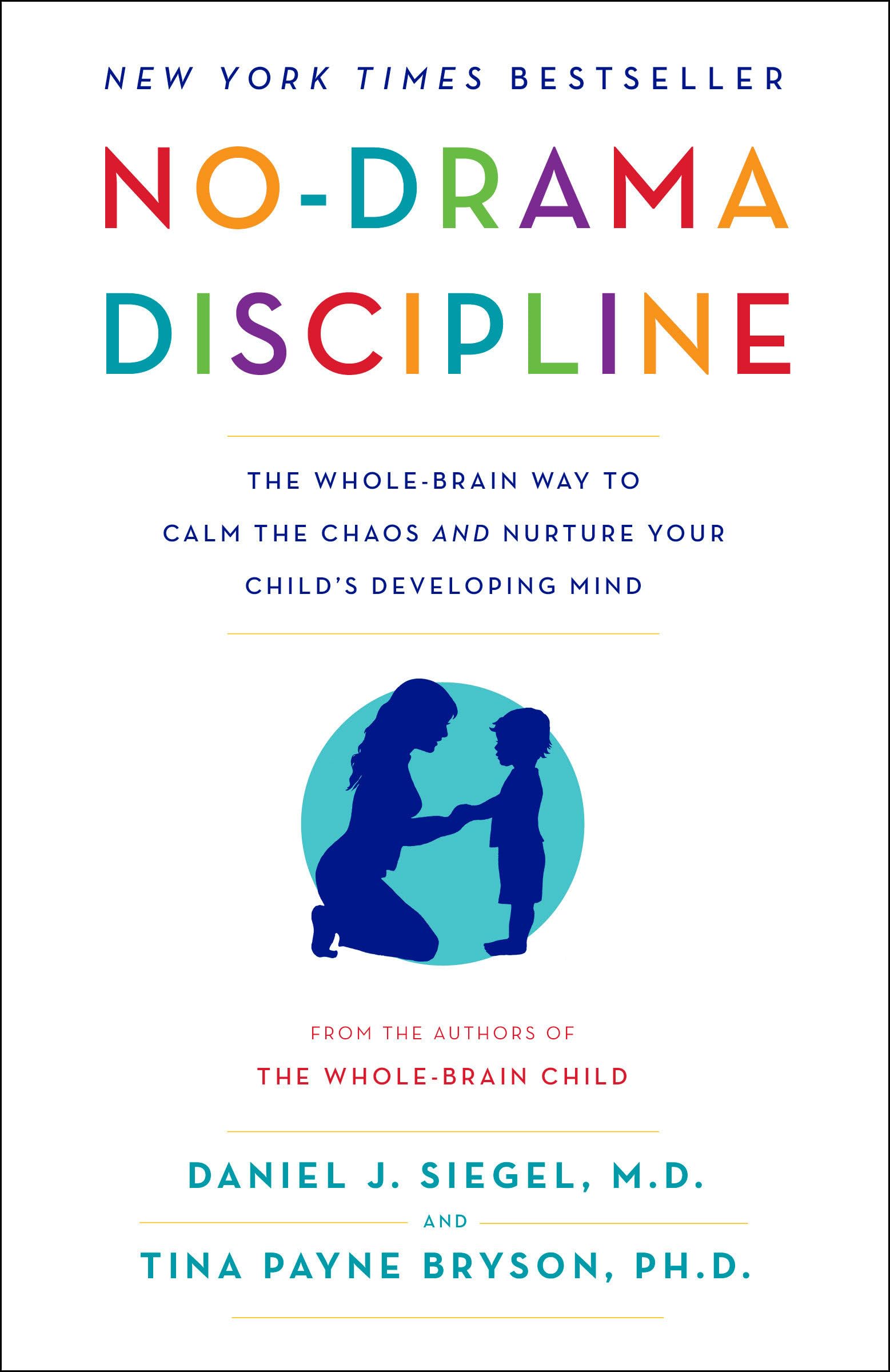
No-Drama Discipline: The Whole-Brain Way to Calm the Chaos and Nurture Your Child's Developing Mind
- Health, Fitness & Dieting
- Psychology & Counseling
- Child Psychology
No-Drama Discipline walks through this exact distinction in detail, with scripts for staying regulated yourself while you hold a limit, which matters because kids read your nervous system before they hear your words.
4. Scripts for Saying No Without Starting a Power Struggle
The fastest way to avoid a power struggle is to acknowledge the want before you state the limit, because kids stop fighting the no once they feel heard, and that combination takes seconds to say.
Most standoffs happen because a child feels dismissed, not because the limit itself was unreasonable. "No, we're not buying that" lands very differently from "You really want that toy. I can see that. The answer is still no." The second version doesn't take longer, and it doesn't cave, but it removes the fuel that turns a request into a battle.
Scripts by common flashpoint
At the store: "You want the candy. That makes sense, it's right there and it looks good. We're not getting it today. You can pick which fruit we get instead."
At bedtime: "You wish you could stay up. I get it, the day feels fun and you don't want it to end. Bedtime is still bedtime. Do you want the blue nightlight or the star one?"
Hitting a sibling: "You're furious he took your toy. Being mad is okay. Hitting is not okay in this house. Let's get the toy back together."
Screens after the limit: "You want more time. I know it's a good show. Screens are done for now. We can put on your favorite song instead."

How to Talk so Little Kids Will Listen: A Survival Guide to Life with Children Ages 2-7 (The How To Talk Series)
- Relationships
- Conflict Management
- Image Unavailable Image not available forColor:
How to Talk so Little Kids Will Listen is built almost entirely around this kind of scripting, with age specific phrasing for toddlers through age seven, and it's one of the most practical resources for parents who know what to do in theory but freeze on wording in the moment.
5. What Happens in the Meltdown After You Say No
A meltdown after a no is the release of emotion the limit contained, not evidence that the limit was wrong, and the parent's job in that moment is to stay present and regulated rather than to fix the feeling or reverse the decision.
This is the point where a lot of gentle parenting attempts quietly slide into permissive parenting: the limit gets reversed the moment the crying starts, because the parent reads the meltdown as proof they made a mistake. But a meltdown is a normal, healthy discharge of a big feeling in a small nervous system that hasn't learned to regulate itself yet. Reversing the limit teaches a much bigger lesson than the original no ever would have: that tears change the rules.
A simple sequence to hold through a meltdown
1. Stay physically near, even if your child pushes you away verbally 2. Keep your own breathing slow and visible; kids co regulate off your nervous system 3. Repeat one short phrase if needed: "I'm here. The answer is still no." 4. Wait out the wave; most meltdowns peak within 90 seconds to a few minutes and then subside on their own 5. Reconnect warmly once things settle, without reopening the original decision
Parents managing more frequent or intense meltdowns, particularly with kids who have attention differences, often find that timing and structure around the moment matter as much as the words themselves; the reasoning behind why certain routine expectations backfire for some children applies to limit setting too, since rigid delivery without flexibility in timing can escalate a child who is already dysregulated.
6. How to Know If You've Drifted Into Permissive Parenting
You've likely drifted into permissive territory if limits change based on how loudly your child protests, rather than staying consistent regardless of the reaction, and that pattern is worth catching early because it tends to intensify rather than resolve on its own.
This is not a failure; it happens to almost every parent at some point, usually during a particularly exhausting week, a public meltdown, or a season when you're depleted and the path of least resistance feels safer than holding firm. The goal isn't to never slip. It's to notice the pattern and reset.
Permissive parents are warm but avoid conflict. Kids raised this way often struggle with self control precisely because the environment never asked it of them.
— Dr. Laurence Steinberg, The Ten Basic Principles of Good Parenting (2004)
Signs worth paying attention to

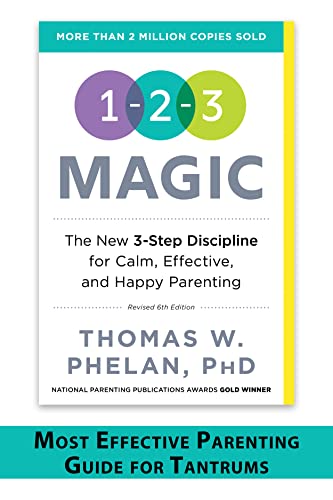


1-2-3 Magic: Gentle 3-Step Child & Toddler Discipline for Calm, Effective, and Happy Parenting (Positive Parenting Guide for Raising Happy Kids)
- Relationships
- Conflict Management
- Image Unavailable Image not available forColor:
1-2-3 Magic is one of the most widely used resources specifically for this drift, because it gives parents a simple, repeatable structure (count to three, then a consequence follows) that removes the emotional negotiation entirely, which many parents find easier to hold consistently than open ended scripting alone.
If screens are a common flashpoint where the limit tends to bend, the strategies in screen time solutions built for real family routines are worth pairing with the scripts above, since screen limits are one of the most common places permissiveness creeps in first.
| Approach | Best For | Core Method | Main Drawback | Recommended Product | Price Range |
|---|---|---|---|---|---|
| Emotion coaching plus firm limits | Ages 2 to 8, tantrums and defiance | Name the feeling, hold the boundary | Takes practice to stay calm under protest | Tiny Humans, Big Emotions | Varies by retailer |
| Toddler specific power struggle framework | Ages 1 to 4 | Predictable scripts for common flashpoints | Less detail for older kids | Transforming Toddlerhood | Varies by retailer |
| Count based consequence system | Ages 2 to 12 | Count to three, then a set consequence | Can feel mechanical at first | 1-2-3 Magic | $9 to $10 |
| Scripted phrasing by age and scenario | Ages 2 to 7 | Ready made language for common conflicts | Requires memorizing phrases | How to Talk so Little Kids Will Listen | $14 to $15 |
| Brain based regulation strategies | Ages 0 to 12 | Understanding the developing brain during limits | More conceptual, less script heavy | The Whole-Brain Child | $10 to $11 |
| Calm, connected discipline framework | Ages 0 to 9 | Staying regulated yourself while enforcing limits | Requires consistent parent practice | No-Drama Discipline | $14 to $15 |
Expert Insights
Saying no to your child, again and again, calmly, kindly, and without apology, is one of the most loving things you'll do as a parent. It won't always feel good in the moment. Your child may cry, push back, or tell you it's unfair. That's not a sign you've failed at gentle parenting; it's a sign you're doing it right. Kids don't need parents who remove every obstacle from their path. They need parents steady enough to hold the line while staying close through the storm that follows. That combination, not the absence of no, is the whole point.
If this reframed something for you, save it for the next hard moment at the store or bedtime, and pass it along to another parent who might be carrying the same guilt over a perfectly reasonable no.
Sources & References
- American Academy of Pediatrics. "Discipline strategies for parents." AAP.org, 2023.
- Baumrind, D. "Child care practices anteceding three patterns of preschool behavior." Genetic Psychology Monographs, 1967.
- Ainsworth, M. "Patterns of Attachment: A Psychological Study of the Strange Situation." 1978.
- Gottman, J. "Raising an Emotionally Intelligent Child." Simon & Schuster, 1997.
- Siegel, D. and Bryson, T.P. "No-Drama Discipline." Bantam, 2014.
- Siegel, D. and Bryson, T.P. "The Whole-Brain Child." Delacorte Press, 2011.
- Steinberg, L. "The Ten Basic Principles of Good Parenting." Simon & Schuster, 2004.
- Zero to Three. "Parenting attitudes and confidence survey." 2023.
Frequently Asked Questions
Is it okay to say no to my toddler even if gentle parenting is supposed to be about empathy?
How do I say no without triggering a huge meltdown every time?
What's the difference between gentle parenting and permissive parenting?
My child says "you don't love me" when I say no. How do I respond?
At what age should I start setting firm limits?
What if my co parent or partner isn't consistent with the same limits?
Can saying no too often damage my child's self esteem?
Was this helpful?
Thanks — your feedback helps us pick what to write next.