Breastfeeding Latch Problems: How to Spot, Fix and Get Help
A good latch means your baby's mouth is wide open and covers most of the bottom part of your areola. Pain beyond the first minute or so is a sign to break the suction and relatch. If it still hurts, or you are worried, get help from a lactation provider.
In this article
TL;DR: Quick summary
A good latch means your baby's mouth is wide open and covers most of the bottom part of your areola. Pain beyond the first minute or so is a sign to break the suction and relatch. If it still hurts, or you are worried, get help from a lactation provider.
What you'll get
About 32 minutes to read. Short on time? Read the bold lines and the Key Takeaways near the end.
It is 3 a.m. and your baby is feeding. Something feels off. Maybe your toes are curling, maybe your baby keeps slipping off, or maybe you simply have no idea what "good" is supposed to feel like.
If that sounds familiar, you are in very good company. Latch trouble is one of the most common worries I hear from new parents, and it is very often fixable. A small change in position can make a big difference.
Breastfeeding is natural, but it is also a skill that you and your baby learn together. Neither of you was handed a manual. Feeling clumsy at the start does not mean you are doing it wrong as a parent.
Let's start with the basics: what a good latch actually looks like, so you know what you are aiming for.
What does a good breastfeeding latch look like?
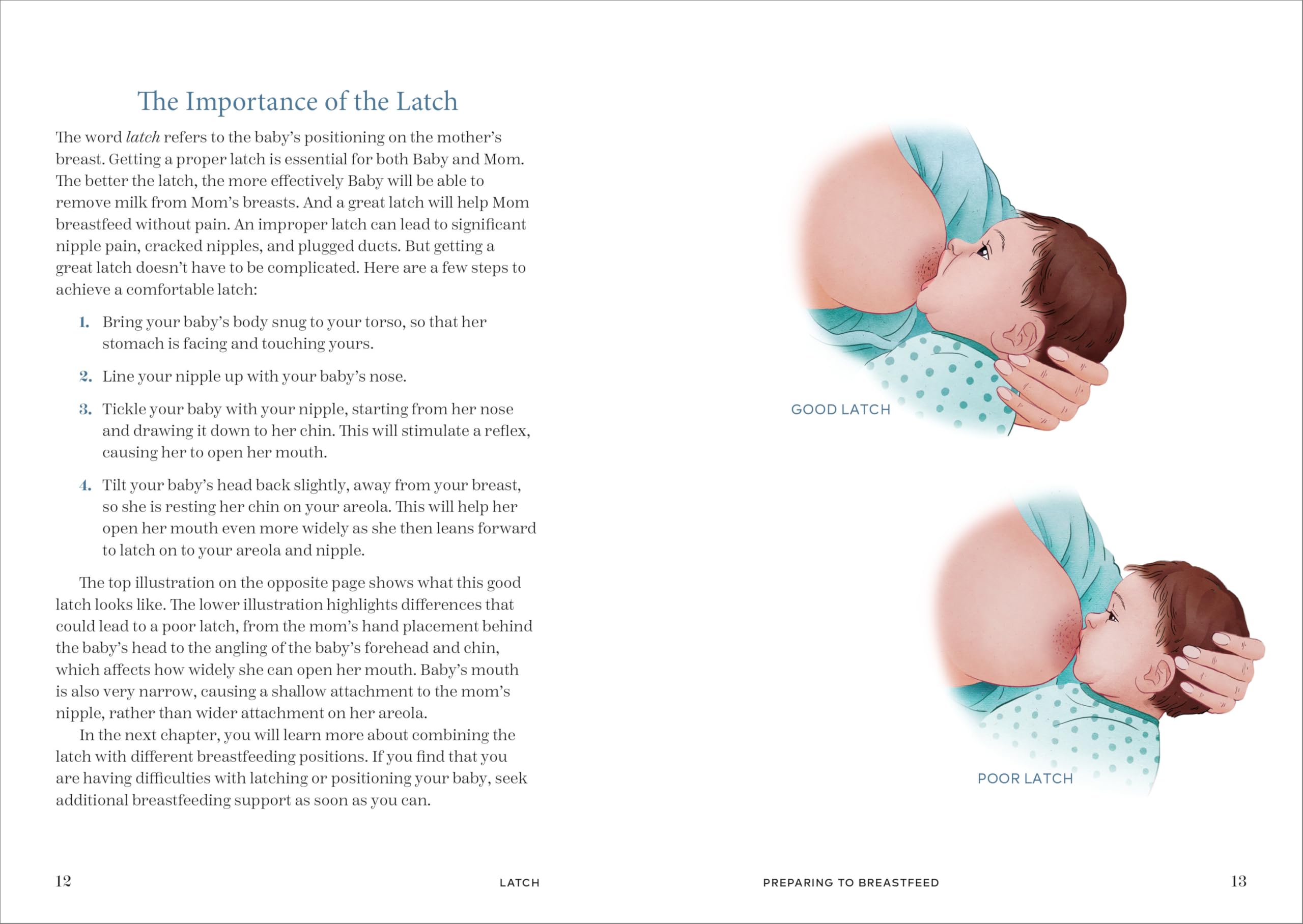
A good latch means your baby's mouth is wide open and covers most of the bottom part of your areola, the darker skin around the nipple, not just the nipple itself. It should feel like a firm tug, not a pinch, and your baby should look calm while feeding.
Good latch versus shallow latch
Think of the nipple as the doorway and the breast as the room. Your baby needs to get well inside the room, not stand on the doorstep. A baby who takes in a good mouthful of breast can draw milk out comfortably, and you feel much less friction.
A shallow latch is the opposite. A bad, or shallow, latch means your baby is only suckling on your nipple, and that causes nipple pain. Here is how Cleveland Clinic puts it:
A bad, or shallow, latch means your baby is only suckling on your nipple. This causes nipple pain.
Cleveland Clinic
The CDC lists three signs of a bad latch: your baby is only suckling on the nipple, your baby's lips are curled inward, and breastfeeding hurts. Any one of these is a reason to pause and try again.
What it looks like from the outside
Picture a parent feeding her newborn in the cradle hold. Her baby's mouth opens wide, almost like a yawn, with the chin pressed into the breast and the nose clear enough to breathe. The lower lip is turned outward like a little fish lip, and you can see a bit more areola above the top lip than below the bottom one.
That is the picture you want. If instead you see a small, pursed mouth sitting on the very tip of the nipple, with lips tucked in, the latch is probably shallow.
Your 30 second latch check
Run through this at the breast, ideally in the first minute of a feed:
If you can tick most of these, you are probably in good shape. If any of these are missing, break the suction and try again.
Why a poor latch matters beyond pain
A bad latch is not only uncomfortable for you. Babies who latch on wrong tend to fall asleep often at the breast and may not seem satisfied after a feed if they are not getting enough milk. Some parents describe the feeling as a pinch.
So a painful latch is both your body and your baby giving you the same message. Something needs a small adjustment.
Common mistakes to avoid
If you like to see things step by step, Latch: A Handbook for Breastfeeding with Confidence at Every Stage is worth a look. Latch: A Handbook for Breastfeeding with Confidence at Every Stage offers step by step visuals that may be easier to follow than words alone. For the wider picture of what these early weeks involve, our guide to your baby's first 30 days is a good companion read.
Why does breastfeeding hurt, and how do I fix a bad latch?
Pain that carries on past the first minute or so of a feed usually means the latch needs fixing. You can correct it mid feed: break the suction, wait for a wide open mouth, then bring your baby back so the nipple and areola are both in.
What a painful latch is telling you
Plenty of parents are told that sore nipples are just part of the deal. That is not quite right. A little tenderness as your baby first latches can happen, but the American Academy of Pediatrics is clear about what comes next:
Pain beyond the first minute or so of nursing is a sign of improper latching on and should be immediately corrected.
American Academy of Pediatrics
Some moms describe the feeling as a pinch as their baby nurses. The CDC also lists breastfeeding that hurts alongside two other signs of a bad latch: your baby is only suckling on the nipple, and your baby's lips are curled inward.
Picture a mom on day three who grits her teeth through every feed because she assumes this is normal. By the weekend her nipples are cracked and she dreads the next feed. A quick reset at the very first wince could have spared her some of that.
How to fix the latch, step by step
Do not yank your baby away. Slow down and follow these steps.
- Slide a clean finger into the corner of your baby's mouth to break the suction.
- Take your baby off the breast and pause. Hold them close, skin to skin if you can, so they stay calm.
- Wait for a wide open mouth before you latch again.
- Bring your baby to the breast, not the breast to your baby. Aim to take in the nipple and the areola, the darker skin around it.
- Check the signs: lips flared outward rather than curled in, and the pain easing as the feed goes on.
If you have a partner nearby, give them a script. Something like: "I'm going to start again, can you pass me a pillow and sit with me?" Asking for help is part of the technique, not a failure.
Other clues the latch is off
Pain is not the only signal. Babies who latch on wrong tend to fall asleep often at the breast, and they may not seem satisfied after a feed if they are not getting enough milk.
So a baby who falls asleep within 5 minutes of latching on, or after only two or three minutes of sucking, deserves a closer look at the latch, not just a longer feed.
Common mistakes
When to get help
If you still feel pain after repositioning, talk to your doctor or a lactation consultant to make sure your baby is latched well, or to check that something else is going on. Do not wait for the soreness to build. The CDC advises getting help as soon as you can if you see signs of a bad latch.
How do I know if my baby is getting enough milk?
The clearest signs are steady feeding and steady output. Your baby feeds often, about 8 to 12 times in 24 hours, and you can see and hear swallowing during feeds. Wet diapers and weight gain then confirm it. If those slip, your baby needs a check.
Signs that things are going well
Most worried parents are watching the wrong thing. They watch the clock or how full the breast feels. A better guide is what your baby does and what comes out the other end.
Feeds do not need to look tidy. Some are long and some are quick snacks. What matters is the pattern across the whole day and night.
Signs that need a call
Some signals mean it is time to get help, not to wait and see.
If you notice any of these, call your baby's doctor or a lactation consultant as soon as you can. Do not wait for the next scheduled visit.
The two week checkpoint
Babies usually lose a little weight after birth, then turn the corner. By two weeks, your baby should be back to birth weight. Once your milk has come in, your baby should also be gaining at least 5 to 7 ounces per week.
If your baby is still under birth weight at two weeks, or is not gaining at that pace, ask for follow up. This is not a verdict on you. It is a prompt to find out why, and a poor latch is one of the most fixable reasons.
Behavior clues that point to the latch
Sometimes the baby's behavior at the breast tells you more than the scale does. Watch for a baby who latches on and then lets go repeatedly, pushes away, or resists the latch. Falling asleep within a few minutes of starting is another clue.
Babies who latch on wrong also tend to doze at the breast and may not seem satisfied after a feed if they are not getting enough milk.
Picture a baby on day six who nurses for five minutes, drifts off, then wakes hungry 30 minutes later. Mum feels sore and the baby has only three wet diapers. That pattern deserves a call, not more patience.
A simple log to bring to appointments
You do not need an app. A page of paper on the fridge works. Write one line per feed and one tick per diaper.
Add questions at the bottom, such as "Is this enough feeds?" so you do not forget them in the room. If you want to understand more about what your baby is taking in during these first days, our guide to newborn feeding basics explains what to expect.
Why won't my baby latch on?
Your baby is rarely refusing you on purpose. Common reasons include being born early, a tongue tie or cleft, reflux, or being too sleepy to feed. Most of these can be worked through with the right help and a little time.
What can make latching harder?
A baby may struggle to latch if:
A tongue tie means the strip of skin under the tongue is short or tight, so the tongue can't move freely. You can't always see it, which is why a trained person needs to look.
What does refusal actually look like?
It can look different from baby to baby. Watch for a baby who:
Picture a baby who opens wide, takes the breast, sucks a few times, then pulls off and cries. You offer again and the same thing happens. That is exhausting, and it is easy to decide you are doing something wrong. More often your baby is telling you that something about feeding isn't working yet.
How do I help a sleepy baby feed?
Some babies are so drowsy in the early days that they miss their own hunger cues. If your baby is sleepy and hasn't got the hang of feeding cues yet, wake them to feed every 2 to 3 hours.
Try this order:
- Unwrap your baby down to a diaper so they aren't too cosy.
- Hold them skin to skin against your chest.
- Stroke their back, feet or cheek, or change their diaper.
- Hand express a little milk onto your nipple so they smell and taste it.
- Offer the breast when they show signs of waking, such as sucking on their hands or turning their head.
Common mistakes to avoid
Will it get easier?
Often, yes. Most babies learn to breastfeed effectively if given time. But a baby who has difficulty sucking needs more than patience. Work with your baby's healthcare provider and a certified lactation consultant (IBCLC) together.
If you want practical routines and some reassurance that every new parent feels unsure at first, our list of 14 life changing tips for first time parents is a good place to steady yourself.
When to get help
Call a breastfeeding medicine specialist or lactation consultant if your baby won't stay latched on, which makes it hard or impossible to give them enough milk. Call too if your baby pushes away when you try to latch. Don't wait to see if it settles by itself.
Do nipple shields and nipple everters help with latch problems?
They can, for some families, but they are short term helpers and not a cure. A nipple everter gently draws out nipples that make latching harder. A nipple shield can bridge the gap while the latch is sorted out. Both work best with expert guidance.
What each tool actually does
The Lansinoh LatchAssist Nipple Everter is a small hand tool that uses gentle suction, which you control, to draw out flat or inverted nipples. The idea is that a nipple that stands out a little more is easier for your baby to take into a wide open mouth. It comes with more than one flange size so you can find a fit that doesn't rub.
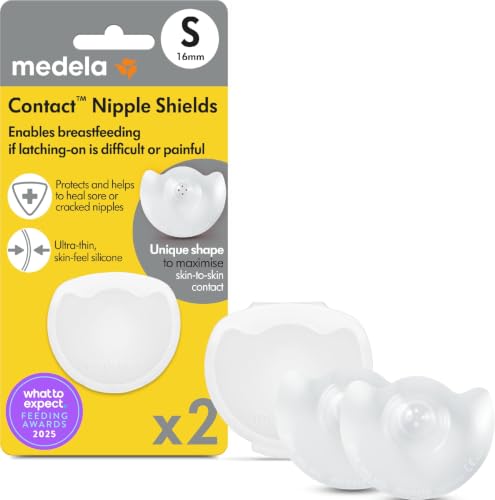
The Lansinoh Contact Nipple Shields are thin, flexible silicone covers that sit over your nipple during a feed. They are made to help you keep breastfeeding while latching issues are addressed. The cut out design leaves more of your skin touching your baby's.

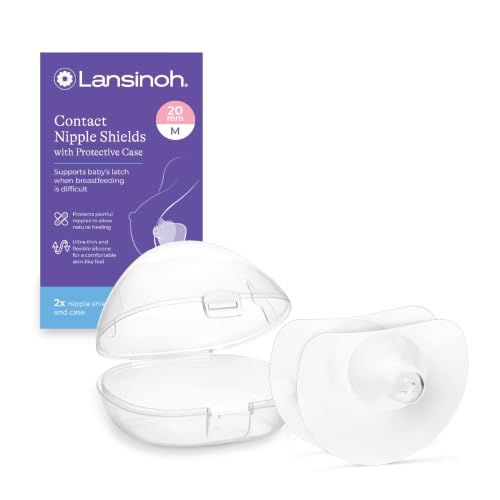



Lansinoh Contact Nipple Shields for Nursing Mothers, with Case, 2 Count
- HELP DURING LATCHING DIFFICULTIES - Helps you continue to breastfeed while latching issues are addressed
- COMFORTABLE – Made of super-soft, ultra-thin, flexible 100% silicone
- SKIN-TO-SKIN - Unique cut-out design maximizes skin-to-skin contact while using the nipple shield
Picture a parent whose baby keeps sliding off a flat nipple and getting frustrated. An everter before the feed might help the nipple stand out. A shield might keep the feed going while a consultant works on positioning. Neither one replaces working out why the latch is hard.
Should I use a nipple shield long term?
In most cases, no. If you are using a shield, you should work closely with a lactation specialist, who will make a plan for you to stop using it as soon as possible.
Think of a shield as a bridge, not a destination. You want a plan for the far side before you step onto it.
The safety rule
Any breastfeeding device should be used with the guidance of a certified lactation consultant (IBCLC) or a healthcare provider with advanced knowledge of breastfeeding. That covers shields, everters and anything else you find in the baby aisle. Most babies learn to breastfeed effectively if given time, but a baby who struggles needs that professional team.
Common mistakes
If you are worried about milk supply or you see signs of a bad latch, get help from a health care or lactation support provider as soon as you can.
Questions to ask your consultant
Write these on your phone before the appointment, so you don't blank when the baby starts crying.
Ask for the plan in writing if you can. Tired parents forget details, and your partner will thank you.
What can make latching easier during night feeds and pumping?
Light, position and fit make the biggest difference. At night, a dim light lets you see your baby's mouth so you can fix a shallow latch early. For pumping, a correctly sized flange cuts friction. None of these replace help from a lactation professional if pain continues.
Why 3 a.m. feeds go wrong
Picture a parent at 3 a.m., eyes half shut, holding a baby who is just as drowsy. Neither of you is in a state to line up a deep latch. The baby takes a shallow mouthful, you wince, and everyone drifts off anyway.
A very sleepy baby can have a hard time latching on at all. Babies who latch wrong also tend to fall asleep often at the breast. So a sleepy feed is not always a calm, successful one.
If your baby is sleepy and still has not mastered feeding cues, the guidance is to wake them to breastfeed every 2 to 3 hours. Ask your doctor or health visitor how long you can let your baby sleep between feeds in your situation.
A simple 3 a.m. routine
- Turn on a dim, warm light rather than the main bedroom light.
- Unwrap your baby a little and keep them skin to skin for a minute. This helps them wake enough to open wide.
- Bring your baby to the breast, nose level with the nipple, and wait for a big open mouth.
- If it pinches after the first minute, break the suction with a clean finger in the corner of the mouth and relatch.
Seeing the latch without waking the house
Bright lights wake everyone up, and then you have a wide awake baby and a long night. A dim, directional light solves the problem. The Wearable Baby Night Light gives off a dim light, so it can stay out of your eyes and your baby's.
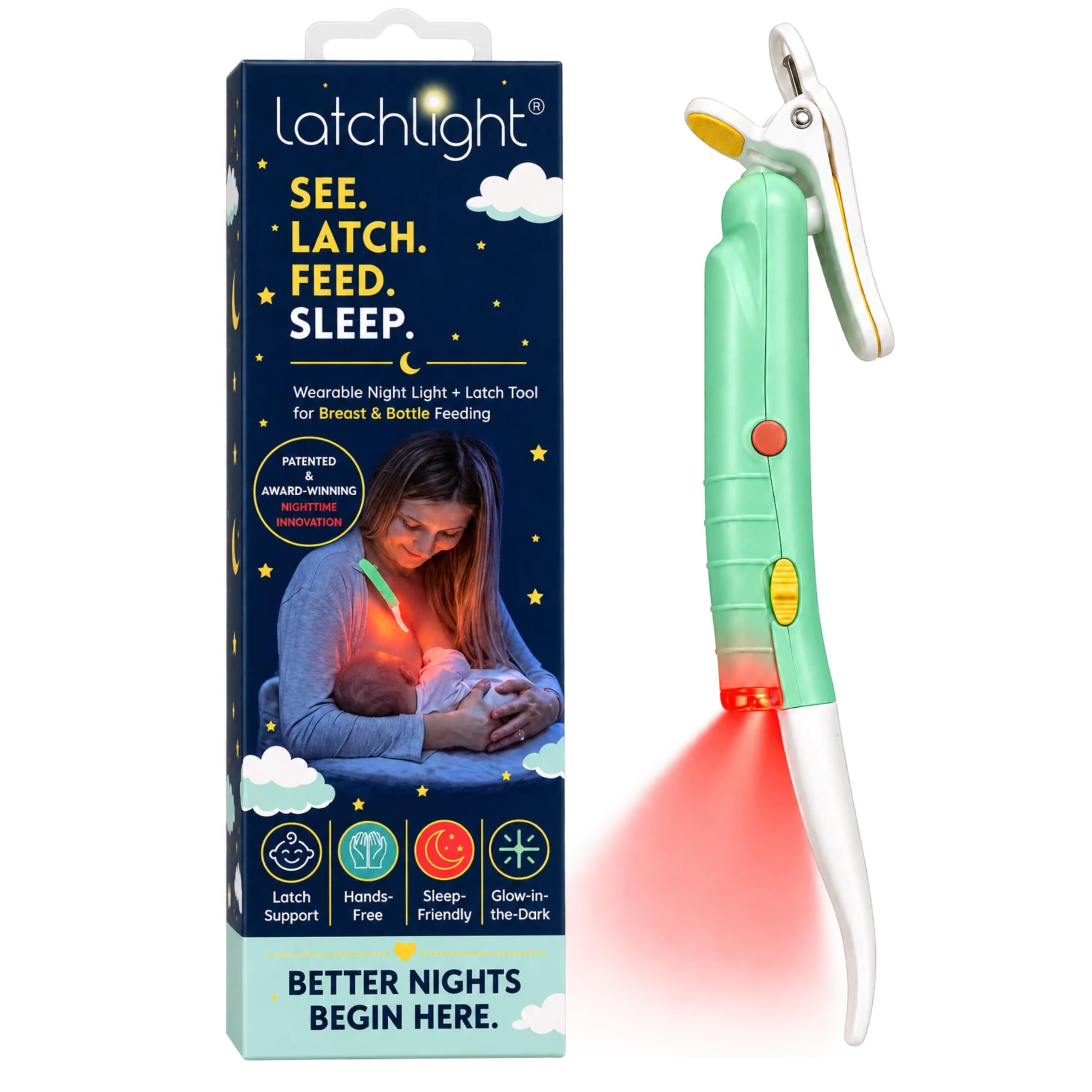
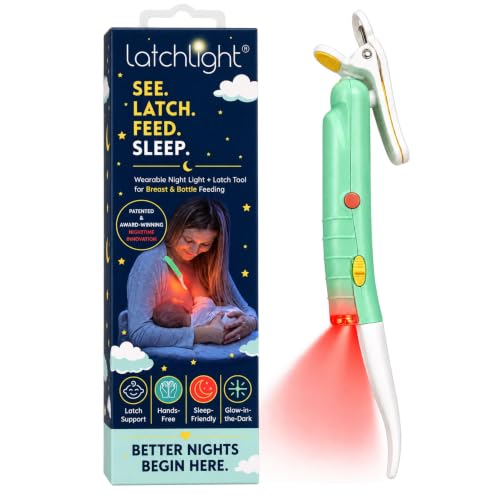



Wearable Baby Night Light for Breastfeeding & Bottle Feeding | Dimmable Red & Amber Light | Melatonin-Friendly | Glow-in-the-Dark | Silicone Tip Aids Latch Adjustments
- TARGETED GLOW NIGHT LIGHT - LatchLight provides directional illumination at a narrow 40 degree angle, that…
- SILICONE LATCH-ASSIST TIP – LatchLight features a soft, slim, and flexible 100% silicone tip, co-designed…
- GLOWS IN THE DARK - LatchLight has a glow in the dark handle! Locate your LatchLight in the darkness of your…
Treat any feeding aid as something to use only with guidance from a certified lactation consultant or a healthcare provider with advanced knowledge of breastfeeding. If you use any feeding device, check with a lactation consultant or your healthcare provider that you are using it well.
Quick guides for when your brain is foggy
Exhaustion makes it hard to remember what you were taught. A short reference can help. The Perfect Latch and other helpful breastfeeding advice is a quick Kindle read you can open on your phone mid feed. Latch: A Handbook for Breastfeeding with Confidence at Every Stage is a fuller book for the days when you want more detail.
Read them before the baby arrives if you can. At 3 a.m. you only want to skim a page, not learn something new.
Pumping comfort is about fit
If you pump, the flange (the cone shaped part that sits on your breast) needs to suit your nipple. A nipple ruler lets you measure your nipple size and choose a flange insert that is more comfortable. These are pump fit tools, not latch fixes, and they will not change how your baby latches.
Nipples can change in the early weeks, so it is worth measuring again from time to time. If pumping hurts even after you have checked the fit, ask a lactation professional to look at your set up. Pain linked to breastfeeding is a reason to call.
Common mistakes at night and with the pump:
Budget matters too. If you are weighing up what to buy, our guide to newborn essentials under $200 can help you decide what is worth the money.
When should I call a lactation consultant about latch problems?
Call as soon as you notice pain, a baby who will not stay latched or pushes away, or any worry about your latch or milk supply. You do not need to wait for a crisis. Getting help early is the advice from the CDC, and it can make the fix simpler.
The call now triggers
The CDC puts it plainly:
If you see signs of a bad latch or are worried about your milk supply, get help from a health care or lactation support provider as soon as you can.
CDC, Newborn Breastfeeding Basics
In practice, that means picking up the phone if any of these sound familiar:
That last one counts. "Something feels off" is a good enough reason to ask.
The red flag numbers
Some signs need a call to your baby's healthcare provider, not a wait and see approach. Keep these handy.
If you are not sure how to count, ask your provider to show you what to track. Never guess on weight or diapers when your baby is very young.
Who to see, and how they work together
Think of it as a small team rather than one person.
A certified lactation consultant (IBCLC) watches a full feed and adjusts your positioning and latch. A breastfeeding medicine specialist is a doctor with extra training, helpful when pain or supply problems have a medical side. Your baby's healthcare provider checks weight, feeding and overall health.
Here is why they need to talk to each other. Tongue tie and reflux can both make latching harder. Picture a baby who clicks at the breast and slips off again. The lactation consultant spots the pattern during a feed, and the baby's provider examines the mouth and decides what comes next. Neither can do the whole job alone.
Most babies do learn to breastfeed well given time, but working with both professionals is the safest route when a baby struggles to suck.
What to say at the appointment
Be specific. "It's going badly" is hard to act on. Try something like this:
"My nipples hurt for the whole feed, not just the first minute. Her lips seem to curl in, and she falls asleep after a few minutes. I counted four wet diapers yesterday. Can you watch a feed and tell me what to change?"
Then bring a few things with you:
Be ready to demonstrate a feed as you normally do it, even if it feels awkward. Do not tidy it up for the professional. They need to see the real thing.
Common mistakes
Look after yourself too
Feeding trouble can leave you tearful, anxious and isolated. That is common, and it is worth saying out loud to someone. If you feel overwhelmed, read our guide to fourth trimester care in family medicine to see what good support should look like. If low mood is sticking around, our review of postpartum depression recovery books may help, and your own provider is there for you as well as your baby.
Which latch tool or support is right for you?
None of these fixes a latch on its own. They work best alongside hands on help from a lactation consultant, who can tell you which one, if any, suits your situation.
| Option | Best Age Range | Primary Benefits | Main Drawbacks | Recommended Product | Price Range | |---|---|---|---|---|---| | Nipple everter | Newborn weeks, before feeds | Gently draws out flat or inverted nipples so they are easier to grasp | Helps only when nipple shape is the issue; not a fix for a shallow latch | Lansinoh LatchAssist Nipple Everter | $9.39 | | Nipple shields | Early weeks, short term | Lets you keep feeding while the cause of the latch trouble is found | Needs a plan to stop using them, and ideally a lactation specialist's guidance | Lansinoh Contact Nipple Shields | $8.49 | | Printed breastfeeding handbook | Pregnancy through the early months | Calm, step by step reading you can return to at 3 a.m. | Cannot watch your baby feed or spot a problem for you | Latch: A Handbook for Breastfeeding with Confidence | $11.19 | | Quick read ebook | Late pregnancy or the first days | Short, instant, easy to read on your phone during a feed | Only 5 reviews so far, and general advice only | The 'Perfect Latch' ebook | Price not listed | | Wearable night light with latch tip | Newborn night feeds | Directional red and amber glow helps you see your baby's lips without waking everyone | Costs the most here; the tip is a gentle aid, not a treatment | LatchLight wearable night light | $29.99 | | Nipple ruler | Once you start pumping | Helps you pick a pump flange size that is more comfortable | Measures size only; it will not tell you why a baby struggles to latch | Luxemum nipple ruler | $3.99 |
If you use a shield or any other breastfeeding device, get guidance from a lactation specialist or another provider with advanced knowledge of breastfeeding.
Key Takeaways
- A good latch means a wide open mouth that covers most of the bottom part of your areola, not just the tip of the nipple.
- Pain beyond the first minute or so is a signal to break the suction and relatch, not something to push through.
- Count feeds, swallows and wet diapers; these are signs of whether your baby is getting enough to eat.
- A sleepy baby, a baby who pushes away, or a baby who keeps letting go all need a closer look.
- Tools such as shields or other breastfeeding devices can help, but they work best with a lactation specialist guiding you and checking the latch.
- Ask for help early. Lactation support is part of normal care, not a last resort.
- Your own mood and rest count too, so tell someone when you are struggling.
You are both still learning
If feeding has felt harder than anyone warned you, please hear this: struggling with latch says nothing about how much you love your baby. Most babies do learn to breastfeed effectively when they are given time and the right support.
Tonight, pick one small step. Write down your lactation consultant's number, try one gentle relatch, or simply tell a friend how hard it has been.
A good latch is a skill you and your baby learn together, and asking for help is part of the learning. You are doing better than you think.
Sources & References
- my.clevelandclinic.org. "Getting a Good Breastfeeding Latch & What To Know About Latch."
- American Academy of Pediatrics. "Ensuring Proper Latch On While Breastfeeding - HealthyChildren.org."
- CDC. "Newborn Breastfeeding Basics."
- kidshealth.org. "Breastfeeding FAQs: Getting Your Baby to Latch."
- hopkinsmedicine.org. "Difficulty with Latching On or Sucking."
- American Academy of Pediatrics. "Warning Signs of Breastfeeding Problems - HealthyChildren.org."
Frequently Asked Questions
How long should breastfeeding hurt at the start of a feed?
Can a shallow latch still give my baby enough milk?
How do I safely take my baby off the breast to relatch?
Is it okay to use a nipple shield?
Why does my newborn fall asleep within minutes of latching?
When should I call a lactation consultant about my baby's latch?
When is my baby's weight a reason to get checked quickly?
Was this helpful?
Thanks — your feedback helps us pick what to write next.