
Teen Independence: How to Prepare Your Child Before They Turn 13
Teen independence is not a switch that flips at 13. It is a slow build of decision making, responsibility and self management that starts in the early years. Give your child small choices now, add bigger ones as they show they can handle them, and guide without controlling.
In this article
TL;DR: Quick summary
Teen independence is not a switch that flips at 13. It is a slow build of decision making, responsibility and self management that starts in the early years. Give your child small choices now, add bigger ones as they show they can handle them, and guide without controlling.
What you'll get
About 34 minutes to read. Short on time? Read the bold lines and the Key Takeaways near the end.
It usually happens on an ordinary Tuesday. Your 11 year old rolls their eyes when you offer to carry their bag, or announces they would rather walk to the park with a friend than have you come along. Part of you feels proud. Part of you feels a small lurch in your stomach.
Both reactions are normal. I hear them from parents in clinic all the time, and the question underneath is nearly always the same: "Am I letting go too fast, or too slowly?"
Here is the direct answer. Independence is something you build in your child over years, in small steps, long before the teenage years begin. Parents who start early may find the teen years go more smoothly, because much of the practice has already happened. This article walks you through how to do it, with exact words to say, safety rules and a simple plan for each stage.
What does teen independence actually look like, and why start before 13?
Teen independence is a gradual build of decision making, responsibility and self management, not a sudden break from you at 13. Children who practise small choices from the early years tend to arrive at adolescence better prepared for bigger ones. So the groundwork happens now, between birth and 12.
Independence is a set of skills, not a moment
When parents picture a "independent teen", they often picture someone who has stopped needing them. That is not the goal, and it is not what healthy independence looks like.
A more useful picture is a young person who can make a reasonable decision, own the result, and manage their own time, belongings and feelings. They still come to you. They just come with a plan, or with a better question.
The CDC runs a free online resource for parents and caregivers of youth between the ages of 11 and 17, and Encouraging Teen Independence is one of its named topics. That tells you how central this is to parenting the teen years. But notice the starting age: 11. Your child is already close to that door by the end of primary school.
Why the groundwork happens before 13
Many adolescents seek more independence and autonomy in their decisions and their behaviour, and the American Academy of Pediatrics says parenting strategies will often need to shift to account for this. You cannot shift strategy overnight if you have always made every decision for your child. Neither of you has practised.
Think of it like swimming. You would not take a child to the deep end for the first time at 13 and hope for the best. You start in the shallows, with an adult close by, and the water gets deeper as the skills grow.
For more on what is coming, see our guide to teen development from 13 to 17, and for where your child is right now, the 9 to 12 growth guide.
The core approach: guide, don't control
The US Department of Education puts the balance simply:
With most young teens, it's easiest to maintain this balance by guiding but not controlling.
US Department of Education
Guiding means you set the frame and your child makes real choices inside it. Controlling means you make the choice and call it a rule.
Here is an example. Picture a seven year old who wants to choose their own outfit for school. You do not have to hand over the whole wardrobe. You might say: "It's cold today, so pick one top with long sleeves and one pair of trousers. You choose which ones."
The frame is the weather and the dress code. The choice is theirs. If they pick stripes with spots, that is not a problem to fix. It is practice.
A common mistake: treating independence as rebellion
Many parents hear "I can do it myself" and take it as defiance. They tighten up, say no more often, and make every request a negotiation. That is understandable, but it turns a developmental goal into a battle.
A better habit is to ask yourself, "Is this child asking for something I can coach?" Most of the time the answer is yes. You can say, "I can see you want to do this on your own. Show me how you'd do it, and let's see what we need to add."
How do I give my child independence in stages?
Hand over independence one small step at a time, and let your child's behaviour set the pace. When they show they can handle a responsibility, you add a privilege. When they struggle, you step back a little. Readiness matters more than birthdays.
The staged principle
The US Department of Education puts it simply:
That advice is written about young teens, but it works just as well earlier. Think of it as a ladder. Your child climbs one rung, shows they can stand there steadily, and then you offer the next one.
This also prepares you for what comes later. The American Academy of Pediatrics notes that many teens seek more independence and that parenting strategies often need to shift to match. Children who have practised small freedoms for years meet that shift with skills already in place.
What the ladder can look like
Every child moves at their own speed, so treat these as examples, not deadlines.
Notice that each rung is a bigger version of the one below. Nothing jumps from "I choose your socks" to "manage your whole week." If you want to know what typical readiness looks like at this age, what's normal for tweens is a useful reference.
Link privileges to responsibility, not to bribes
The wording matters here. A bribe is "Do this and I'll give you that." A staged privilege is "You showed me you can handle this, so you're ready for more." The first is a deal. The second is recognition.
Here is a script you can borrow:
"You handled that well, so next time you can do it on your own."
Picture a nine year old who has packed their bag for two weeks and remembered their reading book every time. You might say, "You've been so reliable with your bag. Starting Monday, you can also set your own homework time after school. Let's check in on Friday and see how it went." The privilege comes from what they actually did, and the check in keeps the door open for adjusting.
Common mistakes
When to slow down
Sometimes a step goes wrong. Your child forgets the planner for a week, or the self made lunch ends up as a bag of crackers. That is information, not failure.
Step back one rung and practise again, without shame. You could say, "That was a bit much too soon. Let's go back to doing it together for a few days, then try again." Most children bounce back quickly when they feel supported and not judged.
If your child keeps struggling with everyday tasks that other children their age manage, or if worry or anger shows up whenever you hand something over, mention it to your paediatrician. It may be nothing, but it is worth a conversation.
What's the difference between guiding and controlling my child?
Guiding means you stay involved, set clear limits with your child, and let them make choices inside those limits. Controlling means you decide everything, watch in secret, or ban things outright. The research favours guiding over controlling, including for media and screen use.
What the research actually says
The American Academy of Pediatrics says the current research literature supports autonomy-granting, active monitoring, where you stay involved. The same research links controlling and restrictive monitoring with more problematic media use and more problematic behaviour in teens.
That surprises many parents. Tighter rules feel safer, but research links controlling, restrictive monitoring with more problems, not with good habits.
The US Department of Education puts it simply:
With most young teens, it's easiest to maintain this balance by guiding but not controlling.
US Department of Education
The AAP also notes that many adolescents will seek more independence and autonomy, and that parenting strategies often need to shift to match. Starting that shift in the tween years means you practise it while the stakes are still small.
A screens example you can picture
Picture a eleven year old who has just been given a tablet. There are two very different ways this can go.
The guiding version: You sit down together and agree the rules. Where does the tablet live at night? Which apps are fine? What happens if something upsetting pops up? Then you check in on a regular schedule, say every Sunday, and look at how it's going together.
The controlling version: You ban the tablet after one bad experience, or you install tracking software and read messages without telling your child. When they find out (and children often do), the lesson they take is "hide it better."
Words that guide and words that control
The phrases you use matter as much as the rules. Guiding phrases invite your child to think. Controlling phrases shut the conversation down.
Try these guiding questions:
And notice these controlling phrases:
Sometimes "because I said so" really is the right answer, usually when safety is at stake and there is no time to talk. Even then, you can explain afterwards: "I made that call quickly because I was scared you'd get hurt. Let's talk about it now."
If you want help with the harder moments, calm conversation strategies can make these talks much less explosive. For the specifics of screens, the guide to tween screens and online rules goes into more detail.
The most common mistake
Many parents think the only alternative to control is stepping away completely. It isn't. Staying involved is not the same as micromanaging.
Micromanaging looks like checking every message, rewriting homework, or choosing which friends are "allowed." Staying involved looks like knowing who your child's friends are, asking about their day, and being the person they come to when something goes wrong.
Ask yourself one question: "Am I helping my child think, or am I thinking for them?"
When to get help
If rules lead to constant fights, secrecy, or a child who seems withdrawn, anxious or very angry about screens, talk to your paediatrician. If you are worried your child is being bullied or is seeing harmful content, act on that straight away and ask for support. You do not need to wait for things to get worse.
At what age can my child stay home alone?
There is no single magic age. Many experts point to around 11 or 12 for a few hours, others say 10 to 12 or even 12 or 13, and every child is different. Readiness matters more than the birthday: look at maturity, judgment and how your child handles surprises.
What the guidance says
Most children will not be mature enough to manage being alone on a regular basis until they are about 10 or 11. Until about age 11 or 12, most children are not ready to handle emergencies, and the AAP advises parents to find structured supervision for most children until that point.
Structured supervision just means a safe plan with an adult in charge, such as after school care, a trusted neighbour or a relative. It is not a failure on your part. It is the right fit for a child who is not there yet.
How long is too long?
Time away is a dial, not a switch. Here is one common way to think about it.
Notice that being home alone and being in charge of a little brother or sister are two different jobs. Your ten year old may manage the first and not the second.
Check your local rules
Some states do have laws about when you can leave a child home alone, with minimum ages ranging from 8 to 14. Only a few states have them at all. Search your state or county child welfare site, or ask your paediatrician's office, so you know the rule where you live.
Is your child ready? A quick checklist
Ask yourself these questions honestly.
Run a trial before the real thing
Think of the first time as practice, not a test. Picture a ten or eleven year old whose parent pops out for 30 minutes to the shop.
- Start with a short absence while you are close by, such as a quick errand.
- Write an emergency plan together and rehearse it out loud: "What do you do if the smoke alarm goes off?"
- Post a list of phone numbers by the phone or on the fridge: you, another adult, and emergency services.
- Agree when you will call or text, and what counts as a reason to call you.
- Debrief when you get back: "What felt easy? What felt strange? What would you change?"
Then stretch the time slowly. If the debrief goes well, move from 30 minutes to an hour and keep building. A first aid book such as this teen life skills handbook can give older children a calm place to learn basics before you step out.
Common mistakes
When to get help
If your child is very anxious, calls you again and again, or you are unsure they could cope in an emergency, wait and keep using supervision. Ask your paediatrician if your child has a medical condition, learning needs or anxiety that changes the picture. Looking at what is normal for tween behaviour and emotions can also help you judge readiness.
How do I let my child go out on their own safely?
Go slowly. Skills for going out alone grow step by step, and clear rules, simple precautions and an emergency plan keep your child safe while they build them. Start with short, practised trips close to home, then stretch the distance and the time as your child shows they can cope.
Ask the readiness questions first
Before the first solo trip to the park, shop or a friend's house, run through a few honest questions. They work for a 10 year old heading to the corner shop and for a 12 year old planning a trip to the cinema with friends.
If any answer is "not yet", that is useful information, not a failure. It tells you what to practise next.
Check how your child handles peer pressure
Going out alone usually means going out with other children, and that is where pressure shows up. Ask yourself whether your child can say no when friends push them toward risky things, such as vaping or binge drinking. Those may feel far away at age 10, but the habit of saying no is built young.
Rehearse it together at home, in a light and slightly silly way. Give your child a few lines they can borrow:
- "No thanks, I'm good."
- "My mum would find out in five minutes, and I'd be in so much trouble."
- "Nah, I'm going to head home now."
Then agree on a rescue plan. A simple code text, like "Can you call me about the dog?", lets them leave without losing face. Tell them you will always come and collect them, no questions asked that night.
Teach the three Ws
When your child is old enough to go out alone, always ask who they will be with, where they will be, and when they will return home. These are the three Ws. Say them as a family habit, not as an interrogation, so your child learns to offer the answers before you ask.
For example, you might say, "Before you go, tell me your three Ws." Your child replies, "Sam and Priya, the library on Elm Street, back by five." You agree, and you remind them to text if plans change. Changing plans is fine; changing them without telling you is the thing to avoid.
The common mistake: rules without practice
Many parents set a firm list of rules and then wave their child out the door. Rules only help if your child has tried them out in real life.
Instead, do a practice run. Walk the route together, then walk it with you a few steps behind, then let them go while you wait at home with your phone nearby. Roleplay the tricky moments too: missing a bus, a stranger asking for help, a friend suggesting something you would not approve of. Confidence comes from having done it, not from being told.
If a first trip goes badly, shorten the next one rather than cancelling. Your child learns that mistakes lead to a smaller step, not a closed door.
Looking at teen health and safety helps you see why risk taking is part of normal development, and the guide on tween health and safety covers the years just before. If your child is very anxious, has a medical condition or has struggled with safety rules, ask your paediatrician how to pace things.
Which life skills should I start teaching before my child turns 13?
Start with small, regular jobs and build up. Cooking and cleaning, money, time, first aid, and handling feelings can all begin in the primary years. Teach each skill in steps, let your child do it alone, and accept results that are a bit messy.
Skills by category, with examples
Think of five buckets. Each one grows as your child does.
You don't need to teach all five at once. Pick one bucket this month.
How to teach it: show, do together, watch, let go
The stages idea we met earlier applies here too. Independence is granted in steps, and the more mature and responsible a young teen's behavior is, the more privileges parents can grant. Chores and skills are how children show that responsibility.
- Show. Make the toast while your child watches, and say what you are doing out loud.
- Do together. Your child spreads the butter while you hold the toaster.
- Watch. You stand back, hands in your pockets, and only step in for safety.
- Let them do it alone. You leave the room, and the job is theirs.
Then comes the hard part: accept imperfect results. A wonky bed or a slightly crunchy egg is a pass. If you redo the job in front of them, they hear that their effort wasn't good enough.
Books that extend the learning
Once your child is reading well, a good guide can back up what you practise at home. For broad practical skills, Life Skills for Teens: A Practical & Essential Handbook to Independence and Life Skills for Teens: How to Cook, Clean, Manage Money, Fix Your Car, Perform First Aid, and Just About Everything in Between cover a lot of ground. For confidence and money, Essential Life Skills Playbook For Teen Boys is worth a look.

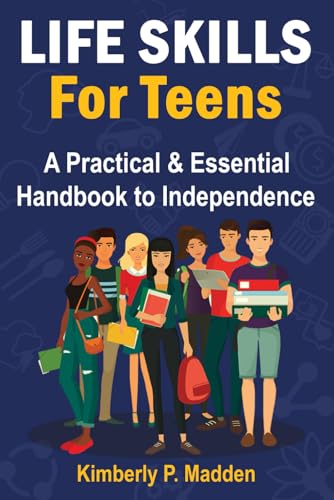

Life Skills for Teens: A Practical & Essential Handbook to Independence How to Cook, Manage Money, Score a Good Job, Buy a Car, Do First-Aid, Manage Time, Solve Problems, Handle Emotions, and More!
- Health, Fitness & Dieting
- Psychology & Counseling
- Adolescent Psychology
For feelings and wellbeing, Life Skills for Teens and Young Adults: Health Edition adds journaling prompts that suit a child who likes to write things down. Two more, The Ultimate Adulting Handbook Life Skills for Teens and Young Adults and The Ultimate Adulting Life Skills Handbook for Teens and Young Adults, deal with later topics such as jobs, renting and time management.
Treat these as resources to grow into, not something to hand over and walk away from. Read a chapter together, pick one idea, and try it that week. If you want free guidance as your child nears the teen years, the CDC offers Essentials for Parenting Teens for parents of youth between the ages of 11 and 17, and it covers encouraging teen independence.
The common mistake: doing it for them because it's faster
It really is quicker to pour the cereal yourself on a rushed morning. But every job you take back tells your child you don't think they can do it.
Instead, choose one "their job" routine per week. Maybe it is packing their lunch on Mondays, or feeding the pet every evening. Keep it the same each week, and let natural consequences teach: a forgotten water bottle is a lesson, not a disaster.
If your child finds everyday tasks very hard, or seems far behind friends of the same age, mention it to your paediatrician. They can check whether extra support would help.
What should I do when my child pushes back, struggles or makes mistakes?
Pushback is normal. It usually means your child is practising independence. Stay calm, ask what happened and what they would change, let reasonable consequences land, then adjust the next step. Keep watching closely, but avoid clamping down with tighter rules after every slip.
Why pushback is a good sign
When your child argues about a rule, rolls their eyes or says "I can do it myself," they are testing their own judgement. That is the job at this stage. Many adolescents seek more independence and more say in their decisions and behaviour, and parenting strategies often need to shift to match.
So the rules that worked at 8 may not fit at 12. That does not mean you failed. It means your child has grown, and your approach needs a small update.
For more on what is typical at this age, our guide to tween behaviour and emotions is a good companion read.
What to say and do after a mistake
Picture a 12 year old who agreed to be home by 5 and walked in at 6:15 without texting. Your first reaction may be to take away every outing. Pause instead.
- Stay calm first. Wait until you both have settled. "Let's talk about this after dinner" is a perfectly good opening.
- Ask what happened. Try: "Walk me through what happened. I'd like to understand."
- Ask what they would change. Try: "What would you do differently next time?" Let them answer before you add your thoughts.
- Let a reasonable consequence land. Perhaps the next outing is a shorter one, or they check in by text for a week. Keep it linked to the mistake and keep it short.
- Adjust the next step. Make the next outing a little smaller, not the end of outings.
Independence grows in stages, and privileges can rise as behaviour shows more maturity. A slip usually means "take one step back and try again," not "go back to the start."
Stay involved without squeezing harder
It is tempting to respond to every wobble with more checking and more rules. Research points the other way. It supports monitoring that is active but gives your child autonomy, and it links controlling, restrictive monitoring with more problematic behaviour.
With most young teens, the balance is easiest to keep by "guiding but not controlling." In practice, that means you stay curious, keep asking questions and keep the safety rules that matter, while leaving room for your child to handle things.
Common mistakes:
Signs that need extra help
Ordinary slips and sulks are part of growing up. Talk to your paediatrician, a school counsellor or another professional if you notice any of these:
Asking for help early is a strength, not a verdict on your parenting.
A simple weekly check in
A short check-in, held on a regular basis, helps keep small problems small. Choose a calm time, such as a walk or a car ride, and ask three things:
- "What went well this week?"
- "What was hard or confusing?"
- "Is there anything you'd like more say in, or any help you need from me?"
Listen more than you talk. If online life is part of what's hard, social media and mental health is worth reading together as a family.
Which resources can help you teach independence?
Books will never replace practice, but the right one gives you a starting point for conversations. Most of these are written for teens, so for a younger child you read them first and pick out the pieces that fit. Here is how the six compare.
| Option | Best Age Range | Primary Benefits | Main Drawbacks | Recommended Product |
|---|---|---|---|---|
| Confidence and money talks, especially for boys | Late tween years into the teens | Builds confidence, money habits and a sense of what comes next | Aimed at boys, so it may not suit every child | Essential Life Skills Playbook for Teen Boys |
| A whole life handbook to dip into together | Older tweens and teens | Covers cooking, money, first aid, time and emotions in one place | A lot of topics, so you need to choose what to read first | Life Skills for Teens practical handbook |
| Journaling and emotional check ins | Older tweens and teens | Gives your child private words for feelings and stress | Only works if your child is willing to write | Life Skills for Teens and Young Adults: Health Edition |
| Adult tasks such as jobs and renting | Mid to late teens | Makes big future steps feel less scary | Too far ahead for most children under 13 | The Ultimate Adulting Handbook |
| Hands on kitchen, cleaning and home skills | Tweens and up, with a grown up nearby | Practical tasks you can practise at home this week | Reading is not enough; your child still has to do the tasks | Life Skills for Teens: How to Cook, Clean, Manage Money |
| Time, health and social skills | Older tweens and teens | Helps with routines, friendships and everyday habits | Some chapters will feel too advanced for a younger child | The Ultimate Adulting Life Skills Handbook |
Key Takeaways
- Independence is built in small steps from the early school years, not handed over on a 13th birthday.
- Grant freedom in stages, and let your child's responsible behaviour decide how fast you move.
- Aim to guide, not control. Controlling and restrictive monitoring is linked with more problematic behaviour in teens.
- Treat home alone time as a trial: most experts point to about 11 or 12 for a few hours, and your own child's maturity matters more than the number.
- Before any outing, practise it together and use the three Ws: who, where and when.
- Teach skills by doing them, and use a resource like this practical life skills handbook to spark conversation, not to replace practice.
- When mistakes happen, step back one stage, talk it through, and let your child earn trust back.
You are not letting go, you are handing over
Every time you let your child carry the bag, make the call or walk to the corner shop, you are saying, "I believe you can do this." Your child hears that message long after the task is done.
Some days the handover will feel too fast, and other days too slow. That is normal. You will not get every step right, and you do not need to.
Independence grows best where a child knows a safe adult is always still there.
Pick one small thing this week, let your child try it, and be ready with a warm word whether it goes well or not. That is how confident teens get made.
Sources & References
- US Department of Education. "Independence -- Helping Your Child Through Early Adolescence."
- CDC. "Essentials for Parenting Teens."
- American Academy of Pediatrics. "Balancing Online Safety and Independence: Parental Monitoring by Age."
- American Academy of Pediatrics. "Is Your Child Ready to Stay Home Alone? - HealthyChildren.org."
- hopkinsmedicine.org. "Babysitting Safety Class at Johns Hopkins All Children's."
- safekids.org. "Frequently Asked Questions."
- American Academy of Pediatrics. "Determining when your child is ready to stay home alone."
- communityhealth.mayoclinic.org. "Primary Care in Rochester and Kasson."
- nspcc.org.uk. "Leaving Your Child Home Alone - Advice."
- raisingchildren.net.au. "Going out independently: teenagers."
- hopkinsmedicine.org. "Stranger Danger and Stranger Safety."
Frequently Asked Questions
What age can my child stay home alone?
Is it okay to leave my 13 year old home alone overnight?
How do I know my child is ready to go out on their own?
Should I check my teen's phone and online activity?
How do I give independence without losing control?
How early should I start preparing my child for teen independence?
What if my child makes a mistake with their new freedom?
Was this helpful?
Thanks — your feedback helps us pick what to write next.