HALO Swaddle Secrets for Calmer, Safer Newborn Sleep
TL;DR: Quick summaryA HALO swaddle can help a newborn settle, but it is a short term comfort tool, not a SIDS prevention tool. Pick a size that fits, keep the wrap snug at the chest with roomy hips and knees, watch for overheating, and stop at the first sign of rolling.

In this article
TL;DR: Quick summary
A HALO swaddle can help a newborn settle, but it is a short term comfort tool, not a SIDS prevention tool. Pick a size that fits, keep the wrap snug at the chest with roomy hips and knees, watch for overheating, and stop at the first sign of rolling.
What you'll get
About 27 minutes to read. Short on time? Read the bold lines and the Key Takeaways near the end.
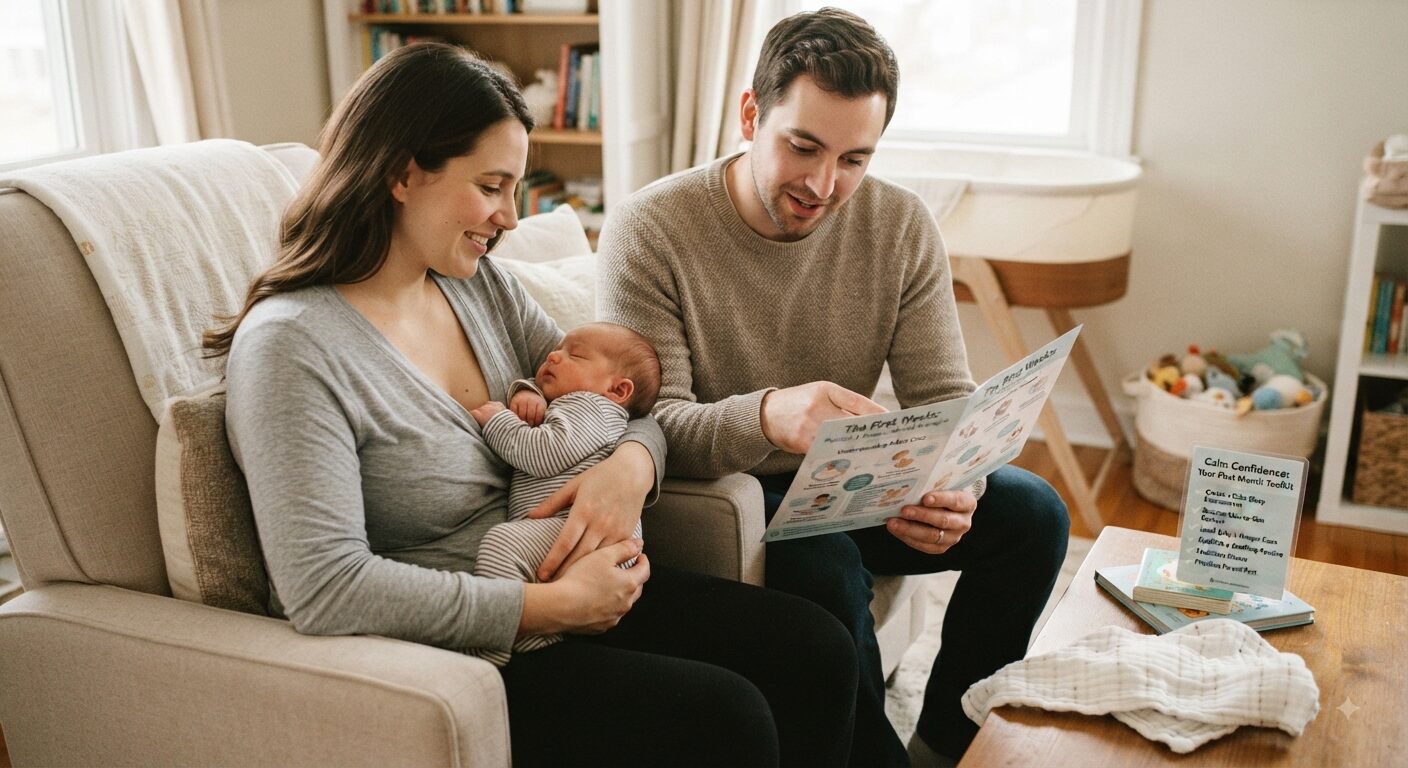
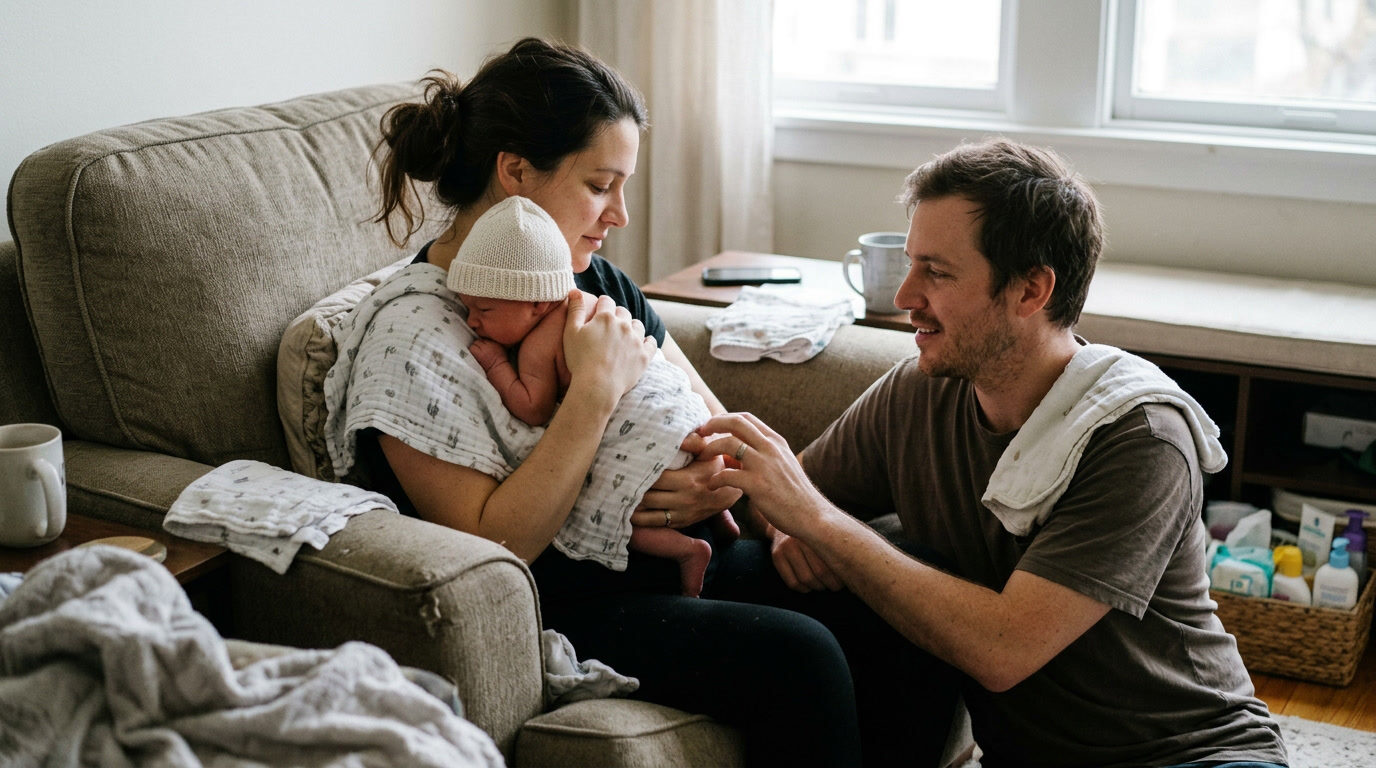
It is 2 a.m. and your baby has finally dropped off in your arms. You lower them into the crib, and their arms fly out like a startled starfish. Eyes open, cry starts, and you are back to square one.
If that scene feels familiar, you are in good company. This guide is for parents of newborns up to about 3 months, and for anyone in the last trimester shopping for baby gear and wondering whether a swaddle is worth buying.
I will be honest with you from the start, the way I would be in clinic. Swaddling helps some babies settle, but it does not make sleep safer by itself. What it does give you is a calmer baby, if you use it correctly and stop at the right time. By the end you will know how to choose, wrap, check, and move on.
Does swaddling really help a newborn sleep?
For many newborns, yes. A 2022 systematic review found swaddling appears to increase quiet sleep and cut sleep state changes in babies new to it. But there is no evidence that it lowers SIDS risk, and any gear that makes sleep heavier needs extra care.
Why swaddles calm some babies
Newborns have a startle reflex. A noise, a bump, or a sense of falling makes their arms fling outward, and that jolt can wake them. A swaddle gently holds the arms close, so those flings wake your baby less often.
Many babies also seem to like the snug, held feeling. It is a little like being cuddled, only it lasts after you put them down. The research fits what many parents notice: swaddled babies tend to have more quiet sleep and fewer shifts between sleep states.
Picture a baby who falls asleep on your chest, then wakes within minutes of being put down. A swaddle can bridge that gap for some families. It will not work for every baby, and that is fine.
The part nobody puts on the box
Here is the piece parents rarely hear. The American Academy of Pediatrics looked at this in its 2022 safe sleep report and said:
There is no evidence to recommend swaddling as a strategy to reduce the risk of SIDS.
American Academy of Pediatrics (2022)
So please do not buy a swaddle because you think it protects your baby from SIDS. Buy it because it may help your baby settle, and then use it safely.
The same review adds a caution. It says parents should know that conditions which make a baby harder to rouse may raise the risk of sudden unexpected death in infancy (SUDI) among babies not previously swaddled. That is why technique, temperature and the sleep space matter so much. If your baby has never been swaddled, ask your doctor or health visitor before you start.
For the bigger picture of what ordinary newborn sleep looks like, our newborn sleep guide walks through it. For the full set of rules around the crib, read safe sleep too. Both are worth five minutes before the baby arrives.
What to say when someone tells you swaddling is a must
Relatives often have strong opinions, so it helps to have a calm line ready. Try this: "We are using it to help our baby settle. The doctors say it does not prevent SIDS, so we are also following the safe sleep rules."
That sentence respects their care and keeps you in charge. It also stops the swaddle from becoming a source of guilt if your baby simply hates it.
Common mistakes in this first step:
When to get help: if your baby is hard to wake, feeds poorly, or you are worried about their breathing, call your doctor or health visitor straight away. Do not wait for a better moment.
Which HALO swaddle should I buy, and what size?
Choose by your baby's weight and your room's warmth, not by colour. Check the weight range on the label, match the TOG (a warmth rating) to your room, and pick a swaddle that lets you go from arms in to arms out when the time comes.
Getting the size right
Sizing is the step most parents rush, and it matters more than any feature. Read the label for the weight or age range of the exact swaddle you are buying. For example, the cotton HALO SleepSack Swaddle and the HALO Sleepsack 3 Way Adjustable Swaddle come in different size ranges, so check the label of each.
A swaddle that is too big lets arms slip out and fabric ride up toward your baby's face. A swaddle that is too small squeezes the hips and chest. The goal is snug at the chest with ample room at the hips and knees.
If your baby is very small, was born early, or sits between sizes, ask your paediatrician or health visitor which size suits them. Do not size up "to grow into", because a loose swaddle is a poor swaddle.


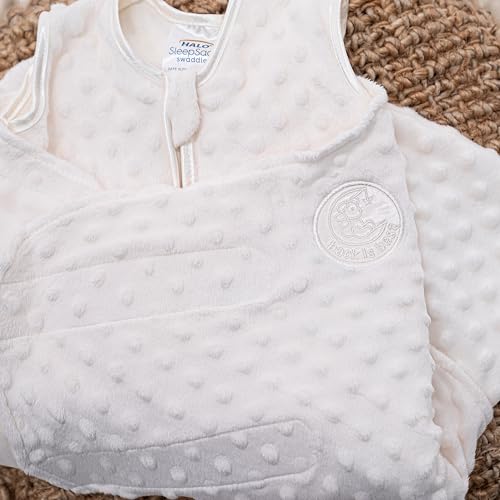

HALO Sleepsack Swaddle, 3-Way Adjustable Swaddle Blanket, TOG 3.0, Velboa Plush Dots, Cream, Newborn, 0-3 Months
- 3-way adjustable swaddle that adjusts to your baby's sleep style. Swaddle arms in, hands-to-face, one or both…
- Used by hospitals nationwide as their swaddle of choice for safe sleep education. "Back is Best" embroidery…
- Strong, adjustable fasteners ensure a perfect fit and resist breakouts for more secure swaddling. Unzips from…
What a TOG rating actually tells you
TOG is a warmth rating. A higher number means a warmer fabric. Here is how the HALO options in this guide line up:
Your room decides, not the calendar. Warmth and room temperature go together, so the right TOG rating depends on how warm your room actually is. A plush swaddle in a warm room is a recipe for a sweaty baby.
If you are not sure which rating suits your home, ask your health visitor what room temperature they suggest for your baby's sleep. Then pick the TOG to match.
Features worth paying for
Not every feature earns its place, but a few do. Look for these:
Note the wording there. That listing refers to a particular HALO swaddle, so check the label and the maker's information for the exact one you choose.
The SwaddleStretch has stretchy sleeves that let arms move up or out. It suits babies who fight the arms in position.
Common mistakes when buying:
How do I swaddle my baby with a HALO, step by step?
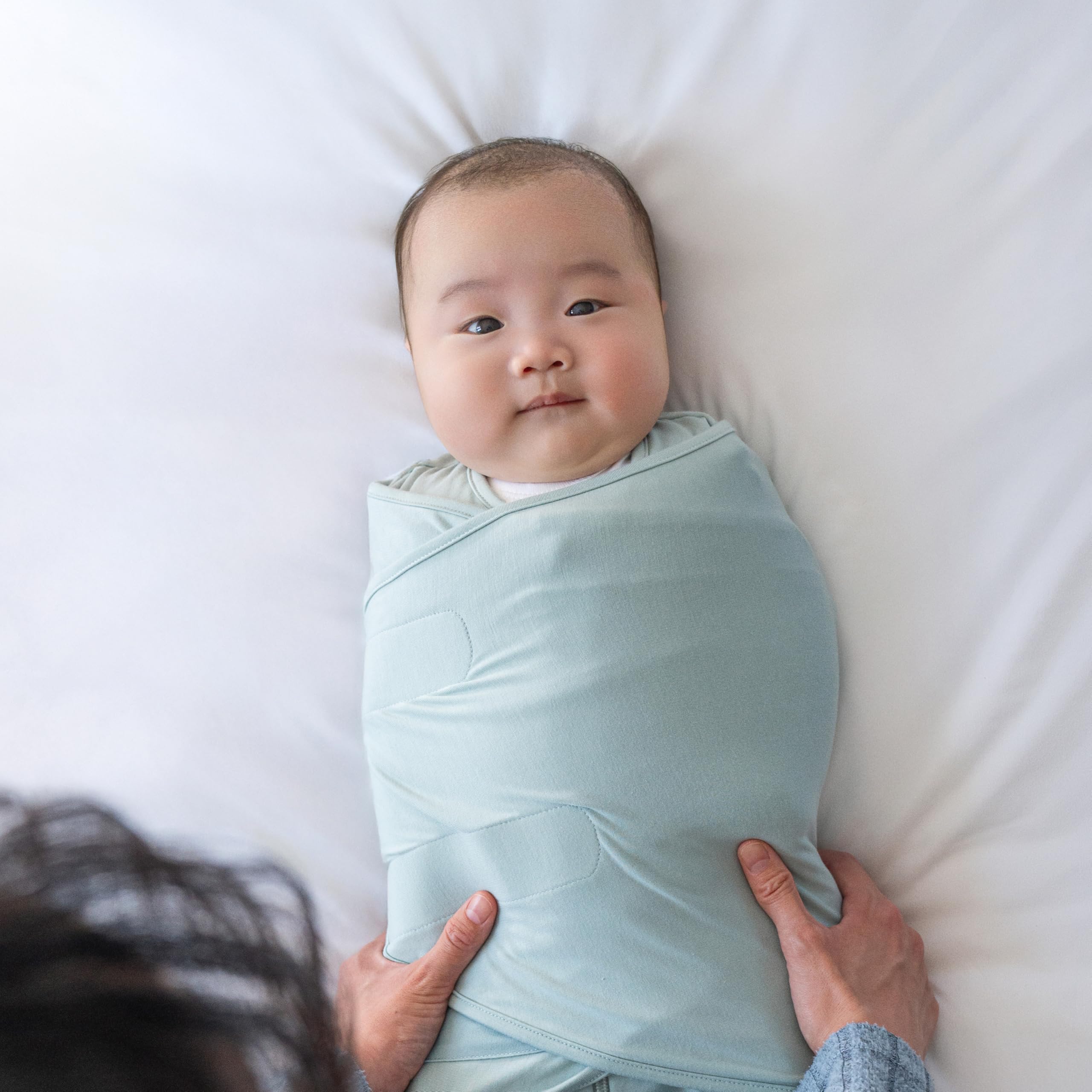
Open the swaddle flat, lay your baby on it with shoulders at the neckline, wrap one wing across, then the other, and fasten. Keep it snug at the chest and loose at the hips and knees, and leave the neck and face clear.
The wrap, in order
Do a first run in daylight when your baby is calm and fed. Then it will feel easy at night.
- Change the diaper first. Then unzip the bottom of the swaddle and lay it flat with the neckline at the top.
- Lay your baby on their back on the swaddle, with their shoulders in line with the neckline. The fabric should sit below the chin and never rise toward the mouth or nose.
- Choose the arm position. Arms in at the sides, hands to face, or one arm out are the arm positions the HALO instructions allow; choose the one your baby settles best with.
- Bring the first wing across the chest and fasten it with the hook and loop tab, flat against the fabric.
- Bring the second wing across the other way and fasten it. Check the chest is snug but not tight.
- Zip the bottom closed. Gently check the legs can bend and fall apart freely at the hips and knees.
- Slide your fingers between the wrap and your baby's chest. If it will not slide, loosen it. If there is a big gap, tighten the wings, not the legs.
- Lay your baby down to sleep on their back, as the "Back is Best" embroidery on the swaddle reminds you.
Our safe sleep guide covers the full set of rules for the crib.
Wrap it to the "snug on top, loose below" rule
That short phrase is all you need to teach a partner, grandparent or sitter. The upper body is held snug, the lower body is free. The AAP puts it more formally: swaddling should be snug around the chest but allow ample room at the hips and knees.
Swaddling should be snug around the chest but allow for ample room at the hips and knees to avoid exacerbation of hip dysplasia.
American Academy of Pediatrics (2022)
Say it out loud when you hand your baby over: "Snug on top, loose below, face clear, back down." It takes three seconds and helps everyone remember the basics.
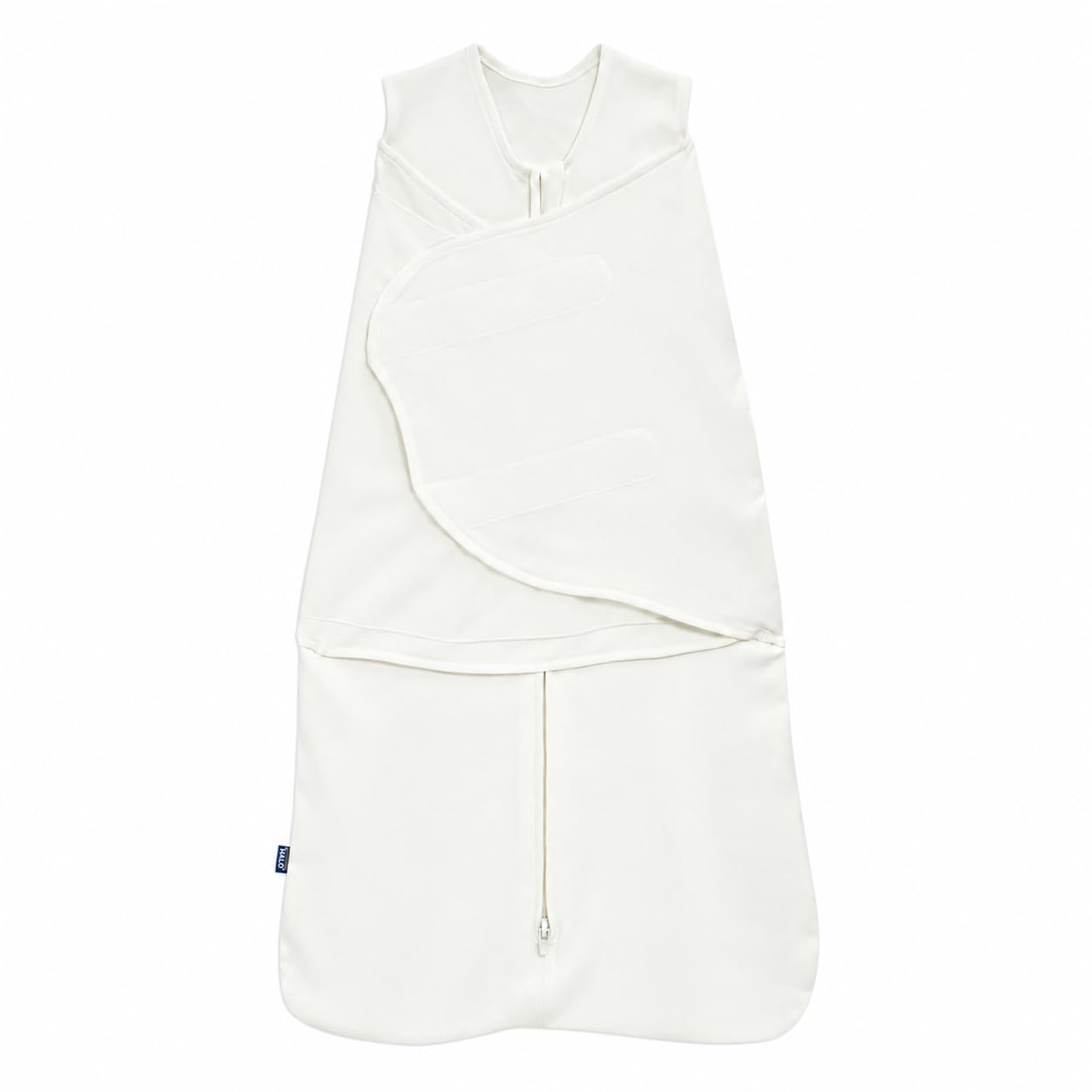
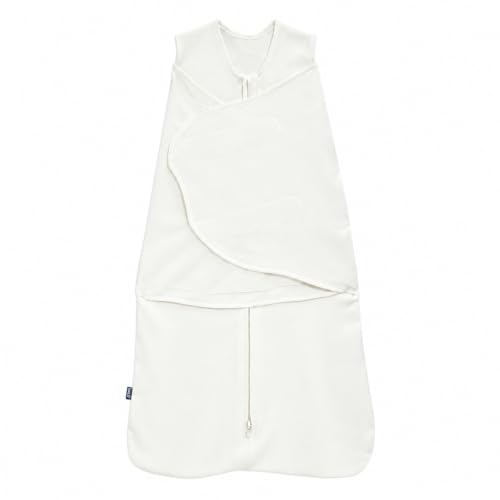


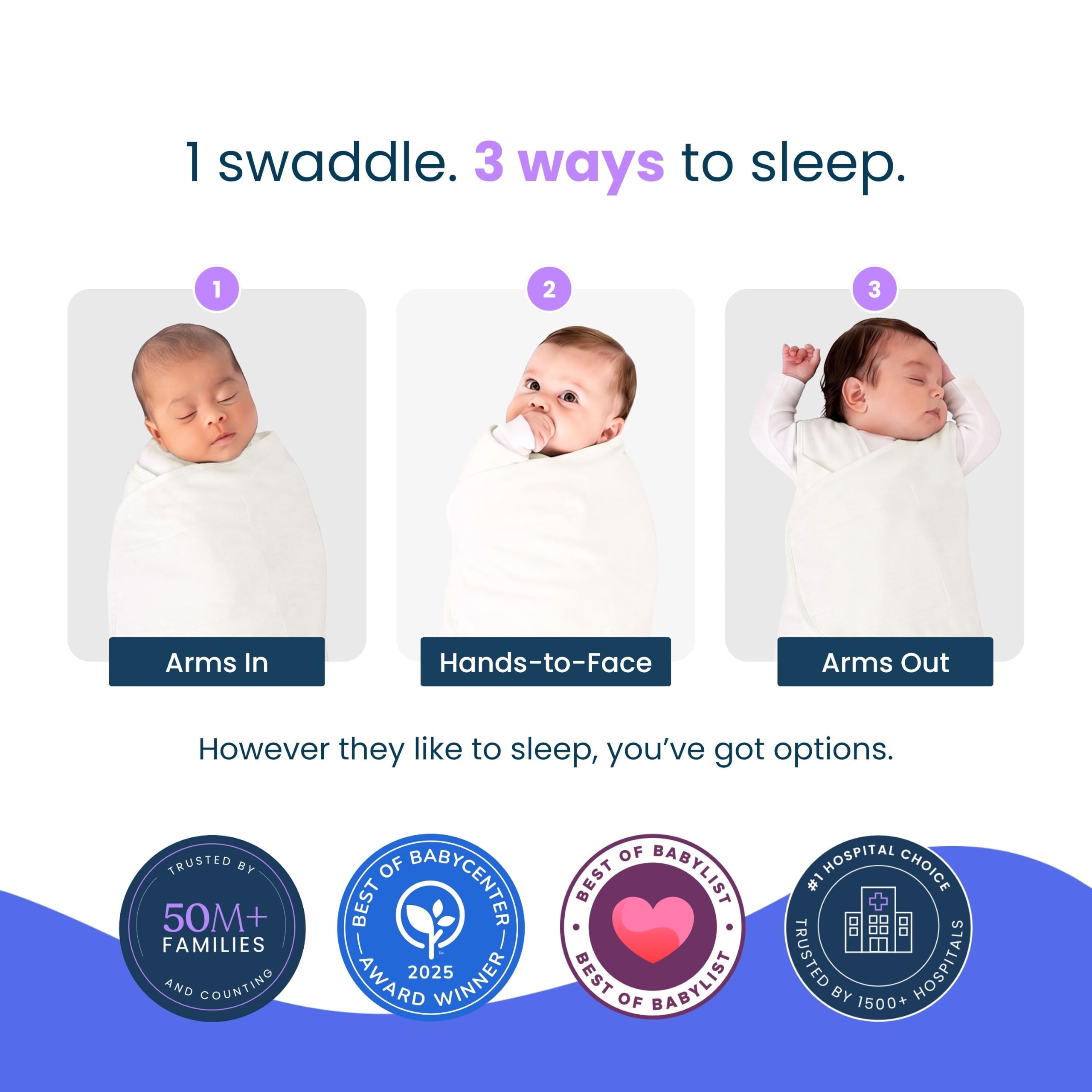
HALO SleepSack Swaddle | Cotton | 1.5 TOG | 68-75°F | 6-12 lbs |Cream
- SAFE AND SECURE SLEEP SOLUTION: The Original Halo Sleepsack Swaddle replaces loose blankets in the crib…
- SOFT AND STRETCHY COTTON: Made from 100% cotton with a double-knit construction, offering a cozy and slightly…
- 3-WAY ADJUSTABLE SWADDLE DESIGN: Generously sized fasteners allow a perfect, customizable fit. Adjust the…
Making nighttime changes easy
Newborns feed often, so you will be changing diapers in the dark. The 3 way HALO swaddle unzips from the bottom, so your baby can stay wrapped through a diaper change. That helps keep them drowsy and keeps you from redoing the whole wrap.
Keep a spare swaddle in the crib area. A leaking diaper at 4 a.m. is much easier when you are not hunting for a clean one.
When your baby fights the wrap
Wrapping a baby who is already screaming is hard. Try swaddling earlier, when you see the first sleepy signs, such as yawning, staring, or jerky arm movements. An overtired baby resists far more.
If your baby still protests, try one arm out or hands to face, which gives them something to suck or hold. Some babies need arms up. If so, consider a stretch style like the SwaddleStretch.
Common mistakes:
How do I keep my baby's hips safe and avoid overheating?
Keep the wrap snug at the chest but roomy at the hips and knees, so legs can bend and fall apart naturally. Watch for sweating, damp hair, flushed cheeks, heat rash and fast breathing, which can mean your baby is too hot.
Why hips need room
Newborn hips are still forming. The hip is a ball and socket joint, and in a condition called developmental dysplasia of the hip (DDH), the socket does not hold the ball well. Tightly straightened legs can make that worse.
HealthyChildren.org reports that studies have found straightening and tightly wrapping a baby's legs can lead to hip dislocation or dysplasia. The International Hip Dysplasia Institute recommends holding infant hips in slight flexion and abduction during swaddling, which in plain words means gently bent and slightly apart. Mayo Clinic puts it simply:
Babies need to be able to bend their legs.
Mayo Clinic
That is the test. If your baby cannot bend their legs inside the swaddle, it may be too tight below the chest.
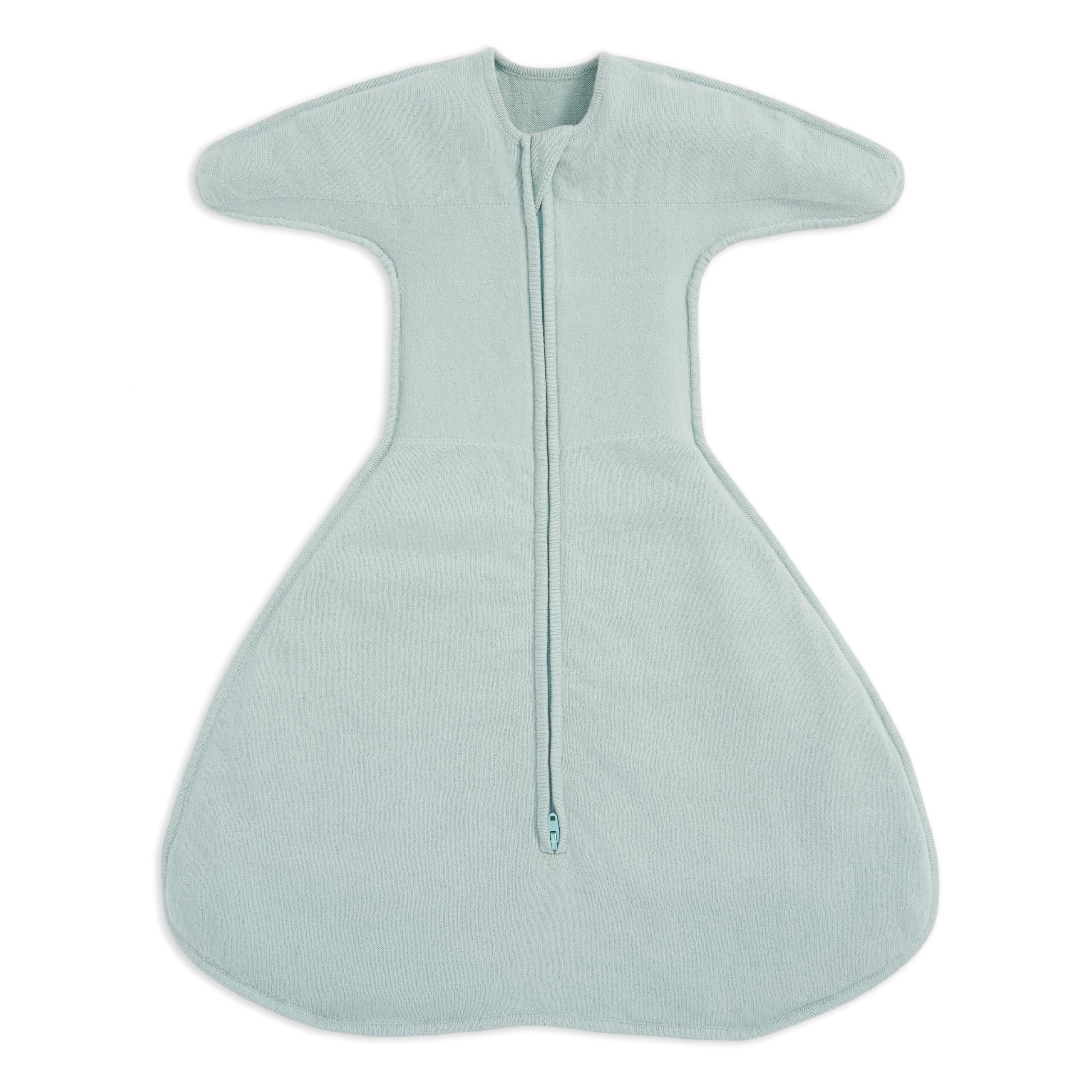
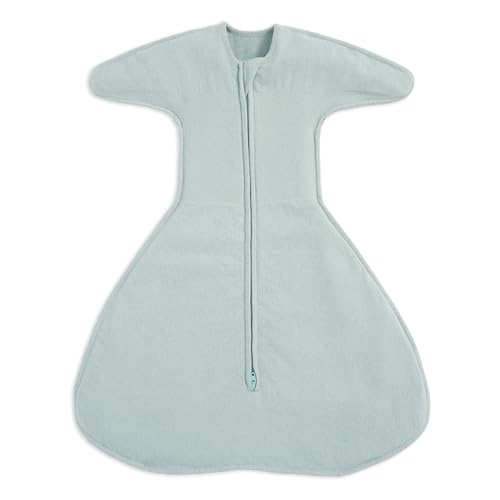
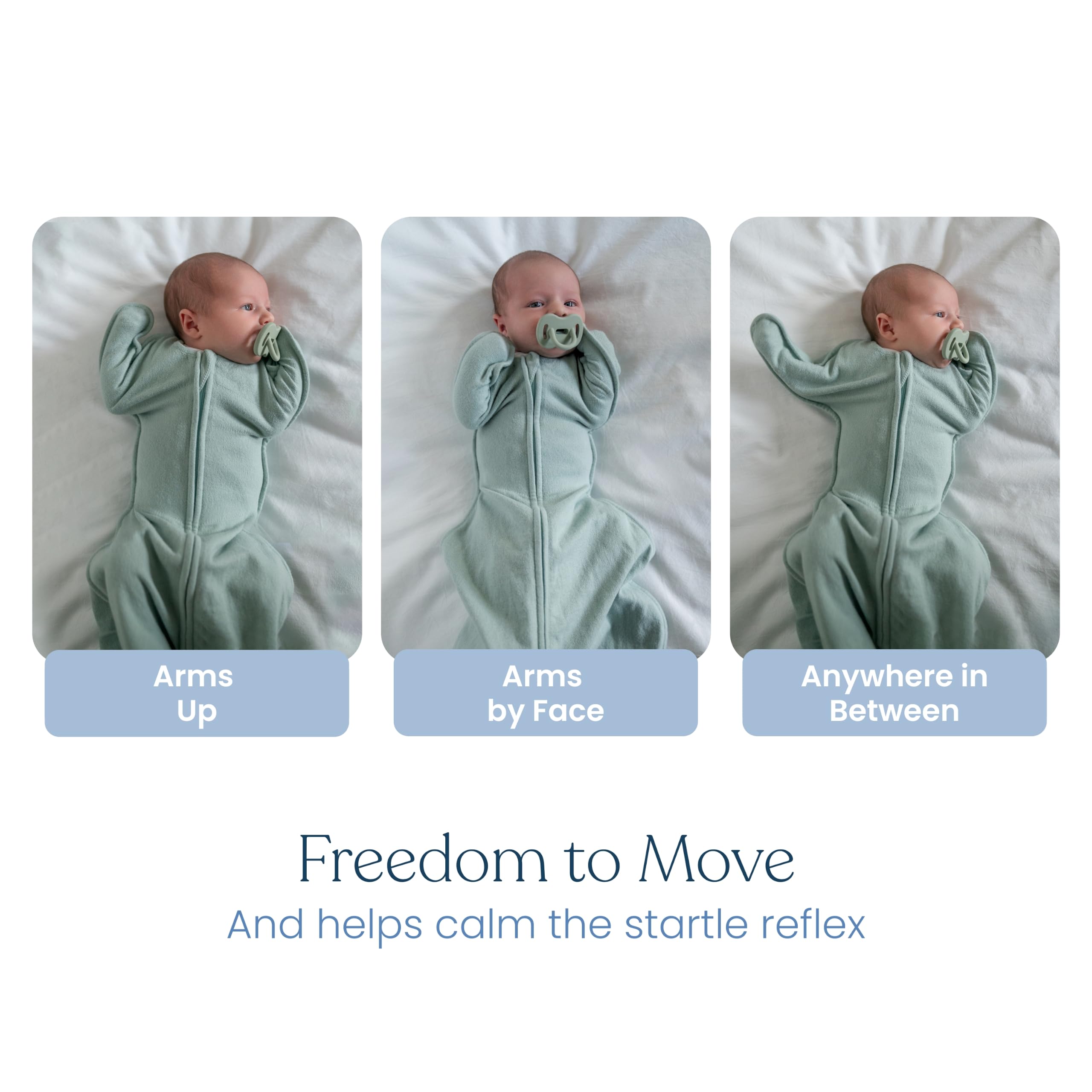
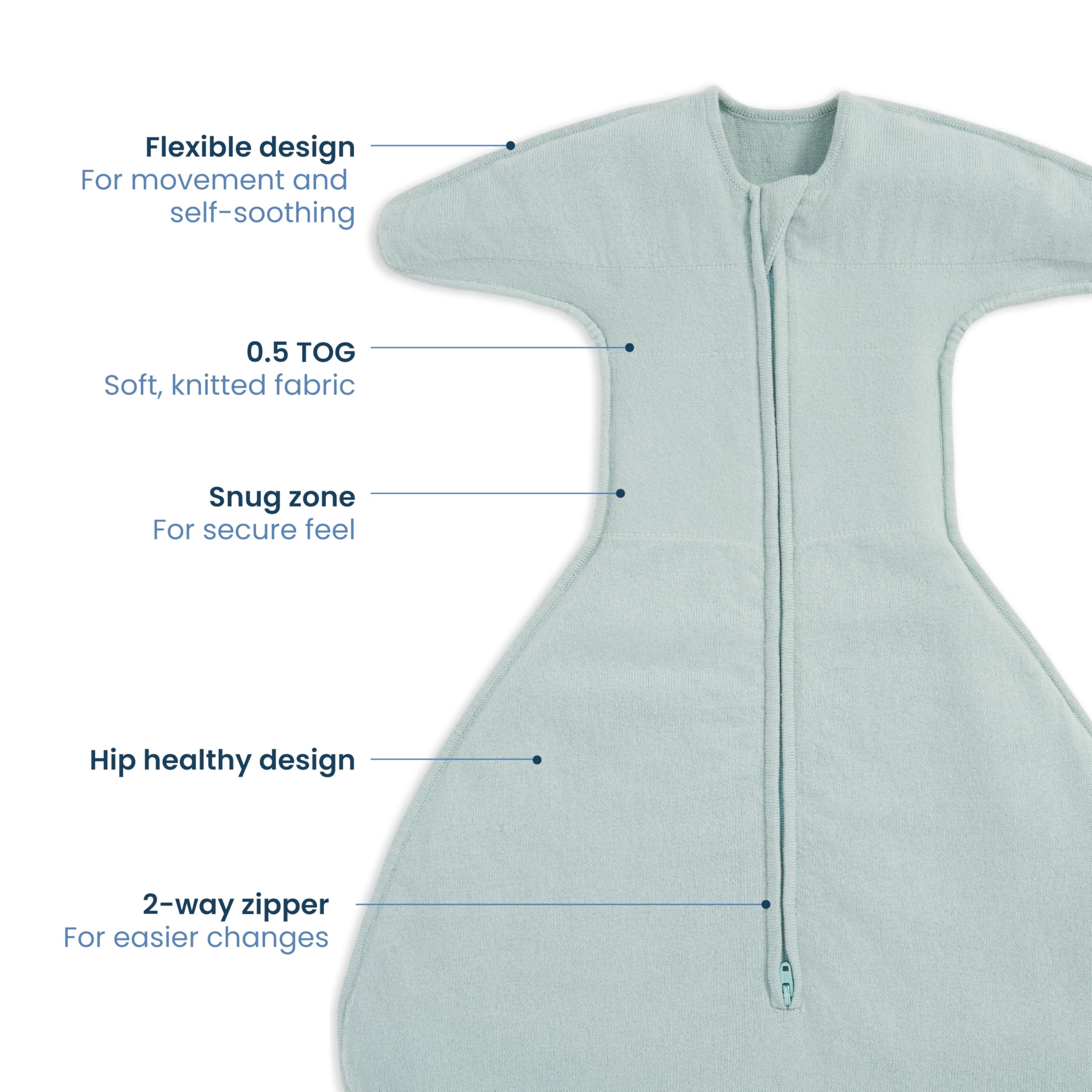
HALO Sleepsack SwaddleStretch, Arms Up or Extended Arms, Newborn Baby Swaddle, 0 – 3 Months, 0.5 TOG, Calm Sage
- FREEDOM TO MOVE: Stretchy sleeves support a natural sleep position, allowing arms to move up, out, or…
- STARTLE-SOOTHING: Patent-pending design with unique sleeve construction and stretch fabric help ease the…
- HELPS THEM FEEL SECURE: Snug zone creates a cozy, held feeling that can help your little one settle for sleep.
The hip check you can do in ten seconds
Once your baby is wrapped, look and feel:
If you are using a sack style like the SwaddleStretch, check that the legs have room to move freely inside it. A good design helps, but your own check is the one that counts.
If your baby was born breech, or there is a family history of hip problems, ask your doctor which hip checks apply to you. Do not guess.
Spotting overheating
A swaddled baby has fewer layers to remove, so heat builds quietly. HealthyChildren.org lists the signs:
The baby could be too hot if you notice sweating, damp hair, flushed cheeks, heat rash and rapid breathing.
American Academy of Pediatrics
Hands and feet are often cool in babies and are not a good guide. Feel the back of the neck or the chest instead. If it is damp or hot, take a layer off or swap to a lighter TOG swaddle.
Scenario: you wrap your baby in a plush 3.0 TOG swaddle in a warm bedroom, and an hour later their hair is damp. That is your cue to unwrap and move to a lighter fabric next time, not to turn the fan on and hope.
Weighted swaddles are not safe
You will see weighted sleep products marketed as extra calming. The AAP is clear:
Weighted swaddle clothing or weighted objects within swaddles are not safe and therefore not recommended.
American Academy of Pediatrics (2022)
Weighted swaddle clothing and weighted objects within swaddles are not safe, so do not add anything to make a swaddle heavier. No rolled blankets, no sandbags, no extra hand weights.
Common mistakes:
When to get help: if you notice your baby's legs seem to resist bending, one leg looks different from the other, or you hear a clicking hip, mention it at your next check. Do not wait until the next routine visit if you are worried.
What should the sleep space and bedtime routine look like?
Keep it simple: an uncluttered crib, a swaddle as the only layer on your baby, dim lights, steady background sound, and a short routine in the same order each night. The HALO swaddle replaces loose blankets rather than joining them.
The sleep space
CHOP's Safety Center page describes the HALO wearable blanket as replacing loose blankets for safe sleep. That is the main idea: your baby is the one wearing the warmth, so nothing loose needs to sit in the crib.
Beyond that, the crib rules are covered in our safe sleep guide, and I would rather you read them there than get a half version here. The checklist is short and it is worth ticking off before the baby comes home.
Check your baby for signs of overheating, such as sweating, damp hair, flushed cheeks, heat rash or rapid breathing, and adjust the swaddle to suit. If you are unsure what range to aim for, ask your health visitor.
Light, sound and the rhythm of the day
Newborns do not know day from night yet. You can help gently. Keep days bright and busy, with normal household noise. Keep nights dim and quiet, with minimal talking and no play.
Dim lights as bedtime approaches, and use blackout curtains if streetlights come in. Steady background sound can mask sudden noises. Our explainer on why white noise works covers how to use it sensibly, including keeping the volume low and the machine away from the crib.
A video monitor can be handy too. Our roundup of the best video baby monitors can help you pick one. It lets you see whether the swaddle has stayed in place and the face is clear without opening the door.
A bedtime routine you can actually keep
You do not need a fancy ritual. You need something short that you can repeat when you are exhausted. Try this order:
- Feed your baby in low light.
- Change the diaper and check the skin for any signs of heat.
- Swaddle with the three checks: chest snug, hips free, face clear.
- Cuddle for a minute, with a low, steady voice.
- Lay your baby down on their back, drowsy if you can manage it.
Say the same short phrase each time, such as "Time for sleep, I love you." Babies learn the pattern long before they understand words.
Scenario: you spend half an hour rocking, then wake the baby by transferring them. If that sounds familiar, our piece on rocking your baby to sleep explains when it makes nights harder, and a swaddle can make the transfer less jarring.
Newborn nights are not meant to be long
It helps to remember that newborns wake to feed, and that is normal. A swaddle can help your baby settle between feeds, but it will not turn a newborn into a long sleeper.
If your baby wakes hungry, feed them. Do not try to stretch the gap by wrapping tighter. The goal is a settled baby, not a long stretch.
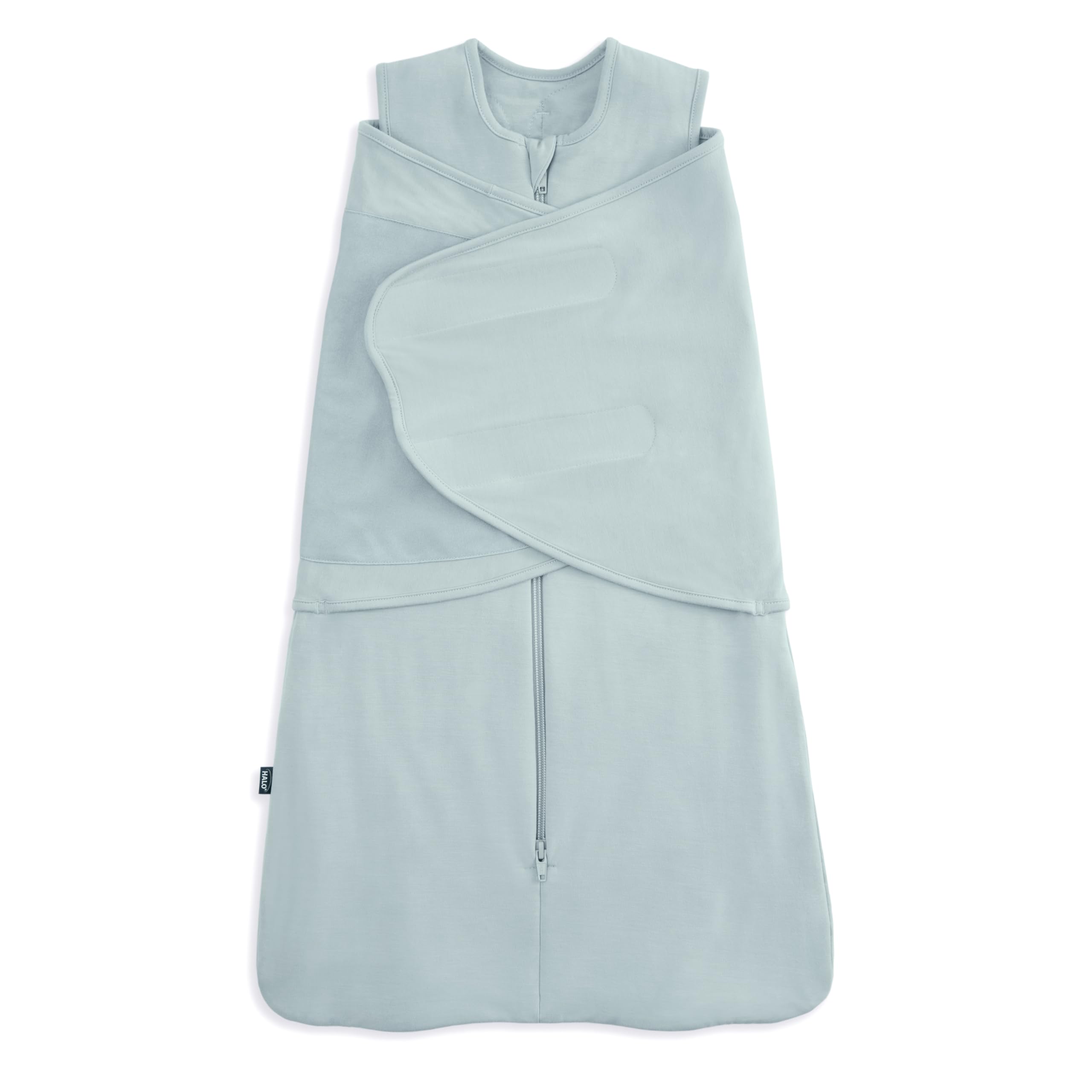


HALO Sleepsack Supersoft Swaddle, Bamboo Viscose, 2 TOG, 0-3M, NB, Calm Sage
- LUXURIOUSLY SOFT BAMBOO FABRIC – Made from buttery-soft 95% viscose / 5% spandex, this best-selling SleepSack…
- CUSTOMIZABLE 3-WAY SWADDLE DESIGN – Allows for arms in, arms out or hands to face swaddling so your baby can…
- SNUG AND SECURE FIT EVERY TIME – Adjustable wings with hook and loop fasteners create a perfectly snug…
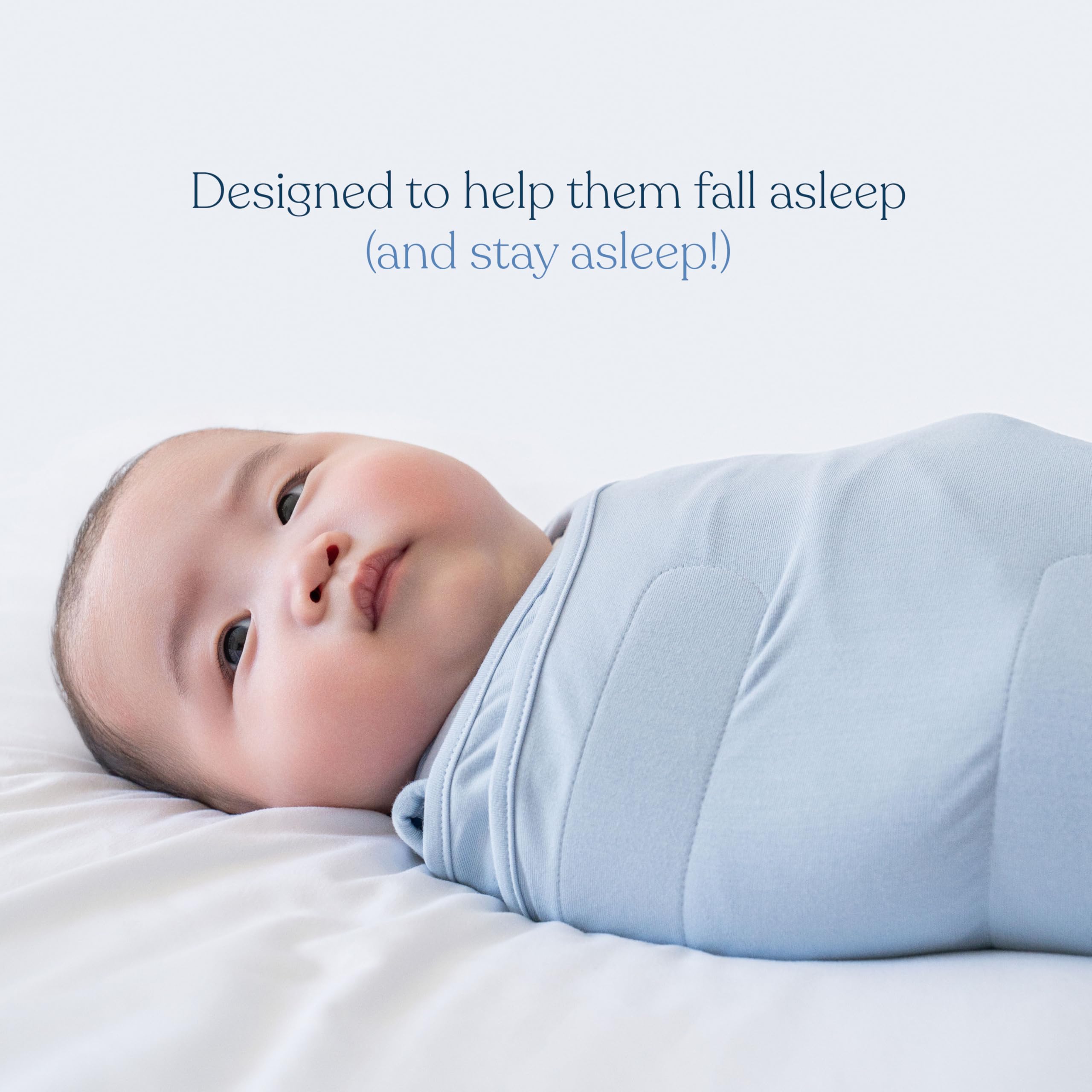
For parents who want a softer feel, the HALO Sleepsack Supersoft Swaddle in bamboo viscose is an option with adjustable wings for a snug fit. It is a nice choice if your baby seems sensitive to scratchy fabric. Compare its price with the other options before deciding whether the feel justifies it.
Common mistakes:
When should I stop swaddling, and how do I switch?
Stop at the first sign your baby is trying to roll, even if that is earlier than you expected. Guidance varies from around 2 months to around 4, but the rolling signs matter more than the calendar.
Why the age range varies
Different organisations give slightly different ages, because babies roll at different times. Here is how the main sources put it:
The common thread is clear. The sign matters more than the date. HealthyChildren.org says it directly:
Stop swaddling as soon as your baby shows any signs of trying to roll over.
American Academy of Pediatrics
CHOP's page adds a second trigger:
Discontinue swaddling when the baby shows signs of rolling over or breaking out of the swaddle wrap.
Children's Hospital of Philadelphia
The signs to watch for
You do not need to wait for a full roll. Watch for:
Any one of these is enough. Do not wait until all of them show up, and do not tighten the wrap to keep a baby in. A tighter wrap does not make rolling safe.
How to switch without wrecking sleep
If your baby is not yet showing rolling signs but is nearing the early end of the range, you can move gradually. Moving in stages can make this easier:
- Start with arms in.
- Move to one arm out, or hands to face, for a few nights.
- Move to both arms out.
- Move to a wearable blanket with no wrap at all.
If your baby is already showing rolling signs, skip the slow steps and go straight to a wearable blanket with free arms. HealthyChildren.org notes that sleep sacks that do not swaddle and let the baby move freely can be used as long as you want.


HALO Sleepsack Supersoft Wearable Blanket, Viscose Made from Bamboo, Sleeping Bag for Babies, 1.5 TOG, 6 – 12 Months, Medium, Calm Sage
- 95% viscose from bamboo / 5% elastane
- #1 SLEEPSACK - Award-winning, easy-to-use wearable blanket for safe sleep
- SUPER SOFT - 95% viscose from bamboo / 5% elastane interior and exterior with 100% polyfill, hypoallergenic &…
The HALO Sleepsack Supersoft Wearable Blanket is made for older babies and is a natural next step. Like the swaddle, it replaces loose blankets in the crib. Pick the size on the label by your baby's weight, as you did for the swaddle.
What to expect for the first few nights
Expect some grumbles. A baby who has been held snug for weeks will notice the change. Some will wake more for a few nights; some will not mind at all.
Stay consistent. Use the same routine, the same white noise, and the same phrase. If your baby seems upset, comfort them, but do not go back to full swaddling, because that undoes the safety step.
If this change coincides with a rough patch, you are not alone. Our baby sleep regression stages guide explains how sleep can wobble month by month.
Childcare and other carers
Make sure everyone who looks after your baby knows the stop rule. AAP lead author Rachel Moon says child care providers should not swaddle babies, because centres typically take infants at about 2 or 3 months.
Here is a script for a childminder or grandparent: "We have stopped swaddling because rolling starts around now. Please use the wearable blanket with arms free, and always place him on his back."
Common mistakes:
What if my baby hates the swaddle or still wakes all night?
Some babies simply dislike being wrapped, and that is fine. Try arms up or hands to face, change the timing, or skip swaddling and use a wearable blanket. Frequent waking in the early weeks is normal, so judge the swaddle by how settled your baby is, not by hours slept.
Three common swaddle problems
Most trouble falls into one of these groups. Here is what I suggest for each.
My baby screams the moment I wrap. Start earlier, at the first sleepy signs. Try one arm out or hands to face. Wrap calmly, with a low voice, and pause if your baby gets upset.
My baby keeps breaking out. First check the size and fasteners. A swaddle that is too big will not hold. But if your baby is breaking out night after night, treat it as a sign to stop swaddling. Do not add extra wraps, tape or a heavier blanket to keep them in.
My baby sleeps well in the swaddle but wakes up hot. Look for damp hair, flushed cheeks or fast breathing. Switch to a lighter TOG, or check the room.
Choosing a swaddle for a baby who dislikes arms in
If your baby always fights arms in, a different design may help. The HALO SwaddleStretch is one option to look at if your baby fights arms in, and it is worth checking its sizing and fit guidance before you buy.
The three way HALO Supersoft Swaddle is one option to consider if you want to compare arm positions, though the evidence here does not confirm how it is designed to work.
Remember that either one is only for the pre rolling stage. Once the signs appear, you switch to a wearable blanket.
HALO Sleepsack Supersoft Swaddle, Bamboo Viscose, 2 TOG, 0-3M, NB, Calm Sage
- LUXURIOUSLY SOFT BAMBOO FABRIC – Made from buttery-soft 95% viscose / 5% spandex, this best-selling SleepSack…
- CUSTOMIZABLE 3-WAY SWADDLE DESIGN – Allows for arms in, arms out or hands to face swaddling so your baby can…
- SNUG AND SECURE FIT EVERY TIME – Adjustable wings with hook and loop fasteners create a perfectly snug…
Why your baby is still waking
A swaddle will not stop night feeds. Newborns have small stomachs and need to eat often. It will not stop growth spurts or clusters of fussiness in the evening either.
Here is a quick troubleshooting list to run through before you blame the swaddle:
If the answers are all no, give it some time. Newborn sleep is messy, and it is not your fault.
Your own sleep matters too
Exhausted parents make harder decisions. Share night shifts with a partner if you can, so that each of you gets one longer stretch. Ask a friend or relative to take the baby for an hour in the day so you can nap.
If you want more ideas, our baby sleep solutions piece lists eight ways to soothe your infant. Pick one or two, not all eight.
When to get help
Call your doctor or health visitor if:
That last one counts as much as the others. Parents' wellbeing is part of the medical picture, and asking for help is a strength.
Common mistakes:
Which HALO option fits which stage?
Here is a quick comparison. Think of it as a ladder: start with the swaddle that suits your baby, and move to a wearable blanket when rolling signs appear.
| Option | Best Age Range | Primary Benefits | Main Drawbacks | Recommended Product | Price Range |
|---|---|---|---|---|---|
| Arms in swaddle, plush and warm | Newborn, before any rolling signs | Strong startle control, bottom zip for diaper changes, easy step down to arms out | Warmest option (3.0 TOG), easy to overheat in a warm room | HALO Sleepsack 3 Way Adjustable Swaddle | $34.95 |
| Hands to face or one arm out cotton swaddle | Newborn, before any rolling signs | Lets babies self soothe, mid weight 1.5 TOG, popular and widely reviewed | Needs the right weight range, check the fit | HALO SleepSack Swaddle in cotton | $34.95 |
| Arms up or extended arms stretch swaddle | Newborn, before any rolling signs | Lightest option (0.5 TOG), stretchy sleeves, roomy legs | Fewer reviews, less snug for strong startlers | HALO Sleepsack SwaddleStretch | $24.95 |
| Bamboo viscose three way swaddle | Newborn, before any rolling signs | Very soft, three way fit, adjustable wings | Highest price, 2 TOG may run warm | HALO Sleepsack Supersoft Swaddle | $49.95 |
| Wearable blanket, arms free | Once swaddling stops | Replaces loose blankets, no wrap so no rolling risk | Does not contain the startle reflex | HALO Sleepsack Supersoft Wearable Blanket | $44.95 |
Guidance on when to stop swaddling varies from about 2 months to about 4 months, but the AAP, NICHD and Mayo Clinic all point to stopping once rolling signs appear.
What do the experts agree on?
Across organisations, the message is surprisingly consistent. Swaddle snugly at the chest, leave room for the hips and knees, and stop early.
AAP lead author Rachel Moon has pointed out that child care providers should not swaddle babies, since centres typically take infants at about 2 or 3 months. That fits the wider guidance, because rolling is close by that age.
The NICHD says to avoid swaddling once a baby starts to roll over, usually around 3 months of age.
Avoid swaddling once baby starts to roll over (usually around 3 months of age).
NICHD
The practical takeaway is that the calendar is a rough guide and your baby is the real clock. Watch them, not the date.
Key Takeaways
- A swaddle may help your baby settle and sleep more quietly, but there is no evidence it reduces SIDS risk, so keep following every safe sleep rule.
- Choose by your baby's current size and the room's warmth, not by a size to grow into. A good starting point is the HALO Sleepsack 3 Way Adjustable Swaddle.
- Wrap snug on top and loose below: chest held, hips and knees free to bend, face clear.
- Never use weighted swaddles, and do not add loose blankets over a swaddle.
- Watch for sweating, damp hair, flushed cheeks, heat rash and fast breathing, and lighten up if you see them.
- Stop swaddling at the first sign of rolling or repeated breakouts, then move to a wearable blanket such as the HALO Sleepsack Supersoft Wearable Blanket.
- If your baby hates the wrap, that is fine. Try a different arm position or skip swaddling altogether.
A calmer night is possible
Those first weeks are a blur of feeds, nappies and wondering whether you are getting any of it right. A swaddle will not fix all of that, but used well it can take the edge off the hardest hour of your night.
Remember the simple version. Snug on top, loose below, face clear, back down, and stop at the first sign of rolling. If your baby hates it, you have lost nothing and you can try something else.
A swaddle is a short chapter, not the whole book of your baby's sleep. If this guide helped, save it for later, share it with a partner or grandparent, and come back when it is time to switch.
Sources & References
- Children's Hospital of Philadelphia (chop.edu). "Sleepsacks & Swaddles."
- American Academy of Pediatrics. "Sleep-Related Infant Deaths: Updated 2022 Recommendations for Reducing Infant Deaths in the Sleep Environment."
- American Academy of Pediatrics (HealthyChildren.org). "Swaddling: Is it Safe for Your Baby?"
- American Academy of Pediatrics (HealthyChildren.org). "How to Keep Your Sleeping Baby Safe: AAP Policy Explained."
- NIH (NICHD Safe to Sleep). "FAQs."
- Health Canada (canada.ca). "Dressing your baby for sleep."
- American Academy of Pediatrics (AAP News). "Improper swaddling a risk factor for developmental dysplasia of hip."
- Mayo Clinic. "Helping baby sleep through the night."
- American Academy of Pediatrics (AAP News). "Unwrapping the controversy over swaddling."
- NIH (National Library of Medicine). "The effect of swaddling on infant sleep and arousal: A systematic review and narrative synthesis."
Frequently Asked Questions
Can I swaddle my newborn every night?
Does swaddling prevent SIDS?
Is a HALO swaddle safe for my baby's hips?
When should I stop swaddling?
Can I use a weighted swaddle?
What do I use after the swaddle?
How do I know if my baby is too hot in the swaddle?
Was this helpful?
Thanks — your feedback helps us pick what to write next.