
Can Dads Get Postpartum Depression? 8 Things to Know
Yes, dads can absolutely get postpartum depression. Research shows roughly 1 in 10 new fathers experiences it, and the number may be even higher because most men never get screened or ask for help.

In this article
There is a moment that happens in hospitals all over the world, every single day. A baby arrives. Everyone crowds around the mother to ask how she is feeling. Someone thrusts a mood questionnaire at her before discharge. Dad stands in the corner holding a car seat, looking capable and competent, and absolutely nobody asks him how he is doing.
That gap in attention has real consequences. According to a 2010 meta-analysis published in the Journal of the American Medical Association (JAMA), approximately 10.4% of fathers experience depression in the first year after their baby is born. Some studies, particularly those looking at fathers of babies admitted to neonatal intensive care units or fathers living with a partner who has postpartum depression, put that number closer to 25 to 50 percent.
This article is for every parent who has wondered whether what dad is going through counts, and what to do about it. Here is what you will understand by the end:
1. Paternal Postpartum Depression Is Real, Recognised, and Surprisingly Common
Yes, this is a genuine clinical condition, not a running joke about dads being "emotionally useless." Paternal postpartum depression, sometimes called paternal perinatal depression or PPD in fathers, refers to a depressive episode that begins during a partner's pregnancy or in the first year after birth. It meets the same diagnostic criteria as major depressive disorder in any other context.
The landmark number most clinicians refer to comes from that 2010 JAMA meta-analysis by James Paulson and Sharnail Bazemore, which reviewed 43 studies covering more than 28,000 fathers. They found that 10.4% of fathers met criteria for depression between the first trimester of pregnancy and the first year postpartum, compared with a baseline male depression rate of roughly 4.8% in the general population. In other words, becoming a father more than doubled the rate.
More recent research has continued to confirm this. A 2021 review published in Pediatrics noted that rates climb significantly when the mother is also depressed, and that many studies likely undercount paternal depression because the screening tools used were designed with mothers in mind.
Why do we talk about this so rarely?
Part of the answer is cultural. Many societies still operate on a deeply ingrained idea that fathers are the stable providers who hold things together while mothers recover. Asking for emotional support, admitting vulnerability, or saying "I am really struggling" runs counter to that script for a lot of men. The result is a quiet epidemic sitting inside households where everyone is focused on the baby.
Part of the answer is also medical. Postpartum depression screening in clinical practice targets mothers almost exclusively. The Edinburgh Postnatal Depression Scale, the most widely used screening tool, is given to mothers at postnatal visits. Fathers rarely see a healthcare provider at all in the months after birth unless they are already sick with something else. There is no systematic pathway for checking in on them.
2. The Symptoms in Dads Look Different, and That Is Why They Get Missed
Paternal postpartum depression does not always look like a man sitting quietly in the dark crying. That version happens, but it is far from the most common presentation. In men, depression frequently shows up as irritability, anger, emotional numbness, and a compulsive urge to escape into work, alcohol, exercise, gaming, or anything else that keeps them out of the house.
This pattern has been described in the psychiatric literature as a "male depressive syndrome" where externalising behaviours replace the internalising ones more commonly seen in women. Where a mother with postpartum depression might cry, withdraw, and express sadness, a father might pick fights, drink more than usual, become controlling, or simply disappear into a 70-hour work week and call it dedication.
Men are less likely to identify their own symptoms as depression, partly because they do not fit the cultural image of what depression looks like, and partly because the coping strategies men tend to use, like drinking or overworking, are widely normalised.
— James Paulson, PhD, Journal of the American Medical Association (2010)
The full list of symptoms to watch for
That last point is critical. Men are significantly more likely than women to die by suicide, and depression is the single biggest driver of that risk. If a father is having thoughts of harming himself or of the family being "better off without him," that is a psychiatric emergency and needs immediate professional attention.
What About Dad? is a straightforward read that walks through exactly how these symptoms present in men, and it is the kind of book you can hand to a father who does not yet have the language to describe what he is going through.
3. When Does It Start, and How Long Can It Last?
Paternal postpartum depression can begin during pregnancy, not just after birth. This is one of the most important things to understand, because most parents assume it is triggered by the sleepless nights and chaos of a newborn. In reality, the psychological and hormonal shifts begin much earlier.
Research published in Social Psychiatry and Psychiatric Epidemiology has found that paternal depression rates are elevated from the first trimester onward. Anxiety during the pregnancy, financial pressure, fears about becoming a good father, and a sense of exclusion from the pregnancy experience all contribute to vulnerability well before the baby arrives.
The timeline most commonly seen in clinical practice
The peak window for paternal postpartum depression is typically between three and six months after birth. This can seem counterintuitive. The very early weeks are exhausting, but many new dads are running on adrenaline and the novelty of the experience. It is often when that initial surge fades, when the reality of this being permanent settles in, and when a partner returns to work or starts to regain her own routines, that a father's depression peaks.
Without treatment, paternal postpartum depression can persist for a year or more. Some fathers in longitudinal studies have shown elevated depressive symptoms at their child's 12-month and even 36-month assessments, suggesting this is not simply a short adjustment period that resolves on its own.
The Postpartum Dad covers the full timeline clearly, including what recovery actually looks like and how to know you are getting better rather than just having a good week.
For mothers navigating their own postpartum struggles alongside a struggling partner, the postnatal depression recovery journey often mirrors many of the same patterns, and understanding both experiences together can help a couple feel less isolated and more able to support each other.
4. What Puts Some Dads at Higher Risk?
Not every new father develops postpartum depression, and understanding the risk factors can help families identify vulnerability early and put support in place before things get really hard.
The single most consistent predictor in the research literature is maternal postpartum depression. When a mother is depressed, the father's risk of depression approximately doubles. This is likely a combination of factors: increased stress and responsibility on the father, loss of emotional support from a partner who is herself struggling, a shared genetic and socioeconomic context, and possibly relationship conflict that arises when both parents are depleted.
Key risk factors for paternal postpartum depression
When She Needs You Most is particularly useful for fathers navigating a situation where their partner is also struggling, since it addresses the double burden of supporting a partner with postpartum depression while dealing with their own distress.
5. How a Dad's Depression Affects His Baby and the Whole Family
This section matters deeply to me clinically, because it is the part of the conversation that often motivates fathers to actually seek help when nothing else does. Men who would never seek treatment "for themselves" will sometimes engage when they understand the concrete effect their untreated depression is having on their child.
The evidence here is unambiguous and has been building for two decades. A landmark 2006 study by Paul Ramchandani and colleagues, published in The Lancet, followed over 11,000 families and found that children of fathers who were depressed at two months postpartum had significantly elevated rates of emotional and behavioural problems at age three and a half. The effect was independent of maternal depression.
Paternal depression in the postnatal period is associated with adverse emotional and behavioural outcomes in children, independent of maternal depression.
— Paul Ramchandani et al., The Lancet (2005)
What this looks like in real families
Depressed fathers interact with their infants less. They make less eye contact, use fewer words, engage in less play, and respond less warmly and consistently to their baby's cues. This matters enormously because the first year of life is a period of extraordinary brain development. Secure attachment, language acquisition, and emotional regulation all depend on predictable, warm, responsive caregiving from the people around a baby, not just their mother.
When a father is emotionally withdrawn, irritable, or simply absent (physically or psychologically), babies notice. Infants as young as three months show distress responses to a parent's emotional unavailability, as demonstrated in the famous "still face" experiments by Dr Edward Tronick.
Beyond the baby, a depressed father puts enormous strain on the couple relationship. Many mothers of new babies already feel unseen and unsupported. A partner who is irritable, withdrawn, or increasingly absent adds to that burden significantly. The relationship conflict that follows can itself worsen both parents' mental health, creating a feedback loop that is very hard to break without outside support.
If you are a mother reading this and also finding your own recovery hard, the broader picture of your postpartum body and mind matters just as much, and addressing both parents' needs at the same time gives the whole family the best chance of coming through this well.
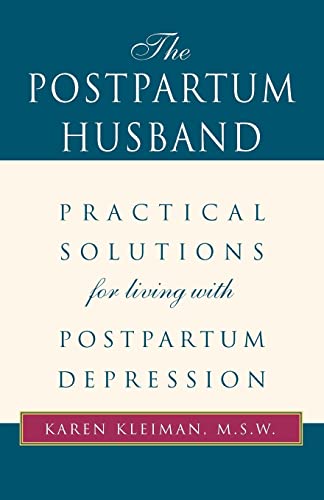
The Postpartum Husband: Practical Solutions for living with Postpartum Depression
- Used Book in Good Condition
6. What Hormones and Biology Actually Have to Do With It
One of the most common dismissals of paternal postpartum depression is the argument that men "don't go through anything physical," so any emotional difficulties must be purely psychological. This argument does not survive contact with the science.
Fatherhood involves real, measurable hormonal shifts. Research published in the American Journal of Human Biology has shown that men's testosterone levels drop significantly around the birth of a child and in the early months of caring for an infant. Studies from Notre Dame and Harvard have documented these changes in biological fathers who are actively involved in caregiving. Lower testosterone in the immediate postnatal period appears to be associated with more engaged fathering, which is a good thing, but it also means the hormonal landscape for new fathers is not static or irrelevant.
More significantly, levels of cortisol, oxytocin, prolactin, and vasopressin all change in actively caregiving fathers. Oxytocin, the so-called "bonding hormone," rises in fathers who spend significant time in hands-on care of their infants. This is the same hormonal system involved in maternal bonding, and it functions in both parents.
What the hormonal picture means practically
It means that the biology of fatherhood is real, it varies between individuals, and it interacts with psychological and social factors to produce vulnerability in some men. A father who has a genetic predisposition toward depression, who is sleep deprived, whose relationship is under stress, and whose hormonal system is in flux is carrying a genuine physiological burden, not just a "mindset problem."
This Isn't What I Expected is a deeply practical resource, and while it was written with mothers in mind, many of the chapters on the biology and psychology of postpartum adjustment translate directly to fathers' experience too.
7. How to Get Help: What Actually Works for Dads
Treatment for paternal postpartum depression is effective, but getting there requires navigating a healthcare system that was not built with fathers in mind. Knowing your options in advance makes it much easier.
The evidence-supported treatments for paternal postpartum depression are broadly the same as for depression in any adult: talking therapies (particularly cognitive behavioural therapy and interpersonal therapy), medication when indicated, and psychosocial interventions like peer support and couples counselling.
Talking therapies
Cognitive behavioural therapy (CBT) is the most researched psychological treatment for depression in adults, including new fathers. It works by helping you identify and shift the thought patterns and behaviours that are maintaining the depression. For fathers, CBT often addresses things like perfectionism about the provider role, catastrophic thinking about parenting failure, and avoidance behaviours like overworking.
Interpersonal therapy (IPT) focuses specifically on relationship dynamics and life transitions, which makes it particularly well suited to the postpartum period, when both are in upheaval. Several studies have shown IPT is effective for paternal as well as maternal postpartum depression.
Medication
Antidepressants, particularly SSRIs like sertraline and escitalopram, are effective for moderate to severe depression in men and do not affect breastfeeding infants (since the father is not the one feeding). Many men are reluctant to consider medication, but for moderate to severe depression, the combination of therapy and medication typically outperforms either alone.
Peer support and group programmes
There is growing evidence that peer-based interventions specifically designed for fathers are effective and often more acceptable to men than one-on-one therapy, which some find too emotionally confronting as a starting point. Programmes like the "Dads Pad" initiative in the UK and various father-specific group programmes in the US have shown promising outcomes.
Practical things a dad can do today
8. How Partners, Family Members, and Clinicians Can Help
Recognising paternal postpartum depression is one thing. Actually getting a struggling dad to engage with support is another, and in most families the people closest to him are the ones who need to open the door.
This section is for partners, parents of new dads, midwives, health visitors, and anyone else who is watching a father they care about struggle without knowing how to reach him.
What partners can do
The single most important thing a partner can do is name what they are seeing without framing it as a character flaw. "I've noticed you've seemed really far away lately and you don't seem to be enjoying anything. I'm worried about you" is very different from "you're never present and you don't even care about the baby."
Many depressed fathers are already filled with shame. They feel like failures as providers, as partners, and as parents. Adding accusation to that pile usually drives them further into avoidance. Naming concern with care and without judgment is the most effective way to start the conversation.
What family members and friends can do
What clinicians can do
Paediatricians, family doctors, midwives, and health visitors are in a unique position because they are often the only professionals who see the whole family in the postpartum period. Routinely asking fathers how they are doing at well-baby visits costs nothing. Having the Edinburgh Postnatal Depression Scale available for fathers, not just mothers, costs nothing. Making a referral when a father flags difficulties costs nothing except a few minutes.
The American Academy of Pediatrics has explicitly recommended that paediatricians screen mothers for postpartum depression at well-child visits. The next logical and necessary step is to extend that to fathers, and several professional bodies are now making that case.
What About Dad? is an excellent resource for clinicians who want a clear, evidence grounded overview of how to identify and approach paternal postpartum depression in practice.
Resources at a Glance: Books for Fathers and Families
| Resource | Best For | Key Focus | Format | Recommended Product | Price |
|---|---|---|---|---|---|
| A dad-specific primer | Fathers who want a quick overview | What paternal PPD looks like and basic coping | Short book | The Postpartum Dad | $9.99 |
| Supporting a partner | Dads whose partner is also struggling | How to show up when she has PPD | Practical guide | When She Needs You Most | $14.99 |
| Couples resource | Partners navigating PPD together | Relationship strategies during postpartum | Used book | The Postpartum Husband | $18.86 |
| Clinical overview | Clinicians and informed parents | Understanding and addressing PPD in men | Evidence-based text | What About Dad? | $12.99 |
| Broad postpartum guide | Mothers and fathers both | Full postpartum depression experience | Classic resource | This Isn't What I Expected | $10.50 |
| Men who want to engage | Fathers new to the conversation | Guided understanding of postpartum for men | Guided workbook | Postpartum through her eyes | $12.99 |
What Experts Are Saying
A Final Word
Here is the truth about paternal postpartum depression: it does not make a man a bad father. In many cases, the fact that he is suffering at all is evidence that he cares deeply, that the weight of this new responsibility is real to him, and that he is trying to hold up more than any one person should hold alone.
The families I have seen come through this hardest of periods intact are the ones where both parents were allowed to be human. Where "I am not okay" was something a father could say out loud without the room going silent with discomfort. Where getting help was understood as an act of love for the baby, not a confession of weakness.
If a father can get through a single conversation about how he is really feeling, that is the first step toward everything getting better.
Save this article, share it with a new parent you know, or leave it quietly on the kitchen table. Sometimes the most powerful thing is just making sure someone knows there is a name for what they are going through.
Sources & References
- Paulson JF, Bazemore SD. "Prenatal and postpartum depression in fathers and its association with maternal depression." Journal of the American Medical Association. 2010;303(19):1961-1969.
- Ramchandani P, Stein A, Evans J, O'Connor TG. "Paternal depression in the postnatal period and child development: a prospective population study." The Lancet. 2005;365(9478):2201-2205.
- Singley DB, Edwards LM. "Men's perinatal mental health in the transition to fatherhood." Professional Psychology: Research and Practice. 2015;46(5):309-316.
- Gettler LT, McDade TW, Feranil AB, Kuzawa CW. "Longitudinal evidence that fatherhood decreases testosterone in human males." PNAS. 2011;108(39):16194-16199.
- American Academy of Pediatrics. "Incorporating Recognition and Management of Perinatal and Postpartum Depression Into Pediatric Practice." Pediatrics. 2019;143(1).
- Garfield CF, Isacco A. "Fathers and the well-child visit." Pediatrics. 2006;117(4):e637-e645.
- Cameron EE, Sedov ID, Tomfohr-Madsen LM. "Prevalence of paternal depression in pregnancy and the postpartum: an updated meta-analysis." Journal of Affective Disorders. 2016;206:189-203.
- Darwin Z, Galdas P, Hinchliff S, et al. "Fathers' views and experiences of their own mental health during pregnancy and the first postnatal year: a qualitative interview study of men participating in the UK Born and Bred in Yorkshire (BaBY) cohort." BMC Pregnancy and Childbirth. 2017;17:45.
- Courtenay W. "Dying to Be Men: Psychosocial, Environmental, and Biobehavioral Directions in Promoting the Health of Men and Boys." Routledge. 2011.
- Tronick E, Als H, Adamson L, Wise S, Brazelton TB. "The infant's response to entrapment between contradictory messages in face-to-face interaction." Journal of the American Academy of Child Psychiatry. 1978;17(1):1-13.
Frequently Asked Questions
Can dads really get postpartum depression, or is it just stress?
How do I know if a dad has postpartum depression or is just tired from a new baby?
Do dads get postpartum depression at the same time as moms?
Can a dad get postpartum depression if he did not witness the birth or is not the biological father?
Will antidepressants affect a dad's ability to care for the baby?
How do I bring up the subject of postpartum depression with a dad who will not talk about it?
How long does paternal postpartum depression last if it is left untreated?
Was this helpful?
Thanks — your feedback helps us pick what to write next.