Kids Separation Anxiety at School: What Actually Helps
Separation anxiety at school is common and usually eases with a short, predictable goodbye, a calm plan shared with the teacher, and gradual practice at being apart; if it lasts about four weeks or more, or keeps your child out of class, it is time to talk to your paediatrician o

In this article
It is 8:20 on a Monday morning. Your five year old has one arm wrapped around your leg, shoes still off, saying her tummy hurts. You are already late, the teacher is waving gently from the door, and you are wondering whether this is a phase, a problem, or something you caused.
If that is your morning, you are far from alone. The CDC reports that about 9.4 percent of children aged 3 to 17 in the United States, roughly 5.8 million, had a diagnosed anxiety problem in 2016 to 2019. The DSM 5, the diagnostic manual used by psychiatrists, estimates that separation anxiety disorder specifically affects about 4 percent of children over a 6 to 12 month period. Many more children have milder versions that never get a diagnosis but still make mornings miserable.
I see this every September and again after every school holiday. The good news from clinic and from research is that most children do very well once the adults around them have a clear, consistent plan.
What you'll understand by the end of this article:
1. What Separation Anxiety at School Really Is
Separation anxiety is intense fear or distress when a child is apart from the person they feel safest with, and at school it becomes a concern only when the distress is out of proportion for your child's age, lasts for weeks, and gets in the way of daily life. Anything short of that is a normal part of growing up.
The normal version
Separation anxiety is a developmental milestone. Paediatric guidance, including from the American Academy of Pediatrics, describes it starting in the second half of a baby's first year, peaking somewhere between 10 and 18 months, and easing as children approach age 3. That timeline is a rough guide, not a deadline. Many perfectly healthy four and five year olds cry at the classroom door in the first weeks of preschool or kindergarten, and some children have a wobble every time routines change.
The reason is simple. Young children cannot yet hold a clear mental picture of "Mum will definitely come back after lunch." Their sense of time is short, and their trust is built from experience. Each time you leave and return, that trust grows. Tears at a goodbye often mean your child loves you and has not yet fully learned that goodbyes are safe.
When it becomes a disorder
Separation anxiety disorder is a diagnosis made by a clinician, and the DSM 5 asks for a particular pattern. In children the symptoms need to last at least four weeks, be excessive for the child's developmental stage, cause real distress or get in the way of daily life, and include at least three of the following:
Notice how much of that list happens outside the classroom. A child with separation anxiety disorder is rarely only anxious at school. You will often see it at bedtime, at sleepovers, when you leave the room, or when you are late for pick up.
How it differs from shyness, school refusal and other worries
Shyness is about unfamiliar people. Separation anxiety is about distance from a specific person. Social anxiety is about fear of being judged. School refusal is a behaviour, not a diagnosis, and it can come from separation anxiety, social anxiety, bullying, learning difficulties, sensory overload, or a mix. This matters because the fix depends on the cause. A child who dreads school because of a classmate needs a very different plan from one who dreads leaving you.
2. Why School Triggers Separation Anxiety
School triggers separation anxiety because it asks a child to spend many hours away from their main caregiver, in a busy place, with new rules and new adults, and several of those demands usually land at the same time. For an anxious child, that stack of changes can feel like too much.
Transitions are the biggest trigger
The most common times I see this in clinic are the first term of preschool, the move to kindergarten or Reception, the jump to a new school, and the return after long holidays or an illness. Sundays and Mondays are notoriously difficult because the weekend has reminded your child how nice it is to be home with you.
Big transitions deserve preparation, not just a pep talk. A good kindergarten transition program with visits, a meeting with the teacher, and a gradual start can lower the temperature before the first day even arrives.
Life events behind the scenes
Anxiety about school is often really anxiety about something else. Children may start to cling after:
Children rarely say, "I am worried about Dad's operation." They say, "My tummy hurts, I can't go." If your child's school worries began suddenly, ask yourself what else changed in the last month or two. A picture book can help young children make sense of a change at home. For a child whose world was turned upside down by a new sibling, Pocket Full of Kisses follows Chester Raccoon as he adjusts to life with a baby brother, and it opens a conversation about being loved even when attention is shared.


Pocket Full of Kisses (The Kissing Hand Series)
- Children's Books
- Growing Up & Facts of Life
- Family Life
Temperament and family patterns
Some children are simply born more cautious. Researchers describe this as behavioural inhibition, a temperament that makes children slow to warm up to new situations and quick to notice danger. It is not a flaw. These are often thoughtful, sensitive, conscientious children. They also tend to find school drop off harder than their more adventurous classmates.
Anxiety also runs in families, through both genes and learned patterns. If you are an anxious parent yourself, please hear this as information, not blame. Children pick up on our tension at the door, and the way we respond to their worry can either shrink it or accidentally feed it. We will come back to that, because it is one of the most useful things to understand.
Why avoidance makes things worse
Every time a child avoids a feared situation and feels instant relief, the brain learns that the situation was truly dangerous and that avoiding it worked. The relief is real, but so is the lesson. Parents are often caught in this trap with the kindest intentions: "She was so upset, I just took her home." The next morning is harder. If you want the wider picture on childhood worry, our piece on new research about anxious kids is a good companion read.
3. Signs of Separation Anxiety in Children (Including the Ones Parents Miss)
The signs of separation anxiety in school age children include clinging, crying, and refusal to go in, but they also include stomach aches, sleep problems, constant "what if" questions, and behaviour that looks like defiance. The quieter signs are the ones parents miss most often.
Signs by age
Toddlers and preschoolers (ages 2 to 5):
Younger school age (ages 5 to 8):
Older children (ages 9 to 12):
The body keeps the score of worry
Physical symptoms are very common, and they are real. A child who says their stomach hurts is not lying; anxiety genuinely affects digestion, muscle tension, and heart rate. The clue that anxiety may be involved is the pattern: symptoms appear on school mornings or Sunday nights, ease once the child is allowed to stay home, and are mild or absent on weekends and holidays.
That said, please do not assume. If your child has repeated headaches or abdominal pain, see your paediatrician or GP to rule out medical causes. It is a stronger plan to check the body first and then address the worry, rather than guessing and missing something.
When anxiety looks like bad behaviour
Anxious children are often described as stubborn, oppositional, or attention seeking. A child who refuses to leave the car, throws a shoe, or melts down at the door may be in a state of fear, not defiance. Fight, flight, and freeze all look different on the outside. If your child's teacher is reporting problems in class, it is worth reading about behaviour problems in class and asking whether anxiety could be the driver beneath them.
Red flags that need prompt attention
If your child mentions being scared of a particular person or place at school, listen carefully and speak to the school the same day. Separation anxiety is common, but it should never be assumed when a child is telling you something specific.
4. How to Handle Drop Off: A Step by Step Goodbye That Works
The goodbye that works best is short, warm, predictable, and confident, followed by you actually leaving. A long, emotional goodbye or a quick sneak out both tend to make things harder, even though they feel kind in the moment.
Before you leave the house
Mornings go better when they feel boringly predictable. Prepare what you can the night before, such as the bag, clothes, and lunch. Get your child to bed on time, since tired children have fewer coping resources. Eat breakfast together if you can, and leave a few extra minutes so nobody is hurrying and snapping.
Talk through the day in simple terms: "We'll get dressed, have breakfast, drive to school, and I'll walk you to your classroom. Ms. Patel will be at the door. I'll pick you up after afternoon snack." A visual schedule with pictures can help younger children. Describing the return in terms of a concrete event, not a clock time, makes sense to children who cannot yet read the time.
The goodbye itself
1. Connect briefly. Get down to eye level, give a hug or high five, and use warm eye contact. 2. Say your ritual. The same short phrase every day, such as "Love you, see you after snack." 3. Hand over to a named adult. Let the teacher or assistant take over so your child is not left in no man's land. 4. Leave. Do not linger. Wave if you like, but go. Lingering teaches your child that your presence at the door is negotiable. 5. Do not sneak out. Disappearing while your child is distracted can feel easier, but it damages trust and often makes them watch you for the next escape.
This is also where phones come in. Children notice when we are half present at the door, checking messages while they are falling apart. Putting your phone away for this one moment is a small act that signals "you matter more than anything on this screen." If you have not already, have a look at what we say about how much children notice your phone.
Rituals and keepsakes
Children love a small, concrete ritual because it gives their feelings a place to go. Some families use a special handshake, a note in the lunchbox, a drawing of a heart on the wrist, or a small token in a pocket.
The classic is a story. In Audrey Penn's picture book The Kissing Hand, a young raccoon named Chester is nervous about his first day at school. His mother kisses the palm of his hand so that whenever he feels lonely, he can press it to his cheek and know she loves him. It is gentle, short, and has been reassuring children for decades. Many parents copy the idea and kiss a palm before the school door. The 4.9 star rating across thousands of reviews tells you plenty about how often it helps.


The Kissing Hand (Kissing Hand Books)
- Children's Books
- Growing Up & Facts of Life
- Family Life
If you want a second copy to keep at school, a grandparent's house, or a carer's home, this additional listing of The Kissing Hand can serve that purpose, though it is pricier, so compare listings before you buy. And if your child wants to keep revisiting Chester, A Kissing Hand for Chester Raccoon from the same series is another way into that comforting world. Books are a tool, not a cure, but they give your child a story to hold onto and give you something to say.
What to say, and what to skip
The most useful script combines validation with confidence:
Things to skip, however tempting:
Pick up matters too
Greet your child warmly and keep it low key. Resist the urge to ask, "Were you OK? Did you cry?" That can plant the idea that something went wrong. Try "Tell me one thing that made you smile today."
Parents' own feelings
Leaving a distressed child is awful. It is normal to cry in the car. Research on parent accommodation by Dr. Eli Lebowitz at the Yale Child Study Center suggests that when parents shape their lives around a child's anxiety, such as staying, rescuing, or answering the same worry again and again, the anxiety tends to be maintained. That is not about blame; it is why the calmer you can be, the more your child's brain learns that goodbye is manageable.
5. Working With the School and Building Coping Skills at Home
The best results come when home and school use the same plan, so tell the teacher what you are doing, ask what they see, and teach your child a few simple coping tools you can practise together. A consistent adult response across settings is one of the strongest things you can offer an anxious child.
Team up with the teacher
Teachers have seen hundreds of anxious children, and most are glad to help when parents come with a plan rather than a complaint. A good meeting covers:
Agree how the school will handle calls home, too. For many anxious children, repeated phone calls at 10 a.m. become a ritual that keeps the worry alive. A plan such as "If she is upset, the teacher will support her for 10 minutes and call only if she has not settled" protects your child from escalation. In many places, the school counsellor or psychologist (or a SENCO in the UK) can help build a plan, and for older children with significant school anxiety, formal supports may be available.
Ask the school about other helpful structures too. Peer connection is protective, and preschool social skills groups can help children who find group settings daunting build confidence in a small, supportive setting.
Teach your child to name feelings
Anxious children often feel a big, unnamed storm in their bodies. Giving it a name makes it smaller. Try:
Then offer one simple tool at a time:
1. Slow breathing. "Smell the flower, blow out the candle" works well for young children, and balloon breaths work for older ones. 2. A coping phrase. "I'm safe. I can do hard things. Mum comes back." 3. A worry time. Fifteen minutes in the early evening when your child can share worries, so the rest of the day is more peaceful. 4. Thinking through "what if." Ask "What is the most likely thing to happen?" and "What would you do if it did?"
Let play do some of the work
Play is how young children practise big feelings in a safe way. Pretend school, with dolls who feel nervous, and a doll who gets picked up at the end, teaches the same lesson as any lecture. Our article on why play is how preschoolers learn explains why this works. Let your child direct the game, and when the doll cries, respond the way you would like your child to be responded to.
Listening before fixing
One of the hardest parenting skills with an anxious child is to resist fixing. We want to take the worry away, so we explain, reassure, and argue. A gentler approach is to listen first. The Rabbit Listened by Cori Doerrfeld is a picture book about a child named Taylor whose block tower is knocked down. One animal after another tries to fix the problem or give advice, until the rabbit simply sits close and listens. It is a lovely model for adults as much as children, and The Rabbit Listened makes a good bedtime conversation starter about what to do when you feel upset.

Build independence in small steps
Anxious children benefit from gradual practice, often called a ladder. Start with something your child can manage and work up. For a child who struggles at drop off, the ladder might look like:
1. Practise goodbyes at home, moving to another room for 1 minute, then 5, then 15 2. Spend an hour at a relative's house 3. Attend a short playdate where you are not in the room 4. Visit the classroom with you on a weekend or after school 5. Do the full school drop off with the plan above
Praise effort, not just results: "You felt scared and you went in anyway. That is what brave looks like."
6. When to Get Help: What Treatment for Separation Anxiety Looks Like
Seek professional help if your child's distress has lasted about four weeks or more, is keeping them out of school, or is affecting sleep, friendships, or family life, because anxiety in children is very treatable and earlier help usually means a quicker recovery. A visit to your paediatrician or GP is a good starting point.
What to expect at the first appointment
A clinician will usually ask about when symptoms began, what is happening at school and home, sleep, eating, and any life changes. They will often check for medical causes, ask about other worries, and sometimes use a short questionnaire. They may speak to your child on their own. Bring your diary, any notes from the teacher, and a list of questions.
Therapy comes first
Cognitive behavioural therapy (CBT) is the best studied talking therapy for childhood anxiety. It teaches children to recognise worry in the body, challenge unhelpful thoughts, and gradually face feared situations. Programmes such as Philip Kendall's well known "Coping Cat" are built around this approach.
The largest study of this question is the Child/Adolescent Anxiety Multimodal Study (CAMS), published in the New England Journal of Medicine in 2008 by Dr. John Walkup and colleagues. It included 488 children aged 7 to 17 with separation anxiety disorder, generalised anxiety disorder, or social phobia, and compared 12 weeks of CBT, the SSRI medication sertraline, both together, and a placebo. The response rates were:
In plain English, therapy works, medication works, and the combination did best. Most children with mild to moderate symptoms start with therapy.
Parent focused programmes
Because so much of childhood anxiety is shaped by how families respond to it, some programmes work mainly with parents. One is SPACE (Supportive Parenting for Anxious Childhood Emotions), developed by Dr. Eli Lebowitz at Yale. Parents learn to offer support and acceptance without accommodating the anxiety. A 2020 randomised trial in the Journal of the American Academy of Child and Adolescent Psychiatry found it worked about as well as CBT delivered directly to the child. This is encouraging for families whose child is too young, or too anxious, to engage in therapy.
Medication
Medication is a specialist decision. It is usually considered when anxiety is moderate to severe, when therapy alone has not been enough, or when a child cannot engage with therapy because they are too distressed. SSRIs are the main group used. They are prescribed and monitored by a doctor, and families should be told about benefits, side effects, and what to watch for. It is a conversation, not a rush.
Getting back to school
If your child has been off for a while, the aim is a gradual return to school, not a long break. Most clinicians and schools favour a graded plan: perhaps a short day at first, a quiet entrance, a trusted adult, and a clear timetable for building up. The longer a child stays home, the harder the return tends to be. Missing school for weeks does not usually settle anxiety on its own.
Looking after yourself
Parenting an anxious child is tiring. Many parents feel guilty, judged, or alone. You are not the cause of your child's anxiety, but you are the most powerful part of the solution. If you are anxious yourself, getting support can help your child as well as you.
Stories can still play a supporting role during treatment. A book such as Chester the Brave continues the Kissing Hand series' themes of courage and reassurance, and gives children simple language for being brave when they feel unsure. It is a companion to professional help, not a replacement for it.
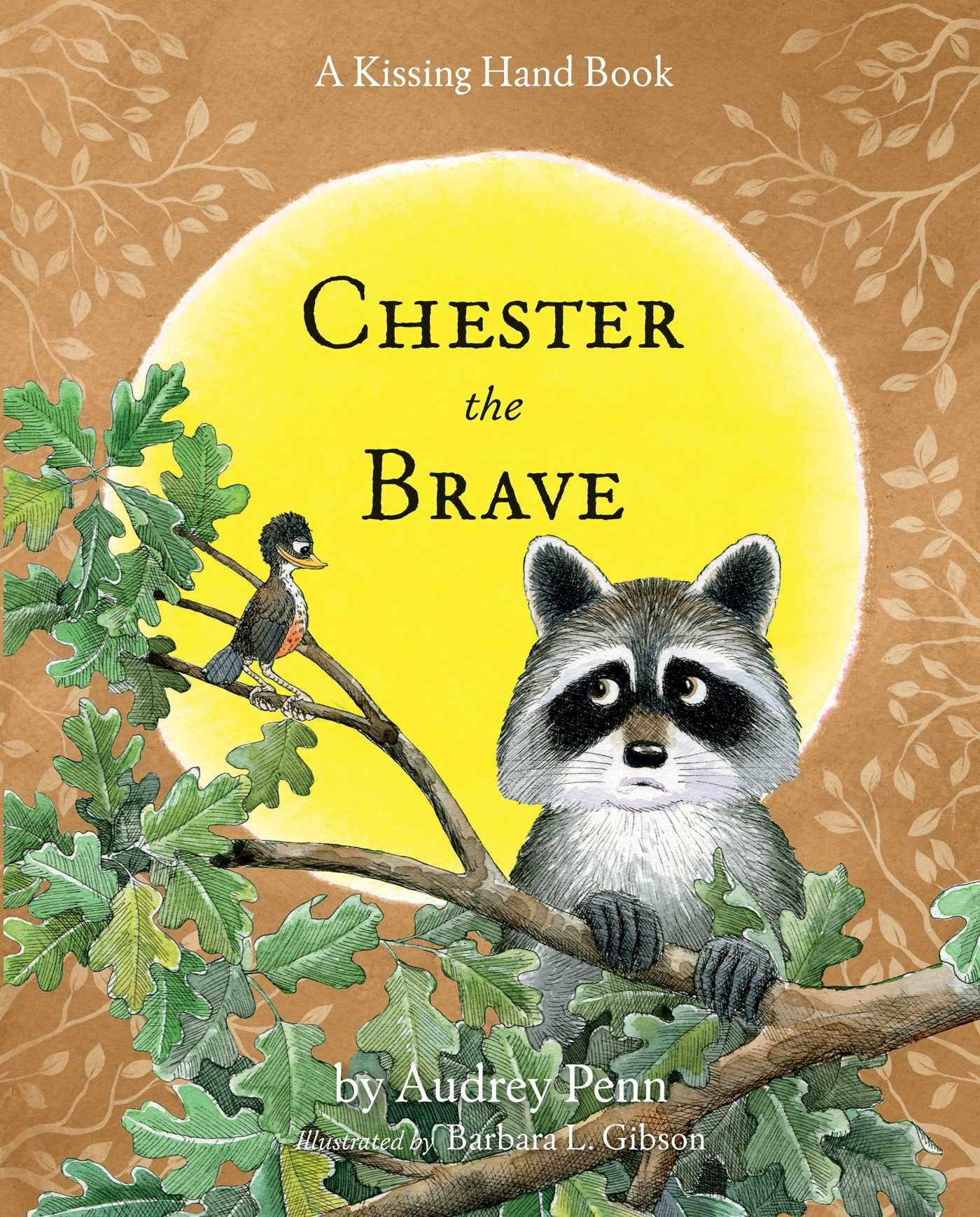

Chester the Brave (The Kissing Hand Series)
- Children's Books
- Growing Up & Facts of Life
- Family Life
Comparing Your Options: Which Approach Fits Which Situation
Different approaches suit different children and different stages. Use this table as a starting point, and remember that most families combine two or three of these.
| Option | Best Age Range | Primary Benefits | Main Drawbacks | Recommended Product | Price Range |
|---|---|---|---|---|---|
| A daily goodbye ritual (like the kissing hand) | Ages 2 to 6 | Gives feelings a place to go, short and easy to repeat | Needs consistency; works best alongside a calm plan | The Kissing Hand (Kissing Hand Books) | $10.95 |
| A second copy for school or a carer's house | Ages 3 to 7 | The same story and ritual in more than one place | Pricier listing; compare editions before buying | The Kissing Hand (second listing) | $20.63 |
| Revisiting the Chester story through the series | Ages 3 to 7 | Familiar characters, repeat reading builds comfort | Books alone will not treat significant anxiety | A Kissing Hand for Chester Raccoon | $12.11 |
| Preparing for a change at home, such as a new baby | Ages 3 to 7 | Opens a conversation about sharing love and attention | Not specific to school anxiety | Pocket Full of Kisses | Check current price |
| Building courage for hard moments | Ages 4 to 8 | Gives children language for bravery | Supports, but does not replace, a gradual plan | Chester the Brave | $16.90 |
| Learning to listen and validate feelings | Ages 3 to 9 (and parents) | Models listening before fixing; good for talking about big feelings | Does not address separation directly | The Rabbit Listened | Check current price |
Expert Insights: What the Major Sources Agree On
The research and the guidance from major organisations point the same way. I have paraphrased these in my own words rather than quoting, so please check the original sources listed below.
The American Academy of Pediatrics describes separation anxiety in babies and toddlers as a normal stage that fades as children learn that caregivers return. Its parent guidance leans on short, consistent goodbyes, practising brief separations, and avoiding the sneak out.
The American Academy of Child and Adolescent Psychiatry (AACAP) explains that when a child's fear about separation is persistent and intense, it can interfere with school and family life, and that early assessment and treatment lead to better outcomes. It notes that CBT and, where needed, medication are recognised treatments.
Dr. Eli Lebowitz, Yale Child Study Center, and his colleagues have shown that parental accommodation, meaning the adjustments families make to avoid a child's distress, tends to keep anxiety going, and that teaching parents to respond with support and confidence can reduce symptoms as effectively as therapy delivered to the child.
Dr. John Walkup and the CAMS team found that CBT, sertraline, and the combination all outperformed placebo, with the combination producing the highest response rate.
The shared message: respond warmly, do not avoid, and get help early.
Frequently Asked Questions
Key Takeaways
Conclusion
Standing at a classroom door while your child cries is one of the hardest parts of parenting. It can feel like you are doing something wrong, when in truth you are teaching one of life's most important lessons: that love does not disappear when someone leaves the room.
Be warm, be steady, and be brief at the door. Work with the teacher, and ask for help sooner rather than later if the worry will not budge. Most children, with the right support, find their feet.
A confident goodbye is not a cold one; it is a promise that you believe your child can do hard things.
If this helped, save it for the next tricky Monday, and share it with another parent who is waving through the classroom window right now.
Sources & References
- Centers for Disease Control and Prevention. "Data and Statistics on Children's Mental Health." Reports 9.4 percent of US children aged 3 to 17 with diagnosed anxiety, 2016 to 2019. https://www.cdc.gov/children-mental-health/data-research/index.html
- American Psychiatric Association. "Diagnostic and Statistical Manual of Mental Disorders, Fifth Edition (DSM 5)." 2013. Section on Separation Anxiety Disorder.
- Walkup JT, Albano AM, Piacentini J, et al. "Cognitive Behavioral Therapy, Sertraline, or a Combination in Childhood Anxiety." New England Journal of Medicine, 2008;359:2753 to 2766.
- Lebowitz ER, Marin C, Martino A, Shimshoni Y, Silverman WK. "Parent Based Treatment as Efficacious as Cognitive Behavioral Therapy for Childhood Anxiety: A Randomized Noninferiority Study of Supportive Parenting for Anxious Childhood Emotions." Journal of the American Academy of Child and Adolescent Psychiatry, 2020.
- American Academy of Pediatrics. "Separation Anxiety" parent guidance. HealthyChildren.org.
- American Academy of Child and Adolescent Psychiatry. "Separation Anxiety Disorder" and "Children Who Won't Go to School" (Facts for Families). aacap.org.
- Penn, Audrey. "The Kissing Hand." Tanglewood Press.
- Doerrfeld, Cori. "The Rabbit Listened." Dial Books for Young Readers, 2018.
Frequently Asked Questions
Is it normal for a 5 year old to cry at school drop off?
How long does separation anxiety at school last?
Should I stay at school until my child calms down?
Is it OK to keep my child home when they are anxious?
Did I cause my child's separation anxiety?
When is separation anxiety a disorder?
Why is my child fine all week but upset on Monday?
Was this helpful?
Thanks — your feedback helps us pick what to write next.