
Mom Guilt Definition: What It Is, Why It Happens, What Helps
Mom guilt is the persistent feeling that you are falling short as a parent, even when you are doing a reasonable job. It is common and it is not a diagnosis, but it can tip into something heavier that deserves support.

In this article
Nearly half of parents (48 percent) told the American Psychological Association that most days their stress is completely overwhelming, compared with 26 percent of other adults. That figure was cited in the US Surgeon General's 2024 advisory on parental mental health. When I read it, I thought of the hundreds of parents I have sat across from in clinic who apologised before they even told me why they had come.
Picture a school morning. You snapped about a missing shoe, your toddler is watching cartoons while you answer one work email, and you are already composing a mental list of everything you did wrong by 8:15 a.m. That tight, sinking feeling has a name, and it is far more common than any of us admit out loud.
What you'll understand by the end of this article:
1. What Is Mom Guilt? A Plain English Definition
Mom guilt is the persistent feeling that you are not doing enough, not being enough, or making the wrong choices for your child, even when the evidence in front of you says your child is safe, loved and doing fine.
Let me break that definition down, because each part matters.
Notice that the standard is often invisible to you. Many of the rules driving mom guilt were never chosen. They were absorbed from your own childhood, from relatives, from social media, from the parenting book you read at 3 a.m.
It is a popular term, not a diagnosis
"Mom guilt" is not a clinical condition. What the American Psychiatric Association's diagnostic manual does list is excessive or inappropriate guilt as one possible symptom of depression. That is why I will spend time later on telling the two apart. Most mom guilt is ordinary, but some of it is a signal worth listening to.
It is not only mothers
The phrase centres on mothers because research consistently finds mothers carry more of it. In a 2017 study in the journal Sex Roles, Borelli and colleagues compared parents of young children and found that mothers reported more work and family guilt than fathers did. Fathers, grandparents and other primary caregivers feel it too. If you are a dad or caregiver reading this, everything here applies to you.
Guilt versus shame
This distinction changes everything. The psychologists June Tangney and Ronda Dearing, who have studied these emotions for decades, describe guilt as a focus on a behaviour ("I yelled, and that was not okay") and shame as a focus on the self ("I am a terrible mother"). Guilt tends to push people toward repair, apologising and doing differently. Shame tends to push people toward hiding, defensiveness and withdrawal.
Mom guilt usually starts as guilt and then slides into shame at 2 a.m. Learning to catch that slide is one of the most useful skills in this article.
Common triggers I hear about
Part of why these rules feel so heavy is the performance quality of modern parenting. I explore that in more detail in this piece on why parenthood feels like a performance, and it is worth a read if you suspect you are parenting for an invisible audience.
2. Why Mom Guilt Happens: The Forces Behind the Feeling
Mom guilt happens because of a gap between what you believe a mother should do and what one human being with limited hours and energy can actually do. That gap is built by culture, by logistics and by love.
Intensive mothering: the invisible rulebook
The sociologist Sharon Hays described a cultural ideal she called intensive mothering in her 1996 book The Cultural Contradictions of Motherhood. In this model, mothering is child centred, guided by experts, emotionally absorbing, labour intensive and financially expensive. In other words, a "good" mother gives everything, all the time.
The research on what this ideal does to real mothers is sobering.
Read that second finding twice. You can reject the rulebook with your thinking brain and still feel judged by it. That is not weakness. That is how deeply those messages are woven into the culture.
The mental load
Guilt also grows from sheer logistics. Someone has to remember the vaccination appointment, the spare uniform, the birthday present, the dentist, the packed lunch. When that remembering falls mostly on one person, every dropped ball feels like a personal failing rather than a predictable result of an overloaded system. The Surgeon General's advisory names time pressure and unrealistic societal expectations among the pressures weighing on parents. If you want to understand how heavy that invisible work really is, the weight of modern maternal stress is worth sitting with.
Comparison on tap
A generation ago, you compared yourself with the mothers on your street. Now you compare yourself with curated highlights from thousands of strangers. Nobody posts the cereal for dinner night. Your brain, though, treats every polished image as a data point about what "normal" looks like.
Guilt as a sign you care
There is a kinder reading, and I offer it with a small caveat: it is how I think about it clinically, not a proven mechanism. The parents who feel the most guilt are very often the most attuned, thoughtful and invested. Guilt is what caring looks like when it has nowhere useful to go. The goal is not to erase the caring. It is to point it somewhere helpful.
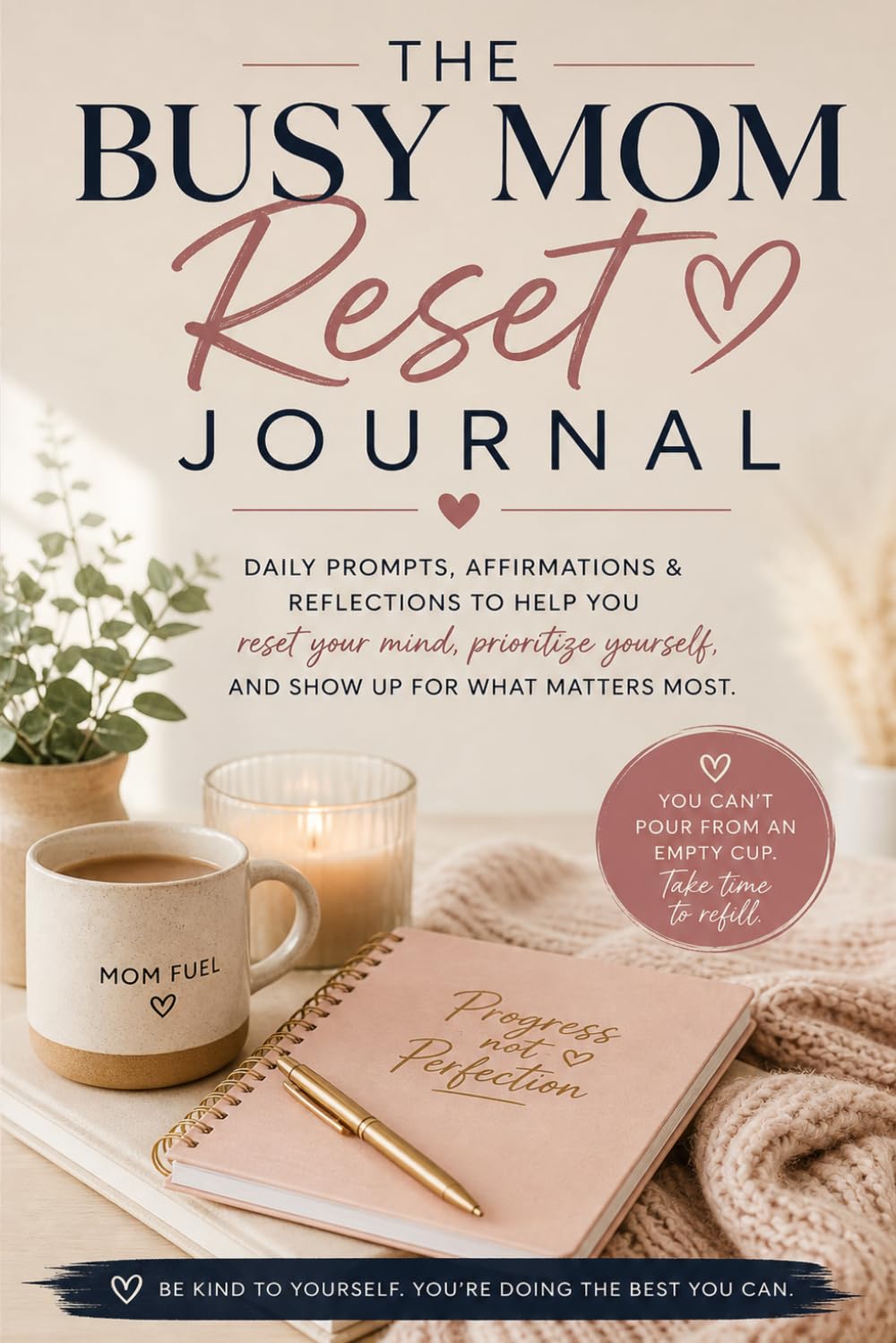

The Busy Mom Reset Journal: 30 Days to Feel Organized, Motivated & Less Overwhelmed: A Guided Self-Care, Gratitude & Goal Planner for Moms Who Do Everything
- Journal Writing
- Image Unavailable Image not available forColor:
- Daily reset prompts
If you are in the "do everything and feel behind on all of it" camp, a structured reset can help you see your load on paper. The Busy Mom Reset Journal offers 30 days of daily reset prompts, with gratitude and goal planning, designed for moms who feel they are doing everything. It is a tool for gaining clarity, not a treatment, but seeing your day written down often shows that you are doing far more than your guilt admits.
3. What Mom Guilt Looks Like From Newborn to Age 12
Mom guilt changes shape as your child grows, but the engine underneath stays the same: a "should" that no human could meet. Knowing the usual shapes can help you recognise your own.
The newborn weeks and the first 90 days
Early on, guilt tends to cluster around feeding, sleep and bonding. You may feel guilty about how you feed your baby, whether you are "doing skin to skin right," or whether you cry more than you smile. You may feel guilty for wanting sleep, for handing the baby to someone else, or for not feeling an instant rush of love.
As a paediatrician, my clinical bottom line is this: a fed, safe, responded to baby with a caregiver who is looking after her own health is doing well. Whether the milk comes from the breast or a bottle matters far less to a baby's wellbeing than most guilt would have you believe.


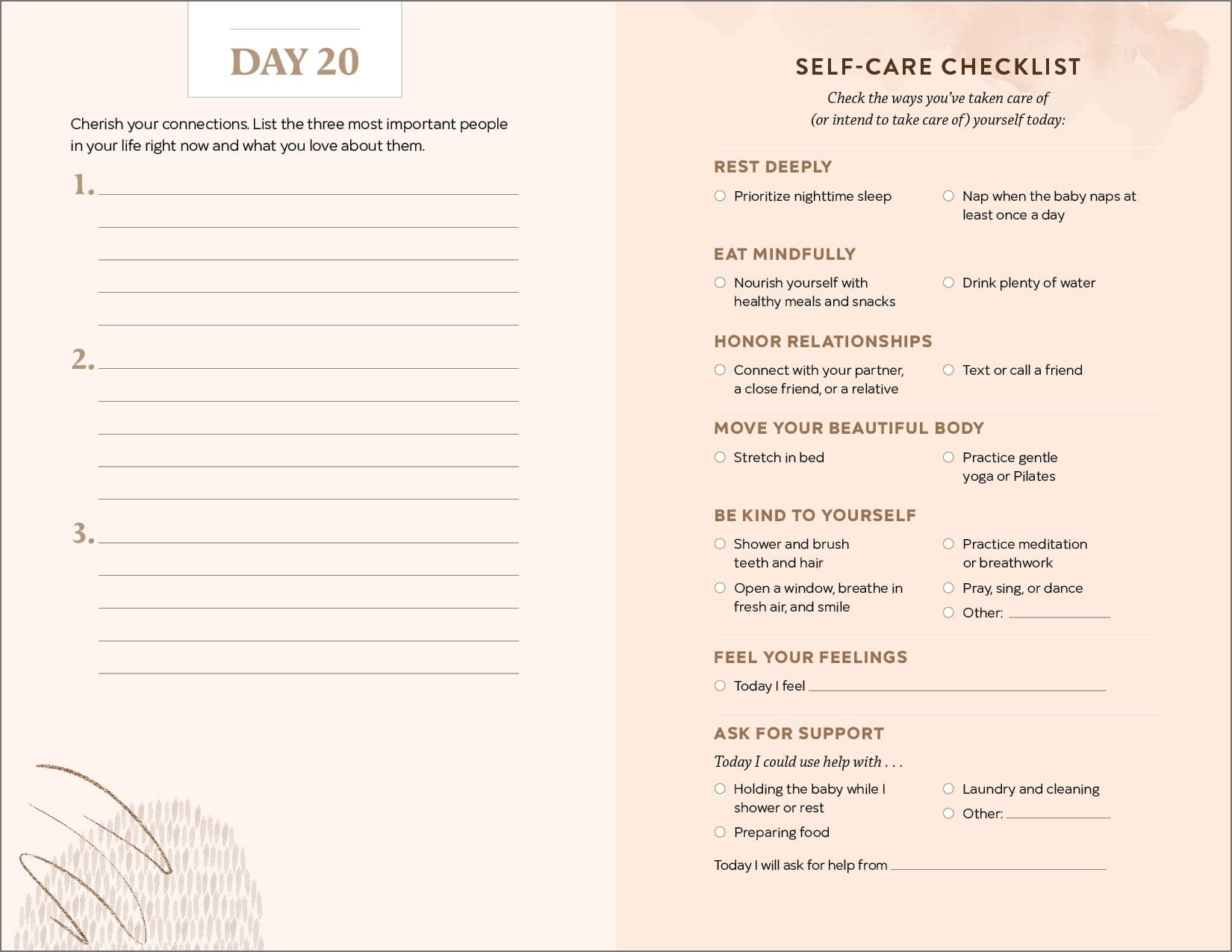
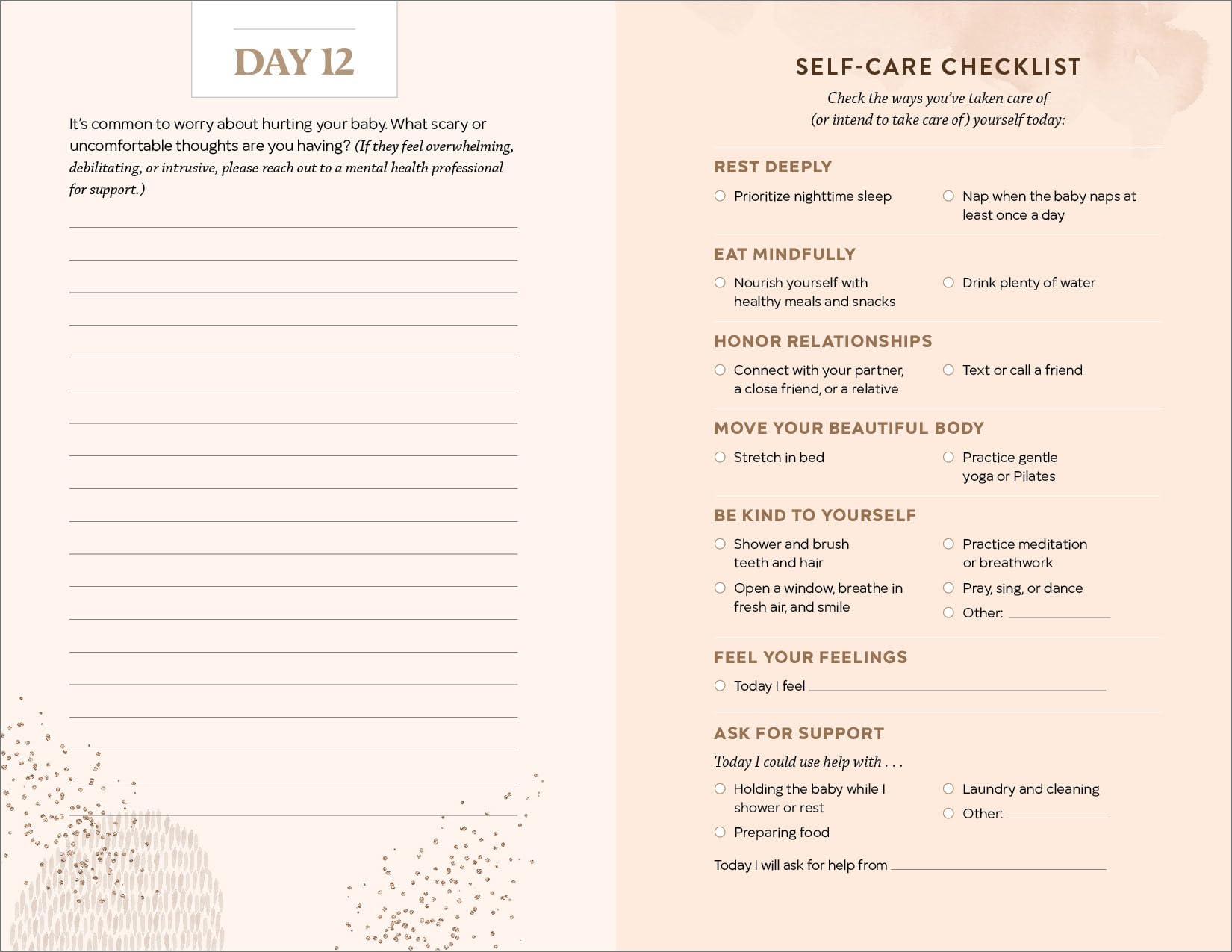
The First 90 Days After Birth: A Self-Care Journal for First-Time Moms
- Parenting & Relationships
- Family Relationships
- Motherhood
New mothers often tell me they do not have a single spare minute to think about themselves. That is exactly why a short, structured daily prompt can help. The First 90 Days After Birth is a self care journal written for first time moms and priced at $15.49. It will not fix sleep deprivation, but it can give you five minutes of attention in a season when nobody is paying attention to you.
Babies and toddlers
Between about 6 months and 3 years, the guilt usually attaches to childcare, work and discipline.
Preschool and school age children, ages 4 to 12
As children get older, guilt shifts toward achievement, enrichment and fairness.
Here, I want to give you a big, evidence informed permission slip. The American Academy of Pediatrics' 2018 clinical report on the power of play, written by Yogman and colleagues, emphasises that play with caring adults and with peers is essential for healthy development, and that it does not depend on expensive toys or packed schedules. If you worry you are not providing enough "enrichment," read about unstructured play before you add another class to the calendar. Some of the best developmental work happens when your child is bored on the living room floor.
4. When Guilt Is a Signal and When It Is a Symptom
Guilt is a useful signal when it is specific, proportionate and leads to a repair; it is a possible symptom when it is constant, all consuming and tied to a general feeling of worthlessness.
Healthy guilt
Guilt that works looks like this: you notice you were short with your child at bedtime, you feel a pang, you apologise the next morning and you try to be a little more patient. The feeling is tied to a specific event, it is proportionate, and it resolves once you have acted. Tangney and Dearing's research on guilt supports this: guilt linked to a specific behaviour is associated with empathy and reparative action, while shame is not.
Guilt that deserves attention
If any of those describe you, please do not wait for it to pass. Speak to your GP, paediatrician, midwife, health visitor or another clinician this week. Excessive or inappropriate guilt is one of the recognised symptoms of depression, and depression in new parents is common and very treatable.
How common is this really?
The US Centers for Disease Control and Prevention reports that about 1 in 8 women who recently gave birth experience symptoms of postpartum depression. In the UK, the NHS explains that the "baby blues" (tearfulness and mood swings) typically settle within about two weeks of birth, whereas low mood that lasts longer or gets worse needs assessment. NICE guidance on antenatal and postnatal mental health recommends that health professionals ask about mood and anxiety at routine contacts, so you are never being a nuisance by raising it.
Guilt and burnout
Mom guilt can also feed parental burnout. Mikolajczak, Gross and Roskam (2019) describe parental burnout as having four features: overwhelming exhaustion, emotional distancing from your children, a sense of being an ineffective parent, and a stark contrast with the parent you used to be. If that reads like your week, start with the small, practical habits that prevent parental burnout, and speak to a professional if it persists.


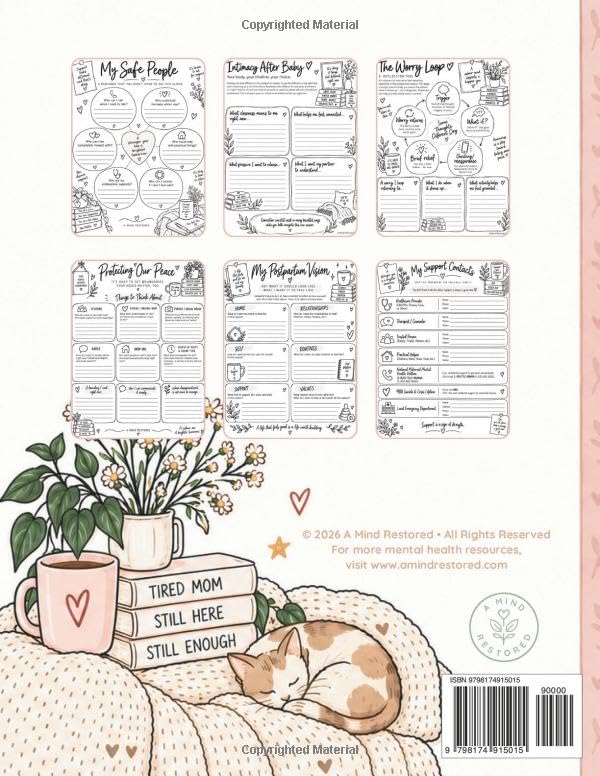
For new moms who want a gentle, structured way to process the heavy stuff, Postpartum Is a Lot is a mental health workbook that addresses overwhelm, emotional changes, mom guilt, self care and life after baby. A workbook is a supportive companion, not a replacement for care. If you are struggling, use it alongside, not instead of, help from a clinician.
If you need to talk to someone today
5. The Good Enough Parent: What the Research Says You Actually Need
You do not need to be perfect. Your child needs you to be reliably responsive, to notice and repair the inevitable mistakes, and to look after yourself well enough to keep showing up.
Where "good enough" comes from
The idea comes from Donald Winnicott, a British paediatrician and psychoanalyst who spent decades observing mothers and babies. In the 1950s he coined the phrase "good enough mother." His point was not that mothers should lower their standards. It was that perfection is actually unhelpful to a child. A baby whose every need is met instantly and flawlessly never learns that frustration is survivable, that the world is not an extension of the self, and that relationships can wobble and recover.
Rupture and repair
The developmental psychologist Edward Tronick's observational research on parents and babies found that even in healthy, loving pairs, caregivers and infants are in a perfectly matched state only part of the time. Figures around 30 percent are often cited from his early work with Gianino (1986). The rest of the time there are small mismatches, and what makes the relationship strong is the repair: the smile, the soothing, the reconnection. Mismatch is not the problem. Missing repair is.
That is liberating. It means the moments you cringe about (the snappy tone, the distracted nod) are not where the damage lies. The damage would lie in never coming back to them.
A simple repair script
When you lose your cool, try these steps once everyone has calmed down:
1. Get calm first. Repair works best when your body has settled. 2. Name what happened. "I raised my voice earlier." 3. Own your part. "That was my job to handle better, not yours." 4. Reassure. "I love you, and you did not cause it." 5. Reconnect. A hug, a shared snack, a few minutes of play. 6. Say what you will try next time. Keep it small and honest.
For older children, this takes about a minute. It also quietly teaches your child how to apologise, which is one of the most useful social skills they will ever learn.
What perfectionism costs
Remember Meeussen and Van Laar's finding that pressure to be a perfect mother tracks with parental burnout. Aiming for perfect is not just unachievable. It is associated with the very exhaustion that makes you less patient and less present. Aiming for good enough is not laziness. It is the more protective, more sustainable strategy, for you and for your child.
Your child learns from how you treat yourself
Children absorb how adults talk about their own mistakes. If your inner voice is a harsh critic, your child is quietly learning what to say to themselves when they struggle. Modelling "I made a mistake and I can be kind to myself while I fix it" is one of the most valuable things you can pass down. If this idea resonates, my piece on mindful parenting explains why being present and non judgemental matters more than being flawless.


You're A Good Mom: Positive Affirmations for Moms, Journal with prompts
- Crafts, Hobbies & Home
- Crafts & Hobbies
- Guided Journals
Many parents find that the harsh inner voice needs a deliberate counterweight. You're A Good Mom is a guided journal of positive affirmations with prompts, designed for moms. Affirmations land best when they are believable, so pick the lines that feel true and skip the ones that make you roll your eyes.
6. How to Ease Mom Guilt Today: A Practical Plan
Start small and repeat often. You will not think your way out of mom guilt in one sitting, but a handful of daily habits will turn the volume down.
Seven steps you can start today
1. Name the "should." Say it plainly: "I feel guilty because I believe a good mom would never use screens at dinner." Naming it separates the feeling from the fact. 2. Run a quick reality check. Ask: Is there actual harm here? Would I judge a friend this way? What would a reasonable, kind observer say? Most of the time the evidence is much gentler than your inner critic. 3. Choose one repair or one change, then stop. If something genuinely needs fixing, fix one thing. Then let the guilt go, because guilt that has already led to action has done its job. 4. Edit your inputs. Mute or unfollow the accounts that leave you feeling behind. You are allowed to curate what shapes your sense of "normal." 5. Share the load out loud. Instead of "you never help," try: "Can we sit down for 15 minutes and divide up the invisible tasks, like appointments, school forms and meals?" Specifics invite solutions; generalities invite defensiveness. 6. Protect tiny pockets of rest. Not a spa day. Five minutes, three times a day, that belong to you. 7. Tell one real person. Say "I've been feeling guilty about this" to a friend or relative. You will almost certainly hear "me too," and shared guilt weighs less.
Make the first five minutes of the day kinder
How you start the morning often sets the tone of the guilt for the day. Mom's Mornings Before the Chaos is a guided morning journal built around gratitude, focus and self care, just for moms. Spending a few minutes setting one realistic intention, before anyone needs anything, can change how the day feels.



Realistic Self-Care for Moms: A Guided Journal for Taking Care of You While Taking Care of Them
- Parenting & Relationships
- Family Relationships
- Motherhood
If your self care list keeps losing to everyone else's needs, a book that starts from reality rather than fantasy can help. Realistic Self Care for Moms is a guided journal for taking care of you while taking care of them, currently listed at $21.83. The key word is "realistic": the point is not another thing to fail at, but small, doable acts of care.
Journals are a tool, not a treatment
I recommend writing tools often because they help many parents notice patterns and slow the 2 a.m. spiral, and because they cost little and carry no risk. But please keep them in perspective. If your guilt comes with persistent low mood, loss of interest, or hopelessness, a journal is a companion to professional care, never a substitute for it.
When the exhaustion is bigger than the guilt
Sometimes the honest answer is that you are not feeling guilty so much as depleted. If that sounds like you, the emotional exhaustion of modern parenting deserves its own attention, and so do you. Asking for practical help (a meal, an hour, a conversation with your employer) is not indulgent. It is maintenance on the person your child depends on most.
If you are the partner or relative
Do not tell a guilty mother "you're doing great" and walk away. Name something specific you saw ("I noticed how calmly you handled that meltdown"), take a task off her plate without being asked, and avoid comparing her to anyone else.
Choosing a Support Tool: Which Option Fits Your Season?
Different seasons of parenting call for different kinds of support. Use this table as a starting point for matching what you are feeling to a gentle, practical tool. None of these replaces medical or therapeutic care when you need it.
| Option | Best For | Primary Benefits | Main Drawbacks | Recommended Product | |
|---|---|---|---|---|---|
| Affirmations and prompts | A loud inner critic, any age of child | Builds a kinder inner voice, quick daily habit | Works only if the lines feel believable to you | [PRODUCT_LINK:1\ | You're A Good Mom] |
| Newborn season journal | The first 90 days after birth | Short, structured self care prompts for first time moms | Focused on early postpartum, less useful later | [PRODUCT_LINK:2\ | The First 90 Days After Birth] |
| Guided mental health workbook | New moms with overwhelm, emotional changes and guilt | Gentle structure for processing heavy feelings | Supports, but does not replace, professional care | [PRODUCT_LINK:5\ | Postpartum Is a Lot] |
| Realistic self care journal | Moms with no time for elaborate routines | Small, doable acts of care for busy days | Needs a few minutes of consistency | [PRODUCT_LINK:3\ | Realistic Self Care for Moms] |
| Morning routine journal | Moms who start the day already behind | Gratitude, focus and a calmer start | Requires an earlier or protected morning moment | [PRODUCT_LINK:4\ | Mom's Mornings Before the Chaos] |
| 30 day reset planner | Moms who feel they do everything and feel disorganised | Daily reset prompts, goal planning and gratitude in one place | A month long commitment | [PRODUCT_LINK:6\ | The Busy Mom Reset Journal] |
Expert Insights on Mom Guilt
Two voices have shaped how I explain guilt to parents, and both are worth hearing in their own words.
The first is Brené Brown, PhD, a research professor at the University of Houston Graduate College of Social Work, whose work on shame and vulnerability has reached millions. She draws a clear line between a useful emotion and a corrosive one:
What I take from this in practice: guilt is information about your values. It shows you what matters to you. The trouble starts only when guilt stops being about a specific action and starts being a verdict on who you are.
The second is Donald Winnicott, a British paediatrician and psychoanalyst who spent his career studying mothers and infants. His description of the "good enough mother" remains one of the most reassuring ideas in
Was this helpful?
Thanks — your feedback helps us pick what to write next.